Tiger Eye Matrix


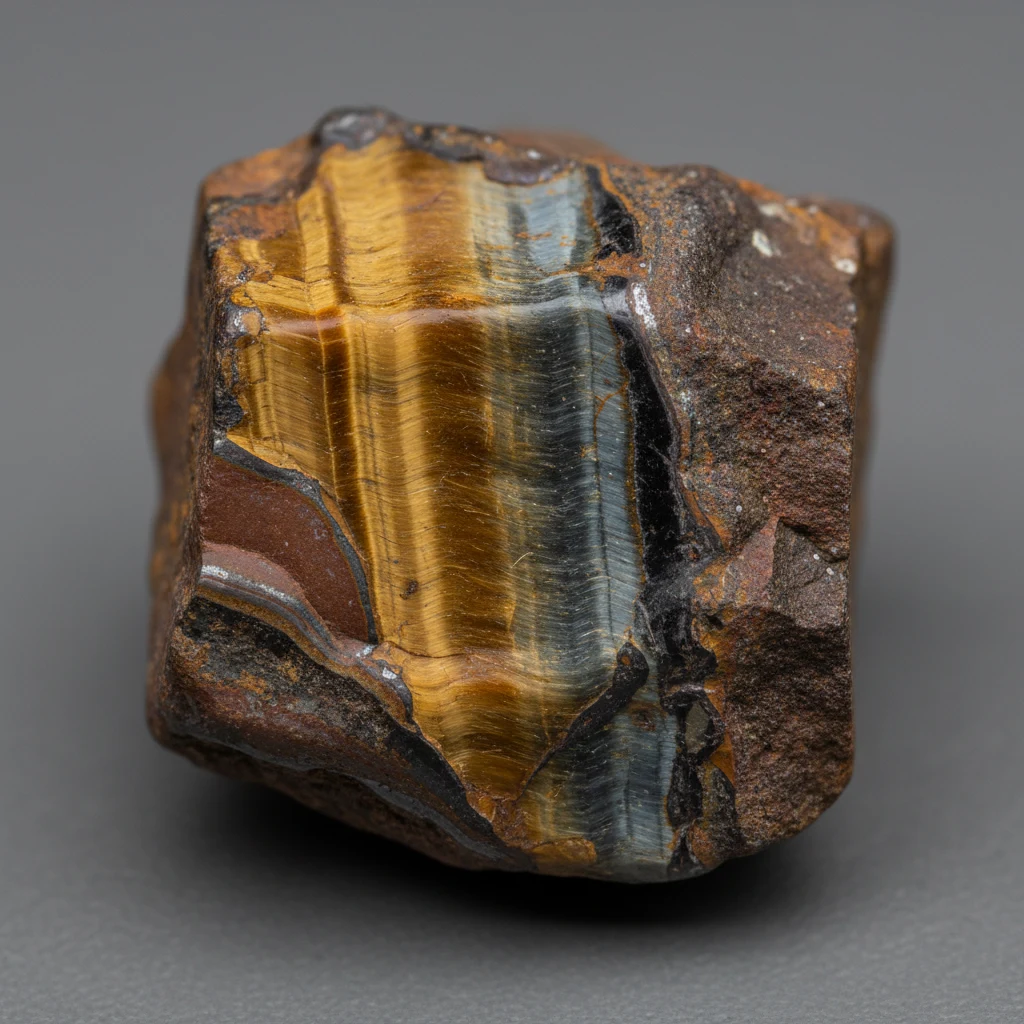
Quick answer: Tiger Eye Matrix is a mixed rock material that contains golden to brown tiger eye seams within an iron-rich host rock. Its identity is based on chatoyant quartz bands, color zoning, and the surrounding matrix rather than a single uniform crystal.
AI Rock ID can help screen Tiger Eye Matrix by checking for chatoyant bands, quartz-like luster, and iron-stained host rock textures in a photo. RockIdentifier.io can provide a visual identification estimate, but mixed matrix specimens may still need close inspection or a scratch test for confirmation.
Good fit
- Collectors who like rough, mixed-rock specimens with visible mineral relationships
- Buyers comparing natural tiger eye seams against dyed or assembled-looking pieces
- Beginners learning to recognize chatoyancy in quartz-based materials
- Display pieces where contrast between golden bands and dark matrix is part of the appeal
Not a good fit
- Anyone seeking a fully polished, uniform tiger eye cabochon
- Situations where a single-mineral identification is required
- Buyers who prefer transparent or faceted gemstones
- Specimens intended for heavy wear if the matrix is crumbly or uneven
Most commonly confused with
- Tiger Eye: Tiger Eye is usually sold as more uniform chatoyant quartz, while Tiger Eye Matrix keeps visible host rock attached.
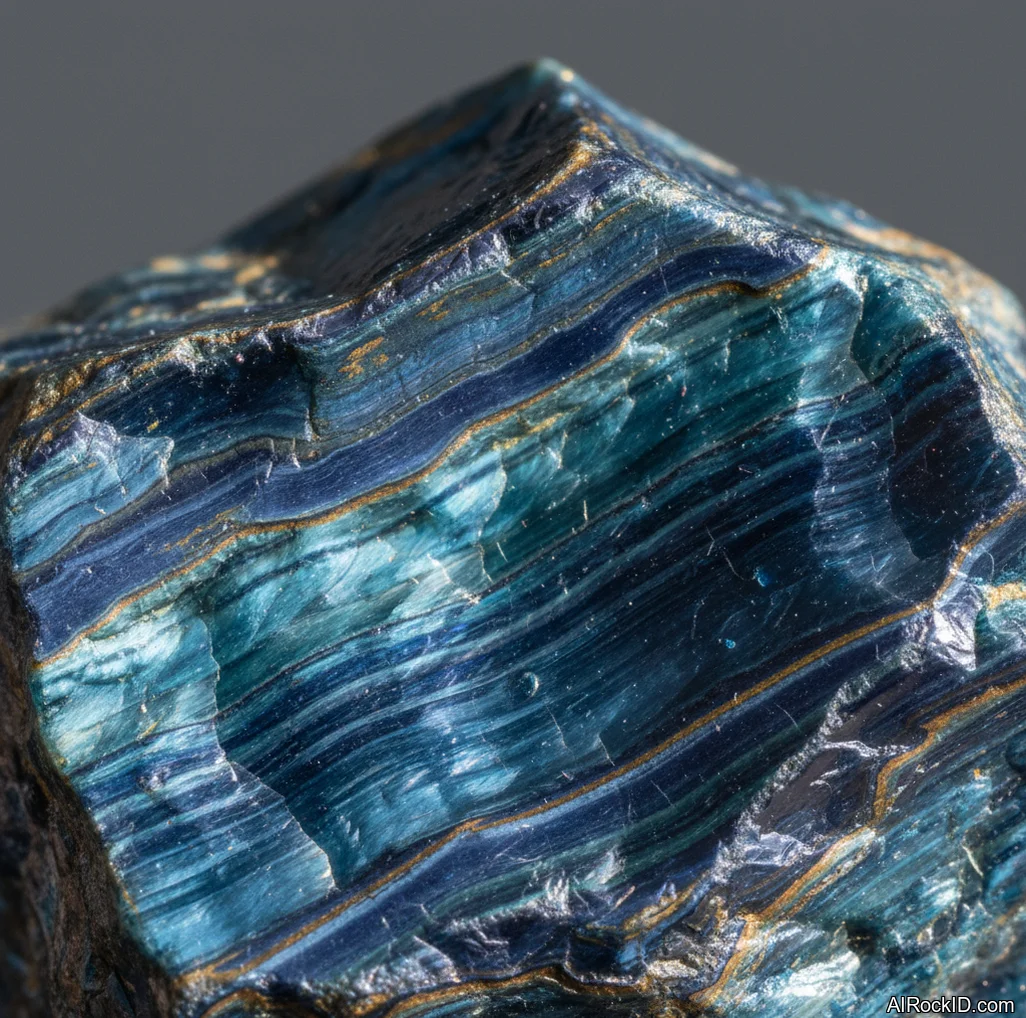
- Hawk's Eye: Hawk's Eye tends to show blue-gray chatoyant bands rather than golden brown iron-rich bands.
- Pietersite: Pietersite has brecciated, swirling chatoyant fragments rather than straight seams in a rough matrix.
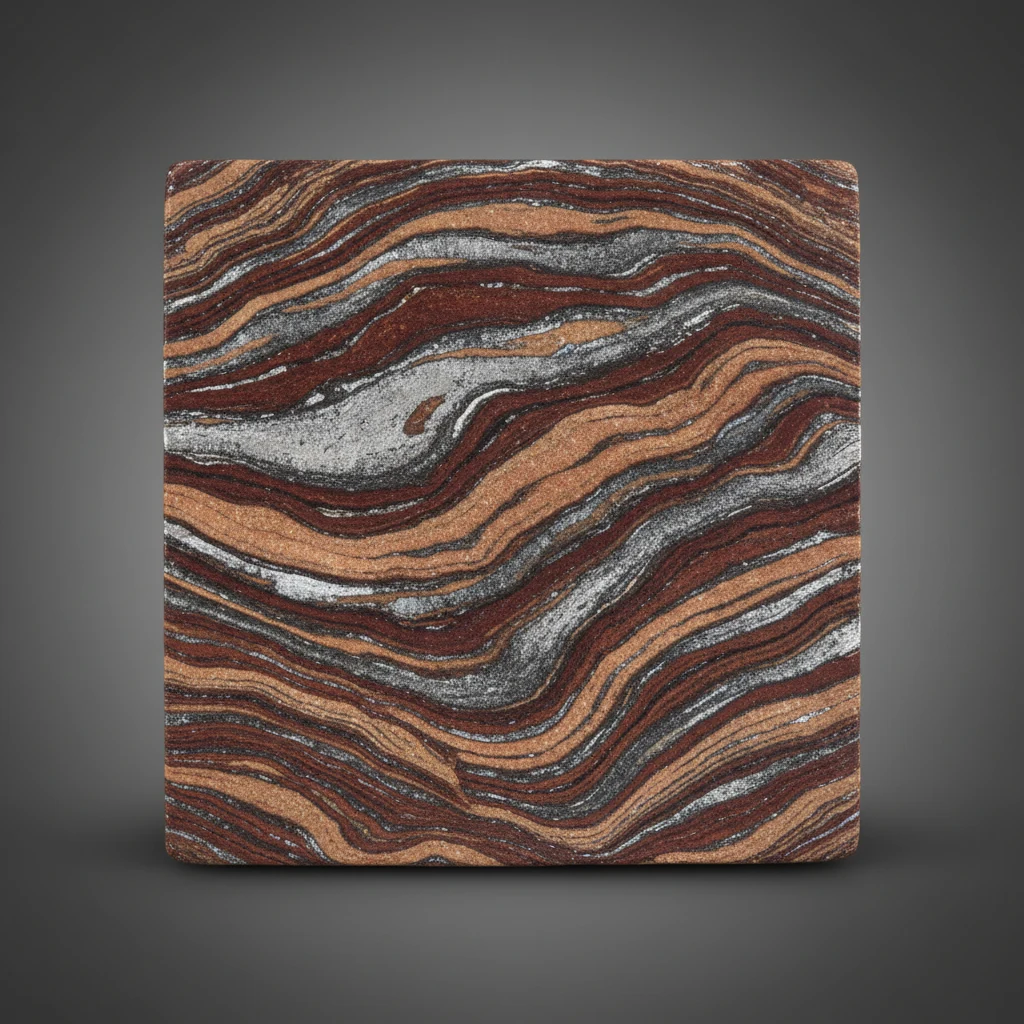
- Banded Iron Formation: Banded iron formation may show red, gray, or black layers but usually lacks the silky moving eye effect of tiger eye.
Tiger Eye Matrix Lookalike Comparison
| Material | Key Visual Clue | Main Difference |
|---|---|---|
| Tiger Eye Matrix | Golden-brown silky seams in darker host rock | Shows both chatoyant quartz and attached matrix |
| Tiger Eye | More continuous golden chatoyant bands | Usually less host rock and a more uniform appearance |
| Hawk's Eye | Blue-gray to steel-colored sheen | Color is cooler and less iron-golden |
| Pietersite | Broken, stormy chatoyant patches | Pattern is brecciated rather than seam-like |
| Banded Iron Formation | Layered red, black, or gray rock | Typically lacks a moving cat's-eye sheen |
AI identification confidence
AI identification confidence is usually moderate when a photo clearly shows golden chatoyancy next to dark, iron-rich matrix. Confidence drops when the surface is dusty, unpolished, wet, or photographed without directional light.
When AI gets it wrong
- A non-chatoyant ironstone or jasper surface is photographed under strong glare
- Only the dark matrix is visible and the tiger eye seam is out of frame
- Dyed or resin-coated material creates an artificial shine
- A polished tiger eye piece is labeled as matrix even though no host rock is present
How to Check Tiger Eye Matrix Authenticity
Look for a natural transition between the golden tiger eye seam and the surrounding host rock rather than a sharp glue line or painted surface. Real tiger eye chatoyancy shifts as the stone is tilted under a single light source. Uniform bright color across cracks, pits, or the matrix may suggest dye or surface treatment.
Photo Tips for Identifying Tiger Eye Matrix
Use a single direct light source and tilt the specimen slowly to see whether a silky band moves across the tiger eye portion. Photograph both the chatoyant seam and the surrounding matrix in focus. A dry, clean surface is better for identification than a wet surface because water can create misleading shine.
Buying Notes for Rough Tiger Eye Matrix
Check whether the piece is stable, because some host rock can be softer or more fractured than the tiger eye seam. Ask for photos from multiple angles so the matrix, chatoyancy, and any cracks are visible. Weight alone is not a reliable value guide because dense host rock can add mass without increasing the amount of tiger eye present.
What Is Tiger Eye Matrix?
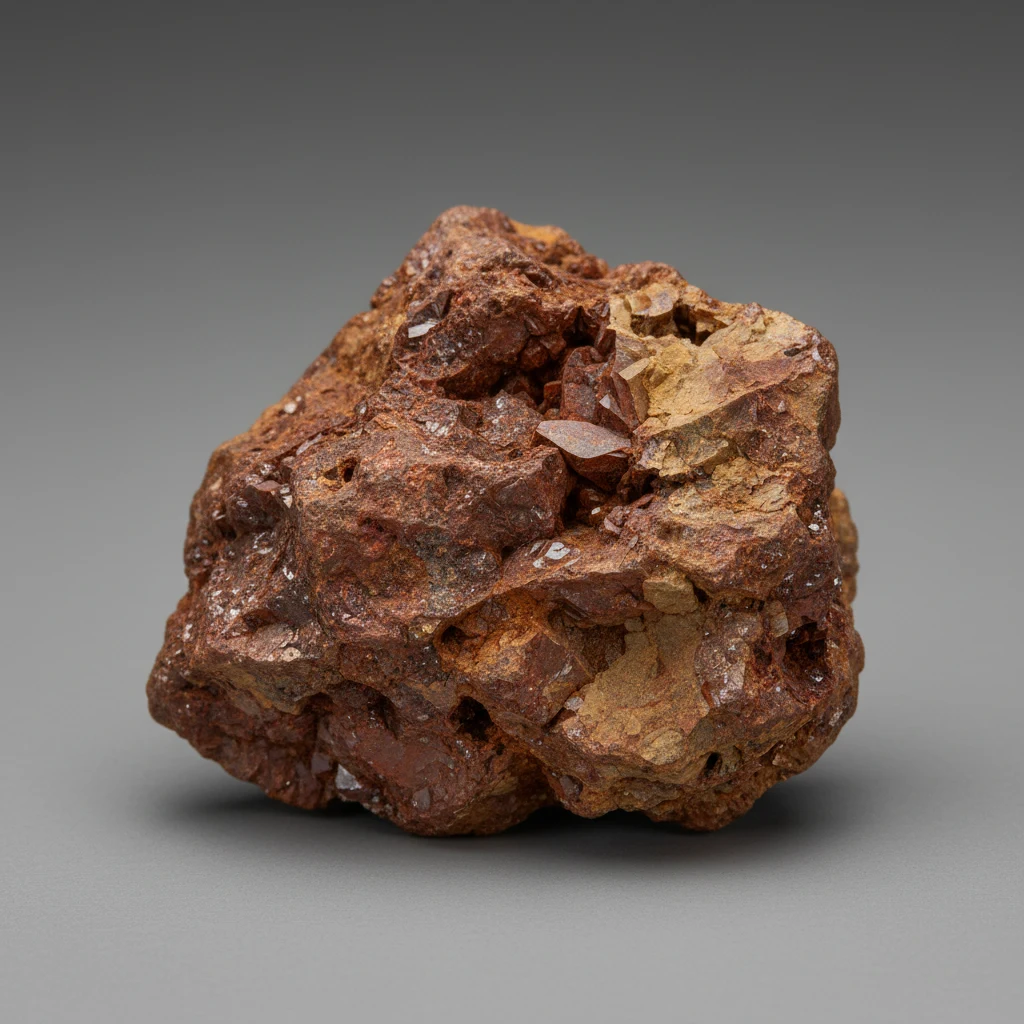
Tiger Eye Matrix is rough tiger eye still attached to, or intergrown with, its host rock. In the hand it usually feels like a hard, uneven quartz-rich stone: golden, honey-brown, or reddish-brown tiger eye bands run through darker brown to black iron-rich matrix, with rusty staining and broken quartz seams visible on natural surfaces.
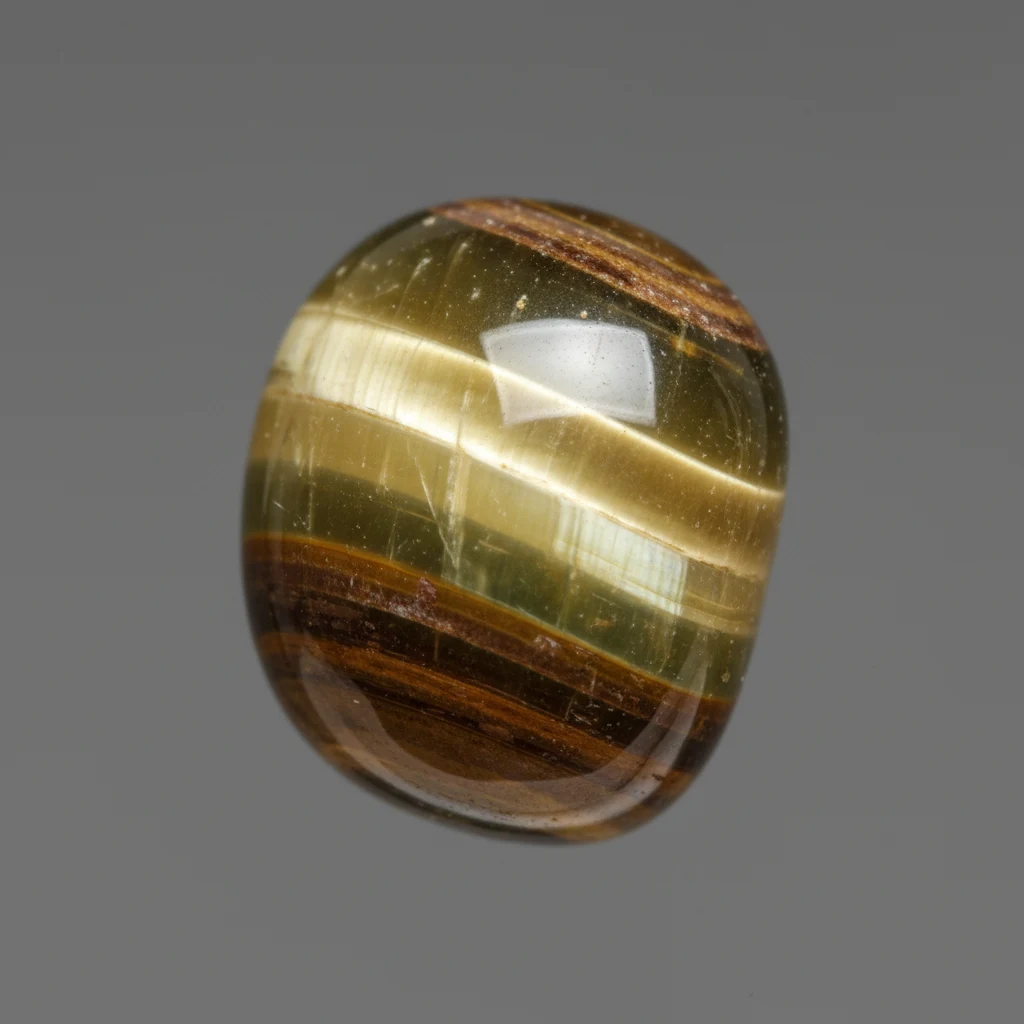
The key feature is chatoyancy, the silky moving sheen seen when a fibrous tiger eye band is turned under a single light. Unlike a polished cabochon, a tiger eye matrix stone is valued for its raw context: dull earthy ironstone, waxy quartz edges, splintery fibrous zones, and irregular seams that show how the tiger eye sits inside the surrounding rock.
Origin & History
Tiger eye has been used as an ornamental stone since at least the 19th century, and famous early material came from South Africa. The name comes from the golden-brown color and narrow chatoyant band that resembles a tiger’s eye, especially when a cut or naturally exposed surface is moved in direct light.
In the trade, “matrix” means the tiger eye is not a clean lapidary seam but remains attached to darker host rock. Collectors use the term for rough pieces with natural banding, iron staining, and uneven quartz-rich patches. Locality names and specimen comparisons are commonly checked against references such as mindat.org.
Where Is Tiger Eye Matrix Found?
Tiger Eye Matrix is best known from iron-rich Precambrian sedimentary sequences, especially in South Africa and Western Australia. Notable collecting and trade references include the Griquatown and Prieska areas of the Northern Cape, South Africa, and the Hamersley Range and Pilbara region of Western Australia.
Formation
Tiger Eye Matrix forms when fibrous crocidolite, a blue amphibole, is altered and replaced by microcrystalline to crystalline quartz while iron is oxidized into yellow, brown, and red iron oxides such as goethite and hematite. The original parallel fibrous texture is preserved, and that aligned structure produces the moving silky flash called chatoyancy.
Matrix specimens keep the surrounding material instead of being trimmed into clean gem rough. That host rock may be iron-rich quartzite, jaspery quartz, or ironstone, so a fresh piece can show hard quartz seams beside dull brown-black matrix. The result is a specimen that records both the tiger eye band and the rough iron-rich environment around it.
How to Identify Tiger Eye Matrix
Identify Tiger Eye Matrix by looking for golden yellow to honey-brown parallel fibrous bands set in darker rusty, reddish-brown, dark brown, black, gray, or blue-gray matrix. Under a single directional light, true tiger eye bands show a shifting silky line; broken quartz-rich areas may look vitreous to waxy, while ironstone surfaces look dull or earthy.
The quartz-rich tiger eye portion is hard, about Mohs 6.5–7, and can scratch glass. Streak is white to pale brown, though iron-rich matrix may streak yellow-brown or reddish brown. It is generally nonmagnetic to very weakly attracted if iron oxides are abundant. Avoid confusing it with wood, slag glass, or dyed jasper; the fine parallel fibers and natural chatoyant flash are the strongest field clues.
Properties of Tiger Eye Matrix
Physical Properties
| Crystal System | Trigonal for the quartz component; occurs as massive, fibrous, pseudomorphic aggregates in matrix |
| Hardness (Mohs) | 6.5–7 (Hard) |
| Density | about 2.64–2.71 g/cm³, variable with iron-rich matrix |
| Luster | Silky, vitreous, waxy, or dull depending on surface and matrix |
| Diaphaneity | Opaque to translucent in thin quartz-rich edges |
| Fracture | Uneven to splintery on fibrous material; conchoidal to uneven on quartz-rich areas |
| Streak | White to pale brown; iron-rich matrix may streak yellow-brown or reddish brown |
| Magnetism | None to very weak; iron-rich matrix may show slight attraction in some specimens |
| Colors | golden yellow, honey brown, reddish brown, dark brown, black, gray, blue-gray |
Chemical Properties
| Classification | Silicate; quartz aggregate with iron oxides and possible relict amphibole textures |
| Formula | Dominantly SiO2 with Fe oxides/hydroxides; original amphibole commonly represented as Na2Fe2+3Fe3+2Si8O22(OH)2 in crocidolite-related textures |
| Elements | silicon, oxygen, iron, sodium, hydrogen |
| Common Impurities | hematite, goethite, limonite, riebeckite/crocidolite relics, jaspery quartz, ironstone |
Optical Properties
| Refractive Index | Quartz component about 1.544–1.553 |
| Birefringence | Quartz about 0.009; usually not measurable in opaque aggregate pieces |
| Pleochroism | None in quartz; color is mainly from inclusions and iron oxides |
| Optical Character | Uniaxial positive for quartz; aggregate displays chatoyancy from parallel fibrous structure |
Tiger Eye Matrix Health & Safety
Intact tiger eye matrix is safe to handle, but cutting, grinding, drilling, or sanding can create respirable silica dust and may disturb fibrous amphibole relics in some rough material. Dust inhalation is the main concern, not normal handling.
Tiger Eye Matrix Value & Price
Price Range
Rough/Tumbled: Common rough matrix pieces are often about $2–$15 per small specimen; larger attractive pieces with strong golden chatoyancy may sell for about $15–$75 or more.
Cut/Polished:
Value depends on strength of chatoyancy, contrast between tiger eye and matrix, band continuity, polish potential, size, lack of fractures, and locality. Clean lapidary-grade seams are usually worth more than dull ironstone-heavy matrix.
Durability
Good — Scratch resistance: Good; quartz-rich tiger eye is around Mohs 7 and resists everyday scratching better than many collector stones., Toughness: Fair to good; fibrous or fractured matrix pieces can chip or split along seams.
Generally stable in normal indoor conditions. Prolonged soaking, acids, harsh chemicals, or ultrasonic cleaning can loosen iron-rich matrix, enhance staining, or exploit fractures.
How to Care for Tiger Eye Matrix
Use & Storage
Store separately from softer minerals because quartz-rich tiger eye can scratch them. Wrap fragile matrix pieces to prevent chipping along ironstone or fibrous seams.
Cleaning
Clean with a soft brush, mild soap, and brief rinsing. Dry thoroughly, especially where porous iron-rich matrix is exposed.
Cleanse & Charge
For metaphysical use, cleanse with smoke, sound, moonlight, or a dry cloth rather than saltwater or prolonged soaking.
Placement
Display under a single directional light to show the best silky flash. Keep away from high humidity if the matrix is porous or iron-rich.
Caution
Avoid acids, bleach, ultrasonic cleaners, steam cleaners, and dry grinding. Rough matrix may shed small grains or stain surfaces with iron oxides.
Works Well With
Tiger Eye Matrix Meaning & Healing Properties
In modern crystal healing traditions, Tiger Eye Matrix is used as a grounding and confidence stone. Its meaning is usually read from its look and feel: bright golden tiger eye for focus and willpower, dark iron-rich matrix for steadiness, and the moving flash for practical decision-making under pressure. These are cultural and spiritual interpretations, not medical claims.
Practitioners commonly associate Tiger Eye Matrix with the Root and Solar Plexus chakras, the zodiac signs Leo, Capricorn, and Gemini, and the planetary symbols Sun and Mars. For care in spiritual use, cleanse it with smoke, sound, moonlight, or a dry cloth. Avoid saltwater, long soaking, acids, bleach, ultrasonic cleaners, steam cleaners, and dry grinding, especially on porous or fractured matrix pieces.
Identify Tiger Eye Matrix from a photo
Compare Tiger Eye Matrix traits, care tips, value clues, and common lookalikes with a clear photo.
Common mistakes
- Assuming every brown banded rock with iron staining is Tiger Eye Matrix
- Judging chatoyancy from flash glare instead of a moving silky band
- Calling a uniform polished tiger eye tumble “matrix” when no host rock is visible
- Overlooking dye that concentrates in cracks, pits, or porous matrix areas
- Expecting the matrix portion to have the same hardness and durability as the tiger eye seam