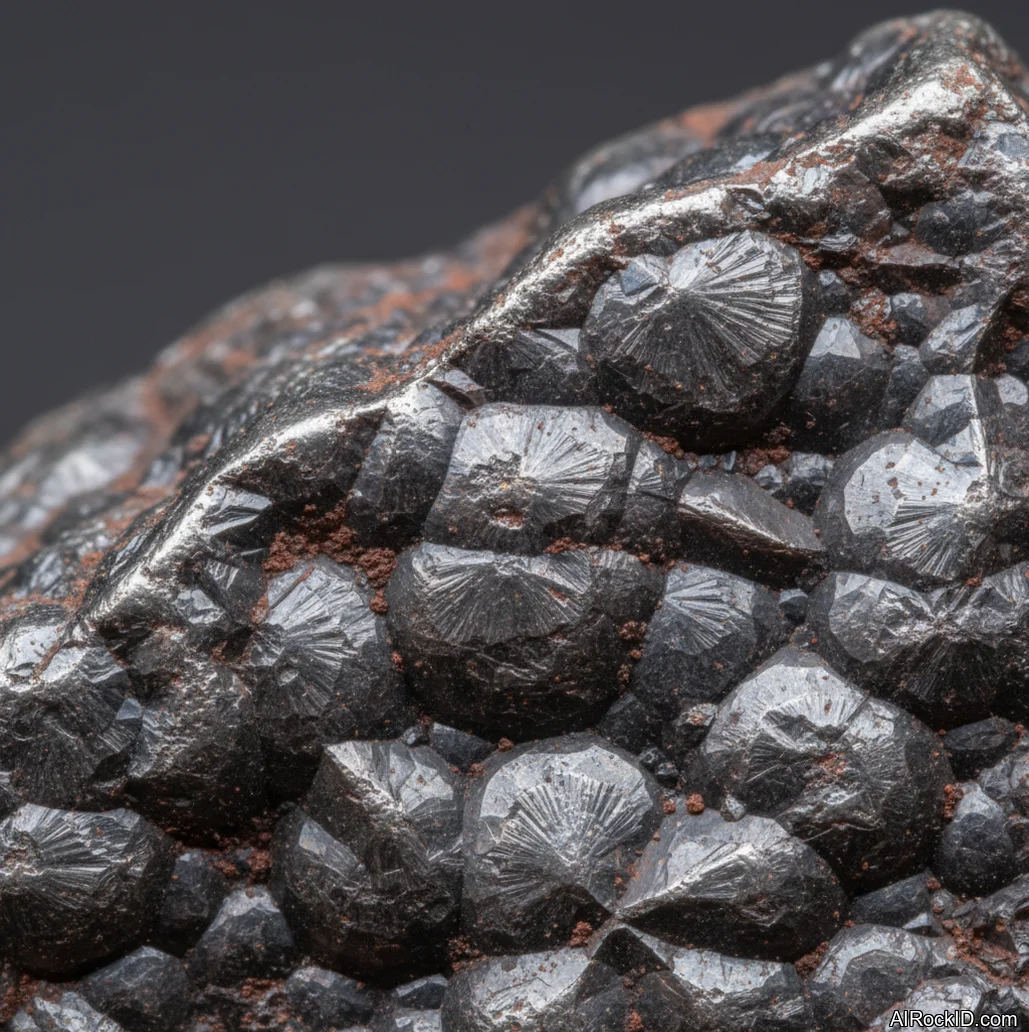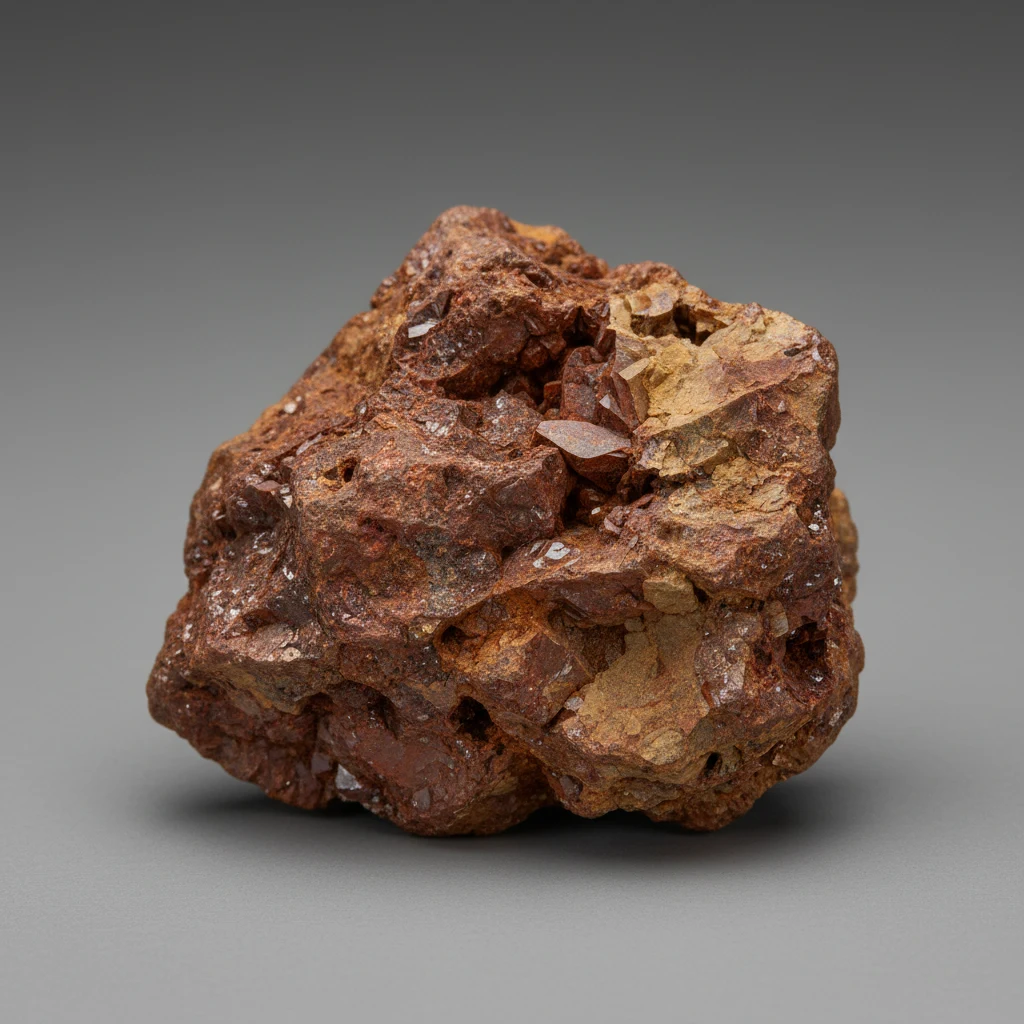
Brown Ironstone


Quick answer: Brown Ironstone is an iron-rich, typically sedimentary rock known for its brown to reddish-brown color and earthy streak. It is often identified by its dull to submetallic look, moderate hardness, and association with iron oxides such as limonite, goethite, or hematite.
AI Rock ID can help screen Brown Ironstone by comparing color, texture, streak, luster, and visible layering against common iron-rich rocks. RockIdentifier.io provides photo-based identification support, but field tests such as streak, hardness, and magnetism are still useful for confirmation.
Good fit
- Collectors interested in common iron-rich sedimentary rocks
- Learners comparing limonite, hematite, goethite, and ironstone
- Rockhounds studying earthy streaks, concretions, or weathered iron deposits
- Decorative stone collectors who prefer natural brown and rusty tones
Not a good fit
- Anyone seeking a transparent or facetable gemstone
- Jewelry use where high polish, durability, and water resistance are required
- Collectors who need a precise mineral species rather than a rock name
Most commonly confused with
- Hematite: Hematite often has a red-brown streak and may show a metallic or steel-gray surface, while Brown Ironstone is usually rockier and more earthy.
- Limonite: Limonite is a general iron oxide/hydroxide material and can be a major component of Brown Ironstone rather than a separate-looking crystal.
- Goethite: Goethite may form more distinct fibrous, botryoidal, or crystalline habits, while Brown Ironstone is commonly massive or sedimentary.
- Jasper: Brown or red jasper is usually harder, more compact, and has a smoother waxy appearance compared with earthy ironstone.
Brown Ironstone vs. Similar Iron-Rich Rocks
| Feature | Brown Ironstone | Common Lookalike |
|---|---|---|
| Streak | Earthy reddish-brown to brown | Hematite is usually distinctly red-brown |
| Texture | Massive, layered, concretionary, or earthy | Jasper is denser and more waxy |
| Hardness | About Mohs 5-6, variable by composition | Iron-stained sandstone may be softer or gritty |
| Luster | Dull, earthy, or weakly submetallic | Hematite can be metallic or shiny |
| Composition | Rock made of iron oxides plus sedimentary material | Goethite or hematite may be more mineral-specific |
AI identification confidence
Photo identification confidence for Brown Ironstone is usually moderate because many iron-rich rocks share similar brown, rusty, or earthy surfaces. Results improve when images include a fresh break, streak test, scale reference, and close-up texture.
When AI gets it wrong
- The specimen is heavily weathered, mud-coated, or stained by surface iron oxides.
- Lighting makes a dark brown rock appear red, black, or metallic.
- The photo does not show grain size, layering, streak, or fracture texture.
- A single mineral such as hematite or goethite is labeled as Brown Ironstone because of similar color.
Final recommendation
Use Brown Ironstone as a practical field name when a specimen is clearly iron-rich, brown, and rock-like but not identifiable as a single mineral species. For higher confidence, combine visual identification with streak, hardness, magnetism, and local geology.
How to Check Authenticity When Buying Brown Ironstone
Brown Ironstone is common, so authenticity concerns usually involve mislabeling rather than laboratory treatment. Ask for locality, natural-light photos, and whether the piece is sold as a rock specimen, an iron ore sample, or a metaphysical stone. A genuine specimen should show natural variation, earthy or rusty tones, and a brown to reddish-brown streak rather than painted or sealed color.
Field Tests That Help Identify Brown Ironstone
A streak plate is one of the most useful tools because many iron-rich specimens leave a brown, yellow-brown, or reddish-brown mark. A steel nail or pocket knife can help estimate hardness, while a small magnet may show whether magnetite is present. Testing an inconspicuous area is preferable because streak and scratch tests can mark the specimen.
Natural Forms and Field Occurrence
Brown Ironstone may appear as nodules, concretions, beds, crusts, or dense earthy masses in sedimentary settings. It is commonly associated with weathered iron deposits, clay-rich rocks, sandstone, shale, and bog iron environments. Shape and surrounding rock context can be as important as color when separating it from stained sandstone or ordinary weathered rock.
What Is Brown Ironstone?
Brown Ironstone is a common iron-rich sedimentary rock, usually seen in brown to reddish-brown pieces with an earthy, opaque look. In the hand, it feels more substantial than many ordinary sedimentary rocks because of its iron content, and its surface tends to read as dull rather than glassy or sparkling.
Collectors value Brown Ironstone as a straightforward field specimen: tactile, heavy for its size, and easy to place in an iron-rich rock tray beside iron ore, hematite, or jasper. Its listed hardness is Mohs 5-6, with fair scratch resistance, good toughness, uneven fracture, weak magnetism, and a reddish-brown streak that helps confirm the identification.
Origin & History
Brown Ironstone gets its name from the broader term “ironstone,” first used in the early 19th century for rocks with significant iron content. The name is practical rather than ornamental: it tells the collector to expect iron-rich color, weight, and a sedimentary origin rather than transparent crystal form.
In a collection, Brown Ironstone often serves as a teaching piece for iron minerals in rock form. When comparing labels and locality wording, mindat.org can be used as a plain-text reference point, while the specimen itself is best read through its brown to reddish-brown color, earthy luster, and reddish-brown streak.
Where Is Brown Ironstone Found?
Brown Ironstone is most commonly found in sedimentary basins. Reported countries include the United States, Australia, and Brazil, with notable localities including Ohio, USA; New South Wales, Australia; and Minas Gerais, Brazil.
Formation
Brown Ironstone forms through the accumulation of iron-rich sediments in ancient lakes or seas. It can also result from the weathering of iron-rich rocks, which helps explain why pieces often look earthy, compact, and naturally stained in brown to reddish-brown tones.
Its formation is recorded in the rock’s feel and finish: opaque, dull, and uneven rather than crystalline or transparent. The listed chemical classification is oxide, with the formula Fe2O3·nH2O, and common impurities may include manganese and calcium.
How to Identify Brown Ironstone
Identify Brown Ironstone by its brown to reddish-brown color, earthy luster, opaque body, and noticeable weight in the hand. A simple streak test should show reddish-brown, which is one of the most useful quick checks for this iron-rich sedimentary rock.
Its physical profile is moderate and practical: Mohs hardness 5-6, density 2.5-3.0 g/cm3, weak magnetism, and uneven fracture. Brown Ironstone is amorphous, isotropic, and has no birefringence or pleochroism, so it is identified more by field texture, streak, heft, and color than by crystal faces.
Properties of Brown Ironstone
Physical Properties
| Crystal System | Amorphous |
| Hardness (Mohs) | 5-6 (Medium (4-6)) |
| Density | 2.5-3.0 g/cm3 |
| Luster | Earthy |
| Diaphaneity | Opaque |
| Fracture | Uneven |
| Streak | Reddish-brown |
| Magnetism | Weakly Magnetic |
| Colors | Brown, Red, Reddish-Brown |
Chemical Properties
| Classification | Oxide |
| Formula | Fe2O3·nH2O |
| Elements | Fe, O |
| Common Impurities | Mn, Ca |
Optical Properties
| Refractive Index | Not applicable |
| Birefringence | None |
| Pleochroism | None |
| Optical Character | Isotropic |
Brown Ironstone Health & Safety
No significant health risks are associated with handling brown ironstone.
Brown Ironstone Value & Price
Price Range
Rough/Tumbled: $5 - $15 per specimen
Cut/Polished:
Price can vary based on size and locality.
Durability
Moderate — Scratch resistance: Fair, Toughness: Good
Generally stable but can weather over time.
How to Care for Brown Ironstone
Use & Storage
Store in a cool, dry place away from direct sunlight.
Cleaning
Clean with a damp cloth and mild soap. Avoid harsh chemicals.
Cleanse & Charge
Can be cleansed by soaking in saltwater.
Placement
Place in a location that receives natural light.
Caution
Avoid exposing to extreme temperatures.
Works Well With
Brown Ironstone Meaning & Healing Properties
In crystal healing traditions, Brown Ironstone is believed to offer grounding, stability, and strength. Its dense, earthy feel suits Root chakra work, especially for collectors who like stones that feel steady and unshowy rather than bright or delicate.
It is also associated with emotional balance, nurturing, trust, inner peace, relaxation, focus, courage, and transformation, but it is not a substitute for medical treatment. For metaphysical pairings, it works well with quartz, hematite, and jasper, and it is linked with Taurus, Virgo, the Earth element, and the planet Earth.
Identify Brown Ironstone from a photo
Compare Brown Ironstone traits, care tips, value clues, and common lookalikes with a clear photo.
Common mistakes
- Assuming every rusty brown rock is Brown Ironstone without checking streak or texture.
- Calling Brown Ironstone a single mineral species when it is usually a rock name.
- Confusing iron staining on sandstone or quartz with an ironstone specimen.
- Relying only on surface color, which can change with weathering and soil coating.
- Expecting all Brown Ironstone to be strongly magnetic; magnetism depends on the minerals present.