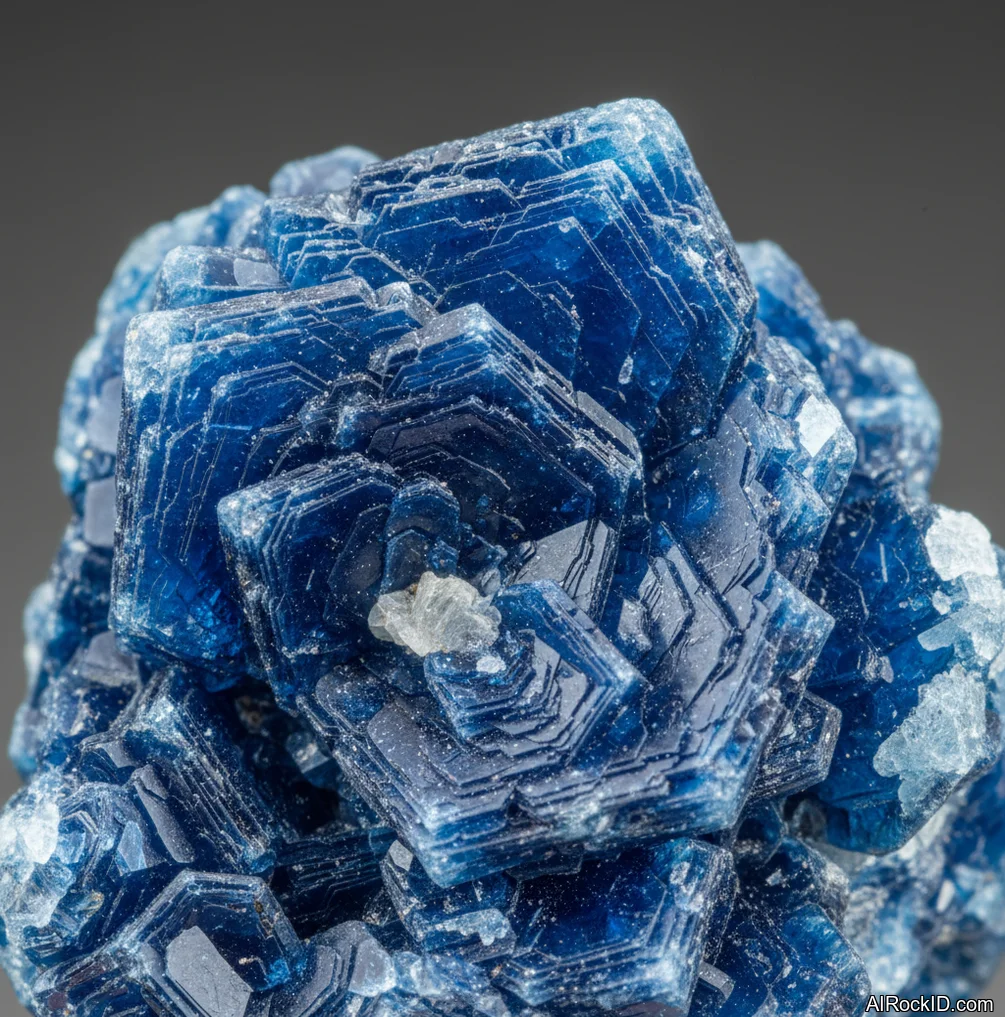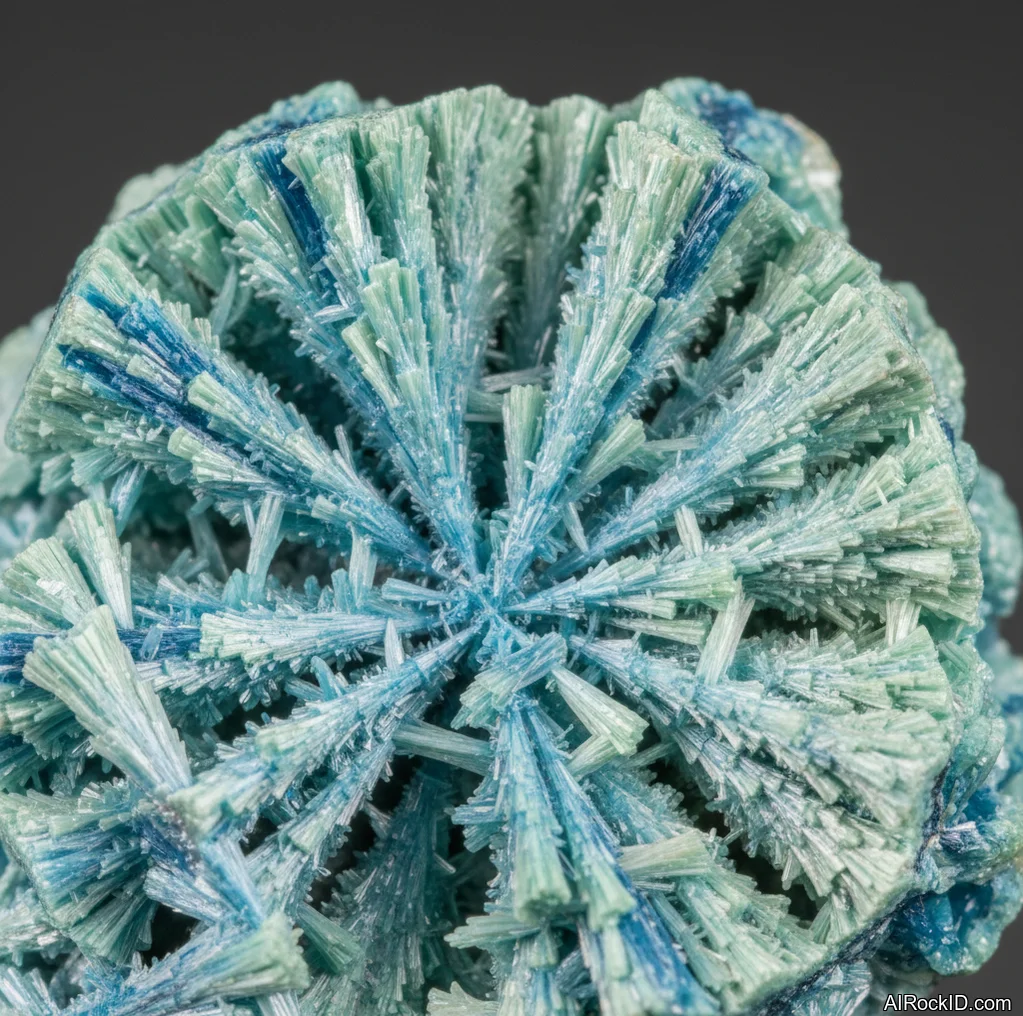
Bornite


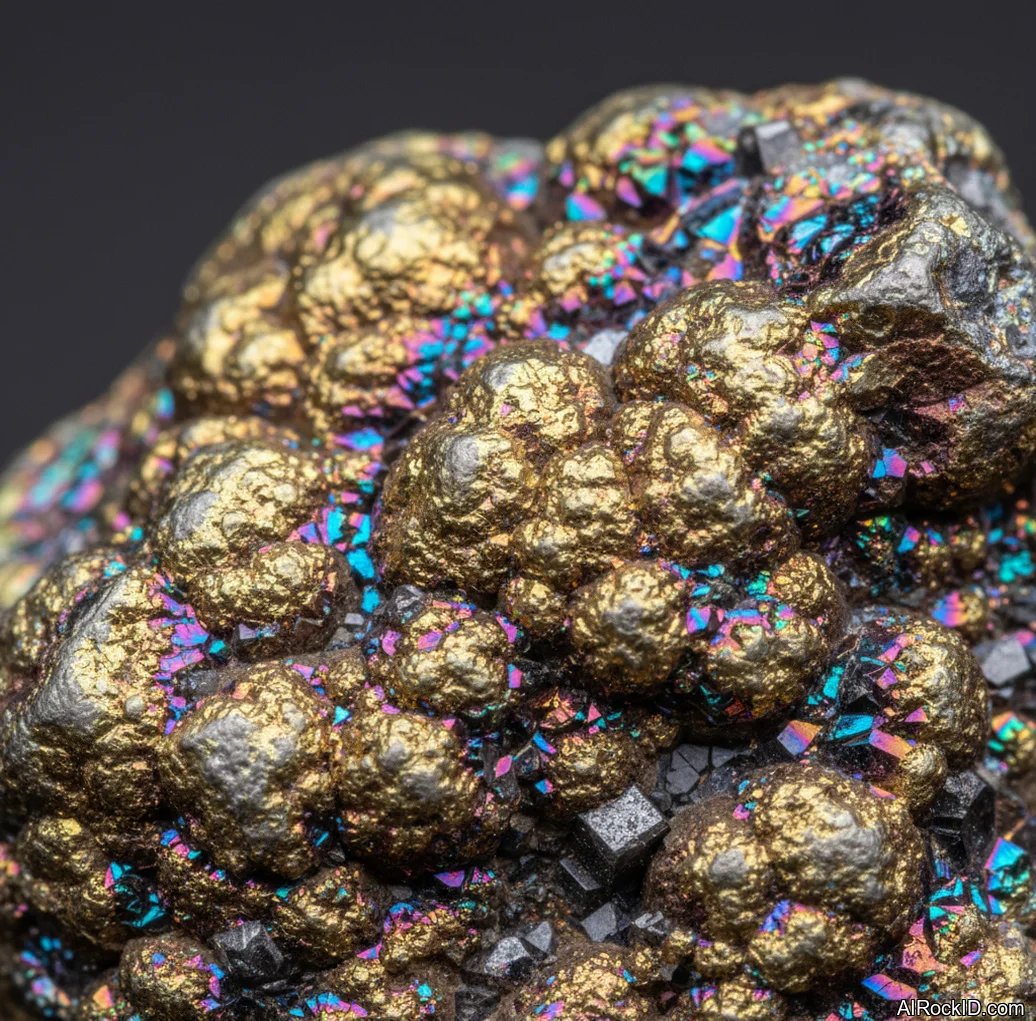
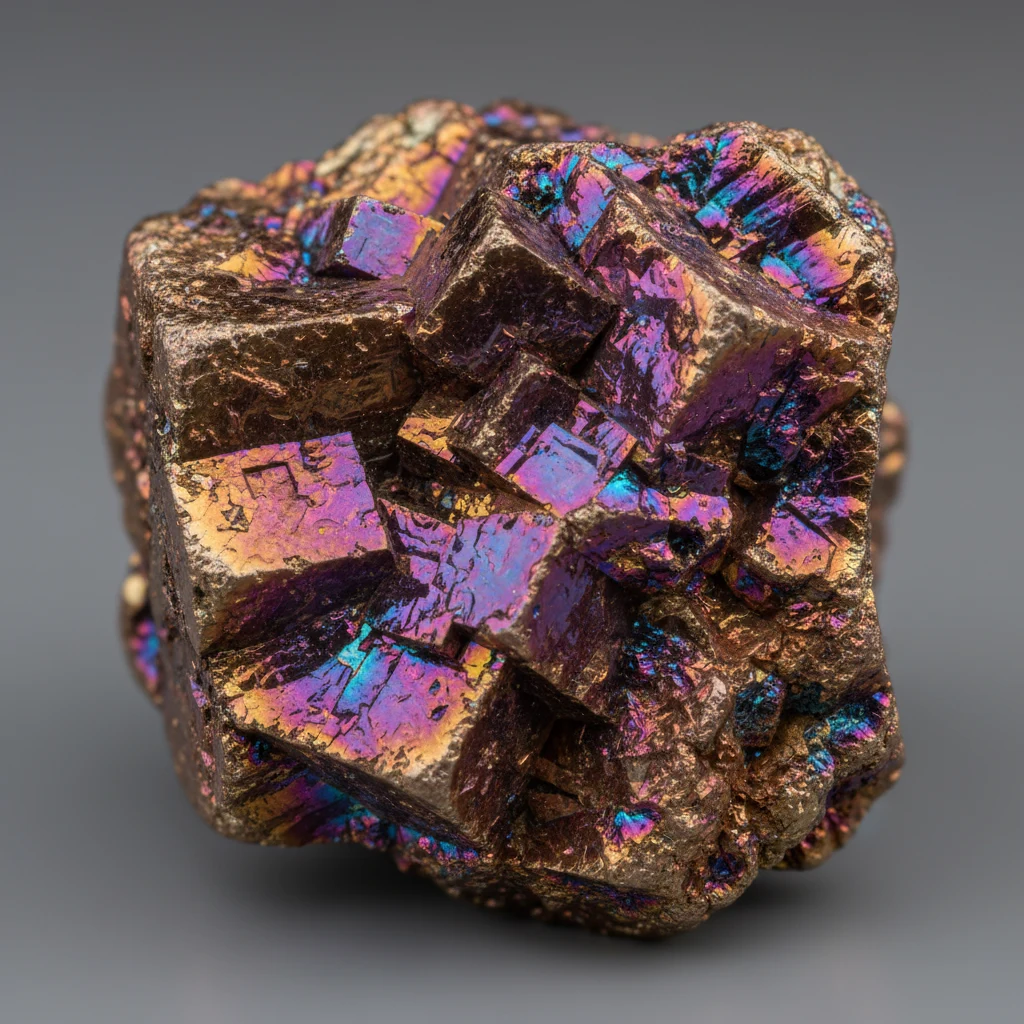
Quick answer: Bornite is a copper iron sulfide often recognized by its purple, blue, and gold iridescent tarnish, which gives it the nickname peacock ore. Natural bornite can be confused with treated chalcopyrite, so color alone is not enough for confident identification.
AI Rock ID can help compare a suspected bornite specimen against visual features such as metallic luster, tarnish colors, and crystal habit. RockIdentifier.io provides crystal identification support, but lab testing may be needed for high-value specimens or ore samples.
Good fit
- Collectors who want a colorful metallic sulfide specimen
- Beginners learning to compare copper minerals by luster and tarnish
- Display collections kept dry and handled gently
- People interested in the difference between bornite and peacock-treated chalcopyrite
Not a good fit
- Jewelry that will be worn often, because bornite is soft and can tarnish or rub
- Water-based crystal practices or soaking displays
- Children’s handling collections, due to softness and copper sulfide content
- Buyers who want permanent bright rainbow color without surface changes over time
Most commonly confused with
- Chalcopyrite: Chalcopyrite is commonly acid-treated and sold as peacock ore, while bornite is a distinct copper iron sulfide with a different composition.
- Pyrite: Pyrite is typically brass-yellow with cubic crystals and is harder than bornite.
- Covellite: Covellite is usually deep indigo-blue to purple and has a different copper sulfide chemistry.
- Chalcocite: Chalcocite is usually dark gray to black with metallic luster and lacks the same common peacock tarnish pattern.
Bornite vs. Common Lookalikes
| Specimen | Typical look | Key difference | Mohs hardness |
|---|---|---|---|
| Bornite | Bronze-brown fresh surface with purple-blue tarnish | Copper iron sulfide; relatively soft | 3-3.25 |
| Chalcopyrite | Brassy yellow, sometimes rainbow-treated | Often sold as peacock ore after treatment | 3.5-4 |
| Pyrite | Pale brass-yellow metallic cubes or grains | Harder and usually cubic | 6-6.5 |
| Covellite | Indigo-blue to violet metallic masses | More consistently blue-purple | 1.5-2 |
| Chalcocite | Dark lead-gray to black metallic masses | Darker and less rainbow-tarnished | 2.5-3 |
AI identification confidence
AI identification of bornite is moderate when photos clearly show metallic luster, tarnish colors, and the specimen’s surface texture. Confidence drops when a specimen is heavily weathered, artificially treated, photographed under colored light, or shown without scale and multiple angles.
When AI gets it wrong
- Rainbow-treated chalcopyrite may be labeled as bornite because both are sold under the name peacock ore.
- Strong lighting, flash, or saturation filters can exaggerate iridescent colors.
- Massive sulfide specimens without visible crystal form can look similar in photos.
- A single top-down image may hide streak, hardness, density, and fresh-surface color clues.
Final recommendation
Choose bornite from sellers who distinguish natural bornite from treated chalcopyrite and provide clear photos in neutral light. For serious mineral collecting, ask for locality, treatment disclosure, and whether the specimen has been coated or enhanced.
Natural Bornite vs. Peacock Ore Listings
The name peacock ore is used inconsistently in the mineral trade. Some listings use it for natural bornite, while many colorful specimens sold under that name are chalcopyrite that has been acid-treated to create bright rainbow colors. A reliable listing should state the actual mineral name and disclose any treatment.
Buying Checklist for Bornite
Look for photos taken in natural or neutral light, including close-ups and a full-specimen view. Ask whether the color is natural tarnish, artificial treatment, or a surface coating. Locality information, such as a mine, district, or country of origin, can improve traceability but does not guarantee identification.
Simple At-Home Clues
Bornite is soft enough to be scratched by harder common materials, but scratch testing can damage a specimen and should be avoided on display pieces. A fresh bornite surface is typically brownish to bronze before tarnishing, while the colorful surface is often a thin alteration layer. Do not use acid, soaking, or abrasive cleaning to test a specimen.
What Is Bornite?
Bornite is a copper iron sulfide mineral, Cu5FeS4, best known to collectors as peacock ore. In the hand it feels dense for its size, metallic, opaque, and softer than many common display minerals, with a Mohs hardness of 3-3.25. Fresh surfaces are usually bronze, copper-red, reddish brown, or brownish purple, but exposed faces can bloom into purple, blue, violet, magenta, and sometimes greenish iridescence.
For mineral collectors, bornite is both an ore specimen and a color specimen. It is an important copper ore in hydrothermal and porphyry copper deposits, yet its appeal often comes from the tarnish skin rather than crystal form. Massive or granular pieces are common; fine, well-crystallized specimens from classic localities are more desirable.
Origin & History
Bornite was named in 1845 by Wilhelm Karl von Haidinger for Ignaz von Born, an Austrian mineralogist and metallurgist. The collector nickname peacock ore comes from the bright iridescent tarnish that can flash across the surface like peacock feathers, especially in purple, blue, and magenta tones.
A practical warning belongs with the name: not every specimen sold as peacock ore is bornite. Some commercial rainbow pieces are acid-treated chalcopyrite, especially when the surface looks extremely bright, porous, or etched. For locality and species cross-checking, mindat.org is a useful reference when labels or dealer descriptions are uncertain.
Where Is Bornite Found?
Bornite is found worldwide in copper deposits, so it is considered common rather than rare. Important producing and collecting countries include the United States, Chile, Peru, Mexico, Canada, Namibia, Kazakhstan, Australia, Germany, the United Kingdom, Morocco, and South Africa.
Formation
Bornite forms mainly in copper-rich hydrothermal settings where hot, sulfur-rich fluids move copper and iron into fractures and altered host rocks. It may crystallize as a primary sulfide in high-temperature vein, skarn, and porphyry environments, giving the specimen its dense metallic feel and ore-mineral character.
Bornite can also form secondarily during supergene enrichment, when copper is remobilized and replaces earlier sulfides such as chalcopyrite. This is why bornite may occur with other copper sulfides and oxidized copper minerals in porphyry copper systems, hydrothermal veins, skarns, and sediment-hosted copper deposits.
How to Identify Bornite
Identify bornite by combining color, streak, hardness, density, and luster rather than relying on rainbow color alone. A good specimen is metallic and opaque, with bronze-brown to copper-red fresh areas and a grayish black to black streak. It feels heavy, with a specific gravity around 4.9-5.3 g/cm3, and it is soft enough to be scratched by a copper coin or knife.
Bornite is softer than chalcopyrite and lacks pyrite’s brassy yellow fresh color. Natural bornite may show attractive purple-blue tarnish, but intensely rainbow, etched-looking peacock ore is often treated chalcopyrite. Structurally, bornite is orthorhombic and commonly pseudocubic at higher temperatures; in hand specimens it is usually massive or granular rather than sharply crystallized.
Properties of Bornite
Physical Properties
| Crystal System | Orthorhombic; commonly pseudocubic at higher temperatures |
| Hardness (Mohs) | 3–3.25 (Soft) |
| Density | 4.9–5.3 g/cm³ |
| Luster | Metallic |
| Diaphaneity | Opaque |
| Fracture | Uneven to subconchoidal; brittle |
| Streak | Grayish black to black |
| Magnetism | Not magnetic to weakly magnetic in some specimens because of inclusions or alteration |
| Colors | bronze, copper-red, brown, purple, violet, blue, magenta, iridescent |
Chemical Properties
| Classification | Sulfide |
| Formula | Cu5FeS4 |
| Elements | Copper, Iron, Sulfur |
| Common Impurities | Silver, Cobalt, Nickel, Zinc, Arsenic |
Optical Properties
| Refractive Index | Not applicable; bornite is opaque |
| Birefringence | Not observable in transmitted light |
| Pleochroism | Not observable in transmitted light; reflected-light colors may vary with tarnish and polishing |
| Optical Character | Opaque metallic mineral; studied mainly by reflected-light microscopy |
Bornite Health & Safety
Normal handling is low risk, but dust from cutting, grinding, or tumbling may irritate the lungs and can contain copper, sulfur compounds, and trace impurities. Water, acids, salt, and humidity may promote oxidation or copper leaching.
Bornite Value & Price
Price Range
Rough/Tumbled: Small massive or tarnished specimens commonly sell for about $3–$25; larger display pieces or specimens with attractive natural iridescence may range from $25–$150; well-crystallized bornite specimens from classic localities can be much higher.
Cut/Polished:
Value depends on natural color, specimen size, association with other copper minerals, locality, crystal quality, and whether the iridescence is natural. Treated peacock-ore material is usually less valuable to mineral collectors than verified natural bornite.
Durability
Low to moderate — Scratch resistance: Bornite is soft and can be scratched by a copper coin or knife; it should be protected from abrasion., Toughness: Brittle, with uneven fracture; edges and granular masses can chip or crumble.
Bornite is reasonably stable as a dry display specimen but can tarnish, oxidize, or develop alteration products in humid, acidic, or salty conditions. Avoid prolonged water exposure and chemical cleaning.
How to Care for Bornite
Use & Storage
Store bornite dry, away from harder minerals that can scratch it. Keep in a padded box, display case, or labeled specimen tray with stable humidity.
Cleaning
Clean gently with a soft dry brush or microfiber cloth. If necessary, use a barely damp cloth and dry immediately. Avoid acids, ultrasonic cleaners, steam cleaners, saltwater, vinegar, and harsh detergents.
Cleanse & Charge
For spiritual-style cleansing, use dry methods such as smoke, sound, moonlight, or placing near clear quartz. Avoid water-based cleansing because bornite is a copper sulfide and may tarnish or oxidize.
Placement
Display in a dry indoor location away from direct moisture, kitchen fumes, and strong sunlight. A closed cabinet helps slow tarnish and prevents dust buildup.
Caution
Do not confuse natural bornite with acid-treated chalcopyrite sold as peacock ore. Do not tumble with harder stones, and do not use bornite in gem water or mineral elixirs.
Works Well With
Bornite Meaning & Healing Properties
In modern crystal-healing traditions, bornite is associated with transformation, joy, confidence, creativity, optimism, and energetic renewal. These meanings are cultural and spiritual interpretations, not scientifically verified medical effects, so bornite should be treated as a symbolic support rather than a health treatment.
Practitioners often link bornite with the Crown, Third Eye, and Solar Plexus chakras, and with the zodiac signs Sagittarius, Leo, and Scorpio. Because it is a soft copper sulfide, use it dry: place it on a cloth, altar, or display shelf, and avoid water, saltwater, acids, gem elixirs, or prolonged skin-and-moisture contact.
Identify Bornite from a photo
Compare Bornite traits, care tips, value clues, and common lookalikes with a clear photo.
Common mistakes
- Assuming every rainbow metallic specimen sold as peacock ore is bornite
- Judging bornite only by bright color instead of luster, hardness, fresh-surface color, and seller disclosure
- Using water, vinegar, or harsh cleaners on a soft sulfide specimen
- Buying dyed, coated, or treated material without asking how the color was produced
- Expecting iridescent tarnish to remain unchanged under handling, moisture, or abrasion