Covellite


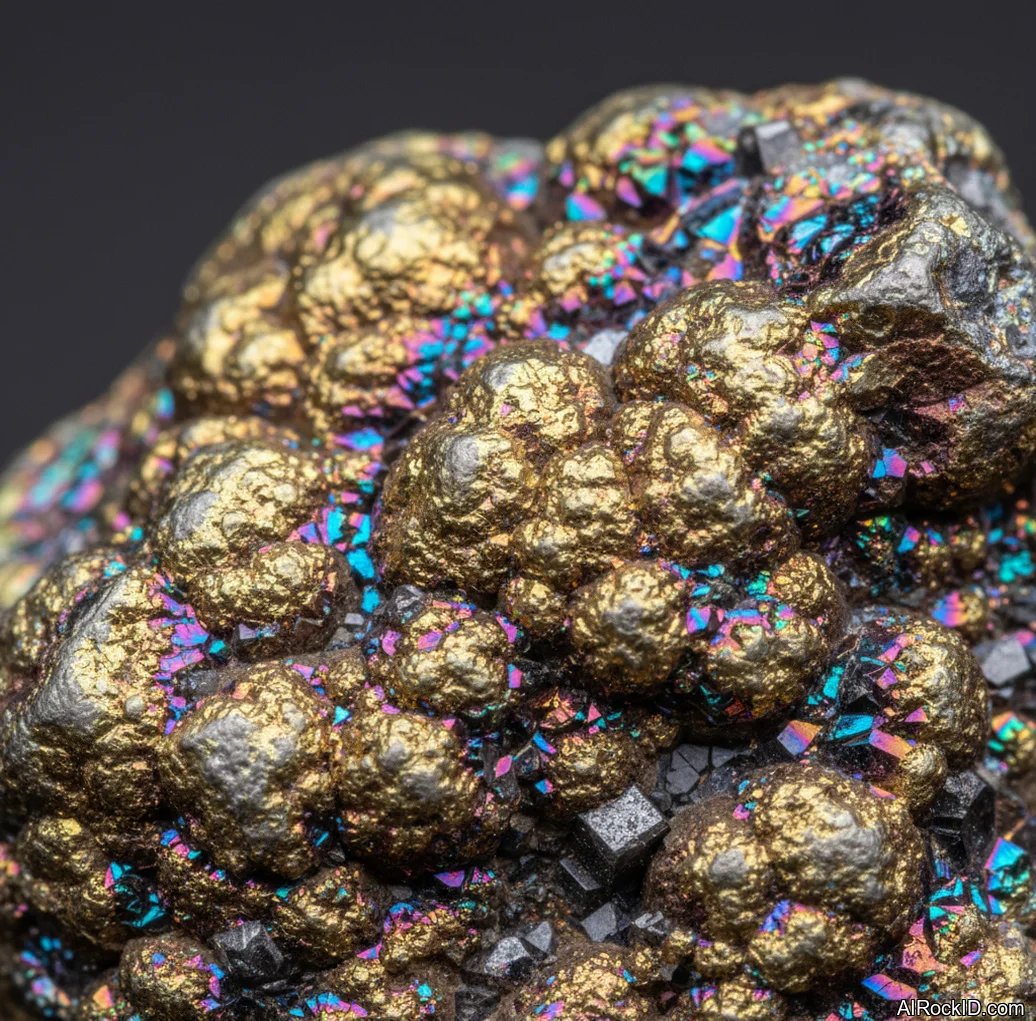
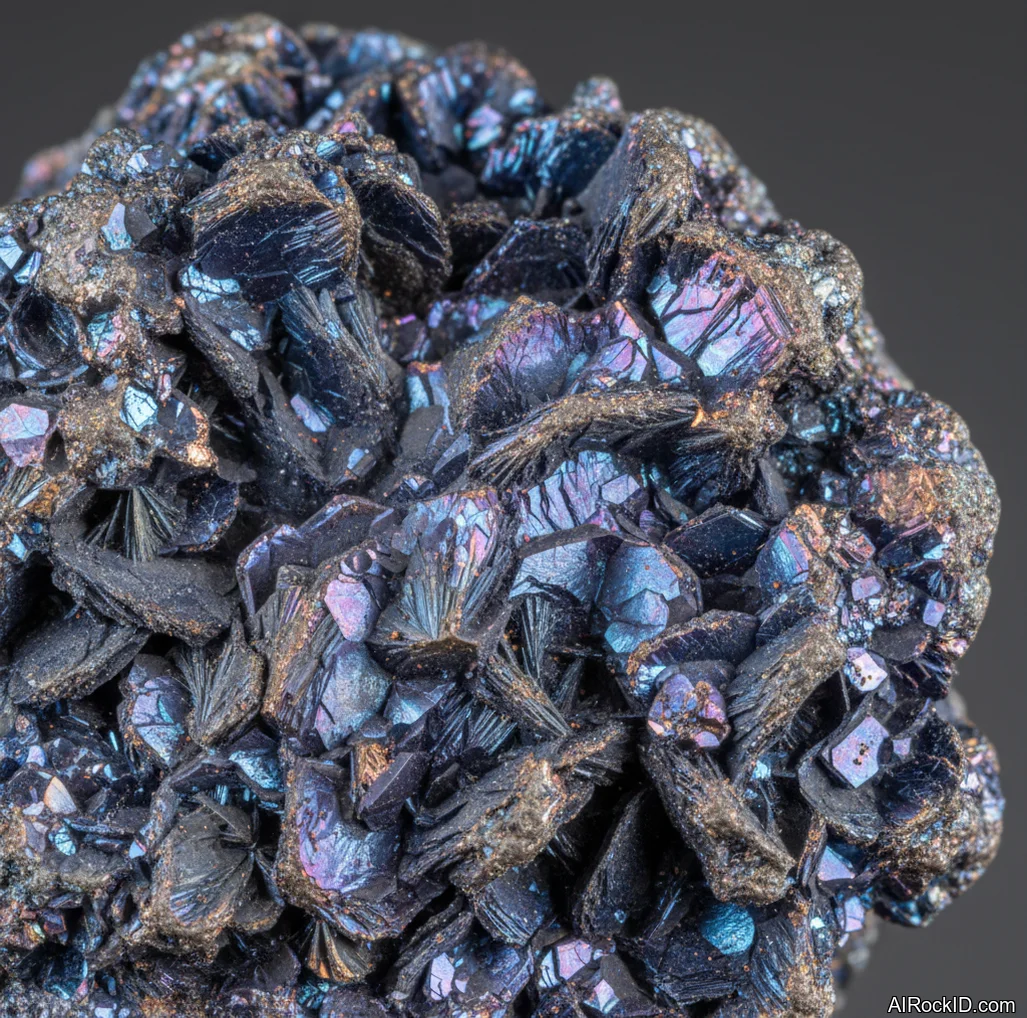
Quick answer: Covellite is a soft, metallic copper sulfide best known for its deep indigo-blue to violet-blue color and iridescent tarnish. It can resemble several other copper minerals, so streak, hardness, habit, and association with copper sulfide ores are useful for identification.
AI Rock ID can help compare a Covellite photo against visually similar copper minerals by evaluating color, luster, surface texture, and context. RockIdentifier.io can provide a likely identification, but soft metallic sulfides often need a streak test, hardness check, or expert confirmation for higher confidence.
Good fit
- Collectors who want a distinctive metallic blue copper sulfide specimen
- People studying copper ore minerals and secondary enrichment zones
- Display collections where fragile, soft minerals can be protected
- Specimen owners who can avoid abrasion, moisture, and frequent handling
Not a good fit
- Rings, bracelets, or other jewelry exposed to wear
- Tumbled-stone use, because Covellite is very soft and prone to damage
- Wet display settings or repeated washing
- Unsupervised handling by children due to fragility and copper sulfide dust concerns
Most commonly confused with
- Bornite: Bornite commonly shows rainbow tarnish and a bronze-brown fresh surface, while Covellite is typically deep blue to violet-blue.
- Chalcopyrite: Chalcopyrite is brassy yellow on fresh surfaces and harder than Covellite, even when tarnished.
- Azurite: Azurite is blue but nonmetallic to vitreous and usually forms crystals, nodules, or earthy masses rather than metallic plates.
- Chalcocite: Chalcocite is usually dark gray to black with metallic luster, not the strong indigo-blue typical of Covellite.
Covellite vs. Similar Copper Minerals
| Mineral | Typical Look | Helpful Difference | Mohs Hardness |
|---|---|---|---|
| Covellite | Indigo-blue to violet metallic, often iridescent | Very soft and blue-black to lead-gray streak | 1.5–2 |
| Bornite | Bronze-brown fresh surface with purple rainbow tarnish | Fresh chips are not deep blue | 3–3.25 |
| Chalcopyrite | Brassy yellow metallic, may tarnish colorful | Yellow fresh color and harder surface | 3.5–4 |
| Azurite | Rich blue, vitreous to earthy | Nonmetallic luster and blue streak | 3.5–4 |
| Chalcocite | Dark gray to black metallic | Less vivid blue and usually denser-looking masses | 2.5–3 |
AI identification confidence
AI identification of Covellite is usually moderate when photos show a fresh metallic blue surface, platy habit, and copper-ore matrix. Confidence drops when the specimen is heavily tarnished, poorly lit, powdered, or mixed with other sulfides.
When AI gets it wrong
- Rainbow-tarnished Bornite may be labeled as Covellite if only surface colors are visible.
- Tarnished Chalcopyrite can look blue or purple in photos despite having a brassy yellow fresh surface.
- Azurite may be confused with Covellite when luster and texture are not clear.
- Mixed copper sulfide specimens can contain more than one similar-looking mineral in the same piece.
Final recommendation
Choose Covellite as a protected display or study specimen rather than a handling stone. For buying, prioritize labeled locality information, clear photos in neutral lighting, and sellers who disclose coatings, stabilization, or mixed-mineral associations.
How to Check a Covellite Specimen
A practical check starts with color, luster, and softness: Covellite should show a metallic indigo-blue to violet-blue appearance and can be scratched easily. A streak test may leave a lead-gray to blackish mark, but streak testing can damage the specimen. If the piece is valuable or fragile, use visual comparison and expert review instead of destructive tests.
Buying Authentic Covellite
Authentic Covellite specimens are often sold as small metallic masses, platy crystals, or pieces on matrix rather than durable polished stones. Be cautious with unusually bright, uniform blue pieces, heavily oiled surfaces, or listings that do not show the matrix or multiple angles. Locality information from known copper-mining regions can support authenticity but does not prove it by itself.
Photography Tips for Identification
Photograph Covellite in indirect natural light or diffused white light to reduce false rainbow glare. Include close-up and full-specimen images, plus any matrix or associated minerals. A scale object and one photo at a slight angle can help show metallic luster and platy texture.
What Is Covellite?
Covellite is a copper sulfide mineral with the formula CuS, and it usually shows that indigo to peacock-blue metallic sheen.
Pick up a piece and the weight hits you first. It feels weirdly heavy for something that can look thin and flaky, and it’s got that cold, “yep, this is metal” feel you don’t get from glassy minerals. The good pieces will throw blue and violet back at you when you tip them under a desk lamp, like oil-on-water colors, only tighter and more steely.
Most covellite you’ll see for sale isn’t some perfect little crystal, either. It’s more like crusty coatings, chunky massive bits, or bladed aggregates sitting on matrix with pyrite, chalcopyrite, bornite, or chalcocite. And it’s soft, honestly. Treat it like quartz and you’ll end up with blue dust on your fingers and a specimen that looks kind of wrecked (ask me how I know).
Origin & History
If you’ve ever thought “covellite” sounds like somebody’s last name, that’s because it is. It was described in 1832 by François Sulpice Beudant, and he named it after Niccolò Covelli, an Italian mineral collector and researcher.
Thing is, older books and some dealers still call it “covelline.” And you’ll hear “copper indigo” too, usually when someone’s pointing at that deep, inky blue color (the kind that can flash a little when you tilt a piece under a desk lamp). In ore geology it matters because it can show up in copper deposits as conditions change, so it’s one of those minerals that tells you what the deposit has been through.
Where Is Covellite Found?
It turns up in copper mining districts worldwide, especially in oxidized and secondary enrichment zones where sulfides get reworked near the surface.
Formation
Covellite kind of looks like it ought to be one of those primary minerals that grew large and showy, but that’s not how it usually happens. Most of it shows up later. You’ll run into it a lot in the secondary enrichment zone of copper deposits, where fluids moving through the rock and shifting chemistry end up converting older sulfides. And instead of big crystals, it often turns up replacing chalcopyrite or chalcocite, or sitting on fracture surfaces as those paper-thin, metallic blue films that catch the light when you tilt the piece.
If you’ve got a mixed sulfide specimen in hand, you can sometimes “read” what happened just by staring at it long enough. The brassy chalcopyrite or pyrite tends to be the earlier stuff, then the blue covellite creeps along a crack or rims individual grains like a skin. And every so often there’s a bit of bornite hanging around too, throwing in that extra rainbow flash. But it won’t stay perfect forever, will it? Leave it in a humid display case and that bright surface can dull with time.
How to Identify Covellite
Color: Deep indigo blue is the classic look, often with violet or greenish iridescence on fresh surfaces. Some pieces are more steel-gray in shadow until you hit them with angled light.
Luster: Metallic luster, often with a slick, reflective sheen.
Pick up the specimen and tilt it slowly under a single light source. Real covellite does that “blue flash” across cleavagey, platey surfaces, while dyed or coated material tends to look flat and uniform. If you scratch it with a copper coin or a fingernail edge on a thin edge, it’ll mark easier than you expect because it’s so soft. And if the seller calls it “blue bornite,” ask for a close photo. Bornite usually has more rainbow and less solid indigo.
Common Look-Alikes
Covellite is sometimes confused with these materials:
- Bornite (Peacock Ore)
- Chalcopyrite
- Indigo-dyed quartz
- Blue metallic glass
- Azurite
- Enargite
Market Cautions & Treatments
When AI Can Get This Wrong
AI models often mix up covellite with bornite and chalcopyrite in photos since all throw oil-slick blues and purples. Bornite tends to look more rainbow and less indigo, but that's hard to catch in flat images. The real test is the weight and the flaky, micaceous texture—rub a thumb across and real covellite feels slippery, not gritty or chalky.
Properties of Covellite
Physical Properties
| Crystal System | Hexagonal |
| Hardness (Mohs) | 1.5-2 (Very Soft (1-2)) |
| Density | 4.6-4.8 g/cm3 |
| Luster | Metallic |
| Diaphaneity | Opaque |
| Fracture | Uneven |
| Streak | lead-gray |
| Magnetism | Non-magnetic |
| Colors | indigo blue, blue-violet, steel gray, purple, iridescent blue |
Chemical Properties
| Classification | Sulfides |
| Formula | CuS |
| Elements | Cu, S |
| Common Impurities | Fe, Ag |
Optical Properties
| Refractive Index | 2.2-2.5 |
| Birefringence | None |
| Pleochroism | Strong |
| Optical Character | Uniaxial |
Covellite Health & Safety
Handling it is usually no big deal. But don’t grind it or sand it (that fine dust gets everywhere, even under your nails), and skip anything that kicks up dust in general. And whatever you do, don’t leave it soaking in water for long stretches.
Safety Tips
Wash your hands right after you handle it. And don’t let it get anywhere near drinking water or an aquarium. If you absolutely have to work on a specimen, do it with good ventilation and wear a properly fitted respirator (not a loose dust mask).
Covellite Value & Price
Price Range
Rough/Tumbled: $10 - $150 per specimen
Prices jump when the indigo is deep, the metallic faces look clean and slick (the kind that catch a hard flash of light when you tilt them), and there’s something good-looking with it, like pyrite or quartz sitting on matrix. But if it’s crumbly, kind of dull, or buried under a heavy coating, it usually stays cheap since it doesn’t show well in a case and it sheds dust and flakes when you handle it.
Durability
Fragile — Scratch resistance: Poor, Toughness: Poor
Covellite is soft and can tarnish or dull if handled a lot or stored in humid conditions.
How to Care for Covellite
Use & Storage
Store it in a box or a perky case compartment so it doesn’t rub against harder minerals. I keep my covellite away from quartz points because one little slide can leave a permanent scrape.
Cleaning
1) Use a soft, dry brush to lift loose dust. 2) If needed, wipe gently with a barely damp microfiber cloth and dry right away. 3) Skip ultrasonic cleaners, salt, and long soaks.
Cleanse & Charge
For a metaphysical reset, use smoke, sound, or a dry bed of clean quartz chips. I wouldn’t use water for cleansing on this one, even if the piece looks solid.
Placement
A shaded shelf is better than a sunny windowsill since the surface can dull and fingerprints show fast. If you want the blue to pop, aim a single warm light from the side and let it catch the angles.
Caution
Soft and kind of flaky. So don’t toss it around, don’t cinch it up in wire, and definitely don’t coat it in oils or those “crystal sprays” that can dry tacky and leave stains on metallic surfaces.
Works Well With
Covellite Meaning & Healing Properties
Next to softer, earthy stones, covellite feels sharp in your hand. Kind of electrical, too. That’s just how it hits me, anyway. When I’m holding a good indigo piece, my focus snaps in fast, like I’ve turned down the room noise and cranked up whatever problem I’m trying to think through.
But it’s not a cuddly stone. Look, if you want calm in that cozy, sink-into-the-couch way, covellite can feel a little too bright, especially during meditation. I’ve had nights where I set it on the bedside table and then lay there feeling mentally wired, eyes open in the dark, brain doing laps. So now I use it earlier in the day, and later on I swap it out for something gentler.
On the shop side, people usually connect it with intuition, inner work, honest self-checks, that sort of thing. Keep it in the personal-growth lane, not the medical lane. And if you like using minerals as symbols and anchors for habits, covellite fits that focused, no-nonsense headspace really well.
Common mistakes
- Identifying every blue-purple metallic tarnish as Covellite without checking the fresh surface.
- Assuming a polished or coated blue stone is natural Covellite without seller documentation.
- Using water or abrasive cleaning methods on a soft Covellite specimen.
- Ignoring associated minerals, which can reveal whether the specimen is a mixed copper sulfide ore.
- Relying on color alone when Bornite, Chalcopyrite, and Chalcocite can show similar tarnish colors.
Identify Covellite from a photo
Compare Covellite traits, care tips, value clues, and common lookalikes with a clear photo.