Aurichalcite


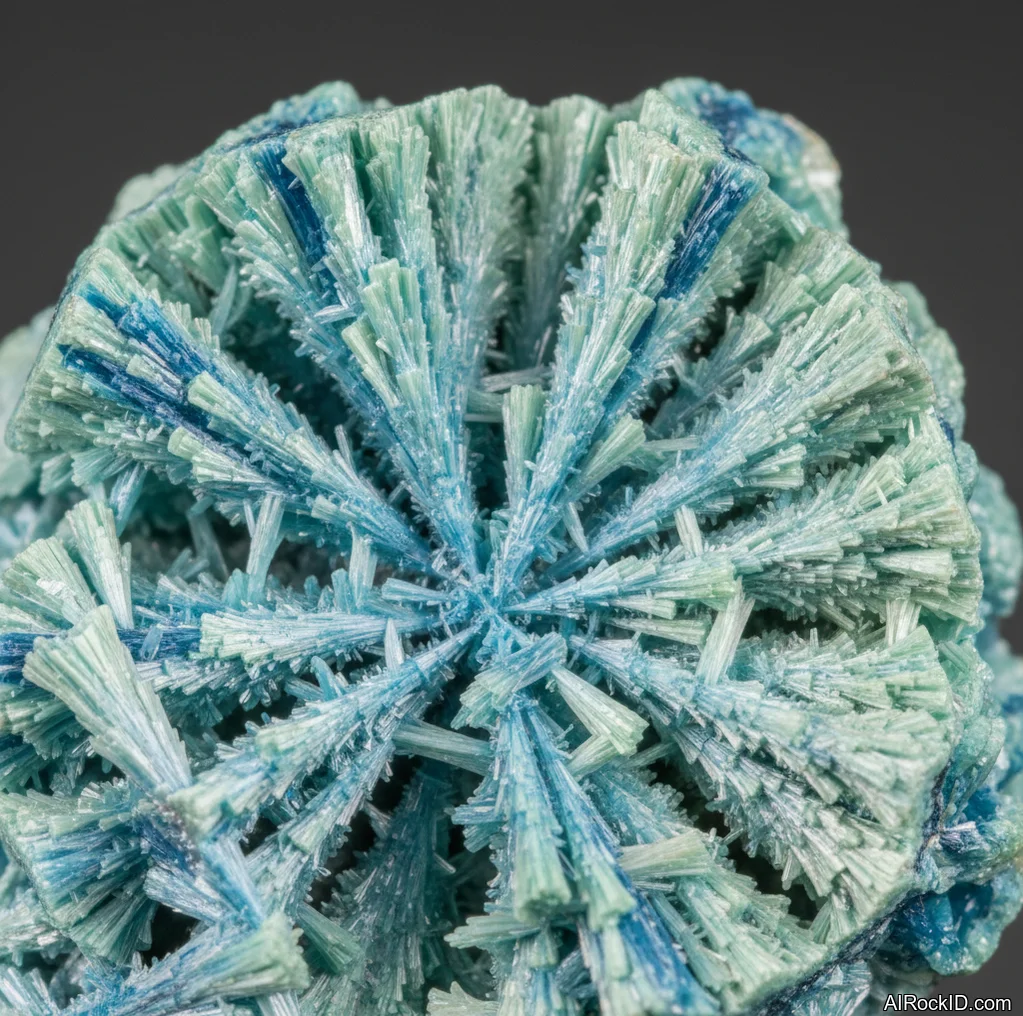
Quick answer: Aurichalcite is best recognized by its pale sky-blue to blue-green color, silky to pearly luster, and delicate acicular or crusty habit. Because it is very soft and often powdery, it is usually collected as a mineral specimen rather than used in jewelry.
AI Rock ID can help compare aurichalcite against similar blue-green secondary copper minerals using color, habit, and surface texture from a photo. RockIdentifier.io provides visual identification support, but fragile or mixed ore specimens may still require hardness checks, streak observation, or expert confirmation.
Good fit
- Collectors who enjoy delicate secondary copper-zinc minerals
- Display specimens kept in a protected case
- People comparing pale blue-green ore-zone minerals
- Educational collections focused on oxidation-zone mineralogy
Not a good fit
- Rings, bracelets, or daily-wear jewelry
- Tumbled stones or pocket stones
- Specimens that will be handled often
- Wet cleaning, ultrasonic cleaning, or soaking
Most commonly confused with
- Chrysocolla: Chrysocolla is commonly more massive, waxy to earthy, and lacks aurichalcite’s fine needle-like sprays.
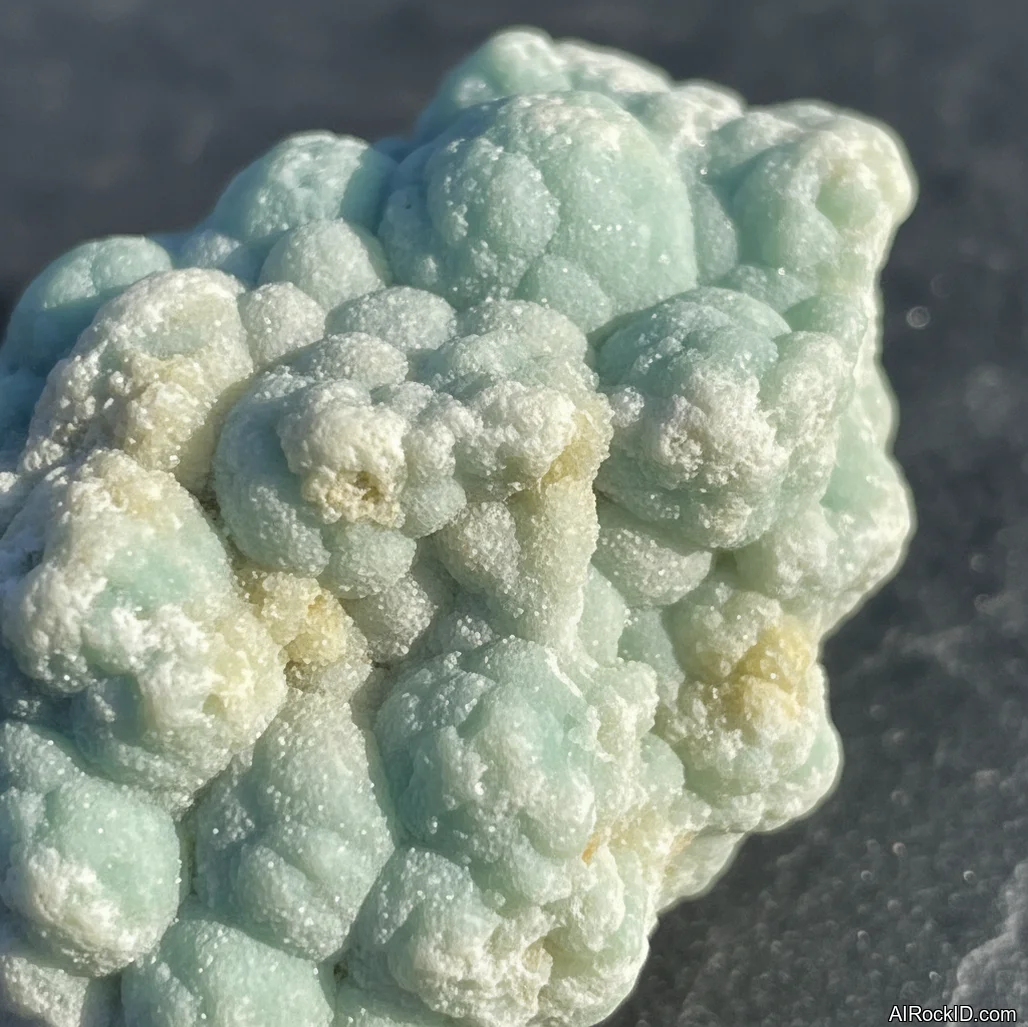
- Hemimorphite: Hemimorphite can be blue-green but is generally harder and may form glassier crystals or botryoidal crusts.
- Smithsonite: Smithsonite is usually harder and often appears as botryoidal, crystalline, or massive material rather than soft fibrous crusts.
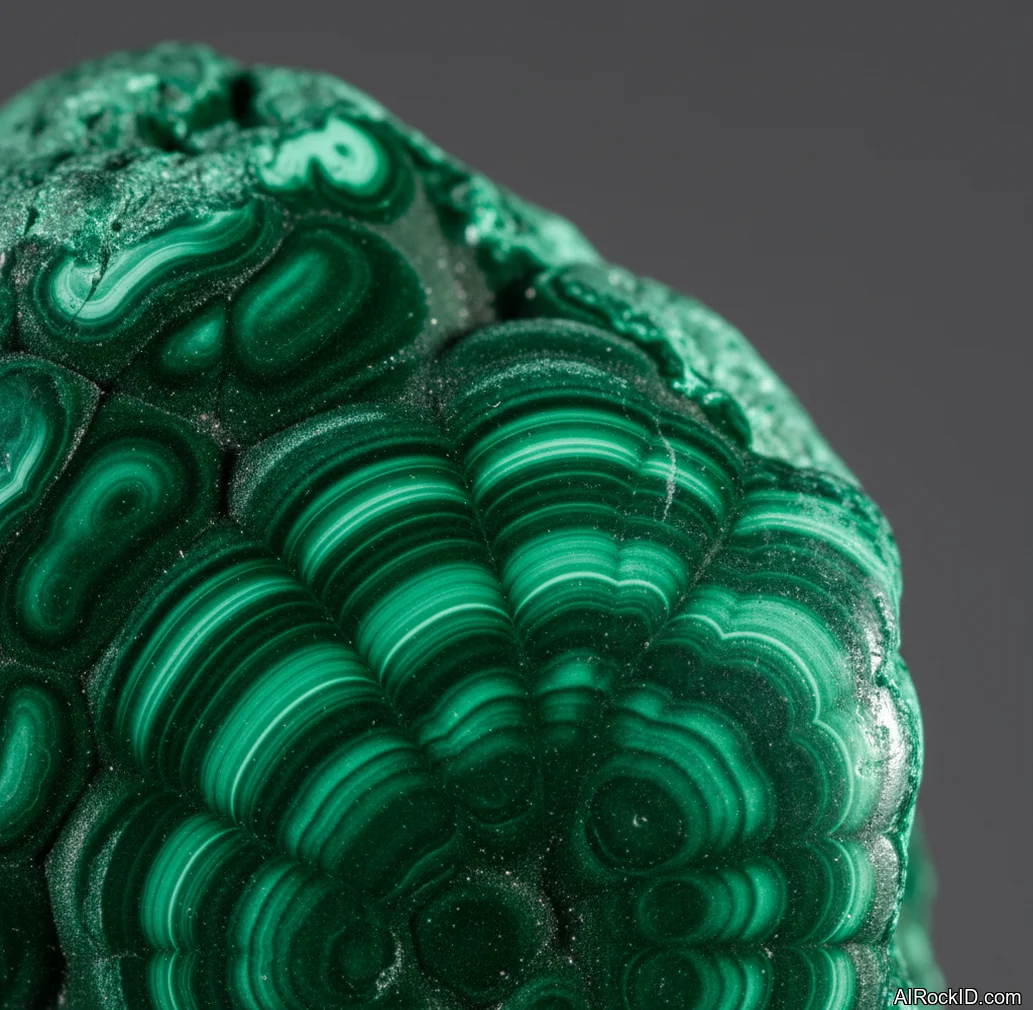
- Malachite: Malachite is typically richer green, denser-looking, and commonly shows banding or botryoidal forms.
Aurichalcite vs. Similar Blue-Green Minerals
| Mineral | Typical look | Key difference | Common clue |
|---|---|---|---|
| Aurichalcite | Pale blue to blue-green needles or crusts | Very soft and delicate | Silky, powdery, or feathery surface |
| Chrysocolla | Blue-green massive or earthy coatings | Usually not needle-like | Waxy, dull, or uneven texture |
| Hemimorphite | Blue, white, or greenish crusts and crystals | Harder and often glassier | May show botryoidal or crystalline surfaces |
| Smithsonite | Pastel botryoidal, crystalline, or massive forms | Harder zinc carbonate | Rounded or sugary surfaces |
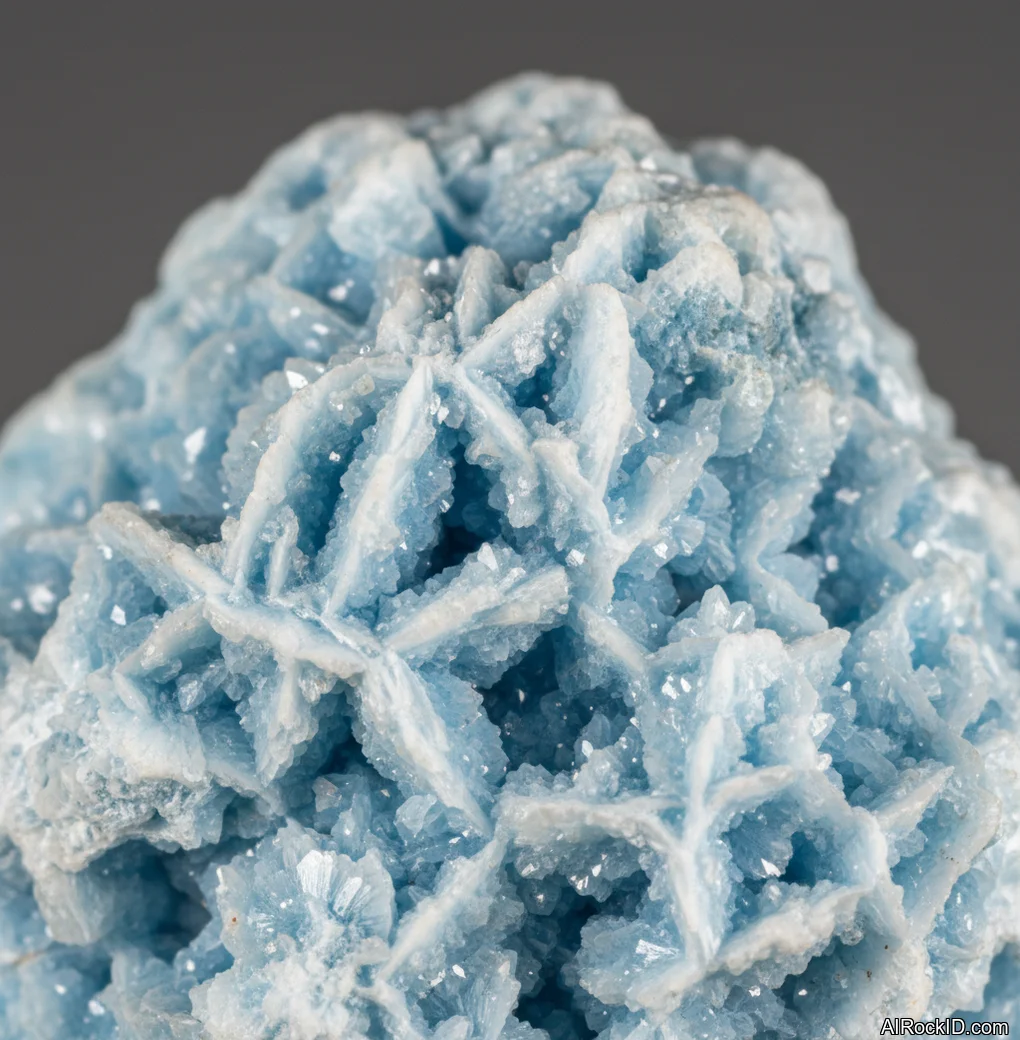
| Rosasite | Blue-green fibrous crusts | Often darker and more velvety | Common in copper-zinc oxidation zones |
AI identification confidence
AI photo identification for aurichalcite is moderate when the specimen shows pale blue-green acicular sprays, crusts, or association with oxidized ore minerals. Confidence is lower for massive coatings, poor lighting, or specimens mixed with chrysocolla, rosasite, hemimorphite, malachite, or smithsonite.
When AI gets it wrong
- The photo shows only color, not crystal habit or texture.
- The specimen is a mixed ore sample with several blue-green minerals present.
- Lighting makes pale blue-green minerals appear more saturated or darker.
- The surface is powdery, altered, or coated by another secondary mineral.
Final recommendation
Choose aurichalcite when you want a display mineral with delicate blue-green sprays or crusts rather than a durable handling stone. For authenticity, prioritize specimens with clear locality data, natural matrix, and a habit consistent with soft secondary copper-zinc carbonates.
How to Buy Authentic Aurichalcite
Authentic aurichalcite is usually sold as a fragile mineral specimen on matrix, not as polished beads or carvings. Look for pale blue to blue-green fibrous crusts, needles, or tufts with a natural association to oxidized copper-zinc ore minerals. Reliable listings should include a locality, specimen size, and clear photos that show texture rather than only color.
Photo Tips for Identifying Aurichalcite
Use bright, indirect light and take close-up photos from several angles to show the fine crystal habit. Include a scale object, such as a ruler or coin, because aurichalcite crystals are often very small. Avoid wetting the specimen for photos, since moisture can damage fragile crusts and make colors appear misleading.
Aurichalcite in Mixed Mineral Specimens
Aurichalcite commonly occurs with other secondary minerals in oxidized copper-zinc deposits, so one specimen may contain several visually similar phases. Blue-green coatings on the same matrix are not always the same mineral. Labels from older collections may identify the main visible mineral but not every associated mineral present.
What Is Aurichalcite?
Aurichalcite is a hydrous copper-zinc carbonate mineral that usually shows up as pale blue to blue-green needle sprays or thin crusts, most often in the oxidized zones of ore deposits.
Pick up a decent cabinet piece and the first thing you notice is how airy it looks, like somebody dragged mint-blue fuzz across the rock and it just stuck. And then you get a little tense, because yeah, it really can be that fragile. I’ve handled aurichalcite that felt almost like a soft toothbrush on the matrix, with needles so fine a sloppy fingertip will bend them or flat-out wipe them off.
At first glance, people mix it up with chrysocolla, or even smithsonite. But aurichalcite has that fibrous, silky look when you tilt it under a lamp and the light skates across the surface. The color usually lives in the “robin’s egg to seafoam” zone, sometimes with a faint green tinge, sometimes more of a chalky blue (depends on the piece, doesn’t it?). When it’s good, it’s really good. But a lot of specimens are more crust than crystal, and that’s just how the species often presents.
Origin & History
In 1839, aurichalcite was formally described by the Swiss mineralogist August Breithaupt. He was working at a time when people were sorting out a lot of secondary copper minerals, basically by staring hard at them and separating one from another through careful observation.
The name comes from “aurichalcum,” an old word for brass. That tracks, because aurichalcite is essentially copper plus zinc in carbonate form. And yeah, the name’s a clever nod, but it also trips people up with the mythical “orichalcum” stuff you’ll see online. In mineralogy, aurichalcite is an actual mineral species, and it turns up in places where copper and zinc weather together.
Where Is Aurichalcite Found?
It turns up in oxidized copper-zinc deposits worldwide, especially classic desert and mine localities where carbonate minerals have room to grow on limonite and gossan.
Formation
Most aurichalcite shows up late, up in the oxidized zone above sulfide ore. Think of older zinc and copper minerals rotting away, groundwater slipping through with carbonate in it, and then, once the chemistry finally lines up, these tiny needle crystals pop out on open rock faces.
Look, if you’ve got a decent specimen in hand, you can practically read what happened. There’s that rusty brown limonite and goethite staining underneath, little vugs and pinholes where air and water clearly moved through, and then the aurichalcite sort of powders over everything in that soft blue-green (almost like a thin frost). But it’s finicky. Too much copper without enough zinc and you slide into malachite or azurite. Flip it around: if zinc runs the show, you’re looking at smithsonite or hydrozincite instead, and yeah, sometimes those sit right next to aurichalcite on the same matrix. Who hasn’t seen that odd mix on one rock?
How to Identify Aurichalcite
Color: Usually pale blue, blue-green, or greenish blue, often in delicate fibrous coatings or sprays. Color can look washed-out in dim light and pop more under a bright neutral lamp.
Luster: Silky to pearly on fibrous aggregates.
Pick up the matrix and tilt it slowly under a single overhead light: aurichalcite gives a soft, silky shimmer that looks like brushed fabric. The real test is touch, gently, because it feels like fine fibers and it can crumble if you rub it. If you scratch it with a copper penny, it’ll usually mark pretty easily, since it’s a soft carbonate.
Common Look-Alikes
Aurichalcite is sometimes confused with these materials:
- Chrysocolla (especially the powdery, pale blue crusty stuff on limonite)
- Rosasite (blue-green rosettes and fibrous crusts; often sold side-by-side with aurichalcite)
- Hemimorphite (sky-blue drusy or tufted sprays on matrix, can read the same in photos)
- Smithsonite (blue-green botryoidal coatings; sometimes mislabeled as aurichalcite when it’s just zinc carbonate)
- Dyed howlite or magnesite sold as “turquoise” (color soaks into cracks and drill holes, then gets compared to aurichalcite by color alone)
- Blue-green slag glass or resin “mineral on matrix” fakes (too glossy, too uniform, and usually heavier than the airy look suggests)
Market Cautions & Treatments
When AI Can Get This Wrong
At first glance in photos, AI mixes aurichalcite up with rosasite and hemimorphite because all three can look like pale blue-green tufts on brown limonite. The real test is tactile and mechanical: aurichalcite feels like a soft toothbrush on matrix and you can crush needles with a fingernail, but hemimorphite is harder and usually looks more glassy drusy than fuzzy. A quick loupe check helps too, since aurichalcite tends to read as fine needle sprays and thin crusts, not botryoidal bubbles like smithsonite.
Properties of Aurichalcite
Physical Properties
| Crystal System | Trigonal |
| Hardness (Mohs) | 1-2 (Very Soft (1-2)) |
| Density | 3.2-3.6 g/cm3 |
| Luster | Silky |
| Diaphaneity | Translucent |
| Fracture | Uneven |
| Streak | Light blue to greenish blue |
| Magnetism | Non-magnetic |
| Colors | Pale blue, Blue-green, Greenish blue, Turquoise-blue, Whitish blue-green |
Chemical Properties
| Classification | Carbonates |
| Formula | (Zn,Cu)5(CO3)2(OH)6 |
| Elements | Zn, Cu, C, O, H |
| Common Impurities | Fe, Mn, Ca, Mg |
Optical Properties
| Refractive Index | 1.67-1.74 |
| Birefringence | 0.06 |
| Pleochroism | Moderate |
| Optical Character | Uniaxial |
Aurichalcite Health & Safety
Normal handling’s fine. Just don’t grind it, sand it, or hit it with a brush in a way that kicks up that super-fine carbonate dust, because that’s the stuff you can end up breathing in (and you’ll feel it in your throat). Treat it like any other soft secondary copper mineral. And keep it out of food areas, same as you would with anything you wouldn’t want near a cutting board.
Safety Tips
If you’re going to trim matrix, put on a respirator and keep the work wet so the dust doesn’t get into the air. And after a show day, wash your hands, because those blue-green minerals really do end up on your fingertips (you’ll see the color in the creases).
Aurichalcite Value & Price
Price Range
Rough/Tumbled: $15 - $250 per specimen
Prices swing all over the place depending on how packed the needles are and whether the piece was tucked into a pocket or just sitting out in the open on a crumbly limonite face. Thing is, big, unbroken sprays from the classic mines usually run higher, because a ton of them get busted up during mining and trimming (you can hear that awful little crunch when it happens).
Durability
Fragile — Scratch resistance: Poor, Toughness: Poor
Aurichalcite is very soft and its needle aggregates can powder or shed if handled, vibrated, or cleaned aggressively.
How to Care for Aurichalcite
Use & Storage
Store it in a box or a perky case where nothing can rub the needle surface. I keep my best aurichalcite in a thumbnail box with foam that supports the matrix, not the crystals.
Cleaning
1) Skip running water and dry brushing, since the needles can shed. 2) Use a hand blower or very gentle canned air from a distance to remove loose dust. 3) If you must, dab the matrix only with a barely damp cotton swab, avoiding the blue-green growth.
Cleanse & Charge
For a simple reset, set it on a shelf overnight away from sunlight and handle it with intent rather than with a lot of ritual steps. If you like pairing methods, use sound or smoke nearby instead of salt or water baths.
Placement
Put it somewhere stable, low-traffic, and not right under a vent. A display case is best, because one accidental sleeve swipe can ruin a great spray.
Caution
It’s super soft and kind of fibrous to the touch. Don’t toss it in the tumble, don’t run it through an ultrasonic cleaner, and don’t just leave it rolling around with harder minerals that’ll nick it up fast.
Works Well With
Aurichalcite Meaning & Healing Properties
Next to heavier copper minerals like malachite, aurichalcite just feels lighter. In your palm. And honestly in the whole vibe people project onto it.
I’ve watched this happen at shows. Someone picks it up, turns it a little under the table lights, and the words they reach for are almost always “soft voice” ones: calm, gentle, airy. Makes sense, because those pale needle sprays read like a quiet color, not something loud that punches you in the face.
If you use crystals as a personal focus tool, aurichalcite tends to get linked with easing tension and taking the edge off emotional static. But look, I’m going to be blunt. It’s not medical, and it’s not swapping in for sleep, therapy, or actual treatment. It’s more like a reminder object. A tactile cue. (Even though the funny part is you usually don’t want to handle it much at all.)
Thing is, aurichalcite and “daily carry” don’t really mix because of durability. It’s basically the opposite of a pocket stone. So people usually work with it by keeping it close but protected, like on a desk in a case, and letting that color sit in your peripheral vision doing its quiet thing.
I’ve kept a piece by my microscope station for years. It’s the kind of specimen that makes you pause before you start messing with tiny, frustrating tasks, the kind where your fingers want to rush and you can almost hear yourself exhale before you touch anything.
Common mistakes
- Assuming every pale blue-green coating is aurichalcite
- Buying polished beads labeled aurichalcite without checking whether the material is durable enough for that use
- Handling fragile tufts or crusts directly with fingers
- Cleaning the specimen with water, acid, ultrasonic cleaners, or a stiff brush
- Relying on color alone instead of habit, softness, matrix, and locality
Identify Aurichalcite from a photo
Compare Aurichalcite traits, care tips, value clues, and common lookalikes with a clear photo.