Bloodstone


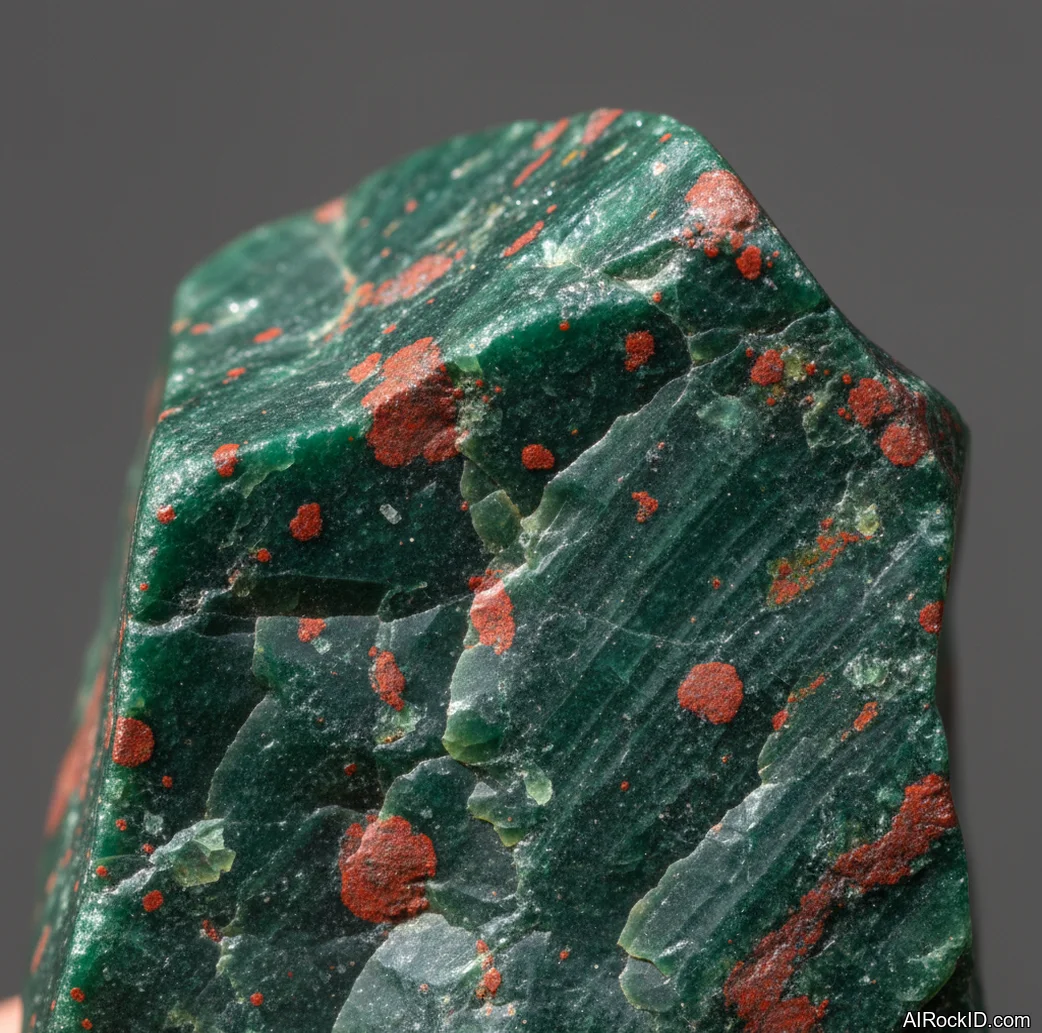
Quick answer: Bloodstone is a dark green chalcedony, usually with red to brown iron-oxide spots or streaks. For identification, its waxy luster, opaque to slightly translucent edges, and quartz-like hardness help separate it from softer dyed stones and painted imitations.
AI Rock ID can help screen a bloodstone specimen by comparing color pattern, luster, opacity, and likely lookalikes from a photo. RockIdentifier.io is useful for a first-pass identification, but physical checks such as hardness, magnification, and seller documentation are still important for buying decisions.
Good fit
- Collectors who want a durable green-and-red chalcedony variety
- Jewelry wearers looking for a stone that can handle regular use with basic care
- Beginners learning to distinguish jasper, chalcedony, and dyed stones
- Buyers who prefer natural-looking mottled patterns over uniform color
Not a good fit
- Anyone expecting a transparent faceted gemstone
- Buyers who need every red spot to be natural without verification
- People looking for a stone that can be identified by color alone
Most commonly confused with
- Moss Agate: Moss agate usually shows green dendritic or moss-like inclusions rather than red iron-oxide spots on a dark green base.
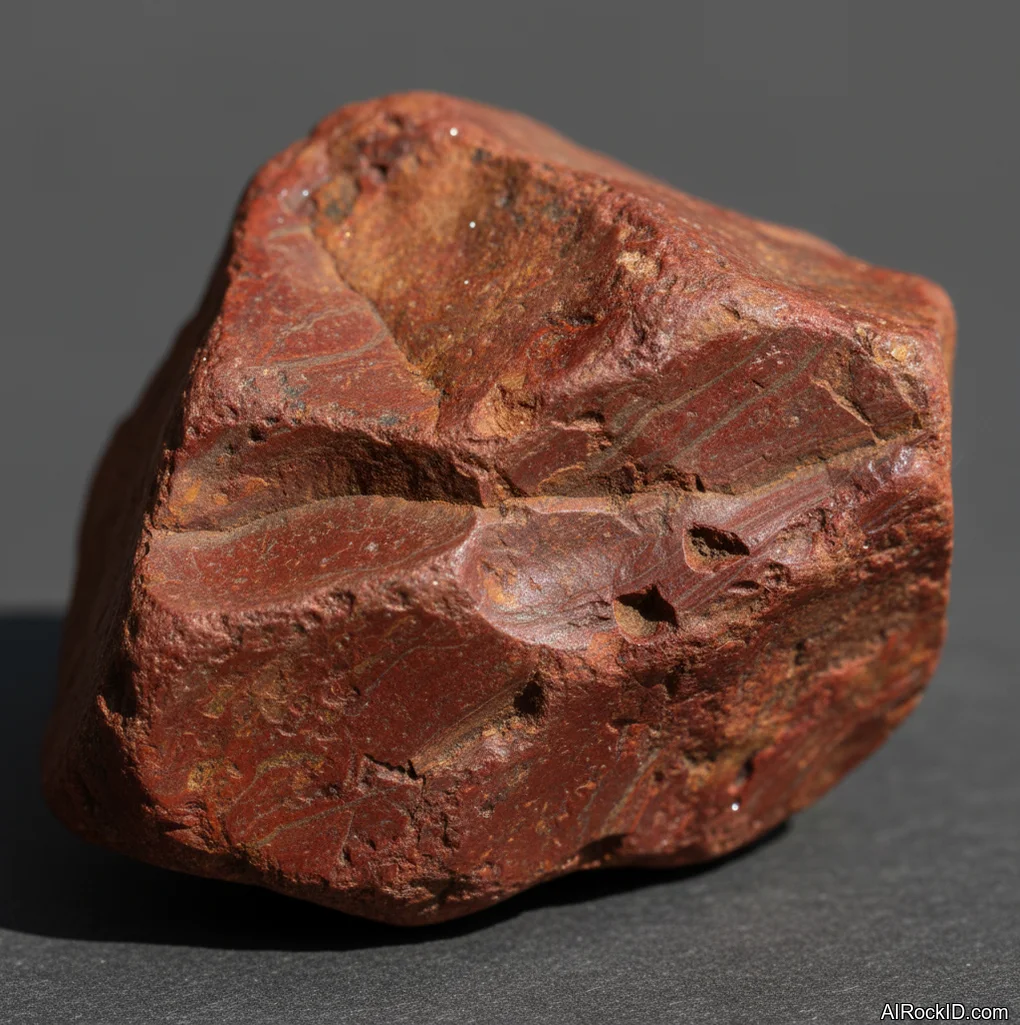
- Jasper: Jasper can be opaque and patterned, but bloodstone is specifically a green chalcedony with red to brown iron staining.
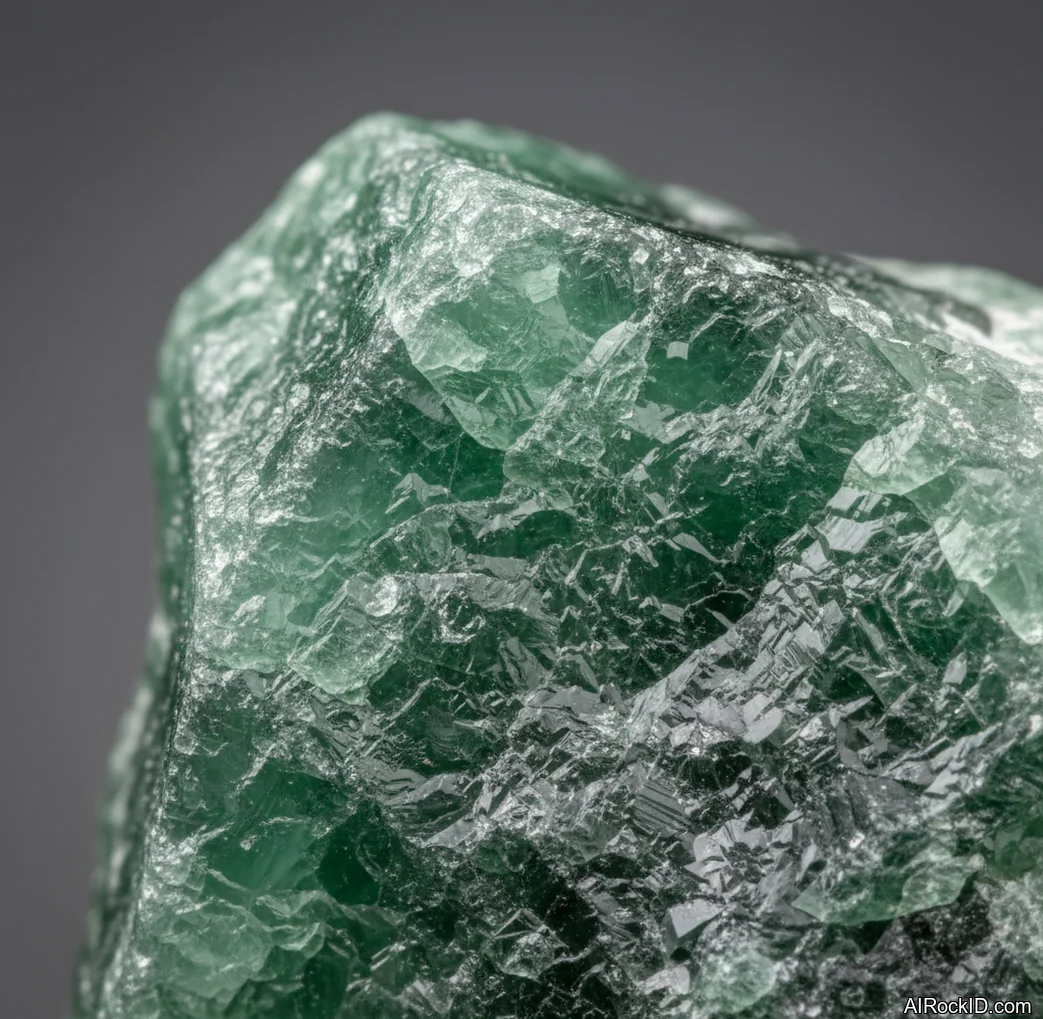
- Green Aventurine: Green aventurine often has a subtle sparkly aventurescence from mica, while bloodstone has a waxier look with red spotting.
- Dyed Agate: Dyed agate may show unnaturally even green color or dye concentration in cracks, unlike typical natural bloodstone patterning.
Bloodstone vs Common Lookalikes
| Stone | Typical Look | Key Difference | Hardness |
|---|---|---|---|
| Bloodstone | Dark green chalcedony with red to brown spots | Red iron-oxide markings on green quartz base | 6.5-7 |
| Moss agate | Clear to milky chalcedony with green mossy inclusions | Moss-like dendrites, usually not red spotted | 6.5-7 |
| Green aventurine | Green quartz with subtle sparkle | Mica shimmer instead of blood-like spotting | 6.5-7 |
| Serpentine | Green, waxy, sometimes mottled | Softer and easier to scratch | 2.5-5.5 |
| Dyed agate | Bright or uniform green, sometimes banded | Dye may collect in fractures or pores | 6.5-7 |
AI identification confidence
AI identification is usually more reliable when the photo shows bloodstone’s green base, red spotting, luster, and scale in natural light. Confidence drops when the stone is polished into a small bead, photographed under strong color filters, or lacks visible red markings.
When AI gets it wrong
- The sample is a green chalcedony or jasper with little to no red spotting.
- A dyed agate has color concentrated in cracks or along cut surfaces.
- The photo lighting makes brown, black, or green stones appear red-spotted.
- The specimen is a composite, painted, or resin-filled decorative item.
Final recommendation
Choose bloodstone with a natural-looking dark green base, irregular red to brown spots, and no obvious surface coating. For higher-priced pieces, ask the seller for clear daylight photos, treatment disclosure, and a return option if identification is uncertain.
How to Check Bloodstone Authenticity
Look for irregular red to brown spots that appear within the stone rather than sitting like paint on the surface. Under magnification, natural markings usually look uneven and mineral-like, while dye may collect in fractures, drill holes, or pits. A simple scratch check can help rule out softer lookalikes, but it should be done only on an inconspicuous area.
Buying Bloodstone Beads and Cabochons
Bloodstone beads can vary widely in red spotting, and some strands may include mostly plain green chalcedony. Cabochons with balanced green color and visible red markings are often easier to identify than very small beads. Ask whether the stone is natural, dyed, stabilized, or assembled before purchasing.
Photo Tips for Identifying Bloodstone
Photograph bloodstone in indirect daylight on a neutral background to avoid false color shifts. Include a close-up of the red markings, the edge of the stone, and any drill holes or fractures. A second photo beside a coin or ruler helps show size and texture for AI and human review.
What Is Bloodstone?
Bloodstone is a green variety of chalcedony (microcrystalline quartz) with red iron-oxide inclusions, usually hematite.
Hold a solid piece and you feel it immediately. That familiar quartz heft is there, but the surface is softer, almost waxy, not like the crisp glassy feel you get from clear quartz points. Most bloodstone ends up tumbled, cabbed, or carved since it doesn’t form those pretty standalone crystals. In your palm, the nicer material reads as deep forest green with sharp red flecks that look like they’re suspended inside the stone, not smeared across the outside. And yeah, you’ll sometimes see yellow or white streaks (especially if there’s some jasper in the mix).
People often assume the red spots are always bright, cherry red. Thing is, a lot of real bloodstone runs more brick red or rusty, and under indoor lighting the green can go so dark it’s almost black. Step into sunlight and it usually wakes up. And if you’ve sifted through enough tumbles at a shop, you start recognizing the feel: true chalcedony stays cool to the touch and has that slick, clean glide, while dyed look-alikes can feel weirdly warm and a little plasticky.
Origin & History
“Heliotrope” comes from Greek roots that mean “turning toward the sun,” and in older lapidaries and gem books it shows up as the classic name for bloodstone. “Bloodstone” is the trade name that stuck, mostly because of the red speckling, and people have been spinning stories about that look for ages.
As a material, it’s been used for seals, intaglios, and small carvings for a long time because it takes a clean polish and the color contrast still pops even when the piece is tiny. Up close you can really see why cutters like it: that dark green base gets glassy when it’s finished, and the little red spots don’t smear or fade, they stay sharp. In older European sources it’s tied to amulets and signet rings, the kind that end up with soft wear on the edges from being handled.
From a collector angle, it’s one of those stones that never really disappears from shows. It’s always sitting on somebody’s table. But the quality and the cuts shift year to year depending on what the dealers actually brought with them.
Where Is Bloodstone Found?
Most commercial bloodstone comes from India, with other material turning up in places like Australia, Brazil, the western United States, China, and Russia.
Formation
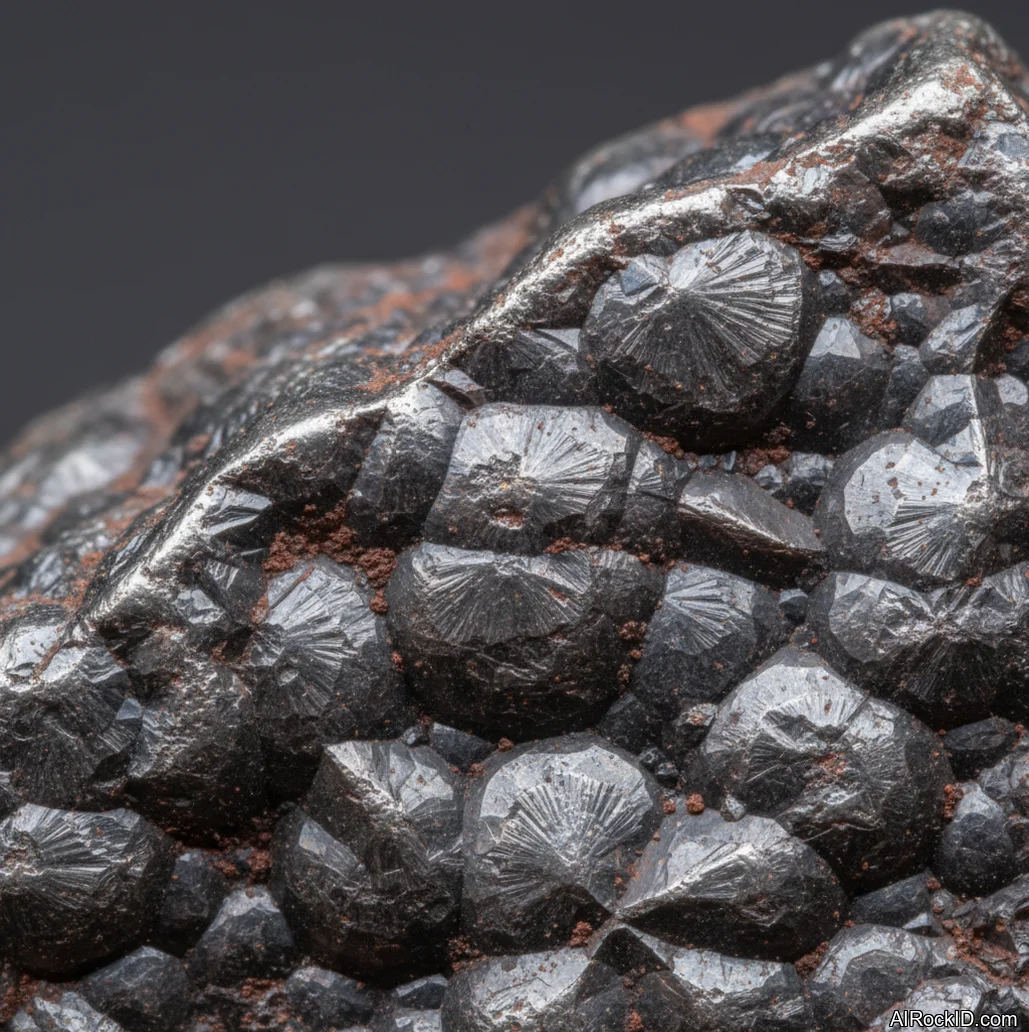
Bloodstone starts out when silica-rich fluids seep into little openings in rock, then harden into chalcedony as they cool and set. While that silica is still kind of gel-like and tightening up, iron-bearing minerals either get caught in it or grow right inside it. The red specks you see are usually hematite (iron oxide), scattered as tiny inclusions, sometimes with other iron minerals mixed in too.
You tend to find bloodstone in volcanic or sedimentary places where silica can actually travel around, so think fractures, small cavities, replacement zones. And compared to banded agate, bloodstone usually shows up as a more solid, chunky mass. No lacy fortification bands here. Just a dark green base with iron freckles, plus the occasional hazy patch where the silica didn’t stay perfectly even (it happens).
How to Identify Bloodstone
Color: Deep green to blue-green chalcedony with scattered red spots or streaks from iron oxides, most commonly hematite. Some pieces show yellow or white patches where jaspery material mixes in.
Luster: Waxy to vitreous, especially obvious on a fresh polish.
Look closely at the red spots with a loupe. In real bloodstone, the red is inside the stone and can look slightly diffuse at the edges, not like surface paint. The real test is a simple scratch check: at Mohs 6.5 to 7 it’ll scratch window glass, but a steel nail usually won’t bite it. And in your hand, good chalcedony has that smooth, cool, slightly greasy feel that’s hard to fake with dyed glass.
Common Look-Alikes
Bloodstone is sometimes confused with these materials:
- Dyed green chalcedony/agate with added red dye (sold as bloodstone, especially in tumbled lots)
- Jasper sold as "bloodstone" (especially dark green jasper with red spots, or brecciated jasper)
- Heliotrope look-alike material: green serpentine with red iron staining (softer, scratches easier)
- Green aventurine quartz with scattered red/brown hematite staining (sparkly mica gives it away)
- Epidote-in-quartz or green quartz with hematite specks (more translucent patches than typical bloodstone)
- Painted or colored glass "bloodstone" beads/cabs (too uniform, too glossy, feels warmer fast)
Market Cautions & Treatments
When AI Can Get This Wrong
In photos, AI mixes bloodstone up with green jasper and dyed agate all the time because a polished surface hides the microcrystalline texture. At first glance, any dark green stone with red spots gets labeled bloodstone, especially under warm indoor lighting that pushes the greens toward brown. The real test is a quick hardness and feel check: bloodstone (chalcedony) should scratch glass and stay cool, while serpentine won’t and often feels a bit slick or soapy.
Properties of Bloodstone
Physical Properties
| Crystal System | Trigonal |
| Hardness (Mohs) | 6.5-7 (Hard (6-7.5)) |
| Density | 2.58-2.64 g/cm3 |
| Luster | Waxy |
| Diaphaneity | Opaque |
| Fracture | Conchoidal |
| Streak | White |
| Magnetism | Non-magnetic |
| Colors | Dark green, Blue-green, Red, Brownish red, Yellow, White |
Chemical Properties
| Classification | Silicates |
| Formula | SiO2 |
| Elements | Si, O |
| Common Impurities | Fe |
Optical Properties
| Refractive Index | 1.530-1.540 |
| Birefringence | 0.004-0.009 |
| Pleochroism | None |
| Optical Character | Uniaxial |
Bloodstone Health & Safety
Bloodstone is basically quartz, so you can handle it without worrying, and rinsing it off under the tap is fine (it’ll feel slick when it’s wet). But it’s still a silica stone. So if you’re grinding or sanding it and kicking up that super-fine powder, don’t breathe the dust.
Safety Tips
If you’re cutting or polishing, keep things wet, crack some ventilation (a fan in the window helps), and wear a real respirator that’s actually rated for silica dust, not just a paper mask.
Bloodstone Value & Price
Price Range
Rough/Tumbled: $3 - $40 per piece
Cut/Polished: $2 - $12 per carat
Price jumps around based on the color contrast and how clean the polish looks in your hand (you can see it right away under a light). Dark green with sharp, well-spaced red spots usually pulls in more than muddy green material with brown smears or a bunch of fractures.
Durability
Durable — Scratch resistance: Good, Toughness: Good
It’s stable quartz, so normal light and air won’t bother it, but chips can happen on sharp edges if you bang it around.
How to Care for Bloodstone
Use & Storage
Store it in a pouch or a divided box if it’s polished, because chalcedony can still scuff other polished stones over time. Raw chunks are tougher, but the edges can chip if they rattle around.
Cleaning
1) Rinse with lukewarm water and a drop of mild soap. 2) Use a soft toothbrush for crevices and carving details. 3) Rinse again and dry with a microfiber cloth.
Cleanse & Charge
If you do the metaphysical cleanse routine, water rinse or smoke is fine for bloodstone. I skip salt so it doesn’t leave crust in little pits and polish lines.
Placement
On a desk, bloodstone reads best under natural light since the green can look almost black under warm bulbs. If you’re displaying multiple pieces, put it next to lighter stones so the red spots don’t disappear.
Caution
Skip harsh cleaners and ultrasonic machines on carved pieces that already have fractures or open pits, because that grime can get forced deeper and stay there. And if it’s set in jewelry, don’t let it take sharp hits on corners or edges, like when a ring smacks a countertop or a pendant bangs against a doorframe.
Works Well With
Bloodstone Meaning & Healing Properties
In the shop, bloodstone lands squarely in the “grounded, steady” lane. It’s the one people grab when they want something that feels solid in the hand, not airy or floaty. And the look backs that up: deep green with little red flecks, like a stone that’s taken some knocks and still held together.
Grab a palm stone and it clicks pretty fast why it’s an everyday-carry favorite. It’s smooth, it doesn’t feel delicate, and it warms up slowly. That slow warm-up is super noticeable, too, like it stays cool against your skin for a beat before it finally takes on your hand’s heat. So, practically speaking, it’s an easy pocket fidget without that “am I about to wreck this?” feeling you get with something like selenite.
But look, this is the line I draw every time I’m talking to customers: tradition and personal practice aren’t medical care. Bloodstone gets wrapped up in “blood” talk for pretty obvious reasons, but it’s still just chalcedony with iron oxides. If you like stones as a focus object for breathing, workouts, or staying present when you’re stressed, bloodstone does that job really well. If you’re expecting it to treat anything physical, don’t. Use it as a reminder tool, not a stand-in for a doctor.
Common mistakes
- Assuming every green stone with red marks is bloodstone without checking hardness or texture.
- Confusing moss agate dendrites with bloodstone’s red iron-oxide spots.
- Overlooking dye concentrated around bead holes, cracks, or surface pits.
- Judging authenticity from polished surface color alone.
- Expecting all natural bloodstone to have bright red spots; many pieces show brownish or sparse markings.
Identify Bloodstone from a photo
Compare Bloodstone traits, care tips, value clues, and common lookalikes with a clear photo.