Cheetah Jasper


Quick answer: Cheetah Jasper is a trade name for opaque, spotted jasper with tan, cream, brown, and black patterning that resembles animal spots. It is best identified by its microcrystalline quartz hardness, waxy-to-dull luster, and irregular natural spotting rather than by color alone.
AI Rock ID can help compare a photographed Cheetah Jasper specimen against visually similar spotted stones by analyzing color, pattern, and surface texture. RockIdentifier.io should be used as an identification aid, with hardness, luster, and seller information checked when authenticity matters.
Good fit
- Collectors who like opaque jasper with bold spotted patterns
- Jewelry buyers looking for a durable stone with hardness around 6.5–7
- Beginners learning to distinguish jasper from softer decorative stones
- Anyone comparing animal-pattern trade names such as Cheetah Jasper, Leopard Skin Jasper, and Dalmatian Jasper
Not a good fit
- Buyers who need a formally recognized mineral species name rather than a trade name
- Anyone expecting a transparent or faceted gemstone appearance
- Collectors who require locality-confirmed specimens unless documentation is provided
- Users who need a stone to be identified by metaphysical claims alone
Most commonly confused with
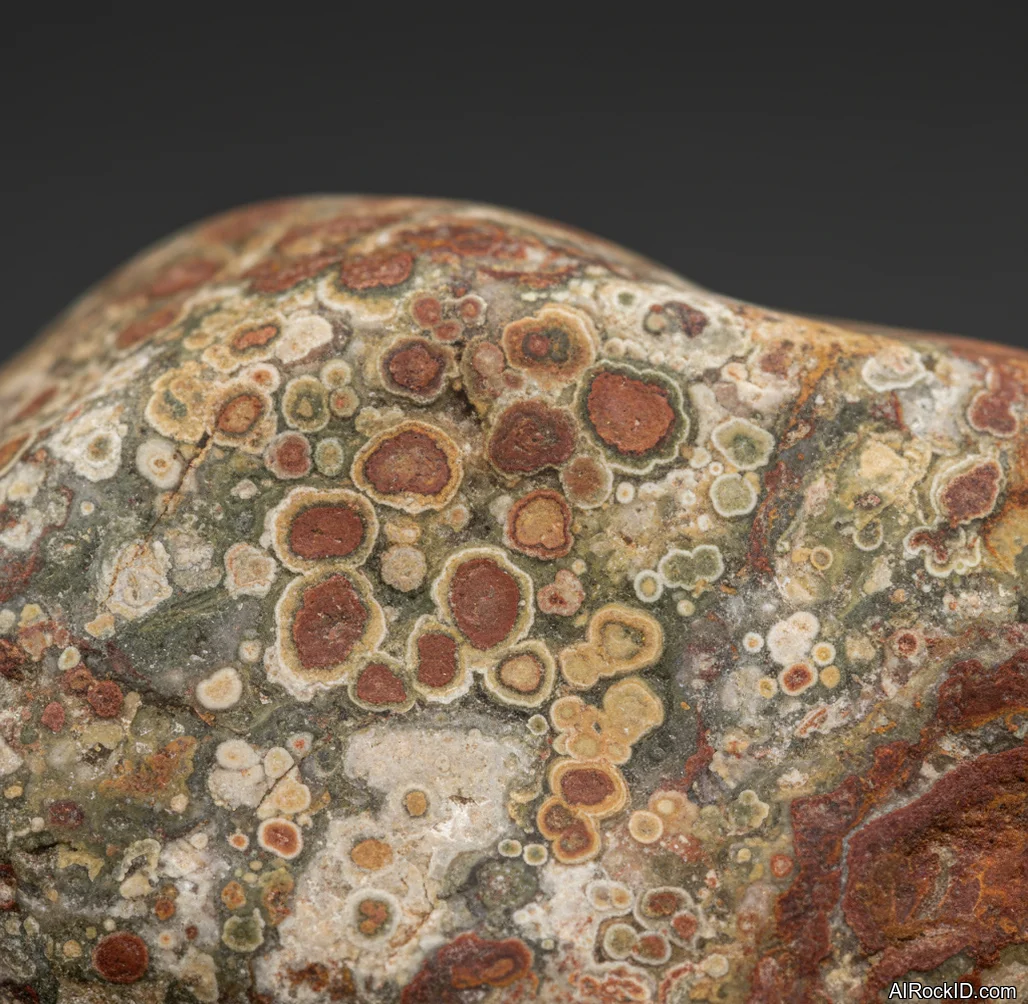
- Leopard Skin Jasper: Often has orbicular or ring-like spots, while Cheetah Jasper is usually sold for smaller, denser tan-to-brown spotting.
- Dalmatian Jasper: Typically has a cream base with black tourmaline or amphibole-like spots, not a tan-to-brown jasper matrix.
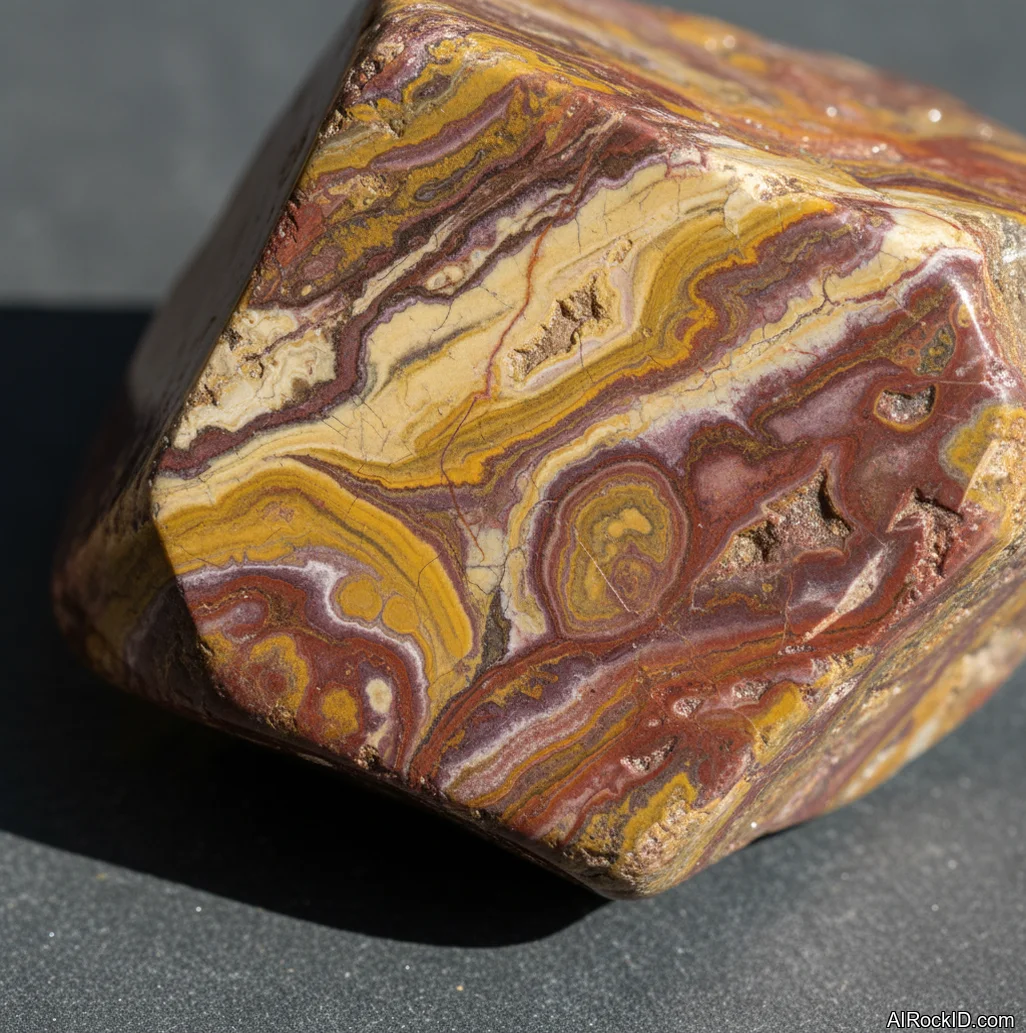
- Picture Jasper: Shows scenic bands or landscape-like patterns rather than repeated animal-like spots.
- Agate: Agate is commonly more translucent and banded, while Cheetah Jasper is generally opaque.
Cheetah Jasper Lookalike Comparison
| Stone | Typical Appearance | Key ID Clue | Transparency |
|---|---|---|---|
| Cheetah Jasper | Tan, cream, brown, and dark spotted patterns | Opaque microcrystalline quartz with earthy, irregular spots | Opaque |
| Leopard Skin Jasper | Orbicular, ringed, or rosette-like spots | More circular patterning is common | Opaque |
| Dalmatian Jasper | Cream to beige body with black spots | Black spots contrast strongly with a pale base | Opaque |
| Picture Jasper | Brown scenic bands or landscape-like markings | Pattern is more banded or pictorial than spotted | Opaque |
| Agate | Banded, layered, or translucent chalcedony | Light may pass through thin edges | Translucent to opaque |
AI identification confidence
AI identification confidence for Cheetah Jasper is usually moderate because many spotted jaspers and decorative stones share similar colors and patterns. A stronger ID comes from combining image results with hardness testing, opacity, luster, and confirmation that the name is being used as a jasper trade name.
When AI gets it wrong
- The photo is taken under warm lighting that makes cream, tan, or brown stones look more similar than they are.
- The specimen is polished into a bead or cabochon, hiding fracture texture and natural surface features.
- The stone has been dyed or resin-treated, causing color to appear more saturated or uneven in cracks.
- The app is comparing trade names, which may overlap because sellers use Cheetah Jasper and Leopard Skin Jasper inconsistently.
Final recommendation
Choose Cheetah Jasper when you want an opaque, durable, earthy spotted jasper and are comfortable with a trade-name identification. For higher confidence, buy from sellers who disclose treatments, provide clear photos, and avoid claiming that every spotted jasper variety has a fixed geological source.
How to Check Cheetah Jasper Authenticity
Authentic Cheetah Jasper should feel hard and dense, with an opaque body and a waxy to dull polish. Look for natural variation in the spots rather than perfectly repeated printed patterns. Very bright colors, dye collecting in cracks, or a plastic-like surface can indicate treatment or imitation. Seller descriptions should make clear that Cheetah Jasper is a trade name for a jasper-like material, not a separate mineral species.
Buying Tips for Cheetah Jasper
Clear photos in natural light are important because the stone’s value is mostly based on pattern, polish quality, size, and overall appearance. Beads and cabochons should have smooth surfaces without deep pits, large chips, or poorly drilled holes. Locality information is useful when available, but many commercial pieces are sold without verified source details. Avoid paying a large premium for unsupported claims such as rare origin, guaranteed energy effects, or untreated status without evidence.
Photo Tips for Identifying Cheetah Jasper
Use a sharp photo taken in daylight or neutral white light, with the stone filling most of the frame. Include one close-up of the spot pattern and one image showing the whole specimen or jewelry piece. A photo of a thin edge can help show whether the material is fully opaque or slightly translucent. Avoid heavy filters, flash glare, and colored backgrounds because they can distort tan and brown tones.
What Is Cheetah Jasper?
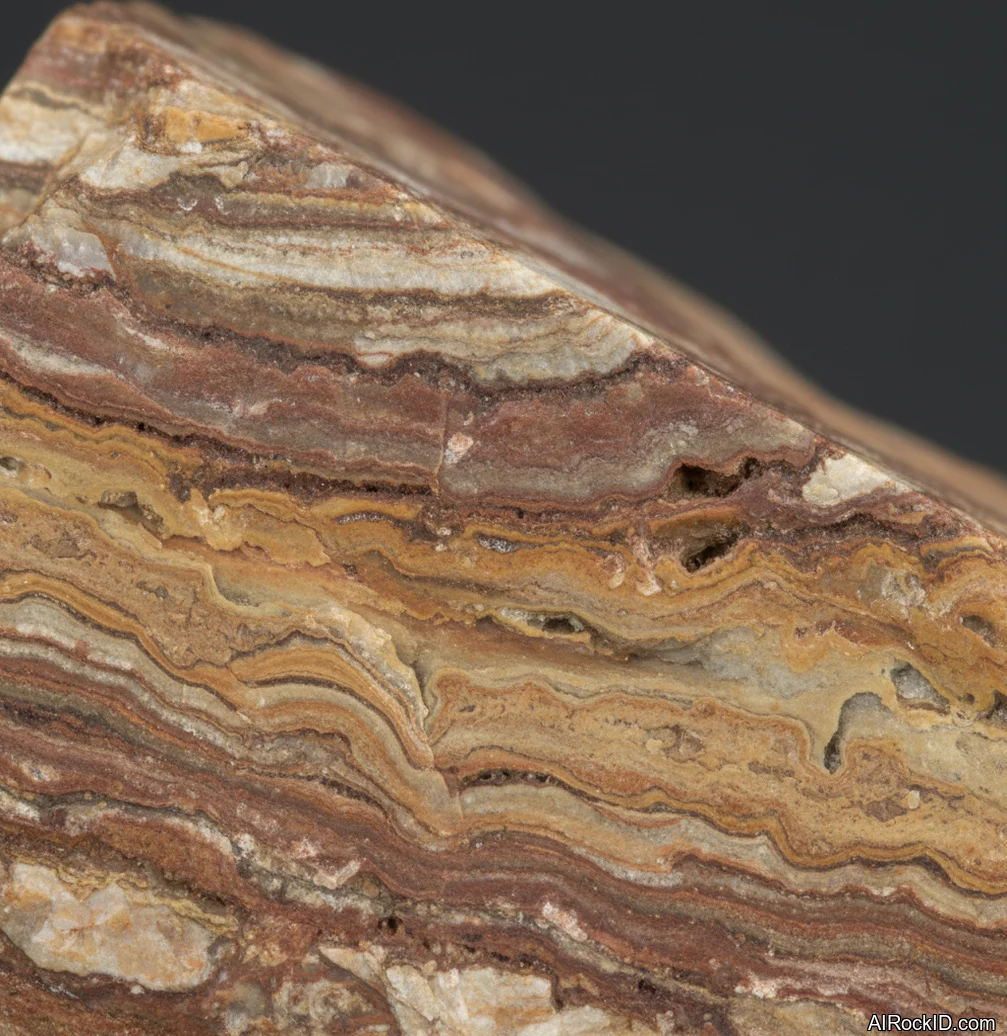
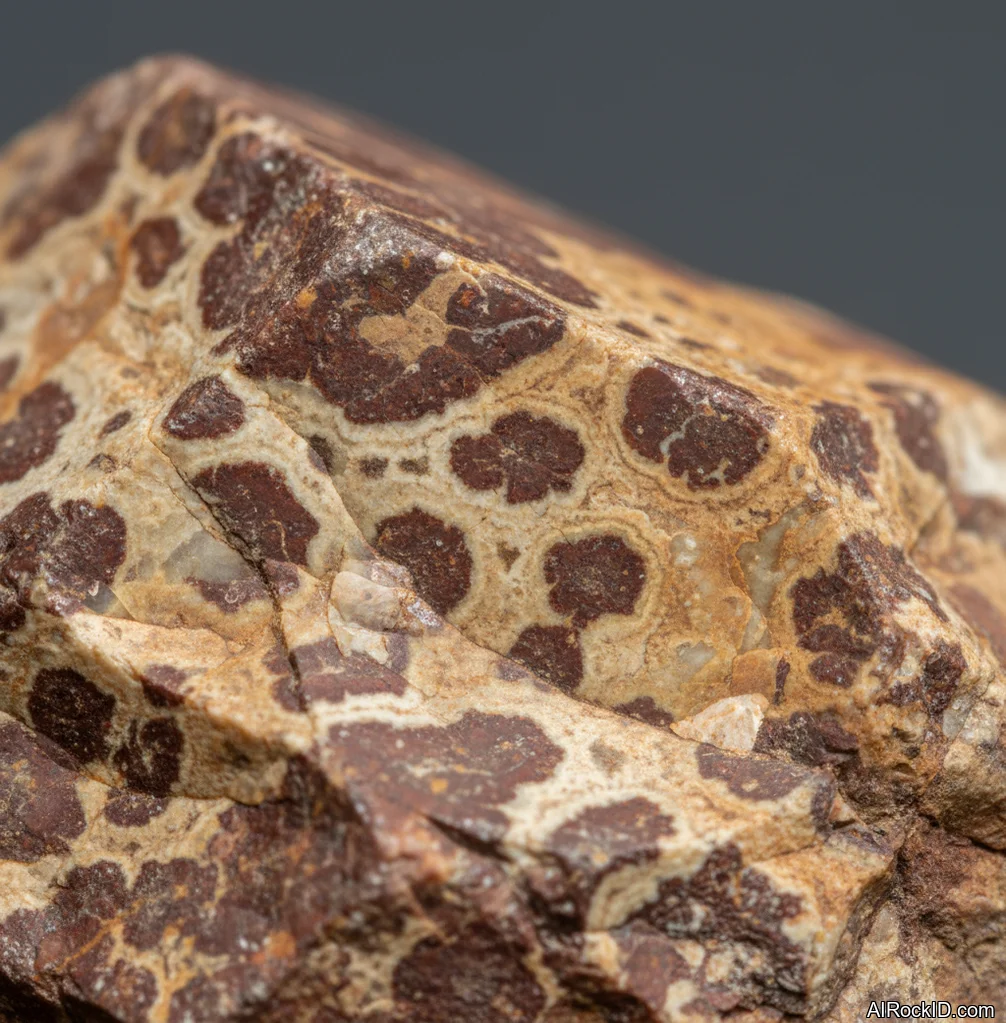
Cheetah Jasper is a patterned type of jasper, which is an opaque microcrystalline quartz. You can spot it by that tan-to-cream base covered in brown and black “spots” that really do look like a cheetah coat.
Pick one up and the feel hits you first. It’s got that smooth, almost soapy tumble-polish jasper gets, and it stays cool in your hand longer than glass (I always notice that). Most pieces you’ll see for sale are tumbled stones, palm stones, or beads, because the pattern pops once it’s polished.
At first glance people call it “cheetah agate,” but it doesn’t act like banded agate and it’s usually not translucent at all. Look closer and those spots often have fuzzy edges, like ink bleeding into paper. And the background can swing from sandy beige to caramel brown depending on how much iron staining is in that slice.
Origin & History
Cheetah Jasper is a modern trade name, not a formally defined mineral species. Dealers use it the same loose way they toss around names like “picture jasper” or “ocean jasper.” Jasper itself has been used forever as a lapidary material, but “Cheetah Jasper” mostly starts popping up in late 20th century to early 2000s retail and bead markets, right when patterned material became a big thing at gem shows.
The name comes straight from how it looks. If the rough has those clustered brown spots on a warm tan base, someone at a wholesaler table will call it cheetah without even thinking twice. And it sticks because it’s easy to remember. Customers can clock it from a few feet away, sitting in a bowl of tumbles (you know the kind, the ones that clack together when you dig around).
Where Is Cheetah Jasper Found?
Most Cheetah Jasper in the retail market is sold as African jasper, with a lot of material labeled from South Africa or Namibia; similar spotted jaspers also come through Madagascar and India.
Formation
Most jasper starts out when silica-rich fluids snake through a rock and the silica turns into this jelly-like stuff, then tightens up and hardens into microcrystalline quartz. The “cheetah” pattern happens because the chemistry isn’t uniform while that’s going on. Little pockets form where iron oxides and other fine mineral grains get caught in place, and once everything sets, those pockets show up as spots after you cut it and run it under the wheel (the polish really makes them pop).
Put it next to banded agate and the feel is different. Jasper usually reads more solid and jumbled, not neatly organized. You won’t get that crisp fortification banding. Instead it’s clouds, freckles, blotches, and sometimes those hairline cracks that got sealed back up with silica. So a slab can look wildly different from one end of the same nodule to the other, which is kind of the whole point, right?
How to Identify Cheetah Jasper
Color: Usually a beige, tan, or creamy base with brown to dark brown spots, sometimes with black flecks or smoky gray areas. The pattern can be tight and speckled or big, blobby patches depending on the cut.
Luster: Waxy to dull in rough, waxy to vitreous once polished.
If you scratch it with a steel nail, it shouldn’t take the scratch easily, but the nail might leave a faint metal streak you can rub off. The real test is a glass plate: it should scratch glass like other jaspers do. And in your hand, it feels dense and cool, not light and warm like resin or plastic “stone” beads.
Common Look-Alikes
Cheetah Jasper is sometimes confused with these materials:
- Leopard Skin Jasper
- Dalmatian Stone (often dyed)
- Picture Jasper
- Brecciated Jasper
- Polished agate with spotted patterns
- Glass fakes with printed or painted spots
Market Cautions & Treatments
When AI Can Get This Wrong
AI photo tools usually mix up Cheetah Jasper with Leopard Skin Jasper or Dalmatian Stone, especially when the spots show up on a beige base. Photos can't show temperature or heft, so you can't spot a glass fake that way. The real test is in hand—real jasper stays cool, feels dense, and won't show color bleeding if you wipe it with alcohol.
Properties of Cheetah Jasper
Physical Properties
| Crystal System | Trigonal |
| Hardness (Mohs) | 6.5-7 (Hard (6-7.5)) |
| Density | 2.58-2.64 |
| Luster | Waxy |
| Diaphaneity | Opaque |
| Fracture | Conchoidal |
| Streak | White |
| Magnetism | Non-magnetic |
| Colors | Beige, Tan, Cream, Brown, Dark brown, Black, Gray |
Chemical Properties
| Classification | Silicates |
| Formula | SiO2 |
| Elements | Si, O |
| Common Impurities | Fe, Mn, Al, Ca |
Optical Properties
| Refractive Index | 1.530-1.540 |
| Birefringence | None |
| Pleochroism | None |
| Optical Character | Uniaxial |
Cheetah Jasper Health & Safety
Cheetah Jasper is basically microcrystalline quartz, so it’s fine to pick up, handle, and even rinse off under the tap. But if you’re cutting or grinding it, treat the dust like you would any other lapidary dust. Mask up, keep things wet if you can, and don’t breathe that fine powder (it gets everywhere, like it clings to your fingers).
Safety Tips
If you’re shaping or sanding, put on a respirator, and keep things wet with water so the silica dust doesn’t kick up.
Cheetah Jasper Value & Price
Price Range
Rough/Tumbled: $3 - $20 per piece
Price mostly comes down to two things: how much the pattern pops and how clean the polish looks. Big palm stones with tight, high-contrast spotting usually run higher than those small tumbles that look kind of muddy, like they never really got past that dull, slightly chalky stage.
Durability
Very Durable — Scratch resistance: Good, Toughness: Good
It’s a tough quartz rock that handles daily carry well, but a high polish can still get dulled by gritty sand and keys.
How to Care for Cheetah Jasper
Use & Storage
Store it in a pouch or a divided box if it’s polished, because quartz-on-quartz scuffs happen fast in a mixed bowl. Keep it out of gritty places like beach sand if you want the shine to last.
Cleaning
1) Rinse with lukewarm water. 2) Wash with mild soap and a soft brush or cloth. 3) Rinse again and dry fully with a towel to avoid water spots in tiny surface pits.
Cleanse & Charge
For a non-fussy reset, I use running water and a quick wipe, or set it on a windowsill for indirect light. Don’t bake it in harsh sun for days if you care about the exact tone of the polish.
Placement
On a desk or by the door works well because it’s durable and doesn’t mind getting handled. If you’re displaying a bunch together, give each piece a little space so the polished faces don’t rub.
Caution
Skip ultrasonic cleaners and harsh acids. And don’t toss it in a tumbler with softer stones unless you’re fine with them coming out all scuffed and scratched.
Works Well With
Cheetah Jasper Meaning & Healing Properties
Most dealers just toss Cheetah Jasper into the whole “grounding jasper” category, and honestly, that’s pretty much what it’s for. It’s the kind of stone you drop in your pocket so you’ve got something solid to grab when you need to feel steady. And I get why people do it. The surface feels nice in your fingers, sort of smooth but not slippery, and the spotted pattern gives your eyes a place to rest when your thoughts are doing laps.
But look, it’s not a flashy stone. If you’re hoping for fireworks, you’re gonna be let down. What it’s good at, in a metaphysical practice, is the everyday stuff. Routine. It’s a worry stone that doesn’t chip, a palm stone you can clamp down on during a boring meeting, a bead bracelet that holds up to daily wear without you having to baby it (or take it off every time you wash your hands).
And none of this is medical. It’s not a replacement for care from an actual professional. I treat it like a tactile tool, plain and simple. When I’m sorting flats at a show or stuck standing at a register all day, I’ll roll a cheetah jasper tumble in my hand, and it helps keep me in my body instead of floating off in my head. Why overcomplicate it?
Common mistakes
- Assuming every tan spotted jasper is Cheetah Jasper without comparing Leopard Skin Jasper or Dalmatian Jasper.
- Treating Cheetah Jasper as a distinct mineral species rather than a commercial jasper name.
- Relying only on spot pattern while ignoring hardness, opacity, and luster.
- Mistaking dyed or color-enhanced material for naturally colored jasper.
- Expecting all sellers to use the name consistently across regions and supply sources.
- Using metaphysical descriptions as proof of geological identity.
Identify Cheetah Jasper from a photo
Compare Cheetah Jasper traits, care tips, value clues, and common lookalikes with a clear photo.