Kunzite


Quick answer: Kunzite is the pink to violet variety of spodumene, valued for its delicate color, elongated crystal habit, and strong pleochroism. Because its color can fade with prolonged light exposure and it can resemble other pink gems, careful identification is useful before buying or labeling a specimen.
AI Rock ID can help screen kunzite by checking visible traits such as color range, transparency, crystal shape, cleavage, and likely lookalikes from a photo. RockIdentifier.io provides educational identification support, but confirmed gem identification may still require refractive index, specific gravity, spectroscopy, or a professional gem lab report.
Good fit
- Collectors who want a pink to violet lithium-bearing mineral specimen
- Jewelry buyers who understand that kunzite is better suited to protected or occasional-wear settings
- People comparing pink transparent gems such as morganite, rose quartz, pink sapphire, and tourmaline
- Specimen owners who want help distinguishing natural kunzite from glass, dyed material, or other pink crystals
Not a good fit
- Daily-wear rings exposed to frequent knocks, sunlight, or household chemicals
- Buyers who want a pink gem with stable color under strong long-term light exposure
- Anyone relying on color alone to confirm identity
- Settings that leave the stone unprotected along cleavage directions
Most commonly confused with
- Morganite: Morganite is pink beryl and typically has different refractive index, density, and pleochroism than kunzite.
- Rose Quartz: Rose quartz is usually milky to translucent and lacks kunzite’s strong cleavage and typical elongated spodumene crystal form.
- Pink Tourmaline: Pink tourmaline commonly has a different crystal habit, higher density, and tourmaline-specific optical properties.
- Pink Sapphire: Pink sapphire is corundum, much harder than kunzite and better suited for frequent-wear jewelry.
Kunzite vs. Similar Pink Gems
| Material | Key clue | Main difference from kunzite |
|---|---|---|
| Kunzite | Pink to violet spodumene with strong pleochroism | Mohs 6.5–7 and distinct cleavage |
| Morganite | Peach-pink to pink beryl | Different RI and usually less dramatic pleochroism |
| Rose Quartz | Milky or translucent pink quartz | Typically not transparent with elongated spodumene cleavage |
| Pink Tourmaline | Prismatic crystal habit with striations | Different density, RI, and tourmaline crystal form |
| Pink Sapphire | Durable pink corundum | Much harder at Mohs 9 |
AI identification confidence
AI photo identification can be moderately useful for kunzite when the image shows crystal habit, transparency, color zoning, cleavage, and multiple angles. Confidence is lower for faceted stones because many pink gems look similar once cut, so lab measurements are the most reliable confirmation.
When AI gets it wrong
- The stone is faceted and lacks visible crystal habit or cleavage.
- Lighting makes pale morganite, rose quartz, or glass appear violet-pink.
- The photo is overexposed, heavily filtered, or taken under colored light.
- The specimen is coated, dyed, fracture-filled, or mounted in jewelry that hides diagnostic surfaces.
Final recommendation
For casual identification, compare kunzite against morganite, rose quartz, pink tourmaline, pink sapphire, and glass rather than relying on pink color alone. For valuable jewelry or high-value specimens, request diagnostic test results or a reputable gemological report before purchase.
How to Check Kunzite Authenticity
Authentic kunzite should be evaluated by more than color: useful clues include pleochroism, refractive index, specific gravity, cleavage, and crystal habit. A refractometer reading near spodumene values can separate kunzite from many lookalikes, while a microscope may reveal natural inclusions, cleavage features, or evidence of treatment. For expensive faceted stones, a gemological report is the safest way to verify identity and any disclosed treatment.
Buying Kunzite Jewelry
Kunzite jewelry is best chosen with protective settings, especially for rings, because the mineral has distinct cleavage and can chip if struck. Color, size, transparency, cutting quality, and fading risk all affect desirability. Ask sellers whether the stone is natural kunzite, treated, synthetic, or imitation, and keep written disclosure for higher-value purchases.
Photo Tips for Identifying Kunzite
Use daylight or neutral white light and photograph the stone from several angles to show color changes from pleochroism. Include close-ups of crystal ends, cleavage surfaces, inclusions, and any label or setting marks. Avoid heavy filters or saturated lighting because they can make rose quartz, morganite, glass, and pink tourmaline appear closer to kunzite than they are.
What Is Kunzite?
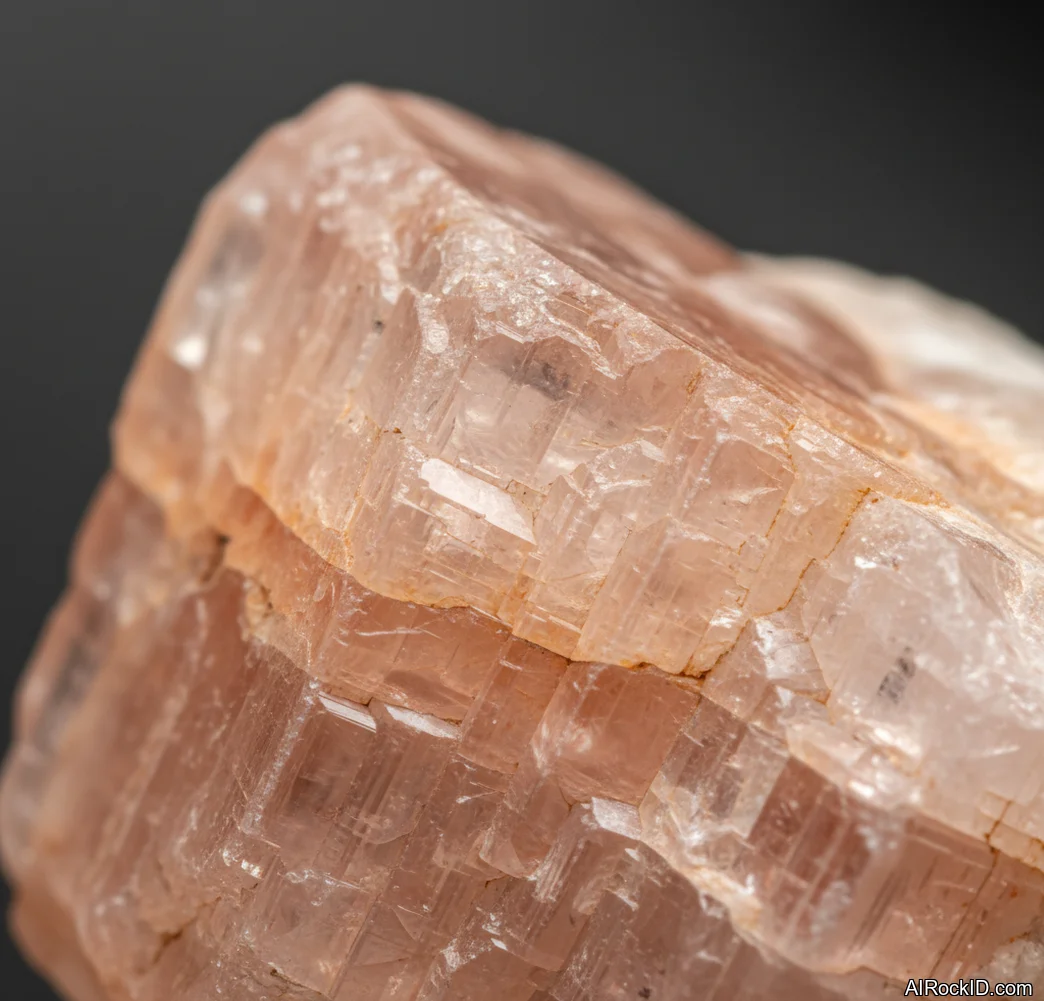
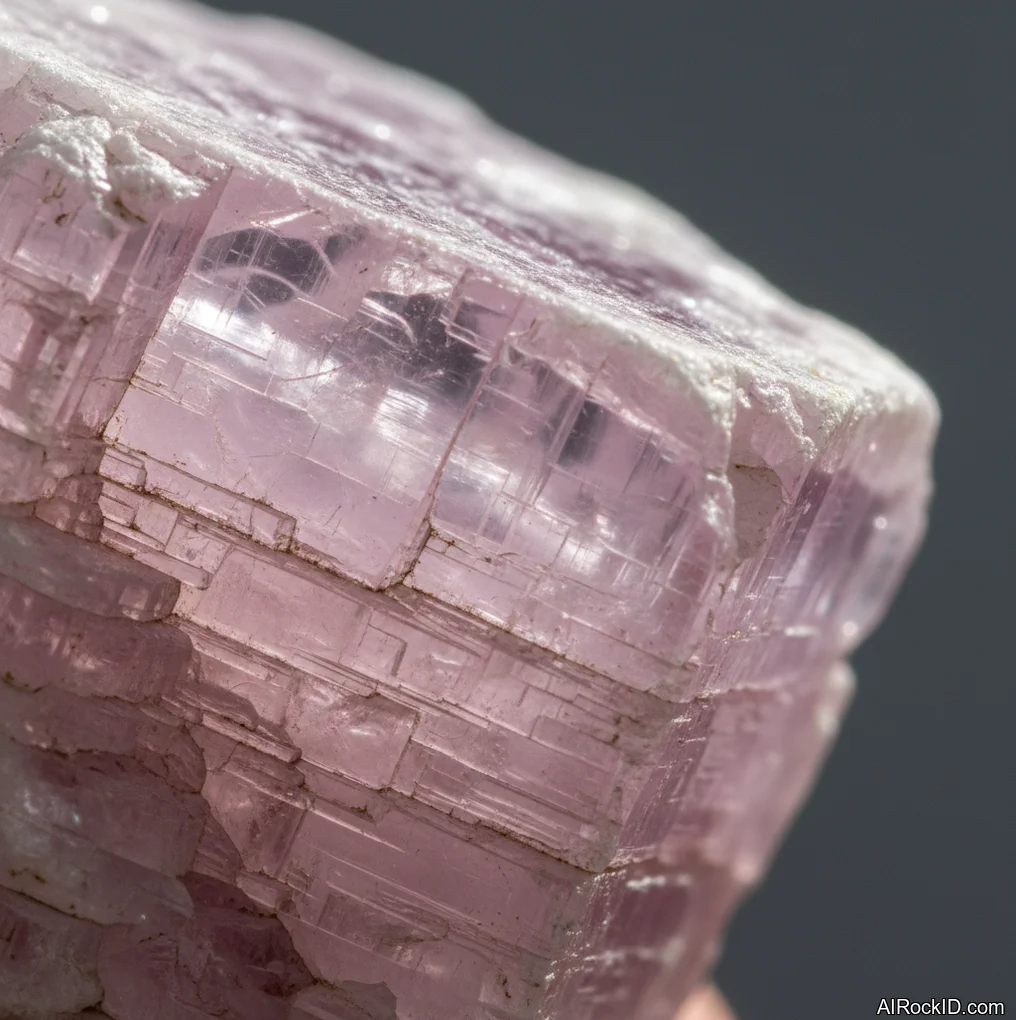
Kunzite is the pink to lilac gem variety of the mineral spodumene. When you’ve actually got a piece in your hand, it doesn’t feel dainty at all. It’s got that solid, serious crystal heft, and the faces can go almost oily-glassy when the light catches them just right. Grab a clean chunk and, thing is, the edges are sharper than you expect, because it breaks along cleavage so easily.
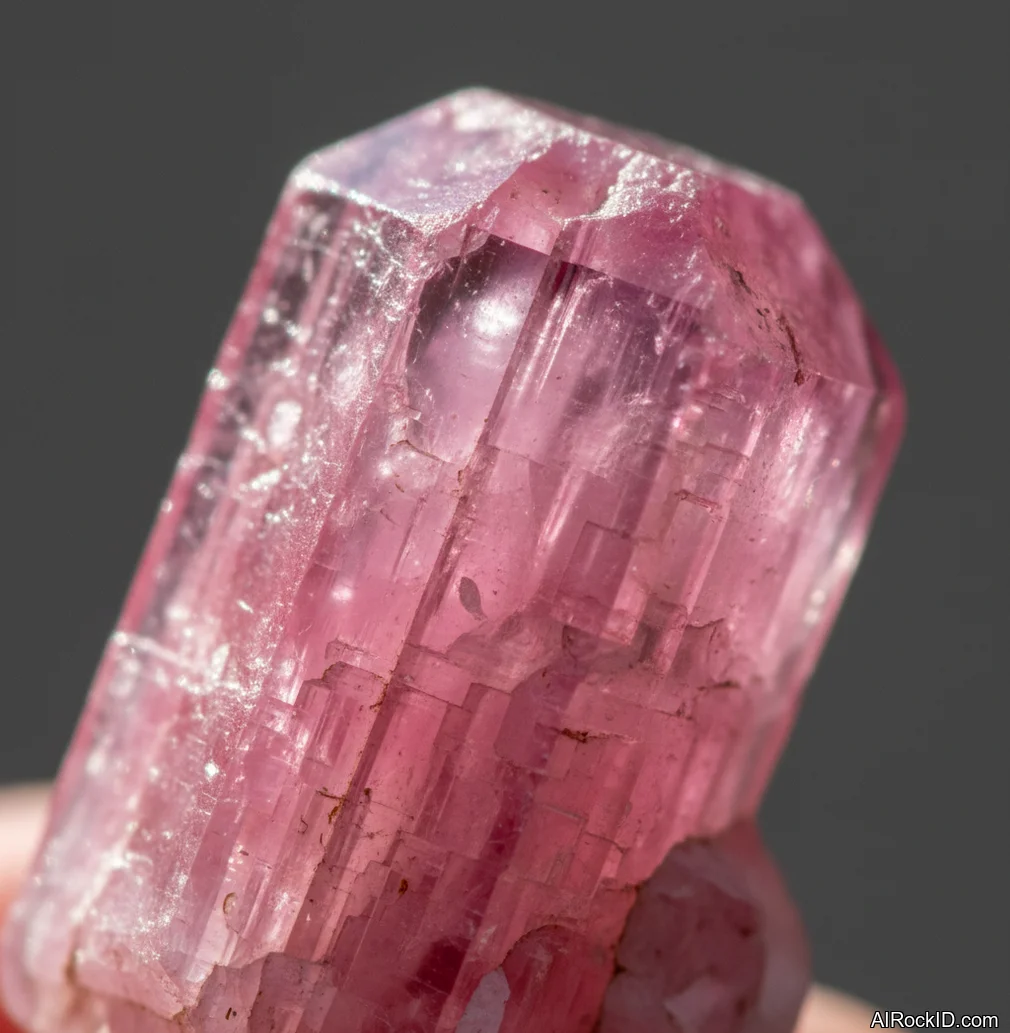
People glance at it and go, “pink quartz,” but kunzite’s got this sleepy, slightly violet tone and a depth that just doesn’t match rose quartz’ cloudy softness. Look closer. You can sometimes spot long, parallel growth lines. And the color really can shift as you turn it since the pleochroism is real. One second it’s cotton-candy pink, then it slides cooler, toward lavender, even under the same lamp. Weirdly satisfying, right?
But here’s the annoying part: sunlight can bleach it. I’ve watched a nice medium-pink piece go noticeably paler after a summer sitting on a bright windowsill (no joke). So if you want to keep the best color, stash it in a drawer or a case, and it’ll stay put.
Origin & History
1902 is the key year for kunzite. George Frederick Kunz, Tiffany & Co.’s gem expert (and, honestly, a hardcore mineral guy on his own time), was the one who described it and gave a name to the pink spodumene coming out of California.
And yeah, the name is basically a tip of the hat to Kunz’s work in American gemology. It also stuck because “pink spodumene” is a mouthful, and you can feel that the second you try to say it out loud. The early stuff that people passed around came from the Pala district in San Diego County, and those California stones still hit different for collectors. You’ll see an old paper label with “Pala” on it, slightly yellowed at the edges (sometimes with that dusty, drawer-stored look), and it just has that extra pull.
Where Is Kunzite Found?
Most gem and specimen kunzite comes from lithium pegmatites, with classic sources in Afghanistan and Pakistan and important material from Brazil, Madagascar, and California.
Formation
Raw chunks from pegmatites basically spill the story if you know what you’re looking at. They’re late-stage granitic melts packed with lithium and volatiles, and they cool slowly enough that the crystals can get huge. Sometimes stupidly huge.
Kunzite is spodumene with a tiny bit of manganese in the mix, which is what pushes it into that pink color. It shows up with the usual pegmatite crowd: quartz, feldspar, muscovite, tourmaline, beryl, lepidolite. And when you’re flipping through flats at a show, you’ll see kunzite sitting in the same case as pink tourmaline or morganite all the time, because they come out of the same kind of pockets. (Same dust, same grime on the labels, too.)
But compared to tougher gems, the way it grows gives it away fast. Spodumene wants to be long and blade-like, and if the pocket was generous you get prismatic pieces that look like somebody sliced them out with a ruler. Ever picked one up and noticed how it almost feels like it has edges where it shouldn’t? That’s the habit talking.
How to Identify Kunzite
Color: Kunzite ranges from very pale pink to lilac and light violet, often with color zoning. The color can look stronger from one viewing direction than another because of pleochroism.
Luster: Vitreous, sometimes with a slightly slick sheen on fresh cleavage faces.
Pick up the crystal and tilt it under a single light source. If it swings from pink to more lavender as you rotate it, you’re probably looking at real pleochroism, which rose quartz and most glass fakes won’t mimic the same way. The real test is cleavage: a tiny tap or pressure on a thin edge will want to split it into clean, flat planes, so handle it like it’s a stack of glass slides. And if a seller has a “kunzite” that’s bubble-gum bright and totally uniform, ask questions, because lighting and photography can lie hard with this stone.
Common Look-Alikes
Kunzite is sometimes confused with these materials:
- Rose quartz (especially pale tumbled pieces sold as “kunzite”)
- Pink glass or “lavender glass” (often in faceted stones and beads)
- Pink tourmaline (rubellite) in light shades
- Morganite (pale pink beryl) in clean faceted gems
- Pink fluorite (soft, often banded or zoned, gets mislabeled in carvings)
- Dyed quartz/chalcedony sold as “kunzite” (color sitting in cracks and drill holes)
Market Cautions & Treatments
When AI Can Get This Wrong
At first glance in photos, AI mixes kunzite up with rose quartz, morganite, and pink glass because all three read as clean, pale pink with a soft glow under shop lights. The real test is cleavage and shape: kunzite often shows long prismatic chunks with flat, mirror-like cleavage flashes, while quartz looks more waxy and doesn’t split into those sheet-like breaks. If you can do one quick check, use a hardness pick or a steel blade on an inconspicuous spot: kunzite should laugh at steel, but fluorite and many glasses will mark or scuff.
Properties of Kunzite
Physical Properties
| Crystal System | Monoclinic |
| Hardness (Mohs) | 6.5-7 (Hard (6-7.5)) |
| Density | 3.15-3.21 |
| Luster | Vitreous |
| Diaphaneity | Transparent to translucent |
| Fracture | Uneven |
| Streak | White |
| Magnetism | Non-magnetic |
| Colors | Pale pink, Pink, Lilac, Light violet, Colorless |
Chemical Properties
| Classification | Silicates |
| Formula | LiAlSi2O6 |
| Elements | Li, Al, Si, O |
| Common Impurities | Mn, Fe, Cr |
Optical Properties
| Refractive Index | 1.660-1.676 |
| Birefringence | 0.014 |
| Pleochroism | Strong |
| Optical Character | Biaxial |
Kunzite Health & Safety
Kunzite is usually safe to touch, and it isn’t toxic. Thing is, the real issue isn’t anything chemical. It’s how easily it can crack. Kunzite has perfect cleavage, so one awkward knock or a sharp tap on the edge (especially near a corner) can split it faster than you’d expect.
Safety Tips
If you’re going to cut or grind it, put on eye protection and keep the dust under control, the same way you’d treat any silicate. And don’t crank down on the clamp, either, it’ll bite and can crack if you squeeze it too hard.
Kunzite Value & Price
Price Range
Rough/Tumbled: $10 - $250 per piece
Cut/Polished: $20 - $250 per carat
Color does most of the heavy lifting on price, and once you get into that medium-to-strong pink with good clarity, the numbers climb in a hurry. Sure, big crystals are out there. But a clean one that isn’t chipped along a cleavage plane? That’s where it gets pricey, because they just don’t stay pristine for long (one little knock and you’ll see it).
Durability
Moderate — Scratch resistance: Good, Toughness: Poor
Kunzite is stable in normal conditions but can fade with prolonged exposure to strong light and it chips easily along cleavage.
How to Care for Kunzite
Use & Storage
Store kunzite wrapped or in a compartmented box so it can’t knock against harder stones. And keep it out of direct sunlight if you care about the color.
Cleaning
1) Rinse briefly in lukewarm water with a drop of mild soap. 2) Use a soft brush or microfiber cloth around edges and grooves. 3) Rinse and pat dry, then let it air dry fully before putting it back in a box.
Cleanse & Charge
If you do energy-style cleansing, stick to smoke, sound, or a quick rinse, and skip long sun baths since light can fade it. Moonlight is fine if it’s not sitting in a hot window.
Placement
Put it somewhere it won’t get bumped, like a shelf away from traffic or a cabinet. For display, indirect light looks best and is kinder to the color.
Caution
Skip ultrasonic cleaners, steam cleaning, and anything that might smack it around. And don’t park kunzite in direct sunlight for long stretches if you’re trying to keep that pink from fading.
Works Well With
Kunzite Meaning & Healing Properties
Pick up kunzite when you’re stressed and the first thing that hits you is the color. It’s got that pale pink-lilac vibe that’s easy on the eyes, not loud, not shouty. And yeah, people connect it with emotional comfort and gentler communication, which makes sense, even if what you’re really reacting to is just a calming pastel sitting in your palm.
In my own stash, kunzite is the one I pass to friends who can’t stop fidgeting while they talk. It’s slick when it’s polished, cool right away when you first pick it up, and it almost makes you slow down because it feels fragile, like you don’t want to be the person who chips it. So your grip loosens, your shoulders drop a little. Breathing follows. But look, it’s not medicine, and I don’t act like it can “fix” anxiety or heartbreak all by itself.
And there’s a practical reason the whole “soft heart” thing sticks. Kunzite needs babying. You can’t just toss it in a pocket with keys, and you really shouldn’t leave it baking in the sun on a windowsill. Being forced to treat it gently becomes the practice (kind of the point, right?), and honestly that’s one of the most grounded ways to use any stone.
Common mistakes
- Identifying any transparent pink stone as kunzite based only on color.
- Assuming a large pale pink faceted gem is natural without documentation.
- Ignoring cleavage when choosing kunzite for rings or exposed jewelry settings.
- Leaving kunzite in bright display lighting for long periods despite possible fading.
- Confusing rose quartz carvings or tumbled stones with kunzite specimens.
- Treating online photos as proof of authenticity without measurements or seller disclosure.
Identify Kunzite from a photo
Compare Kunzite traits, care tips, value clues, and common lookalikes with a clear photo.