Pink Calcite


Quick answer: Pink Calcite is a pale to rosy variety of calcite colored mainly by manganese impurities. Its softness, perfect cleavage, and reaction to mild acid help distinguish it from many pink lookalikes.
AI Rock ID can help screen Pink Calcite by comparing color, luster, transparency, fracture patterns, and visible cleavage from a photo. RockIdentifier.io should be used as an identification aid, with simple tests such as hardness and acid reaction used when a confident distinction is needed.
Good fit
- Collectors who want a soft pink carbonate mineral with visible cleavage or a pearly to vitreous surface
- Beginners learning basic mineral tests such as Mohs hardness, cleavage, and acid reaction
- Display pieces kept away from water, abrasion, and direct handling by children
- Buyers comparing natural pink calcite with dyed or mislabeled pink stones
Not a good fit
- Rings, bracelets, or daily-wear jewelry exposed to knocks and scratches
- Aquariums, fountains, or humid settings where carbonate minerals may slowly react or dull
- Anyone needing a pink stone that can tolerate ultrasonic cleaners, acids, or harsh detergents
Most commonly confused with
- Rose Quartz: Rose Quartz is harder, usually lacks calcite cleavage, and does not fizz with dilute acid.
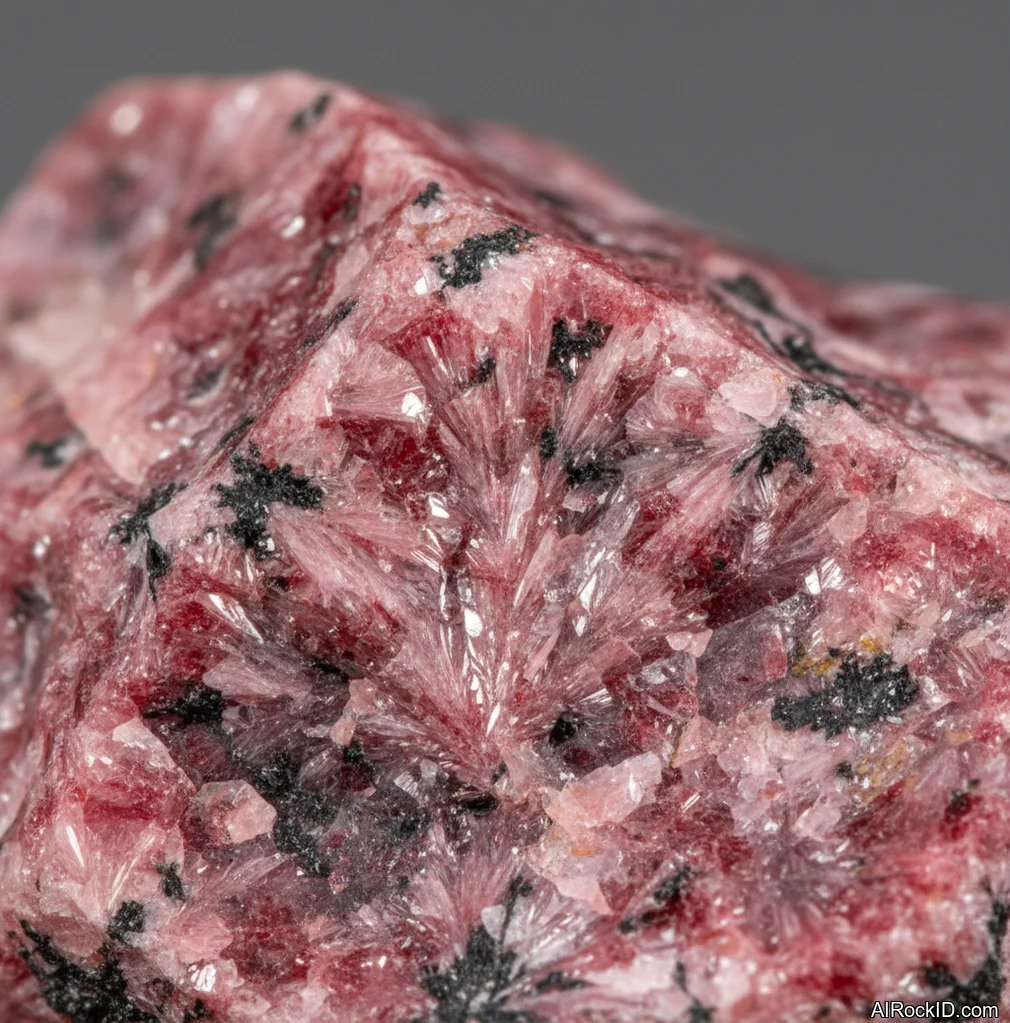
- Pink Aragonite: Pink Aragonite has the same chemistry as calcite but different crystal structure and often forms radiating or fibrous clusters.
- Manganoan Dolomite: Manganoan Dolomite is typically harder than calcite and reacts more weakly to cold dilute acid unless powdered.
- Rhodochrosite: Rhodochrosite is usually deeper pink to red, commonly banded, and has higher specific gravity than calcite.
Pink Calcite vs. Common Pink Lookalikes
| Stone | Hardness | Key ID Clue | Acid Reaction |
|---|---|---|---|
| Pink Calcite | 3 | Perfect rhombohedral cleavage; soft and easily scratched by copper | Fizzes readily with dilute acid |
| Rose Quartz | 7 | Glassy quartz with no cleavage; much more scratch-resistant | No fizz |
| Pink Aragonite | 3.5–4 | Often fibrous, radiating, or acicular rather than rhombohedral | Fizzes with dilute acid |
| Manganoan Dolomite | 3.5–4 | Saddle-shaped crystals or pearly masses; slightly harder | Weak fizz unless powdered |
| Rhodochrosite | 3.5–4 | Richer pink bands or crystals; heavier feel for size | Fizzes slowly to moderately |
AI identification confidence
AI identification is usually stronger for Pink Calcite when photos show cleavage faces, crystal habit, translucency, and scale. Confidence drops when the specimen is a polished palm stone, a uniformly pink tumbled stone, or a close-up image without hardness or acid-test context.
When AI gets it wrong
- A polished pink stone may be labeled Pink Calcite when it is Rose Quartz because cleavage and surface texture are hidden.
- Pink Aragonite and Pink Calcite can look similar in photos because both are calcium carbonate and may react to acid.
- Dyed or coated calcite can appear more saturated than natural Pink Calcite, especially in online listing photos.
- Strong lighting or white-balance changes can make pale calcite look pinker than it is.
Final recommendation
Choose Pink Calcite when the specimen has the right softness, carbonate reaction, and cleavage rather than relying on color alone. For purchases, ask for natural-light photos and avoid listings that use only broad names such as “pink crystal” without mineral identification.
How to Spot Natural Pink Calcite in Listings
Natural Pink Calcite is often pale pink, peach-pink, or rose-toned rather than highly neon or uniformly saturated. Look for visible cleavage planes, subtle internal zoning, or natural surface irregularities. Listings that show only wet-looking, heavily polished pieces can make it harder to judge whether the color is natural or enhanced.
Simple At-Home Identification Checks
Pink Calcite should be scratched by a copper coin or knife point because its Mohs hardness is about 3. A tiny drop of diluted vinegar or dilute hydrochloric acid on an inconspicuous spot may produce fizzing, confirming a carbonate response. Acid tests can mark the surface, so they should be done cautiously and never on valuable polished pieces.
Buying Pink Calcite Online
Useful listings include the specimen’s size, weight, origin when known, and photos in natural light. Be cautious with vague terms such as “strawberry calcite,” “pink onyx,” or “healing pink stone” unless the seller also states the mineral identity. Very bright color concentrated in cracks or along edges can indicate dye treatment.
What Is Pink Calcite?
Pink Calcite is the pink kind of calcite, which is calcium carbonate (CaCO3), and that color mostly comes from tiny traces of manganese.
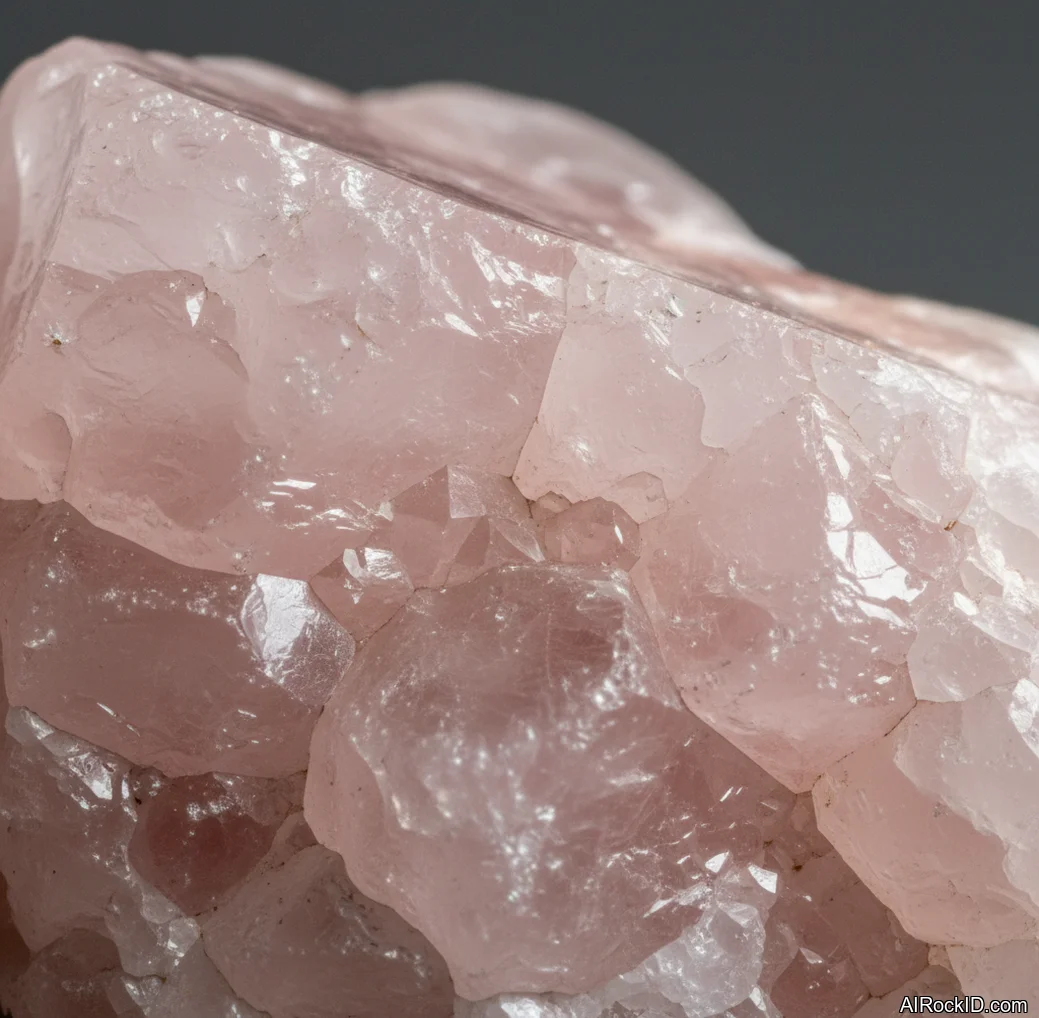
Grab a piece and the first thing you clock is the texture. It’s got that classic calcite slick feel on the cleavage faces, almost like soap, and it stays cool in your palm longer than a bit of glass would. Most of what you see for sale is chunky, massive material instead of neat, pointy crystals, and honestly that works out because the pink usually shows up best when the piece is thick.
People often assume it’ll behave like quartz since it’s sold right next to rose quartz. But it doesn’t. Calcite cleaves like crazy, so one awkward drop and your nice chunk can turn into a small pile of rhombs and chips. Just like that.
Origin & History
Calcite got its official write-up in 1845, thanks to Wilhelm Karl von Haidinger, and the name traces back to the Latin “calx,” meaning lime. That’s the main category Pink Calcite falls under.
Thing is, “pink” isn’t some separate, formal species name. It’s just a color tag dealers slap on it. In the mineral trade you’ll also hear “manganoan calcite,” which is basically shorthand for “manganese is what’s giving it that tint.” And yeah, I’ve seen show labels get a little messy and call it “mangano calcite” (usually scribbled on a tag in marker), and most of the time they mean the exact same thing unless they’re trying to make it sound fancier.
Where Is Pink Calcite Found?
It turns up anywhere calcite forms, but the nicest pink material in shops is often from Mexico and Peru, with Brazil producing big chunky pieces too.
Formation
Most pink calcite forms the same basic way plain calcite does: low-temperature fluids creep through cracks and open pockets in the rock. As that fluid cools down, its chemistry shifts, or it loses CO2, it starts dropping calcium carbonate. And if there’s manganese in the mix, it rides along, so the calcite ends up pink instead of white.
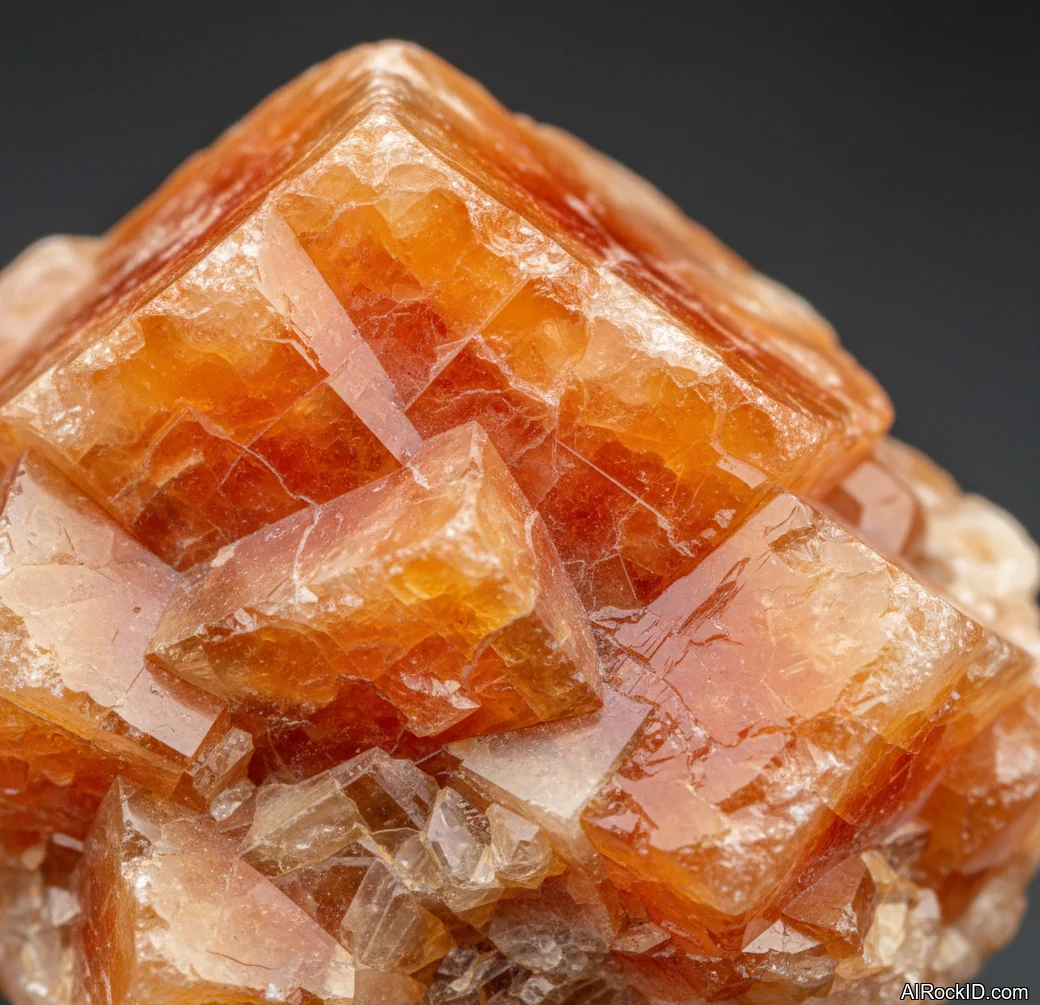
Look, if you snap a piece and stare at the fresh break, you can sometimes catch its whole growth story in the surface. You’ll notice faint banding, some cloudy patches, and tiny healed fractures that flash a little when you tip it under a shop light. In vugs and cavities you might see cleaner crystal faces, but a lot of pink calcite comes as a chunky, massive piece with nice cleavage, not those sharp terminations people expect.
How to Identify Pink Calcite
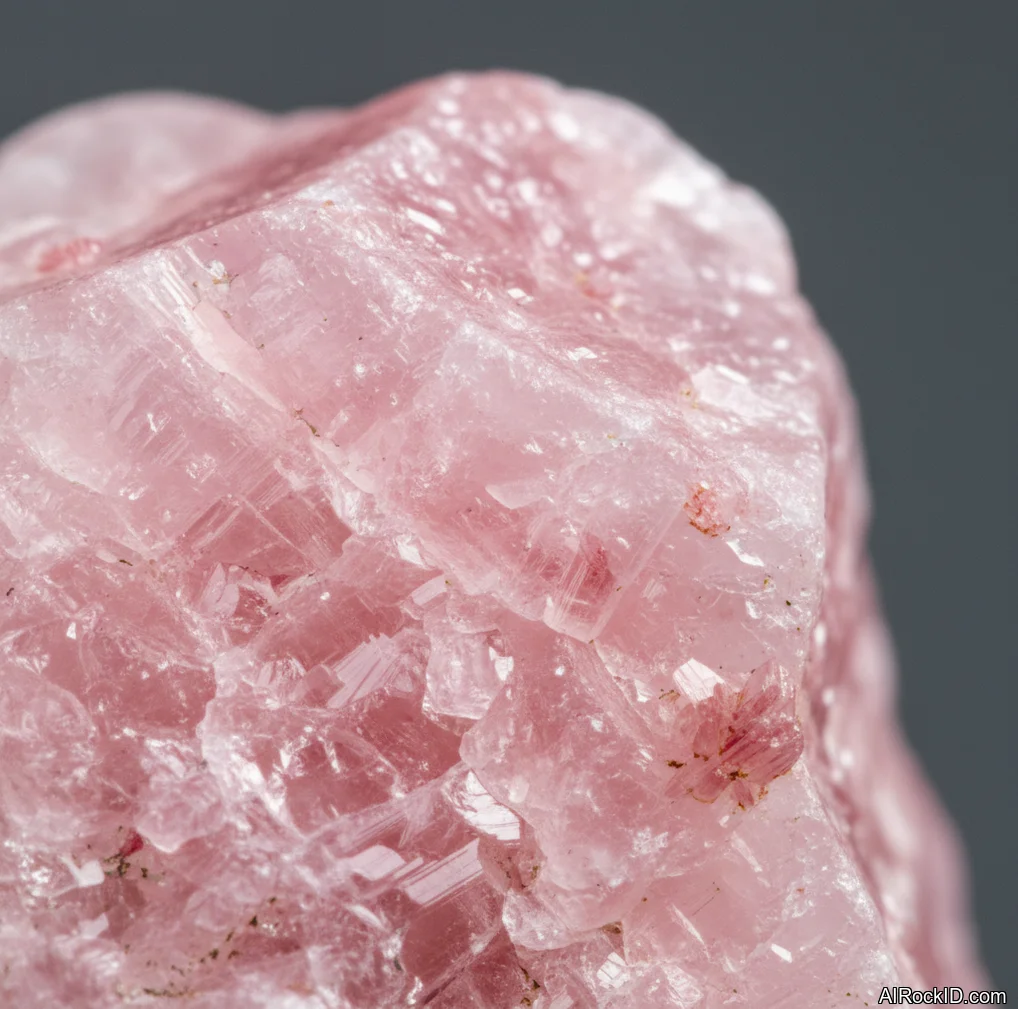
Color: Color runs from pale blush to bubblegum pink, sometimes with white banding or cloudy zones. Stronger pink is usually thicker material, since thin edges can look almost colorless.
Luster: Luster is vitreous to pearly, especially bright on fresh cleavage faces.
If you scratch it with a copper coin or a steel nail, it’ll mark pretty easily because calcite is Mohs 3. The real test is a tiny drop of dilute acid: calcite fizzes from CO2 release, but don’t do that on a polished piece you care about. And when you rotate it, you’ll catch that pearly flash off cleavage planes, the kind of flat sheen quartz just doesn’t have.
Common Look-Alikes
Pink Calcite is sometimes confused with these materials:
- Rose quartz (especially pale tumbled pieces that get sold as “pink calcite” by mistake)
- Mangano calcite (hotter bubblegum pink calcite, often mislabeled as regular pink calcite)
- Pink aragonite (banded or fibrous “onyx” material that gets tossed in the same bins)
- Rhodochrosite (light pink massive pieces, but usually denser and doesn’t show calcite-style cleavage)
- Dyed white calcite or dyed marble (color sits in cracks and pits, base looks chalky white underneath)
- Pink glass or resin (too uniform, too glossy, and it feels warm fast in your hand)
Market Cautions & Treatments
When AI Can Get This Wrong
In photos, AI mixes pink calcite up with rose quartz and mangano calcite all the time because all three read as “soft pink, cloudy, polished.” The real test is a quick hardness check and cleavage: pink calcite scratches with a copper coin or knife, and broken spots often show flat cleavage faces instead of quartz’s curved, glassy fracture. If the pink looks perfectly even across the whole piece, AI will call it calcite anyway, but that’s exactly when you should suspect dye and look for color concentrated in cracks and pits.
Properties of Pink Calcite
Physical Properties
| Crystal System | Trigonal |
| Hardness (Mohs) | 3 (Soft (2-4)) |
| Density | 2.71 g/cm3 |
| Luster | Vitreous |
| Diaphaneity | Transparent to translucent |
| Fracture | Uneven |
| Streak | white |
| Magnetism | Non-magnetic |
| Colors | pale pink, rose pink, salmon pink, white, colorless |
Chemical Properties
| Classification | Carbonates |
| Formula | CaCO3 |
| Elements | Ca, C, O |
| Common Impurities | Mn, Fe, Mg |
Optical Properties
| Refractive Index | 1.486-1.658 |
| Birefringence | 0.172 |
| Pleochroism | None |
| Optical Character | Uniaxial |
Pink Calcite Health & Safety
Pink Calcite is safe to hold and it isn’t toxic. Thing is, the real hazard is just the physical stuff: if it chips, those little flakes can be surprisingly sharp, and the stone itself scratches and breaks pretty easily.
Safety Tips
If you’re going to cut or sand it, put on safety glasses and a dust mask, and keep the surface wet while you work so that fine carbonate dust doesn’t end up floating in the air.
Pink Calcite Value & Price
Price Range
Rough/Tumbled: $5 - $60 per piece
Cut/Polished: $2 - $10 per carat
Prices climb fast when the translucency is cleaner, the pink is stronger, and the piece still has crisp crystal faces instead of those broken cleavage chunks you see everywhere. Big display hunks? Sure, they’re pretty common. But a truly clean, evenly pink chunk with no bruising (that cloudy, beat-up look along the edges) is a lot rarer than you’d expect.
Durability
Nondurable — Scratch resistance: Poor, Toughness: Fair
It’s stable as a mineral, but it bruises, cleaves, and scratches easily with normal handling.
How to Care for Pink Calcite
Use & Storage
Store it in a padded box or a soft pouch, away from harder stones that’ll scratch it up. I don’t let calcite rattle around in a jar, it’ll come out frosted and dinged.
Cleaning
1) Rinse quickly with lukewarm water. 2) Wipe with a soft microfiber cloth, no scrubbing. 3) Dry right away and avoid soaking, salt water, or acidic cleaners.
Cleanse & Charge
For non-water methods, use smoke, sound, or a short rest on a dry selenite slab. Skip salt baths and anything acidic since calcite reacts and can dull.
Placement
It looks best where light can hit the cleavage faces, but keep it off sunny windowsills where it can get knocked or knocked over. A stable shelf with a museum putty dot is a good move.
Caution
Don’t use chemical cleaners or vinegar. And skip ultrasonic or steam cleaning, too. When you handle it, do it over a table, because even a quick little drop can crack it right along the cleavage planes.
Works Well With
Pink Calcite Meaning & Healing Properties
Next to rose quartz, Pink Calcite just feels… quieter in my hand. Softer, too. Like it isn’t trying to broadcast anything, it’s just settling in. And that lines up with how folks talk about it in crystal circles: gentle emotional support, calming vibes, self-kindness, that sort of thing. But look, none of this is medical advice. If someone’s dealing with real anxiety or depression, crystals are a comfort object at best, not treatment.
Grab a palm stone and run your thumb over the polish. It warms up fast, almost right away, and that tactile part is honestly most of the draw. I’ve seen customers pick Pink Calcite simply because it feels good to fidget with, before they even ask what it “does.”
Thing is, there’s a practical downside people gloss over. Toss it loose in a pocket with keys and it’ll come back scratched up and kind of chalky, and that’s a bummer if you bought it for that smooth, dreamy sheen. Treat it like a soft mineral. Because it is.
Common mistakes
- Identifying Pink Calcite by color alone without checking hardness or cleavage
- Assuming every pale pink tumbled stone is Pink Calcite instead of Rose Quartz or dyed material
- Using vinegar or acid on a polished display face where etching would be noticeable
- Buying highly saturated pink pieces without asking whether the color is natural or treated
- Confusing trade names such as “pink onyx” with mineral names
Identify Pink Calcite from a photo
Compare Pink Calcite traits, care tips, value clues, and common lookalikes with a clear photo.