Prophecy Stone


Quick answer: Prophecy Stone is a Moroccan iron-oxide pseudomorph, commonly after marcasite or pyrite, with a dense feel and gray, brown, or dark metallic surfaces. It is often sought by collectors because its sharp, sculptural shapes can resemble weathered metal, hematite, or limonite nodules.
AI Rock ID can help compare a Prophecy Stone specimen against visually similar iron oxides and metallic minerals using photo-based clues. RockIdentifier.io provides crystal and mineral reference information to support identification, collecting, and specimen care.
Good fit
- Collectors who like unusual pseudomorphs and desert-sourced iron oxides
- People comparing heavy gray-brown stones with metallic or earthy luster
- Buyers who want a Moroccan mineral specimen with distinctive natural form
- Anyone building a reference set of hematite, goethite, limonite, and pseudomorph examples
Not a good fit
- Anyone needing a transparent, faceted, or jewelry-grade gemstone
- Collectors who prefer bright color, strong crystal transparency, or high polish
- Buyers who cannot verify Moroccan origin or natural surface condition
- Situations where rust-colored dust or fragile edges would be inconvenient
Most commonly confused with
- Hematite: Hematite is typically smoother, steel-gray to black, and may leave a reddish-brown streak, while Prophecy Stone often has pseudomorphic shapes and mixed iron-oxide surfaces.
- Goethite: Goethite can form botryoidal, fibrous, or earthy masses; Prophecy Stone is usually sold as a specific Moroccan pseudomorph with angular or sculptural forms.
- Pyrite: Pyrite has a brassy yellow metallic look and cubic or pyritohedral crystals, unlike the darker oxidized gray-brown appearance of Prophecy Stone.
- Marcasite: Marcasite is a pale brassy iron sulfide that can alter to iron oxides; many Prophecy Stones are described as pseudomorphs after marcasite.
Prophecy Stone vs. Similar Iron Minerals
| Specimen | Typical Look | Key Difference | Common ID Clue |
|---|---|---|---|
| Prophecy Stone | Gray-brown to dark metallic, sculptural pseudomorph | Trade name for Moroccan iron-oxide pseudomorphs | Heavy feel with angular, altered shapes |
| Hematite | Steel-gray, black, or reddish-brown | More uniform iron oxide mineral | Often gives a red-brown streak |
| Goethite | Brown, black, earthy, botryoidal, or fibrous | Hydrated iron oxide with varied habits | May show velvety or radiating textures |
| Pyrite | Brassy metallic yellow | Unaltered iron sulfide, not gray-brown oxide | Cubic crystals and pale brass color |
| Marcasite | Pale brassy to silvery metallic | Iron sulfide that can weather into oxides | Often lighter and more sulfide-like when fresh |
AI identification confidence
AI identification confidence is usually moderate for Prophecy Stone because the material is visually distinctive but overlaps with hematite, goethite, limonite, and altered sulfides. Clear photos in natural light, multiple angles, and a close-up of surface texture improve the result.
When AI gets it wrong
- Photos are too dark, causing gray-brown iron oxides to look like black hematite or slag
- The specimen is polished, coated, or wet, which can hide natural surface texture
- Only one angle is shown, making pseudomorphic shape difficult to evaluate
- The sample lacks locality information, so a generic iron oxide may be mistaken for Prophecy Stone
Final recommendation
Choose Prophecy Stone when you want a dense, opaque Moroccan pseudomorph with a natural iron-oxide appearance rather than a bright gemstone. For buying, prioritize clear photos, stated origin, natural surface condition, and seller transparency over dramatic metaphysical claims.
How to Check Prophecy Stone Authenticity
Authentic Prophecy Stone is usually sold as a natural Moroccan iron-oxide pseudomorph with a heavy feel and opaque gray-brown surface. Ask for photos in dry natural light, including side views and close-ups of edges, because coatings, polish, or wet surfaces can change the apparent luster. A seller should be able to state the source country and whether the specimen has been stabilized, oiled, or treated.
Photo Tips for Identifying Prophecy Stone
Use indirect daylight and avoid flash glare when photographing Prophecy Stone, because shiny iron oxides can reflect light unevenly. Include a ruler or coin for scale, one full-specimen image, and one close-up of texture. If possible, photograph the specimen dry, since water can temporarily darken the surface and make earthy areas look more metallic.
Collector Notes for Prophecy Stone Specimens
Collectors often evaluate Prophecy Stone by shape, surface preservation, density, and whether the specimen looks naturally pseudomorphic rather than artificially altered. Sharp forms, balanced sculptural outlines, and minimal breakage are generally more desirable. Locality information from Morocco can add context, especially when comparing it with generic hematite or limonite nodules.
What Is Prophecy Stone?
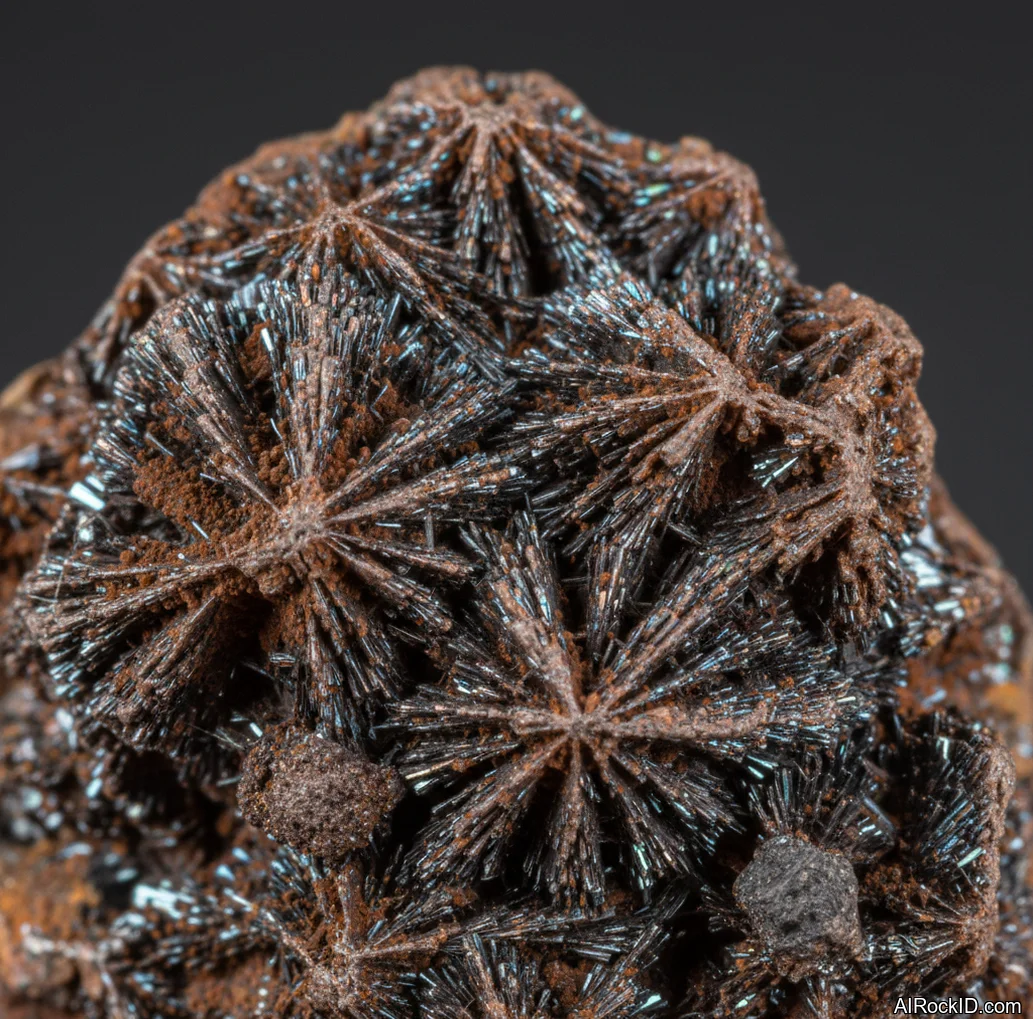
Prophecy Stone is a Moroccan iron-oxide pseudomorph, usually limonite and goethite taking the place of an older sulfide mineral like marcasite or pyrite.
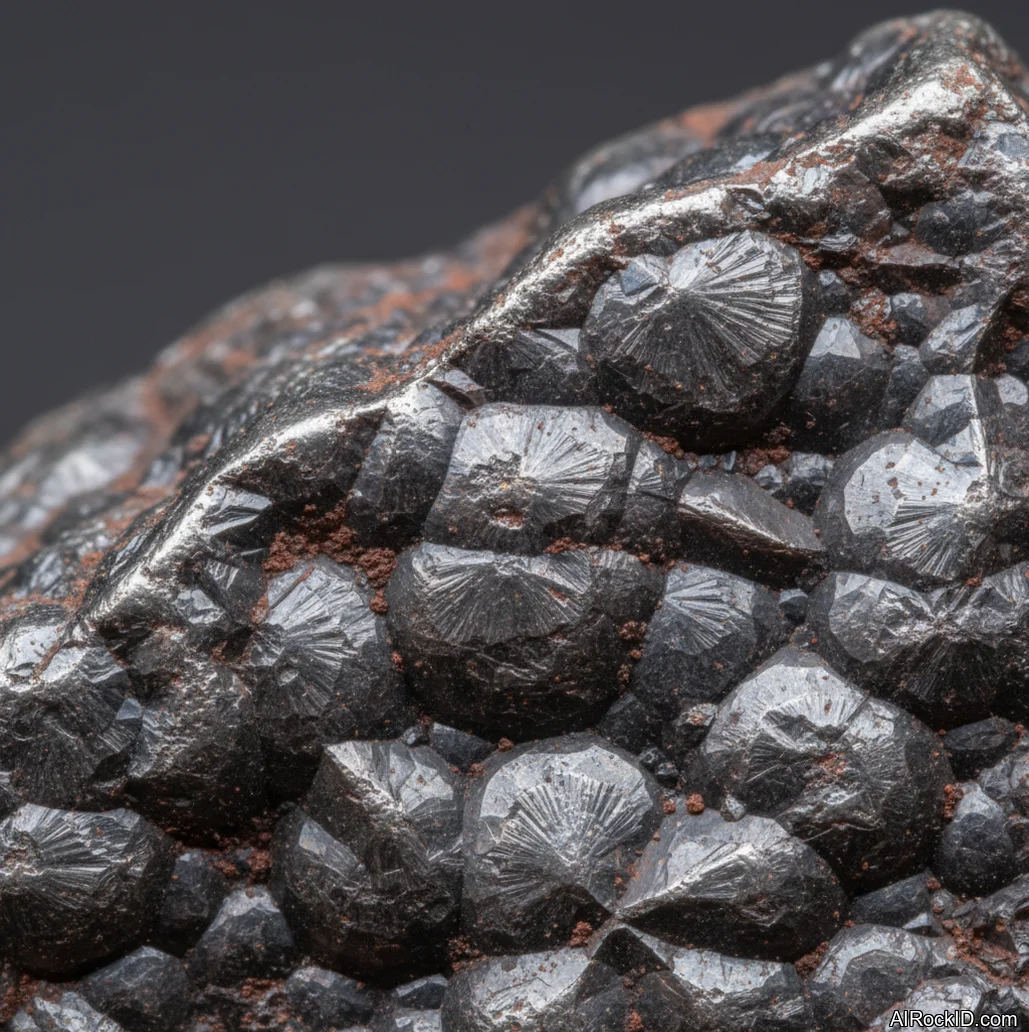
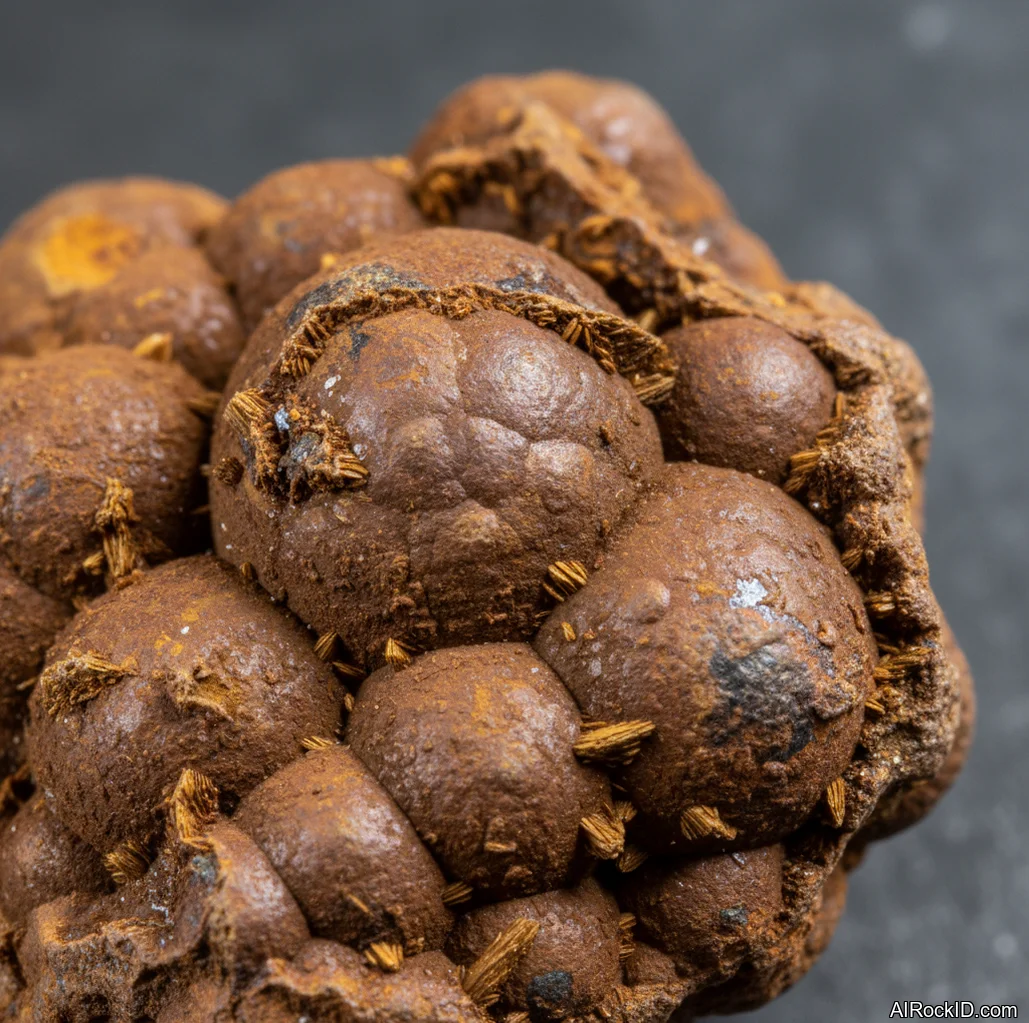
Grab a piece and the first thing that hits you is the weight. It’s surprisingly hefty for something that size. It just drops into your palm and sits there, and the surface feels like a knobby little meteorite, not slick like hematite, and not sandy like plain limonite either. Most of the ones I’ve had in my hands have that dark gray to brown-black skin with a dull-to-submetallic shine, plus those little rusty freckles where it got knocked around in a bucket somewhere (you can almost picture it).
People look at it and assume it’ll be magnetic. Usually it’s not. And you don’t get that clean, mirror-like flash you see on specular hematite. Prophecy Stone is really about the texture and the mass. A tough, rugged nodule you can toss in your pocket without fussing over it too much, although it will scuff softer stones if they’re clacking together. Why wouldn’t it?
Origin & History
Most dealers I’ve talked to trace the name “Prophecy Stone” back to Moroccan markets and the metaphysical world, not some old mineralogy write-up where a professor pinned it down as a new species. You’ll still see it pop up at shows now and then as a “new find,” but geologically it’s the same familiar setup: iron minerals move in, replace earlier crystals, and what you’re left holding is this tough, lumpy shell that feels a bit like a dense, knobby rind in your hand.
Thing is, because it’s a pseudomorph, there’s no single official “first described as Prophecy Stone” moment the way you’d get with an actual new mineral. The rock didn’t change. The name did. Out in the field and in collections, people describe them more straightforwardly as goethite-limonite nodules or iron-oxide pseudomorphs after marcasite/pyrite, and then the trade name stuck because it’s easy to remember and easy to sell.
Where Is Prophecy Stone Found?
Most material sold as Prophecy Stone comes from southern Morocco, commonly reported from the Tata region and nearby desert localities.
Formation
The easiest way to picture it: you start with a sulfide mineral like pyrite or marcasite forming in sedimentary rocks or in those low-temperature hydrothermal setups. Then, later on, oxygen and water find a way in. The sulfide falls apart, the iron gets moved around, and what you’re left with is iron oxyhydroxides like goethite, plus those hydrated mixes people usually just toss into the “limonite” bucket.
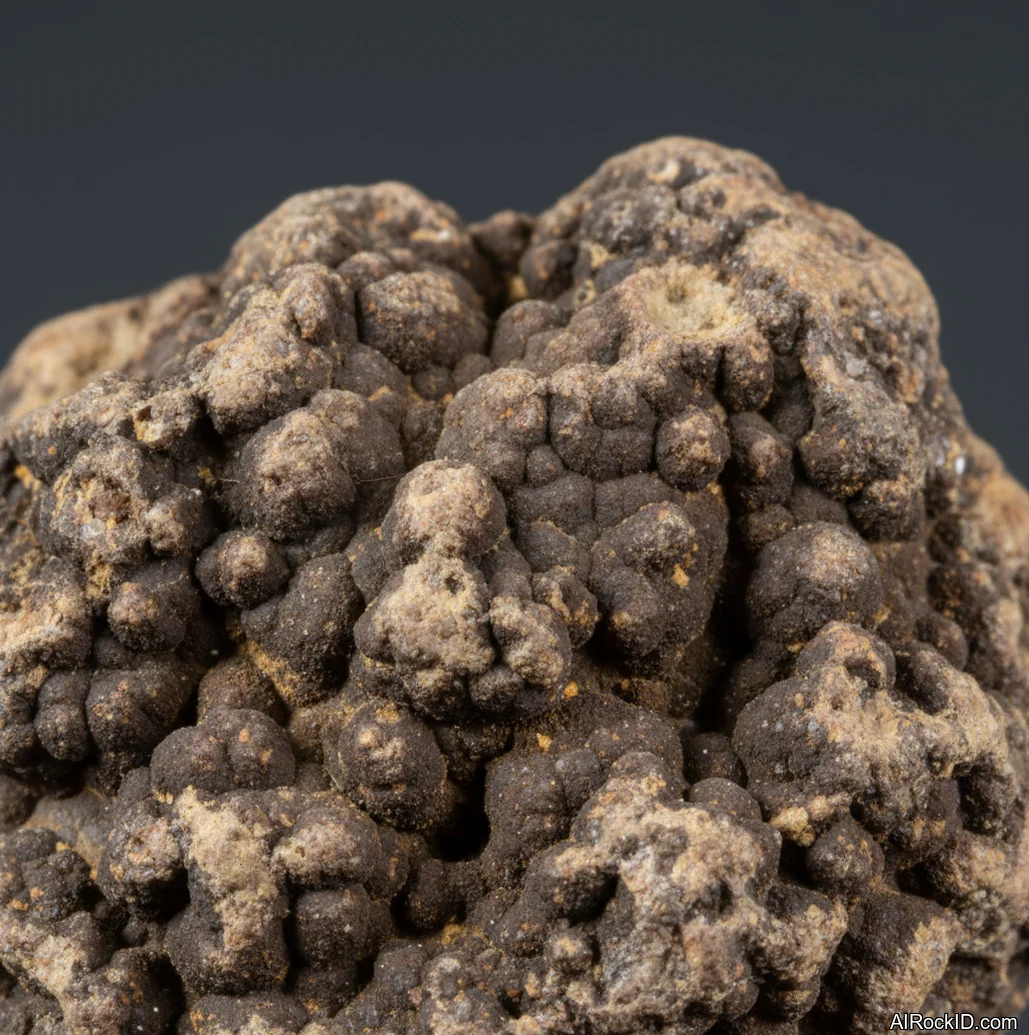
But here’s the fun part. That replacement process can hang onto the original shape. So you’ll still catch little giveaways, like sharp-ish crystal edges or old growth patterns locked into a lump that, from the outside, looks rounded and botryoidal. I’ve cracked open a couple cheap pieces myself, and the inside can look totally different from the skin, more ochre, sometimes even faintly banded (kind of like the weathering crept inward from the outside). Makes sense, right?
How to Identify Prophecy Stone
Color: Usually dark gray, brown-black, or rusty brown, often with patchy oxidation that looks like rubbed iron. Fresh breaks can show yellow-brown to orange-brown tones inside.
Luster: Dull to submetallic, sometimes slightly resinous on smoother bumps.
Look closely at the texture. Real pieces feel like a dense, knobby nodule with rounded botryoidal bumps, not like a poured casting with repeated identical “pimples.” If you scratch it with a steel nail, you’ll often get a brownish streaky powder rather than a clean silver line. And in your hand, it stays cool and heavy, while cheap faux “meteorite” lookalikes tend to feel oddly light or warm and plasticky.
Common Look-Alikes
Prophecy Stone is sometimes confused with these materials:
- Hematite (especially tumbled or polished pieces sold as "grounding stones")
- Limonite / goethite nodules (generic iron-oxide concretions that get relabeled as Prophecy Stone)
- Shungite (real carbon shungite and the common black "shungite" look-alikes)
- Magnetite (black, heavy, often confused in photos when the surface is rough)
- Dyed lava rock or dyed porous basalt sold as "Prophecy Stone"
- Black glass or slag glass pebbles (sometimes sold as "meteorite" or "mystic" stones)
Market Cautions & Treatments
When AI Can Get This Wrong
At first glance in photos, Prophecy Stone gets mixed up with hematite, shungite, and plain limonite because they all read as "dark lumpy rock" on a phone camera. AI struggles when the piece is tumbled or shot under warm light, since the real brown-black and rust tones get crushed into flat black. The real test is in-hand: heft (iron oxides feel dense), a brownish streak on unglazed tile, and a surface that’s knobby and granular instead of glassy-slick.
Properties of Prophecy Stone
Physical Properties
| Crystal System | Orthorhombic |
| Hardness (Mohs) | 5.0-5.5 (Medium (4-6)) |
| Density | 3.3-4.3 g/cm3 |
| Luster | Earthy |
| Diaphaneity | Opaque |
| Fracture | Uneven |
| Streak | yellow-brown to reddish-brown |
| Magnetism | Non-magnetic |
| Colors | dark gray, brown-black, rust brown, yellow-brown |
Chemical Properties
| Classification | Oxides and hydroxides |
| Formula | FeO(OH) (goethite; limonite is variable and commonly treated as a mixture) |
| Elements | Fe, O, H |
| Common Impurities | Mn, Si, Al |
Optical Properties
| Refractive Index | 2.26-2.39 |
| Birefringence | 0.130 |
| Pleochroism | Moderate |
| Optical Character | Biaxial |
Prophecy Stone Health & Safety
Normal handling is pretty low risk. But if you’re cutting, grinding, or hitting the surface with a wire brush, don’t let it turn into a dusty mess.
Safety Tips
If you’re going to shape it, put on a respirator. And when you’re done, hose the slurry off with water (it turns into that gray, muddy paste) instead of dry-sanding it and kicking dust into the air.
Prophecy Stone Value & Price
Price Range
Rough/Tumbled: $8 - $60 per piece
Price mostly comes down to size, the surface condition, and how sculptural the nodule feels in your hand. The ones that are perfectly intact and evenly knobby (the kind you can turn over and it still looks good from every angle) move fast. But if it’s chipped up and there’s a lot of crumbly rust flaking off onto your fingers, it’s going to sit longer.
Durability
Moderate — Scratch resistance: Fair, Toughness: Fair
It’s generally stable in normal room conditions, but the surface can shed fine iron-oxide dust if it’s very weathered or gets banged around.
How to Care for Prophecy Stone
Use & Storage
Keep it in a separate pouch if you store it with softer minerals, because the gritty surface can scuff things like calcite or fluorite. A drawer is fine, but I wouldn’t let a rough piece rattle around in a glass display case.
Cleaning
1) Rinse quickly under lukewarm water to knock off dust. 2) Use a soft toothbrush with a drop of mild soap to clean the bumps. 3) Pat dry and let it air-dry fully before putting it back in a bag or box.
Cleanse & Charge
If you do energetic cleansing, stick to simple methods like smoke, sound, or a brief rinse and dry. Long soaks don’t usually hurt it, but they can lift rusty residue and stain nearby porous stones.
Placement
It’s a nice desk stone because it doesn’t look precious and you can actually hold it while you think. Just put a felt pad under it if you’re setting it on a polished wood shelf.
Caution
Don’t toss it in with softer stones, and don’t go at it with a hard scrub if the surface is already kind of crumbly. If you notice that orange powder rubbing off onto your fingers, take it easy with it and store it in a way that keeps the dust from getting all over your other specimens.
Works Well With
Prophecy Stone Meaning & Healing Properties
Most people who pick up Prophecy Stone are hunting for that steady, head-clearing kind of calm. When I use it, it doesn’t feel like some floaty “love and light” situation at all. It’s more like a mental paperweight. Solid. Present. Hard to ignore.
When I’m scattered, I’ll grab a nodule and just pay attention to what’s actually there: the cold skin of it, those rough little bumps that catch on your fingertips, and the simple, stubborn heft sitting in your palm. No mysticism required. That alone can yank me out of the mental static.
But look, the name sets people up for a certain expectation. Fireworks. Big dramatic stuff. You’re not going to hold it and suddenly get movie-style visions, and if that’s what you’re hoping for, you’ll probably end up annoyed. What it seems to do, for a lot of people, is nudge you into a quieter, inward focus. And you can tell it’s happening because your body loosens up first. Shoulders drop. Breath slows (that kind of thing). If you meditate with crystals, this one can help keep you from drifting off into la-la land.
Thing is, there’s a flip side too. Some pieces come off so earthy and rusty that they feel kind of “muddy” to more sensitive folks, especially if they’ve been sitting in a shop bin and you can practically feel the dust on them. A quick wash helps. So does pairing it with something cleaner and brighter, like clear quartz, if you want the same grounded feel without that heavy, bogged-down edge.
Common mistakes
- Assuming every heavy gray-brown iron oxide specimen is Prophecy Stone
- Mistaking painted, oiled, or wet surfaces for natural metallic luster
- Using color alone instead of checking shape, density, texture, and locality
- Confusing Prophecy Stone with pyrite because both can be related to iron minerals
- Expecting Prophecy Stone to be translucent or suitable for faceted jewelry
- Accepting vague listings without photos of the actual specimen being sold
Identify Prophecy Stone from a photo
Compare Prophecy Stone traits, care tips, value clues, and common lookalikes with a clear photo.