Schist


Quick answer: Schist is a foliated metamorphic rock recognized by its visible mineral layers, often rich in mica that gives it a sparkly surface. It can resemble slate, phyllite, gneiss, or mica-rich rocks, so texture, grain size, and banding are important for identification.
AI Rock ID can help compare a schist specimen against visually similar metamorphic rocks using photos of foliation, grain size, and surface luster. RockIdentifier.io provides reference information to support visual identification, but field context and simple hardness or streak checks can improve confidence.
Good fit
- Learners comparing foliated metamorphic rocks
- Collectors who like sparkly mica-rich textures
- Landscape or building-stone identification projects
- Specimens with visible layered or wavy cleavage
Not a good fit
- Anyone expecting a durable gemstone for jewelry
- Projects requiring a rock that will not split along layers
- Specimens that are heavily weathered or crumbling and difficult to handle
Most commonly confused with
- Slate: Slate has much finer grains and tends to split into flatter, thinner sheets than schist.
- Phyllite: Phyllite has a silky sheen and grains usually too small to see clearly, while schist commonly shows visible mica flakes.
- Gneiss: Gneiss usually has stronger light-and-dark mineral banding, while schist is more mica-rich and platy.
- Mica: Mica is a mineral that may form shiny flakes within schist, while schist is a rock made of multiple minerals.
Schist vs Similar Metamorphic Rocks
| Rock | Typical texture | Key difference |
|---|---|---|
| Schist | Visible platy minerals, often sparkly | Splits along wavy mica-rich layers |
| Slate | Very fine-grained, dull to slightly shiny | Breaks into thin, flat sheets |
| Phyllite | Fine-grained with silky sheen | Less visible mineral grains than schist |
| Gneiss | Coarse bands of light and dark minerals | More distinct compositional banding |
| Quartzite | Hard, sugary, interlocking grains | Usually non-foliated and scratches glass |
AI identification confidence
AI identification confidence for schist is usually higher when photos show the edge, foliation planes, and close-up mica flakes in natural light. Confidence is lower when the sample is polished, wet, covered in soil, or photographed without scale.
When AI gets it wrong
- A close-up photo shows only shiny mica and not the whole rock texture
- Weathered surfaces hide foliation or make the specimen look dull like slate
- Strong banding causes mica schist to be mistaken for gneiss
- A polished decorative stone lacks visible splitting or natural grain
Final recommendation
For identification, look for visible platy minerals, wavy foliation, and a tendency to split along mica-rich layers. If buying a labeled specimen, ask whether it is mica schist, garnet schist, chlorite schist, or another mineral-specific variety.
Schist Varieties and Labels
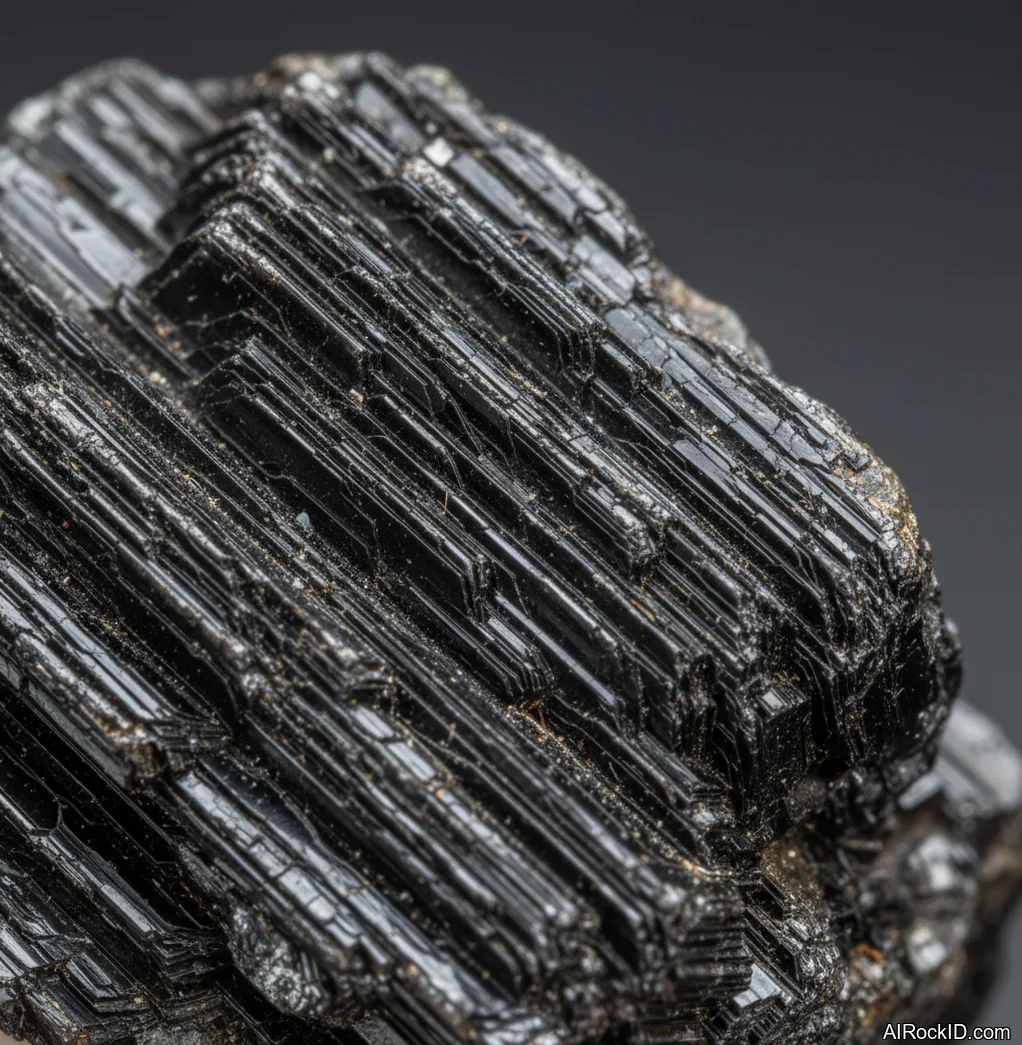
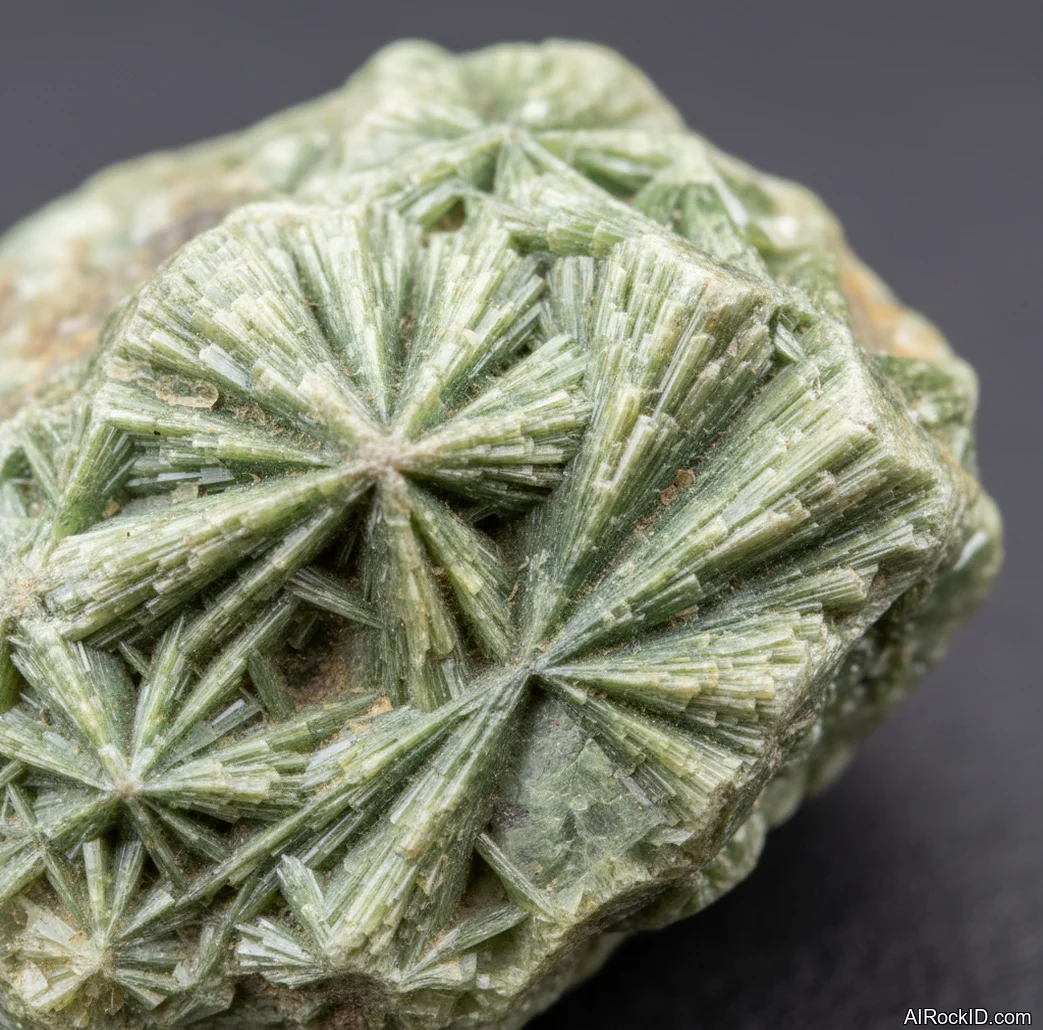
Schist is often named for its most visible or abundant minerals, such as mica schist, garnet schist, chlorite schist, or talc schist. These names describe composition and appearance rather than a single fixed mineral species. A specimen labeled only as “schist” may vary widely in hardness, color, sparkle, and durability.
How to Check a Schist Specimen
Examine both the broad surface and the broken edge. Schist commonly shows aligned flakes or plates that create a layered, sometimes wavy structure. A hand lens can reveal mica flakes, garnet crystals, or other minerals that help narrow the variety.
Buying and Authenticity Notes
Schist is common, so most authenticity concerns involve vague labeling rather than imitation. Decorative pieces may be sold by color or mineral content, but a precise label should match visible features such as mica sparkle, garnet spots, or green chlorite. Avoid assuming that every shiny layered rock is schist without checking grain size and foliation.
What Is Schist?
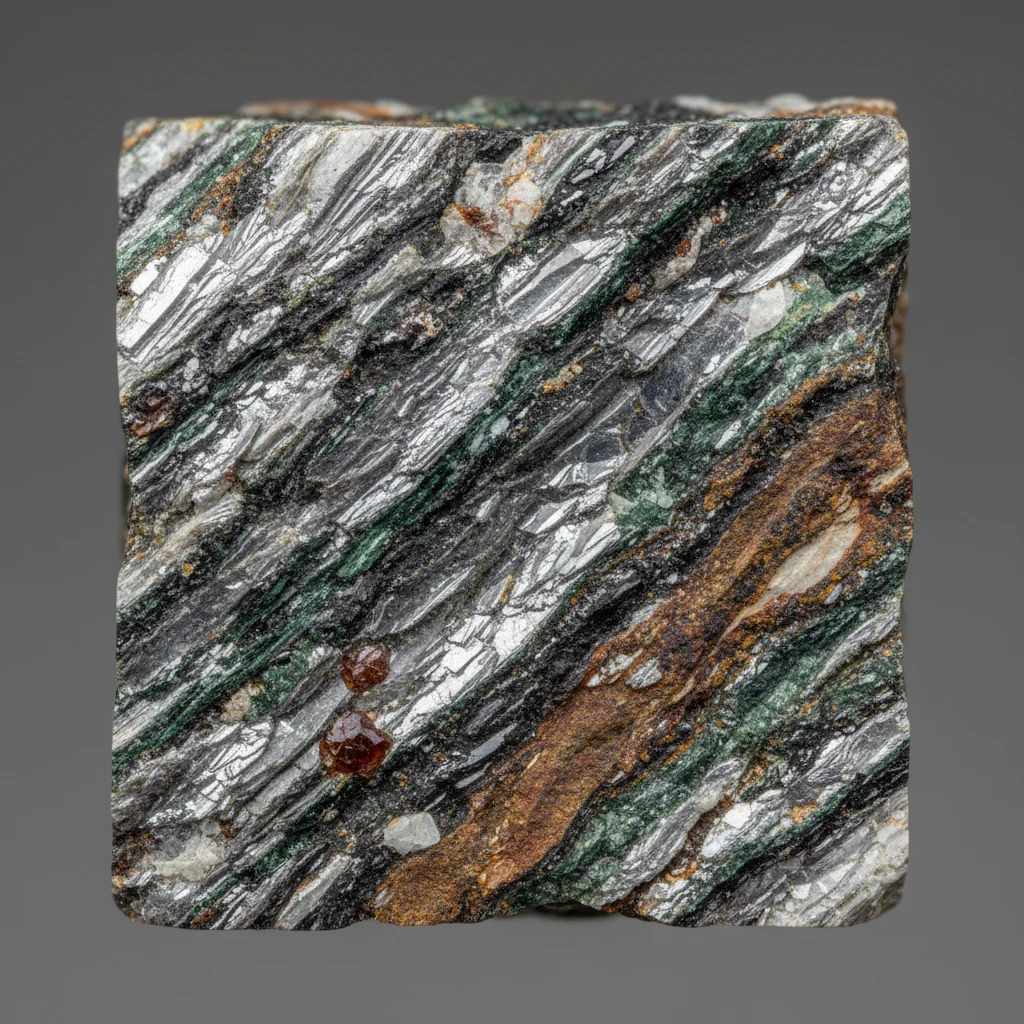
Schist is a medium- to coarse-grained foliated metamorphic rock, not a single mineral. In the hand, it is usually recognized by its sparkly mica-rich layers, wavy sheet-like parting, and visible platy minerals such as muscovite or biotite aligned through the rock.
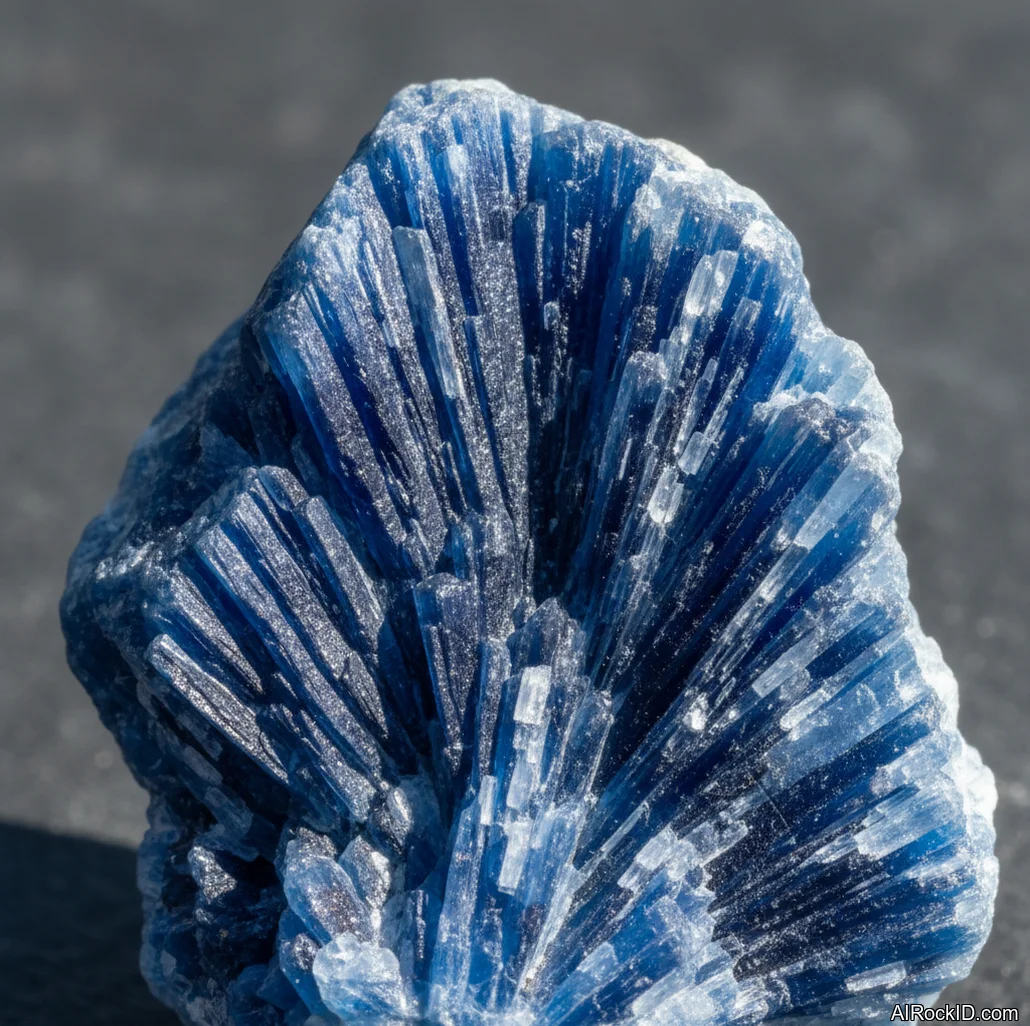
A fresh piece may flash silver, black, green, brown, gray, or reddish-brown as it turns in the light. Many specimens include quartz and feldspar, and some carry larger crystals such as garnet, chlorite, amphibole, or kyanite. Its Mohs hardness is variable, commonly about 3-6.5, because schist is a mineral aggregate rather than one uniform crystal.
Origin & History
The name schist comes from the Greek word “schistos,” meaning split or divisible. That name fits the rock perfectly: good schist often parts along mica-rich foliation into uneven slabs, flakes, and wavy sheets rather than breaking like a massive stone.
Geologists value schist as a practical record of regional metamorphism and mountain-building. When a collector labels mica schist, garnet schist, or chlorite schist, the modifier usually points to the minerals most obvious in the specimen. For locality checking and specimen context, mindat.org is a useful plain-text reference alongside field notes and geologic maps.
Where Is Schist Found?
Schist is common in metamorphic belts worldwide, especially in ancient mountain roots, continental collision zones, and places where sedimentary or volcanic rocks were buried, heated, compressed, and deformed. It is reported from the United States, Canada, the United Kingdom, Norway, Switzerland, Austria, Brazil, India, Australia, and New Zealand.
Formation
Schist forms during medium-grade regional metamorphism. Common starting rocks include shale, mudstone, siltstone, or volcanic rocks, which are altered by heat, pressure, and directed stress until new minerals grow and line up into schistosity.
That aligned fabric is the key: mica flakes, quartz-feldspar grains, and other minerals arrange in layers that catch light and split under pressure. With increasing metamorphic grade, a rock may progress from slate to phyllite, then schist, and eventually gneiss. USGS uses metamorphic rocks like schist to explain how pressure, heat, and deformation reshape earlier rocks.
How to Identify Schist
Identify schist by looking for visible, shiny flakes arranged in foliation rather than the very fine cleavage of slate. A hand specimen usually feels layered, uneven, and somewhat flaky; it may split along mica-rich sheets instead of breaking cleanly across the rock.
Color is variable: gray, silver, black, green, brown, reddish-brown, or white may appear depending on the minerals present. Muscovite gives bright silver flashes, biotite looks dark, chlorite or actinolite can give green tones, and garnet may show as red porphyroblasts. Schist is coarser and more sparkly than phyllite, but usually less strongly banded than gneiss.
Properties of Schist
Physical Properties
| Crystal System | Not applicable; rock composed of multiple minerals |
| Hardness (Mohs) | Variable, commonly about 3-6.5 depending on mineral content (Variable) |
| Density | Approximately 2.6-3.0 g/cm³, higher if rich in garnet, amphibole, or iron minerals |
| Luster | Pearly, silky, vitreous, or micaceous |
| Diaphaneity | Opaque as a rock; individual mica flakes may be translucent |
| Fracture | Uneven to splintery; commonly splits along foliation or schistosity |
| Streak | Variable, commonly white to gray; not a primary identification test for rocks |
| Magnetism | Usually non-magnetic to weakly magnetic; may be slightly magnetic if magnetite is present |
| Colors | gray, silver, black, green, brown, reddish-brown, white |
Chemical Properties
| Classification | Silicate-rich metamorphic rock; mineral aggregate |
| Formula | Variable; commonly quartz (SiO2), feldspars, and micas such as muscovite KAl2(AlSi3O10)(OH)2 or biotite K(Mg,Fe)3AlSi3O10(OH)2 |
| Elements | O, Si, Al, K, Na, Ca, Fe, Mg, H |
| Common Impurities | Mn, Ti, Cr, C, S |
Optical Properties
| Refractive Index | Not applicable to whole rock; varies by constituent minerals |
| Birefringence | Variable; individual mica, quartz, feldspar, amphibole, and garnet grains have different optical properties |
| Pleochroism | Not applicable to whole rock; biotite, chlorite, amphibole, and some accessory minerals may be pleochroic in thin section |
| Optical Character | Aggregate; mineral-dependent |
Schist Health & Safety
Schist is generally safe to handle, but cutting, grinding, or drilling can produce respirable mineral dust, including silica from quartz. Some rare actinolite- or amphibole-rich schists may contain fibrous minerals, so dusty work should be avoided without proper protection.
Schist Value & Price
Price Range
Rough/Tumbled: Common field pieces are usually inexpensive, often under $5-$20; attractive garnet, kyanite, or mica schist specimens may sell for about $10-$100+ depending on size, locality, and crystal quality.
Cut/Polished:
Value is driven by visible foliation, sparkle, fresh unweathered surfaces, included minerals such as garnet or kyanite, specimen size, locality, and educational interest. Ordinary landscaping or outcrop schist has low commercial value.
Durability
Moderate — Scratch resistance: Variable; quartz- and feldspar-rich layers resist scratching better than mica-rich layers, which can be scratched or peeled more easily., Toughness: Fair to poor along foliation because it can split into sheets; more massive varieties are tougher.
Generally stable in normal indoor conditions, but thin mica-rich layers can flake, and weathered schist may crumble. Outdoor use depends on the rock's mineral composition and degree of foliation.
How to Care for Schist
Use & Storage
Store as a rock specimen on a stable shelf or tray. Keep fragile, thinly foliated pieces supported so they do not split or shed mica flakes.
Cleaning
Rinse with water and gently brush with a soft toothbrush. Avoid harsh acids or aggressive ultrasonic cleaning, especially if the schist contains calcite, chlorite, sulfides, or fragile mica layers.
Cleanse & Charge
For metaphysical use, cleanse by gentle rinsing, smoke, sound, or placing on a dry quartz cluster. Avoid prolonged soaking for flaky or weathered pieces.
Placement
Good for geology displays, classroom rock sets, garden accents if durable, or near maps and field guides as an example of regional metamorphism.
Caution
Schist may have sharp edges and can split unexpectedly along foliation. Avoid breathing dust from broken or cut material.
Works Well With
Schist Meaning & Healing Properties
In modern crystal and rock traditions, schist is used as a grounding stone associated with endurance, adaptation, patience, resilience, and transformation. These meanings are cultural and spiritual, not scientific or medical claims, but they fit the rock’s visible story of pressure, heat, and structural change.
Collectors who work metaphysically with schist often place it with Root or Earth Star chakra layouts, or use it near maps, field guides, and geology displays as a reminder of deep Earth processes. For care, keep thinly foliated pieces supported, avoid breathing dust, and cleanse gently with smoke, sound, a dry quartz cluster, or brief rinsing if the specimen is stable.
Identify Schist from a photo
Compare Schist traits, care tips, value clues, and common lookalikes with a clear photo.
Common mistakes
- Calling schist a single mineral instead of a rock made from multiple minerals
- Identifying any shiny stone as schist without checking for foliation
- Confusing fine-grained slate or phyllite with schist
- Assuming all schist has the same hardness or durability
- Using a polished surface alone for identification
- Ignoring accessory minerals such as garnet, chlorite, or quartz when naming a variety