Stibnite


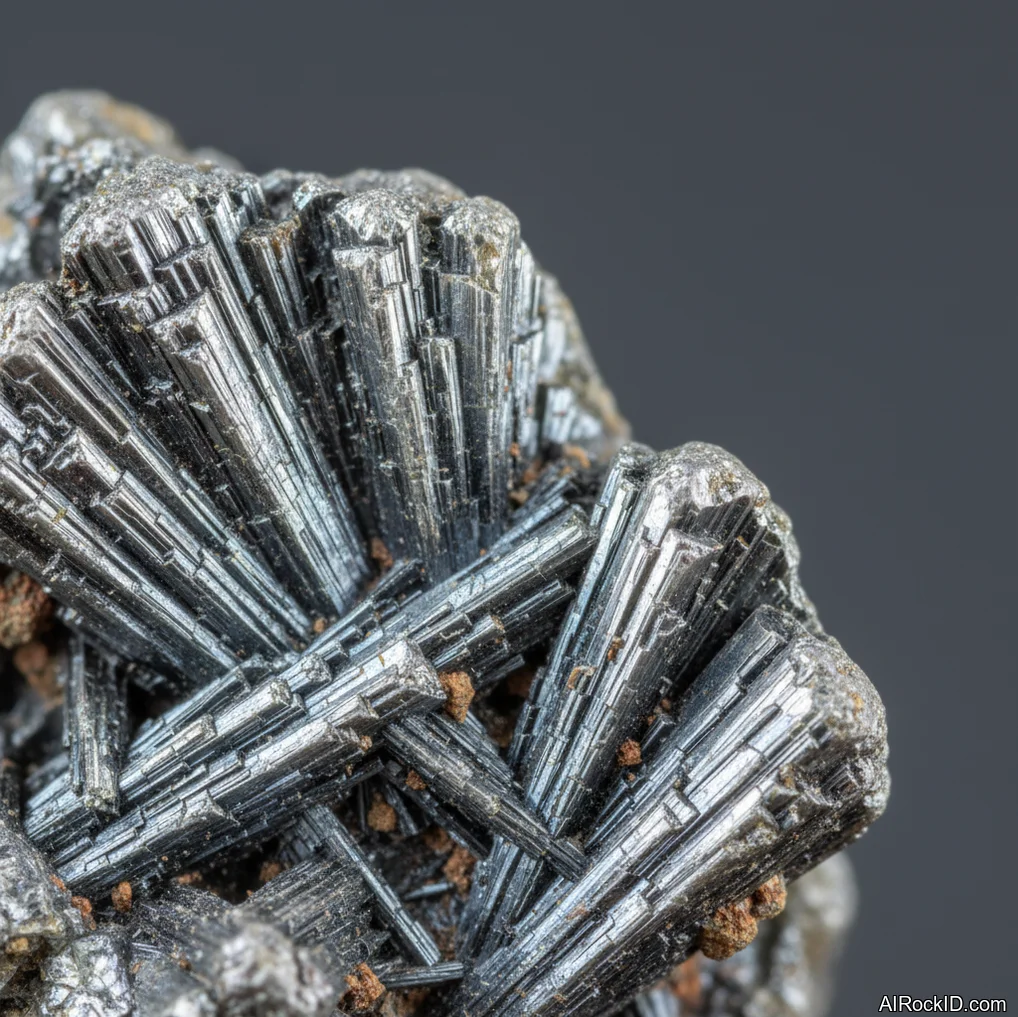
Quick answer: Stibnite is a lead-gray antimony sulfide best known for long, bladed metallic crystals and a relatively low hardness. Because it can shed brittle splinters and contains antimony, it is better suited for careful display than frequent handling.
AI Rock ID can help compare a stibnite specimen’s color, metallic luster, crystal habit, and visible surface texture against similar minerals. RockIdentifier.io provides visual identification support, but fragile or potentially toxic specimens should still be verified through a reputable mineral dealer, label history, or laboratory testing when value or safety matters.
Good fit
- Collectors who want a distinctive metallic mineral with bladed or radiating crystal form
- Display cases where the specimen can remain undisturbed
- Educational collections focused on ore minerals and sulfides
- Buyers comfortable handling fragile minerals with care
Not a good fit
- Children’s collections or classroom touch samples
- Jewelry, pocket stones, or daily carrying
- Humid storage areas or open shelves with heavy dusting
- Anyone seeking a durable mineral for frequent handling
Why people search for this
People often search for stibnite to confirm whether a metallic gray, needle-like or bladed specimen is genuine and to distinguish it from other sulfide minerals. Buyers also look for help recognizing damaged, coated, or mislabeled specimens.
Most commonly confused with
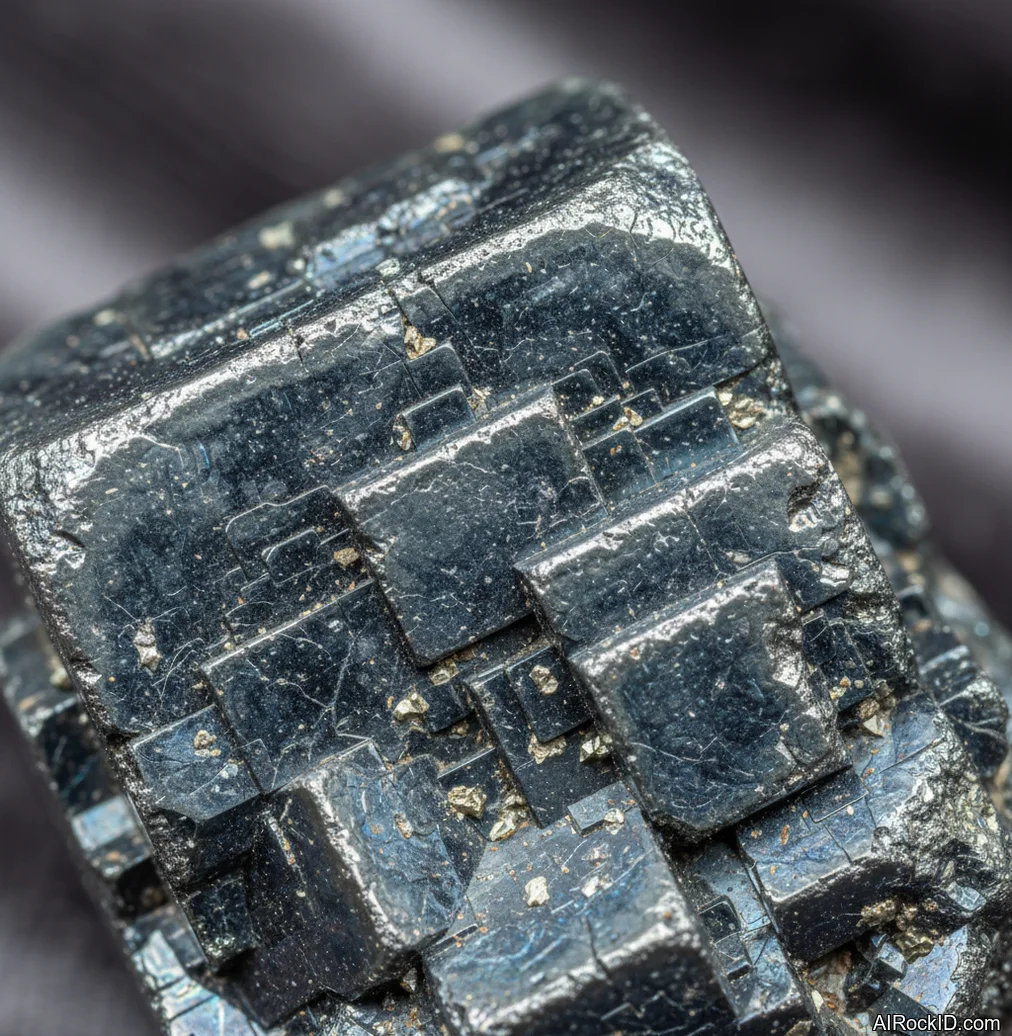
- Galena: Galena is usually more cubic and heavier-looking, while stibnite commonly forms elongated blades or sprays.
- Molybdenite: Molybdenite is softer and often feels greasy or marks paper, while stibnite is brittle and splintery.
- Graphite: Graphite is duller to submetallic and rubs off easily, while stibnite has a brighter metallic luster and distinct crystal blades.
- Bismuthinite: Bismuthinite can look similar but is a bismuth sulfide; reliable separation may require locality data, streak, or lab confirmation.
Stibnite vs. Common Lookalikes
| Mineral | Typical Look | Key Difference | Handling Note |
|---|---|---|---|
| Stibnite | Lead-gray metallic blades or sprays | Soft, brittle antimony sulfide with elongated crystals | Avoid dust and splinters |
| Galena | Bright metallic cubes or stepped masses | Higher density and cubic cleavage are common | Wash hands after handling |
| Molybdenite | Silvery gray platy masses | Very soft and may leave a gray mark | Can smear on surfaces |
| Graphite | Gray to black flaky or massive material | Duller and commonly rubs off easily | Messy but less brittle |
| Bismuthinite | Metallic gray prismatic or fibrous crystals | Similar habit; chemistry testing may be needed | Handle as a fragile sulfide |
AI identification confidence
AI identification confidence for stibnite is often moderate when the specimen shows sharp metallic blades, radiating sprays, and a known mining locality. Confidence drops for massive gray sulfides, broken fragments, tarnished pieces, or photos taken under glare.
When AI gets it wrong
- The image shows only a close-up metallic surface without crystal shape or scale.
- The specimen is tarnished, coated, stabilized, or partially embedded in matrix.
- Lighting glare makes metallic minerals appear brighter or more silvery than they are.
- The sample is a massive sulfide ore rather than a well-formed crystal cluster.
Final recommendation
Choose stibnite if you want a visually distinctive ore mineral for protected display and can handle it as a fragile sulfide. For everyday handling, jewelry, or beginner collections, a harder and less delicate mineral is usually a more practical choice.
How to Check Stibnite Authenticity
Authentic stibnite commonly shows a lead-gray metallic luster, elongated bladed crystals, and a soft, brittle structure. A trustworthy specimen should come with a clear locality, especially for collectible pieces from classic sources such as Romania, China, Bolivia, or Japan. Avoid aggressive scratch tests because stibnite is fragile and may produce unsafe dust or splinters.
Buying Stibnite Specimens
When buying stibnite, examine whether the crystal tips are intact, whether the cluster has been repaired, and whether loose splinters are visible in the packaging. Well-formed sprays and large undamaged blades are usually more desirable than massive ore pieces. Ask the seller whether the specimen has been coated, stabilized, glued, or repaired, because treatments can affect both appearance and collector value.
Stibnite Photo Tips for Identification
Photograph stibnite in indirect light to reduce glare from its metallic surface. Include a ruler or coin for scale and take one full-specimen image plus one close view of the crystal habit. Images that show the matrix, broken edges, and overall shape are more useful for identification than a single shiny close-up.
What Is Stibnite?
Stibnite is an antimony sulfide mineral with the chemical formula Sb2S3.
Grab a solid chunk and the first thing you feel is the weight. It’s weirdly heavy in your hand for how thin those bladed crystals look, and when the faces catch a lamp just right, the shine goes nearly mirror-like.
From across the room it can pass for scrap metal. But a good specimen has that stacked, sword-blade habit that makes you stop mid-aisle at a show. And yeah, it’s soft. I’ve literally watched someone leave a fingerprint smudge on a bright face from handling it a little too long.
Origin & History
Most dealers will tell you the modern name traces back to the Latin “stibium,” which is exactly why antimony gets the symbol Sb. And way before mineral collectors started nitpicking localities on labels, people were grinding up antimony sulfide into a deep black cosmetic pigment (kohl) in parts of the ancient Middle East and Egypt. It’s the kind of black that gets under your fingernails if you’ve ever handled the powdered stuff.
As an officially described mineral species, stibnite got formalized in early mineralogy writing in the 18th century, and the name “stibnite” settled into standard use in the late 1700s. But if you’ve seen old collection tags that say “antimonite,” don’t second-guess yourself, it’s the same material. Just an older naming habit that never quite died out (and still turns up in drawers).
Where Is Stibnite Found?
Stibnite shows up in antimony districts worldwide, especially hydrothermal vein systems. China and Japan are classic sources for big, bladed cabinet pieces.
Formation
Look, if you stare at the way stibnite grows, you can practically imagine the plumbing behind it. Most of the time it’s a hydrothermal mineral, showing up when hot, sulfur-bearing fluids push through fractures and then drop antimony sulfide as they cool down or react with the surrounding rock.
Thing is, compared to something like quartz, stibnite just feels way more “vein-y.” You’ll usually catch it hanging out with other sulfides and sulfosalts like pyrite, sphalerite, galena, plus sometimes those seriously eye-catching companions like calcite or quartz. And those long, blade-like crystals? They often sprout in open pockets along the vein where there’s actual space to stretch, instead of getting squeezed into massive, chunky ore.
How to Identify Stibnite
Color: Silver-gray to lead-gray, sometimes with a bluish steel tone; fresh faces can look bright silver. Tarnish can dull it toward darker gray.
Luster: Metallic, with strong reflections on clean cleavage faces.
Pick up a piece and compare the heft to a similar-sized chunk of quartz or calcite. Stibnite feels unexpectedly heavy. If you scratch it with a copper coin, it’ll usually mark because it’s quite soft, but do that on a junky edge, not a show face. The real test is the bladed, striated crystal habit plus that bright metallic luster, but don’t confuse it with galena cubes or graphite, which feels greasy and writes like a pencil.
Common Look-Alikes
Stibnite is sometimes confused with these materials:
- Galena (especially when it’s in chunky, metallic masses instead of clean cubes)
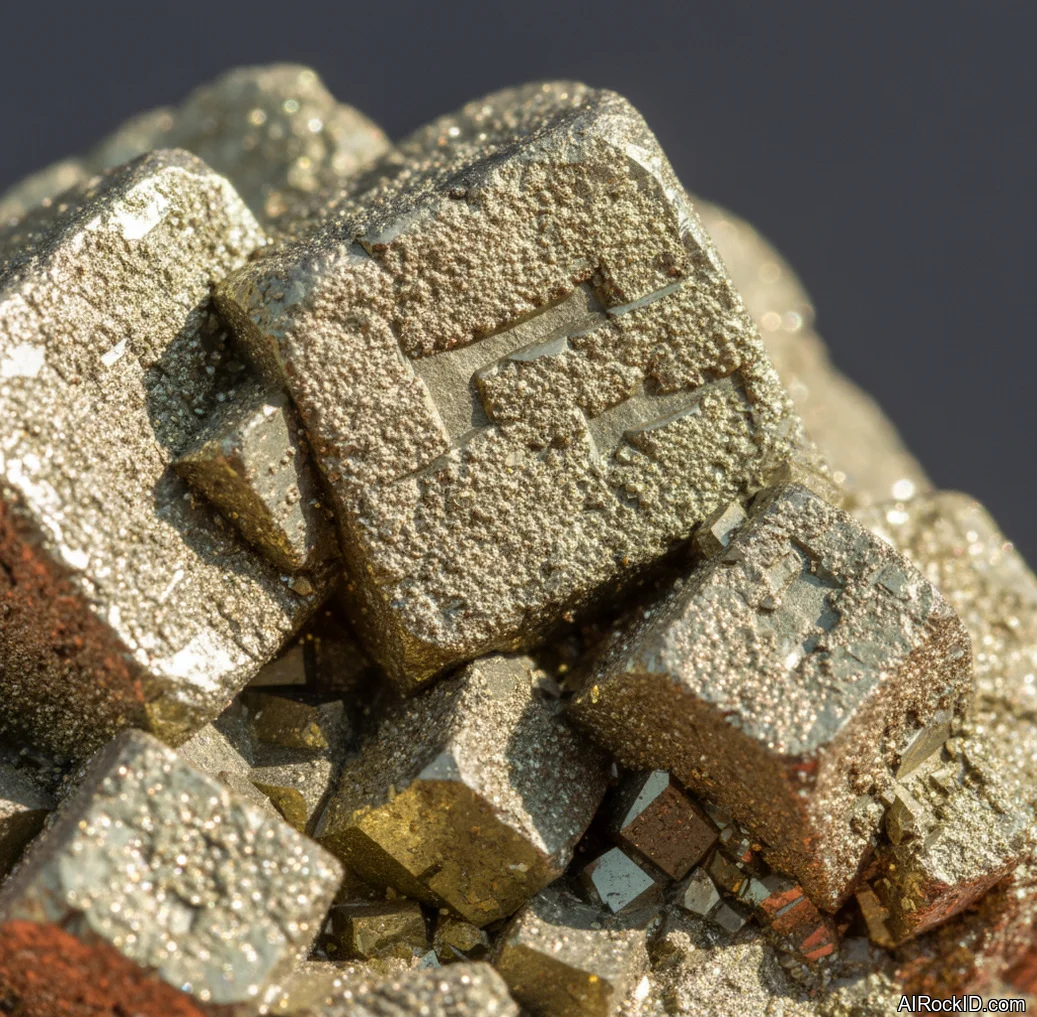
- Hematite (specular or botryoidal “mirror” hematite sold as shiny silver pieces)
- Molybdenite (soft, lead-gray, greasy-looking plates that can seem similar in photos)
- Graphite (massive metallic-gray chunks, often mis-sold when buyers just want “shiny black metal”)
- Silvery slag or metallurgical byproduct (industrial melt waste that gets passed off as a “metallic mineral”)
- Metal-coated glass or resin replicas (tourist-shop “stibnite clusters” that feel a little too warm and too perfect)
Market Cautions & Treatments
When AI Can Get This Wrong
At first glance, phone cameras love to call stibnite “galena” or “hematite” because all three go steel-gray and mirror-bright under a hard light. Photos also miss the soft, bendy feel, so AI won’t catch that stibnite blades nick and smear easily compared to hematite. The real test is a quick scratch and handling check: stibnite is around Mohs 2 and dents fast, while hematite and galena feel tougher and don’t show that same easy edge damage.
Properties of Stibnite
Physical Properties
| Crystal System | Orthorhombic |
| Hardness (Mohs) | 2 (Very Soft (1-2)) |
| Density | 4.52-4.62 g/cm3 |
| Luster | Metallic |
| Diaphaneity | Opaque |
| Fracture | Uneven |
| Streak | lead-gray |
| Magnetism | Non-magnetic |
| Colors | silver-gray, lead-gray, steel-gray |
Chemical Properties
| Classification | Sulfides |
| Formula | Sb2S3 |
| Elements | Sb, S |
| Common Impurities | Fe, As, Pb |
Optical Properties
| Refractive Index | 4.00-4.50 |
| Birefringence | None |
| Pleochroism | None |
| Optical Character | Biaxial |
Stibnite Health & Safety
Handling intact specimens is usually pretty low risk. But if there’s any antimony-bearing dust around, you really don’t want that ending up in your lungs or settling on your cutting board where you make dinner.
Safety Tips
Handle it carefully. Don’t lick your fingers. And stash it somewhere it won’t get knocked around, because the crystals can shed tiny flakes that stick to everything. If you’ve got to clean up bits of debris, grab a damp cloth, wipe it up, and toss the cloth afterward. Don’t brush it dry and kick dust into the air, okay?
Stibnite Value & Price
Price Range
Rough/Tumbled: $15 - $800 per specimen
Most dealers really just eyeball three things: blade size, how bright it looks under the light, and whether the cluster’s still in one clean piece. Crisp, untouched “sprays” with needle-sharp terminations disappear quickly, but the second you spot a glued or repaired tip (you can usually see that slightly dull seam), that’s a real headache in the market.
Durability
Fragile — Scratch resistance: Poor, Toughness: Poor
Stibnite bruises and snaps easily, and the best reflective faces dull if they get rubbed around in a box.
How to Care for Stibnite
Use & Storage
Keep stibnite in a padded box or a display case where it won’t get bumped. I wrap bladed pieces so they can’t rattle, because those tips break if you look at them wrong.
Cleaning
1) Skip water and chemicals. 2) Use a soft, dry artist brush to remove loose dust, working over a tray. 3) For stubborn grime, dab gently with a barely damp cotton swab, then let it air-dry completely.
Cleanse & Charge
If you do energy-style cleansing, use smoke (incense) or sound, not water or salt. I usually just set it near but not touching a piece of quartz and call it good.
Placement
Put it somewhere stable and low-traffic, away from where sleeves, pets, or vacuum hoses can clip it. A dark shelf with a single angled light makes the striations pop without inviting constant handling.
Caution
Don’t use this in elixirs and don’t soak it in water. Keep it from kicking up dust (that fine, chalky stuff gets everywhere), and keep it well out of reach of kids and pets. And when you’re done handling it, go wash your hands.
Works Well With
Stibnite Meaning & Healing Properties
Most dealers over in the metaphysical aisle talk about stibnite like it “cuts through the noise.” And yeah, I get it. You’re literally holding this sharp, metallic mineral that looks like it belongs next to a lathe, and your brain snaps into practical mode fast.
Pick up a piece and you’ll catch yourself being careful without even thinking about it. That alone can shift your mood. For meditation, I’ve had better luck keeping it up on a shelf as something to look at, not something to squeeze in my palm, because it’s soft and those blade-like bits can leave little gray smudges if you sit there fidgeting with it.
But here’s where I draw the line and don’t budge: none of this is medical care, and stibnite isn’t something I’d tell anyone to handle every day for “healing.” If you like the feel of it, use it like a boundary marker on your desk or set it nearby when you’re journaling, then wash your hands and get on with your day.
Common mistakes
- Assuming every metallic gray bladed mineral is stibnite without checking hardness, crystal habit, or locality.
- Handling stibnite like a durable display stone even though it can break, shed splinters, or crumble at crystal tips.
- Cleaning stibnite with water, acids, ultrasonic cleaners, or abrasive tools.
- Buying a specimen based only on a dramatic photo without asking about repairs, coatings, or broken tips.
- Using streak or scratch tests on valuable specimens instead of relying on visual features and provenance.
Identify Stibnite from a photo
Compare Stibnite traits, care tips, value clues, and common lookalikes with a clear photo.