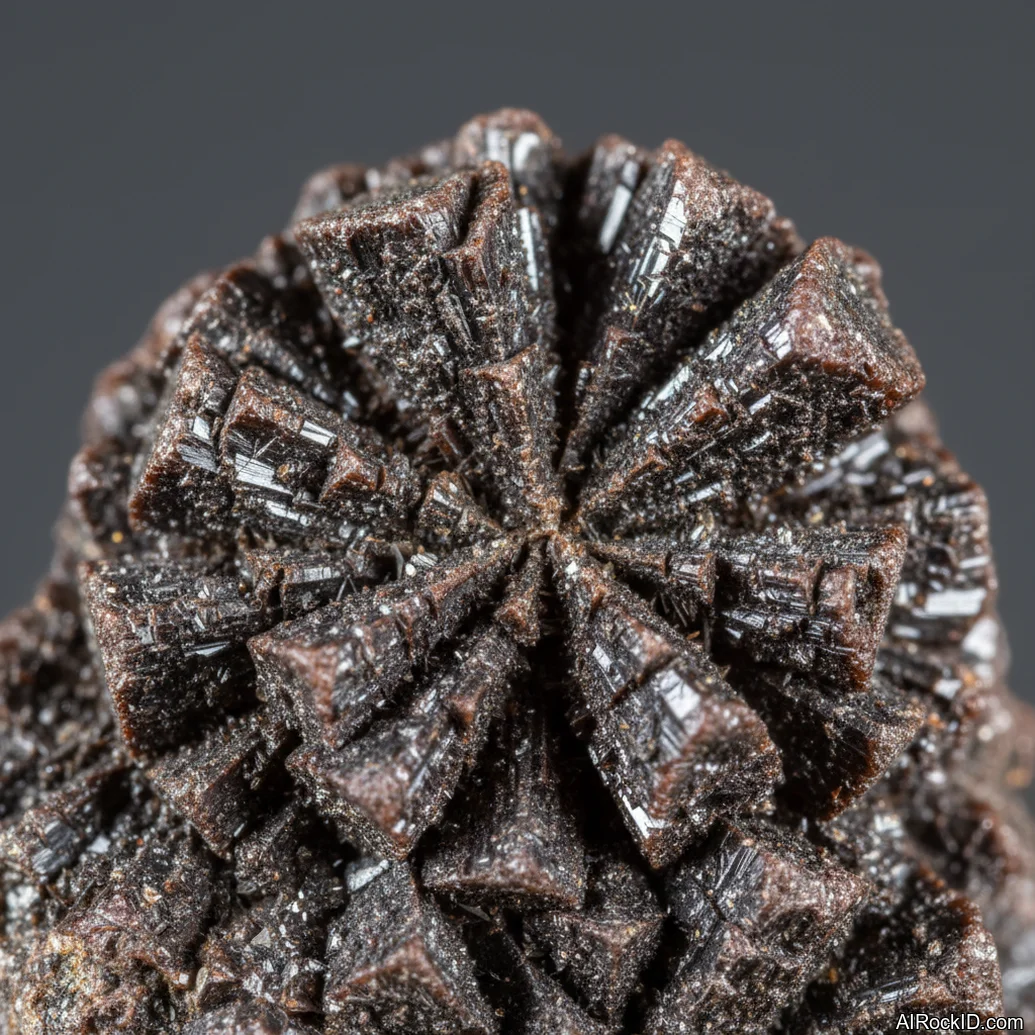
Zincite


Quick answer: Zincite is a zinc oxide mineral best known for its vivid red, orange, yellow-orange, and brownish crystals. Many bright, well-formed specimens sold to collectors are furnace-grown rather than naturally mined, so origin is important when identifying or buying it.
AI Rock ID can help screen a suspected zincite specimen by comparing color, crystal habit, luster, and visual context from a photo. RockIdentifier.io should be used as an identification aid, while high-value or origin-sensitive zincite may still need seller documentation or laboratory confirmation.
Good fit
- Collectors who like vivid red-orange mineral specimens
- Buyers who are comfortable asking whether a crystal is natural or furnace-grown
- Display collections where a soft-to-moderate hardness mineral can be protected
- Students comparing oxide minerals and synthetic growth forms
Not a good fit
- Jewelry meant for daily wear or impact-prone settings
- Buyers who want only naturally mined crystals without verifying provenance
- Collections stored in loose boxes where sharp crystal edges may chip
- Anyone expecting color alone to prove zincite identity
Why people search for this
People often search for zincite because its intense orange-red color is unusual and many specimens have a dramatic crystal shape. Search interest also comes from questions about whether a piece is natural, furnace-grown, or confused with another red-orange mineral.
Most commonly confused with
- Cinnabar: Cinnabar is mercury sulfide, usually deeper vermilion red, much denser, and has different safety considerations.
- Realgar: Realgar is an arsenic sulfide with orange-red color but is much softer and light-sensitive.
- Vanadinite: Vanadinite commonly forms hexagonal barrel-like crystals and is much denser than zincite.
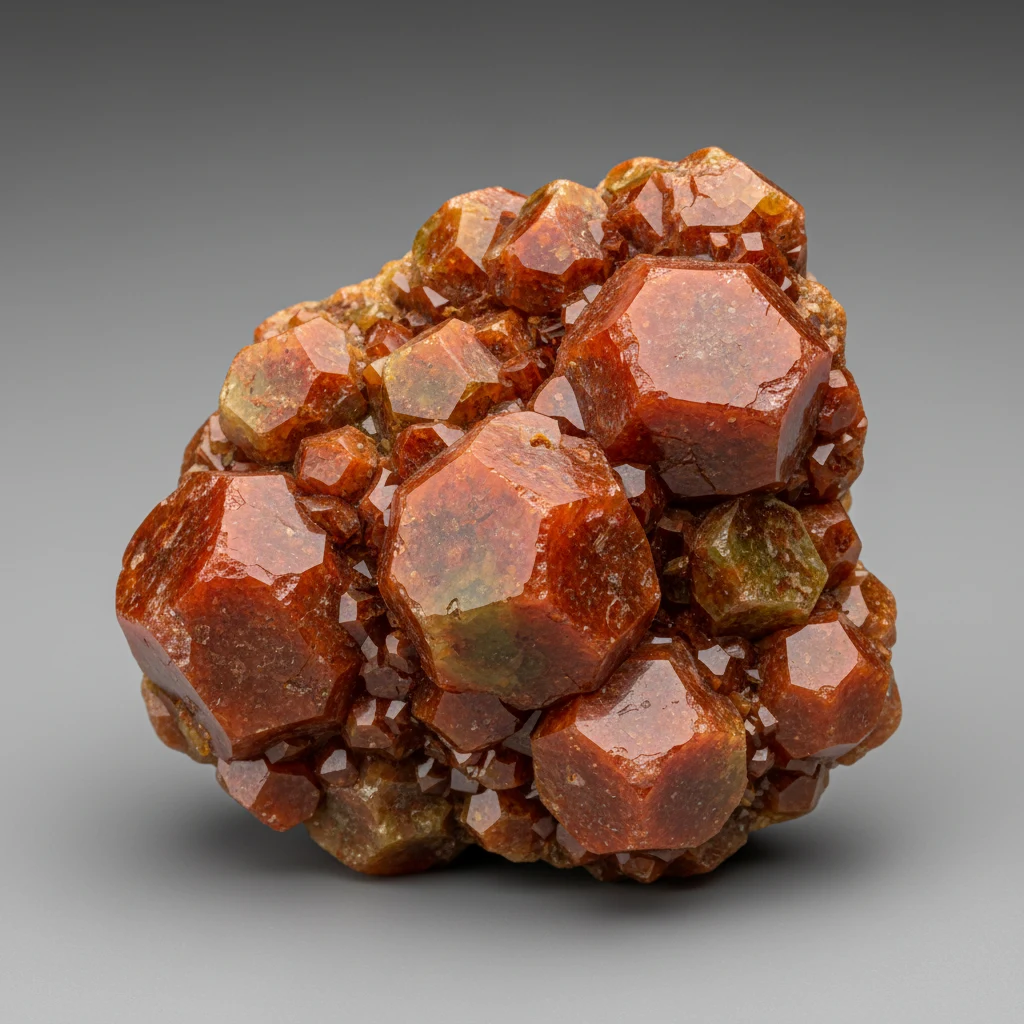
- Spessartine Garnet: Spessartine is harder, usually more glassy, and commonly appears as equant garnet crystals rather than elongated zincite forms.
Zincite Lookalike Comparison
| Specimen | Typical Color | Key Difference | Mohs Hardness |
|---|---|---|---|
| Zincite | Red, orange, yellow-orange, brownish red | ZnO; many collector crystals are furnace-grown | 4–4.5 |
| Cinnabar | Vermilion to brownish red | Mercury sulfide; very dense and softer | 2–2.5 |
| Realgar | Orange-red | Arsenic sulfide; soft and light-sensitive | 1.5–2 |
| Vanadinite | Red, orange, brown | Hexagonal barrels on matrix are common | 3–4 |
| Spessartine Garnet | Orange to reddish orange | Hard garnet with different crystal habit | 6.5–7.5 |
AI identification confidence
AI identification confidence for zincite is usually higher when the image shows vivid color, crystal shape, luster, and matrix or growth context. Confidence drops when the specimen is a polished stone, a small fragment, or a brightly colored furnace-grown crystal photographed without scale.
When AI gets it wrong
- The photo shows only color, with no crystal habit, matrix, or scale.
- The specimen is a tumbled or polished piece that has lost natural crystal features.
- Lighting is overly warm or saturated, making orange minerals appear more red.
- The piece is furnace-grown and resembles several synthetic or lab-altered materials.
Final recommendation
For zincite, the most useful buying question is whether the specimen is natural or furnace-grown, because both can be real zincite but have different collector contexts. Choose pieces with clear labeling, stable storage condition, and photos that show crystal form from more than one angle.
Natural vs. Furnace-Grown Zincite
Natural zincite is uncommon as well-formed crystals and is historically associated with localities such as Franklin and Sterling Hill, New Jersey. Many vivid, sharply formed zincite crystals in the collector market are furnace-grown byproducts from zinc smelting. Furnace-grown zincite is still zinc oxide, but it should be labeled accurately because origin affects collector interest and pricing.
Buying and Authenticity Checks
Ask sellers whether a zincite specimen is natural, furnace-grown, or synthetic-grown, and request locality information when a piece is represented as natural. Be cautious of vague labels such as “rare natural zincite” without a mine, region, or collection history. For expensive specimens, provenance, older collection labels, or professional mineral dealer documentation are more useful than color alone.
Photo Tips for Zincite Identification
Photograph zincite in neutral daylight or balanced indoor light to avoid exaggerating its red-orange color. Include a scale reference, a close view of crystal faces, and a side view showing whether the crystal is on matrix or appears as a freestanding furnace-grown cluster. Multiple angles help separate zincite from cinnabar, realgar, vanadinite, and orange garnet.
What Is Zincite?
Zincite is a zinc oxide mineral, ZnO, best known for vivid orange, red, yellow-orange, and deep reddish-brown crystals. In the hand, a good crystal feels surprisingly heavy for its size because zincite has a density of 5.64–5.68 g/cm³, and fresh faces can flash adamantine to subadamantine luster.
Collectors should know that zincite has two very different market stories. Natural zincite is uncommon and most famous from the Franklin and Sterling Hill zinc deposits of New Jersey, while many bright, sharply formed orange-red crystals in collections are synthetic or accidental furnace-grown zincite from zinc-smelting environments, especially material historically associated with Poland.
Origin & History
Zincite was recognized as a distinct mineral species in the early 19th century and named for its zinc content. Its classic natural home is the Franklin-Sterling Hill mining district in Sussex County, New Jersey, USA, one of the world’s most important zinc ore districts.
For collectors, label accuracy matters as much as color. Natural Franklin or Sterling Hill zincite is a different collecting category from furnace-grown zincite produced during zinc smelting; both can be attractive, but they should not be sold as the same origin. For locality verification, compare specimen labels with mindat.org entries for Franklin Mine and Sterling Hill Mine.
Where Is Zincite Found?
Natural zincite is best documented from metamorphosed zinc-manganese ore bodies, especially Franklin Mine in Franklin and Sterling Hill Mine in Ogdensburg, both in Sussex County, New Jersey, USA. These classic specimens may occur with calcite, franklinite, willemite, tephroite, and other zinc-manganese minerals.
Formation
Natural zincite forms in zinc-rich, high-temperature metamorphic or metasomatic ore environments. In those settings it is commonly associated with franklinite, willemite, calcite, tephroite, and other zinc-manganese minerals, giving classic New Jersey specimens a dense, ore-rich feel rather than a simple gem-crystal look.
Furnace-grown zincite forms differently: zinc vapor oxidizes and crystallizes as ZnO under high-temperature industrial conditions. That process can produce bright, lustrous orange-red crystals or clusters with striking form, but they are not naturally mined crystals and should be described as synthetic, smelter-grown, or furnace-grown when sold.
How to Identify Zincite
Identify zincite by its orange-red to red, yellow-orange, brownish red, or dark reddish-brown color, hexagonal crystal system, and adamantine to resinous luster. It has a Mohs hardness of 4–4.5, a yellow-orange to white streak, and a noticeably high heft for a small specimen.
The most practical field question is whether the piece is natural or furnace-grown. Highly lustrous, large, isolated orange-red crystals are often synthetic or smelter-grown, while natural Franklin-Sterling Hill zincite is commonly granular, massive, or intergrown with calcite, franklinite, and willemite. Associated franklinite may be magnetic, even though zincite itself is non-magnetic to very weakly magnetic depending on inclusions.
Properties of Zincite
Physical Properties
| Crystal System | Hexagonal |
| Hardness (Mohs) | 4–4.5 (Moderate) |
| Density | 5.64–5.68 g/cm³ |
| Luster | Adamantine, subadamantine, resinous |
| Diaphaneity | Transparent to translucent; massive material may be opaque |
| Fracture | Conchoidal to uneven; brittle |
| Streak | Yellow-orange to white |
| Magnetism | Non-magnetic to very weakly magnetic depending on inclusions; associated franklinite may be magnetic |
| Colors | Orange, Red, Yellow-orange, Reddish brown, Brown, Greenish yellow |
Chemical Properties
| Classification | Oxide |
| Formula | ZnO |
| Elements | Zinc, Oxygen |
| Common Impurities | Manganese, Iron |
Optical Properties
| Refractive Index | nω about 2.013, nε about 2.029 |
| Birefringence | About 0.016 |
| Pleochroism | Weak to distinct in colored crystals, commonly yellow-orange to red-brown tones |
| Optical Character | Uniaxial positive |
Zincite Health & Safety
Zincite is generally safe to handle as a solid specimen, but zinc oxide dust or fumes should not be inhaled. Heating zincite or grinding/polishing it without protection can create a respiratory hazard.
Zincite Value & Price
Price Range
Rough/Tumbled: Small furnace-grown crystals commonly sell for about $5–$40; larger bright crystal clusters may sell for $50–$300+. Verified natural zincite from Franklin or Sterling Hill can range from tens to hundreds of dollars depending on size, association, documentation, and specimen quality.
Cut/Polished:
Value depends strongly on whether the specimen is natural or synthetic/furnace-grown, as well as color saturation, crystal sharpness, transparency, size, damage, locality documentation, and association with classic Franklin-Sterling Hill minerals. Natural, well-documented New Jersey zincite is generally more scientifically collectible, while bright furnace-grown crystals are valued mainly for display aesthetics.
Durability
Moderate to delicate — Scratch resistance: Zincite is softer than quartz and can be scratched by many common minerals, tools, and dust particles., Toughness: Brittle; crystals can chip, break, or cleave-like fracture if dropped or knocked.
Stable under normal display conditions, but avoid acids, harsh chemicals, ultrasonic cleaners, steam cleaning, and prolonged abrasion. Bright furnace-grown crystals can have fragile terminations and should be handled carefully.
How to Care for Zincite
Use & Storage
Store separately from harder minerals such as quartz, topaz, and corundum to prevent scratching. Use a padded box or display case for delicate crystal clusters.
Cleaning
Clean gently with a soft brush and lukewarm water if necessary. Avoid acids, strong detergents, ultrasonic cleaners, steam cleaners, and abrasive scrubbing.
Cleanse & Charge
For non-scientific spiritual use, cleanse by placing near selenite, clear quartz, or with gentle sound; avoid saltwater and rough handling.
Placement
Display in a stable cabinet or stand away from high-traffic areas. Keep bright crystals out of prolonged direct sunlight and away from humidity extremes or chemical fumes.
Caution
Many vivid zincite crystals in the market are furnace-grown rather than natural; buy from sellers who clearly disclose origin. Avoid inhaling dust from broken or abraded material.
Works Well With
Zincite Meaning & Healing Properties
In modern crystal-healing traditions, zincite is associated with vitality, motivation, creativity, confidence, willpower, and energetic action. These meanings are cultural and spiritual beliefs, not medical claims, but they match the stone’s visual character: hot orange-red color, bright luster, and a dense, forceful presence in the hand.
Zincite is commonly linked with the Root, Sacral, and Solar Plexus chakras, and with Aries, Leo, and Scorpio. For spiritual use, place it near selenite, clear quartz, or use gentle sound cleansing; avoid saltwater, rough handling, and any practice that requires grinding, heating, ingestion, or inhaling dust.
Identify Zincite from a photo
Compare Zincite traits, care tips, value clues, and common lookalikes with a clear photo.
Common mistakes
- Assuming every bright red-orange zincite crystal is naturally mined.
- Using color as the only identification feature.
- Ignoring density and hardness differences when comparing zincite with cinnabar or vanadinite.
- Buying high-priced zincite without asking for origin or provenance.
- Storing loose zincite crystals with harder minerals that can scratch or chip them.