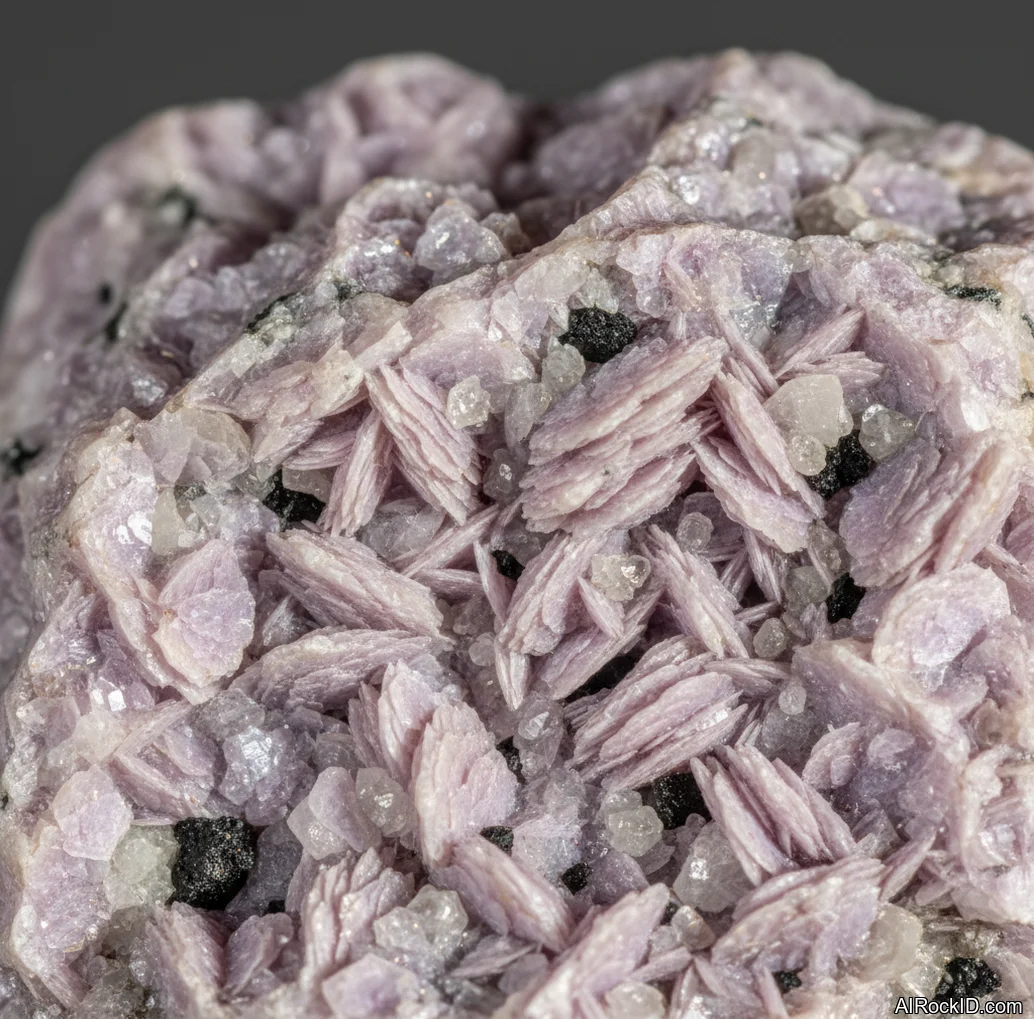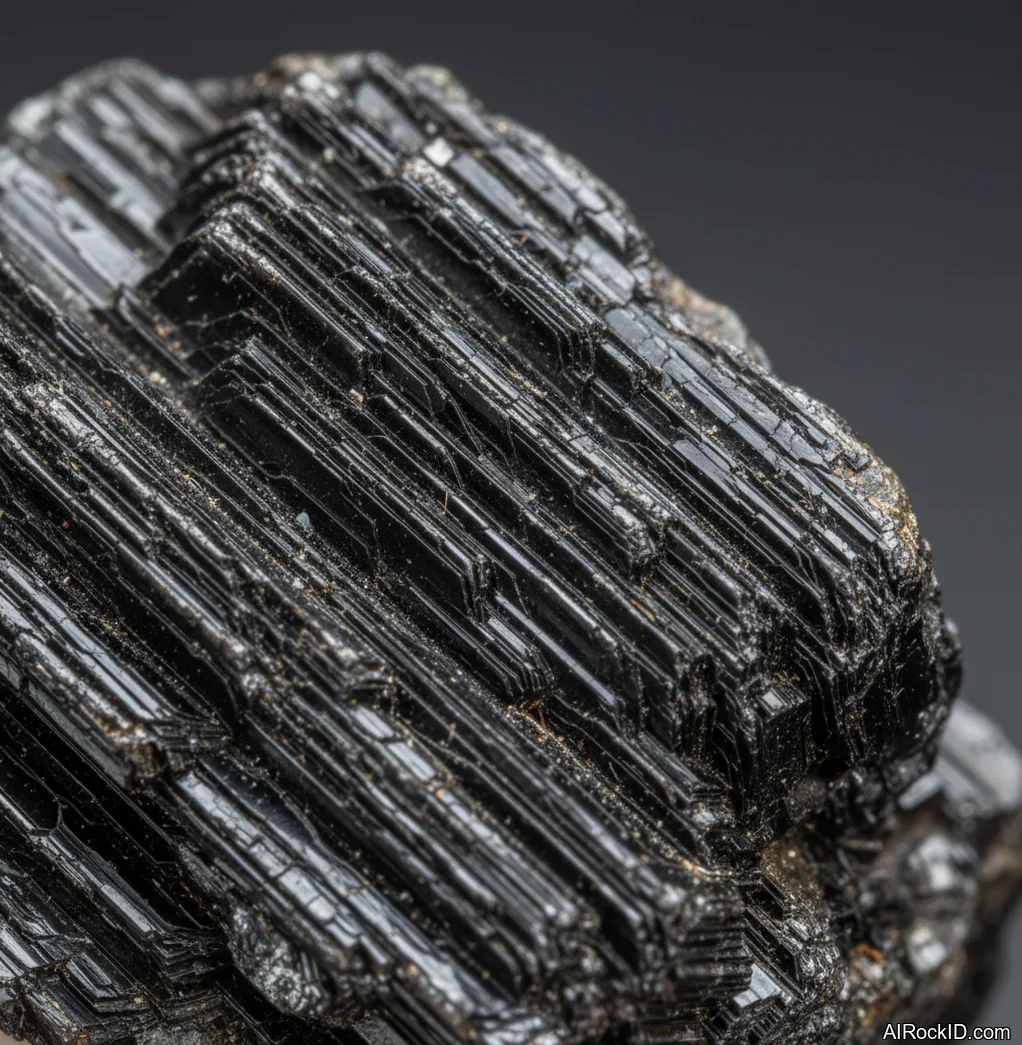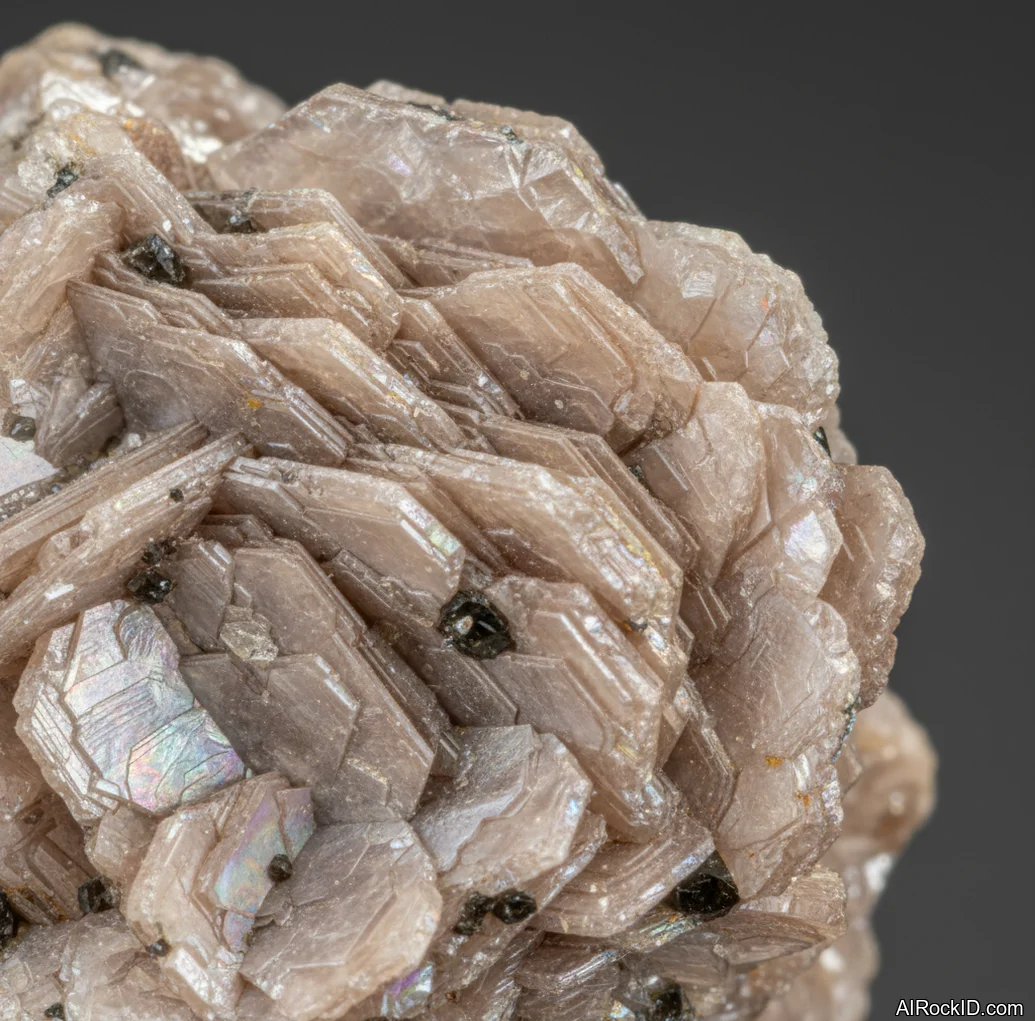
Muscovite


Quick answer: Muscovite is a common mica recognized by its thin, flexible sheets, perfect basal cleavage, light color, and pearly to glassy shine. It is easy to scratch and can be confused with other platy minerals, especially biotite, lepidolite, and phlogopite.
AI Rock ID can help screen muscovite by checking visual traits such as sheet-like cleavage, transparency, color, and luster from a photo. RockIdentifier.io should be used as an identification aid, with hardness, cleavage, and streak observations used to confirm the result when possible.
Good fit
- Collectors who want a classic example of mica with visible sheet cleavage
- Students learning mineral identification by cleavage, luster, and hardness
- Buyers looking for pale, silvery, or transparent mica specimens
- People comparing mica minerals in pegmatite, schist, or granite samples
Not a good fit
- Jewelry that needs high durability or scratch resistance
- Handling by young children without supervision, because thin sheets can flake
- Situations where water soaking or ultrasonic cleaning is required
- Buyers seeking a rare mineral, since muscovite is widespread
Most commonly confused with
- Biotite: Biotite is usually dark brown to black, while muscovite is commonly colorless, silvery, pale tan, or light green.
- Lepidolite: Lepidolite is commonly lilac, pink, or purple and often contains lithium; muscovite is usually paler and not typically purple.
- Phlogopite: Phlogopite is commonly golden brown to reddish brown and is magnesium-rich, while muscovite is potassium-aluminum mica.
- Talc: Talc feels soapy and is softer at Mohs 1, while muscovite splits into elastic sheets and is slightly harder.
Muscovite vs. Common Lookalikes
| Mineral | Typical Color | Key Difference | Mohs Hardness |
|---|---|---|---|
| Muscovite | Colorless, silvery, pale tan, light green | Thin elastic sheets with perfect basal cleavage | 2–2.5 |
| Biotite | Dark brown to black | Dark mica; sheets are often opaque or smoky | 2.5–3 |
| Lepidolite | Lilac, pink, purple | Lithium mica with distinctive purple to pink tones | 2.5–3 |
| Phlogopite | Golden brown to reddish brown | Magnesium mica with warm brown coloration | 2.5–3 |
| Talc | White, gray, pale green | Soapy feel and lower hardness; not elastic sheets | 1 |
AI identification confidence
Photo-based identification of muscovite is often moderate to high when the specimen shows flat, reflective sheets or peeling mica books. Confidence drops for tiny flakes, weathered surfaces, polished pieces, or images without scale and lighting from multiple angles.
When AI gets it wrong
- Dark or backlit muscovite may be labeled as biotite or another dark mica.
- Pale sheet-like selenite or gypsum may be mistaken for muscovite if flexibility is not tested.
- Fine mica flakes in granite or schist may be too small for reliable visual identification.
- Glittery coatings on other rocks can resemble muscovite in a single photo.
Final recommendation
Choose muscovite specimens that show clear sheet cleavage, a pearly to vitreous luster, and minimal crumbling if the goal is display or study. For authenticity, avoid relying only on shine and confirm with simple observations such as low hardness, flexible thin sheets, and the absence of a soapy feel.
How to Check Muscovite Authenticity
Authentic muscovite usually separates into very thin, elastic sheets rather than breaking into blocky fragments. A fingernail may scratch it, and freshly cleaved surfaces often show a pearly or glassy shine. Be cautious with glittery rock coatings or craft mica powders, which may not represent a collectible muscovite crystal specimen.
Buying Muscovite Specimens
Display specimens are commonly sold as mica books, flat plates, or muscovite associated with quartz, feldspar, tourmaline, or garnet. Clearer, larger, well-formed sheets and attractive matrix associations usually affect price more than rarity. Ask whether the specimen is natural, trimmed, repaired, or coated if surface appearance looks unusually bright or uniform.
Field Clues for Muscovite
Muscovite is common in granites, pegmatites, schists, and gneisses, where it may appear as shiny flakes or layered books. Its perfect one-direction cleavage is the most useful field clue, especially when thin flakes bend instead of snapping immediately. Color alone is not enough for identification because muscovite can be colorless, silver, tan, yellowish, or pale green.
What Is Muscovite?
Muscovite is a potassium-rich mica (phyllosilicate) mineral that splits into thin, flexible, transparent-to-translucent sheets.
Hold a chunk in your hand and, honestly, the first surprise is the weight, or the lack of it. It feels weirdly light for something that looks like a rock. Then your thumb hits that slick, flaky edge and it practically begs to peel, like you’re flipping pages in a tiny paperback. Those stacked “books” of sheets are the whole trick, really. Tip it under a shop light and you’ll catch that quick silver flash off the cleavage faces, and then, two degrees later, it goes flat and dull again. So finicky.
People glance at it and assume it’s just fragile glitter. But decent muscovite has a little spring. A thin sheet will bend a bit and flex instead of crumbling, and then it snaps back like it’s got some attitude. But it’s still soft, no getting around that. Keys will scuff it up fast, and if you toss it loose in a bag with quartz (don’t do that) it’ll come out looking scraped and rough.
Origin & History
In modern mineralogy, muscovite got its description and name in 1794 from Johann Friedrich Ludwig Hausmann. The name traces back to “Muscovy,” the old label tied to Russia, because people there used clear mica sheets as actual window panes.
And yeah, a lot of old collector chatter still calls it “Muscovy glass,” and in antique stuff you’ll run into “isinglass” too. I’ve picked up a few of those little vintage panes at shows, the kind where it’s basically a thin muscovite sheet held in a simple frame, edges a bit chipped and the surface catching the light like a peeled layer. It’s a mineral that bumps right up against regular life, not just museum drawers.
Where Is Muscovite Found?
You’ll see muscovite in granites, pegmatites, and many metamorphic rocks worldwide, with big book crystals most often coming from pegmatite districts.
Formation
Raw chunks out of pegmatites are where muscovite really gets dramatic. In a granite pegmatite, the rock cools slow, and there’s basically a watery soup loaded with flux elements, so the sheet silicates have time and space to grow huge. Sometimes you’ll crack one open and it comes out as thick “books” with crisp, clean partings between pages. That’s the stuff with those broad, mirror-like cleavage faces and sheets you can actually use without them crumbling in your hands.
But muscovite isn’t just a pegmatite-only deal. It can grow during metamorphism too, especially in schists and gneisses, where pressure nudges those platy crystals into alignment so the whole rock takes on a sparkly foliation. In schist, the muscovite is usually smaller, more like a shimmery fabric than big plates, and it’s commonly mixed in with biotite, quartz, feldspar (the usual crew). Kind of a different vibe, right?
How to Identify Muscovite
Color: Most muscovite is silvery, colorless, pale champagne, or light tan, sometimes with a faint greenish or brownish tint from impurities. Thin sheets can look almost perfectly clear until you catch a reflection.
Luster: Pearly on cleavage faces, sometimes vitreous on fresh surfaces.
Look closely for perfect basal cleavage that peels into elastic sheets; if you can lift a corner with a fingernail, you’re in mica territory fast. If you scratch it with a copper coin, it’ll mark easily, and a steel nail can gouge it without much effort. The real test is the “book” behavior: it splits into stacked layers with a bright flash at the right angle, not gritty grains like quartz or feldspar.
Common Look-Alikes
Muscovite is sometimes confused with these materials:
- Phlogopite mica (bronzy-brown mica books that look like muscovite until you compare the warmer color and slightly different luster)
- Biotite mica (dark brown to black mica that still peels in sheets, but it’s usually more opaque and dirt-stains your fingers easier)
- Lepidolite mica (lavender to pink mica that’s often sold as “purple muscovite” even though the color and lithium content point to lepidolite)
- Selenite/satin spar gypsum (soft, pale, and shiny; gets mistaken for mica in photos, but it won’t peel into elastic pages and it feels more fibrous or blade-like)
- Cleavage plates of calcite sold as “mica sheets” (clear-ish plates with a flash, but calcite breaks into rhombs, not flexible films, and it fizzes in acid)
- Dyed mica flakes in resin or paint (craft-grade “muscovite” glitter where the color sits in edges and cracks and the flakes look too uniformly perfect)
Market Cautions & Treatments
When AI Can Get This Wrong
At first glance in photos, AI mixes muscovite up with selenite, calcite cleavage, or even clear plastic film because they all read as pale, shiny, layered plates. The real test is mechanical: muscovite peels into thinner, flexible sheets and has that greasy-slick feel under a thumb, while calcite snaps brittle and gypsum feels more fibrous and chalky. A quick hardness check helps too, since muscovite (2 to 2.5) scratches with a fingernail but still won’t behave like a soft, crumbly gypsum blade.
Properties of Muscovite
Physical Properties
| Crystal System | Monoclinic |
| Hardness (Mohs) | 2-2.5 (Soft (2-4)) |
| Density | 2.76-2.88 g/cm3 |
| Luster | Pearly |
| Diaphaneity | Transparent to translucent |
| Fracture | Uneven |
| Streak | White |
| Magnetism | Non-magnetic |
| Colors | Colorless, Silvery white, Pale yellow, Tan, Light green, Light brown, Gray |
Chemical Properties
| Classification | Silicates |
| Formula | KAl2(AlSi3O10)(OH)2 |
| Elements | K, Al, Si, O, H |
| Common Impurities | Fe, Mg, Ti, Na, Li, F |
Optical Properties
| Refractive Index | 1.552-1.600 |
| Birefringence | 0.036-0.041 |
| Pleochroism | Weak |
| Optical Character | Biaxial |
Muscovite Health & Safety
Handling muscovite is usually fine. The only real “risk” is those sharp, papery edges, the kind that feel like stiff pages, and they can give you tiny cuts if you peel sheets too fast. And water won’t hurt it, but if you soak it, the delicate layered bits can loosen up.
Safety Tips
If you’re trimming or snapping mica, put on eye protection, and rinse your hands afterward, because those paper-thin flakes stick to your skin like glitter and don’t want to let go.
Muscovite Value & Price
Price Range
Rough/Tumbled: $2 - $60 per specimen
Cut/Polished: $1 - $10 per carat
Clean, big “book” crystals with crisp pages and that glassy sheen (the kind that catch on your fingertip when you flip them) sell for more, especially when they’re hanging out with tourmaline, beryl, or albite. But if the sheets are thin, scratched up, or they flake apart the second you handle them, they stay cheap. And honestly, most of the everyday schist stuff is basically just a teaching sample.
Durability
Fragile — Scratch resistance: Poor, Toughness: Poor
It’s stable in normal room conditions, but the perfect cleavage means it chips and flakes easily if it’s knocked or rubbed.
How to Care for Muscovite
Use & Storage
Store it in a box or padded tray so harder minerals don’t scuff the cleavage faces. If it’s a big book crystal, keep it from rattling around because the edges love to shed flakes.
Cleaning
1) Use a soft makeup brush or camera lens brush to lift dust from between sheets. 2) If needed, rinse briefly with lukewarm water and a drop of mild soap. 3) Pat dry and let it air-dry fully before putting it back in a closed container.
Cleanse & Charge
If you do metaphysical cleansing, stick to smoke, sound, or a quick pass under cool running water, then dry it well. Long salt soaks aren’t worth the hassle with a flaky mica piece.
Placement
Put it where light can hit it from the side, not straight on, so you get that quick mirror flash off the cleavage. I like muscovite on a lower shelf because you can tilt it in your hand without fear of dropping it.
Caution
Skip ultrasonic cleaners, steam, and any kind of rough tumbling. Don’t toss muscovite loose in your pocket with coins or keys. It’ll come out scuffed up, with those little edge flakes you can feel when you run a fingernail across it. And don’t glue loose sheets unless you’re genuinely okay with it turning into a permanent craft piece. Why? Because once it’s glued down, that’s pretty much it.
Works Well With
Muscovite Meaning & Healing Properties
Next to the loud, flashy metaphysical stones, muscovite feels downright quiet. When I’m sorting a grimy tray of mixed minerals, I’ll keep a muscovite “book” close because the tell is dead simple. Layers. Like pages. You catch that stacked, papery look and your brain goes, okay, that one.
In crystal-shop talk, people link muscovite to clarity, self-reflection, and steady focus, and honestly I get why. It literally splits into clean sheets, and it throws back light like a tiny mirror when you turn it in your fingers. But here’s the straight truth: it won’t “do” anything on its own. What it can do is give you something physical to latch onto. I’ve sat there with a thin sheet (the kind that feels weirdly cool at first), watching the glare blink in and out as I tilt it, and it’s hard not to slow your breathing a notch. Why? Because your attention has somewhere to go.
But muscovite can be a pain. It flakes. It sheds. You’ll find little shiny bits stuck to your fingertips, and sometimes they end up on your shirt like glitter you didn’t ask for. If you want a worry stone you can rub all day, grab something tougher, because mica will look beat-up fast. For me, it’s better living on a desk, sitting there as a reminder to split a big problem into layers, not as a pocket talisman. And yeah, standard reminder: none of this is medical advice.
Common mistakes
- Assuming every shiny flake in a rock is muscovite without checking color, cleavage, and hardness.
- Confusing muscovite with biotite when lighting makes pale mica appear dark.
- Using water soaking or ultrasonic cleaning on flaky specimens, which can loosen thin sheets.
- Calling muscovite selenite because both can look clear and sheet-like.
- Judging authenticity only by sparkle rather than by elastic sheets and perfect basal cleavage.
Identify Muscovite from a photo
Compare Muscovite traits, care tips, value clues, and common lookalikes with a clear photo.