Dacite


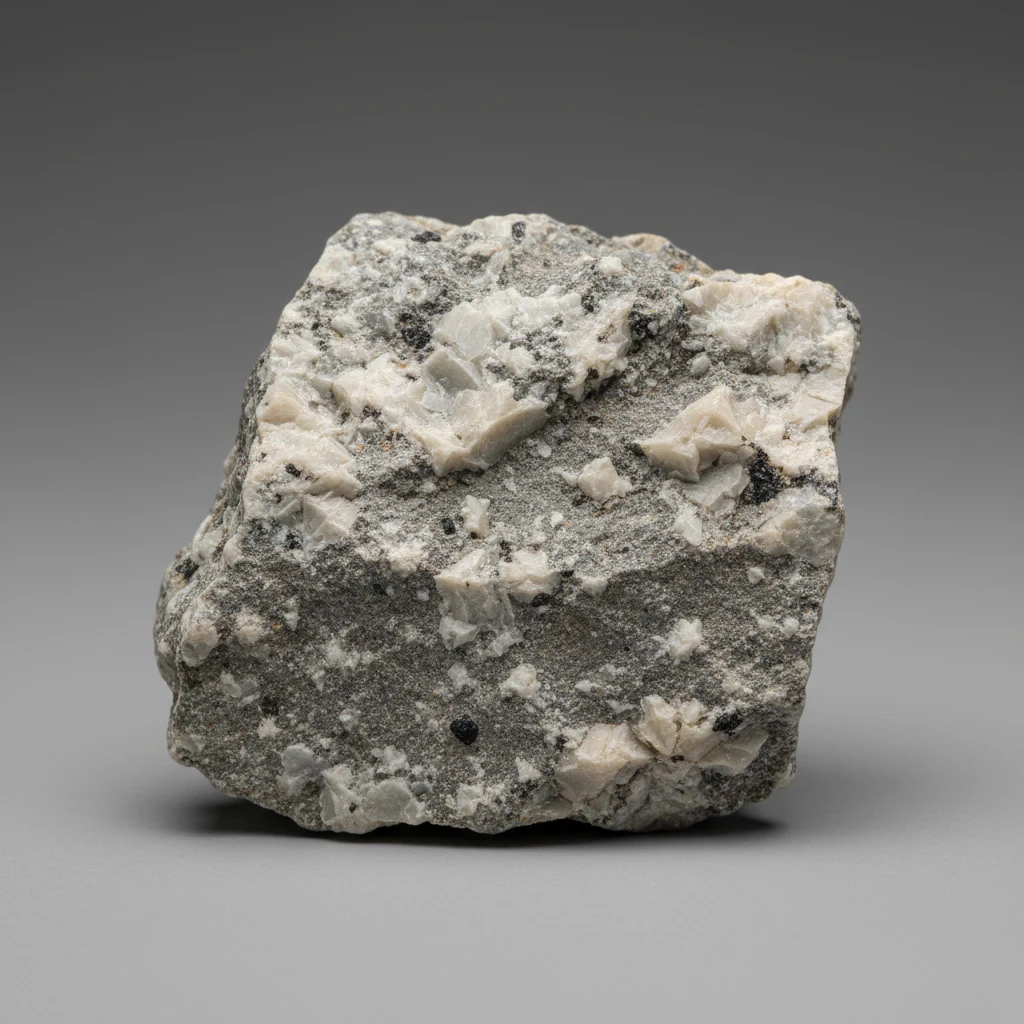
Quick answer: Dacite is a fine-grained volcanic rock with a composition between andesite and rhyolite. It is usually gray, tan, or light brown and may contain small visible crystals of quartz, feldspar, amphibole, or biotite.
AI Rock ID can help compare a dacite photo with visually similar volcanic rocks, especially when texture and color are clear. RockIdentifier.io provides reference information that can support visual identification, but lab testing or local geologic context may be needed for uncertain specimens.
Good fit
- Collectors who want a representative volcanic rock from intermediate to felsic lava flows
- Students comparing volcanic rock textures and silica-rich compositions
- Field hobbyists documenting rocks from volcanic regions
- People who prefer neutral gray, tan, or earthy display stones
Not a good fit
- Buyers looking for a transparent faceted gemstone
- Anyone needing a rare mineral specimen with high resale value
- Identification based only on color, because dacite overlaps with several other volcanic rocks
Most commonly confused with
- Andesite: Andesite is generally slightly less silica-rich and often darker than dacite.
- Rhyolite: Rhyolite is usually more silica-rich and may show lighter colors or flow-banded textures.
- Basalt: Basalt is typically darker, denser, and more iron- and magnesium-rich.
- Tuff: Tuff forms from compacted volcanic ash, while dacite is usually a solidified lava or intrusive volcanic equivalent.
Dacite vs. Similar Volcanic Rocks
| Rock | Typical Color | Key Difference | Texture |
|---|---|---|---|
| Dacite | Gray, tan, light brown | Intermediate to silica-rich composition | Fine-grained, sometimes porphyritic |
| Andesite | Medium to dark gray | Usually lower silica than dacite | Fine-grained to porphyritic |
| Rhyolite | Light gray, pink, tan | Higher silica than dacite | Fine-grained, glassy, or flow-banded |
| Basalt | Dark gray to black | Lower silica and richer in iron-magnesium minerals | Fine-grained, dense, sometimes vesicular |
| Tuff | Variable gray, tan, pink | Made from volcanic ash fragments | Fragmental or porous |
AI identification confidence
AI identification of dacite is usually moderate when the image shows grain size, color, and any visible phenocrysts. Confidence decreases when the specimen is weathered, polished, wet, or photographed without scale or geologic context.
When AI gets it wrong
- A dark dacite sample may be labeled as andesite or basalt.
- A light dacite sample may be labeled as rhyolite, especially if quartz is visible.
- Weathered surfaces can hide the original volcanic texture and color.
- Polished decorative pieces may lose field clues such as vesicles, fracture surfaces, and mineral grains.
Final recommendation
Use dacite identification as a combination of visual texture, mineral clues, and geologic setting rather than color alone. For a confident name, compare it with local volcanic maps or have a geologist examine a fresh broken surface.
How to Check Dacite Authenticity
Dacite is usually sold as a rock specimen rather than a high-value gemstone, so imitation is uncommon. Authentic pieces should show a natural fine-grained volcanic texture, and some may contain small feldspar, quartz, hornblende, or biotite crystals. Be cautious with listings that use gemstone pricing or claim rare crystal properties without locality or geologic details.
Best Photos for Dacite Identification
A useful dacite identification photo should include a dry surface, a fresh broken edge if available, and a common object for scale. Close-up images help show whether the rock is fine-grained, porphyritic, vesicular, or fragmental. Locality information is especially helpful because dacite is common in volcanic arcs and continental volcanic fields.
Dacite in Collections
Dacite is most useful in a collection when labeled with its locality, volcanic field, or eruption unit. A small hand sample can illustrate the compositional range between andesite and rhyolite. Specimens with visible phenocrysts or flow textures are often easier to study than uniformly gray pieces.
What Is Dacite?
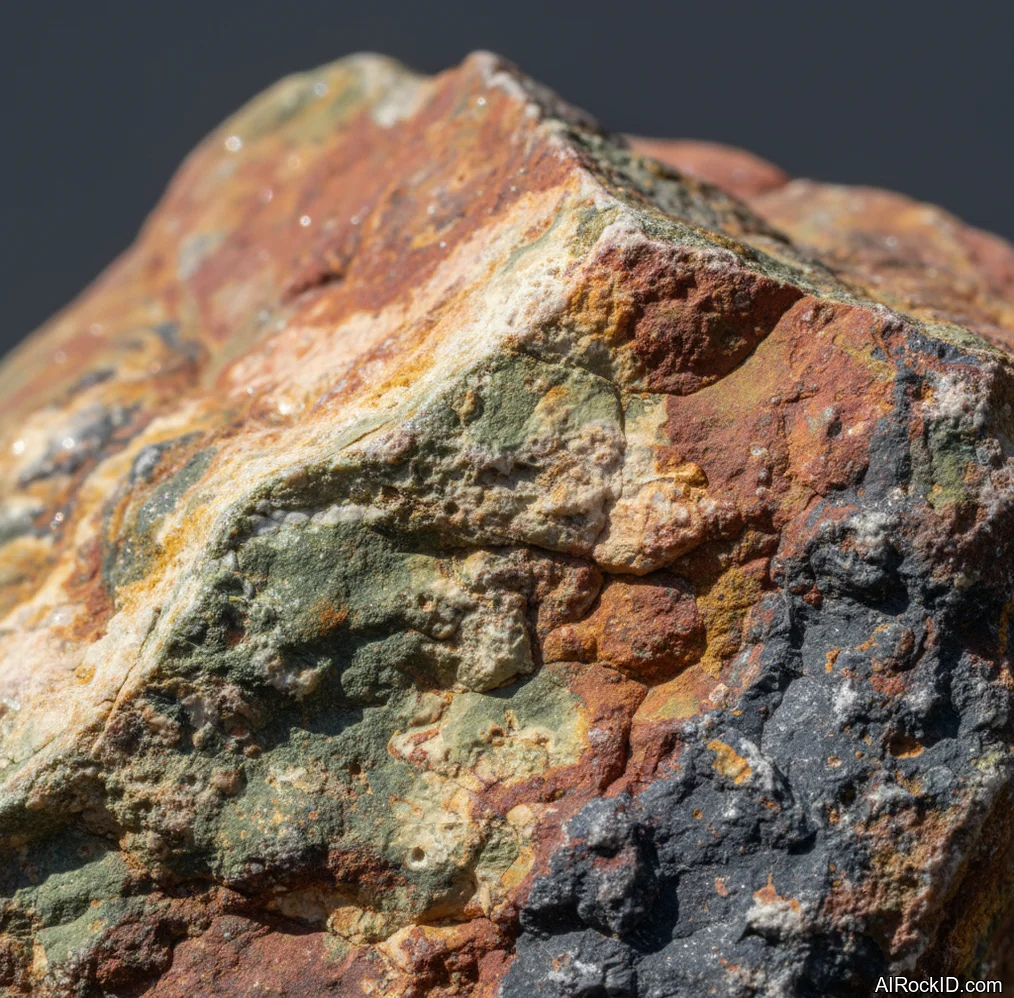
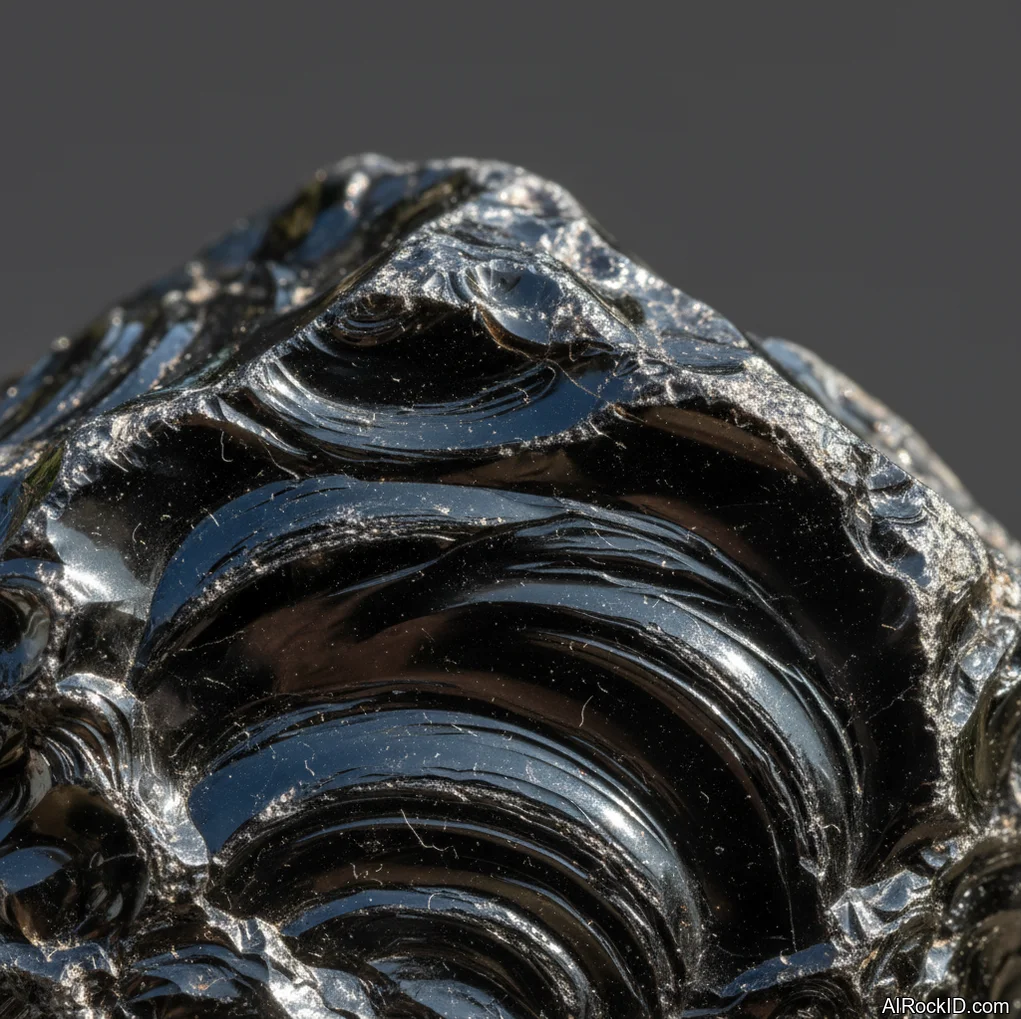
Dacite is a fine-grained volcanic rock with a composition between rhyolite and andesite. In the hand, it is usually gray to light gray, opaque, and compact, with a surface that may look glassy in fresh breaks or dull on weathered faces. Collectors value it less for gem sparkle and more for its volcanic story: a durable, silica-rich rock that records the cooling of lava.
As a specimen, dacite feels practical and sturdy. Its Mohs hardness is 6-7, with good scratch resistance, fair toughness, and an uneven fracture, so chips and broken edges are part of its natural look. It is non-magnetic, has a white streak, and a density of 2.4-2.7 g/cm3. Most pieces are common rather than rare, but locality and specimen quality can still make a noticeable difference.
Origin & History
The name dacite comes from the Dacians of Romania, and the rock was first described in the 19th century. That origin gives the name a historical anchor, even though the rock itself is best understood by its volcanic texture and chemistry: a fine-grained silicate rock, listed with SiO2 and common impurities including Al, Na, and K.
For collectors, the history is not only in the name but in the feel of the specimen. A gray dacite with visible quartz or feldspar phenocrysts can look quiet at first, then become more interesting under close inspection. Locality research is useful when labeling pieces, and mindat.org is a practical plain-text reference point for checking mineral and locality context.
Where Is Dacite Found?
Dacite is commonly found in volcanic regions. Reported countries include Italy, Indonesia, and the USA, with notable localities such as Mount St. Helens in Washington, Mount Pinatubo in the Philippines, and the Etruscan Volcanic Region in Italy. These names matter on a specimen label because dacite’s value is affected by locality as well as overall specimen quality.
Formation
Dacite forms from the cooling and solidification of volcanic lava that is rich in silica. That cooling produces its fine-grained texture, while larger visible crystals, or phenocrysts, may stand out in the groundmass. Quartz or feldspar phenocrysts are especially useful visual clues when sorting a specimen from other gray volcanic rocks.
The rock’s properties reflect that volcanic origin: it is amorphous in the provided crystal-system classification, opaque, isotropic, and without birefringence or pleochroism. Its luster may be glassy to dull, depending on the surface. A fresh chip can show a vitreous look, while older or handled areas may appear flatter and more muted.
How to Identify Dacite
Identify dacite first by its fine-grained volcanic texture and gray to light gray color. It may also appear white, but most collector pieces are subdued gray rather than brightly colored. Look closely for phenocrysts, often quartz or feldspar, set into the finer groundmass. The streak is white, and the rock is non-magnetic.
In hand, dacite has a compact, durable feel with an uneven fracture and a Mohs hardness of 6-7. Its luster is described as vitreous, though the surface can range from glassy to dull. Because its refractive index is not applicable and it is opaque, identification is best done through texture, color, phenocrysts, and confirmed locality rather than gem-style optical testing.
Properties of Dacite
Physical Properties
| Crystal System | Amorphous |
| Hardness (Mohs) | 6-7 (Medium) |
| Density | 2.4-2.7 g/cm3 |
| Luster | Vitreous |
| Diaphaneity | Opaque |
| Fracture | Uneven |
| Streak | White |
| Magnetism | Non-magnetic |
| Colors | Gray, Light Gray, White |
Chemical Properties
| Classification | Silicate |
| Formula | SiO2 |
| Elements | Si, O |
| Common Impurities | Al, Na, K |
Optical Properties
| Refractive Index | Not applicable |
| Birefringence | None |
| Pleochroism | None |
| Optical Character | Isotropic |
Dacite Health & Safety
Dacite poses no significant health risks.
Dacite Value & Price
Price Range
Rough/Tumbled: $20 - $50 per specimen
Cut/Polished:
Price is affected by locality and specimen quality.
Durability
Durable — Scratch resistance: Good, Toughness: Fair
Dacite is stable under normal conditions.
How to Care for Dacite
Use & Storage
Store in a cool, dry place away from direct sunlight.
Cleaning
Clean with a damp cloth to remove dust. Avoid harsh chemicals.
Cleanse & Charge
Place in sunlight or moonlight to cleanse.
Placement
Display in a stable location to avoid damage.
Caution
Handle with care to prevent chips or scratches.
Works Well With
Dacite Meaning & Healing Properties
In crystal-healing use, dacite is associated with balance, creativity, and stability. Practitioners often treat it as a grounding stone because of its Earth element connection and its link with the Root and Sacral chakras. Its gray, steady appearance suits meditation, focus, emotional healing, insight, trust, transformation, and inner peace work.
Dacite is not a substitute for medical treatment, but it is easy to handle as a personal or display stone. It is safe to handle, safe in water, and poses no significant health risks under the provided guidance. Store it in a cool, dry place away from direct sunlight, clean dust with a damp cloth, avoid harsh chemicals, and place it in sunlight or moonlight to cleanse.
Identify Dacite from a photo
Compare Dacite traits, care tips, value clues, and common lookalikes with a clear photo.
Common mistakes
- Identifying every gray fine-grained volcanic rock as dacite without comparing andesite, basalt, and rhyolite.
- Using Mohs hardness alone to identify dacite, because many silicate rocks fall in a similar range.
- Assuming a polished gray stone is dacite when surface texture and mineral grains are no longer visible.
- Confusing volcanic ash tuff with dacite lava because both can be gray or tan.
- Ignoring locality, even though regional geology is one of the strongest clues for volcanic rock identification.