Dragi Dragon Jade


Quick answer: Dragi Dragon Jade is a trade name most often used for green nephrite jade, a compact amphibole rock valued for toughness rather than sparkle. It can be confused with jadeite, serpentine, dyed quartz, and other green stones, so identification should consider structure, density, luster, and treatment clues.
AI Rock ID can help screen Dragi Dragon Jade by comparing color, texture, and surface appearance with common jade and jade-lookalike materials. RockIdentifier.io provides educational identification support, but final confirmation may require gemological testing such as refractive index, specific gravity, or spectroscopy.
Good fit
- Carving, bead, pendant, and cabochon collectors who prefer tough green stones
- Buyers who want nephrite jade but are comfortable with trade names
- People comparing jade lookalikes before purchasing online
- Collectors interested in traditional jade materials rather than transparent gemstones
Not a good fit
- Buyers who need certified jadeite jade specifically
- Anyone expecting a transparent, faceted gemstone appearance
- Shoppers who want a guaranteed natural, untreated stone without documentation
- Projects requiring a soft stone that is easy to shape with basic tools
Most commonly confused with
- Jadeite: Jadeite is a pyroxene mineral and may show different granular texture, higher refractive index, and different value ranges than nephrite.
- Serpentine: Serpentine can resemble green jade but is usually softer and less tough than nephrite.
- Aventurine: Aventurine is quartz-based and often shows sparkly mica inclusions rather than nephrite’s fibrous, waxy look.
- Green Quartz: Green quartz has a glassier luster and different hardness, and dyed examples may show color concentrations in cracks.
Dragi Dragon Jade vs. Common Lookalikes
| Material | Typical clue | Key difference |
|---|---|---|
| Dragi Dragon Jade / nephrite | Waxy to greasy luster, compact fibrous texture | Very tough amphibole rock |
| Jadeite | Granular to sugary texture in some pieces | Different mineral species and often higher market pricing |
| Serpentine | Smooth green look, sometimes slightly oily | Usually softer and less durable |
| Aventurine | Subtle glitter from mica inclusions | Quartz-based rather than amphibole |
| Dyed quartz or agate | Color may concentrate in cracks or pores | Glassier luster and different internal structure |
AI identification confidence
AI identification confidence for Dragi Dragon Jade is usually moderate from photos because many green stones share similar color and polish. Confidence improves when images show natural fracture surfaces, close-up texture, translucency at thin edges, scale, and multiple lighting angles.
When AI gets it wrong
- A polished surface hides the fibrous structure that helps separate nephrite from lookalikes.
- Strong green dye or photo saturation makes quartz, agate, or serpentine appear jade-like.
- The item is photographed without scale, making density and carving style harder to judge.
- Backlighting is absent, so edge translucency and internal texture cannot be evaluated.
Final recommendation
For buying Dragi Dragon Jade, treat the name as a trade label and ask whether the material is confirmed nephrite. Higher-confidence purchases include clear photos, disclosed treatments, realistic pricing, and a reputable seller or lab report for expensive pieces.
How to Check Dragi Dragon Jade Before Buying
Ask the seller whether the stone is nephrite, jadeite, serpentine, or another green material rather than relying only on the trade name. Look for natural-looking color distribution, a waxy to greasy polish, and fine fibrous texture where visible. For higher-priced carvings or jewelry, request a gemological report or at least written disclosure of dyeing, impregnation, or composite construction.
Treatment and Dye Clues
Some jade-like materials are dyed to create stronger green color, and dye can collect in surface pits, cracks, drill holes, or along bead stringing areas. A very even, bright green color at a low price may indicate treatment or a lookalike rather than high-quality natural nephrite. Surface coatings may also change luster and can wear unevenly with handling.
Simple At-Home Observations
Non-destructive checks can help narrow identification but should not be treated as proof. Examine the stone under strong light for edge translucency, inspect magnified surfaces for dye concentration, and compare heft with known stones of similar size. Avoid scratch, heat, acid, or flame tests because they can permanently damage jade, coatings, or imitations.
What Is Dragi Dragon Jade?
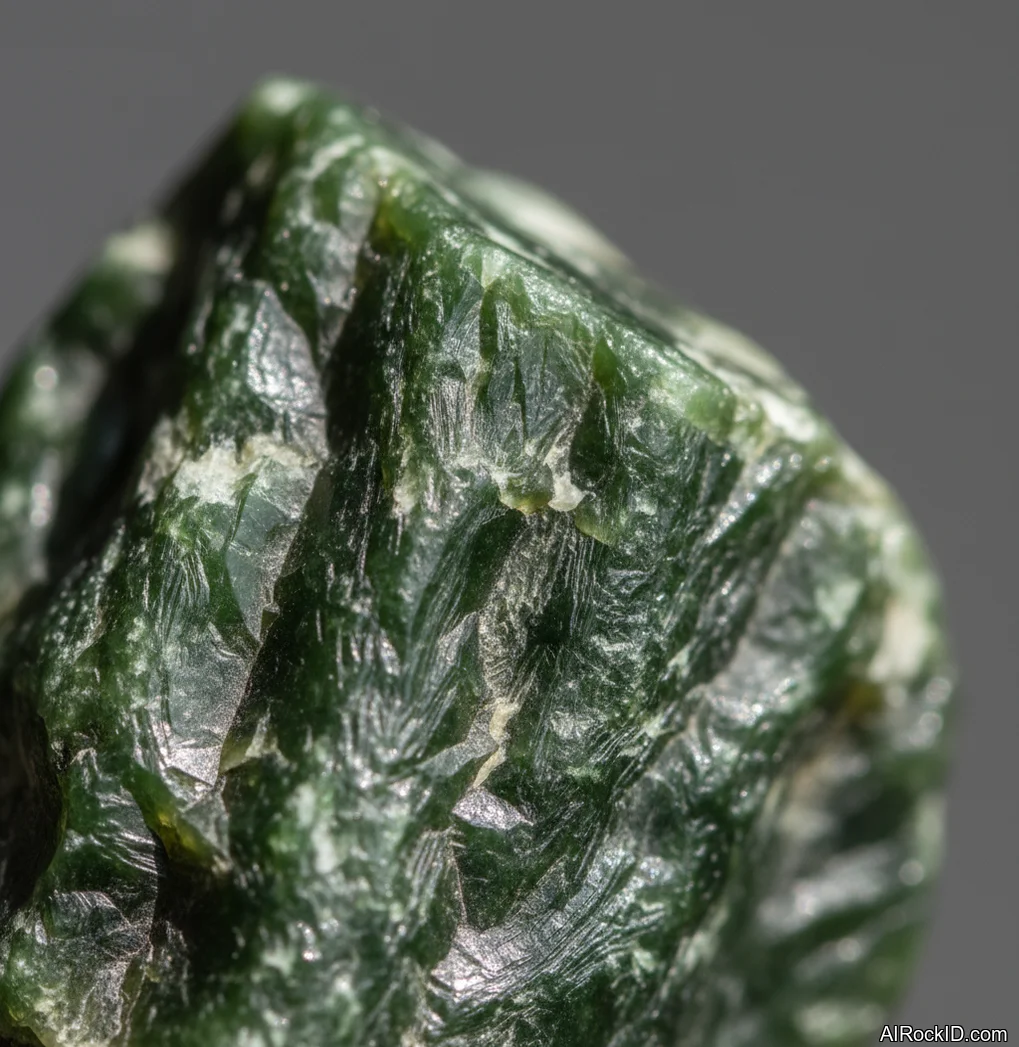
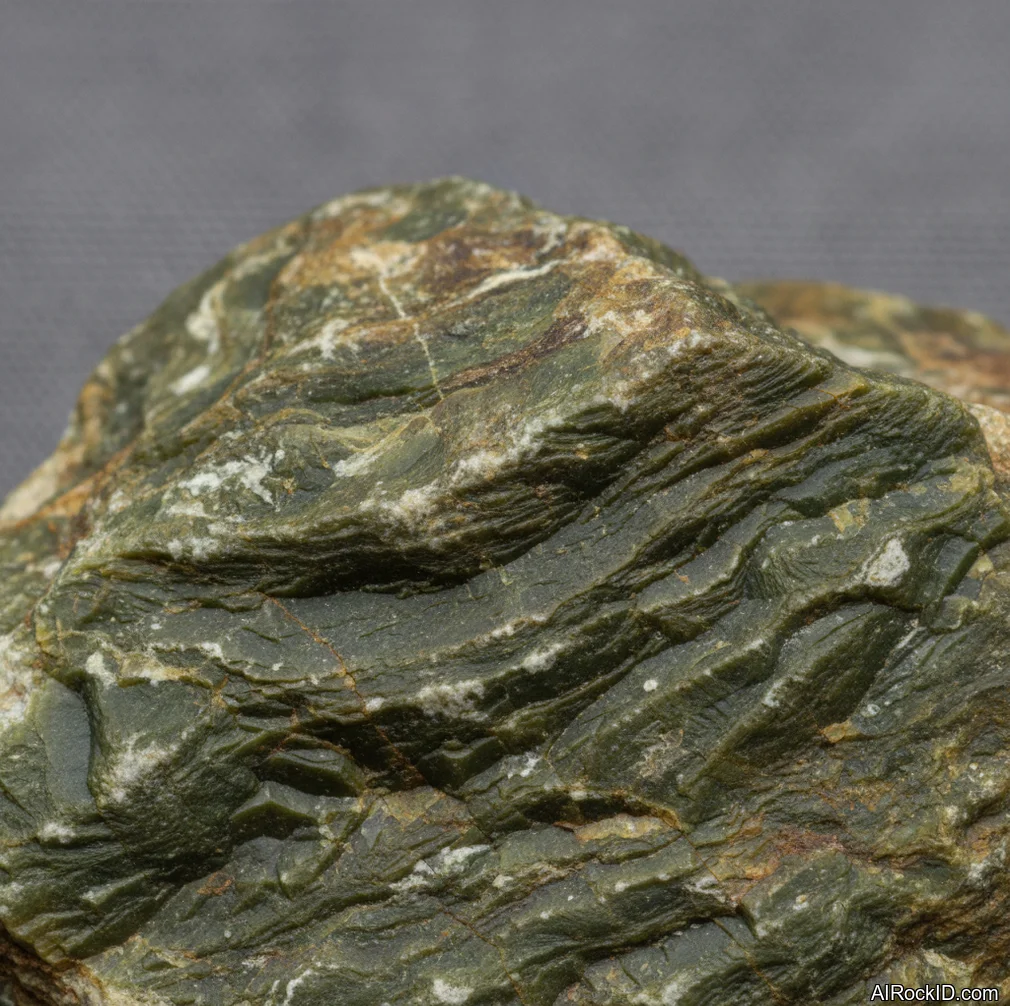
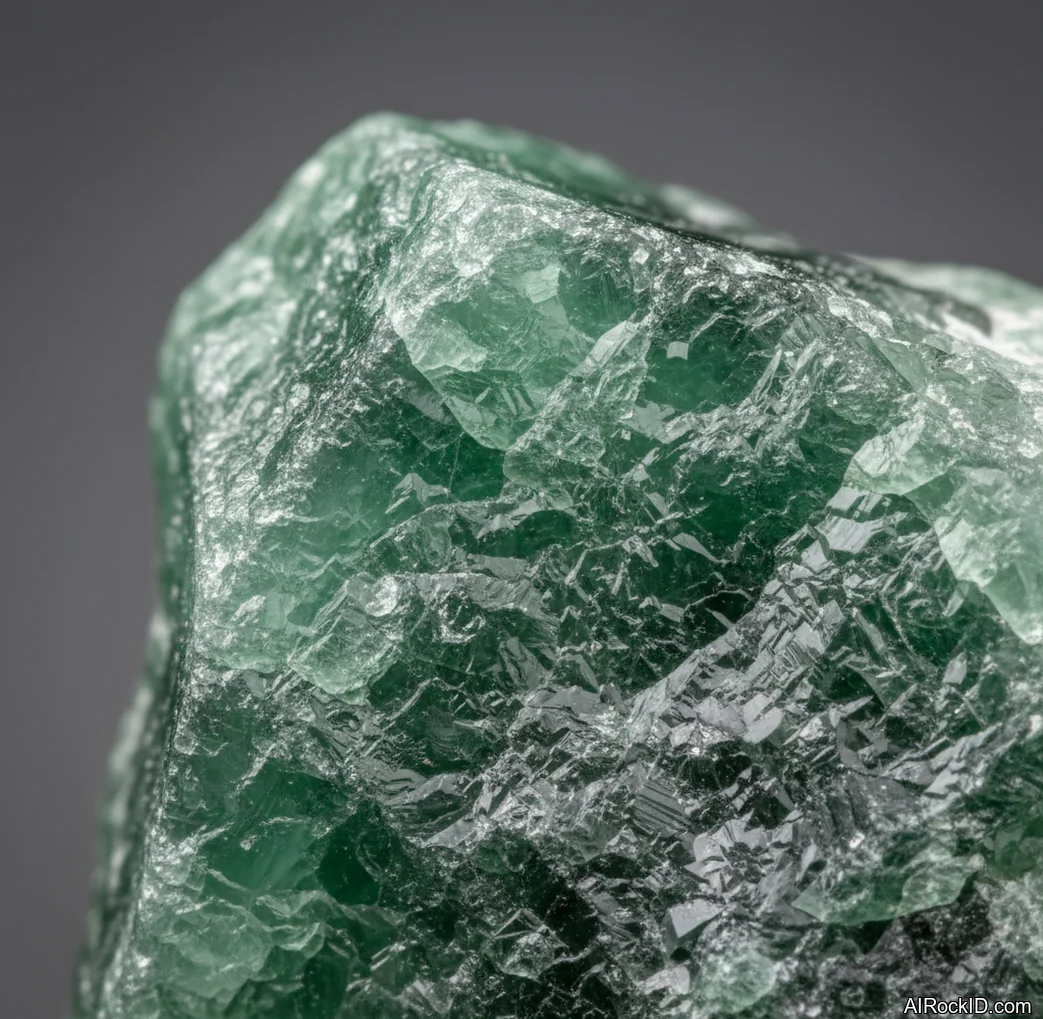
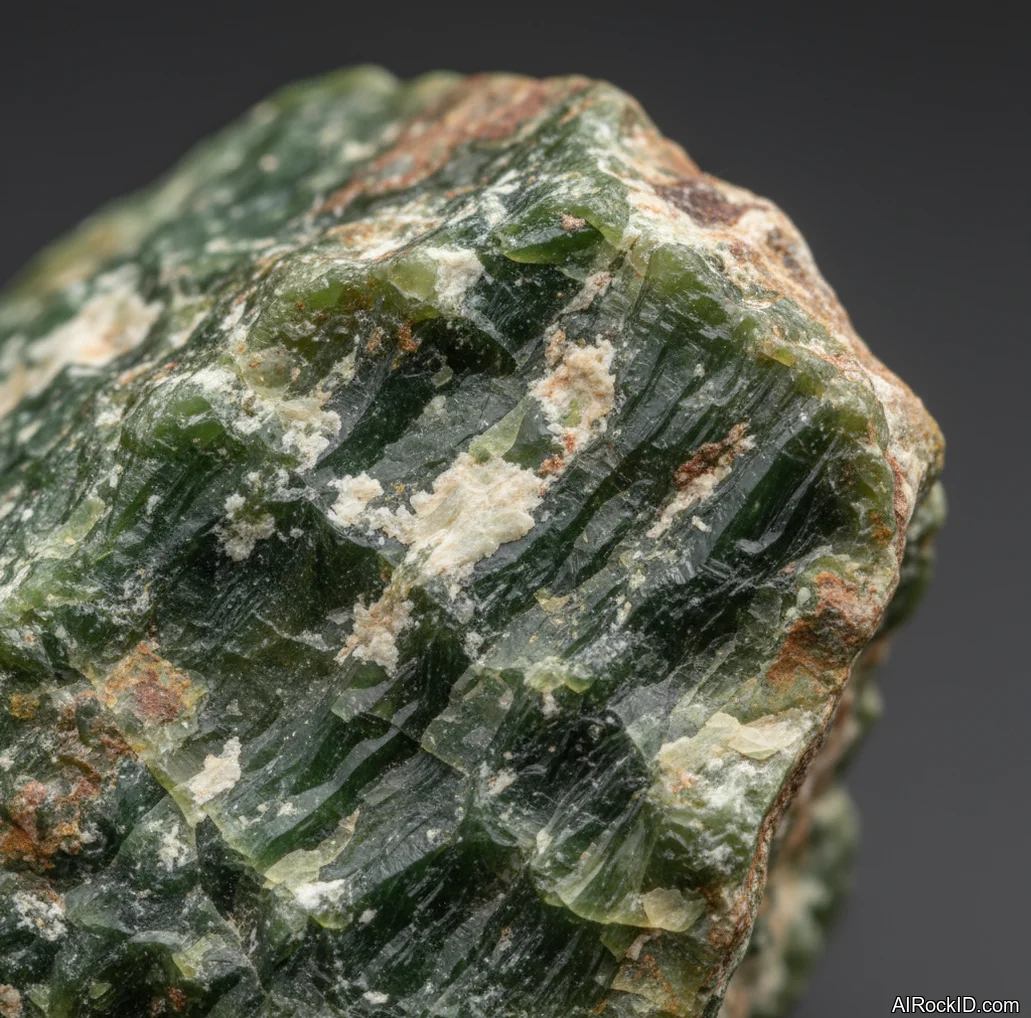
Dragi Dragon Jade is a trade name for nephrite jade, which is a tough, fibrous amphibole rock made mostly of tremolite to actinolite.
Pick up a solid piece and the first thing you feel is the heft. It’s a touch heavier than you’d guess for a green stone, and it stays cool in your palm even after you’ve been standing there chatting at the counter. Most of the material sold under this name comes pre-polished, so it doesn’t flash like glass. It has that soft, waxy glow instead.
Thing is, the color’s almost never just plain “green.” You’ll see little cloudy patches, peppery specks, or darker swirls that look like smoke trapped under the polish. And if you tilt it under a bright shop light, you can sometimes catch a faint silky shift from those tightly packed fibers inside, especially on domed cabs (that’s where it shows up easiest).
Origin & History
“Dragi Dragon Jade” isn’t a real mineral name in the formal sense. It’s basically a shop label, the kind that shows up on tags because “jade” moves faster than “green amphibole,” and the “dragon” bit nods at the whole carving tradition people expect (especially if you’ve ever seen those little dragon pendants lined up in a case).
Nephrite has been described, then described again, in the scientific literature going back to the 1800s, back when mineralogy was getting its rules tightened up and everybody was trying to standardize terms. And the word “nephrite” itself comes from older language tied to kidney stones and amulets. In today’s trade, sellers will slap on fantasy names like this to make their stock sound separate from plain “nephrite,” even when the material tests the same. Why? Because a new tag can make the same stone feel like a different thing.
Where Is Dragi Dragon Jade Found?
Nephrite forms in metamorphic belts worldwide, and trade material often gets labeled by the dealer’s supply chain rather than a verified mine name.
Formation
Most nephrite starts out in the kind of geologic mess I can’t help but like: ultramafic rocks getting altered, fluids sneaking through cracks, and pressure just grinding away for ages. You’re basically watching tremolite to actinolite grow into dense, interlocking fibers during metamorphism, and it often happens where serpentinite and carbonate rocks are part of the mix.
That fibrous structure is the whole game. It’s why nephrite is so tough compared to other green stones. But it also makes the stuff unpredictable. One slice will take a gorgeous polish and feel almost slick under your thumb, and the next has a dead, dull patch or a little healed seam that you don’t even notice until the lapidary’s already committed. How many times does that happen? Too many.
How to Identify Dragi Dragon Jade
Color: Usually medium to deep green with darker mottling, gray-green zones, or blackish specks; some pieces lean yellow-green depending on iron content. Color is typically more “vegetable green” than emerald green.
Luster: Waxy to slightly silky when polished.
Pick up the piece and compare it to glassy green stuff like aventurine or dyed quartz. Nephrite feels tougher and more “solid,” and it doesn’t have that sparkly mica glitter. The real test is texture: under a loupe you often see a fine, fibrous or felted look instead of crisp crystal grains. But watch out for dyed stone, because some sellers punch up the green and the color collects in tiny cracks or drill holes.
Common Look-Alikes
Dragi Dragon Jade is sometimes confused with these materials:
- Dyed serpentine sold as “new jade” (often bright apple-green with dye pooling in pits and cracks)
- Dyed quartzite/aventurine marketed as “jade” (glittery mica sparkle in aventurine that nephrite doesn’t have)
- Green glass or “jade glass” bangles (lighter feel, warmer to the touch, swirly flow lines and bubbles under a loupe)
- Bowenite (a compact serpentine variety) sold as jade (usually softer, takes scratches easier, can look a bit more oily than waxy)
- Prehnite (often with black epidote needles) mistaken for gray-green jade (more translucent and has a different, jelly-like look in strong light)
- Hydrogrossular garnet sold as “Transvaal jade” (can be very convincing but tends to look more sugary or granular on close inspection)
Market Cautions & Treatments
When AI Can Get This Wrong
At first glance in photos, Dragi Dragon Jade gets mixed up with serpentine and hydrogrossular because all three can hit that dark green to gray-green range with a soft polish. AI also trips on lighting: oily highlights on serpentine can read like nephrite’s waxy luster in a phone pic. The real test is hands-on: nephrite feels tougher and heavier than it looks, stays cool longer, and won’t show dye pooling in cracks the way the common “new jade” fakes do.
Properties of Dragi Dragon Jade
Physical Properties
| Crystal System | Monoclinic |
| Hardness (Mohs) | 6.0-6.5 (Hard (6-7.5)) |
| Density | 2.90-3.10 |
| Luster | Waxy |
| Diaphaneity | Translucent to opaque |
| Fracture | Splintery |
| Streak | White |
| Magnetism | Non-magnetic |
| Colors | Green, Dark green, Gray-green, Yellow-green, Black-speckled green |
Chemical Properties
| Classification | Silicates |
| Formula | Ca2(Mg,Fe)5Si8O22(OH)2 |
| Elements | Ca, Mg, Fe, Si, O, H |
| Common Impurities | Fe, Cr, Ni, Mn |
Optical Properties
| Refractive Index | 1.60-1.62 |
| Birefringence | 0.020 |
| Pleochroism | Weak |
| Optical Character | Biaxial |
Dragi Dragon Jade Health & Safety
Handling it is pretty low risk. But once you start doing lapidary work, you can kick up this super fine amphibole dust, and you really don’t want that in your lungs. So keep it wet when you cut, and use basic dust control. It matters.
Safety Tips
If you’re cutting, shaping, or drilling this stuff, keep a steady trickle of water on it, wear a respirator that actually fits snug (not the loose kind that fogs your glasses), and wipe up the wet slurry when you’re done instead of sweeping up dry dust.
Dragi Dragon Jade Value & Price
Price Range
Rough/Tumbled: $10 - $150 per piece
Cut/Polished: $2 - $25 per carat
Prices jump fast once the color cleans up, the translucency gets better, and the polish is tight and even, with no weird dull patches catching the light when you tilt it. Provenance claims can bump the tag up too. But if it isn’t actually documented, I treat those “mine” labels like a suggestion (because, honestly, how would you prove it?).
Durability
Very Durable — Scratch resistance: Good, Toughness: Excellent
Nephrite is stable in normal conditions and holds up well to daily wear, but dyed material can fade or look blotchy over time.
How to Care for Dragi Dragon Jade
Use & Storage
Store it in a soft pouch if it’s polished, because harder stones can scuff the surface over time. I keep jade bangles separate since they love to rub against everything in a drawer.
Cleaning
1) Rinse with lukewarm water and a drop of mild soap. 2) Use a soft brush around carvings or bead holes. 3) Rinse well and dry with a cotton cloth.
Cleanse & Charge
If you do energy-style care, simple running water or a quick smoke cleanse is plenty. I avoid leaving it in harsh sun for long stretches if I suspect it’s dyed.
Placement
On a desk it’s great as a worry stone because it doesn’t feel fragile. In a display case, put it under neutral lighting so the green doesn’t look artificially boosted.
Caution
Skip bleach, strong acids, and ultrasonic cleaners on carved or treated pieces. They’ll sneak into tiny cracks, pop fractures open, or knock the shine down so it looks flat instead of glossy. And if the color looks almost too perfect, treat it like it’s dyed. Keep it out of long stretches of sunlight.
Works Well With
Dragi Dragon Jade Meaning & Healing Properties
Compared to a bunch of the stress stones people grab, nephrite feels different the second it hits your palm. It isn’t sparkly. It’s steady. I’ve passed it across the counter to customers who can’t stop clicking their nails or bouncing their knee, and pretty often they go quiet for a beat, like the weight and that slick, almost satiny surface makes their brain downshift.
A lot of people tie jade to luck, protection, and keeping your head on straight. That’s where Dragi Dragon Jade usually lands too, at least in the shops I’ve been in and the collectors I swap pieces with. I’m not going to act like it’s medicine. But as a tactile anchor? Yeah, it works. A cool, dense stone you can worry with your thumb, right along the slightly rounded edge (you can feel where it’s been polished), is basically a pocket grounding tool.
But here’s the problem: the market’s a mess. Some “dragon jade” out there is just dyed quartzite or serpentine, and those don’t hold up the same after a week riding around in your pocket with keys and lint. Real nephrite keeps that calm, satiny feel, while the cheap stuff can get warm and kind of grabby, and it’ll scratch up fast. If you’re using it for any daily practice, that durability and the feel matter more than whatever story is printed on the tag.
Common mistakes
- Assuming every item sold as Dragi Dragon Jade is certified nephrite.
- Confusing nephrite jade with jadeite jade when comparing prices.
- Using color alone to identify jade, even though many green stones look similar.
- Ignoring dyed or coated material when the color appears unusually vivid.
- Expecting inexpensive beads or carvings to have the same value as fine natural jade.
- Using destructive tests on a finished carving or jewelry piece.
Identify Dragi Dragon Jade from a photo
Compare Dragi Dragon Jade traits, care tips, value clues, and common lookalikes with a clear photo.