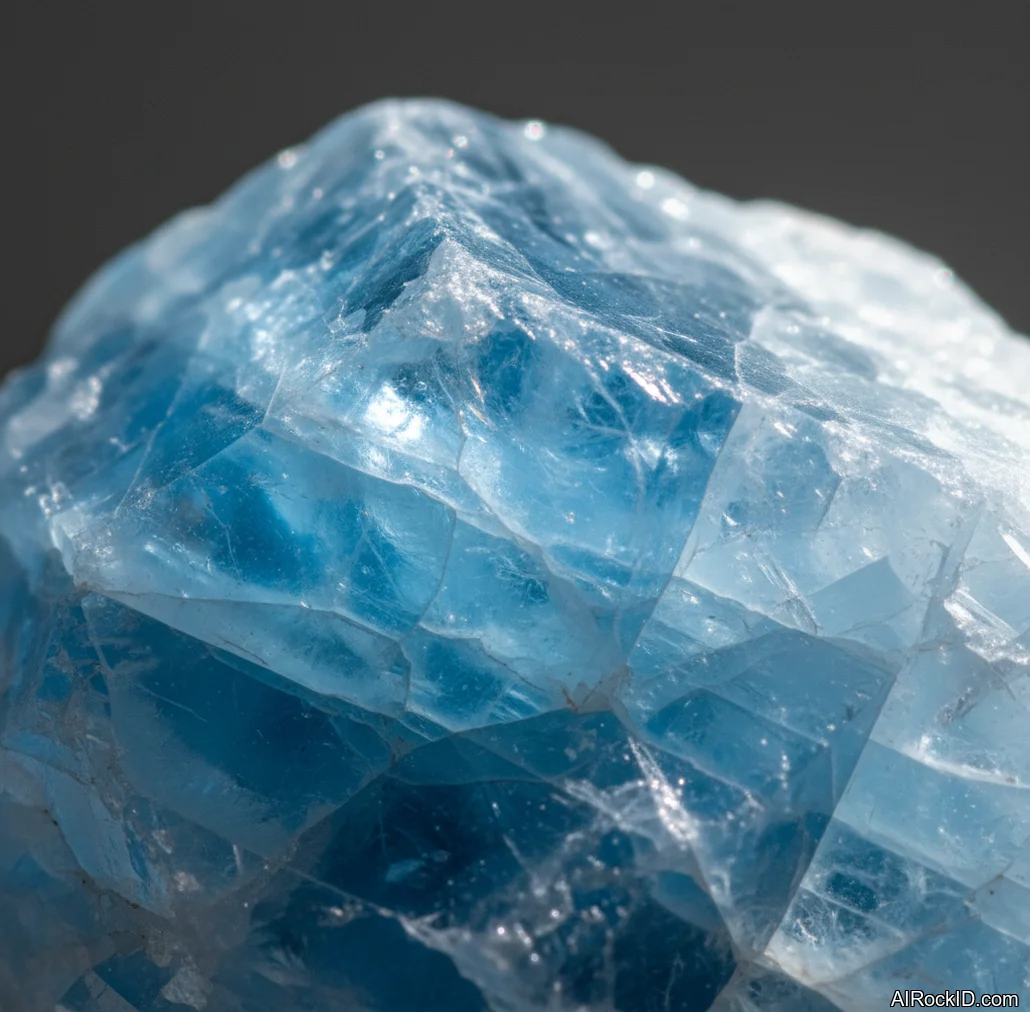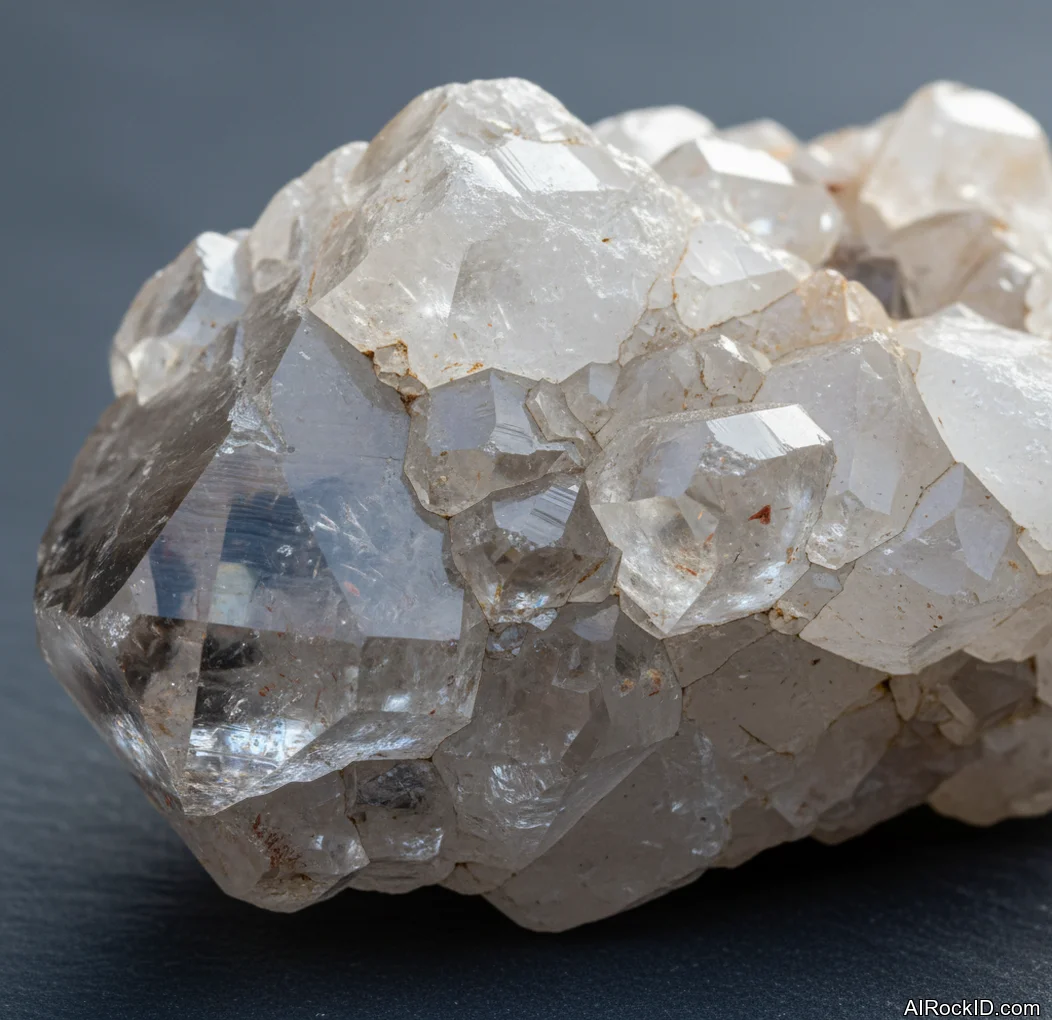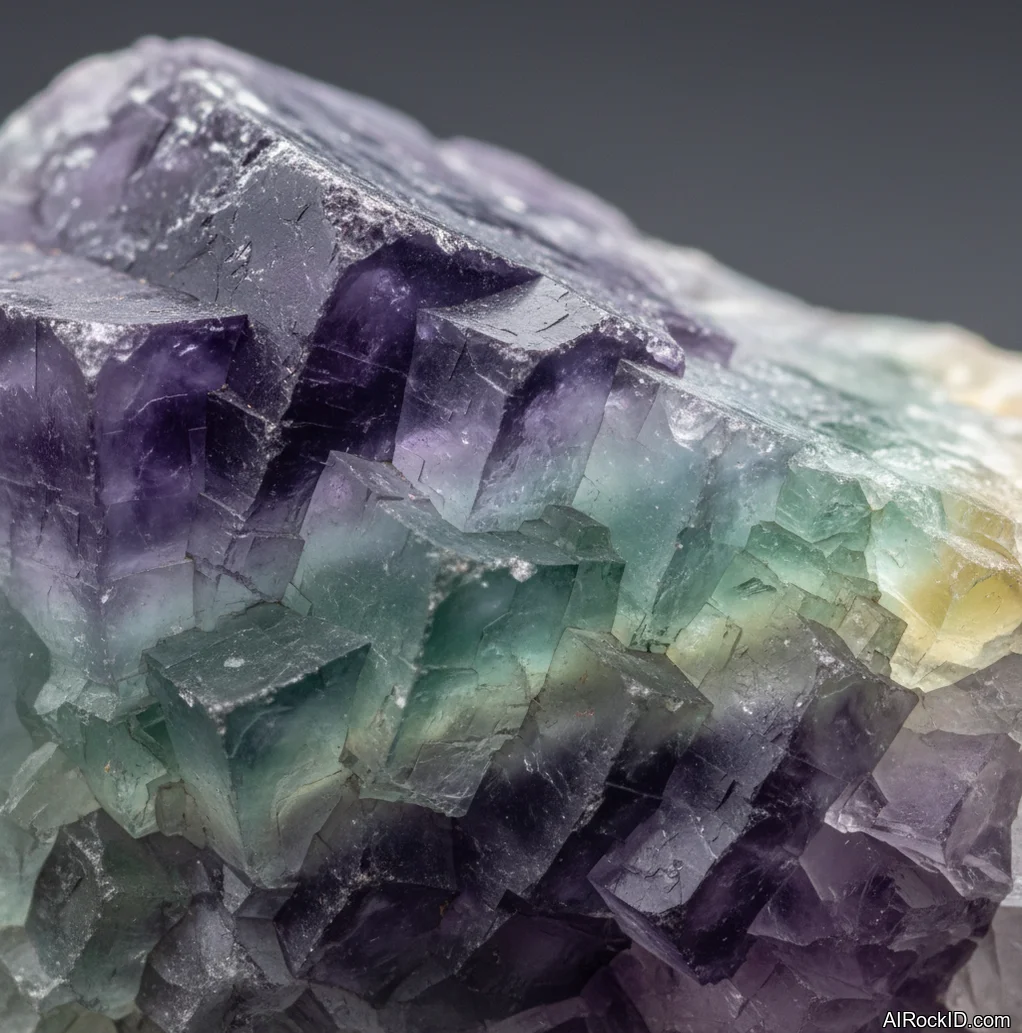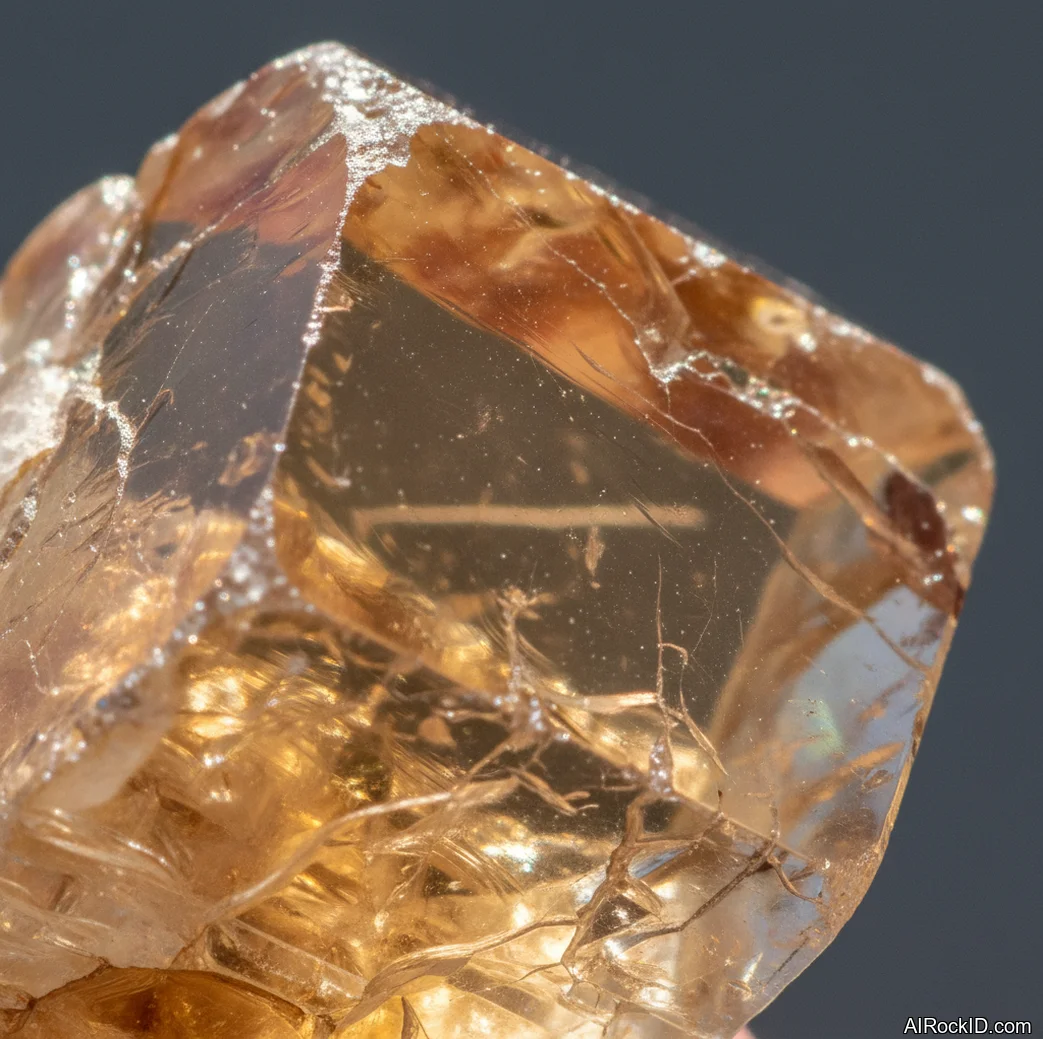
Iceland Spar


Quick answer: Iceland Spar is a transparent variety of calcite best known for strong double refraction, which makes a line or text appear doubled when viewed through a clear cleavage piece. It is soft, reactive to acids, and best identified by its rhombohedral cleavage, low hardness, and optical doubling.
AI Rock ID can help screen a clear, colorless mineral for visual traits consistent with Iceland Spar, such as transparency, cleavage shape, and optical doubling. RockIdentifier.io should be used alongside simple checks like hardness, cleavage, and acid sensitivity because photos alone may not confirm calcite.
Good fit
- Collectors who want a clear example of double refraction
- Classroom demonstrations of birefringence and calcite cleavage
- Mineral displays where the specimen will not be handled often
- Buyers who prefer natural, usually untreated collector pieces
Not a good fit
- Rings, bracelets, or other jewelry exposed to abrasion
- Use around vinegar, lemon juice, or other acids
- Outdoor display or humid storage where surfaces may etch
- Buyers needing a durable clear gemstone for daily wear
Most commonly confused with
- Clear Quartz: Quartz is much harder at Mohs 7 and does not show the same strong text-doubling effect through cleavage pieces.
- Optical Glass: Glass may be very clear but lacks calcite’s rhombohedral cleavage and will not fizz in dilute acid.
- Selenite: Selenite is softer, often fibrous or tabular, and commonly scratches with a fingernail.
- Fluorite: Fluorite has Mohs hardness 4 and octahedral cleavage rather than calcite’s rhombohedral cleavage.
Iceland Spar vs Common Lookalikes
| Material | Hardness | Key ID clue | Acid reaction |
|---|---|---|---|
| Iceland Spar | Mohs 3 | Strong double refraction; rhombohedral cleavage | Fizzes in dilute acid |
| Clear Quartz | Mohs 7 | Hard, glassy, no rhombohedral cleavage | No fizz |
| Optical Glass | About Mohs 5–6 | No natural cleavage; may show bubbles or molded edges | No fizz |
| Selenite | Mohs 2 | Very soft; often fibrous or sheet-like | No typical fizz |
| Fluorite | Mohs 4 | Octahedral cleavage; often colored | No typical fizz |
AI identification confidence
AI identification confidence is usually moderate for Iceland Spar when a photo clearly shows transparency, rhombohedral cleavage, and a visible doubled line through the specimen. Confidence drops when the piece is tumbled, cloudy, photographed without scale, or shown without an optical doubling test.
When AI gets it wrong
- A photo shows only a clear block without a visible cleavage angle or doubled image.
- A polished or cut piece hides the natural rhombohedral cleavage.
- Lighting reflections make glass or quartz appear like calcite.
- The specimen is colorless but too small or blurry to assess hardness, cleavage, or inclusions.
Final recommendation
Choose Iceland Spar when you want a clear calcite specimen for optical study, display, or collection rather than durability. For buying, prioritize pieces with visible doubling, clean rhombohedral cleavage, and disclosure of any chips, repairs, or coatings.
How to Check Iceland Spar at Home
Place the specimen over a printed line or dark text and look through a clear face; true Iceland Spar commonly shows a doubled image. A copper coin or steel knife can scratch calcite, while calcite should not scratch glass. A tiny drop of diluted acid on an inconspicuous spot may fizz, but this can damage the surface and should be avoided on valuable specimens.
Buying Authentic Iceland Spar
Authentic Iceland Spar is usually sold as a natural cleaved calcite rhomb, optical calcite, or clear calcite. Useful listing details include specimen size, origin if known, whether the faces are natural or polished, and clear photos showing the doubling effect. Avoid listings that claim high durability or suitability for everyday jewelry without noting calcite’s Mohs 3 hardness.
Natural Cleavage vs Polished Pieces
Many Iceland Spar specimens show natural rhombohedral cleavage faces rather than faceted gem cuts. Polished pieces can still be calcite, but polishing may make cleavage and edge wear harder to judge from photos. Chips along the edges are common because calcite cleaves easily and should be considered when comparing prices.
What Is Iceland Spar?
Iceland Spar is a transparent, colorless kind of calcite, and it’s famous for one thing above everything else: insane double refraction (birefringence).
Grab a decent chunk and a couple things hit you right away. It stays weirdly cool in your palm, even after you’ve been holding it for a minute. And it has that blocky feel because it breaks into crisp rhombohedrons, not the rounded, glassy shapes people expect. Set it on top of a printed page and the letters jump into two copies, like the rock’s doing a deliberate double-vision gag. I swear it doesn’t stop being fun, even if you’ve had a piece sitting on your desk for years.
At a glance, people peg it as quartz since it’s clear. But it doesn’t act like quartz, not even close. A copper penny will scratch it, a pocket knife bites in without much drama, and the cleavage gives it away every time. One wrong squeeze and you’ll snap off a neat little chip that looks like it was sliced off clean (almost too clean).
Origin & History
Denmark’s naturalist Rasmus Bartholin pinned down double refraction in calcite back in 1669, after working with that super-clear material from Iceland, and collectors still treat that moment like the official scientific birth certificate. And honestly, you can see why: early optics research leaned hard on it because the crystal can be freakishly clean and it shows birefringence so strongly you notice it right away.
So the nickname “Iceland spar” is pretty literal. It comes from the old Iceland deposits where miners pulled out transparent cleavage blocks, the kind with those smooth, flat faces that flash when you tilt them under a lamp, and shipped them off for optical work. But if you flip through older catalogs, you’ll also run into “optical calcite,” which is basically the same thing, just said differently: calcite that’s clear enough to be used in experiments and instruments.
Where Is Iceland Spar Found?
Classic optical-grade material is tied to Helgustadir in Iceland, but clear calcite that gets sold as Iceland spar also comes out of Mexico, the USA, China, and Brazil.
Formation
Most Iceland spar begins life as plain old calcite, crystallizing out of low-temperature fluids that seep into open pockets, like little veins and cavities in basalt or limestone. It only stays that glass-clear if the crystal grows slowly, the fluid chemistry doesn’t wobble much, and there isn’t much grit or other junk floating around, because once there is, the crystal goes cloudy or traps inclusions.
If you pick up the cleanest chunks and tilt them in the light, you can sometimes catch faint internal growth planes, like thin stacked sheets hiding inside. But later alteration is what really ruins it. Calcite reacts pretty easily, so if conditions turn more acidic or water starts moving through again, those perfect clear blocks can get that frosted, sugar-glass skin on the outside or start dissolving along tiny microcracks. Why risk it?
How to Identify Iceland Spar
Color: Most pieces are colorless to water-clear, sometimes with a slight milky haze or a pale honey tint along internal fractures. Under warm light, the edges can pick up a soft yellow cast just from reflections inside the cleavage planes.
Luster: Vitreous to slightly pearly on fresh cleavage faces.
Pick up the crystal and rotate it under a lamp. The flat cleavage faces flash hard, then go dead the moment you tilt off-angle. The real test is the double refraction: set it on text and you’ll see two images, and if you turn the crystal, one image slides around the other. If you scratch it with a copper coin and it leaves a mark, you’re in calcite territory, not quartz.
Common Look-Alikes
Iceland Spar is sometimes confused with these materials:
- Optical glass (especially cut into rhombohedrons)
- Clear quartz
- Selenite (especially polished pieces)
- Halite
- Synthetic calcite
- Dyed calcite (faint color added to mimic rare Iceland Spar 'honey' hues)
Market Cautions & Treatments
When AI Can Get This Wrong
AI photo tools often mix up Iceland Spar with glass or clear quartz, since all look similar in plain light. Double refraction is the giveaway—a printed word splits in two when viewed through real Iceland Spar, but not with glass or quartz. Hardness testing (it scratches with a copper coin but not a nail) and cleavage angles (about 74 and 106 degrees) help nail it down when photos aren't enough.
Properties of Iceland Spar
Physical Properties
| Crystal System | Trigonal |
| Hardness (Mohs) | 3 (Soft (2-4)) |
| Density | 2.71 g/cm3 |
| Luster | Vitreous |
| Diaphaneity | Transparent to translucent |
| Fracture | Uneven |
| Streak | White |
| Magnetism | Non-magnetic |
| Colors | Colorless, White, Pale yellow, Pale honey |
Chemical Properties
| Classification | Carbonates |
| Formula | CaCO3 |
| Elements | Ca, C, O |
| Common Impurities | Fe, Mn, Mg, Sr |
Optical Properties
| Refractive Index | 1.486–1.658 |
| Birefringence | 0.172 |
| Pleochroism | None |
| Optical Character | Uniaxial |
Iceland Spar Health & Safety
It’s usually fine to handle, but those sharp cleavage edges can bite you if a corner snaps off and leaves a fresh, razor-like edge. You’re way more likely to chip the specimen than hurt yourself, though (unless you get careless).
Safety Tips
Do this over a soft towel, and don’t squeeze it like it’s a stress ball. And if you’re cutting or grinding anything, put on eye protection plus a dust mask (seriously, that dust gets everywhere).
Iceland Spar Value & Price
Price Range
Rough/Tumbled: $10 - $250 per piece
Price mostly comes down to clarity, size, and how clean that cleavage block looks in your hand. A little chip on an edge, that cloudy frosted skin, or those wispy internal veils you only catch when you tilt it under a light will tank the value fast. But big, water-clear rhombs? Those jump up in price in a hurry.
Durability
Nondurable — Scratch resistance: Poor, Toughness: Poor
Calcite is soft and cleaves perfectly, so it scratches and chips easily even if it looks glassy and tough.
How to Care for Iceland Spar
Use & Storage
Store it in a box or a padded drawer so it can’t rattle against harder minerals. I keep mine wrapped because calcite loves to pick up little scratches you only notice later under a lamp.
Cleaning
1) Rinse quickly with lukewarm water. 2) Use a drop of mild soap and your fingers or a very soft brush, then rinse again. 3) Pat dry right away with a soft cloth and don’t soak it.
Cleanse & Charge
If you do energy-style cleansing, stick to smoke, sound, or a quick pass under cool running water. Skip salt bowls, and don’t leave it sitting wet.
Placement
Put it somewhere stable where it won’t get bumped, like a shelf away from the edge. Direct sun won’t “fade” it, but a sunny windowsill is where pieces get knocked and chipped.
Caution
Skip acids and vinegar, and don’t touch ultrasonic or steam cleaners. Seriously, even one tiny drip on the tile can wreck it fast, taking a clean rhomb and turning it into a sad little heap of cleavage chips.
Works Well With
Iceland Spar Meaning & Healing Properties
Look, the reason people grab Iceland spar in the first place is pretty down to earth. It’s a “clarity stone” in the most literal way possible. Set it over a line of text and you’ll see the words split into two, like the page suddenly can’t make up its mind. And that tiny optical trick kind of dares you to ask: which read is the real one? Or are you ignoring a third option?
In my own stash, I reach for it when a decision feels like a knot I can’t untie. Not as some magic fix. More like a physical cue to slow down and recheck what I’m assuming. I’ll pinch a piece between my fingers (it’s slick-cool at first, then it warms up), tilt it until the doubled image pops, and it becomes this blunt reminder that what you see changes with angle, lighting, and mood. Obvious, sure. Still useful.
But I’m not going to pretend it does more than it does. It’s not a stand-in for therapy, medication, or real help when you need it. And it’s a fussy stone to carry. Toss Iceland spar in your pocket with keys and you’ll have a cloudy, scratched little chunk before long, and that whole “clarity” feeling turns into pure irritation. Fast.
Common mistakes
- Assuming every clear crystal is quartz without checking hardness or cleavage.
- Testing acid reaction on a display face, which can permanently etch calcite.
- Buying a polished clear stone as Iceland Spar without seeing the double-refraction effect.
- Using Iceland Spar in water, vinegar, or cleansing solutions that may dull the surface.
- Expecting Iceland Spar to be durable enough for daily-wear jewelry.
- Mistaking edge chips and cleavage breaks for evidence that the specimen is fake.
Identify Iceland Spar from a photo
Compare Iceland Spar traits, care tips, value clues, and common lookalikes with a clear photo.