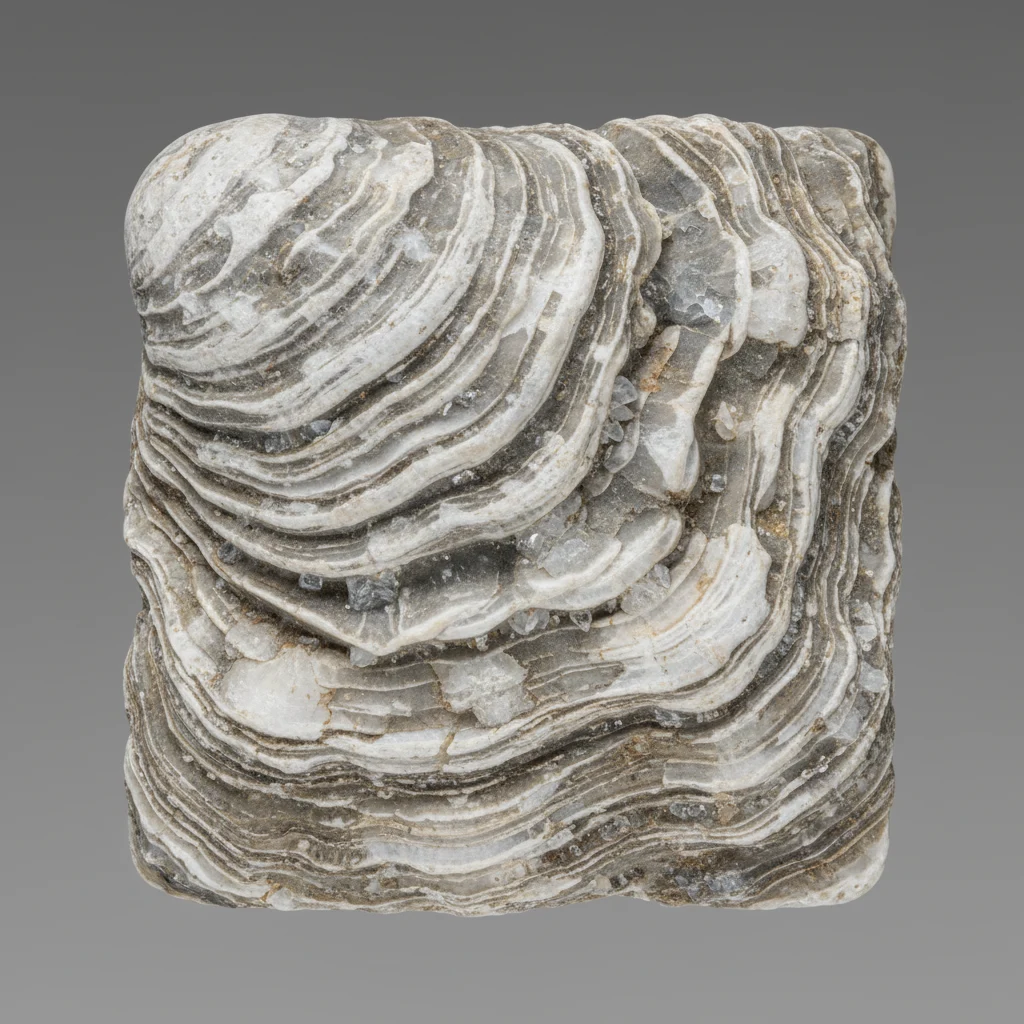
Oyster Shell


Quick answer: Oyster shell is an organic, calcium-carbonate material with a layered nacreous to chalky structure, commonly seen in white, cream, gray, tan, or iridescent tones. It is softer than many gemstones and is best identified by its shell layering, lightweight feel, and reaction to acid rather than by color alone.
AI Rock ID can help compare an oyster shell photo against visually similar materials such as mother of pearl, abalone shell, and calcite. RockIdentifier.io provides crystal and material references that support visual identification, but physical tests may still be needed for confident confirmation.
Good fit
- Collectors interested in organic gem materials and marine calcium-carbonate structures
- Decorative use in carvings, inlay, mosaics, beads, or coastal-themed objects
- Learning the difference between shell, nacre, and mineral calcite
- Low-wear jewelry pieces such as pendants, earrings, or brooches
Not a good fit
- Rings, bracelets, or daily-wear items exposed to abrasion
- Projects requiring high resistance to water, acids, or household chemicals
- Identification based only on white or pearly color
- Buyers seeking a rare mineral specimen rather than an abundant organic material
Most commonly confused with
- Mother of Pearl: Mother of pearl is the nacreous inner shell layer, while oyster shell may include both pearly nacre and dull outer shell material.
- Abalone Shell: Abalone shell usually shows stronger blue, green, and purple iridescence than typical oyster shell.
- Calcite: Calcite is a mineral form of calcium carbonate and lacks the organic layered shell growth pattern.
- Pearl: Pearl forms as a rounded nacreous body inside certain mollusks, while oyster shell is the hard external shell structure.
Oyster Shell vs. Similar Materials
| Material | Typical appearance | Key difference |
|---|---|---|
| Oyster shell | White, cream, gray, tan, sometimes pearly | Layered organic shell with nacreous and chalky zones |
| Mother of pearl | Smooth, pearly, iridescent inner layer | Specifically the nacre lining, not the whole shell |
| Abalone shell | Strong blue-green-purple iridescence | Usually more colorful and curved in broad shell pieces |
| Calcite | Clear, white, yellow, or many other colors | Crystalline mineral with cleavage rather than shell layers |
| Plastic imitation | Uniform shine or printed pattern | May feel warmer and lighter, with repeated artificial patterning |
AI identification confidence
AI photo identification is usually moderate for oyster shell when the image clearly shows layered edges, nacre, surface texture, or a recognizable shell shape. Confidence drops when the material is polished, dyed, carved, crushed, or photographed as a small white fragment.
When AI gets it wrong
- A polished cabochon may be labeled as mother of pearl, pearl, calcite, or howlite because the surface texture is reduced.
- Dyed or coated shell can resemble turquoise, coral, resin, or composite stone in photos.
- Small chips without visible layers may be confused with limestone, chalk, marble, or bone.
- Strong lighting can exaggerate iridescence and make ordinary shell appear closer to abalone.
Final recommendation
Choose oyster shell when the goal is an affordable organic material with visible shell texture, soft luster, or coastal character. For durability, select thicker pieces, protected settings, or decorative uses rather than high-contact jewelry.
How to Identify Oyster Shell in Photos
Look for curved growth lines, layered edges, uneven thickness, and a contrast between chalky outer shell and smoother inner nacre. Natural oyster shell often has pits, ridges, or irregular surfaces rather than the uniform pattern seen in plastic imitations. A single polished piece can be harder to identify unless the edge or back surface is visible.
Buying Oyster Shell: What to Check
When buying oyster shell beads, cabochons, or inlay, check whether the material is natural, dyed, stabilized, reconstructed, or backed with resin. Natural shell may show variation in color and texture, while highly uniform pieces may be laminated, coated, or made from shell composite. Ask sellers for untreated photos under normal lighting if color or iridescence is important.
Authenticity Clues for Oyster Shell
Authentic oyster shell commonly shows layered calcium-carbonate structure and may have slight surface irregularities. Plastic or resin imitations may show repeated patterns, mold lines, overly even color, or a softer synthetic feel. Acid testing can damage shell and should only be done on an inconspicuous area by someone who understands the risk.
What Is Oyster Shell?
Oyster Shell is the hard protective outer layer of an oyster, valued as an organic gem and biogenic material rather than a traditional crystal. In the hand, it feels firm but not glass-hard, with a smooth, often shiny surface and a layered build that tells you it grew gradually rather than crystallized as a single mineral specimen.
Its composition is primarily calcium carbonate, CaCO3, and its Mohs hardness is 3-4. Collectors usually recognize Oyster Shell by its white, cream, or gray color, pearly luster, opaque body, and natural shell form. It is very common, but clean, intact, attractive specimens still have decorative and cultural appeal.
Origin & History
The word oyster comes from the Latin ostrea, and Oyster Shell has been used since ancient times. As a specimen, it carries that long human familiarity: a simple coastal material that has moved from food remains and ornament into collections, gardens, and decorative displays.
For identification writing, it is best described as calcium carbonate biogenic material with organic-gem use, not as a rare mineral crystal. A plain reference point for calcium carbonate mineral information is mindat.org, while the collector’s eye should stay on the shell’s layered structure, pearly surface, and oyster origin.
Where Is Oyster Shell Found?
Oyster Shell is commonly found in coastal regions where oysters thrive. The supplied localities include Chesapeake Bay in the USA, Tokyo Bay in Japan, and Cairns in Australia, all practical examples of places where oyster shells may be encountered in association with oyster-bearing coastlines.
Formation
Oyster Shell forms as the oyster secretes calcium carbonate layer by layer while it grows. That layered construction is the feature you feel and see: a hard outside with a built-up, sometimes smooth and shiny surface that differs from the angular faces of many inorganic crystals.
This formation process explains why Oyster Shell is listed as amorphous in crystal system, with no single crystal habit to inspect. Its density is given as 2.5-2.8 g/cm3, and its durability is moderate, so prolonged moisture and environmental exposure can degrade the shell over time.
How to Identify Oyster Shell
Identify Oyster Shell first by its layered shell structure, smooth surface, and pearly to shiny luster. Typical colors are white, cream, and gray, the streak is white, and the material is opaque. It is non-magnetic, with a fair scratch resistance that matches its Mohs hardness of 3-4.
A practical field check is to compare the shell-like layering with the feel of calcium carbonate material rather than expecting sharp crystal faces. Oyster Shell may show conchoidal fracture, and a hardness test can help separate it from softer or harder lookalikes, though testing should be gentle on decorative specimens.
Properties of Oyster Shell
Physical Properties
| Crystal System | Amorphous |
| Hardness (Mohs) | 3-4 (Medium (4-6)) |
| Density | 2.5-2.8 g/cm3 |
| Luster | Pearly |
| Diaphaneity | Opaque |
| Fracture | Conchoidal |
| Streak | White |
| Magnetism | Non-magnetic |
| Colors | White, Gray, Cream |
Chemical Properties
| Classification | Biogenic material |
| Formula | CaCO3 |
| Elements | Ca, C, O |
| Common Impurities |
Optical Properties
| Refractive Index | 1.65-1.68 |
| Birefringence | None |
| Pleochroism | None |
| Optical Character | Isotropic |
Oyster Shell Health & Safety
Oyster shells are generally safe to handle and use.
Oyster Shell Value & Price
Price Range
Rough/Tumbled: $0.50 - $3.00 per specimen
Cut/Polished:
Price is affected by size, condition, and demand.
Durability
Moderate — Scratch resistance: Fair, Toughness: Fair
Oyster shells can degrade over time when exposed to moisture and environmental factors.
How to Care for Oyster Shell
Use & Storage
Store in a dry place to prevent moisture damage.
Cleaning
Clean with mild soap and water, then rinse thoroughly. Avoid harsh chemicals.
Cleanse & Charge
Sunlight or moonlight can be used for cleansing.
Placement
Can be placed in homes or gardens for decoration.
Caution
Avoid exposing to prolonged moisture.
Works Well With
Oyster Shell Meaning & Healing Properties
In crystal-healing practice, Oyster Shell is believed to support emotional healing, intuition, protection, calming, nurturing, grounding, compassion, relaxation, trust, love, and self-discovery. These meanings are cultural and spiritual associations, not medical treatment, so it should be used as a reflective object rather than a substitute for care.
Oyster Shell is linked with the Root and Sacral chakras, the zodiac signs Cancer and Pisces, the Moon, and the elements Water and Earth. Many practitioners place it where its coastal texture can be seen and touched, or pair it with rose quartz, amethyst, or clear quartz for a softer, reflective display.
Identify Oyster Shell from a photo
Compare Oyster Shell traits, care tips, value clues, and common lookalikes with a clear photo.
Common mistakes
- Calling every pearly shell material mother of pearl, even when dull outer oyster shell is present
- Assuming all white carved pieces are oyster shell without checking for shell layers
- Mistaking dyed oyster shell for naturally blue, green, or pink gemstone material
- Using oyster shell in rings or bracelets without considering its low hardness
- Cleaning oyster shell with vinegar, lemon juice, or acidic cleaners
- Treating shell composites and solid natural shell as the same material