Pink Aragonite


Quick answer: Pink Aragonite is a pink to peach variety or trade grouping of aragonite, a calcium carbonate mineral that is softer and more reactive than quartz. It is commonly sold as polished banded pieces, towers, hearts, and palm stones, especially from Moroccan material.
AI Rock ID can help compare Pink Aragonite against visually similar pink, peach, and banded minerals using color, banding, luster, and texture cues. RockIdentifier.io provides photo-based identification support, but soft carbonates may still require simple confirmation tests or seller documentation.
Good fit
- Collectors who like soft pink, peach, cream, or banded carbonate minerals
- Buyers looking for polished decorative pieces rather than daily-wear jewelry
- Beginners comparing aragonite with calcite, onyx marble, and other banded stones
- People who want a calcium carbonate mineral with visible layering or fibrous texture
Not a good fit
- Rings, bracelets, or pocket stones that will be rubbed or knocked often
- Acidic environments, ultrasonic cleaning, or vinegar-based tests on finished pieces
- Buyers who need a highly scratch-resistant crystal
- Anyone expecting color uniformity across natural banded material
Most commonly confused with
- Pink Calcite: Calcite has the same chemistry but a different crystal structure and often shows stronger rhombohedral cleavage.
- Banded Calcite: Banded calcite is often sold as onyx marble and may look similar when polished, but it is calcite rather than aragonite.
- Rhodochrosite: Rhodochrosite is usually richer pink to raspberry and is a manganese carbonate, not calcium carbonate.
- Pink Opal: Pink opal is silica-based, typically lacks carbonate fizzing, and has a waxier look.
Pink Aragonite Lookalike Comparison
| Material | Typical clue | Key difference |
|---|---|---|
| Pink Aragonite | Pink, peach, cream, or banded carbonate; Mohs 3.5-4 | Aragonite structure; soft and acid-reactive |
| Pink Calcite | Soft pink carbonate with cleavage or massive texture | Calcite structure; often Mohs 3 and shows rhombohedral cleavage |
| Rhodochrosite | Rosy to raspberry bands or masses | Manganese carbonate; usually denser color and different locality/value profile |
| Pink Opal | Waxy, opaque pink surface | Silica mineral; does not fizz like carbonate under proper acid testing |
| Dyed carbonate | Bright or uneven color in cracks and pits | Color may be artificial rather than natural pink zoning |
AI identification confidence
Photo-based identification of Pink Aragonite is moderate when the specimen shows banding, soft pastel color, and carbonate-like polish. Confidence drops when the piece is a uniformly pink tumble, a heavily polished carving, or a seller photo with strong color filters.
When AI gets it wrong
- The stone is labeled by trade name only, such as pink onyx, aragonite onyx, or banded onyx.
- A polished surface hides cleavage, crystal habit, grain, or fibrous structure.
- Lighting makes peach, cream, or beige carbonate appear more pink than it is.
- Dyed calcite or aragonite has color concentrated along cracks or porous zones.
Final recommendation
Choose Pink Aragonite when you want a soft pink carbonate display piece and can handle it gently. For frequent handling or jewelry, a tougher pink mineral may be more practical.
How to Check Pink Aragonite Before Buying
Look for seller photos taken in natural or neutral light, because pink aragonite can appear more saturated under warm lighting. Ask whether the material is natural color, dyed, stabilized, or sold under a trade name such as pink onyx. A reliable listing should identify the mineral as aragonite or explain uncertainty if the item is simply a pink banded carbonate.
Authenticity Clues for Pink Aragonite
Natural pink aragonite often shows uneven pastel color, banding, cream areas, or fibrous-looking zones rather than perfectly uniform color. Suspicious signs include vivid neon pink, dye in cracks, color that rubs off on a damp cloth, or identical-looking pieces across a large batch. Acid tests can damage polished carbonate pieces, so they should not be used on valued specimens unless a discreet test area is acceptable.
Best Uses for Pink Aragonite Pieces
Pink Aragonite is best suited to display specimens, carvings, palm stones, and carefully handled collection pieces. Because it is relatively soft, it is less suitable for rings, bracelet beads, keychains, or items stored loose with harder minerals. If used in jewelry, protective settings and occasional wear are preferable.
What Is Pink Aragonite?
Pink Aragonite is just aragonite that happens to be pink, and aragonite itself is calcium carbonate with an orthorhombic crystal structure. Most of the pieces you run into in shops are banded and polished, and they’ve got that creamy strawberry-milk look that feels “soft” before you even lay a finger on it. Pick one up and the first thing you notice is how light it is for its size, but it still has that real-stone heft, not that plasticky fake weight. Cool in the hand. Quiet.
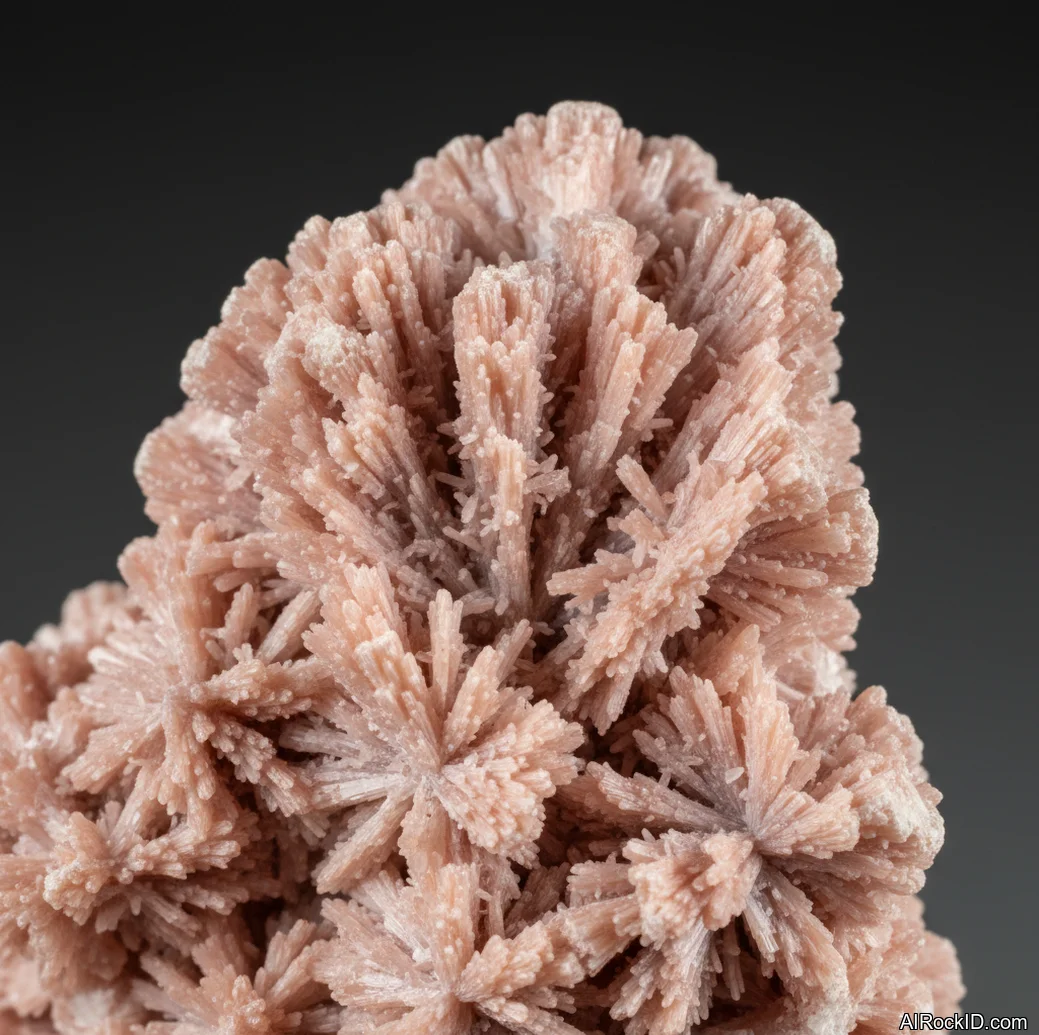
Thing is, a lot of people lump it in with calcite at first because the overall vibe is similar, but aragonite’s built differently. Different crystal structure. And you can kind of see it. On polished hearts and palm stones, there’s often faint banding that looks like someone dragged a paintbrush through blush and beige, then wiped it off. If you tilt it and look along an edge, you’ll sometimes catch tiny sparkly, granular patches where it used to be more fibrous before it got cut and rounded (those little gritty glitter spots). But don’t go in expecting perfect crystals in the pink material. Clean aragonite sprays and twins do exist, but the pink stuff is usually massive, banded, and cut to show off the color.
Origin & History
Aragonite got its official write-up in 1797, when Abraham Gottlob Werner described it and named it after Aragón, Spain. That’s where the classic specimens came from, the kind you can picture sitting in an old drawer with paper labels and a bit of dust, and they helped lock down the species. The name stayed put even after mineralogists figured out it has the exact same chemistry as calcite (CaCO3), just arranged differently at the atomic level.
Pink Aragonite, though, isn’t its own separate species with a neat “discovery date.” It’s basically a trade and collector label for aragonite that’s picked up trace impurities and included material that shift the color into peach, rose, and salmon shades. And in the real world market, a lot of what people started calling “pink aragonite” became widely familiar when the Moroccan banded material flooded in during the 2000s and 2010s, often carved into those palm-stone shapes people like to hold (smooth, slightly waxy feel, and cool at first touch).
Where Is Pink Aragonite Found?
Most commercial Pink Aragonite on the market is banded material from Morocco, with aragonite also occurring worldwide in caves, hydrothermal veins, and carbonate-rich sediments.
Formation
Quartz hangs around forever. Aragonite, compared to that, feels kind of temporary in geologic time, like it’s here for a bit and then slips away.
You usually get aragonite from low-temperature fluids when calcium and carbonate are on hand. Caves are a big one, where it shows up as speleothems, and you’ll also find it in hot spring deposits and in some hydrothermal settings. And it doesn’t stop on land, either. It forms in marine environments too, including shells and some carbonate sediments.
Thing is, aragonite is metastable at Earth’s surface conditions. Give it enough time and it can alter into calcite. So you’ll spot aragonite in fresh cave growth and younger deposits, but older carbonates often end up as calcite instead. That banded pink stuff? Most of the time that’s repeated pulses of mineral-rich water laying down layers, and tiny shifts in chemistry are what make the stripes (sometimes the bands are so fine they look like someone dragged a brush through wet paint).
How to Identify Pink Aragonite
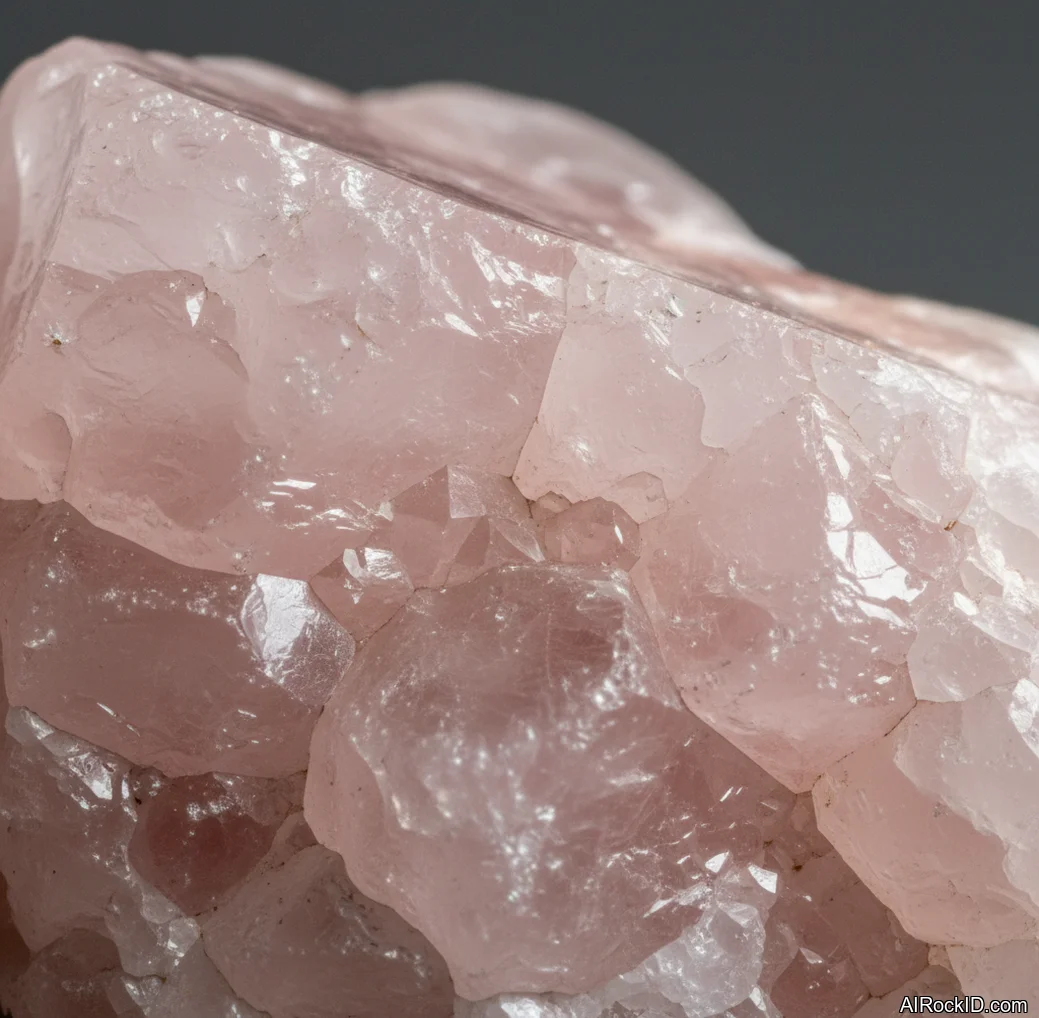
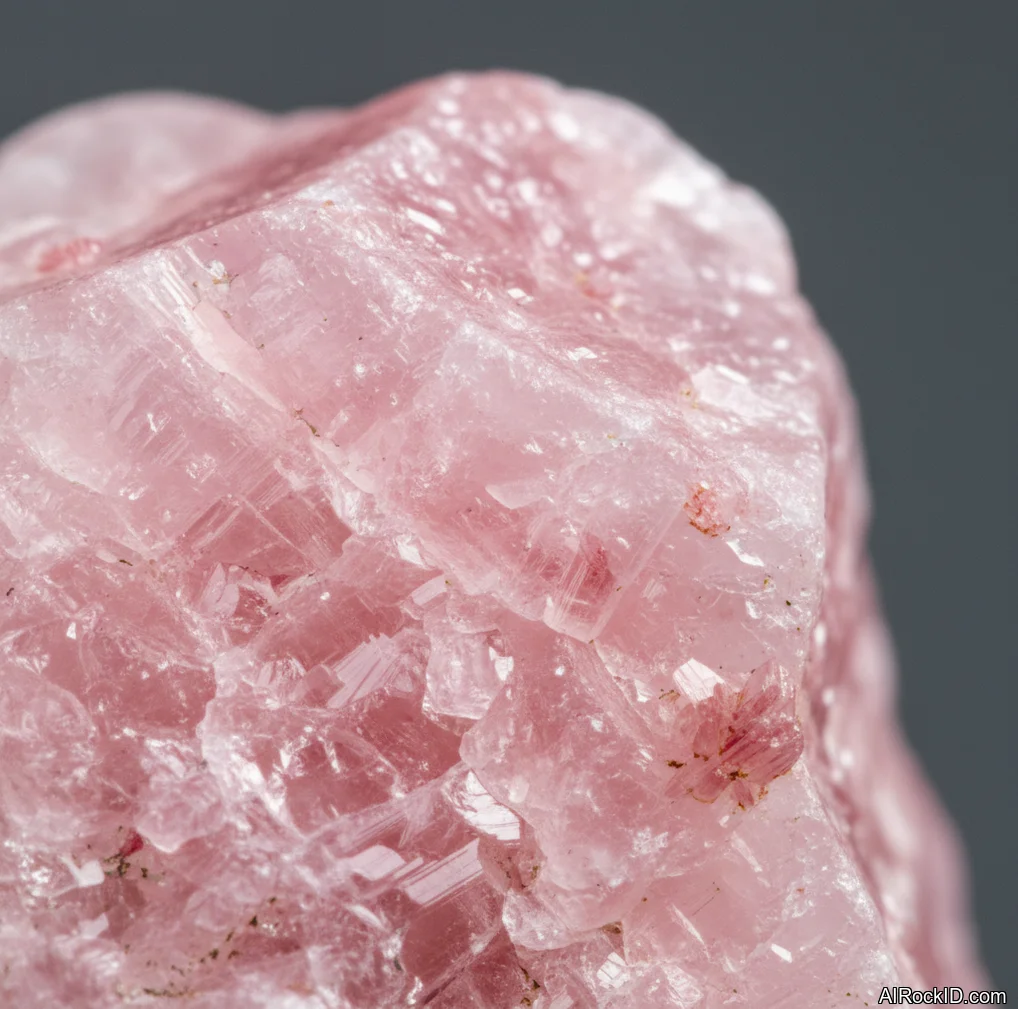
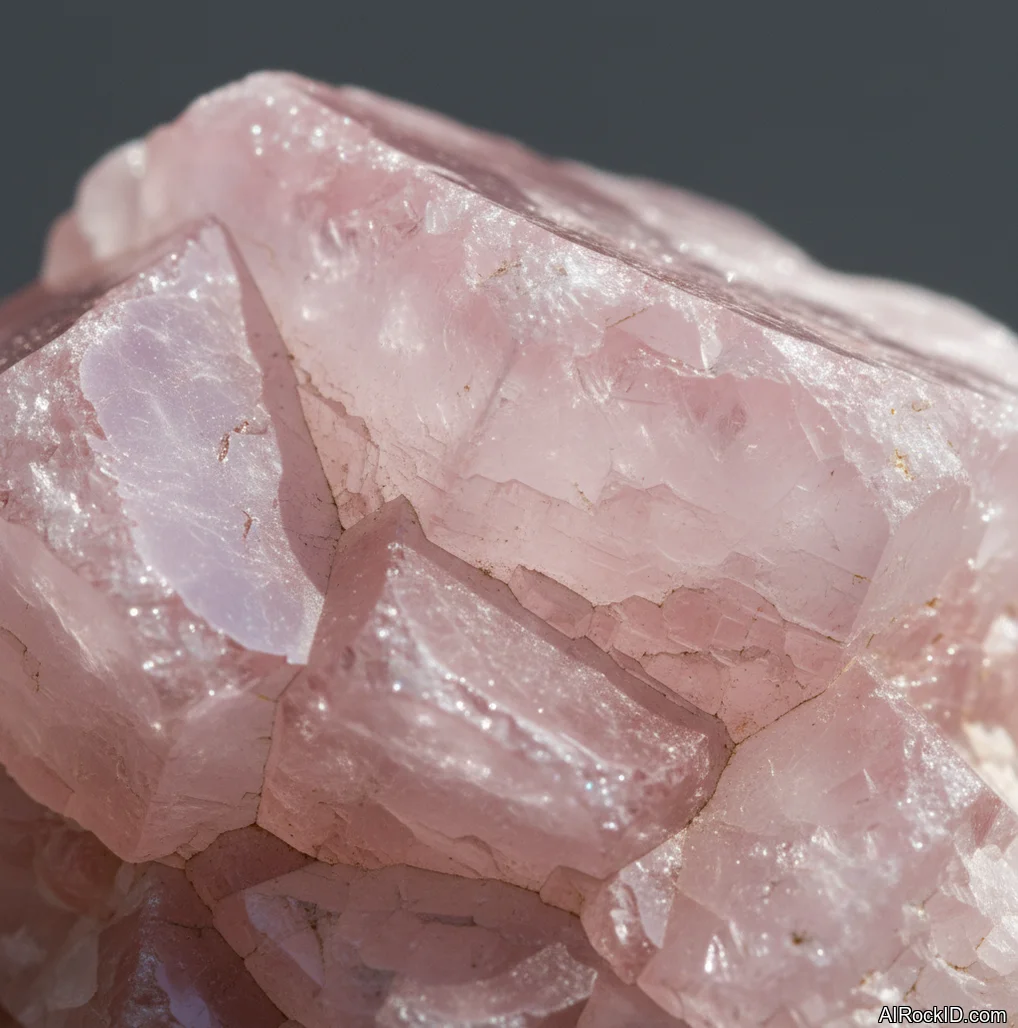
Color: Pink Aragonite ranges from pale blush and peach to salmon-pink, often with cream, tan, or white banding. Color can be patchy, with soft gradients rather than sharp boundaries.
Luster: It’s usually waxy to pearly when polished, and can look silky on fibrous areas.
If you scratch it with a copper penny, it’ll usually show a mark, and a steel nail will bite in pretty easily. The real test is acid: a drop of dilute hydrochloric acid will fizz because it’s calcium carbonate, though you don’t want to do that on a polished piece you care about. And in your hand, it tends to feel slightly “chalkier” on unpolished spots than rose quartz, which feels glassy even when it’s rough.
Common Look-Alikes
Pink Aragonite is sometimes confused with these materials:
- Pink Mangano Calcite (often sold as "pink calcite"; softer, waxier, and reacts fast to acid like aragonite does)
- Pink Calcite (massive calcite; similar pastel bands, but cleavage and crystal habit differ from aragonite)
- Rhodochrosite (banded pinks can look close in photos, but rhodochrosite is heavier and usually shows sharper, higher-contrast bands)
- Pink Opal / Peruvian pink opal (more opaque and chalky, usually no aragonite-style banding; feels a bit "dry" to the touch)
- Dyed calcite or dyed aragonite sold as "pink aragonite" (hot pink zones, dye sitting in pits and fractures)
- Pink glass or resin "aragonite" (too uniform, warmer in the hand, and often has tiny round bubbles)
Market Cautions & Treatments
When AI Can Get This Wrong
In photos, AI mixes Pink Aragonite up with pink calcite and mangano calcite constantly because all three do that creamy pastel banding once they’re polished. The real test is in-hand: aragonite often feels surprisingly light for its size, shows brittle chips on edges, and a drop of weak acid will fizz like calcite but the texture and banding style usually give it away. If the color is perfectly even and the surface looks glassy with no tiny pits or bruises, assume glass or dye until proven otherwise.
Properties of Pink Aragonite
Physical Properties
| Crystal System | Orthorhombic |
| Hardness (Mohs) | 3.5-4 (Soft (2-4)) |
| Density | 2.93-2.95 |
| Luster | Vitreous |
| Diaphaneity | Translucent to opaque |
| Fracture | Uneven |
| Streak | White |
| Magnetism | Non-magnetic |
| Colors | Pink, Peach, Salmon, Cream, White, Tan |
Chemical Properties
| Classification | Carbonates |
| Formula | CaCO3 |
| Elements | Ca, C, O |
| Common Impurities | Sr, Fe, Mn, Mg |
Optical Properties
| Refractive Index | 1.530-1.686 |
| Birefringence | 0.156 |
| Pleochroism | None |
| Optical Character | Biaxial |
Pink Aragonite Health & Safety
Pink Aragonite is a non-toxic calcium carbonate mineral, so it’s generally safe to handle. Just use the usual stone-handling hygiene.
Safety Tips
If you’re going to cut or sand it, put on a respirator and keep things wet to knock the dust down. That fine mineral dust gets everywhere (in your nose, on your tongue), and it’s an irritant.
Pink Aragonite Value & Price
Price Range
Rough/Tumbled: $5 - $60 per piece
Price usually comes down to color (that clean pink versus a more beige tone), the banding, and how nice it gets after a polish. Larger palm stones and carved pieces get expensive fast. But even raw pink aragonite can pull a higher price if the natural texture is especially good, like those tight little ripples you can feel with a fingertip (you know the ones?).
Durability
Nondurable — Scratch resistance: Fair, Toughness: Fair
It can scratch, chip, and dull pretty easily, and prolonged moisture plus heat can slowly rough up the surface on polished pieces.
How to Care for Pink Aragonite
Use & Storage
Store it in a pouch or a separate compartment so harder stones don’t scuff it up. I don’t toss aragonite in a mixed bowl with quartz points unless I want mystery scratches.
Cleaning
1) Rinse quickly with lukewarm water and a drop of mild soap. 2) Use a soft cloth or a very soft toothbrush only on sturdy areas, not crumbly edges. 3) Pat dry right away and let it finish air-drying out of direct sun.
Cleanse & Charge
For a low-fuss reset, use smoke, sound, or a short sit on a piece of selenite. If you like moonlight, keep it brief and bring it back inside so dew doesn’t sit on the polish all night.
Placement
It’s happiest on a nightstand, shelf, or desk where it won’t get knocked around. If you carry it, put it in a fabric pouch because keys and coins will chew it up.
Caution
Skip ultrasonic cleaners, steam cleaners, and harsh acids. Calcium carbonate will react, and you’ll end up with that etched, dull polish you can feel when you run a fingernail across it (it’s a nasty little grab). And don’t park it in a sunny window for weeks, either. That softer, banded material can start to lose its crisp look from tiny micro-scratches plus the constant warm-up, cool-down cycle. Why risk it?
Works Well With
Pink Aragonite Meaning & Healing Properties
Grab Pink Aragonite when you want something calm in your palm, not high voltage. In crystal circles, people link it with soothing, comfort, and that “I’m safe in my own body” feeling. I’ve sold a lot of it to folks who swear they aren’t crystal people. They just want something that feels good to hold when the week’s chewing them up. And yeah, I get it. It has that steady little heft, and the soft pink tone does more than you’d expect.
But look, I’m keeping this on the ground: it isn’t medical care. What it can be is a physical reminder. It’s sitting on your desk, you spot it, and you realize your jaw’s been clenched for an hour. You pick it up, your breathing slows down a notch. Simple stuff. Useful stuff. That’s the real reason people keep a palm stone nearby.
One more thing from behind the shop counter. People mix up Pink Aragonite with pink calcite, and with mangano calcite, constantly. The overall vibe is close, sure, but aragonite pieces often have visible banding, and the surface feels a little different, kind of buttery when it’s polished (your thumb notices right away). And since it’s soft, it’s better as a sit-with-it stone than a wear-it stone. Put it in a ring or a daily bracelet and it gets wrecked fast. Why risk it?
Common mistakes
- Assuming every pink banded carbonate is aragonite without checking for calcite or trade-name labeling
- Using vinegar, lemon juice, or household cleaners on a polished piece
- Expecting Pink Aragonite to resist scratches like quartz or agate
- Buying very bright pink material without checking for dye or color enhancement
- Storing it loose with harder stones that can scratch the surface
- Relying on a single photo when the color may be affected by lighting or filters
Identify Pink Aragonite from a photo
Compare Pink Aragonite traits, care tips, value clues, and common lookalikes with a clear photo.