Purple Creedite


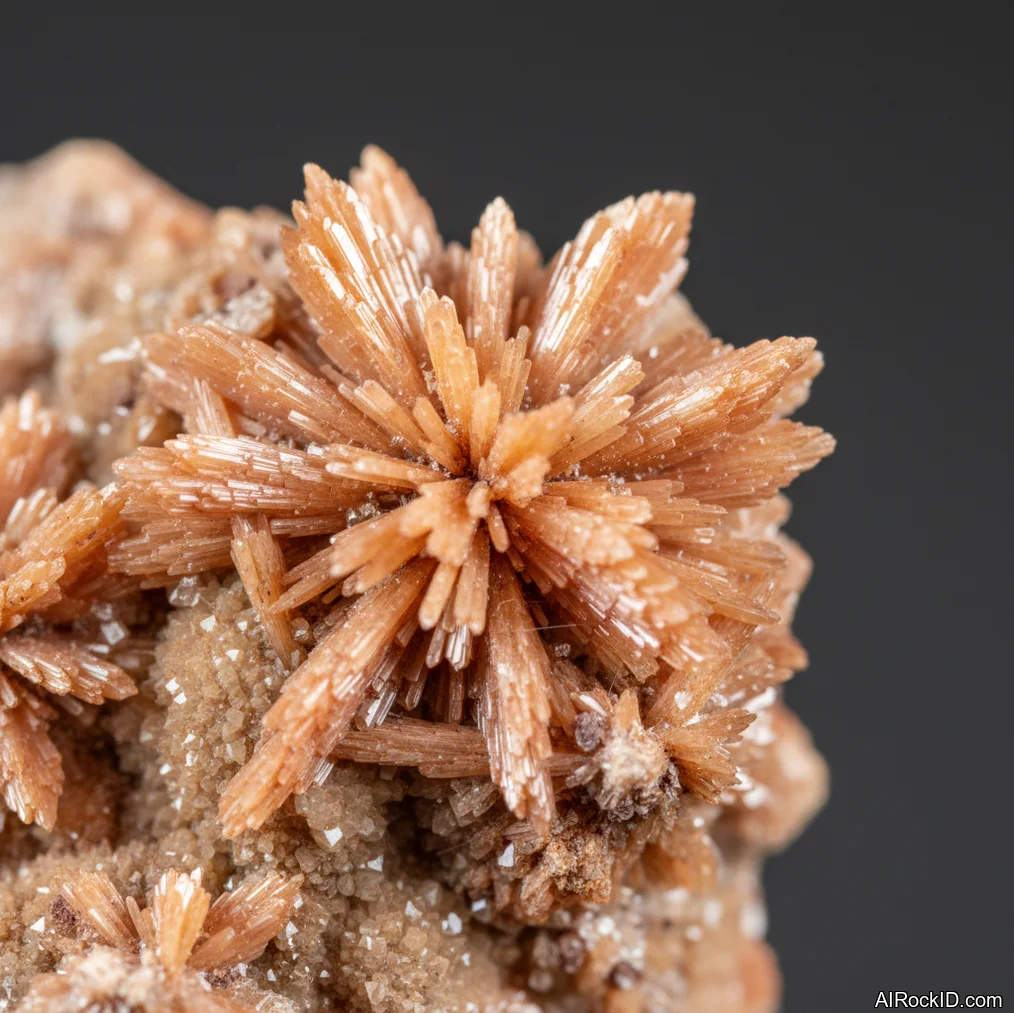
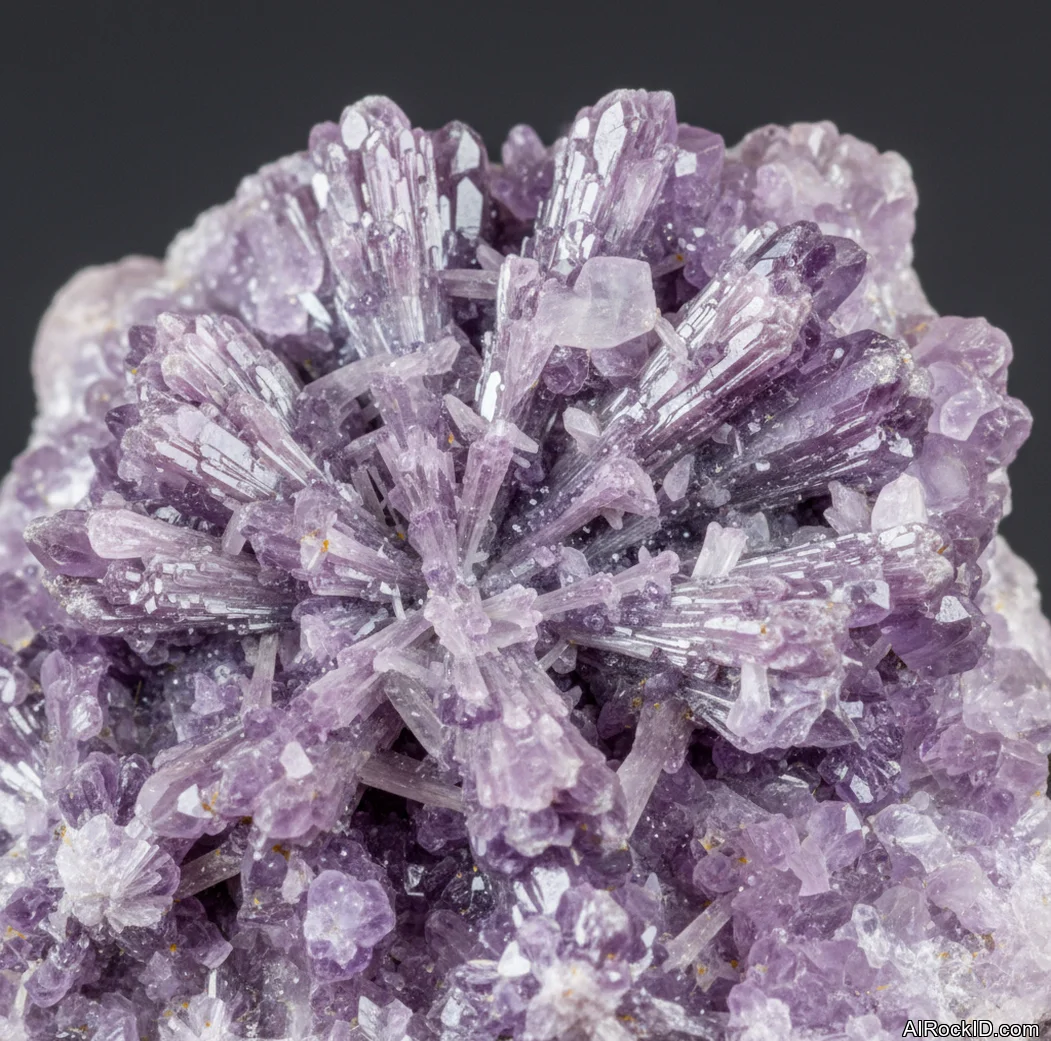
Purple Creedite is the lavender to violet color of creedite, a calcium aluminum fluoro-sulfate hydroxide that forms radiating sprays of slender prismatic crystals. Its most useful identifying trait is that spray habit on pale volcanic rock, with a hardness of only 3.5 to 4. Crystal traditions link it to the Third Eye and Crown chakras.
Most commonly confused with
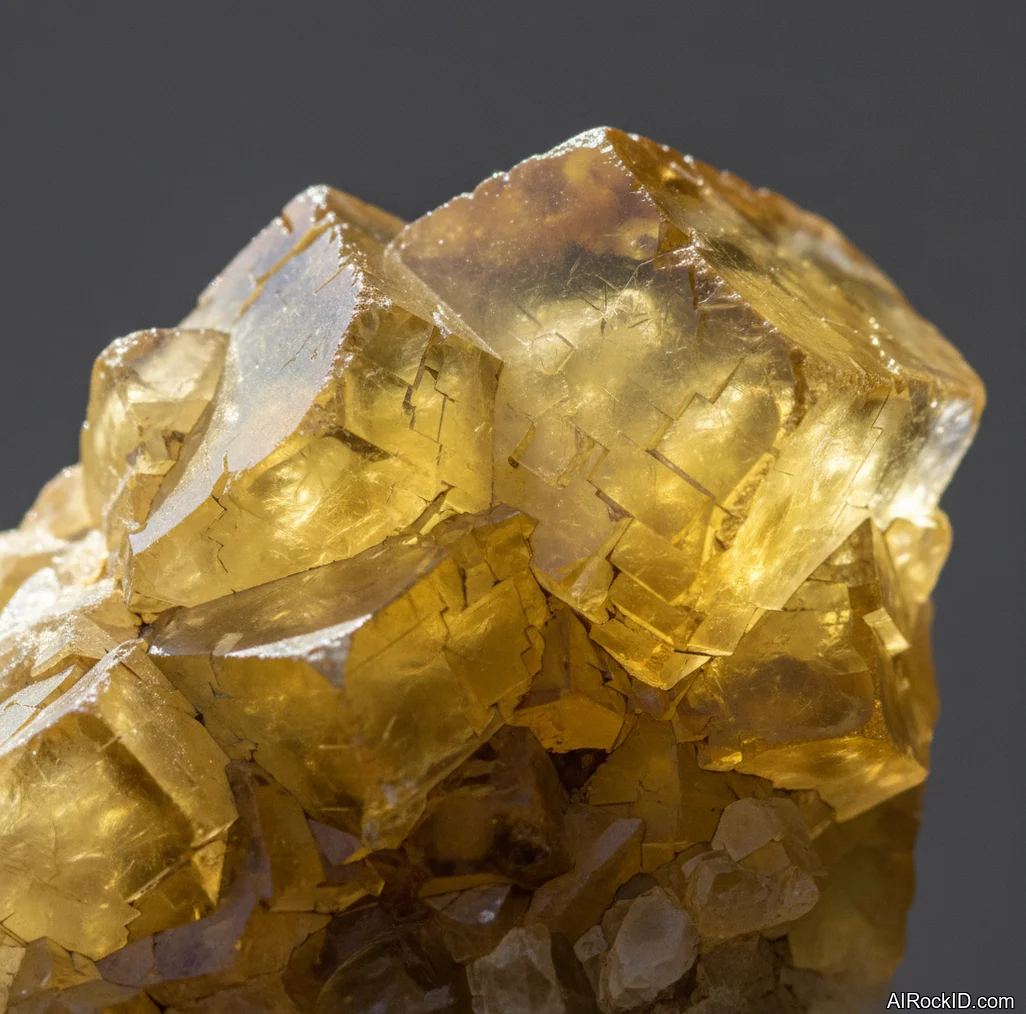
- Fluorite: Fluorite commonly forms cubes or octahedrons and has lower hardness than many collectors expect; creedite is more often seen in sprays or radiating clusters.
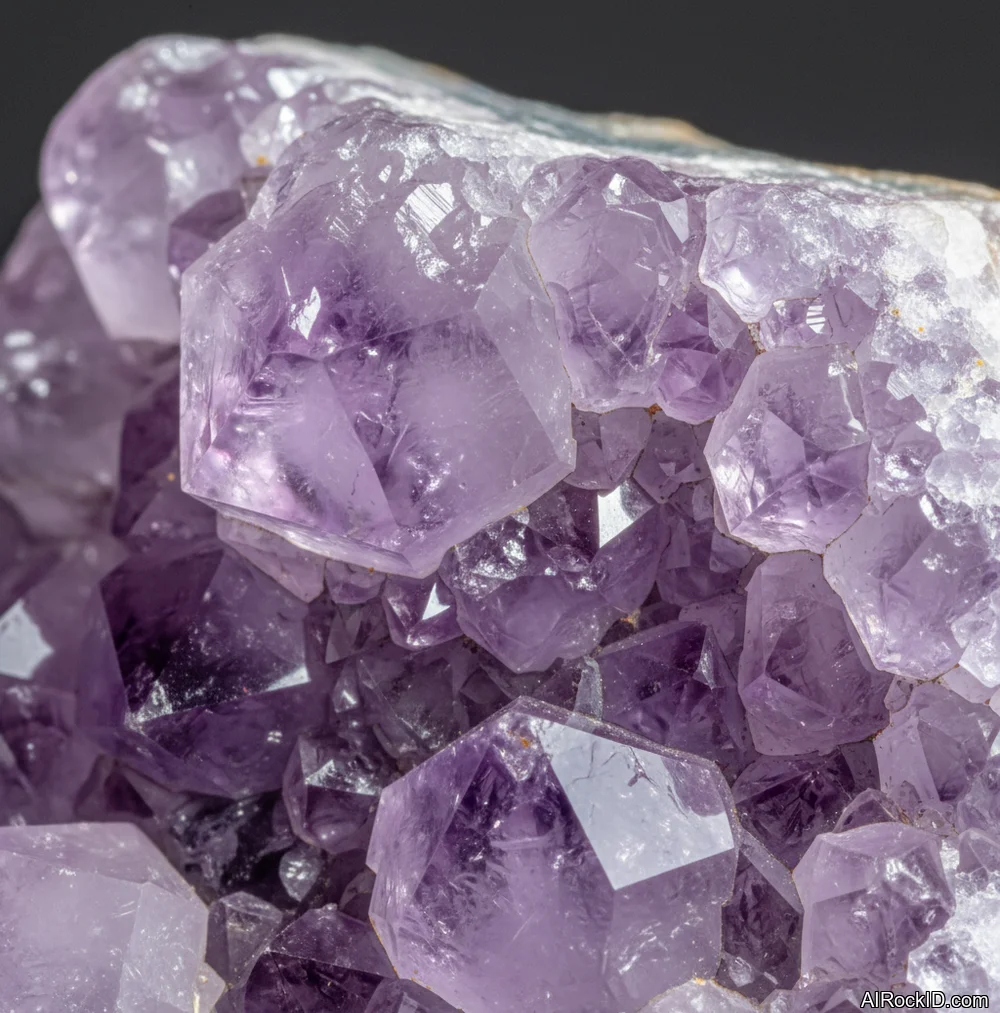
- Amethyst: Amethyst is quartz and usually forms six-sided prismatic crystals, while purple creedite forms different cluster habits and has a distinct mineral chemistry.
- Charoite: Charoite is typically massive with swirling fibrous patterns, not transparent to translucent crystal sprays.
- Kunzite: Kunzite forms elongated spodumene crystals with strong cleavage, unlike the radiating or clustered habit typical of creedite.
Purple Creedite vs. Similar Purple Minerals
| Mineral | Typical habit | Key difference |
|---|---|---|
| Purple creedite | Radiating sprays, clustered crystals | Rare sulfate-fluoride mineral, often from Mexico |
| Fluorite | Cubic, octahedral, or massive | Cubic cleavage and common zoning are frequent clues |
| Amethyst | Hexagonal quartz points or geodes | Harder quartz with six-sided crystal form |
| Charoite | Massive, fibrous, swirling | Opaque purple rock rather than discrete crystals |
| Kunzite | Long prismatic crystals | Spodumene with strong cleavage and pleochroism |
How to Check Purple Creedite Authenticity
Authentic purple creedite is usually sold as a mineral specimen rather than a polished gem. Look for natural crystal clusters, consistent mineral association, and seller-provided locality details, especially from recognized Mexican sources. Be cautious with unusually vivid color, glossy coatings, or listings that use only metaphysical descriptions without mineral data.
Buying Tips for Purple Creedite Specimens
Ask for photos in daylight or neutral lighting, including close-ups of the crystal tips and matrix. Specimens with intact sprays, strong color, and documented locality often command higher prices, while damaged clusters or vague labels should be priced more cautiously. Because creedite can be delicate, confirm that the seller packs fragile crystal clusters securely.
Best Photos for Identifying Purple Creedite
Use a sharp photo taken in neutral light with the specimen filling most of the frame. Include a second image with a ruler or coin for scale and a third image showing the side of the cluster or matrix. Avoid purple backgrounds or colored lighting, because they can make non-creedite minerals appear more similar.
What Is Purple Creedite?
Purple Creedite is the purple to violet form of creedite, Ca3Al2(SO4)(F,OH)10·2H2O, and it grows in these delicate sprays of skinny, prismatic crystals.
A cluster of Purple Creedite looks airy and almost weightless, yet it feels solid in the hand. The needle-like crystals can prick, especially at the tips, and the sprays still look breakable. They appear fragile but are not flimsy.
At a glance, people mix it up with amethyst or purple fluorite. But creedite isn’t that chunky, glassy mass you get with those. It’s more like a frozen firework, all these thin crystals shooting outward, usually perched on light-colored rhyolite or some other volcanic rock.
Under a lamp the appeal of the purple material is clear. The color ranges from pale lilac to a deeper grape tone, and the best pieces keep an even color along the length of the crystals instead of fading near the tips. Many specimens are naturally pale, and online photos often exaggerate saturation. In person, genuine material usually looks soft and glowing rather than intense.
Origin & History
Creedite got its first proper write-up in 1916, based on specimens from the Creede mining district in Mineral County, Colorado, USA. The name’s straight from that spot, and back then Creede was already well known for silver and base-metal mining when the mineral finally got labeled.
The collector tag "purple creedite" appeared later, once Mexican material became widely available. Dealers separate it by color because lavender-to-violet sprays show well in a display case, while white or colorless material is less striking. The wording on specimen labels usually reflects visual appeal rather than an official variety status.
Where Is Purple Creedite Found?
The finest purple sprays most collectors recognize come from Durango, Mexico, with classic U.S. material from Colorado and smaller occurrences reported in a few other countries.
Formation
Most creedite occurs in the oxidized zones of hydrothermal ore deposits, particularly where fluorine- and sulfate-rich fluids move through volcanic rocks. It is a late-stage product of cavity chemistry: the fluids cool, meet sources of aluminum and calcium, and creedite crystallizes as slender prismatic crystals.
Raw pieces from Durango usually have creedite lining vugs in rhyolite or brecciated volcanic rock (the kind with sharp, broken clasts you can feel with your fingertip). Sometimes you’ll see it sitting with fluorite, quartz, or iron oxides that leave that rusty staining in the matrix. And no, it’s not a “grow anywhere” mineral. You need the right soup: sulfate and fluorine, plus aluminum, calcium, and enough open space for the crystals to build sprays instead of turning into a tight, compact crust.
How to Identify Purple Creedite
Color: Purple creedite ranges from pale lavender to medium violet, often with slightly lighter tips or a soft, milky look in thicker clusters. The color is usually more subtle in hand than in edited listing photos.
Luster: Vitreous to silky on crystal faces, especially where the needles are tightly packed.
The real test is the crystal habit: look for radiating sprays of slender prisms rather than cubic or blocky shapes. If you scratch it with a steel needle, it’ll mark pretty easily, which separates it from tougher purple minerals like quartz. And when you tilt a good cluster under a single light, you get a fine glitter off hundreds of tiny faces instead of one big flash.
Common Look-Alikes
Purple Creedite is sometimes confused with these materials:
- Amethyst (especially pale or scepter forms)
- Fluorite (purple cubic clusters)
- Dyed quartz clusters
- Purple halite
- Purple glass sprays
- Treated or dyed creedite
Market Cautions & Treatments
Properties of Purple Creedite
Physical Properties
| Crystal System | Orthorhombic |
| Hardness (Mohs) | 3.5-4 (Soft (2-4)) |
| Density | 2.68-2.75 g/cm3 |
| Luster | Vitreous |
| Diaphaneity | Transparent to translucent |
| Fracture | Uneven |
| Streak | White |
| Magnetism | Non-magnetic |
| Colors | Lavender, Violet, Purple, Colorless, White |
Chemical Properties
| Classification | Sulfates |
| Formula | Ca3Al2(SO4)(F,OH)10·2H2O |
| Elements | Ca, Al, S, O, F, H |
| Common Impurities | Fe, Mn |
Optical Properties
| Refractive Index | 1.461-1.476 |
| Birefringence | 0.015 |
| Pleochroism | Weak |
| Optical Character | Biaxial |
Purple Creedite Health & Safety
Normal display and handling carry low risk. The crystals are sharp and delicate, with glassy points that can snap if bumped. The main concern is damage to the specimen, not chemical hazard.
Safety Tips
Handle it over something soft, like a folded towel, and don’t brush the crystal tips. They snag and chip way easier than you’d think. Use a gentle air puffer instead.
Purple Creedite Value & Price
Price Range
Rough/Tumbled: $30 - $800 per specimen
Prices can jump all over the place depending on how deep the color is, how long the crystals are, and whether the sprays are still intact or look like they’ve been snapped off. And the pieces that actually pull serious money are the clean, undamaged purple clusters sitting on a tidy matrix, with those little points still crisp and not all scuffed up (you can feel it when you run a finger over them).
Durability
Fragile — Scratch resistance: Fair, Toughness: Poor
Creedite crystals chip easily and don’t love rough handling or vibration during shipping.
How to Care for Purple Creedite
Use & Storage
Store it in a box or display case where it will not be bumped, because the sprays break at the base. Lining a box with foam keeps the specimen from rattling.
Cleaning
1) Use a soft air blower to remove dust. 2) If needed, rinse quickly in cool water and let it air-dry fully. 3) Avoid ultrasonic cleaners and stiff brushes.
Cleanse & Charge
For a metaphysical-style cleanse, stick to smoke, sound, or moonlight since the crystal tips are easy to knock. If you do rinse it, keep it quick and don’t use hot water.
Placement
Put it somewhere stable with low traffic, like a shelf you don’t reach over every day. Side lighting makes the sprays sparkle way more than overhead room light.
Caution
Do not tumble it, clean it ultrasonically, or place it loose in a bag with other minerals. Even careful collectors can find a fine dusty residue in the bottom of a storage box, caused by the specimen shifting each time the box is moved.
Works Well With
Symbolism and Uses of Purple Creedite
Purple Creedite has no long history of folklore. As a collector name it became common once Mexican material reached the market widely. Metaphysical writers tend to place it with the Third Eye and Crown chakras, and with the zodiac signs Pisces and Aquarius, and they list Air and Water as its elements. In these traditions the radiating crystal spray is read as a symbol of attention turning upward and outward, and the violet color is tied to reflection and calm.
In practice the mineral is used as a display and focus piece rather than a carried stone. Hardness of 3.5 to 4 and poor toughness mean the points chip and prick, so it suits a desk, shelf or quiet corner for meditation or journaling. Practitioners often use it as an object to look at while settling attention. These are cultural beliefs, not proven effects, and they do not replace medical or mental health care.
Common mistakes
- Identifying any purple crystal cluster as creedite without checking crystal habit
- Assuming a bright violet color is natural without considering dye, lighting, or editing
- Confusing fluorite cleavage faces with creedite crystal clusters
- Cleaning fragile creedite sprays with water, ultrasonic cleaners, or stiff brushes
- Buying based only on color while ignoring locality and specimen structure
Identify Purple Creedite from a photo
Compare Purple Creedite traits, care tips, value clues, and common lookalikes with a clear photo.