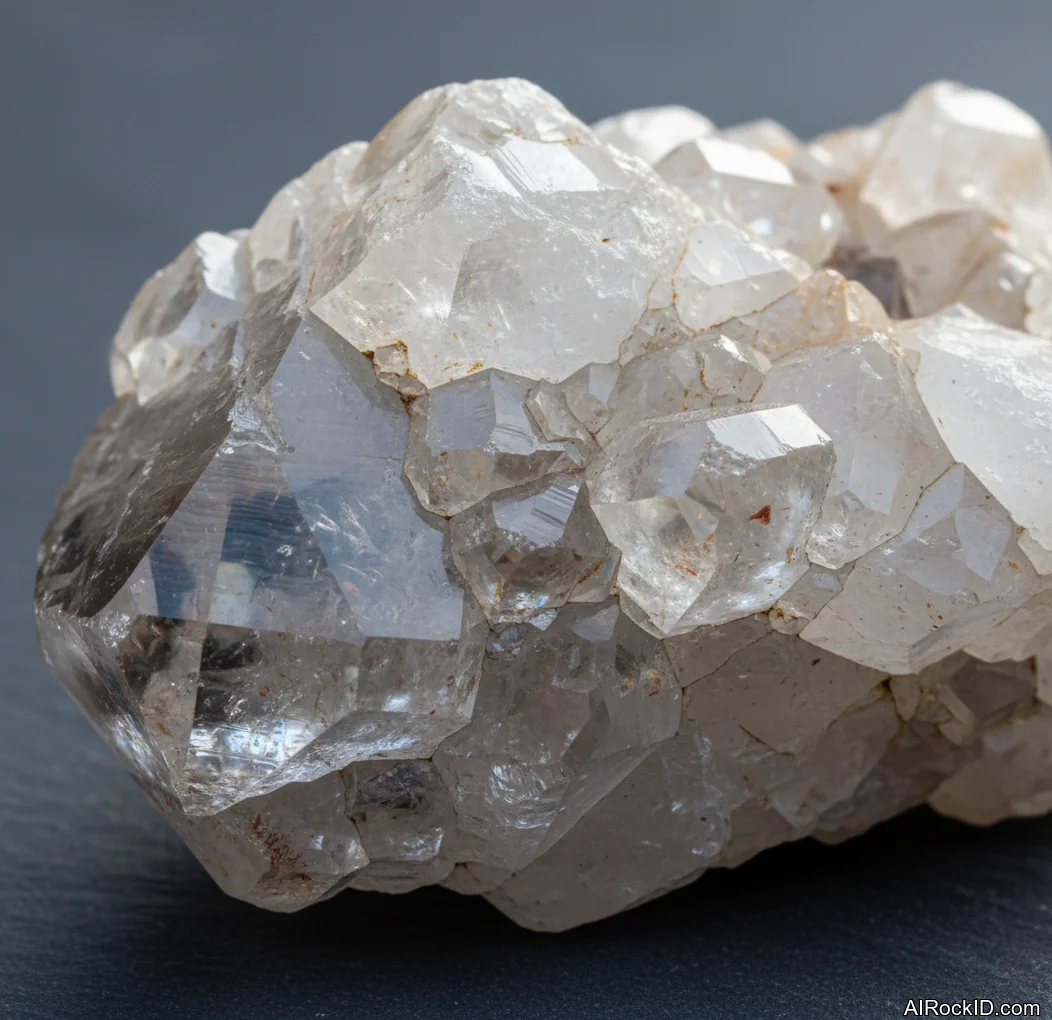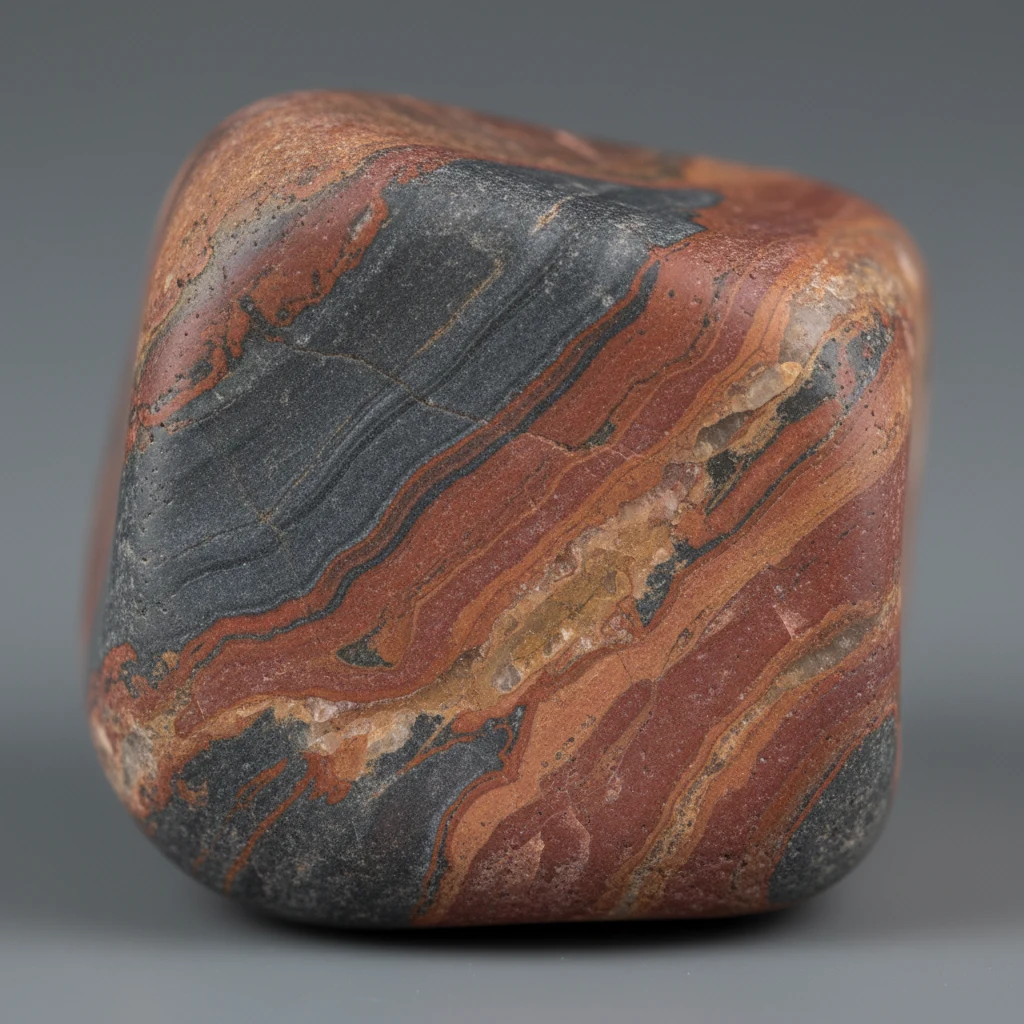
River Pebble


Quick answer: River pebble is a rounded natural stone shaped by moving water, so its exact mineral makeup can vary from piece to piece. Many hard, pale river pebbles are quartz-rich, but some may be sandstone, limestone, basalt, jasper, chert, or other locally sourced rocks.
AI Rock ID can help compare a river pebble’s color, luster, grain, and surface texture against common rock and mineral possibilities. RockIdentifier.io treats river pebble as a shape-and-origin term, so identification may require checking the pebble’s actual material rather than relying on roundness alone.
Good fit
- Collectors who want an easy beginner specimen from a natural river or gravel setting
- People comparing rounded stones used in aquariums, gardens, terrariums, or crafts
- Users trying to separate quartz-rich pebbles from limestone, basalt, chert, or glass
- Anyone learning how water erosion changes rock shape and surface texture
Not a good fit
- Buyers who need a single, fixed mineral species with consistent properties
- Collectors seeking rare or high-value crystal specimens
- Situations where chemical reactivity must be known without testing, such as sensitive aquariums
- Identification based only on color, because river pebbles can be many rock types
Most commonly confused with
- Quartz: Quartz pebbles are usually hard, glassy to waxy, and do not fizz in vinegar or dilute acid.
- Jasper: Jasper is an opaque microcrystalline quartz that may occur as rounded pebbles, often with red, yellow, brown, or green colors.
- Chert: Chert is typically very fine-grained, hard, and may break with a sharp, curved fracture rather than visible grains.
- Basalt: Basalt pebbles are usually dark gray to black, fine-grained, and heavier-looking than many quartz pebbles.
River Pebble Lookalike Comparison
| Material | Typical Clues | Simple Check |
|---|---|---|
| Quartz pebble | Hard, glassy to waxy, often white, clear, gray, or smoky | Scratches glass; no acid fizz |
| Limestone pebble | Dull to earthy, cream, gray, or tan; may show fossils | May fizz with vinegar or dilute acid |
| Basalt pebble | Dark, fine-grained, dense-looking, sometimes with tiny holes | Does not look glassy; often darker throughout |
| Chert or jasper pebble | Opaque, very fine-grained, waxy, often colorful | Breaks with sharp curved surfaces if fractured |
| Tumbled glass | Very smooth, uniform color, sometimes bubbles or mold-like shape | May show rounded artificial edges or internal bubbles |
AI identification confidence
AI identification of a river pebble is usually moderate because the rounded shape records erosion, not a specific mineral species. Confidence improves when the image shows fresh broken surfaces, close-up grain texture, streak, hardness clues, and whether the stone reacts with acid.
When AI gets it wrong
- The pebble is wet, polished, or photographed under strong glare, making texture and luster hard to judge
- Only the rounded exterior is visible and no fresh surface, grain, or fracture pattern can be seen
- Local rocks include several similar-looking gray, white, or tan materials
- The stone is man-made glass, ceramic, concrete, or landscaping aggregate worn smooth by use
Final recommendation
Treat “river pebble” as a descriptive field name until the stone’s mineral or rock type is confirmed. For buying or collecting, ask for locality, material identification, and any treatment details instead of relying on the rounded shape alone.
How to Check a River Pebble at Home
A few simple observations can narrow down a river pebble’s identity. Note its color, weight, visible grains, luster, and whether it can scratch glass. If testing for limestone or calcite, place a small drop of vinegar or dilute acid on an inconspicuous spot and rinse afterward. Avoid destructive tests on sentimental, decorative, or potentially valuable specimens.
Buying River Pebbles for Decor or Aquariums
River pebbles sold for landscaping, aquariums, and crafts may be natural, dyed, polished, coated, or mixed from multiple sources. Aquarium use requires extra caution because limestone, shells, cement, or reactive coatings can change water chemistry. Buyers should look for product details that state whether the stones are natural, inert, washed, and free of dyes or sealants.
Natural vs. Artificially Tumbled Pebbles
Natural river pebbles usually show irregular rounding, varied sizes, and small impact marks from transport in water. Artificially tumbled stones may look more uniformly smooth and may include materials chosen for color rather than local geology. Both can be real rock, but artificial tumbling changes the surface and can make identification harder.
What Is River Pebble?
River Pebble is a smooth, rounded rock shaped by moving water in riverbeds and along shorelines. In the hand, it usually feels compact, cool, and naturally polished, with no sharp crystal faces; the appeal is in the soft edges, balanced weight, and simple gray, brown, or red coloring.
As a collector’s specimen, River Pebble is very common, but still satisfying to sort by color, size, and source. It is classified here as a sedimentary rock and rock type, with many quartz-rich pebbles having SiO2 as a main component. Its listed hardness is 7 on the Mohs scale, with a density of 2.5–3.0 g/cm3.
Origin & History
River Pebble is a descriptive name for stones rounded by water erosion rather than a single mineral species. The term points to the stone’s journey: a larger rock breaks down, is carried by flowing water, and gradually loses its corners until it becomes a pebble with a worn, touchable surface.
Humans have used river pebbles for thousands of years, largely because they are accessible, durable, and easy to handle. A good specimen often looks humble at first, but the smooth skin records repeated movement through water, contact with other stones, and long exposure to natural weathering.
Where Is River Pebble Found?
River Pebbles are most commonly found in riverbeds and shorelines. Listed sources include the USA, India, and Brazil, with notable localities such as the Missouri River in the USA, the Ganges River in India, and the Amazon River in Brazil.
Formation
River Pebbles form when larger rocks are weathered, eroded, and transported by flowing water. As they move through a river system, repeated contact with water, sand, and other stones wears down rough edges, producing the rounded shape and naturally polished surface collectors recognize.
This formation process explains why River Pebbles vary so much in color and appearance. Gray, brown, and red examples may sit together in one gravel bar, reflecting differences in the original rock material and impurities such as Fe or Ca. For general context on erosion and weathering, see USGS.
How to Identify River Pebble
Identify River Pebble by its smooth, rounded form, opaque body, and dull to slightly glossy luster. Common colors include gray, brown, and red. It is non-magnetic, has a white streak, and is listed as amorphous rather than having a visible crystal structure.
In practice, the feel matters as much as the look: a River Pebble should sit comfortably in the palm, with softened edges and a compact weight. Its listed hardness is 7, scratch resistance is excellent, and broken surfaces may show conchoidal fracture, but avoid sharp impacts because chipping can still occur.
Properties of River Pebble
Physical Properties
| Crystal System | Amorphous |
| Hardness (Mohs) | 7 (Hard (6-7.5)) |
| Density | 2.5-3.0 g/cm3 |
| Luster | Dull |
| Diaphaneity | Opaque |
| Fracture | Conchoidal |
| Streak | white |
| Magnetism | Non-magnetic |
| Colors | Gray, Brown, Red |
Chemical Properties
| Classification | Sedimentary rock |
| Formula | SiO2 (main component of quartz pebbles) |
| Elements | Si, O |
| Common Impurities | Fe, Ca |
Optical Properties
| Refractive Index | 1.54-1.55 |
| Birefringence | None |
| Pleochroism | None |
| Optical Character | Isotropic |
River Pebble Health & Safety
River pebbles pose no health risks when handled properly.
River Pebble Value & Price
Price Range
Rough/Tumbled: $0.10 - $1.00 per specimen
Cut/Polished:
Price is affected by size, color, and geographic source.
Durability
Very Durable — Scratch resistance: Excellent, Toughness: Good
River pebbles are stable and resistant to weathering.
How to Care for River Pebble
Use & Storage
Store in a dry place to prevent mold.
Cleaning
Wash with soap and water to remove dirt. Rinse and dry thoroughly afterward.
Cleanse & Charge
Leave under sunlight for a few hours to recharge.
Placement
Can be displayed in gardens or used in decorative arrangements.
Caution
Avoid sharp impacts to prevent chipping.
Works Well With
River Pebble Meaning & Healing Properties
River Pebble is commonly used as a grounding and calming stone in meditation, relaxation, and simple hand-held focus work. Its smooth surface makes it easy to carry, rub between the fingers, or place near a workspace when you want a quiet reminder of stability and patience.
In crystal healing traditions, River Pebble is associated with the Root chakra, the Earth and Water elements, and the zodiac signs Taurus and Virgo. These meanings are cultural and spiritual rather than medical; River Pebble is not a substitute for professional medical treatment.
Identify River Pebble from a photo
Compare River Pebble traits, care tips, value clues, and common lookalikes with a clear photo.
Common mistakes
- Assuming every white river pebble is quartz without checking hardness or texture
- Using round shape as proof of a specific crystal or mineral species
- Calling any colorful pebble jasper when it may be chert, quartzite, sandstone, or dyed stone
- Putting unknown pebbles in an aquarium without testing for coatings, salts, or carbonate reaction
- Judging authenticity only from smoothness, since both natural erosion and mechanical tumbling can round stones