Rosasite


Quick answer: Rosasite is best recognized by its blue to blue-green color, botryoidal or velvety crusts, and association with oxidized copper-zinc ore minerals. Because several copper carbonates look similar, visual ID is strongest when paired with locality, hardness, streak, and specimen associations.
AI Rock ID can help compare a rosasite photo against visually similar copper minerals, especially when color and growth habit are clear. RockIdentifier.io provides crystal and mineral references that can support follow-up checks such as hardness, streak, and common lookalikes.
Good fit
- Collectors who like blue-green secondary copper minerals
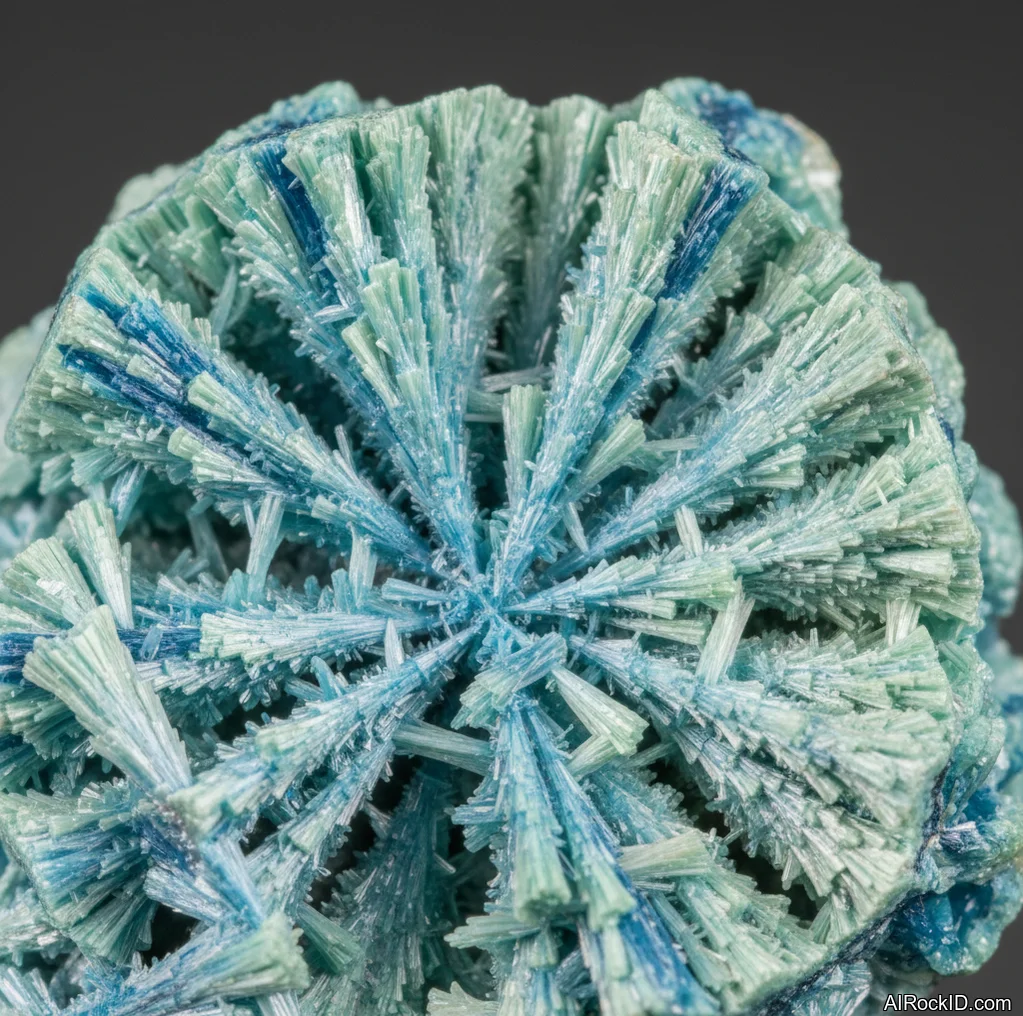
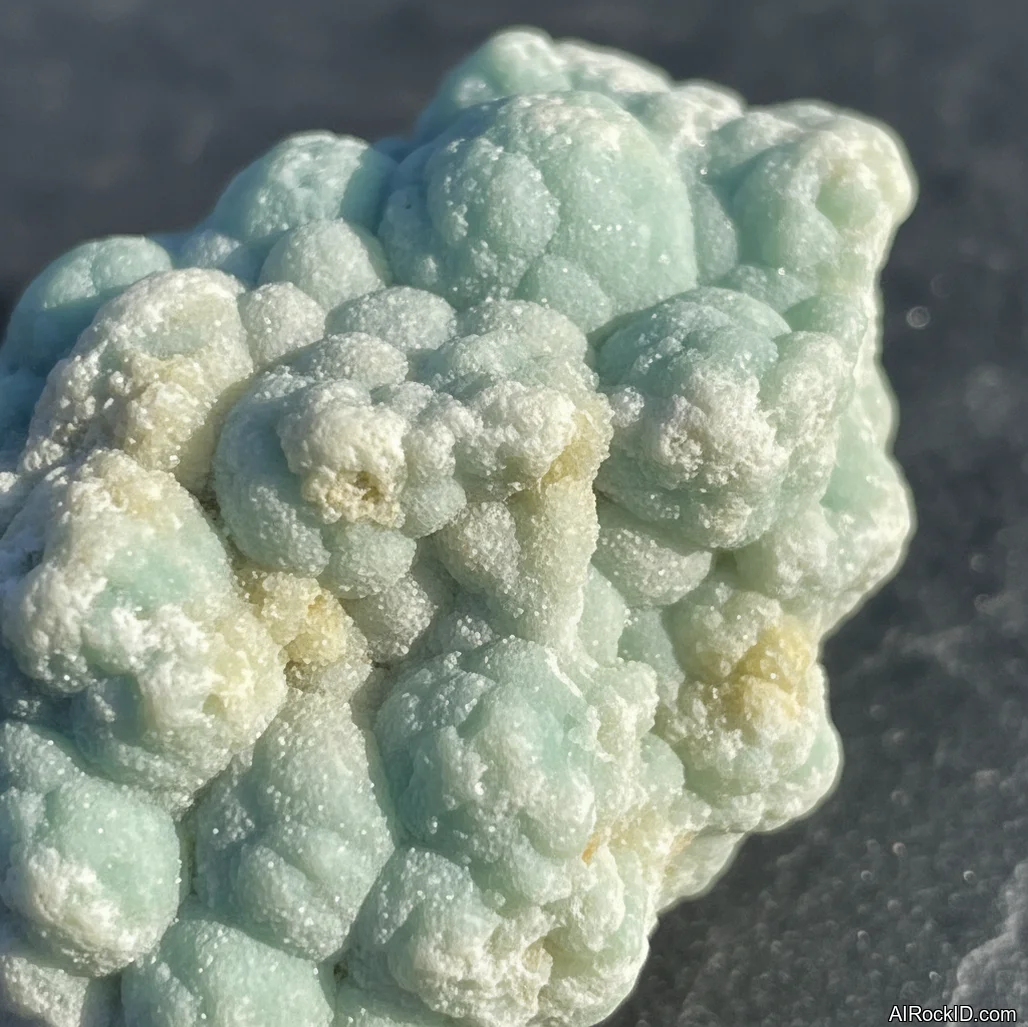
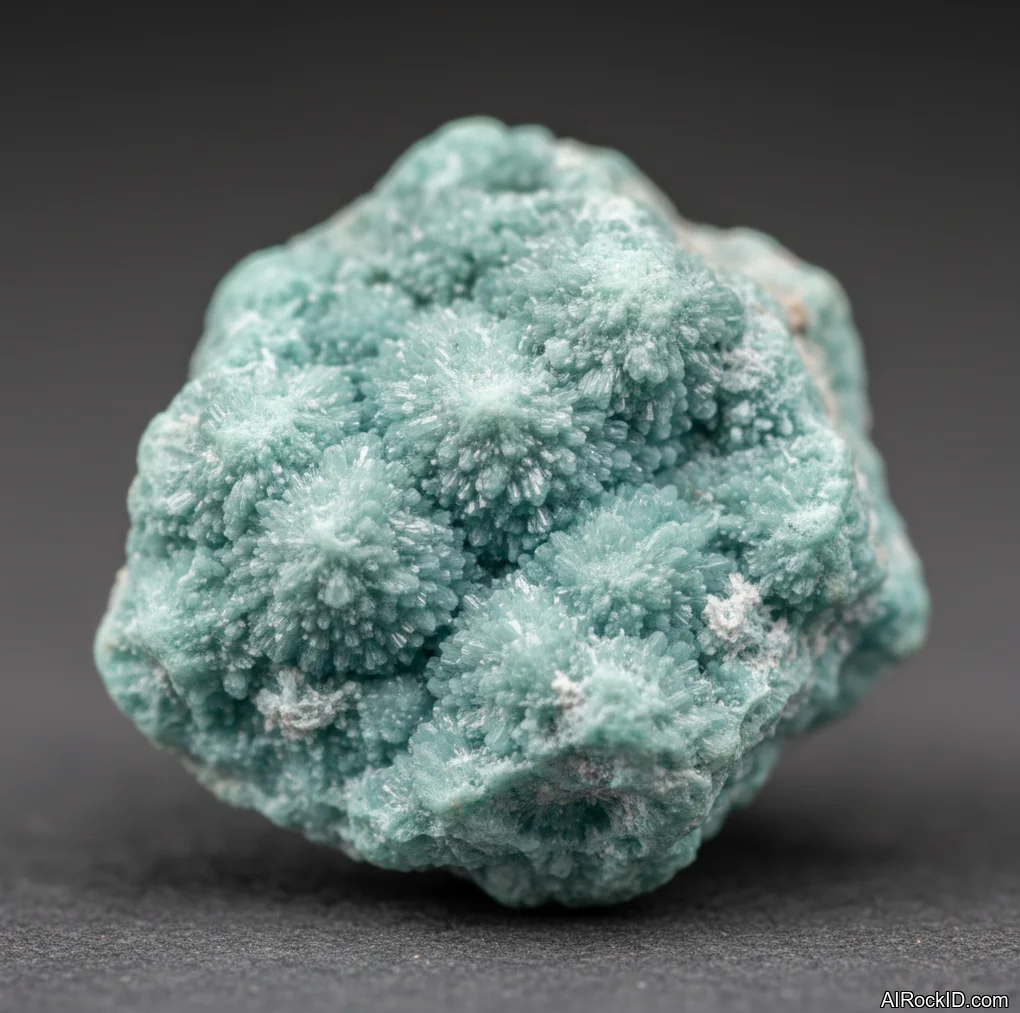
- Specimens showing velvety crusts, botryoidal coatings, or rosette-like aggregates
- Educational displays about oxidized copper-zinc deposits
- Collectors comparing malachite, azurite, aurichalcite, and other copper carbonates
Not a good fit
- Jewelry intended for daily wear, because rosasite is relatively soft and often occurs as fragile crusts
- Water-based cleansing or elixir use, since copper- and zinc-bearing minerals should not be soaked or ingested
- Buyers who need a gem-grade, faceted stone with high durability
Most commonly confused with
- Aurichalcite: Often paler blue-green and more silky or fibrous, while rosasite more commonly forms compact velvety crusts or rounded aggregates.
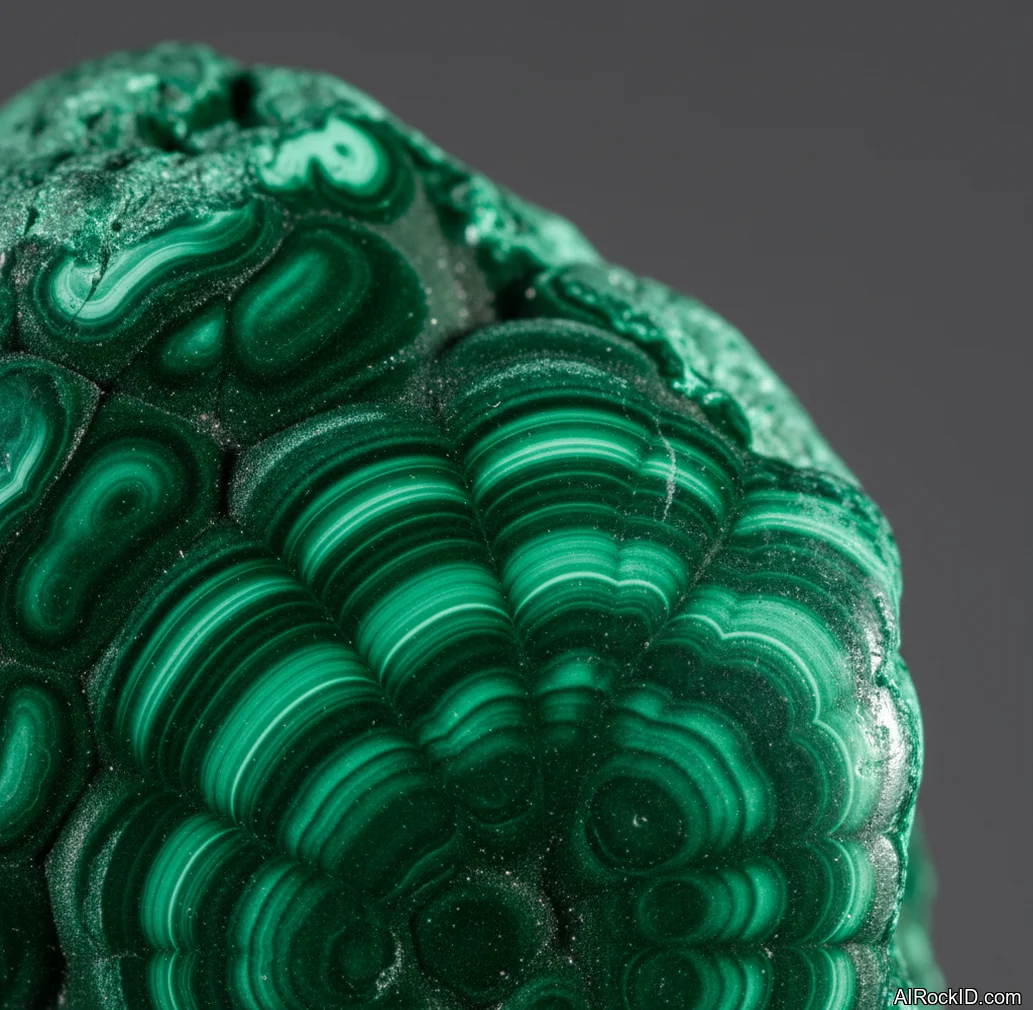
- Malachite: Typically richer green and may show banding; rosasite is usually bluer and commonly linked with zinc-bearing oxidation zones.
- Azurite: Usually deep azure blue with different crystal habits, while rosasite is lighter blue-green and more often crusty or botryoidal.
- Chrysocolla: Can share a blue-green color but is commonly more massive, waxy, or earthy and lacks rosasite’s carbonate mineral chemistry.
Rosasite vs. Similar Blue-Green Minerals
| Mineral | Typical look | Key distinction | Common setting |
|---|---|---|---|
| Rosasite | Blue-green velvety crusts or rounded aggregates | Copper-zinc carbonate; often crusty or botryoidal | Oxidized copper-zinc deposits |
| Aurichalcite | Pale blue-green silky fibers or sprays | More fibrous and delicate in many specimens | Oxidized zinc-copper zones |
| Malachite | Bright to dark green masses or bands | Greener color and common banding | Oxidized copper deposits |
| Azurite | Deep blue crystals or crusts | Darker blue and less green | Oxidized copper deposits |
| Chrysocolla | Blue-green massive, waxy, or earthy coatings | Silicate composition; often less crystalline | Oxidized copper deposits |
AI identification confidence
AI identification of rosasite is usually moderate from a single photo because color and crusty habit overlap with several copper minerals. Confidence improves when the image shows close-up texture, host rock, associated minerals, scale, and the specimen’s known locality.
When AI gets it wrong
- Lighting makes malachite appear bluish or rosasite appear greener than it is.
- The specimen is a mixed crust of rosasite with aurichalcite, smithsonite, malachite, or chrysocolla.
- A photo lacks scale or sharp detail, making velvety, fibrous, and botryoidal textures hard to separate.
- The surface is coated, weathered, or dusty, which can hide the mineral’s true luster and color.
Final recommendation
For buying rosasite, prioritize specimens with a stated locality, stable matrix, and clear photos showing the blue-green surface texture. If exact identification matters, request seller documentation or consider professional testing, especially for higher-priced or rare-locality pieces.
How to Buy Authentic Rosasite
Authentic rosasite is commonly sold as mineral specimens rather than polished jewelry. Look for listings that include a locality, natural matrix, and close-up photos of the velvety or botryoidal surface. Be cautious with vague labels such as “blue copper mineral” or “rosasite-like” unless the seller explains how the ID was made.
Useful Tests for Rosasite Identification
Rosasite is a carbonate mineral, so laboratory acid testing can help separate it from some non-carbonate lookalikes, but acid should not be used on collectible specimens without care. A non-destructive ID approach starts with hardness, streak, luster, crystal habit, and associated minerals. Advanced confirmation may require X-ray diffraction, Raman spectroscopy, or analysis by a mineral lab.
Notable Rosasite Associations
Rosasite commonly occurs with secondary minerals formed during the oxidation of copper-zinc deposits. Associated species may include smithsonite, aurichalcite, malachite, azurite, hemimorphite, and calcite. These associations can help support an identification, but they do not prove it without additional observations.
What Is Rosasite?
Rosasite is a hydrated copper-zinc carbonate mineral. You usually find it in the oxidation zones of metal deposits, where it shows up as blue-green, velvety crusts or those little rosette-like clusters.
Pick up a decent cabinet piece and you’ll notice it right away. The crust feels surprisingly light compared to the rock it’s stuck to. It doesn’t have that “solid” heft quartz has. Not even close. It’s more like a soft blanket laid over the matrix, with tiny curved sprays that grab the light in a strange way when you tilt it under a lamp (the kind of glancing shine you only see at an angle).
And yeah, people confuse it with aurichalcite all the time. I’ve even seen dealers mislabel it on their own tags. The colors overlap, and both can look like blue-green fuzz at a quick glance. But rosasite usually builds up thicker. More botryoidal, more rosette-y masses. The surface often looks satiny, a little pearly, instead of that super airy, hair-fine look aurichalcite tends to have.
Origin & History
Italy pops up right at the start. Rosasite got described in the early 1900s from material tied to zinc and copper deposits, and the name comes from Rosas, Sardinia, where someone finally clocked it as its own separate species.
Thing is, the older books lumped a bunch of these blue-green carbonates together as basically “some kind of malachite” until better chemistry and X-ray work came along and cleaned up the confusion. And honestly? That same muddle still shows up at some shows. You’ll walk past those flat cardboard trays with the little paper tags and see “rosasite/aurichalcite” scribbled on them, because the line between the two can be pretty thin unless you’ve got lab work to back it up.
Where Is Rosasite Found?
Rosasite turns up in oxidized copper and zinc deposits, often with malachite, azurite, smithsonite, and limonite. Classic material is reported from Sardinia (Italy) and well-known collecting localities include Arizona and Mexico.
Formation
Look at where it shows up and you can almost see the reactions happening. Rosasite forms when copper and zinc sulfides break down near the surface, then groundwater drags carbonate in and the whole thing ends up as a late-stage coating. It likes breathing room. Cracks, vugs, and that porous, rusty zone around old ore where everything’s already been chewed up.
Most specimens I’ve had in my hands were crusts sitting on limonite or gossan, and sometimes you’ll see it riding on pale smithsonite. Thing is, the really fuzzy-looking stuff can be touchy. Give it a hard tap and the edges can go to powder, especially when it grew as thin, fibrous sprays instead of those thicker botryoidal mounds.
How to Identify Rosasite
Color: Usually blue-green to green, sometimes leaning more turquoise or more malachite-green depending on copper versus zinc. Fresh surfaces can look brighter than weathered ones, which often go duller and more matte.
Luster: Silky to pearly, sometimes dull on weathered crusts.
Pick up the specimen and tilt it under a single light source. Rosasite often gives a soft, satiny sheen across rounded bumps and rosettes instead of a glassy shine. If you scratch it with a copper coin, it’ll mark easily because it’s a soft carbonate; don’t do that on a display face unless you’re testing a scrap. And if it looks like “blue-green cotton candy,” consider aurichalcite as a close look-alike, especially when the growth is very fine and airy.
Common Look-Alikes
Rosasite is sometimes confused with these materials:
- Aurichalcite (blue-green, silky sprays and crusts on limonite; often sits with rosasite in the same oxidized pockets)
- Chrysocolla (brighter turquoise, more waxy or botryoidal; can look identical in photos when it’s just a thin skin on matrix)
- Malachite (green crusts and fibrous/velvety coatings; sometimes intergrown so sellers pick the better-known name)
- Rosasite-group mixes labeled as “rosasite” (kolwezite/glaukosphaerite style Cu-Zn carbonates; same habit, slightly different chemistry)
- Dyed howlite or dyed magnesite sold as “turquoise/rosasite” (color concentrates in pits and drill holes, and the base stays chalky white)
- Blue-green slag glass or resin “matrix specimens” (too glossy, bubbles, and it feels warm fast in your hand)
Market Cautions & Treatments
When AI Can Get This Wrong
At first glance, AI loves to call rosasite “chrysocolla” or “aurichalcite” because all three show up as blue-green crusts on rusty matrix and the camera flattens the texture. The real test is in-hand: rosasite feels like a velvety blanket of tiny curved sprays, and at Mohs 3.5-4 it’ll scratch calcite but won’t touch glass, while a lot of chrysocolla is softer and more waxy-looking. A quick loupe check helps too: rosasite usually has that fine rosette or fan-spray grain, not the smoother, gel-like skin you see on many chrysocolla coatings.
Properties of Rosasite
Physical Properties
| Crystal System | Monoclinic |
| Hardness (Mohs) | 3.5-4 (Soft (2-4)) |
| Density | 3.7-4.0 g/cm3 |
| Luster | Silky |
| Diaphaneity | Opaque |
| Fracture | Uneven |
| Streak | pale green to bluish green |
| Magnetism | Non-magnetic |
| Colors | blue-green, green, turquoise-green, bluish green |
Chemical Properties
| Classification | Carbonates |
| Formula | (Cu,Zn)2CO3(OH)2 |
| Elements | Cu, Zn, C, O, H |
| Common Impurities | Fe, Mn, Ca |
Optical Properties
| Refractive Index | 1.730-1.850 |
| Birefringence | 0.120 |
| Pleochroism | Weak |
| Optical Character | Biaxial |
Rosasite Health & Safety
It’s usually fine to handle it as a specimen. Just don’t lick it, don’t grind it up, and don’t do anything that kicks up dust. And if you’ve been sorting through a bunch of copper minerals and your fingers have that faint metallic smell (or you notice greenish smudges on your skin), go wash your hands afterward.
Safety Tips
If you’ve got to trim matrix, put on a respirator and wet-cut it so the dust doesn’t go everywhere. Then deal with the slurry the right way, cleaning it up carefully (it gets slick and grimy fast).
Rosasite Value & Price
Price Range
Rough/Tumbled: $15 - $250 per specimen
Price can jump around depending on the color (that true turquoise-blue always pulls more), how much of the crust is still intact, and if it grows in those crisp little rosettes against a contrasting matrix. Tsumeb and the classic Arizona labels can bump the number up too, even when you’re holding a small piece in your hand.
Durability
Nondurable — Scratch resistance: Fair, Toughness: Poor
Rosasite is a soft, porous carbonate and can chip or powder along edges if it’s knocked or rubbed.
How to Care for Rosasite
Use & Storage
Store it in a perky box or on a shelf where it won’t get bumped, because the crusty growth can bruise. If you’ve got cats or curious kids, a closed cabinet saves a lot of heartbreak.
Cleaning
1) Skip soaking and start with a soft, dry brush to lift loose dust. 2) If it needs more, use a barely damp cotton swab and dab, don’t scrub. 3) Let it air dry fully before putting it back in a box or acrylic case.
Cleanse & Charge
For a gentle metaphysical reset, I stick it on a shelf with other specimens and keep it out of harsh sun and salt. Smoke or sound methods are the low-risk options for delicate crusts.
Placement
Put it somewhere you can see the texture up close, like eye-level on a small stand with side lighting. It looks best when light skims across the rosettes.
Caution
Skip ultrasonic cleaners, harsh acids, and any kind of hard scrubbing. Don’t toss it in a tumbler either, unless you want it coming out as gritty dust.
Works Well With
Rosasite Meaning & Healing Properties
Next to the flashy, mirror-polished stuff, rosasite is the quiet one. When I’ve got a tray of copper carbonates in my hands, it’s the piece that makes me pause, mostly because the surface is all texture and no sparkle. In crystal shop language, people tie it to steadying emotions and “clearing the air,” and honestly that matches what you see: a soft green-blue that doesn’t shout.
But look, here’s the real-life part. A lot of rosasite out there is basically a fragile crust sitting on (let’s be honest) ugly brown rock. That throws people when they’re expecting something like a palm stone. I’ve watched customers pick one up and instantly start rubbing the surface with a thumb, and you can literally see the sheen change right in front of you. So if you’re using it for meditation or leaving it on your desk, treat it like a specimen, not a worry stone. Seriously. Don’t buff it with your skin.
And if you follow the chakra map, rosasite usually gets slotted between heart and throat themes because of that blue-green overlap. I’m not going to tell you it “does” anything medically. What I can say is the color is calming in the same way sea glass is calming, and staring at those tiny rosettes up close can knock you out of your own head for a minute (who couldn’t use that?).
Common mistakes
- Identifying every blue-green crust as rosasite without checking for malachite, aurichalcite, or chrysocolla.
- Assuming a polished blue-green stone is rosasite, even though rosasite is more often collected as a fragile specimen.
- Using color alone for identification instead of considering habit, hardness, locality, and associated minerals.
- Soaking rosasite in water or cleaners, which can damage delicate surfaces and may create safety concerns with copper-bearing minerals.
- Expecting all rosasite to form obvious rosettes; many specimens appear as crusts, coatings, or botryoidal aggregates.
Identify Rosasite from a photo
Compare Rosasite traits, care tips, value clues, and common lookalikes with a clear photo.