Xinyi Jade


Quick answer: Xinyi Jade is a trade and locality-related name for nephrite jade associated with Xinyi, Guangdong, China. It is usually evaluated by its toughness, waxy to greasy luster, green to gray-green color, translucency, texture, and carving quality.
AI Rock ID can help screen a suspected Xinyi Jade sample by comparing visible color, luster, texture, and form against nephrite and common substitutes. RockIdentifier.io should be used as a visual identification aid, while gemological testing is still needed for confident separation from treated jade, serpentine, glass, or dyed materials.
Good fit
- Collectors comparing regional nephrite varieties and Chinese jade materials
- Buyers who prefer tough jade suitable for carvings, pendants, beads, or cabochons
- People looking for a waxy green nephrite appearance rather than bright emerald-green jadeite
- Beginners learning the difference between nephrite jade and jadeite jade
Not a good fit
- Buyers who want a guaranteed untreated stone without a seller disclosure or lab report
- People expecting jadeite-level vivid green color or high transparency
- Anyone relying only on color to identify jade
- Collectors who need a precise mine origin without documentation
Most commonly confused with
- Nephrite: Xinyi Jade is generally a locality or trade variety of nephrite rather than a separate mineral species.
- Jadeite: Jadeite can show brighter green and granular texture, while nephrite has interlocking fibrous amphibole structure and exceptional toughness.
- Serpentine: Serpentine can look waxy and green but is usually softer and less tough than nephrite jade.
- Aventurine: Green aventurine is quartz with sparkly mica inclusions, not the fibrous amphibole texture of nephrite.
Xinyi Jade vs. Common Lookalikes
| Material | Typical Look | Key Difference | Simple Check |
|---|---|---|---|
| Xinyi Jade | Waxy green to gray-green nephrite | Tough fibrous amphibole jade | Feels dense and takes a soft waxy polish |
| Jadeite | Green, white, lavender, or mixed colors | Pyroxene jade, often more granular | Requires gem testing for reliable separation |
| Serpentine | Waxy yellow-green to dark green | Softer and less tough | Scratches more easily than nephrite |
| Aventurine | Green quartz with possible sparkle | Quartz material with mica flecks | Look for glittery inclusions |
| Glass imitation | Uniform green or swirled color | Man-made and not crystalline jade | May show bubbles or overly even color |
AI identification confidence
AI identification confidence for Xinyi Jade is usually moderate because photos can show jade-like color and luster but cannot confirm mineral composition. Confidence improves with clear images in natural light, close-ups of texture and edges, and context such as weight, hardness observations, or seller documentation.
When AI gets it wrong
- A polished surface hides grain, dye, or resin treatment.
- The stone is a green serpentine, quartz, glass, or plastic imitation with a similar waxy look.
- Lighting makes gray-green nephrite appear brighter or more saturated than it is.
- The item is sold under a regional jade name without verifiable locality information.
Final recommendation
For buying Xinyi Jade, prioritize material identity and treatment disclosure over the name alone. A reputable seller, natural-light photos, return policy, and gemological report are more useful than a vague locality claim.
How to Check Xinyi Jade Authenticity
Authenticity checks should focus on whether the material is nephrite and whether it has been dyed, polymer-filled, or misrepresented. Useful evidence includes a refractive index reading, specific gravity estimate, magnification, and a seller disclosure for treatments. Origin claims such as Xinyi should be treated as provenance statements and are strongest when supported by documentation.
Buying Tips for Xinyi Jade
Look for an even waxy polish, compact texture, pleasing color distribution, and carving quality without major cracks. Very vivid green color, unusually low prices, or vague wording such as “jade-like” can indicate a substitute or treated material. For higher-priced pieces, request testing from a gemological laboratory or a seller with clear return terms.
Photo Clues for Identifying Xinyi Jade
Good identification photos show the whole object, close-ups of edges, surface texture, and any chips or fractures. Natural daylight is preferable because strong warm or cool lighting can distort green jade color. Backlit photos can help show translucency, but translucency alone does not prove that a material is nephrite.
What Is Xinyi Jade?
Xinyi Jade is basically a trade name for nephrite jade, the tough stuff that’s made up of a felted mass of tremolite to actinolite amphibole. It doesn’t feel like quartz or any of that glassy material. Grab a little palm stone and you notice it right away: there’s this slightly greasy, waxy slip under your thumb, kind of like old soapstone, just tougher (and it doesn’t have that chalky drag).
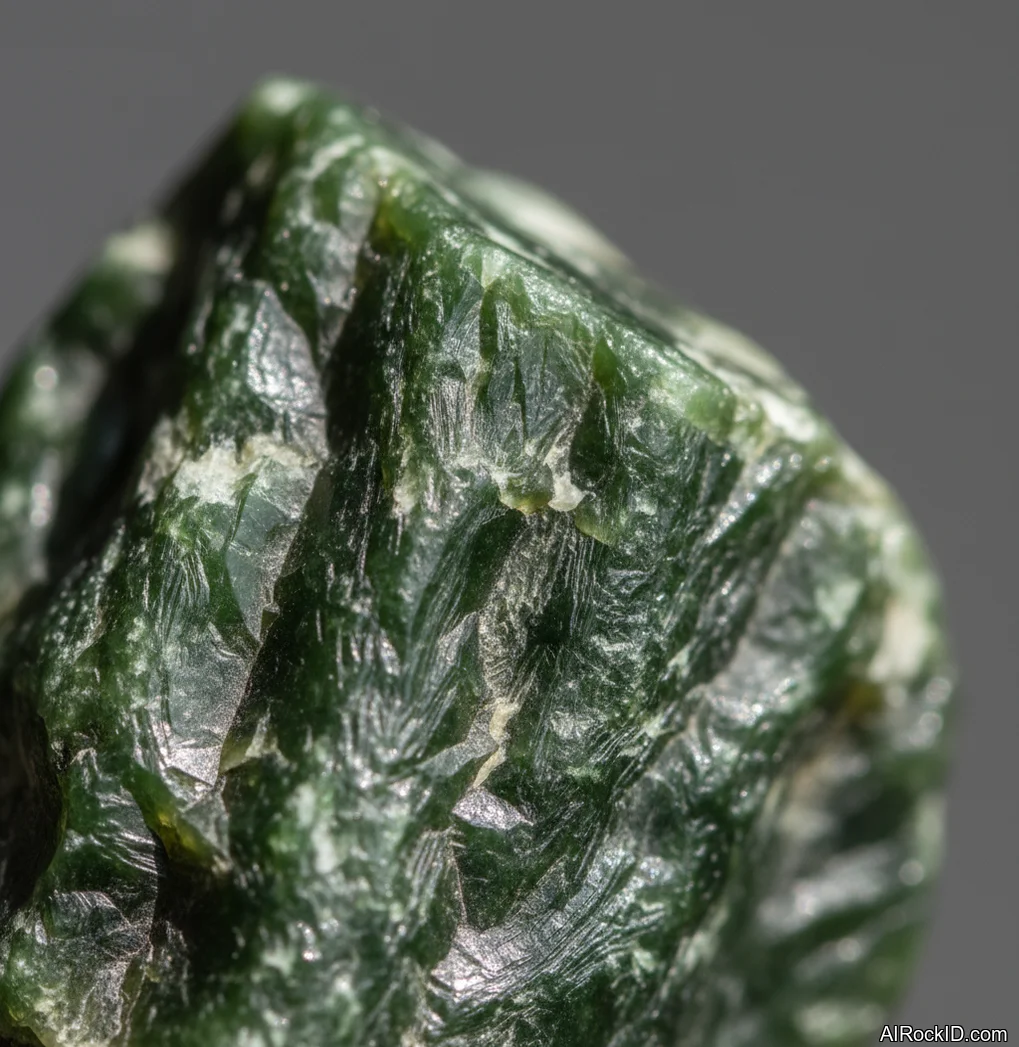
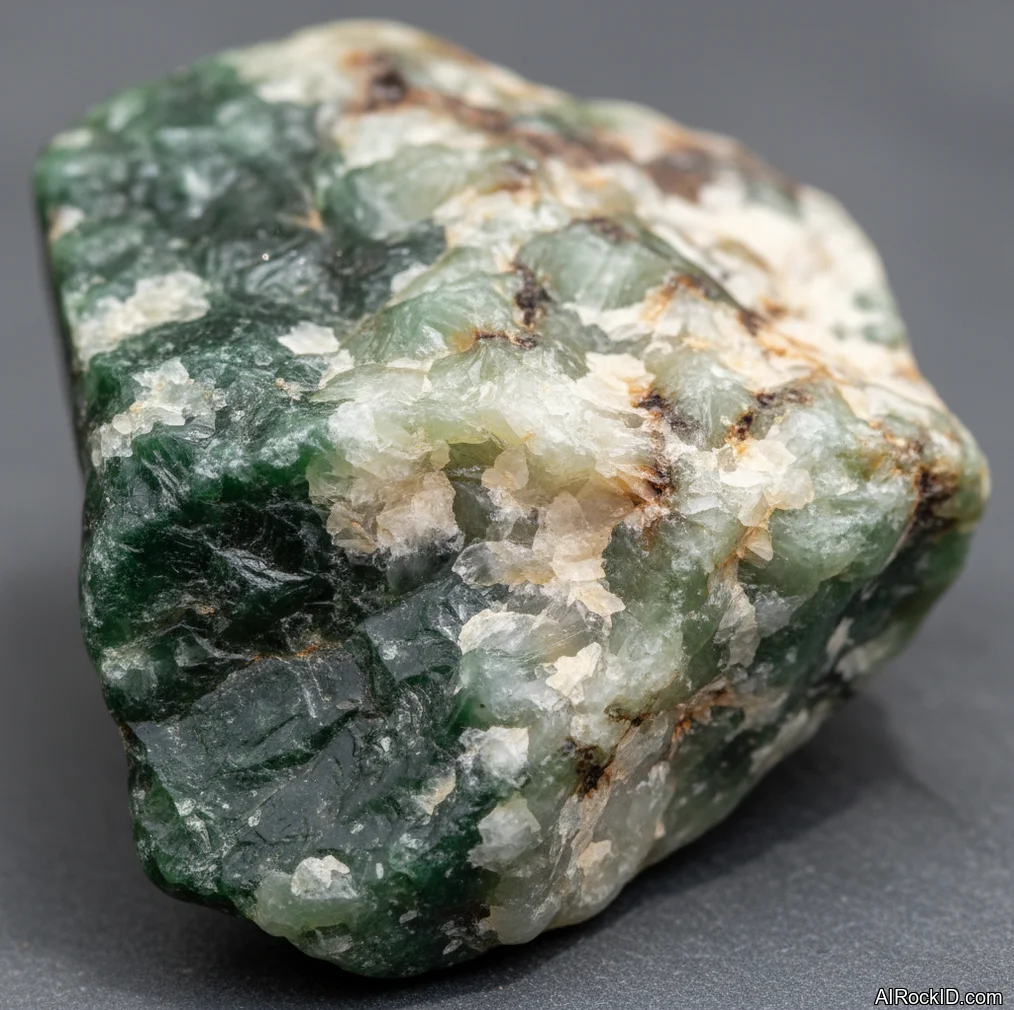
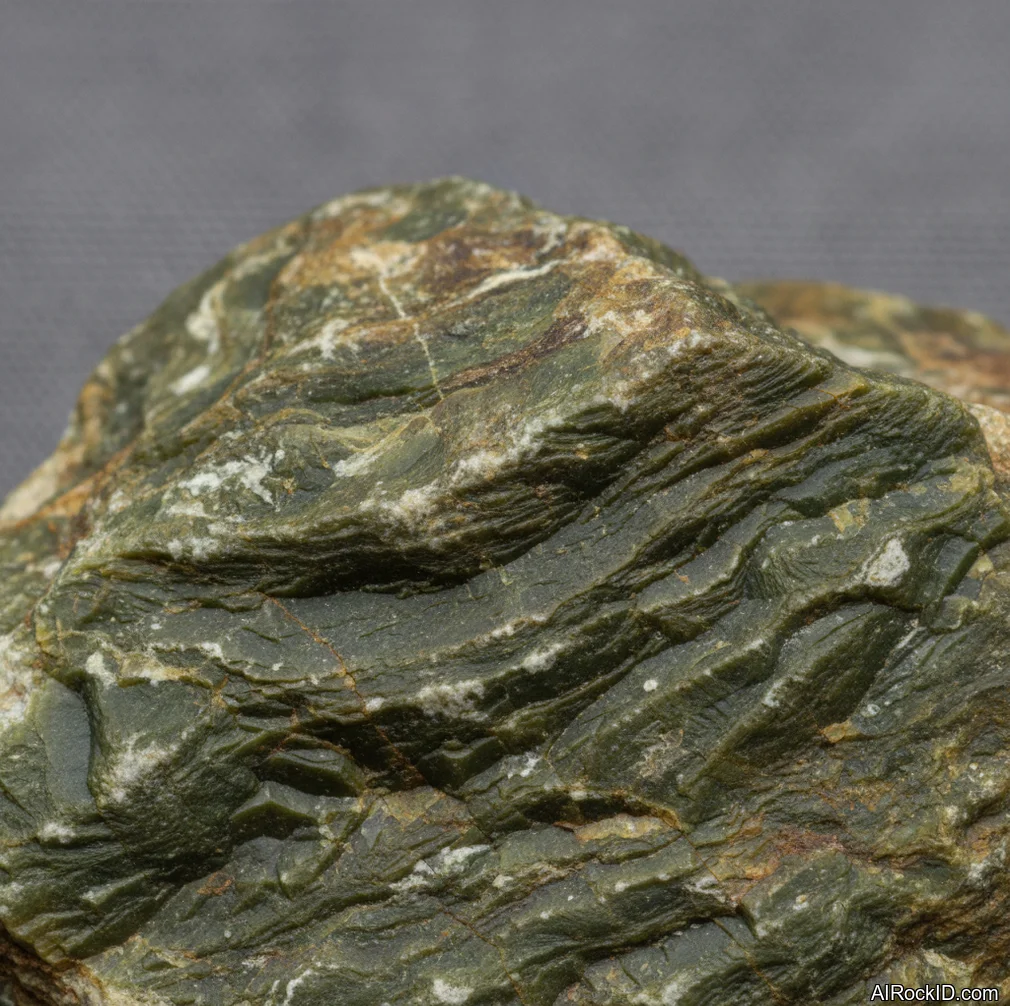
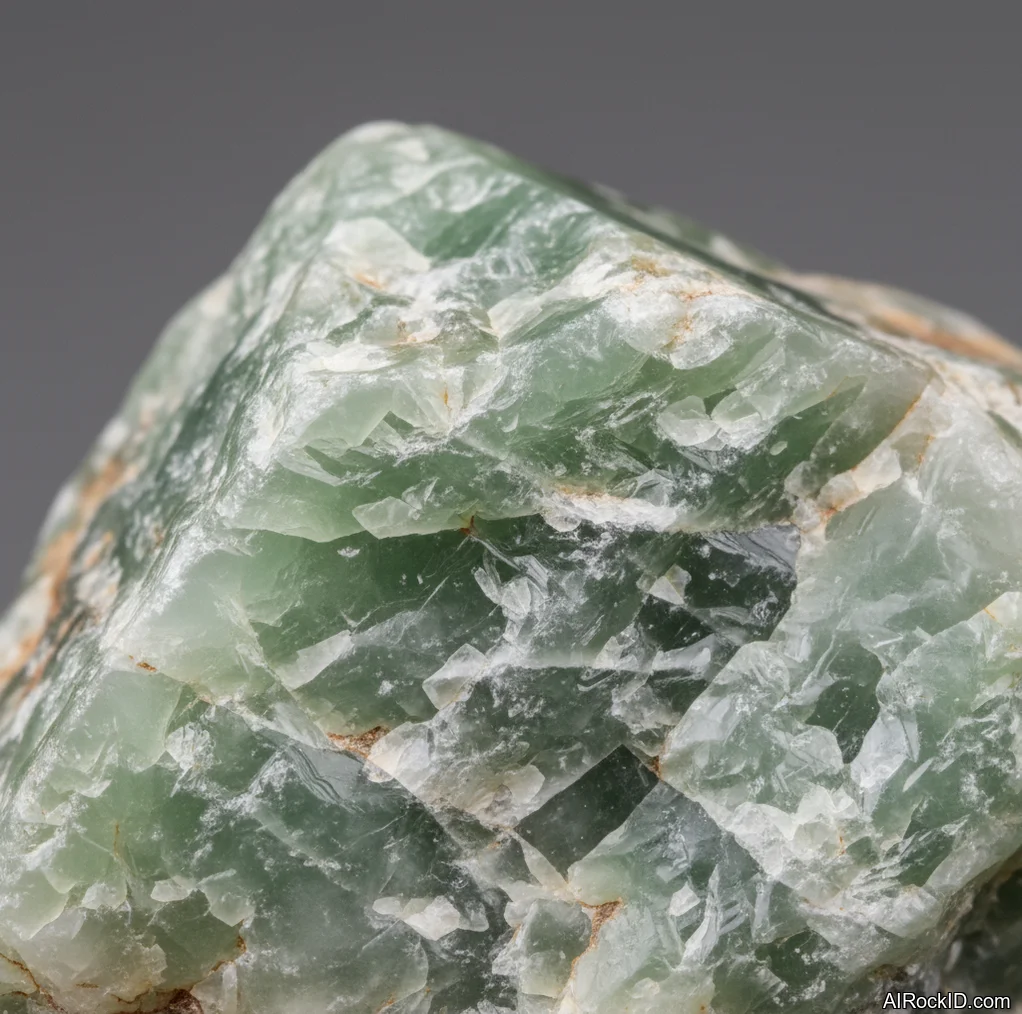
In dim light, sure, it can pass as just another green rock. But put it under a bright lamp and it starts showing its quirks. Cloudy zones. Darker, spinachy streaks. And sometimes you’ll catch a faint woven look that comes from the fibrous structure. I’ve had pieces in my hand where the polish looked almost wet, but the color stayed calm and a bit muted, not neon.
Most of what’s sold as Xinyi Jade ends up cut into carvings, bangles, smooth cabochons, and other small shapes, because it’ll take fine detail without chipping the way a lot of brittle stones do. But look, shows can get messy. People toss “jade” on anything green, so it helps to know how nephrite feels and how it behaves when you test it. Why get burned over a name?
Origin & History
“Xinyi Jade” is basically a market label. It’s tied to Xinyi, around Xinyi City in Guangdong, China, where nephrite has been quarried and worked for ages as a local lapidary material (the kind you actually cut, grind, and polish until the surface goes slick under your fingertips).
But it’s not its own mineral species. You won’t find “Xinyi jade” listed as a formal mineral name the way you’d see tremolite or actinolite in a reference book.
Jade, as an idea, has a long cultural track in China. The “Xinyi” part, though, is mostly about where it came from and how it’s sold. So in shop talk and online listings it usually means “nephrite from the Xinyi area,” or sometimes just “nephrite being sold under that name.” And yeah, the naming gets sloppy. I’ve seen serpentine passed off as “Xinyi jade,” too, which is exactly why the physical tests matter. Why guess when you can check?
Where Is Xinyi Jade Found?
Material sold as Xinyi Jade is associated with Xinyi in Guangdong, China. Nephrite jade also comes from classic deposits in Russia and Canada, and it can look very similar once polished.
Formation
Nephrite shows up during metamorphism, when calcium-rich rocks get reworked while silica-bearing fluids are moving through. You usually find it in or near serpentinite belts and along major fault zones. So picture high pressure, a ton of fluid flow, and a long, long stretch of time for amphibole fibers to grow, twist, and knot themselves into a tight mass.
And that messy, interlocking fiber network is basically the whole trick behind nephrite’s toughness. It isn’t “harder” than everything else. But it hangs together, more like a good piece of plywood, instead of breaking clean like glass. If you’ve ever lightly tapped a bangle with a fingernail, nephrite answers with a duller, more solid thunk than glass or resin, and it still has that dense, real-in-the-hand feel (you can kind of tell right away, right?).
How to Identify Xinyi Jade
Color: Usually medium to dark green with cloudy mottling; some pieces lean gray-green or yellow-green rather than bright emerald. Color is often patchy, not perfectly uniform.
Luster: Waxy to greasy luster when polished, not sparkly or glassy.
Pick up a piece and run a dry thumb across a polished face. Real nephrite has that waxy drag, and it stays cool to the touch longer than plastics or dyed resin. If you scratch it with a steel needle in an inconspicuous spot, it shouldn’t gouge easily, but it can show a light mark if you really dig in. The problem with “jade” at markets is dye and mislabeling. Cheap versions are often serpentine or dyed quartzite, and those tend to feel either too soft (serpentine) or too glassy (quartzite). A 10x loupe helps too: nephrite often shows a fine, fibrous texture instead of granular “sugary” grains.
Common Look-Alikes
Xinyi Jade is sometimes confused with these materials:
- Serpentine (often sold as “new jade” or just “jade”)
- Dyed quartzite/aventurine sold as “jade” (color tends to look too even or too neon)
- Dyed or polymer-impregnated nephrite (same base material, but treated to punch up green)
- Bowenite (a tougher, finer serpentine that can feel waxy like nephrite)
- Green glass imitations (heavy, too glossy, sometimes with tiny bubbles)
- Hydrogrossular garnet (aka “Transvaal jade”)
Market Cautions & Treatments
When AI Can Get This Wrong
At first glance in photos, AI mixes Xinyi Jade up with serpentine or green quartzite because all three read as flat green with a soft polish. Phone pics also blow out the highlights, so nephrite’s waxy, “greasy” luster gets misread as glass. The real test is in-hand: nephrite feels tough and slightly soapy under the thumb, stays cool longer than plastic-resin treatments, and it won’t show the sparkly mica glitter you often see in aventurine when you tilt it under a hard light.
Properties of Xinyi Jade
Physical Properties
| Crystal System | Monoclinic |
| Hardness (Mohs) | 6.0-6.5 (Hard (6-7.5)) |
| Density | 2.90-3.10 |
| Luster | Waxy |
| Diaphaneity | Translucent to opaque |
| Fracture | Splintery |
| Streak | white |
| Magnetism | Non-magnetic |
| Colors | green, dark green, gray-green, yellow-green, white, blackish green |
Chemical Properties
| Classification | Silicates |
| Formula | Ca2(Mg,Fe)5Si8O22(OH)2 |
| Elements | Ca, Mg, Fe, Si, O, H |
| Common Impurities | Fe, Cr, Ni, Mn |
Optical Properties
| Refractive Index | 1.60-1.63 |
| Birefringence | 0.027 |
| Pleochroism | Weak |
| Optical Character | Biaxial |
Xinyi Jade Health & Safety
It’s fine to handle, and it’s fine around water in normal day-to-day use. But like any stone, if you’re cutting or sanding it, don’t breathe in the dust (that gritty, chalky stuff that gets on your fingers and in your throat).
Safety Tips
If you’re doing lapidary cutting, keep the wheel wet and throw on a respirator that’s actually rated for fine particulates. That slurry that splatters onto the splash guard isn’t harmless, and you don’t want to be breathing any of it in, right?
Xinyi Jade Value & Price
Price Range
Rough/Tumbled: $10 - $200 per piece
Cut/Polished: $3 - $30 per carat
Price bounces around depending on translucency, how even the color looks, and how clean the polish comes out. Rough that’s only carving-grade and full of fractures is cheap. But if it’s fine material, an even green, and it’s got good translucency, the price climbs in a hurry.
Durability
Very Durable — Scratch resistance: Good, Toughness: Excellent
Nephrite is stable in normal household conditions, but surface polish can dull if it’s constantly rubbed against harder grit or sand.
How to Care for Xinyi Jade
Use & Storage
Store it in a pouch or a separate box slot so it doesn’t get scuffed by quartz, topaz, or grit. I keep nephrite bangles away from loose tumbled stones because tiny bits of sand can haze the polish over time.
Cleaning
1) Rinse with lukewarm water and a drop of mild soap. 2) Use a soft toothbrush to clean carvings and creases. 3) Rinse well and dry with a microfiber cloth.
Cleanse & Charge
If you do energetic cleansing, simple running water or a quick pass through incense smoke is plenty. Skip salt bowls if the piece has fractures or metal settings.
Placement
On a desk or nightstand it holds up well, and it doesn’t mind ambient light. If it’s a bangle or ring, just remember grit is the real enemy, not normal wear.
Caution
Skip harsh cleaners. And don’t toss heavily fractured pieces in an ultrasonic machine, because that buzzing can push cracks farther than you’d think. Same with heat: steamers and even a hot car can get surprisingly warm fast, and that’s bad news for stone. Also, don’t assume every “Xinyi Jade” listing is actually nephrite. Check what it is first (ask for specifics), and only then pay nephrite prices.
Works Well With
Xinyi Jade Meaning & Healing Properties
Look at how people actually use nephrite day to day and it’s pretty down-to-earth. People keep it as a worry stone, thumb it when they’re stressed, or wear it as a bangle that sits right against your skin all day. That nonstop contact matters. When you pick up a polished piece, it takes a minute to warm up, then it hangs onto the heat, and honestly that can feel soothing, kind of like rolling a smooth coin around in your pocket when your brain won’t shut up.
In crystal circles, nephrite gets linked to steady grounding and that “slow and solid” kind of support. And I get why. It lines up with what it’s like in the hand. It’s tough, it’s fibrous, it’s the kind of stone that can take a knock without fuss. But it’s not a medical tool. Not even close. So I don’t treat it like one. If you’re dealing with anxiety, pain, or anything serious, this belongs next to real care (therapy, a doctor, whatever helps), not in place of it.
One more thing from the buying side, because this trips people up. Some folks expect all jade to look like high-end imperial jadeite, bright and glowing. Nephrite usually doesn’t. It’s quieter. The good pieces win you over with the feel, the density, the way the surface has that soft sheen, not some loud, flashy color.
Common mistakes
- Assuming every green stone labeled jade is nephrite or jadeite
- Treating “Xinyi Jade” as a separate mineral species instead of a regional or trade name
- Using color alone to judge authenticity or value
- Ignoring dye, wax, or polymer treatment disclosures
- Believing a locality claim without seller records or lab documentation
- Confusing a cool, heavy feel with proof of natural jade
Identify Xinyi Jade from a photo
Compare Xinyi Jade traits, care tips, value clues, and common lookalikes with a clear photo.