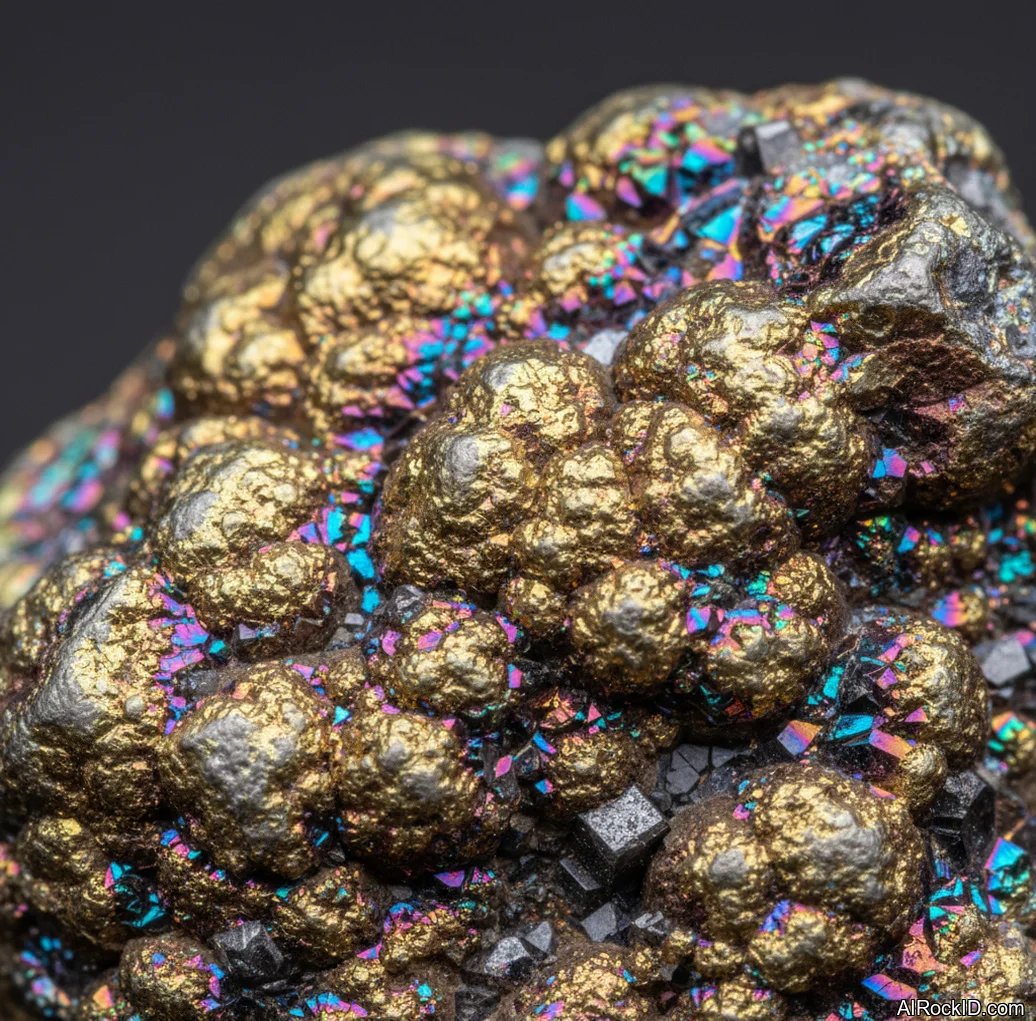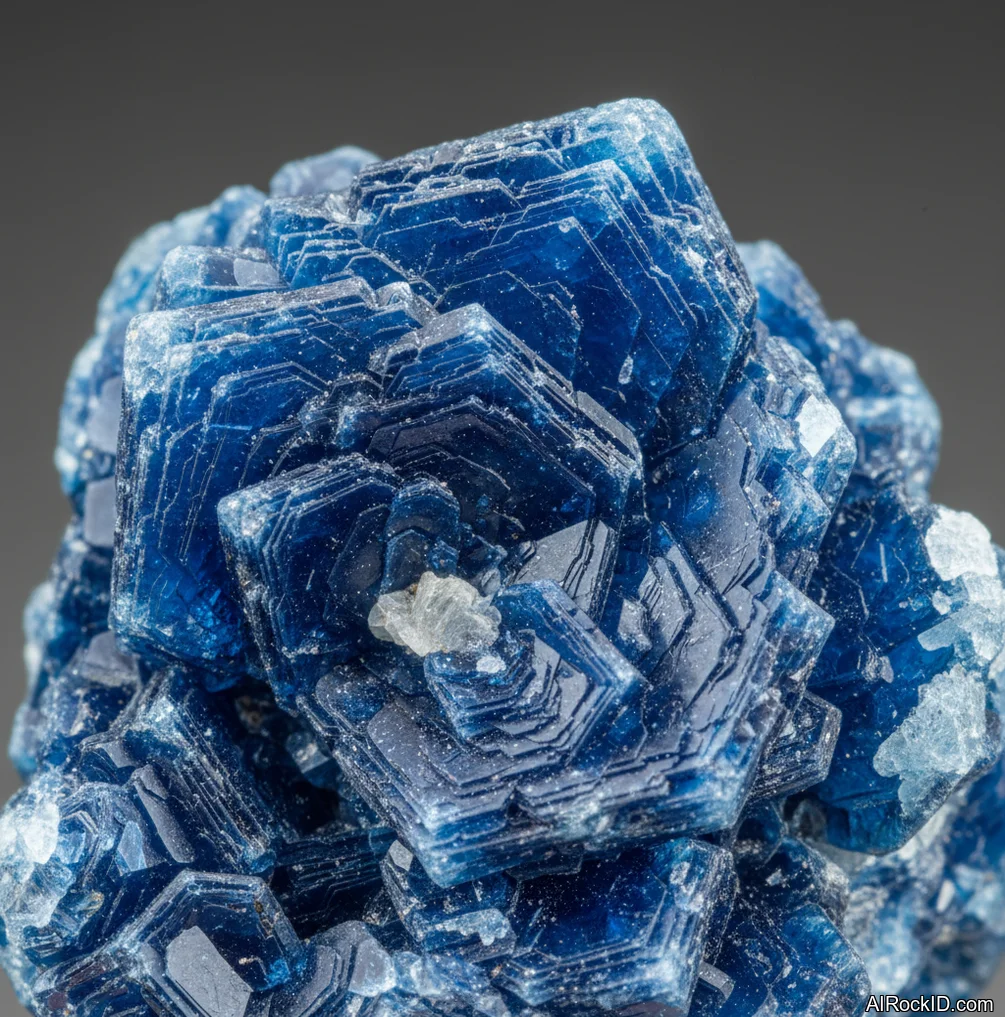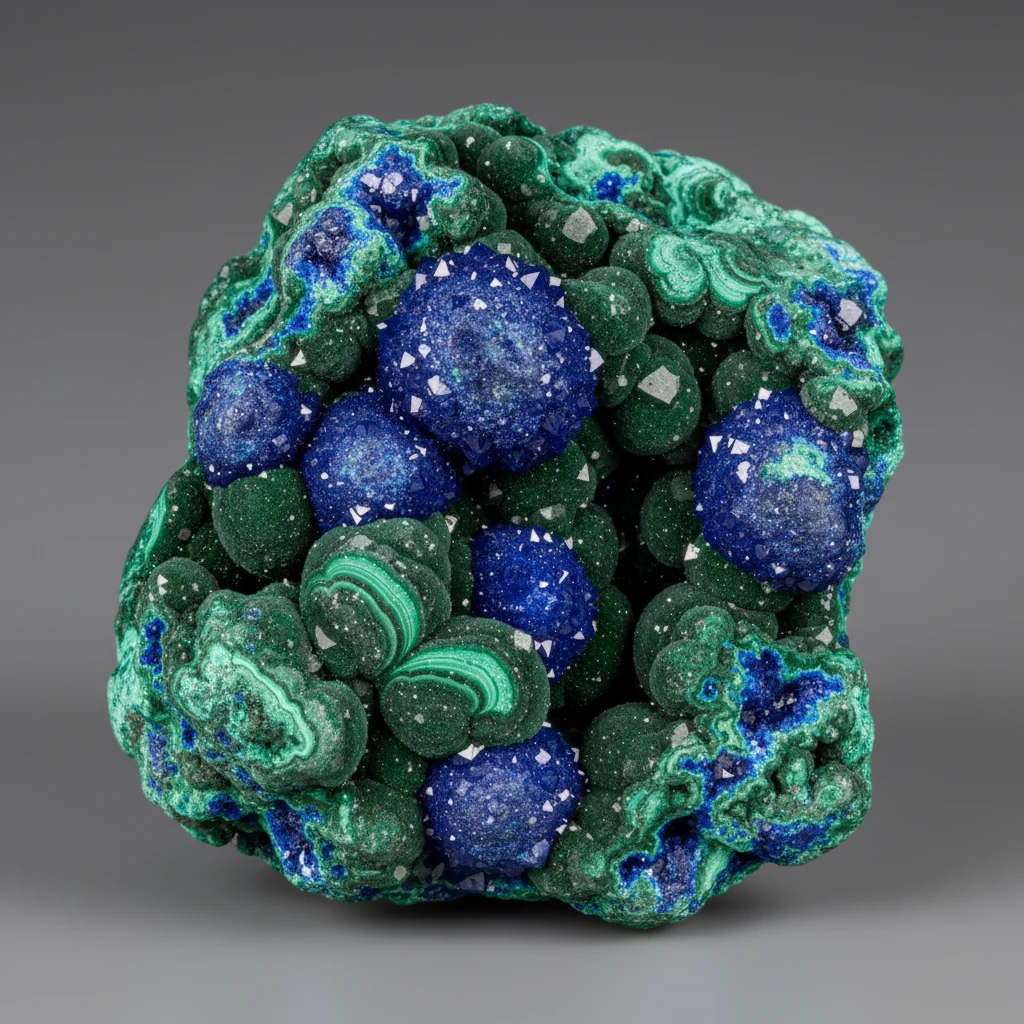
Azurite-Malachite


Quick answer: Azurite-Malachite is a naturally intergrown copper carbonate material showing blue azurite and green malachite in the same specimen. It is relatively soft at about Mohs 3.5–4, so identification should consider color pattern, luster, hardness, and possible treatments or composites.
AI Rock ID can help screen Azurite-Malachite by comparing its blue-green color zoning, surface texture, and specimen habit against known visual patterns. RockIdentifier.io provides crystal information that can support visual identification, but confirm uncertain or high-value pieces with a qualified gemologist or mineral lab.
Good fit
- Collectors who want a copper carbonate specimen with both blue and green color in one piece
- People comparing natural mineral specimens, cabochons, or decorative carvings
- Buyers who want to learn how to spot dyed, stabilized, or composite material
- Beginners studying copper minerals and secondary oxidation-zone minerals
Not a good fit
- Jewelry that will receive heavy wear, impacts, or frequent water exposure
- Collectors who need a very durable mineral for handling or pocket carry
- Buyers who cannot verify whether a polished piece is natural, stabilized, or reconstituted
Why people search for this
People often search for Azurite-Malachite to confirm whether a blue-and-green stone is a natural intergrowth or a treated imitation. Search interest also centers on distinguishing it from chrysocolla, dyed howlite, and composite copper-mineral material.
Most commonly confused with
- Chrysocolla: Chrysocolla is usually softer to variable in hardness and often shows turquoise-blue to green, more waxy or earthy areas rather than distinct azurite-blue patches.
- Malachite: Malachite is dominantly green with banding or botryoidal patterns and lacks the strong royal-blue azurite areas.
- Azurite: Azurite is dominantly deep blue and may have green alteration, but true Azurite-Malachite shows both minerals as visible intergrowths.
- Dyed Howlite: Dyed howlite may show unnatural color concentration in cracks and has a different white matrix or gray veining beneath the dye.
Azurite-Malachite Lookalike Comparison
| Material | Main visual clue | Simple distinction |
|---|---|---|
| Azurite-Malachite | Deep blue and green areas together | Natural intergrowth of azurite and malachite |
| Chrysocolla | Blue-green, waxy or earthy zones | Often less sharply divided than azurite and malachite |
| Malachite | Green bands or swirls | No strong royal-blue azurite patches |
| Azurite | Mostly deep blue | Green may be minor alteration rather than balanced intergrowth |
| Dyed howlite | Bright dye in cracks or pores | Color may appear artificial or concentrated along veining |
AI identification confidence
AI identification is usually moderate for Azurite-Malachite when the photo shows clear blue azurite and green malachite in natural-looking contact. Confidence drops for polished cabochons, heavily stabilized pieces, low-light photos, and specimens with mixed copper minerals such as chrysocolla or cuprite.
When AI gets it wrong
- A polished stone has resin, dye, or stabilization that hides the natural surface texture
- The photo is oversaturated, making chrysocolla or dyed material look like azurite
- Only one color is visible, causing confusion with pure azurite or pure malachite
- The specimen contains several copper minerals in one matrix, making visual classification incomplete
Final recommendation
Choose Azurite-Malachite when you want a visually distinct copper carbonate specimen and can accept a soft, display-oriented material. For purchasing, favor sellers who disclose stabilization, dyeing, backing, and whether the item is natural rough, polished, or composite.
How to Check Azurite-Malachite Authenticity
Authentic Azurite-Malachite should show blue and green areas that appear integrated with the stone rather than painted or concentrated only in cracks. A loupe can help reveal resin-filled pits, dyed pore lines, or crumbly reconstituted fragments. Ask whether the piece is natural, stabilized, sealed, dyed, backed, or assembled before comparing prices.
Photo Tips for Azurite-Malachite Identification
Use indirect daylight and take photos from multiple angles to capture the contrast between blue azurite and green malachite. Include a close-up of the surface, a full-specimen view, and any matrix or broken edge. Avoid heavy filters or high saturation because they can make chrysocolla, dyed howlite, or composites appear more convincing.
Natural Forms and Trade Forms
Azurite-Malachite may appear as rough mineral specimens, slabs, cabochons, beads, carvings, and inlays. Rough specimens can preserve crystal or botryoidal textures, while polished items may be stabilized to reduce softness and porosity. Trade descriptions should distinguish natural intergrowth from mixed copper-mineral rock or manufactured composite material.
What Is Azurite-Malachite?
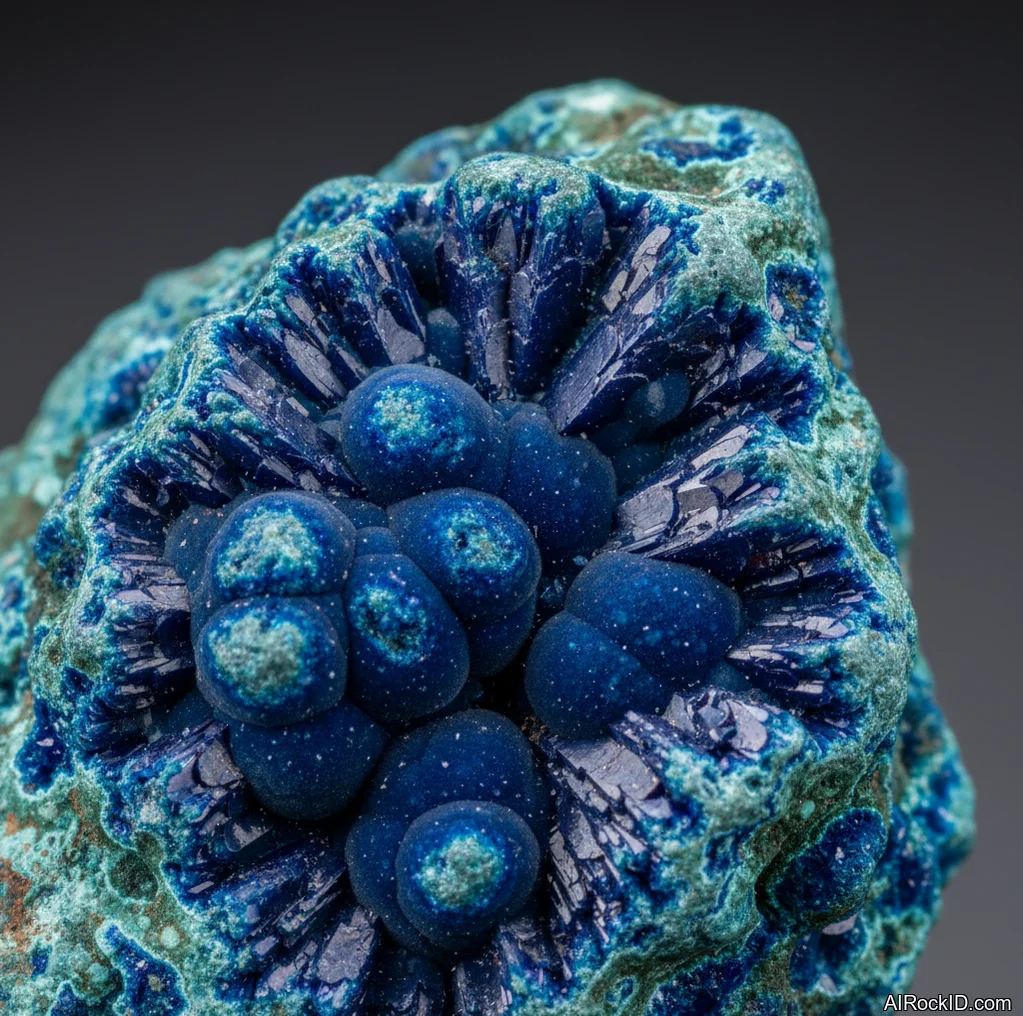
Azurite-Malachite is a natural intergrowth of deep blue azurite and green malachite, both basic copper carbonate minerals. In the hand, a good piece has an unmistakable blue-green contrast: royal to azure-blue patches sitting beside grass-green, emerald-green, or darker banded malachite. It is also known as Azurmalachite, Azur-malachite, or blue-green copper carbonate.
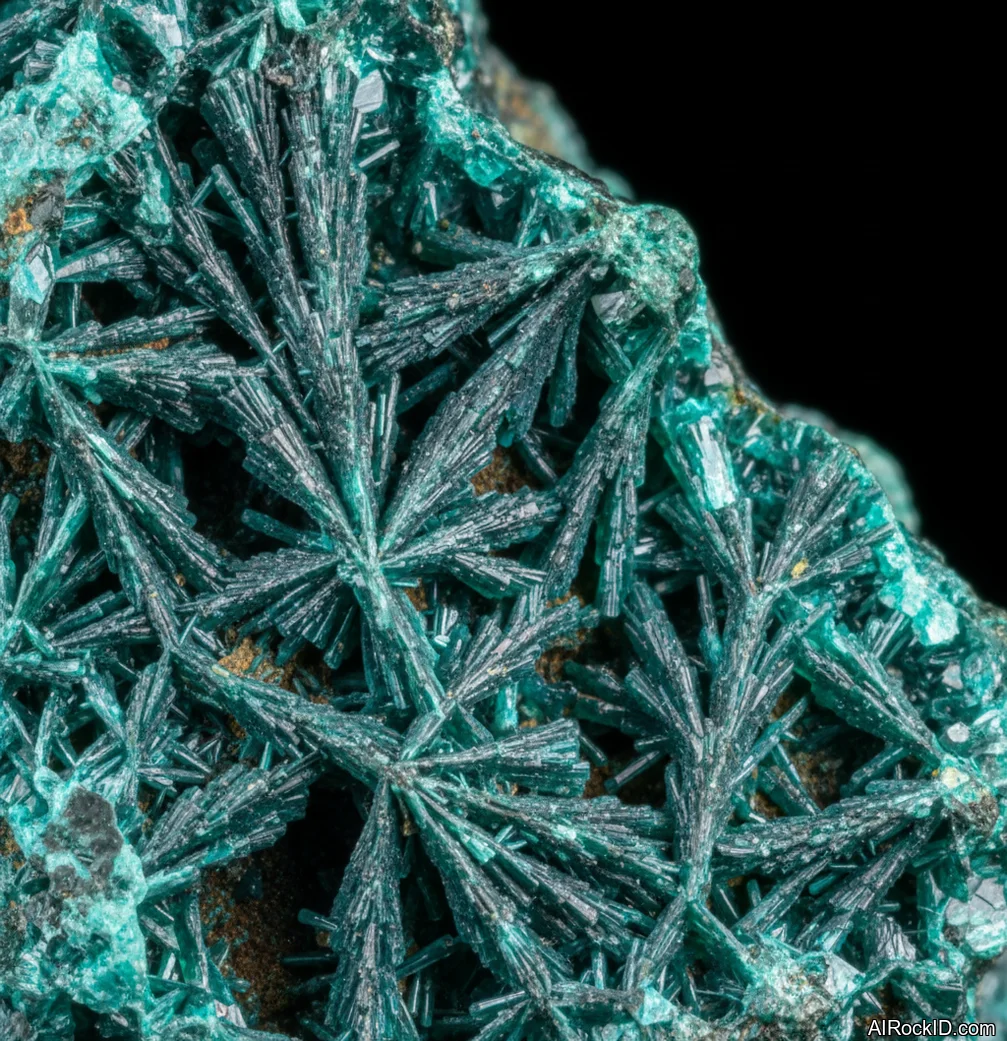
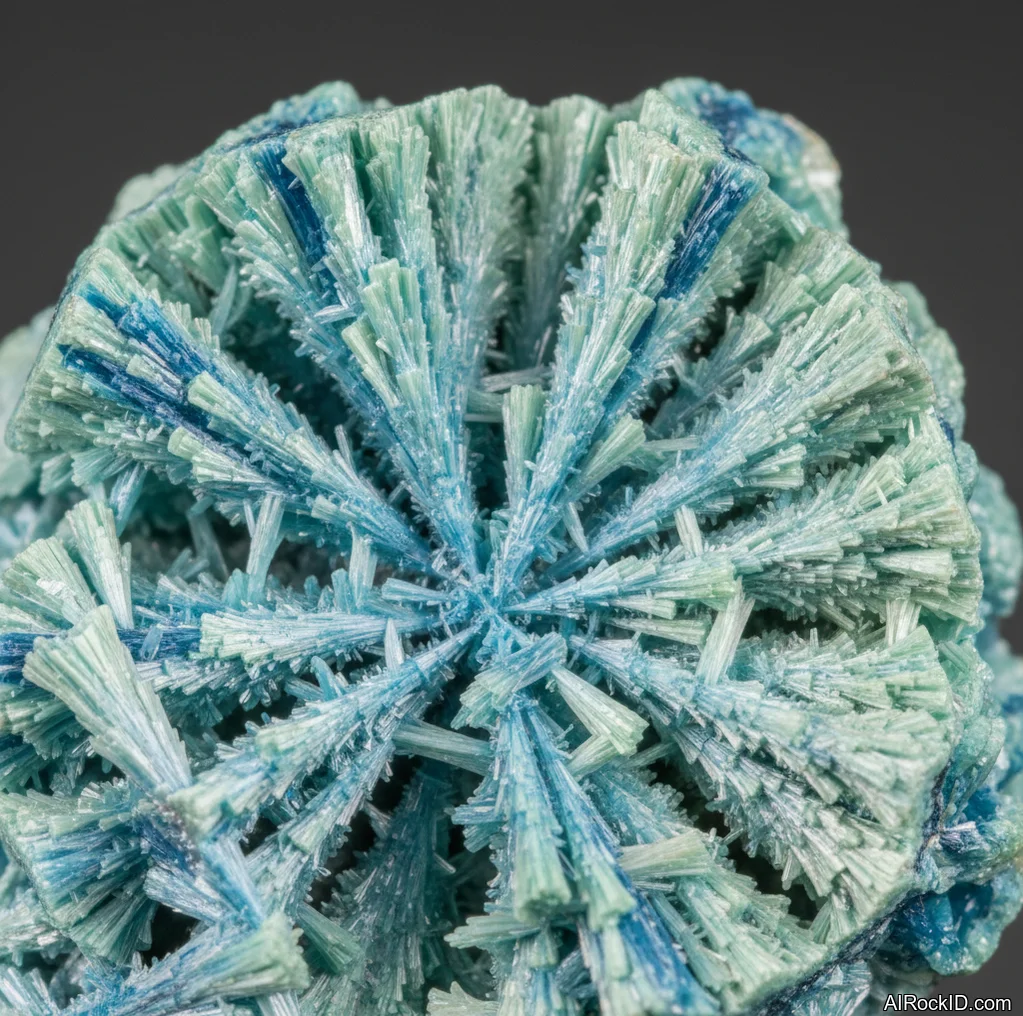
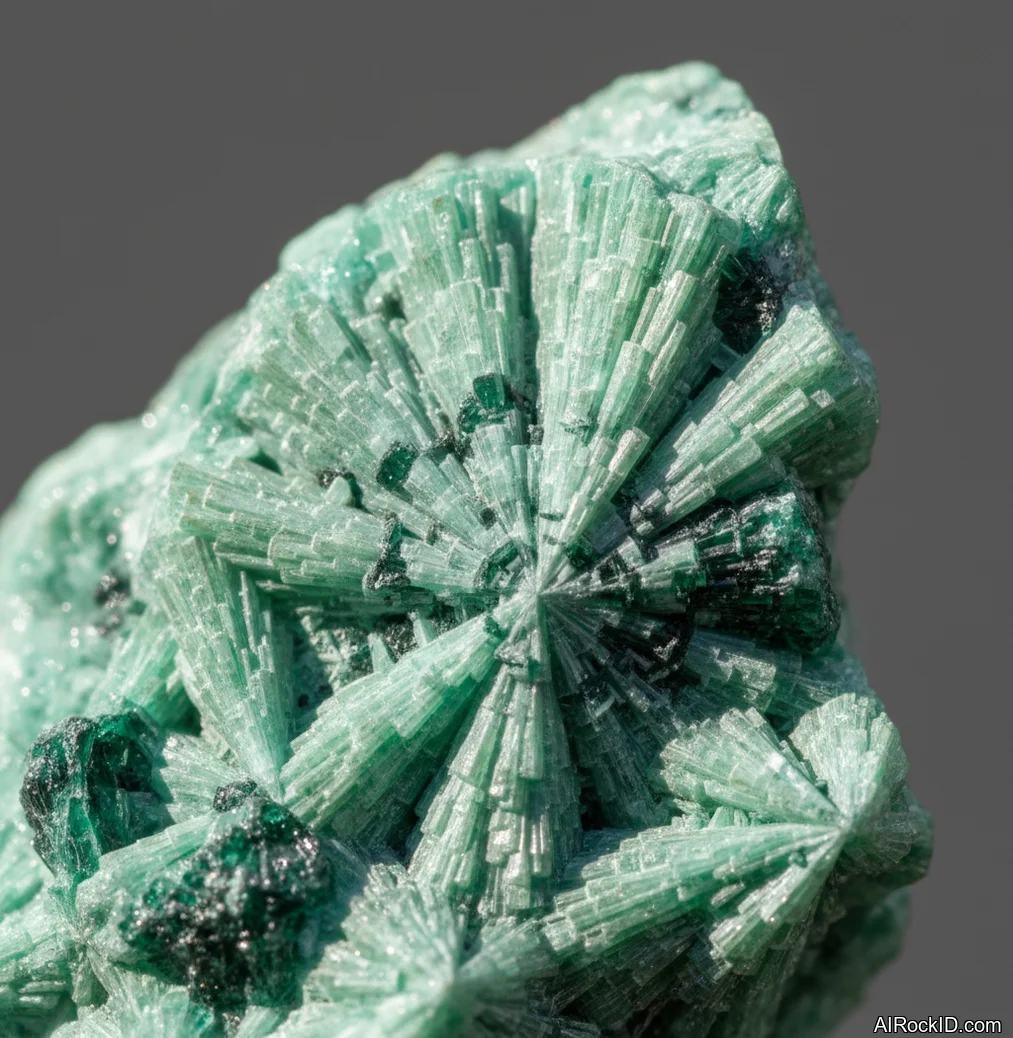
Collectors value it because the specimen records change in a copper deposit, not just color. It may appear as masses, crusts, nodules, botryoidal coatings, crystal-lined cavities, or vivid crystalline specimens. With a Mohs hardness of about 3.5-4, it feels more delicate than quartz, so cabinet display and careful handling suit it better than rough daily wear.
Origin & History
Azurite and malachite have been known since antiquity as copper ores, pigments, and decorative stones. Azurite was valued historically as a blue pigment, while malachite was widely carved and polished for ornament. When they occur together, the result is a naturally mixed copper-carbonate specimen with both visual drama and mineralogical context.
The pairing exists because the two minerals form under similar near-surface conditions in weathered copper deposits. Azurite can also alter to malachite as conditions change, so a specimen may show blue areas being coated, edged, or partly replaced by green. For label checks and locality comparisons, collectors commonly consult mindat.org alongside specimen records.
Where Is Azurite-Malachite Found?
Azurite-Malachite is found worldwide in oxidized copper deposits, especially where copper sulfides and other copper minerals have weathered near the surface. Important producing countries include the United States, Mexico, Morocco, Namibia, the Democratic Republic of the Congo, Australia, France, China, Russia, and Chile.
Formation
Azurite-Malachite forms in the oxidation zone of copper deposits when copper-bearing minerals react with carbonate-rich waters and oxygen near the surface. These are weathering environments, so the mineral surfaces can look crusty, earthy, silky, botryoidal, or sharply crystalline depending on how open the cavity was and how the copper-rich fluids moved.
Azurite may form first under certain carbon dioxide-rich conditions, and malachite can later replace or coat it as water chemistry changes. That is why many specimens show blue azurite islands surrounded by green malachite rims, seams, or coatings. The color pattern is often the formation story made visible in the specimen.
How to Identify Azurite-Malachite
Identify Azurite-Malachite by the vivid combination of intense azurite-blue and malachite-green in the same specimen. The luster may be vitreous or silky on crystalline and fibrous areas, dull to earthy on weathered masses, and waxy to subvitreous when polished. The streak ranges from light blue to green.
It is relatively soft, about 3.5-4 on the Mohs scale, and can be scratched by a steel knife. Look for natural irregular boundaries between blue and green areas, matrix, crusts, nodules, botryoidal masses, or crystal-lined cavities. Be cautious with dyed stones or resin composites; natural pieces usually show uneven mineral growth and copper-mineral associations rather than perfectly uniform color.
Properties of Azurite-Malachite
Physical Properties
| Crystal System | Monoclinic |
| Hardness (Mohs) | 3.5-4 (Soft) |
| Density | Approximately 3.6-4.0 g/cm³ |
| Luster | Vitreous, silky, dull, earthy, or waxy depending on texture |
| Diaphaneity | Transparent to opaque in crystals; commonly opaque in massive specimens |
| Fracture | Conchoidal to uneven; massive material may be splintery or earthy |
| Streak | Light blue to green |
| Magnetism | Non-magnetic |
| Colors | blue, azure blue, deep blue, green, emerald green, dark green, blue-green |
Chemical Properties
| Classification | Basic copper carbonate minerals |
| Formula | Cu3(CO3)2(OH)2 + Cu2CO3(OH)2 |
| Elements | Copper, Carbon, Oxygen, Hydrogen |
| Common Impurities | Iron, Calcium, Silica, Clay minerals, Other copper minerals |
Optical Properties
| Refractive Index | Azurite: about 1.730-1.838; Malachite: about 1.655-1.909 |
| Birefringence | High; azurite about 0.108 and malachite about 0.254 |
| Pleochroism | Azurite is strongly pleochroic in shades of blue; malachite may show green pleochroism in transparent grains |
| Optical Character | Biaxial; mixed aggregate of azurite and malachite |
Azurite-Malachite Health & Safety
Safe as a display specimen when handled responsibly, but copper-bearing dust and dissolved copper from soaking can be harmful.
Azurite-Malachite Value & Price
Price Range
Rough/Tumbled: Small common rough or tumbled pieces may sell for a few dollars; attractive cabinet specimens commonly range from about $20-$300; fine crystallized, highly colorful, or classic-locality specimens can reach hundreds to several thousand dollars.
Cut/Polished:
Value is driven by color saturation, contrast between blue azurite and green malachite, presence of sharp azurite crystals, attractive botryoidal or banded malachite, size, condition, matrix, locality, and lack of repairs or artificial stabilization.
Durability
Fragile to moderately durable — Scratch resistance: Low; with Mohs hardness around 3.5-4, it scratches easily compared with quartz or feldspar., Toughness: Generally fair to poor; crystals and fibrous aggregates can chip, crumble, or bruise if handled roughly.
Stable for display in dry indoor conditions, but azurite can slowly alter to malachite under some environmental conditions. Avoid acids, prolonged soaking, ultrasonic cleaners, steam, high heat, and humid storage.
How to Care for Azurite-Malachite
Use & Storage
Store separately from harder minerals to prevent scratching. Keep in a dry, padded box or display case away from direct sunlight, humidity, and acidic materials.
Cleaning
Clean gently with a soft dry brush or slightly damp cloth, then dry immediately. Do not use acids, vinegar, ultrasonic cleaners, steam cleaners, or prolonged soaking.
Cleanse & Charge
For metaphysical use, cleanse by smoke, sound, moonlight, or placing near clear quartz; avoid saltwater or water cleansing because copper carbonates can be damaged and may release copper.
Placement
Best displayed in a stable, low-humidity cabinet or on a protected shelf where it will not be bumped or scratched.
Caution
Azurite-Malachite is soft and copper-bearing; avoid moisture, acids, abrasive cleaning, and creating dust.
Works Well With
Azurite-Malachite Meaning & Healing Properties
In modern crystal-healing traditions, Azurite-Malachite is used as a stone of insight, transformation, emotional balance, clarity, creativity, and heart-mind connection. These meanings are spiritual beliefs, not scientifically proven medical effects. Practitioners often choose it when they want the blue azurite association with awareness beside the green malachite association with emotional growth.
It is commonly linked with the Third Eye, Heart, and Throat chakras, and with Sagittarius, Capricorn, and Scorpio. For metaphysical care, cleanse it with smoke, sound, moonlight, or by placing it near clear quartz. Avoid saltwater or water cleansing because it is copper-bearing, relatively soft, and not safe for drinking-water infusions.
Identify Azurite-Malachite from a photo
Compare Azurite-Malachite traits, care tips, value clues, and common lookalikes with a clear photo.
Common mistakes
- Assuming every blue-and-green copper stone is Azurite-Malachite without checking for chrysocolla or other copper minerals
- Mistaking dyed howlite or dyed magnesite for natural blue-green copper carbonate material
- Using color alone instead of checking texture, hardness, matrix, and seller disclosure
- Ignoring stabilization or resin treatment in polished cabochons and carvings
- Expecting a soft specimen to perform like a durable everyday jewelry stone