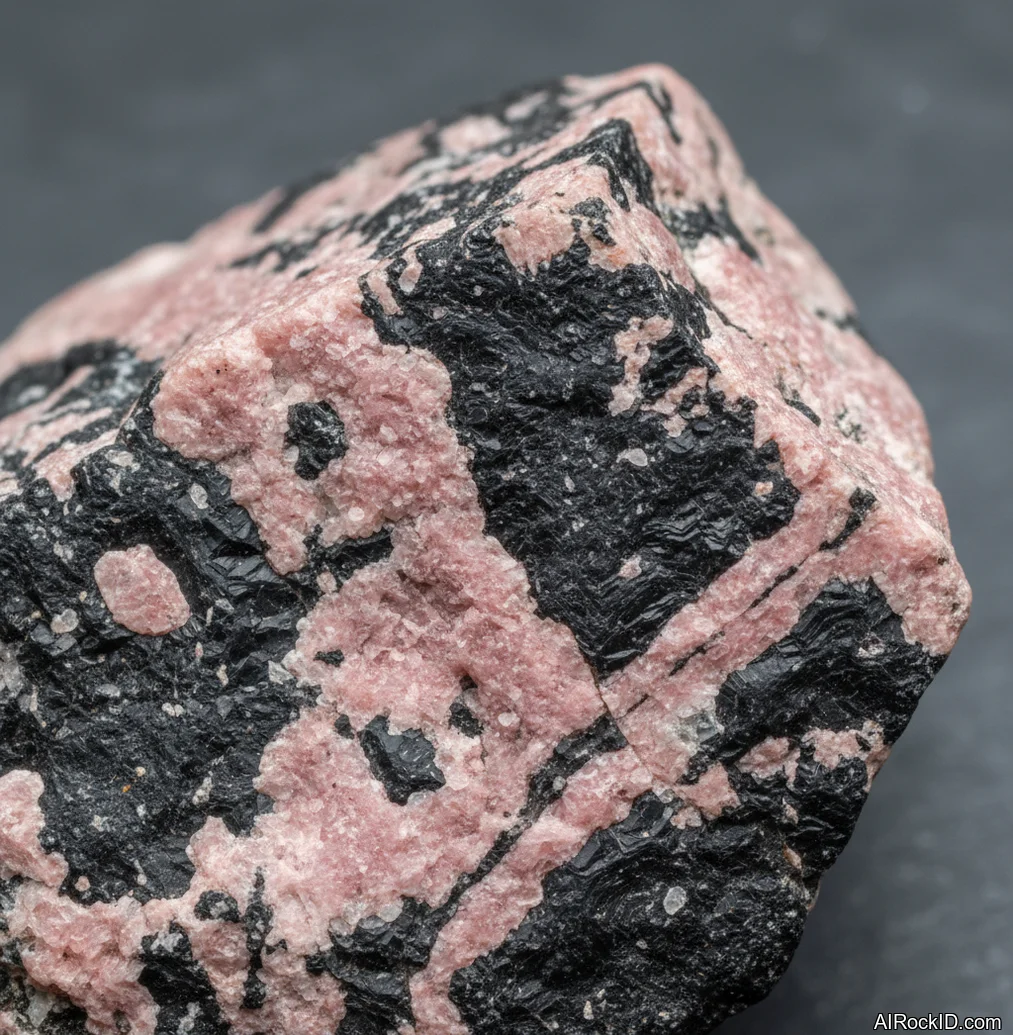
Black Jade And Pink Thulite


Quick answer: Black jade and pink thulite is a mixed lapidary stone combining dark nephrite jade with pink thulite, a manganese-bearing variety of zoisite. It is usually identified by its strong black-and-pink contrast, fine-grained texture, and moderate-to-good toughness depending on the amount of nephrite present.
AI Rock ID can help compare black jade and pink thulite against visually similar stones by checking color zoning, texture, luster, and likely mineral matches from a photo. RockIdentifier.io can be used as a starting point for identification, but mixed stones may still require hardness checks, magnification, or expert confirmation.
Good fit
- Collectors who like naturally contrasting black and pink stones
- Lapidary buyers looking for cabochons, beads, or display pieces with bold color zoning
- Beginners who want a stone that can be recognized by pattern and color contrast
- People comparing jade-containing rocks with other black-and-pink decorative stones
Not a good fit
- Buyers who need a single-mineral gemstone with uniform properties
- Jewelry that will be exposed to frequent impact, harsh chemicals, or ultrasonic cleaning
- Anyone expecting all black areas to test exactly like pure nephrite jade
- Medical or therapeutic use, since crystal traditions are not a substitute for health care
Most commonly confused with
- Rhodonite: Rhodonite is often pink with black manganese veining, but it usually lacks jade-like toughness and has a different cleavage and texture.
- Ruby in Zoisite: Ruby in zoisite commonly shows green zoisite with red ruby and black hornblende, rather than black nephrite with pink thulite.
- Pink Opal: Pink opal is typically softer and more waxy or porcelain-like, without the black jade component.
- Black Jade: Black jade alone is usually dark throughout and does not contain the distinctive pink thulite areas.
Black Jade and Pink Thulite Lookalikes
| Stone | Typical appearance | Key ID clue | Hardness range |
|---|---|---|---|
| Black jade and pink thulite | Black areas with pink thulite patches or bands | Mixed nephrite and zoisite textures in one rock | About 6 to 6.5 |
| Rhodonite | Pink base with black veins or patches | Manganese oxide veining, less jade-like toughness | About 5.5 to 6.5 |
| Ruby in zoisite | Green, red, and black mottling | Red ruby spots in green zoisite matrix | Variable |
| Pink opal | Soft pink, often uniform or cloudy | Softer, no crystalline jade texture | About 5.5 to 6.5 |
| Dyed composite stone | Very bright or unnatural black-pink contrast | Color may concentrate in cracks or bead holes | Variable |
AI identification confidence
AI identification confidence is usually moderate for black jade and pink thulite because the color contrast is distinctive, but the material is a mixed rock rather than a single mineral. Photo-based ID is strongest when the image shows a clean surface, natural patterning, scale, and both black and pink areas.
When AI gets it wrong
- A polished surface hides grain, fracture patterns, or dye concentration.
- Lighting makes pink thulite look red, purple, or brown.
- The stone is a dyed composite, resin-stabilized material, or imitation.
- Only a small area is photographed, making the black or pink component appear isolated.
Final recommendation
For buying, look for natural-looking transitions between the black and pink areas, clear seller disclosure, and photos taken in neutral light. For higher-value pieces, ask whether the material is natural, dyed, stabilized, or assembled before relying on the name alone.
How to Check Authenticity Before Buying
A genuine black jade and pink thulite piece should show natural mineral boundaries rather than paint-like color sitting only on the surface. Use a loupe to check bead holes, cracks, and low spots for concentrated dye. Ask the seller whether the stone has been dyed, resin-filled, stabilized, or assembled from multiple materials. A hardness test should be done only on an inconspicuous area because polished stones can be scratched or damaged.
Photo Tips for Identification
Take photos in daylight or neutral white light and avoid heavy filters that exaggerate the pink color. Include close-up images of the boundary between the black and pink areas, plus one photo with a ruler, coin, or hand for scale. If possible, show both a polished face and any rough or broken edge because texture is often more useful than color alone.
Typical Forms in the Market
Black jade and pink thulite is most often encountered as cabochons, beads, palm stones, small carvings, and polished slabs. Rough pieces may show uneven distribution of the two components, so finished stones are usually cut to highlight the strongest contrast. Large, clean pieces with attractive patterning are less common than small tumbled or cabochon-grade material.
What Is Black Jade And Pink Thulite?
Black Jade And Pink Thulite is a mixed lapidary material, basically black nephrite jade and pink thulite (a manganese-colored zoisite) locked together in a single stone.
Hold a palm stone of it and, honestly, the nephrite hits you first. It has that quiet weight in the hand and that slightly greasy, waxy feel jade people always mention. Not slick like glass. More like a river pebble that’s been rubbed smooth for ages. Then the pink jumps out. The thulite usually shows up as blotches, streaks, or these cloudy little islands sitting in the dark base, and when the cut’s good the contrast reads almost like ink next to rose.
People see it once and go, “That has to be dyed,” because the colors can look weirdly clean at a glance. But look, the better pieces give themselves away when you’ve actually got them in your hand. The black areas don’t read as painted. They have that fibrous, interlocked look. The pink zones look softer and a bit granular, and they’ll take a shine, just not in quite the same way nephrite does. And if you’ve handled enough tumble-polished stones (you know the feel of those edges), you’ll notice nephrite tends to keep its corners crisper longer, while the thulite sections round over just a touch from wear. Why? Different stuff, different behavior.
Origin & History
Nephrite’s been called “jade” for ages in China, Central Asia, and plenty of other places, even though nobody really sorted it out from jadeite as a separate mineral species until modern mineralogy finally nailed it down in the 1800s. The word “nephrite” itself comes from an old “kidney stone” idea, which is where that nephros root is coming from.
Thulite is just the pink variety of zoisite, and it’s closely tied to Norway. It was first described in 1820 and got its name from Norway’s old name, “Thule.” And that combo material you’ll see sold as Black Jade And Pink Thulite? That’s mostly a modern lapidary trade label. Dealers use it for pretty much any good-looking mix of black nephrite with pink thulite patches that’ll take a nice, clean polish (the kind that makes the dark bits look almost wet).
Where Is Black Jade And Pink Thulite Found?
Thulite is classic from Norway, while black nephrite comes from several metamorphic belts worldwide. The mixed material shows up where those rock types intersect or where lapidary rough gets blended and sold under a combo name.
Formation
Nephrite shows up in metamorphic zones, usually where ultramafic rock has been altered and shoved around under pressure, letting amphibole minerals grow into that famous felted, interlocking texture. And that texture is the whole reason nephrite is so tough. It doesn’t “want” to snap along a neat plane. It sort of fights back when you’re working it.
Thulite is just zoisite that’s pink because of manganese, and it comes out of metamorphosed rock as well, most often in calcium-rich settings. So when you find them together, the rock can look like a patchwork: fibrous black nephrite right up against more granular, pink zoisite zones. The line where they meet can turn swirly or even brecciated once it’s cut (you see it the second the surface gets polished), which is exactly what cutters go after for cabochons and worry stones.
How to Identify Black Jade And Pink Thulite
Color: Most pieces are deep black to very dark green-black in the jade, with opaque pink to rose patches from thulite. The pink can be bubblegum, salmon, or dusty rose depending on manganese level and lighting.
Luster: Polished surfaces show a waxy to silky luster, with the nephrite usually looking a bit “oiler” than the thulite.
Look closely at the black zones under a strong light and you’ll often see a fine, fibrous texture instead of a glassy, uniform black. The real test is the feel: nephrite stays cool in the hand and has that dense, smooth drag against your skin, while dyed composites often feel oddly warm or plasticky. If you scratch it with a steel nail, you usually won’t do much to the nephrite, but you might leave a faint line in a thulite-heavy spot because zoisite is a touch softer.
Common Look-Alikes
Black Jade And Pink Thulite is sometimes confused with these materials:
- Nephrite jade with pink dye or resin-filled fractures (sold as "black jade with pink" when the pink is artificial)
- Serpentine (often sold as "jade") with pink rhodonite patches or paint/dye in pits
- Rhodonite in dark manganese matrix (pink + black can look similar in photos, but the feel and fracture are different in hand)
- Thulite (zoisite) mixed with black hornblende/biotite or other dark inclusions (marketed loosely as "jade-thulite")
- Dyed howlite or magnesite (black base with bubblegum-pink dye, usually too uniform and chalky)
- Glass or reconstituted "jade" composite (heavy-looking color blocks, but it feels warmer and shows round bubbles under a loupe)
Market Cautions & Treatments
When AI Can Get This Wrong
At first glance, a phone camera just sees "pink on black" and will happily call it rhodonite-in-matrix, dyed howlite, or even "ruby in zoisite" if the pink leans hot. Photos also miss the jade feel, which is half the point here. The real test is in hand: nephrite stays cool longer, has that waxy drag when you rub it, and it won’t show bubble trails or paint-like pink pooling in cracks under 10x.
Properties of Black Jade And Pink Thulite
Physical Properties
| Crystal System | Monoclinic |
| Hardness (Mohs) | 6-6.5 (Hard (6-7.5)) |
| Density | 2.90-3.10 g/cm3 |
| Luster | Waxy |
| Diaphaneity | Opaque |
| Fracture | Splintery |
| Streak | White |
| Magnetism | Non-magnetic |
| Colors | Black, Dark green-black, Pink, Rose, Salmon |
Chemical Properties
| Classification | Silicates |
| Formula | Ca2Al3(SiO4)3(OH) and Ca2Al3(SiO4)3(OH) (Mn-bearing) |
| Elements | Ca, Al, Si, O, H, Mn |
| Common Impurities | Fe, Cr, Mn |
Optical Properties
| Refractive Index | 1.66-1.70 |
| Birefringence | 0.005-0.010 |
| Pleochroism | None |
| Optical Character | Biaxial |
Black Jade And Pink Thulite Health & Safety
It’s safe to handle, and it’s fine around water in normal everyday use. But like any stone, if you’re cutting or grinding it and making that dry, chalky dust that clings to your fingers, don’t breathe it in.
Safety Tips
Use water when you sand. Seriously, keep things wet so the dust doesn’t go everywhere and turn into that gritty film you’ll feel on your lips and in your nose later. And if you’re doing lapidary work, don’t cheap out on the mask, grab a proper respirator (the kind that actually seals around your face). Why risk breathing that stuff in?
Black Jade And Pink Thulite Value & Price
Price Range
Rough/Tumbled: $10 - $80 per palm stone or small slab
Cut/Polished: $3 - $20 per carat (cabochon material, varies widely)
Prices jump when the pink is clean and spread evenly, without that weird blotchy look you sometimes see. And the polish needs to be tight, with no undercutting on the thulite, because under a light you can catch those little dull dips right away (it looks kind of chalky at an angle). Bigger slabs with dramatic contrast cost more too, since cutters can actually plan their cuts around the pattern instead of fighting it.
Durability
Durable — Scratch resistance: Good, Toughness: Excellent
It’s stable in normal conditions, but the thulite areas can show wear and tiny pits sooner than the nephrite if the polish wasn’t done carefully.
How to Care for Black Jade And Pink Thulite
Use & Storage
Store it like you’d store most polished stones: separate it from quartz and corundum so it doesn’t pick up little scratches. A cloth pouch works fine.
Cleaning
1) Rinse with lukewarm water. 2) Use a drop of mild soap and rub with your fingers or a soft toothbrush. 3) Rinse well and dry with a microfiber cloth.
Cleanse & Charge
If you do energy-style care, a quick rinse and a night on a shelf is plenty. I wouldn’t overthink it, especially with mixed materials.
Placement
On a desk it reads as calm and grounded, but it also looks great under a warm lamp where the pink shows up better. Keep it out of harsh direct sun if you’re picky about long-term color staying steady.
Caution
Skip ultrasonic cleaners and harsh chemicals. And don’t soak it in acids or bleach. If you’re buying, keep an eye out for dyed black material that’s way too perfectly even, plus pink that looks like it’s seeped into the tiny cracks (like it bled and settled there). Looks off, right?
Works Well With
Black Jade And Pink Thulite Meaning & Healing Properties
A lot of “combo stones” feel kind of random once you actually hold them, but this one clicks. The black nephrite side feels heavy and steady in your palm. And then the pink thulite cuts through that weight so the whole thing doesn’t land emotionally flat. That’s usually what people want, right? Grounded, but not shut down.
If you’ve got a polished piece, run your thumb along the seam where the pink meets the black. Even with that glossy finish, there’s a tiny texture shift you can feel. Subtle, but it’s there. So on a stressful day, I end up fidgeting with that edge without even thinking about it (way better than shredding a cuticle).
Thing is, keep it in its lane. This isn’t medical care, and it won’t replace real help for anxiety, depression, or anything physical. What it can do is give you a physical anchor for the habits you’re already trying to build: journaling, breath work, taking breaks, saying the hard thing kindly. And honestly? The best pieces are the ones that just feel good in your hand, not the ones with the fanciest story glued on.
Common mistakes
- Assuming every black area is pure nephrite jade without checking the mixed-rock texture.
- Confusing rhodonite with black veining for pink thulite in black jade.
- Judging authenticity only by color, since dyed or composite stones can mimic the contrast.
- Using ultrasonic or steam cleaning on mounted pieces without knowing whether the stone is stabilized.
- Expecting the whole stone to have one consistent hardness or toughness.
- Paying a premium for the name without asking for treatment disclosure or clear close-up photos.
Identify Black Jade And Pink Thulite from a photo
Compare Black Jade And Pink Thulite traits, care tips, value clues, and common lookalikes with a clear photo.
Black Jade And Pink Thulite FAQ
Related Crystals
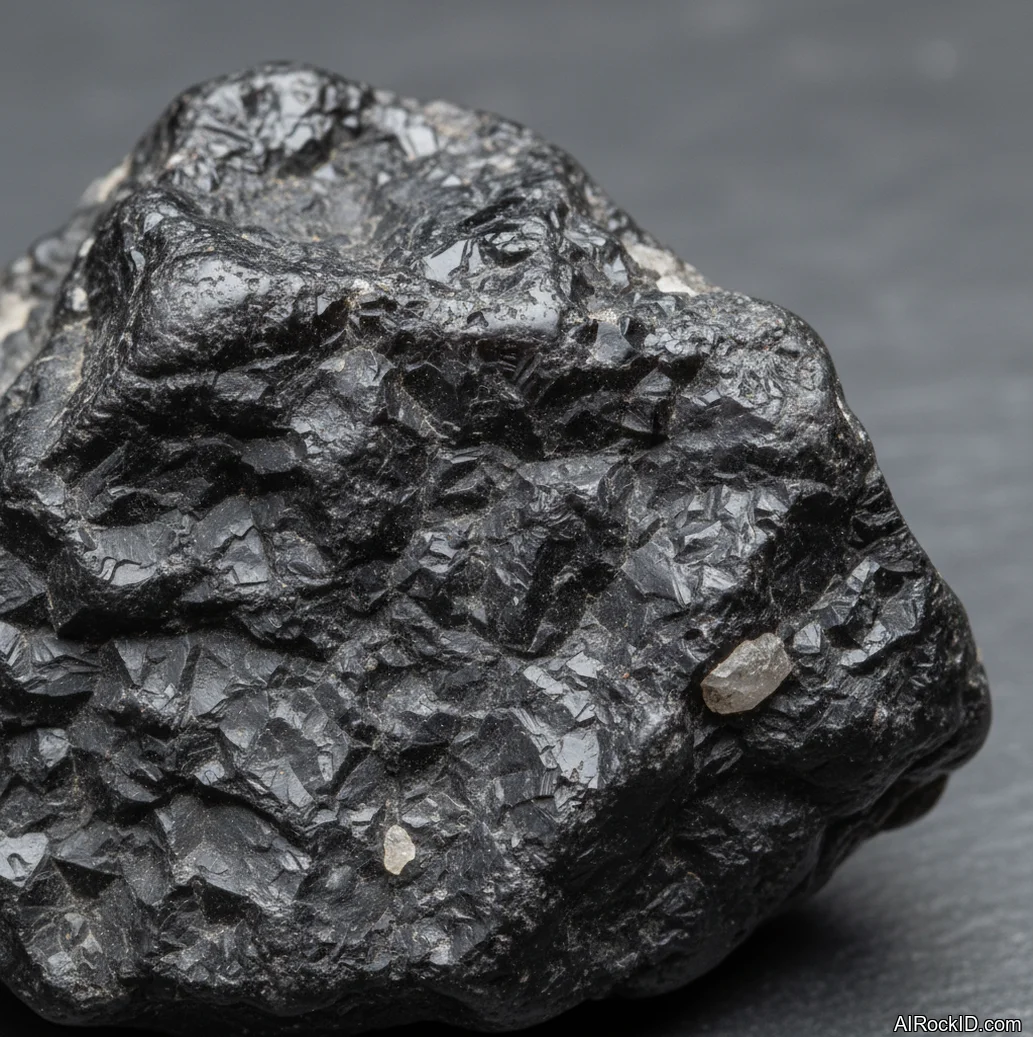
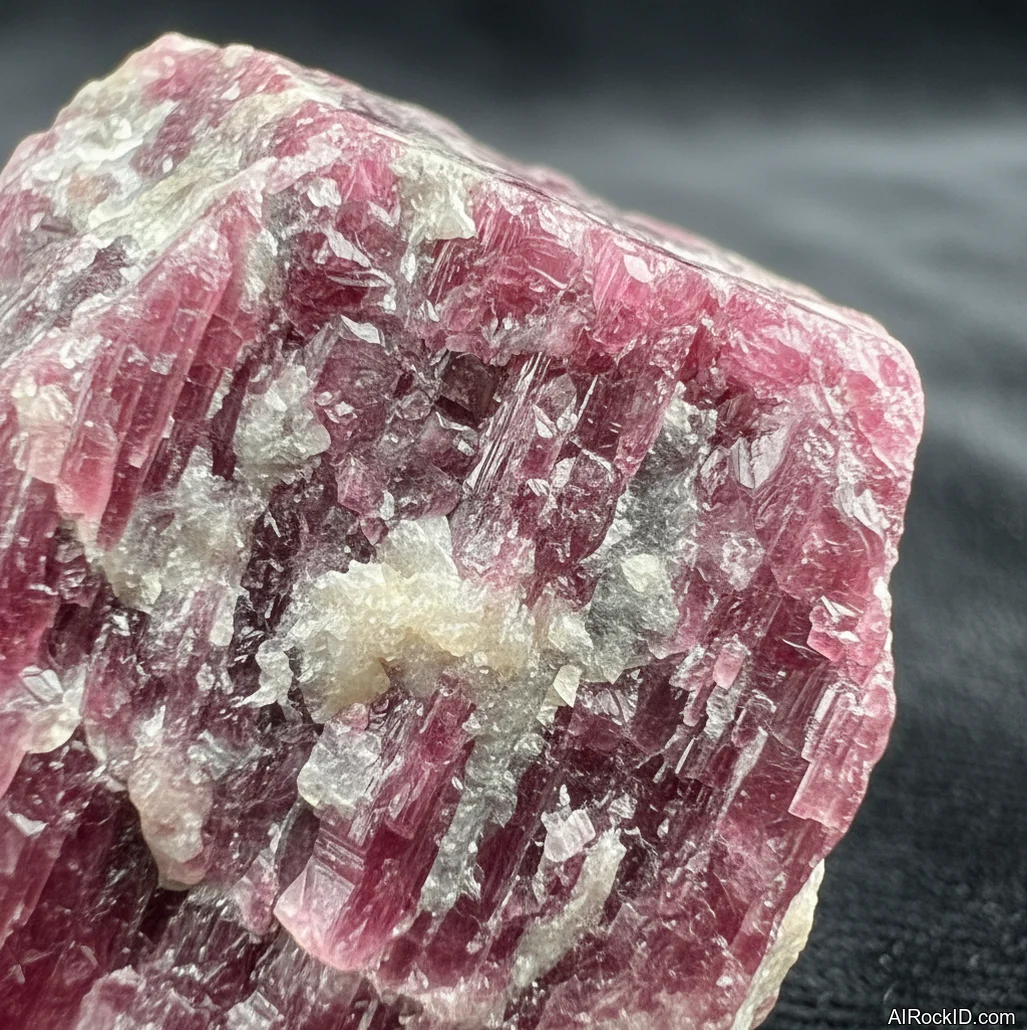
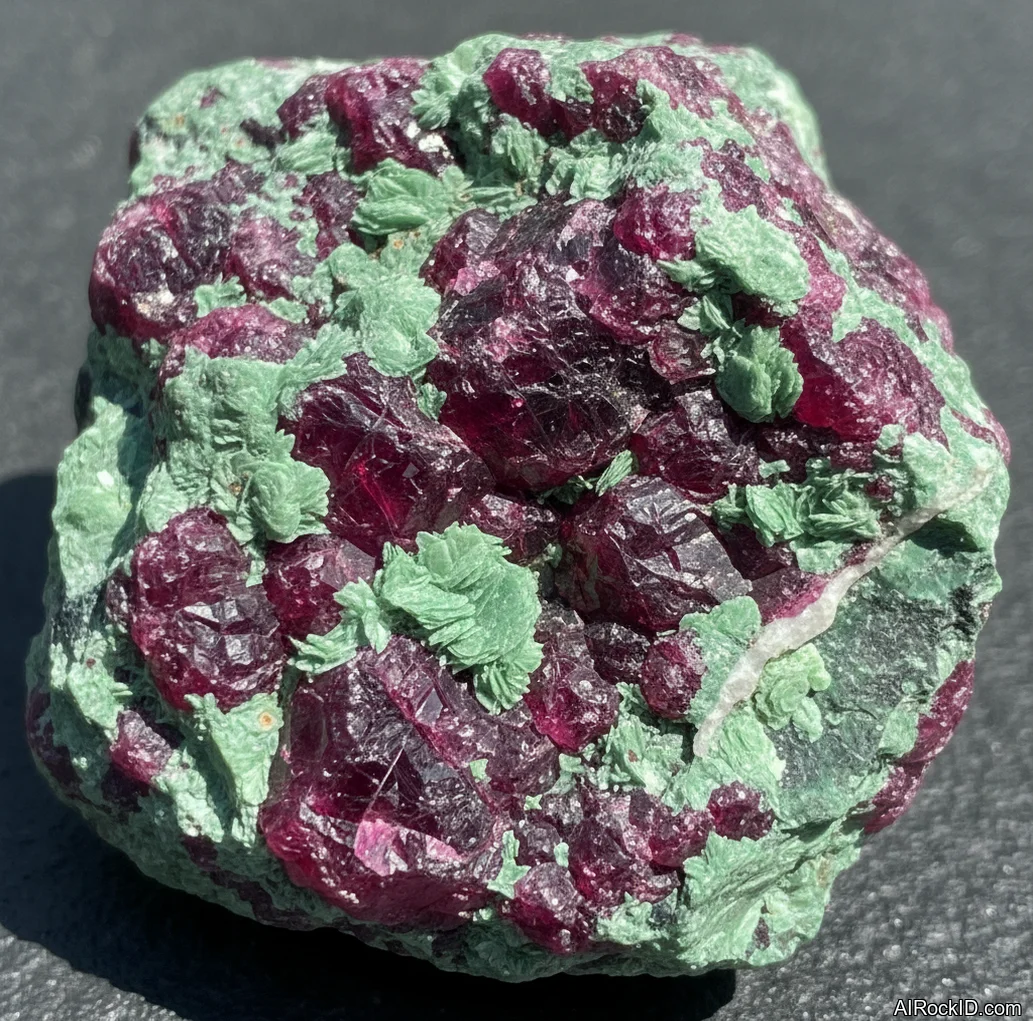
See also: Jade.