Cherry Tanzurine


Quick answer: Cherry Tanzurine is generally sold as a trade-name quartz with purple, pink, or cherry-red coloration. Because the name is commercial rather than a strict mineral species, buyers should evaluate color treatment disclosures, quartz hardness, polish quality, and seller transparency.
AI Rock ID can help compare Cherry Tanzurine against visually similar quartz varieties by analyzing color, translucency, surface texture, and crystal habit from a photo. RockIdentifier.io treats Cherry Tanzurine as a trade-name material, so identification confidence depends on image quality and any available seller information about treatment or origin.
Good fit
- Collectors who like purple-to-red quartz colors under a trade name
- People seeking a durable polished stone for casual handling or jewelry
- Buyers who are comfortable asking sellers about dyeing, coating, or heat treatment
- Beginners comparing quartz varieties and trade names
Not a good fit
- Buyers who want a formally recognized mineral species name
- Collectors requiring untreated natural color with laboratory documentation
- Anyone expecting a rare gem category based only on the trade name
Most commonly confused with
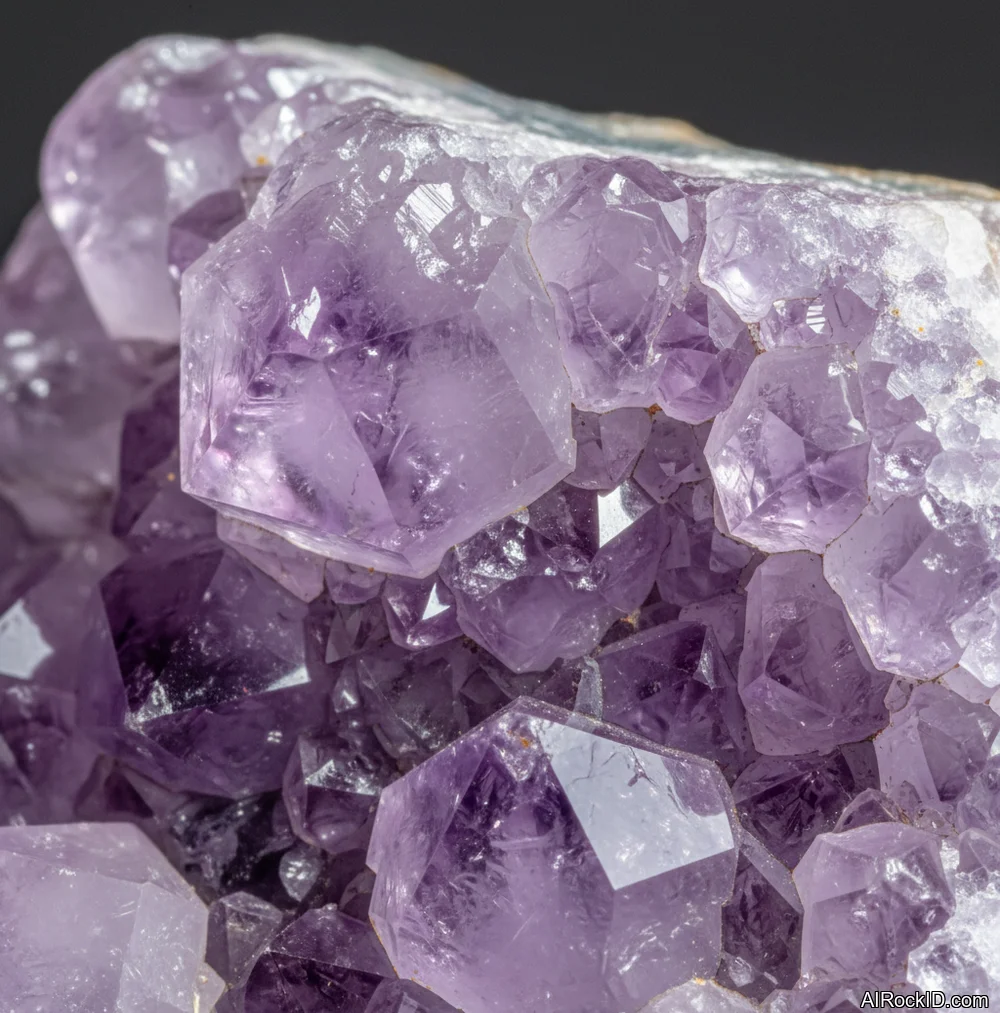
- Amethyst: Amethyst is a recognized purple quartz variety, while Cherry Tanzurine is a trade name that may include enhanced or mixed quartz material.
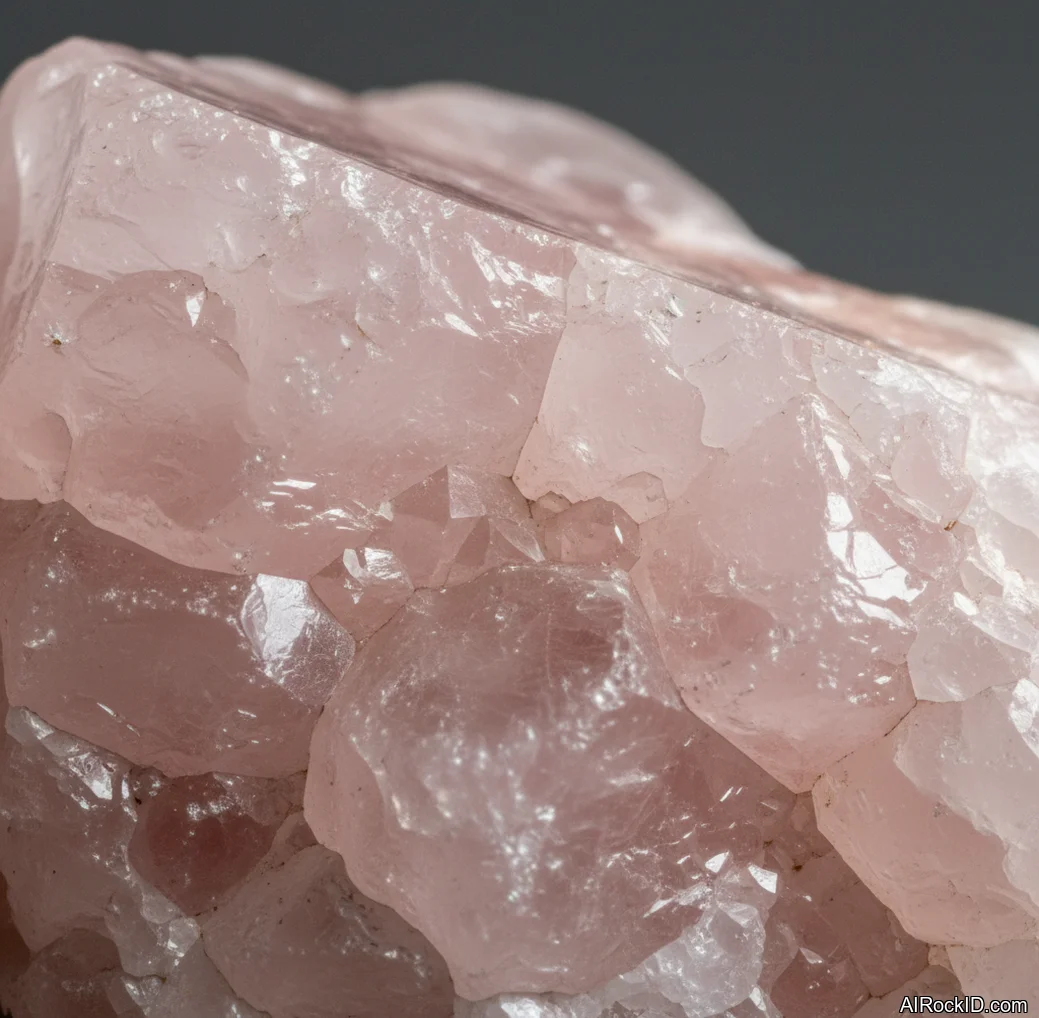
- Rose Quartz: Rose quartz is typically pale pink and cloudy to translucent, while Cherry Tanzurine is often deeper purple, red, or cherry-toned.
- Strawberry Quartz: Strawberry quartz is usually pink to red with included particles, while Cherry Tanzurine may show more variable purple-red coloration and trade-name labeling.
- Dyed Quartz: Dyed quartz can show concentrated color in cracks or pores, which may resemble vivid Cherry Tanzurine sold without clear treatment disclosure.
Cherry Tanzurine vs. Similar Stones
| Material | Typical Look | Key Difference | Buyer Check |
|---|---|---|---|
| Cherry Tanzurine | Purple to cherry-red quartz-like material | Trade name rather than a distinct mineral species | Ask whether color is natural, dyed, coated, or heated |
| Amethyst | Violet to purple quartz | Recognized quartz variety with natural purple color possible | Look for zoning and ask about heat treatment |
| Rose Quartz | Pale to medium pink, often cloudy | Usually softer-looking pink rather than cherry-red | Check for natural cloudiness and even color |
| Strawberry Quartz | Pink-red quartz with visible inclusions | Color often linked to fine internal particles | Inspect inclusions under magnification |
| Dyed Quartz | Very vivid color, often in cracks | Artificial color may collect in fractures | Wipe test and inspect crack lines |
AI identification confidence
AI identification of Cherry Tanzurine is usually moderate because the name describes a commercial appearance rather than a unique mineral structure. Confidence improves when the photo shows translucency, fracture pattern, polish, and any label or seller treatment disclosure.
When AI gets it wrong
- A vivid red or purple stone is photographed under warm lighting that changes the apparent color.
- Dyed quartz, coated quartz, or glass is polished into the same shapes used for Cherry Tanzurine.
- The image lacks scale, surface detail, or a view of fractures and inclusions.
- A seller label uses Cherry Tanzurine as a branding term rather than a consistent material description.
Final recommendation
Choose Cherry Tanzurine based on the actual stone’s appearance, durability, and treatment disclosure rather than the trade name alone. For higher-priced pieces, request clear photos in neutral light and written information about any dyeing, coating, heat treatment, or composite material.
How to Check Cherry Tanzurine Authenticity
Cherry Tanzurine authenticity is best evaluated by confirming that the material is quartz-based and by asking whether the color is natural or enhanced. Look for color concentrated in cracks, around drill holes, or along surface pits, which can indicate dye. A glassy feel, conchoidal fractures, and quartz-like hardness support a quartz identification, but they do not prove the color is natural.
Buying Tips for Cherry Tanzurine
Use neutral-light photos when judging Cherry Tanzurine because strong lighting can make purple, pink, and red tones appear more saturated. Ask sellers for the material name, treatment status, approximate size, and whether the piece is solid quartz, coated quartz, dyed quartz, or a composite. Be cautious when a listing describes Cherry Tanzurine as extremely rare without documentation.
Photo Tips for Identifying Cherry Tanzurine
Photograph Cherry Tanzurine on a plain white or gray background in indirect daylight to reduce color distortion. Include one close-up of the surface, one image showing translucency against light, and one image with a ruler or coin for scale. Avoid heavy filters because they can make quartz, glass, and dyed material harder to separate visually.
What Is Cherry Tanzurine?
Cherry Tanzurine is just a trade name for purple-to-cherry red quartz, and it’s usually sold as tumbled stones, palm stones, or cabochons.
Pick up a piece and you’ll notice the quartz feel right away. It stays cool against your skin, and there’s that slick, glassy polish that makes it want to scoot around in your palm if you’re not paying attention (especially on the more rounded tumbles). The color is the whole reason anyone cares: blotches of raspberry, wine, and violet that look deeper under warm indoor light, then kind of flatten out in harsh daylight. Funny how that happens, right?
Most of what you’ll see in shops is opaque to translucent. Not the clear, see-through “gemmy” stuff people picture when they hear a name that sounds like tanzanite. And yeah, the name throws people. It’s not tanzanite, and it’s not a separate mineral species. It’s quartz being sold under a catchy label, usually for material with a saturated pinkish red and purple mix that photographs really well.
Origin & History
Cherry Tanzurine doesn’t come with that old-school mineral backstory where some professor “first described it in 18xx” and everyone nods politely. It’s a modern trade name that showed up in the retail crystal scene for colored quartz, and it was probably picked because it sounds a lot like “tanzanite” and because “tanzurine quartz” was already floating around as a label.
Thing is, most dealers I’ve talked to use “tanzurine” pretty loosely for purple quartz that leans a little blue in certain light. Then “cherry” gets slapped on the redder batches (the ones that look warmer when you tilt them and the color catches along the edges). And sure, you’ll see sellers call it a rare new discovery, but in day-to-day reality it behaves like quartz and gets sold in the same shapes, sizes, and price brackets as other colored quartz varieties.
Where Is Cherry Tanzurine Found?
On the market it’s most often attributed to Brazil, with occasional claims of Russian or US sources depending on the seller and batch.
Formation
Quartz forms when silica-rich fluids squeeze through cracks and little pockets in rock, then cool off or the chemistry shifts just enough that SiO2 can’t stay dissolved anymore. It drops out. Simple as that.
So that’s why you’ll find quartz in hydrothermal veins and in pegmatites, and it’s also why it can wind up with just about any color, depending on trace elements, tiny inclusions trapped inside, or stuff that happened to it later (treatment is a thing).
With Cherry Tanzurine, the annoying part is that nobody’s using one clean, standard “this is the exact cause of the color” explanation the way they do with amethyst, where you’re talking Fe-related color centers that often get tweaked by heat. Thing is, different lots don’t behave the same. Some pieces look like the color is coming from super fine inclusions or a kind of staining that sits along microfractures (you’ll sometimes see it catching the light in thin, hairline seams when you tilt the stone). But then other lots look way too even, that suspicious, flat uniform tone that makes you wonder if they’ve been dyed or hit with irradiation. Why else would it look so perfectly consistent?
And that’s where the real test comes in: consistency. Natural-looking material usually shows uneven color zoning and little cloudy patches, not a perfectly even candy-red spread across the entire stone.
How to Identify Cherry Tanzurine
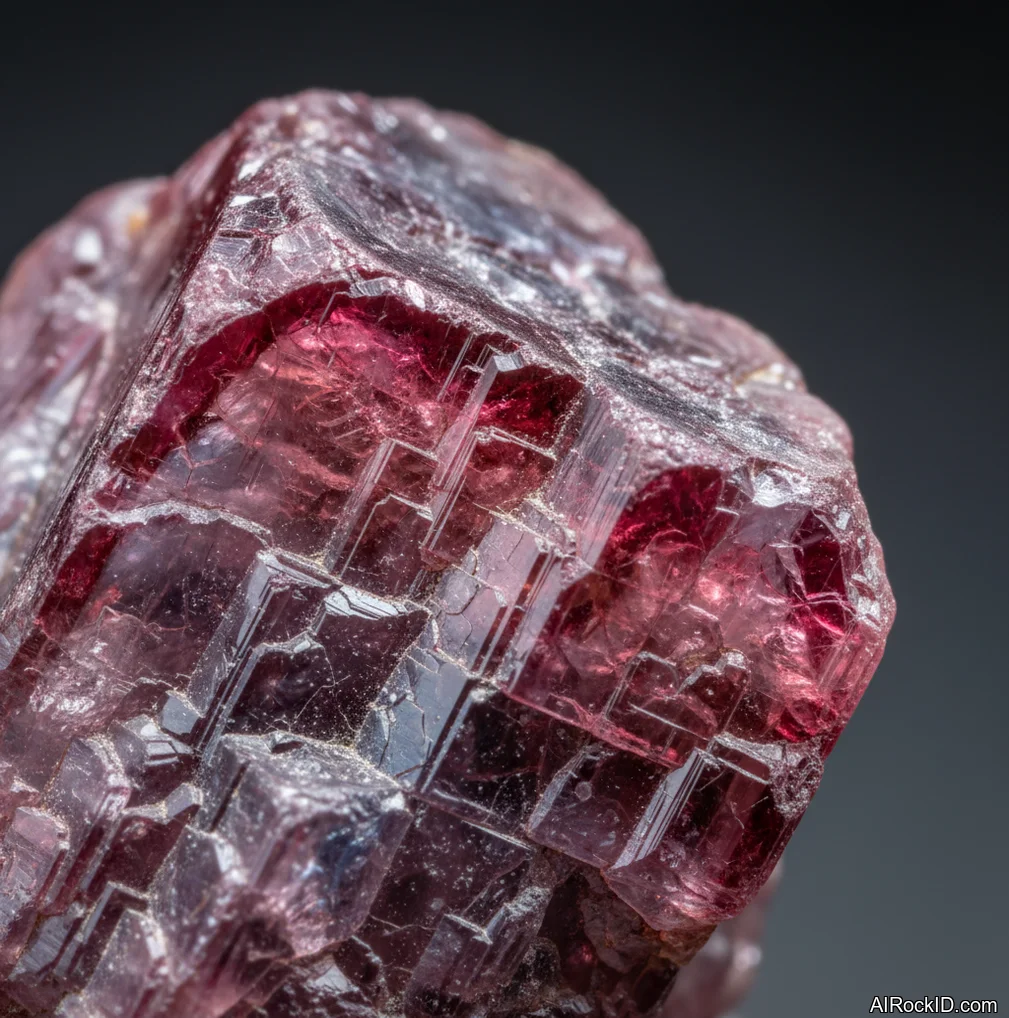
Color: Cherry Tanzurine typically shows mottled cherry-red, raspberry, and violet tones, often in patches rather than a single solid color. Many pieces have lighter milky zones that break up the color.
Luster: Polished pieces show a vitreous (glassy) luster typical of quartz.
If you scratch it with a steel knife, it shouldn’t scratch easily, and it should scratch common glass without much effort. Look closely at the color around tiny pits or fractures: dyed material often pools darker in cracks or around drill holes. And in-hand, real quartz has that cool, hard feel; cheap resin imitations feel warmer and a little grabby instead of slick.
Common Look-Alikes
Cherry Tanzurine is sometimes confused with these materials:
- Strawberry Quartz (dyed clear quartz)
- Lepidolite (especially polished lavender pieces)
- Glass fakes with red and purple swirls
- Cherry Quartz (manmade, often glass or reconstituted quartz)
- Ruby in Quartz (real ruby crystals in quartz, sometimes confused in rough form)
Market Cautions & Treatments
When AI Can Get This Wrong
AI photo tools mix up Cherry Tanzurine with dyed strawberry quartz and cherry glass fakes all the time, especially on polished stones where the surface glare hides the real texture. Lepidolite and certain heat-treated amethyst can trip up the algorithms too. Rubbing it against glass (it'll scratch easily if it's real quartz) and feeling for the cool weight help confirm if you've got the real deal.
Properties of Cherry Tanzurine
Physical Properties
| Crystal System | Trigonal |
| Hardness (Mohs) | 7 (Hard (6-7.5)) |
| Density | 2.65 g/cm3 |
| Luster | Vitreous |
| Diaphaneity | Transparent to translucent |
| Fracture | Conchoidal |
| Streak | White |
| Magnetism | Non-magnetic |
| Colors | Cherry red, Raspberry, Wine red, Purple, Violet, Pink, Milky white |
Chemical Properties
| Classification | Silicates |
| Formula | SiO2 |
| Elements | Si, O |
| Common Impurities | Fe, Al, Ti, Mn |
Optical Properties
| Refractive Index | 1.544-1.553 |
| Birefringence | 0.009 |
| Pleochroism | None |
| Optical Character | Uniaxial |
Cherry Tanzurine Health & Safety
Solid pieces are fine to pick up, and a quick rinse or a short dip in water won’t hurt them, which is pretty much what you’d expect from quartz. Thing is, the one thing you actually need to watch out for is the dust if you’re cutting it or grinding it.
Safety Tips
If you’re going to shape it, put on a respirator and do it with wet grinding so you keep the silica dust down (that dry, chalky stuff that hangs in the air).
Cherry Tanzurine Value & Price
Price Range
Rough/Tumbled: $5 - $40 per piece
Cut/Polished: $2 - $15 per carat
Price swings usually boil down to how saturated the color looks, how “clean” the polish comes off in hand (no cloudy patches or that weird plasticky glare), and whether the seller can actually explain where it came from and any treatment it’s had. Big palm stones with nice, even color cost more. But the ones that look a little too perfect are the exact ones I side-eye for dye.
Durability
Durable — Scratch resistance: Excellent, Toughness: Good
Quartz is stable in normal indoor conditions, but heavily fractured or dyed pieces can look worse over time if they’re banged around or left in strong sun.
How to Care for Cherry Tanzurine
Use & Storage
Keep it in a soft pouch or a divided box slot so it doesn’t scuff softer stones. Quartz will scratch a lot of things you might store next to it.
Cleaning
1) Rinse with lukewarm water and a drop of mild soap. 2) Use a soft toothbrush to clean around pits or drilled holes. 3) Rinse well and pat dry; don’t bake it in direct sun to “dry faster.”
Cleanse & Charge
If you do energetic cleansing, a quick rinse and a wipe-down works fine, or set it on a clean shelf overnight. Skip salt soaks if you suspect dye or lots of microfractures.
Placement
I like it where light hits it at an angle, because the purple and red patches read better than they do under flat overhead lighting. On a desk, it’s the kind of stone you’ll pick up without thinking.
Caution
Skip harsh cleaners and don’t leave it sitting in UV for ages if the color looks like it’s just on the surface or soaked into tiny fractures. And please don’t toss it loose in a pouch with fluorite, calcite, or selenite unless you’re fine with pulling it out later and spotting random little scratches.
Works Well With
Cherry Tanzurine Meaning & Healing Properties
Most people grab Cherry Tanzurine the first time because the colors hit them fast. That red plus purple combo reads like “heart plus mind” to a lot of folks, and I get why. In my own stash, it’s one of those stones that settles you the way quartz does, but it’s not as crisp and all-business as a clear quartz point.
Look, pick up a palm stone and just rub your thumb over it for a minute. The polish starts to warm up from your skin, but the stone stays weirdly cool underneath, and that little push-pull sensation is honestly why I see people use it for stress habits or fidgeting during meditation. If you’re into crystals in the metaphysical sense, I’d call it a focus aid and a mood anchor. Not sleep. Not therapy. Not anything medical.
But the annoying part is the market side. “Cherry Tanzurine” is a branding term, so two pieces from two sellers can feel like they’re not even related. One batch will look mottled and natural, with those uneven cloudy patches you only notice when you tilt it under a lamp, and another will be loud and uniform and, yeah, maybe dyed. So if you’re trying to build a consistent set for ritual or grid work, stick to the same source, check it under the same lighting, and compare it in-hand before you commit to buying a bunch. Why gamble if you don’t have to?
Common mistakes
- Assuming Cherry Tanzurine is a separate mineral species rather than a trade name
- Treating vivid cherry-red color as proof of natural origin
- Ignoring dye concentration around cracks, pits, or bead holes
- Comparing prices without checking size, polish quality, and treatment disclosure
- Using a single indoor photo to judge true color
- Confusing quartz hardness with proof that a stone is untreated
Identify Cherry Tanzurine from a photo
Compare Cherry Tanzurine traits, care tips, value clues, and common lookalikes with a clear photo.