Fossilized Shell


Quick answer: Fossilized Shell is the preserved or mineral-replaced remains of ancient marine or freshwater shells, usually composed of calcium carbonate or related minerals. It is commonly used for study specimens, carvings, beads, and decorative cabochons, with identification based on shell structure, mineral composition, and fossil texture.
AI Rock ID can help compare Fossilized Shell with similar materials by evaluating visible shell patterns, luster, layering, and fossil texture from a photo. RockIdentifier.io provides educational identification support, but close lookalikes and altered specimens may still require hands-on testing or expert review.
Good fit
- Collectors who want an affordable fossil material with visible natural patterns
- Jewelry buyers looking for organic textures in cabochons, beads, or inlay
- Students and hobbyists learning to recognize fossil structures
- Decorative stone users who prefer neutral, earthy, or marine-themed pieces
Not a good fit
- Rings or daily-wear jewelry exposed to knocks, acids, or abrasion
- Anyone needing a rare gemstone with high resale liquidity
- Outdoor displays where weathering and acidic rain may damage carbonate material
- Buyers who prefer transparent faceted gemstones
Most commonly confused with
- Mother of Pearl: Mother of Pearl is nacre from modern or recent shells, while Fossilized Shell shows ancient shell material or mineral replacement.
- Agatized Coral: Agatized Coral has coral polyp structures replaced by silica, while Fossilized Shell usually preserves shell ridges, whorls, or layered shell fragments.
- Coquina: Coquina is a sedimentary rock made of many shell fragments cemented together, while a Fossilized Shell specimen may preserve a single shell or distinct shell pieces.
- Limestone: Limestone may contain fossils but often appears more massive or granular, while Fossilized Shell has clearer shell form or surface ornament.
Fossilized Shell vs Similar Materials
| Material | Typical visual clue | Main difference |
|---|---|---|
| Fossilized Shell | Shell ridges, whorls, layered fragments, or preserved shell outline | Ancient shell material or mineral replacement |
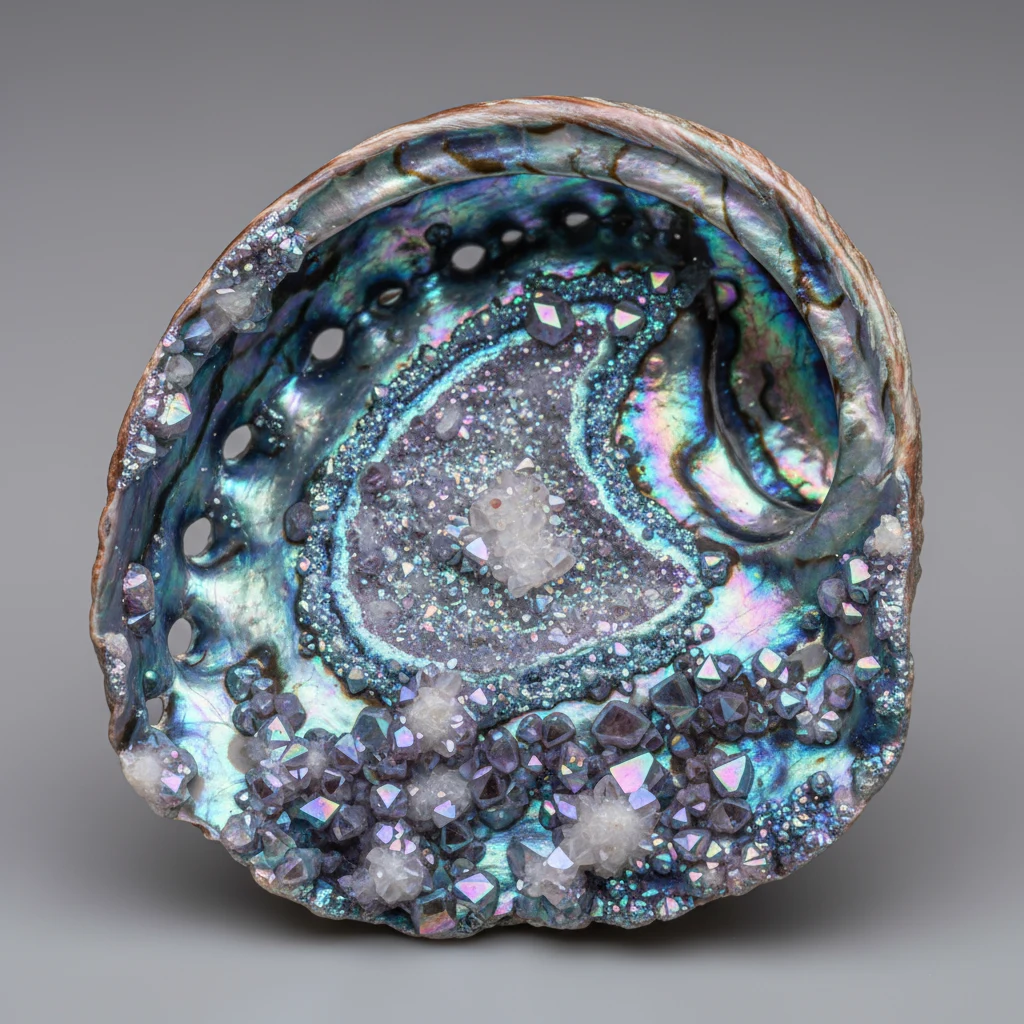
| Mother of Pearl | Iridescent nacre with smooth layered sheen | Usually modern shell nacre, not a fossil |
| Coquina | Many broken shell fragments in a cemented matrix | A shell-fragment rock rather than one preserved shell |
| Agatized Coral | Honeycomb or flower-like coral structures | Coral skeleton replaced mainly by silica |
| Limestone | Fine-grained to granular carbonate rock, sometimes fossiliferous | May contain fossils but lacks a distinct shell specimen |
AI identification confidence
AI photo identification is often moderately reliable when Fossilized Shell has clear ridges, whorls, hinge lines, or shell fragments. Confidence drops when the piece is polished, dyed, heavily weathered, or embedded in a matrix that hides diagnostic structure.
When AI gets it wrong
- Polished cabochons may look like limestone, jasper, or patterned marble without visible fossil structure.
- Dyed or resin-stabilized shell material can obscure natural color and surface texture.
- Coquina and shell limestone may be labeled as Fossilized Shell even when they are fragmental rocks rather than individual fossils.
- Modern shells, Mother of Pearl, and craft inlays can resemble fossil shell in photos if age and mineralization are not documented.
Final recommendation
Choose Fossilized Shell when the specimen shows clear shell structure, natural-looking color, and a seller description that explains the source or fossil type. For jewelry, pendants, earrings, beads, and protected settings are more practical than high-impact ring designs.
How to Identify Fossilized Shell in Photos
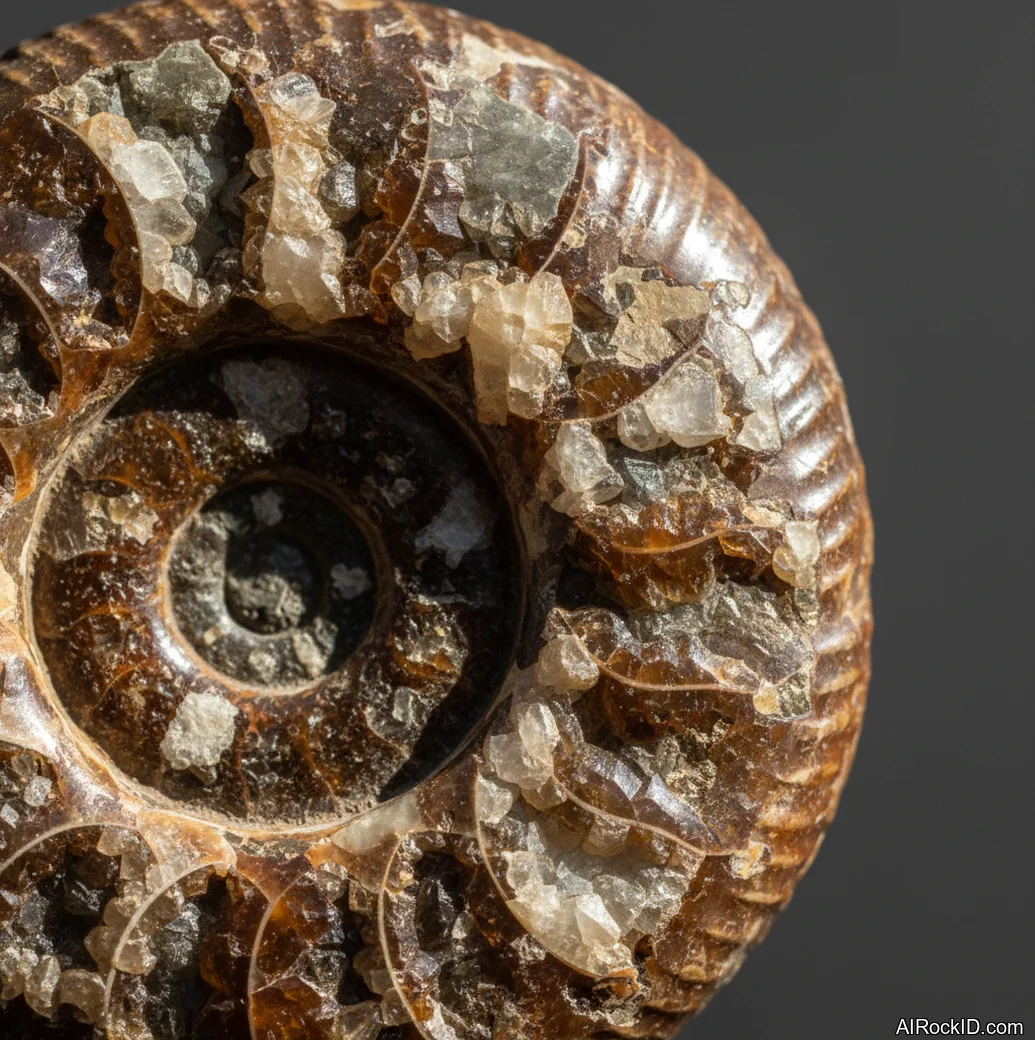
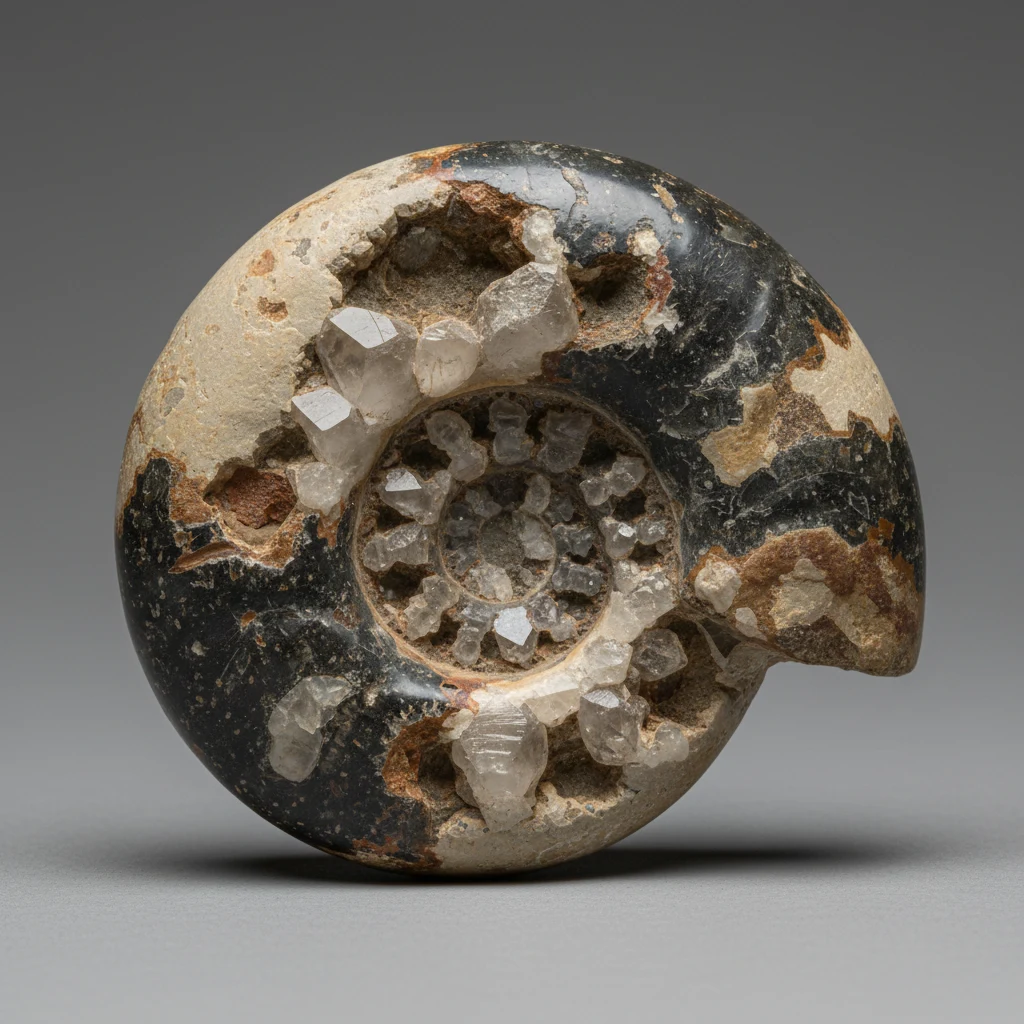
Look for recognizable shell features such as growth lines, spiral whorls, hinge areas, ribbing, or layered shell fragments. Natural Fossilized Shell often has irregular color zoning, worn edges, or mineral-filled cracks rather than a perfectly uniform pattern. A simple photo cannot confirm age, but visible shell anatomy is a stronger clue than color alone.
Buying and Authenticity Checklist
Ask whether the item is a single fossil shell, a shell-fragment rock, or a carved material made from fossiliferous stone. Check listings for disclosure of dyeing, resin stabilization, polishing, or composite backing, especially in beads and cabochons. Authentic pieces do not need to be flawless; natural cracks, matrix, and uneven fossil texture are common.
Ethical and Legal Notes for Fossil Shells
Fossil collection rules vary by country, state, land ownership, and protected area status. Commercially sold Fossilized Shell should come from legal sources, and rare or scientifically important specimens may be better documented and preserved rather than altered for jewelry. Buyers should avoid specimens advertised with vague or suspicious origin claims.
What Is Fossilized Shell?
Fossilized Shell is the preserved shell material of ancient marine organisms, typically mollusks. In hand, it is recognized less like a faceted gem and more like a small record of sea life: hard, often curved, sometimes smooth, and marked by the shapes or patterns of the original shell.
As an organic gem, Fossilized Shell is biogenic calcium carbonate, CaCO3, with calcium, carbon, and oxygen as its listed elements. Its common colors are beige, gray, and black, and its surface usually reads dull to only slightly shiny. With a Mohs hardness of 3-4, it has fair scratch resistance, good toughness, and needs sensible handling to avoid chips or cracks.
Origin & History
The word fossil comes from the Latin fossilis, meaning “dug up,” which suits Fossilized Shell perfectly: it is a once-living marine shell preserved in the ground and later collected from rock. Fossilized shells have been studied since the early 19th century, giving them both scientific and collector interest.
For collectors, the appeal is immediate and tactile. A Fossilized Shell specimen can feel like a compact, curved fragment of ancient shoreline, with its identity carried in shell shape, pattern, and mineralized weight. For locality and specimen comparisons, mindat.org is a useful plain-text reference to consult alongside reliable specimen labels.
Where Is Fossilized Shell Found?
Fossilized Shell is commonly found in sedimentary rock formations. The listed countries include the USA, Canada, and Brazil, with notable localities including New Jersey in the USA, Alberta in Canada, and São Paulo in Brazil.
Formation
Fossilized Shell forms when shells are buried under sediment and undergo mineralization over millions of years. The original marine shell becomes preserved within the sedimentary setting, leaving a hard, often curved form that still reflects the organism’s shell shape.
This long mineralization process is why a small specimen can feel dense, quiet, and stone-like while still showing organic structure. Fossilized Shell is amorphous, opaque, non-magnetic, and has a white streak, with conchoidal fracture possible when broken. Its density is listed at 2.5-2.8 g/cm3.
How to Identify Fossilized Shell
Identify Fossilized Shell by looking first for shell form: curved outlines, preserved shell shapes, and distinctive surface patterns are the strongest clues. Colors can include beige, gray, and black, and the luster is typically dull to slightly shiny rather than glassy.
In practical handling, expect an opaque specimen with a smooth texture in many areas and a Mohs hardness of 3-4. It is non-magnetic, has a white streak, and is classed as amorphous rather than a visible crystal. Avoid relying on color alone, since Fossilized Shell occurs in several neutral tones.
Properties of Fossilized Shell
Physical Properties
| Crystal System | Amorphous |
| Hardness (Mohs) | 3-4 (Medium (4-6)) |
| Density | 2.5-2.8 g/cm3 |
| Luster | Dull |
| Diaphaneity | Opaque |
| Fracture | Conchoidal |
| Streak | White |
| Magnetism | Non-magnetic |
| Colors | Beige, Gray, Black |
Chemical Properties
| Classification | Biogenic |
| Formula | CaCO3 (calcium carbonate) |
| Elements | Ca, C, O |
| Common Impurities | Fe, Mg |
Optical Properties
| Refractive Index | 1.66 |
| Birefringence | None |
| Pleochroism | None |
| Optical Character | Isotropic |
Fossilized Shell Health & Safety
There are no significant health risks associated with handling fossilized shells.
Fossilized Shell Value & Price
Price Range
Rough/Tumbled: $5 - $50 per specimen
Cut/Polished:
Price is affected by size, quality, and fossil age.
Durability
Moderate — Scratch resistance: Fair, Toughness: Good
Fossilized shells are stable under normal conditions.
How to Care for Fossilized Shell
Use & Storage
Store in a cool, dry place away from direct sunlight.
Cleaning
Clean with a soft cloth and mild soap if necessary. Avoid harsh chemicals.
Cleanse & Charge
Leave in sunlight or moonlight for a few hours to cleanse.
Placement
Place in a stable location to avoid breakage.
Caution
Handle with care to avoid chips or cracks.
Works Well With
Fossilized Shell Meaning & Healing Properties
In crystal healing traditions, Fossilized Shell is believed to support emotional healing, intuition, grounding, calming, soothing, transformation, trust, self-discovery, relaxation, and compassion. These meanings are cultural and spiritual associations, not a substitute for medical treatment.
Energetically, Fossilized Shell is linked with the Root and Sacral chakras, the zodiac signs Cancer and Pisces, the Moon, and the Water element. For a gentle working set, it pairs well with rose quartz, clear quartz, and amethyst. Store it cool and dry, place it securely, and clean with a soft cloth and mild soap when needed.
Identify Fossilized Shell from a photo
Compare Fossilized Shell traits, care tips, value clues, and common lookalikes with a clear photo.
Common mistakes
- Assuming every shell-like pattern is an actual fossil rather than a modern shell, carved carbonate, or printed design.
- Using vinegar or other acids for cleaning, which can etch calcium carbonate shell material.
- Judging authenticity by shine alone, since polishing can make both real fossil shell and imitation materials look similar.
- Buying dyed beads without checking whether color treatment has been disclosed.
- Confusing shell-fragment rocks such as coquina with a single preserved fossil shell.
- Expecting Fossilized Shell to withstand daily ring wear like harder gemstones.