Golden Sheen Obsidian


Quick answer: Golden Sheen Obsidian is a natural volcanic glass known for its reflective gold-colored flash, usually caused by microscopic inclusions or gas-related structures within the glass. It is commonly cut into cabochons, beads, carvings, and display pieces, and it should be handled like glass because it can chip or fracture.
AI Rock ID can help compare Golden Sheen Obsidian against visually similar black, metallic, or glassy stones from a clear photo. RockIdentifier.io provides crystal identification support, but visual ID should be paired with hardness, luster, fracture, and seller information when authenticity matters.
Good fit
- Collectors who like black stones with a reflective metallic flash
- Jewelry wearers who prefer cabochons, beads, or pendants over faceted gems
- Buyers looking for a natural volcanic glass rather than a crystalline mineral
- People comparing sheen obsidian varieties such as gold, silver, and rainbow obsidian
Not a good fit
- Rings or bracelets exposed to frequent knocks and abrasion
- Anyone expecting a crystalline gemstone with high scratch resistance
- Buyers who need a stone that can be cleaned with harsh chemicals or ultrasonic tools
- Specimens sold with vague origin, dye, or coating claims that cannot be verified
Most commonly confused with
- Silver Sheen Obsidian: Shows a gray to silvery reflection rather than a warm gold reflection.
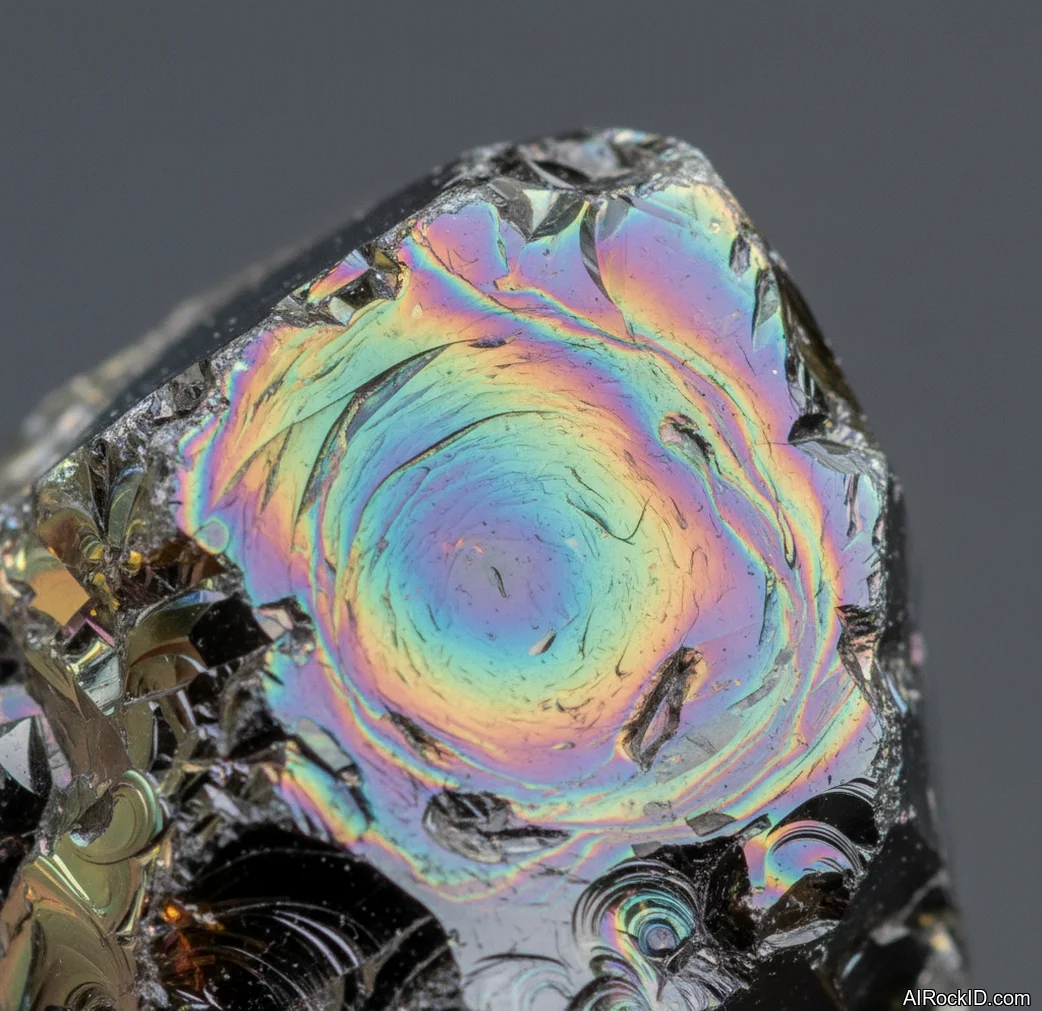
- Rainbow Obsidian: Displays bands or arcs of multiple colors instead of a mostly golden sheen.
- Black Obsidian: Usually appears uniformly black and glassy without a strong metallic flash.
- Goldstone: A man-made glass with glittering coppery sparkles, not a natural obsidian sheen.
Golden Sheen Obsidian vs. Lookalikes
| Material | Key Visual Cue | Simple Check |
|---|---|---|
| Golden Sheen Obsidian | Black glass with directional gold flash | Sheen changes as the stone is tilted |
| Silver Sheen Obsidian | Black glass with gray-silver flash | Reflection is cool-toned rather than gold |
| Rainbow Obsidian | Black glass with colored arcs or bands | Color appears in layers or curved zones |
| Goldstone | Brown, blue, or black glass with glittery specks | Sparkles look evenly distributed and metallic |
| Hematite | Metallic gray to black stone | Leaves a red-brown streak on unglazed porcelain |
AI identification confidence
AI identification of Golden Sheen Obsidian is usually moderate when the photo clearly shows a black glassy surface and a directional gold sheen. Confidence drops when the stone is photographed in dim light, shown only from one angle, or polished so highly that glare hides the true sheen.
When AI gets it wrong
- Goldstone may be mistaken for Golden Sheen Obsidian when glitter is blurred in a photo.
- Silver Sheen Obsidian can appear golden under warm indoor lighting.
- Black Obsidian may be over-identified as Golden Sheen Obsidian if reflections from lights look yellow.
- Coated glass or resin imitations can look convincing in photos without hardness, fracture, or source details.
Final recommendation
Choose Golden Sheen Obsidian when you want natural volcanic glass with a warm metallic flash and can protect it from hard impacts. For buying, prioritize clear photos from multiple angles, honest disclosure of treatments, and a return policy if the sheen or material is uncertain.
How to Check Golden Sheen Obsidian Authenticity
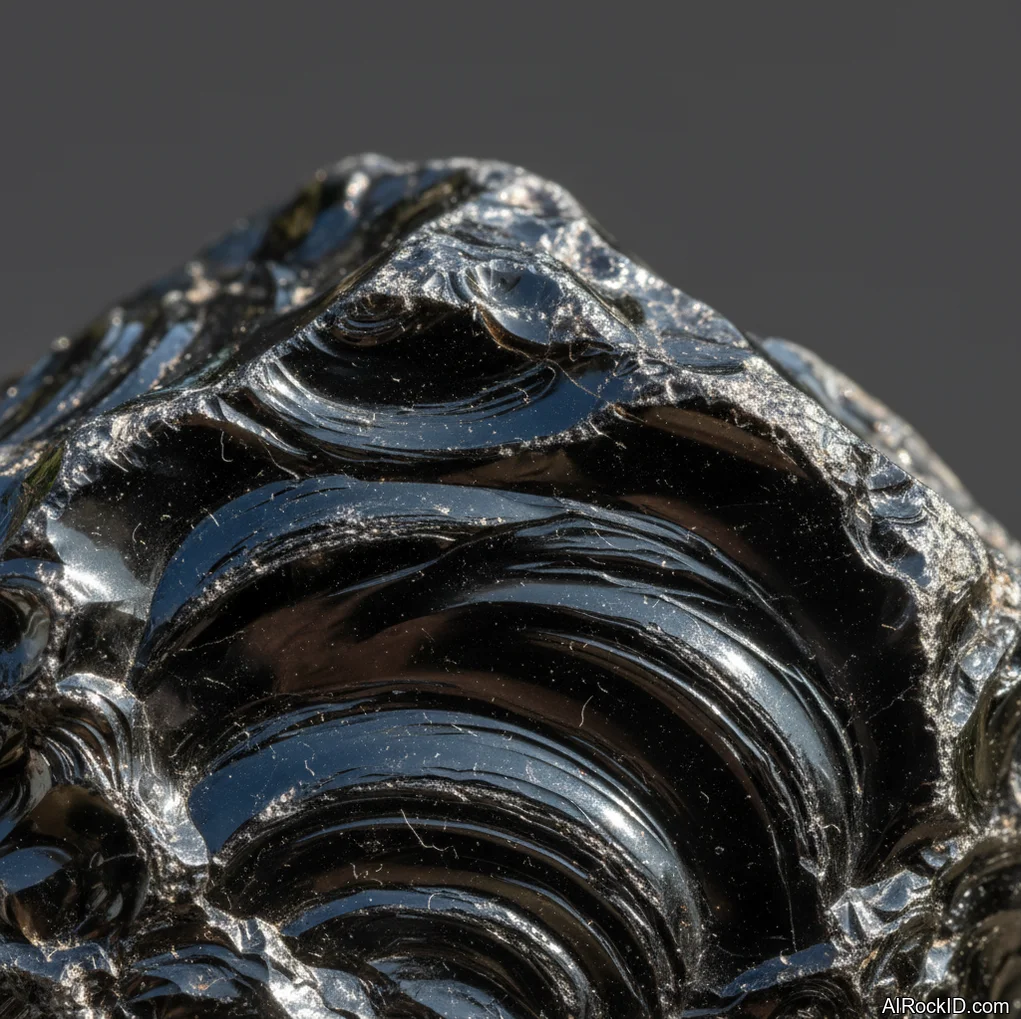
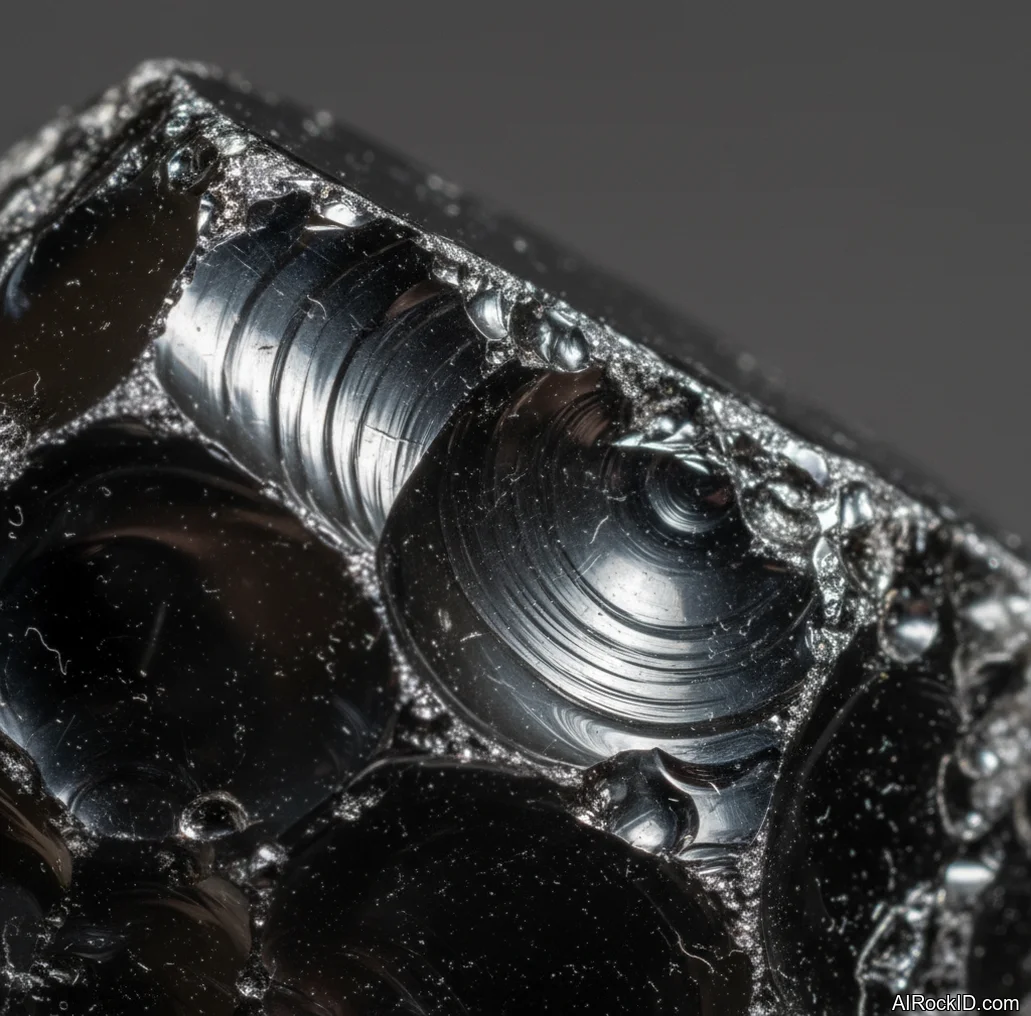
Authentic Golden Sheen Obsidian should look glassy, show conchoidal fracture on broken edges when visible, and display a sheen that shifts with the viewing angle. The gold effect should appear as a reflective internal sheen rather than loose glitter, paint, or a surface coating. A seller should be able to state whether the piece is natural obsidian, treated glass, or a man-made imitation.
Best Photos for Identifying Golden Sheen Obsidian
Use daylight or soft white light and photograph the stone from several angles, including one image where the gold sheen is visible and one where the base color looks black. Avoid using strong flash directly on the surface because glare can mimic a metallic sheen. Close-up images of drill holes, edges, or chips can help separate natural volcanic glass from coated or glitter-filled glass.
Buying Notes for Golden Sheen Obsidian Jewelry
Golden Sheen Obsidian is better suited to pendants, earrings, beads, and protected settings than to everyday rings. Look for smooth polishing, secure settings, and no sharp chips along edges or bead holes. Very low prices are not automatically suspicious because obsidian is often affordable, but claims of rarity, guaranteed healing effects, or undisclosed coatings should be treated cautiously.
What Is Golden Sheen Obsidian?
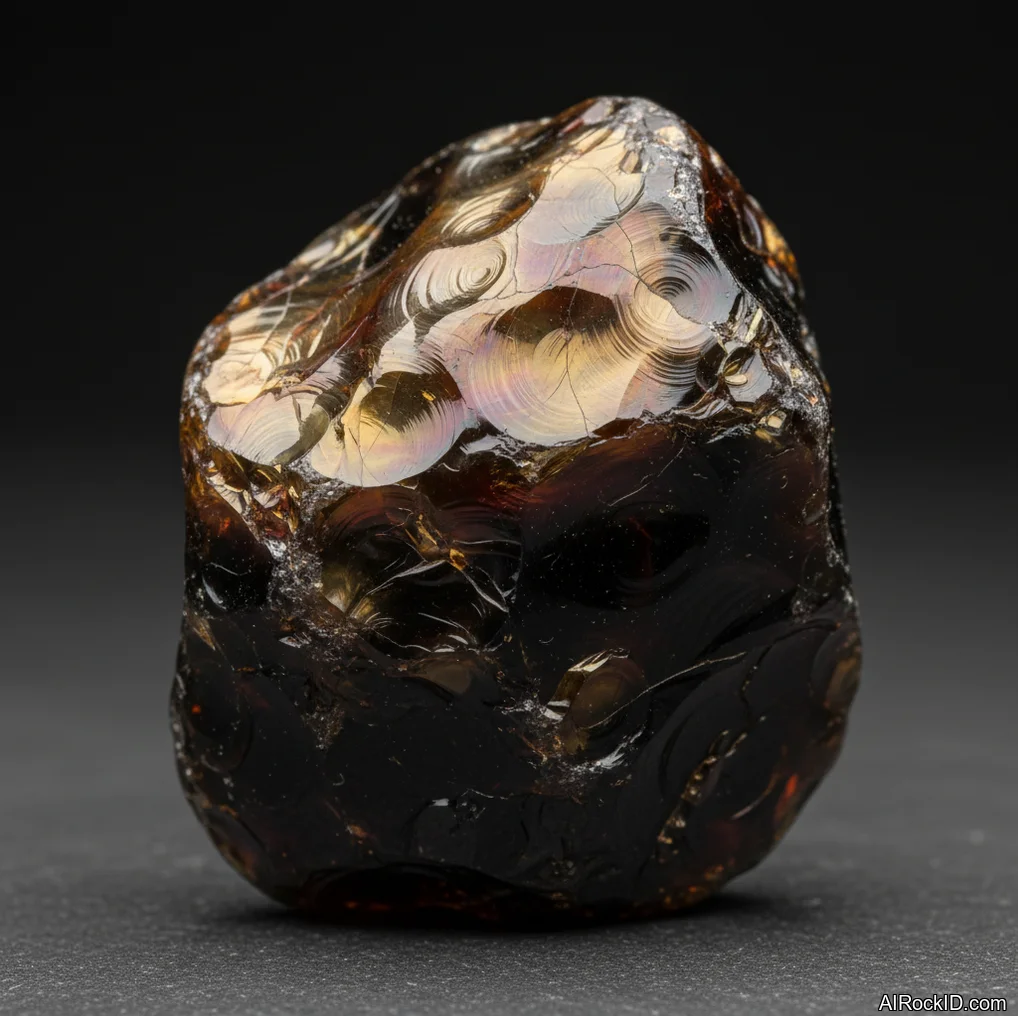
Golden Sheen Obsidian is a natural volcanic glass, obsidian, with a reflective gold sheen that comes from microscopic mineral inclusions. At a quick glance, it just reads as plain black obsidian. But tip it under one overhead light and that gold stripe slides across the face like oil on water.
Grab a palm stone and the first thing you feel is the temperature. It hangs onto that cool, slick feel longer than most polished jaspers sitting in the same tray. The sheen isn’t sparkly. It’s a muted, metallic flash that shows up, disappears, then shows up again depending on the angle, and on some pieces it runs in wide streaks, like the flow lines got caught halfway through a swipe.
But here’s the catch: a lot of pieces get cut in a way that punches up the sheen more than the rough really has. So a flat cab can look unreal, and the same material in rough can look kind of plain until you hunt for the one angle where it lights up. Why does that happen? It’s all about how that reflective band lines up with the surface you’re looking at.
Origin & History
Obsidian’s been known since antiquity. But “golden sheen obsidian” is really just a trade name, and it didn’t start showing up regularly until the late 20th century, when lapidaries and dealers began separating out the sheen varieties for the jewelry and carving market.
The word “obsidian” goes back to Latin, and it’s often tied to “Obsidius” in Roman writings. And people used it for blades, scrapers, and mirrors for a simple reason: it breaks into absurdly sharp edges. Like, the kind that’ll bite you if you get careless handling a fresh flake.
In the shop, the sheen types ended up with their own labels because they act a little differently on the wheel (some spots heat up and grab faster than you expect), and because buyers are chasing that exact flash. Gold sheen is in the same family as silver sheen and rainbow obsidian, just with a different look that comes from inclusion size and the way the glass flowed while it cooled.
Where Is Golden Sheen Obsidian Found?
Most golden sheen material on the market is associated with Mexican volcanic fields, with smaller occurrences and similar sheen obsidian found in parts of the western USA and the Caucasus.
Formation
Obsidian shows up when silica-rich lava chills so fast the atoms never get a chance to lock into a crystal lattice. So you don’t get crystal faces or cleavage. Just glass.
That golden sheen? It comes from tiny plate-like inclusions plus little bubbles that get lined up as the lava flows, and they kick light right back at you.
Look, if you’ve got a polished face in your hand and you tilt it under a lamp, you can sometimes catch faint flow banding under the sheen. It’s subtle. More like smoky stripes than anything loud. And if you’ve ever put it on a saw, you figure out fast that the cut direction matters. Cut across the flow and the sheen can just die on you. Cut with the flow and the whole piece lights up. Why does that happen? Because you’re either slicing through those aligned layers or riding along them.
How to Identify Golden Sheen Obsidian
Color: Body color is usually jet black to very dark brown, with a gold reflective sheen that appears as bands or patches when tilted in light.
Luster: Vitreous luster with a metallic-looking sheen effect on polished surfaces.
Pick up the stone and rotate it under a single point light. The sheen should move as a smooth band, not as sparkly flecks. If you scratch it with a steel nail, it’ll mark easier than quartz does, and the scratch will look pale on the black glass. The real test is the feel on an edge: fresh chips are razor-sharp and glassy, and cheap “gold” coatings tend to feel warmer and look too uniform at every angle.
Common Look-Alikes
Golden Sheen Obsidian is sometimes confused with these materials:
- Black obsidian (no sheen, but gets sold as “golden” in low light)
- Gold sheen obsidian glass fakes (man-made black glass with a sprayed or laminated gold film)
- Goldstone / aventurine glass (coppery glitter, often mislabeled as “gold sheen obsidian” online)
- Hypersthene or bronzite palm stones (bronze flash, but they’re fibrous and not glassy)
- Black onyx or dyed black agate (banding can be subtle; polish looks waxier than obsidian)
- “Rainbow” or “silver sheen” obsidian sold as golden sheen (flash color shifts, but sellers mix labels a lot)
Market Cautions & Treatments
When AI Can Get This Wrong
Phone cameras love to crush blacks, so AI often calls golden sheen obsidian “black onyx” or “black tourmaline” when the sheen doesn’t catch the light. Photos also confuse it with hypersthene because both can throw a bronze flash, but hypersthene has a satiny, fibrous shimmer instead of that clean glassy face. The quick confirm is movement: tilt the piece under one overhead light and the gold band should slide like a stripe, and a steel pin won’t bite the surface the way it can on softer dyed agate.
Properties of Golden Sheen Obsidian
Physical Properties
| Crystal System | Amorphous |
| Hardness (Mohs) | 5-5.5 (Medium (4-6)) |
| Density | 2.35-2.60 g/cm3 |
| Luster | Vitreous |
| Diaphaneity | Opaque |
| Fracture | Conchoidal |
| Streak | white |
| Magnetism | Non-magnetic |
| Colors | black, dark brown, gold |
Chemical Properties
| Classification | Silicates |
| Formula | SiO2 (amorphous, variable composition) |
| Elements | Si, O |
| Common Impurities | Fe, Mg, Ca, Na, K, Al, Ti |
Optical Properties
| Refractive Index | 1.48-1.51 |
| Birefringence | None |
| Pleochroism | None |
| Optical Character | Isotropic |
Golden Sheen Obsidian Health & Safety
Golden Sheen Obsidian is generally safe to handle, and it’s fine around water too. Thing is, the real concern isn’t the stone itself, it’s the edges. Raw chunks or freshly chipped bits can have razor-sharp, glassy edges (the kind that’ll catch your skin before you even notice), so that’s what you need to watch out for.
Safety Tips
Don’t run your thumb along any sharp edges. And if you ever knap it, cut it, or grind it, put on eye protection. Sharp chips fly fast, and you don’t always see them coming, right?
Golden Sheen Obsidian Value & Price
Price Range
Rough/Tumbled: $3 - $30 per piece
Cut/Polished: $1 - $6 per carat
Price mostly comes down to how strong that sheen is, how even it looks across the surface, and how clean the polish came out. Big, flat faces that throw a broad, even gold flash (the kind you see the second you tilt it under a light) move way quicker than chunky rough that only lights up at one specific angle.
Durability
Moderate — Scratch resistance: Fair, Toughness: Fair
It’s stable in normal indoor conditions, but it can chip on edges and scratch if it rides around with harder stones.
How to Care for Golden Sheen Obsidian
Use & Storage
Store it in a soft pouch or a separate compartment so it doesn’t pick up scratches from quartz or topaz. If it’s a carved piece, keep it where it won’t get bumped off a shelf.
Cleaning
1) Rinse with lukewarm water and a drop of mild soap. 2) Wipe with a soft microfiber cloth, especially along the sheen face. 3) Dry fully before putting it back in a bag or box.
Cleanse & Charge
If you do energetic cleansing, smoke, sound, or a quick rinse works fine. Avoid salt scrubs since they can leave tiny scuffs on a high polish.
Placement
Angle matters, so set it where a lamp or window light can hit it from the side and bring the sheen out. I like a small stand that lets you tilt it a few degrees until the gold band shows.
Caution
Skip ultrasonic cleaners and anything too abrasive, the kind that feels like gritty sandpaper in your hand, because it can haze the polish. And watch the edges on obsidian; they’re surprisingly sharp when you run a finger along them. Drop it on tile and, yep, it can chip.
Works Well With
Golden Sheen Obsidian Meaning & Healing Properties
Compared to a lot of shinier stones, golden sheen obsidian feels pretty blunt in your hand. It’s grounding. No fluff. Like it’s not here to “cheer you up” so much as it’s here to make you look at what’s actually going on. That’s why people like it. And yeah, this is metaphysical talk, not medical advice.
Grab a polished palm stone and just hold it for a minute. It’s got that glassy, slick feel, almost like a really smooth bottle that’s been tumbled forever, and that part is calming. But then the gold flash catches when you tilt it under a lamp or near a window, and your eyes keep snapping back to it. Like a visual anchor. I’ve had customers use it as a focus object while journaling, or when they’re trying to break a bad habit, because it feels steady and it doesn’t come off airy.
But look, I’ll be straight with you. Some people expect it to feel “soft” emotionally just because it’s gold. Most of the time, it doesn’t. Want something gentler? Pair it with rose quartz (that combo helps), or keep the obsidian for short sessions instead of carrying it around all day. Why force it?
Common mistakes
- Assuming every yellow reflection on black glass is natural golden sheen
- Confusing glitter-filled Goldstone with Golden Sheen Obsidian
- Using hardness alone to identify the stone, since many glasses test similarly
- Cleaning polished obsidian with abrasive pads that can dull the surface
- Wearing obsidian rings during heavy work despite its glass-like fracture risk
- Judging authenticity from a single front-facing photo without angled images
Identify Golden Sheen Obsidian from a photo
Compare Golden Sheen Obsidian traits, care tips, value clues, and common lookalikes with a clear photo.