Green Apatite


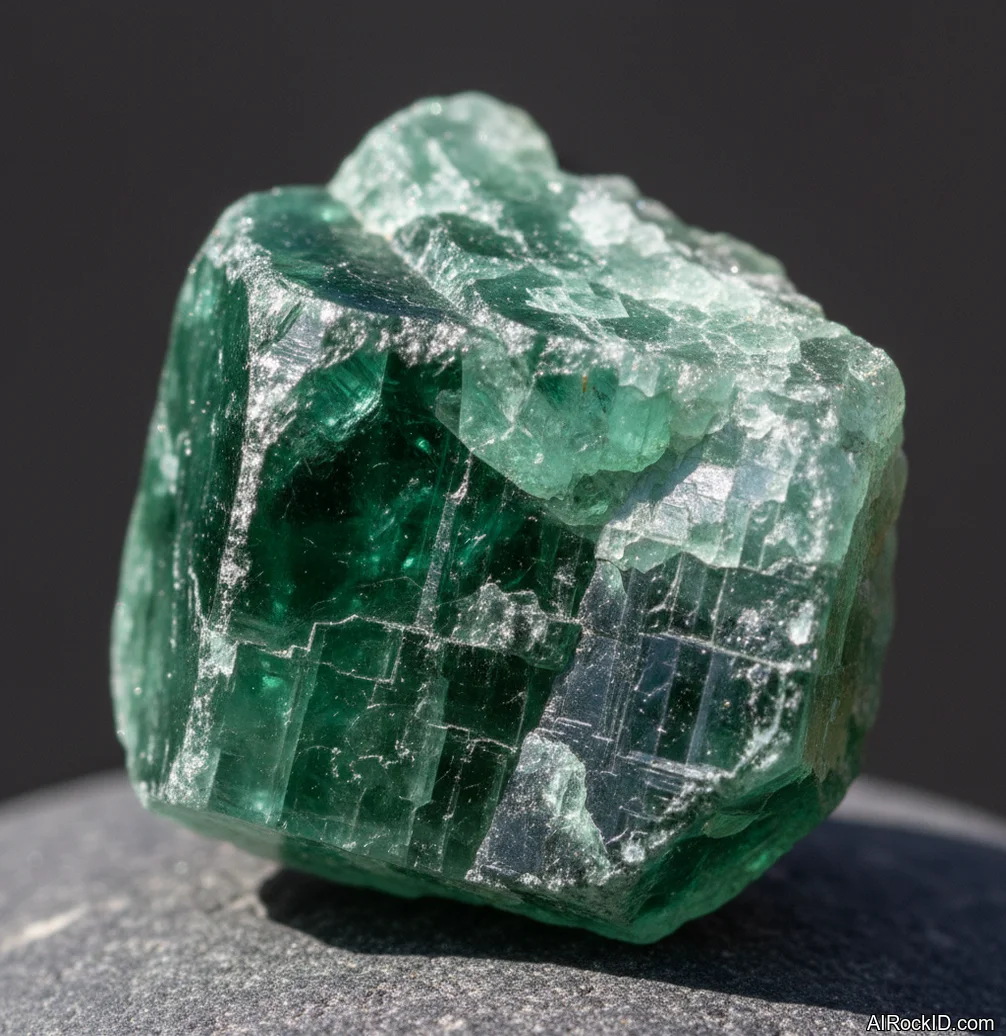
Quick answer: Green apatite is identified by its green to yellow-green color, vitreous luster, hexagonal crystal habit, and moderate hardness of Mohs 5. Because several green minerals can look similar in photos, reliable identification often depends on hardness, specific gravity, crystal form, and whether the stone is natural, dyed, or mislabeled.
AI Rock ID can help screen a green apatite specimen by comparing visible traits such as color, luster, transparency, and crystal shape against similar minerals. RockIdentifier.io provides crystal reference information that can support visual identification, but lab testing is recommended for high-value or uncertain stones.
Good fit
- Collectors who want a bright green phosphate mineral with a recognizable hexagonal crystal system
- Buyers looking for tumbled stones, small cabochons, or mineral specimens rather than daily-wear rings
- People comparing green stones such as peridot, fluorite, tourmaline, and glass
- Beginners who want a mineral that is attractive but still requires basic handling care
Not a good fit
- Jewelry that will receive frequent impact or abrasion, such as everyday rings
- Anyone needing a highly durable green gemstone similar to sapphire or jade
- Buyers who cannot tolerate possible confusion with treated, dyed, or imitation green stones
- Specimens stored loose with harder minerals such as quartz or topaz
Most commonly confused with
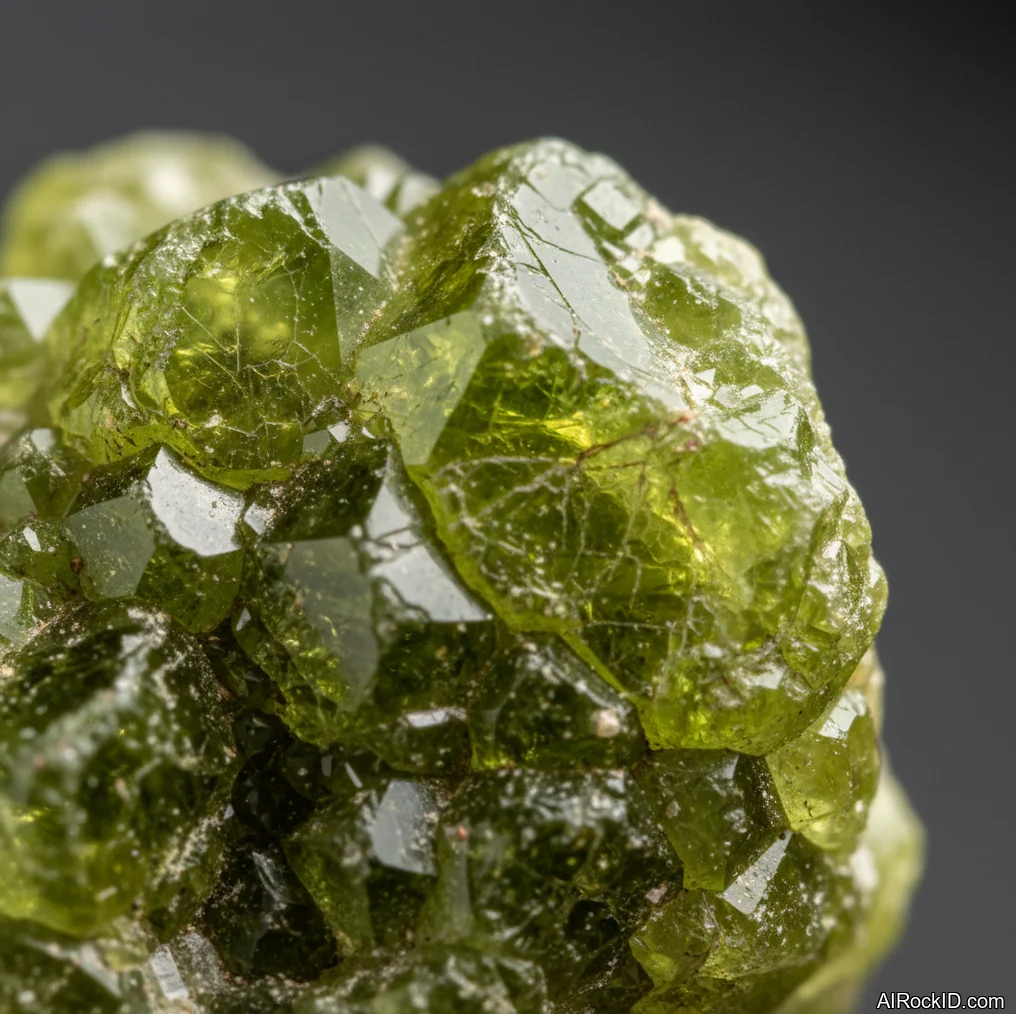
- Peridot: Peridot is usually olive to yellow-green, has higher hardness around Mohs 6.5–7, and belongs to the olivine group rather than the apatite group.
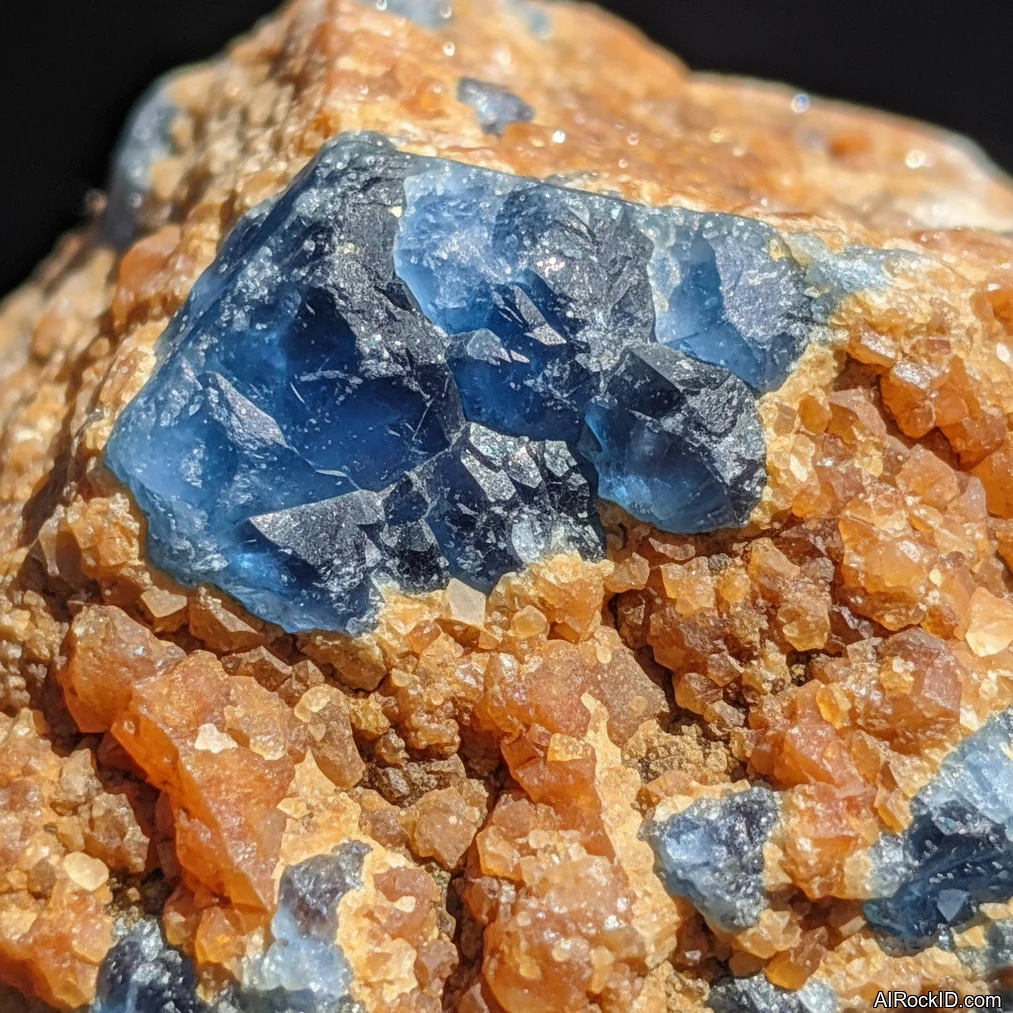
- Fluorite: Fluorite is softer at Mohs 4, commonly shows cubic cleavage, and may display strong color zoning.
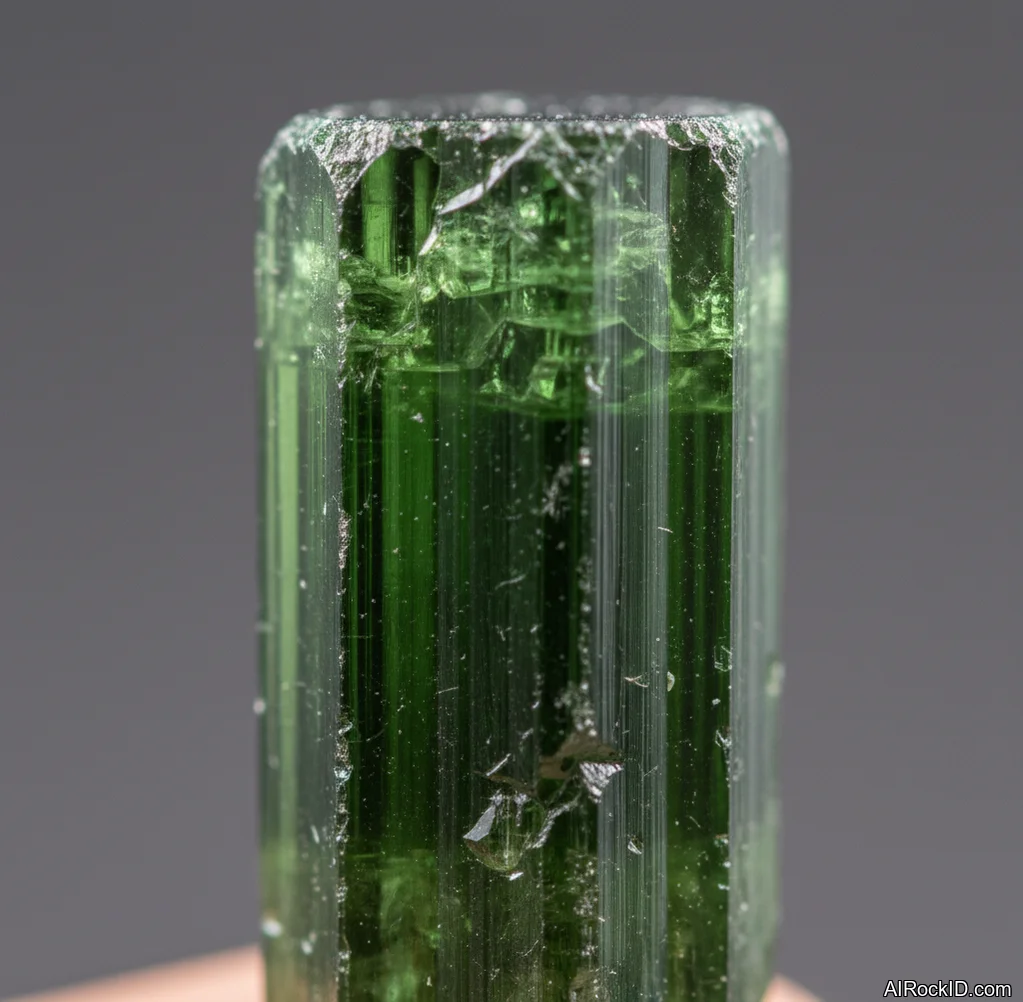
- Green Tourmaline: Green tourmaline is harder, commonly forms striated prismatic crystals, and is typically more durable for jewelry.
- Green Calcite: Green calcite is softer at Mohs 3, reacts with weak acid, and has perfect rhombohedral cleavage.
Green Apatite vs. Similar Green Stones
| Stone | Typical Hardness | Key Difference | Common Clue |
|---|---|---|---|
| Green apatite | Mohs 5 | Calcium phosphate mineral | Vitreous luster; may occur as hexagonal crystals |
| Peridot | Mohs 6.5–7 | Olivine mineral, usually tougher in wear | Olive or yellow-green body color |
| Fluorite | Mohs 4 | Softer and has prominent cleavage | Often cubic or strongly zoned |
| Green tourmaline | Mohs 7–7.5 | Harder borosilicate mineral | Long striated prisms are common |
| Green glass | Variable | Man-made or imitation material | Possible bubbles or mold-like shapes |
AI identification confidence
Photo-based AI identification of green apatite is moderate when the specimen shows a clear green color, vitreous luster, and crystal habit. Confidence is lower for polished cabochons, tumbled stones, tiny chips, or images without scale because many green minerals and glass can appear similar.
When AI gets it wrong
- A polished stone has no visible crystal faces or diagnostic structure
- Lighting makes pale green, yellow-green, and blue-green stones look the same
- The specimen is dyed, coated, or sold under a trade name rather than a mineral name
- A lookalike mineral such as fluorite, peridot, tourmaline, or glass has similar color in the photo
Final recommendation
Choose green apatite when you want a bright green collector stone and can handle a mineral with moderate hardness. For frequent-wear jewelry, ask for disclosure about treatment and consider a harder green gemstone if durability is the main priority.
How to Check Green Apatite Before Buying
Ask the seller whether the stone is natural, treated, dyed, stabilized, or sold under a trade name. Request clear photos in daylight, including close-ups of surface texture, inclusions, and any chips or fractures. For higher-priced faceted stones, a gemological report can help separate apatite from peridot, tourmaline, glass, or other green materials.
Natural, Treated, and Imitation Green Apatite
Natural green apatite can vary from pale yellow-green to saturated green, and color may not be evenly distributed. Some inexpensive green stones sold online may be dyed, glass, or another mineral mislabeled as apatite. Treatment disclosure matters because appearance alone is not always enough to prove identity or natural origin.
Field Clues for Green Apatite Specimens
Green apatite may appear as prismatic hexagonal crystals, granular masses, or transparent to translucent fragments. A hardness check can be useful: apatite can scratch calcite but is scratched by quartz. Destructive tests should be avoided on finished stones, valuable crystals, or specimens with delicate faces.
What Is Green Apatite?
Green apatite is just apatite in a green color, and apatite itself is a calcium phosphate mineral from the apatite group.
Grab a tumbled stone and you’ll notice the feel before anything else. It’s cooler than glass. But it won’t have that slick, too-perfect polish you get on dyed quartz. Most green apatite I’ve handled in shops runs a bit cloudy, with mossy-looking patches and those tiny internal “feathers” that flash when you tilt it under a lamp (I always end up rolling it between my fingers to check).
People mix it up with peridot or green tourmaline at first, which makes sense, but it doesn’t act like them. The color can go almost electric under bright LED lighting, then calm down into a softer, more olive tone in warm indoor light. And if you’re out rough-hunting, don’t count on it taking a beating. It’s a 5 on the Mohs scale, so it can take a shine, sure, but it’ll also pick up little edge dings if it bounces around loose in your pocket.
Origin & History
Apatite got its first proper description in 1786, thanks to Abraham Gottlob Werner. He pulled the name from the Greek word “apatē,” or “deceit,” since apatite has a bad habit of being confused with other minerals, especially beryl, tourmaline, and olivine.
Green apatite, though, doesn’t really come with one neat “first discovered” moment like a brand-new rare species would. It’s more like a color version that collectors and the gem and specimen trade started separating out once the market got big enough to bother naming it that way. And honestly, most dealers still fall back on the original naming story because it just fits. I’ve literally seen someone at a show holler “green beryl” from across a table, then freeze mid-sentence after picking it up, feeling that lighter heft in their hand, and catching those softer, slightly rounded edges. Kind of says it all, doesn’t it?
Where Is Green Apatite Found?
Green apatite shows up in pegmatites, skarns, and alkaline complexes worldwide. In the trade you’ll most often see material sold from Brazil and Madagascar, with occasional bright pieces from Mexico and Russia.
Formation
Most green apatite shows up in igneous and metamorphic rocks, basically anywhere phosphorus is around and there’s plenty of calcium to work with. Pegmatites are the classic spot. Those late-stage fluids get loaded with weird chemistry, and then apatite drops out as prismatic hexagonal crystals tucked in with feldspar, quartz, mica, and sometimes you can feel that mica smear on your fingertips if you’ve been handling the rough.
But you’ll also find it in skarns. That’s when hot fluids hit limestone (or other calcium-rich rocks) right next to an intrusion and everything reacts. And that’s where the color gets fun. A little iron can nudge apatite into green, and trace elements can shift it from apple-green to a darker teal.
Look, if you’ve got a rough crystal in hand, check it under a lamp and rotate it slowly. You’ll sometimes catch zoning, those faint band-like changes in color. They kind of blink in and out as the light grabs different growth faces. Pretty subtle. Easy to miss.
How to Identify Green Apatite
Color: Green apatite ranges from pale mint and yellow-green to saturated apple-green and blue-green. Many pieces show patchy color or internal “moss” rather than a perfectly even tone.
Luster: Vitreous, like clean window glass.
If you scratch it with a steel nail, it can mark or chip more easily than peridot or tourmaline, which is your first clue you’re in apatite territory. The real test is hardness: it won’t reliably scratch glass the way quartz does, but it will scratch calcite. And in the hand, a lot of green apatite has that slightly “greasy-glassy” feel when polished, plus tiny edge bruises that show up fast on softer stones.
Common Look-Alikes
Green Apatite is sometimes confused with these materials:
- Green fluorite
- Dyed quartz (especially 'green aventurine')
- Prehnite
- Peridot (olivine)
- Glass fakes (green or yellow-green)
- Serpentine
Market Cautions & Treatments
When AI Can Get This Wrong
Photo ID apps mix up green apatite with fluorite and dyed quartz all the time, especially if the stone's polished and the camera can't pick up the cloudy patches or feather inclusions. Glass fakes also fool AI because the colors line up in photos. Scratch it with a steel blade—real apatite scratches but won't cut glass, and the cleavage is sometimes visible on broken edges.
Properties of Green Apatite
Physical Properties
| Crystal System | Hexagonal |
| Hardness (Mohs) | 5 (Medium (4-6)) |
| Density | 3.10-3.22 g/cm3 |
| Luster | Vitreous |
| Diaphaneity | Transparent to translucent |
| Fracture | Conchoidal |
| Streak | White |
| Magnetism | Non-magnetic |
| Colors | Green, Yellow-green, Blue-green, Olive green |
Chemical Properties
| Classification | Phosphates |
| Formula | Ca5(PO4)3(F,Cl,OH) |
| Elements | Ca, P, O, F, Cl, H |
| Common Impurities | Fe, Mn, REE |
Optical Properties
| Refractive Index | 1.628-1.649 |
| Birefringence | 0.002-0.006 |
| Pleochroism | Weak |
| Optical Character | Uniaxial |
Green Apatite Health & Safety
Normal handling’s pretty low risk. The bigger concern is the stone itself, honestly. Drop it on a hard floor and you’ll hear that awful little “clack” and maybe see a fresh chip or scratch right along an edge. That’s the main issue here: physical damage to the stone, not a hazard to you.
Safety Tips
If you’re going to cut or grind it, handle it the same way you would any other lapidary material. Keep a steady trickle of water on the cut (you’ll see that muddy slurry build up fast), make sure you’ve got good ventilation, and wear a proper respirator so you don’t end up breathing in that super-fine dust.
Green Apatite Value & Price
Price Range
Rough/Tumbled: $5 - $60 per piece
Cut/Polished: $10 - $60 per carat
Color and clarity are what really set the price here, and once the green gets clean and properly saturated, the numbers climb in a hurry. Calibrated cabochons tend to stay pretty wallet friendly (you can usually see the soft, slightly waxy dome and those tiny wheel marks if you tilt one under a desk lamp), but transparent faceting rough with good color can cost way more than people expect for a Mohs 5 stone.
Durability
Moderate — Scratch resistance: Fair, Toughness: Fair
It’s stable in normal indoor conditions, but it bruises and scratches easier than many jewelry stones, so it needs a little respect.
How to Care for Green Apatite
Use & Storage
Store it separate from harder stones like quartz and corundum, or it’ll come out looking “mysteriously” scuffed. I keep apatite in a small pouch or a compartment box so the edges don’t kiss other rocks.
Cleaning
1) Rinse with lukewarm water and a drop of mild soap. 2) Use a soft toothbrush to gently scrub crevices. 3) Rinse well and pat dry; avoid ultrasonic and steam cleaners.
Cleanse & Charge
For non-physical care routines, a quick rinse and a dry rest on a shelf works fine. If you use sunlight, keep it brief because some pieces look washed out after long window time.
Placement
A shaded shelf or a cabinet is great, especially if you’ve got a crystal cluster that flashes under spotlights. If it’s a tumbled stone you handle a lot, expect a few tiny scratches over time.
Caution
Try not to wear this in a ring or bracelet if it’s going to get knocked around. Those settings take a beating, and the edges can chip and then start wearing down fast (you’ll see little dull, rubbed spots first). And don’t toss it loose in a box with quartz, topaz, sapphire, or diamond. That’s basically asking for scratches.
Works Well With
Green Apatite Meaning & Healing Properties
A lot of the people who buy green apatite from me aren’t chasing some big mystical makeover. They want that “fresh start” feeling, sure, but in a very Monday-morning sense. Like getting their calendar under control, grinding through studying, or just crawling out of a rut. I get it. When you’re holding a cool, glassy green stone that looks like spring leaves, your brain hooks onto that idea fast.
Grab a polished palm stone and run your thumb over it for a minute. You’ll see why these end up in fidget bowls and desk trays. It’s smooth, but it doesn’t have that slick, skating-on-glass feel. But look, there’s a catch: it’s not a worry stone you can beat up forever. I’ve had customers come back and show me the same spot on their piece turning hazy after a few months of daily pocket carry, because apatite just isn’t that hard.
On the metaphysical side, green apatite gets linked to growth, motivation, and heart-centered goals. And some people like pairing it with journaling or habit tracking since it feels focused without feeling heavy (if that makes sense). Keep it in the realm of personal practice, not medicine. If you’re stressed, it can be a simple reminder to breathe and reset, but it’s not a treatment for anything.
Common mistakes
- Assuming every bright green tumbled stone labeled apatite is correctly identified
- Using color alone to separate green apatite from fluorite, peridot, tourmaline, or glass
- Wearing green apatite in high-impact jewelry without considering its Mohs 5 hardness
- Cleaning apatite with harsh chemicals, steam, or ultrasonic methods without confirming suitability
- Storing apatite loose with harder minerals that may scratch its surface
- Treating metaphysical descriptions as medical or diagnostic information
Identify Green Apatite from a photo
Compare Green Apatite traits, care tips, value clues, and common lookalikes with a clear photo.