Green Opal


Quick answer: Green Opal is a green form of common opal, a hydrated silica material that typically lacks the rainbow play-of-color seen in precious opal. It is often identified by its waxy to vitreous luster, translucent to opaque body, and moderate hardness, but it can be confused with chrysoprase, jade, serpentine, and dyed materials.
AI Rock ID can help compare Green Opal against similar green stones by checking visible traits such as color pattern, luster, translucency, and surface texture. RockIdentifier.io can be used as a supporting reference, but final identification is more reliable when paired with hardness, specific gravity, and reputable seller information.
Good fit
- Collectors who like soft green, earthy-looking silica minerals
- Jewelry buyers seeking cabochons or beads rather than high-sparkle faceted gems
- Beginners learning to distinguish common opal from chalcedony, jade, and serpentine
- Anyone who prefers stones with subtle color variation instead of strong transparency
Not a good fit
- People expecting strong rainbow play-of-color like precious opal
- Rings or daily-wear jewelry that may receive knocks, water exposure, or abrasion
- Buyers who need a stone that can be identified confidently by photos alone
Most commonly confused with
- Chrysoprase: Chrysoprase is a nickel-colored chalcedony and is usually harder, with a more chalcedony-like waxy translucence.
- Jade: Jade is tougher and generally denser, while Green Opal is softer and more glassy to waxy in appearance.
- Serpentine: Serpentine is often softer, may feel slightly greasy, and can show mottled yellow-green or olive patterns.
- Prehnite: Prehnite is usually more translucent with a pale apple-green color and may show a pearly or glassy luster.
Green Opal vs. Similar Green Stones
| Stone | Typical Look | Key Difference | Approx. Hardness |
|---|---|---|---|
| Green Opal | Opaque to translucent green, waxy to vitreous | Hydrated silica; often lacks crystalline structure | 5.5–6.5 |
| Chrysoprase | Bright apple to mint green, waxy translucence | Chalcedony; usually harder and more uniform | 6.5–7 |
| Jade | Green, white, or mottled; compact texture | Very tough and commonly denser than opal | 6–7 |
| Serpentine | Olive to yellow-green, mottled or veined | Softer and may have a greasy feel | 2.5–5.5 |
| Prehnite | Pale green, translucent, sometimes cloudy | Often more translucent with pearly-glassy luster | 6–6.5 |
AI identification confidence
AI identification confidence for Green Opal is usually moderate because many green stones share similar color and polish in photos. Confidence improves when the image includes natural texture, a close-up of luster, translucency at the edge, scale, and any visible matrix or inclusions.
When AI gets it wrong
- Polished cabochons or beads appear as a uniform green with few diagnostic features.
- Lighting makes pale stones look brighter or more saturated than they are in person.
- Dyed or resin-stabilized material hides natural color zoning and surface texture.
- The stone is photographed without scale, edge translucency, or a view of the back.
How to Check Green Opal Before Buying
Look for a natural-looking green color, visible texture, and a seller description that clearly states whether the stone is natural, dyed, stabilized, or composite. Be cautious with very bright, perfectly even green pieces, especially beads with stronger color around drill holes or fractures. For higher-priced pieces, request origin information, treatment disclosure, and clear photos taken in neutral lighting.
Natural, Dyed, and Stabilized Green Opal
Natural Green Opal can vary from pale mint to olive green and may show cloudy zones, matrix, or uneven color. Dyed material may have color concentrated in cracks, pits, or porous areas, while stabilized material may have resin added to improve durability or polish. Treatments are common in some porous stones and should be disclosed when they affect value or durability.
Best Uses for Green Opal in Jewelry
Green Opal is best suited for pendants, earrings, brooches, beads, and cabochons that are protected from hard impact. Rings and bracelets can be worn, but they should have protective settings and be removed during cleaning, exercise, or work with abrasive surfaces. Because opal contains water, sudden heat, dryness, and harsh chemicals can increase the risk of damage.
What Is Green Opal?
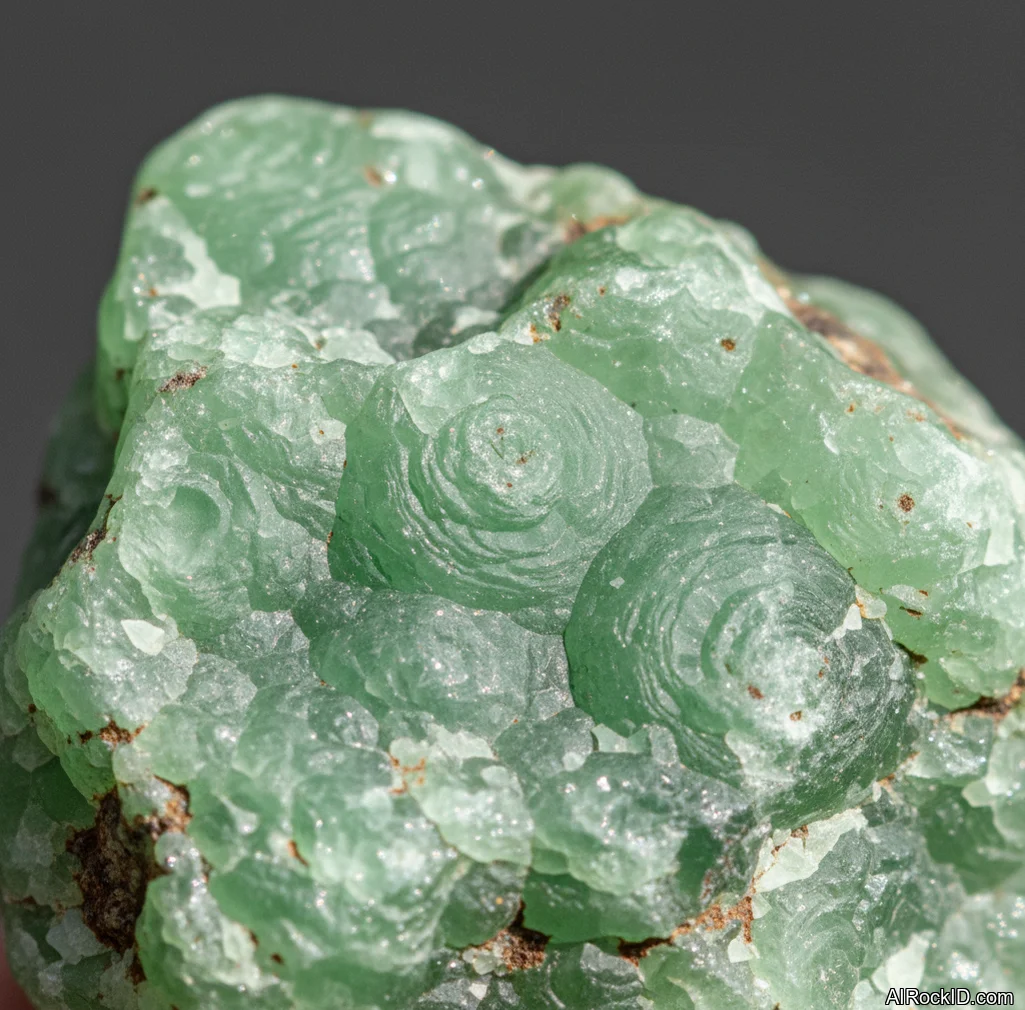
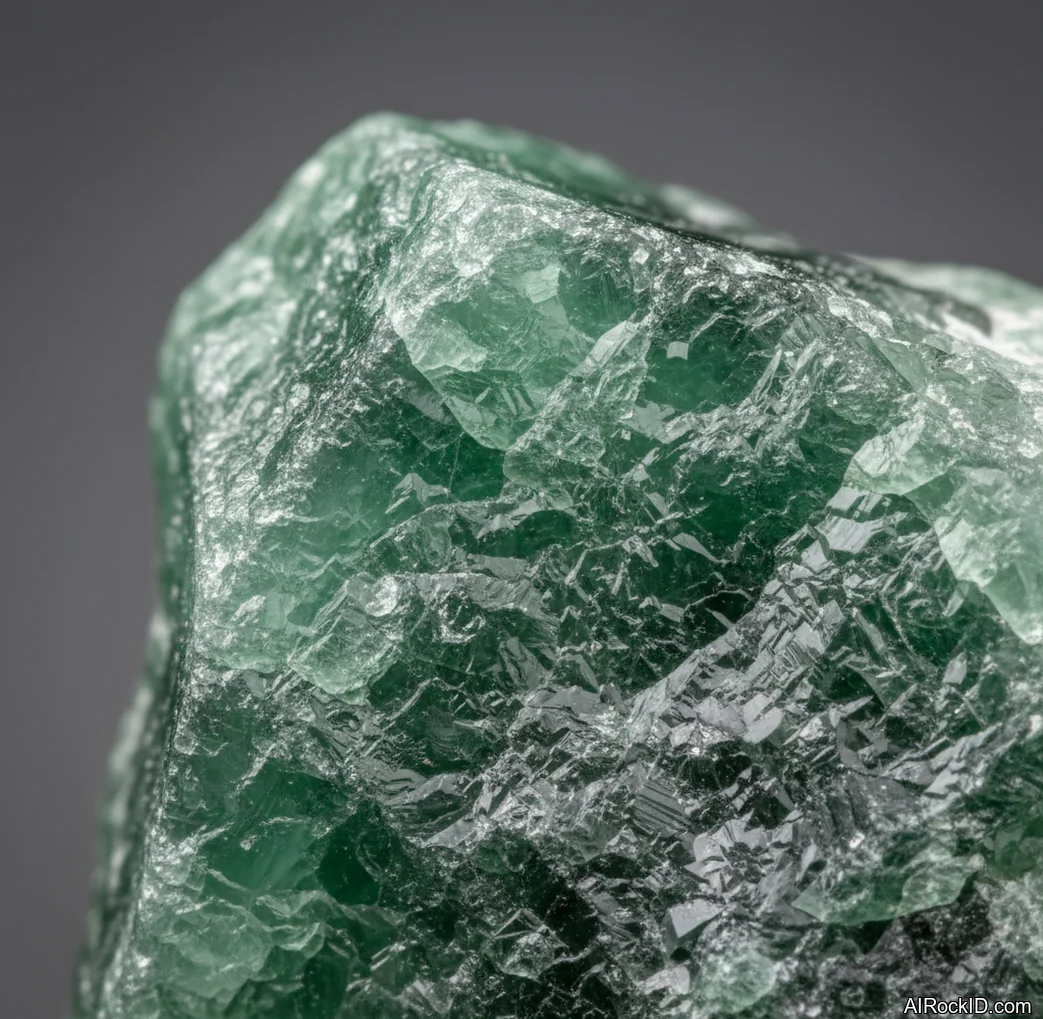
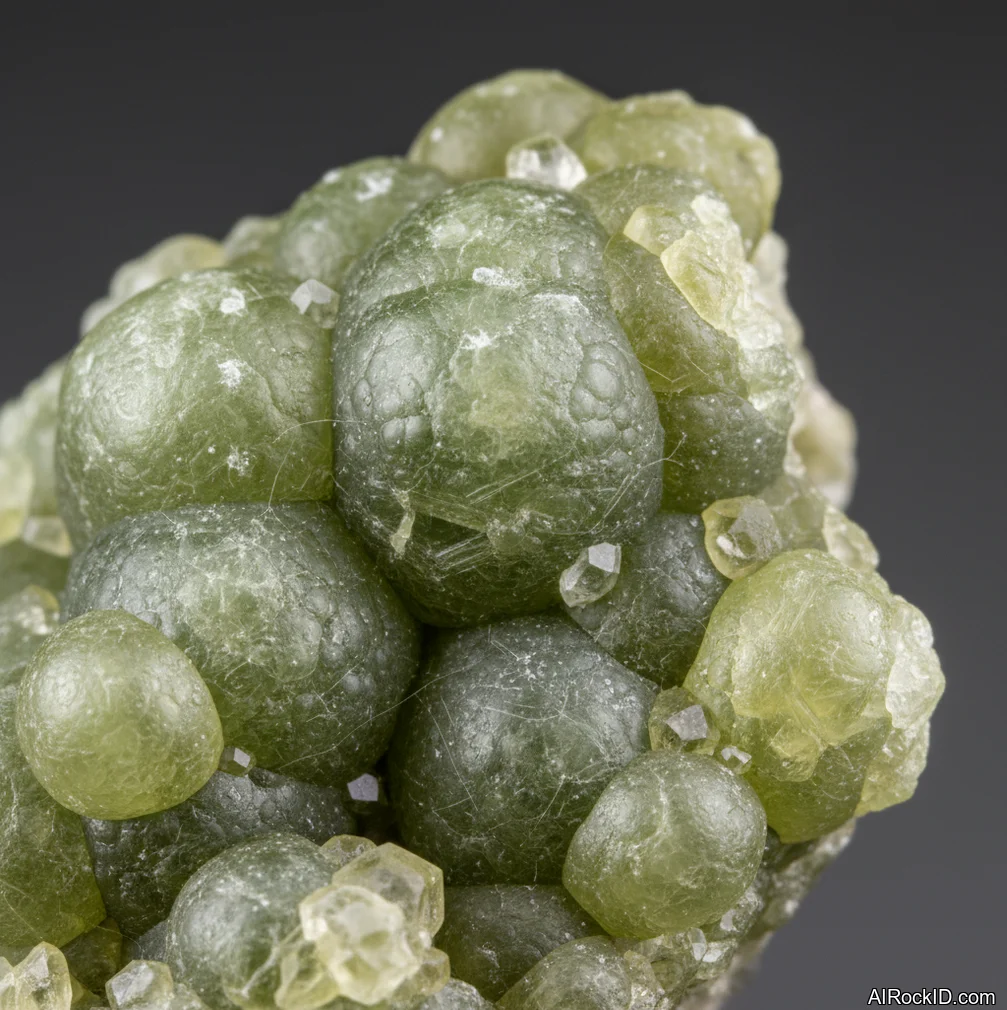
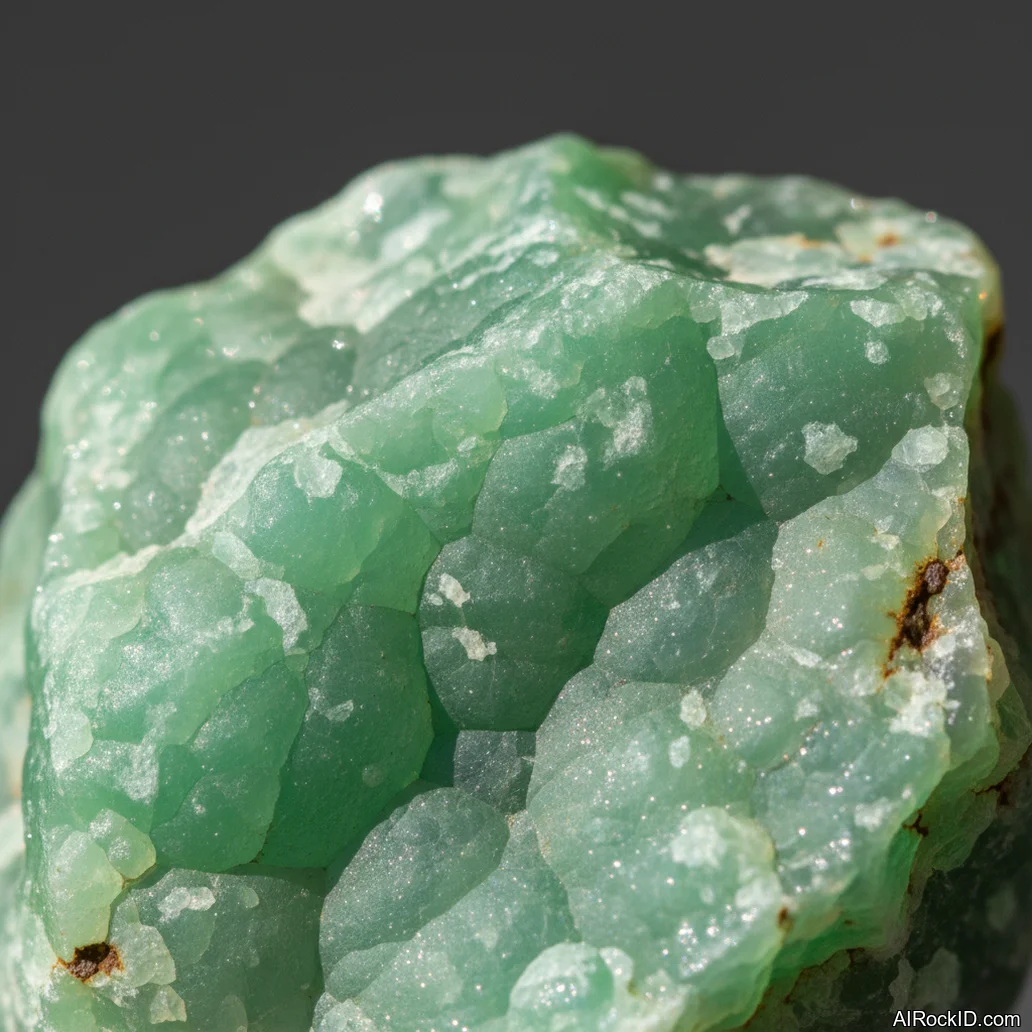
Green Opal is the green version of common opal, which is an amorphous hydrated silica (SiO2·nH2O). It usually has a soft, cloudy look instead of the crisp play-of-color people expect from “precious” opal. Most pieces are opaque to translucent, and the green can swing from pale pistachio all the way to a deeper moss tone.
Pick up a tumbled piece and the first giveaway hits fast. It feels light for its size. And it warms up in your palm quicker than quartz does, like it’s not holding the cold the same way. The surface usually has this faintly waxy glide to it, not that hard glassy feel you get with chalcedony (you notice it most when you rub a thumb across a rounded edge). Tilt it under a bright shop light and you won’t see those rainbow flashes like Lightning Ridge material. You get a gentle depth instead, like the color is suspended in milk.
A lot of what’s sold as green opal ends up as polished freeforms or beads, because the rough is often lumpy and fractured. But once in a while you run into a good chunk with clean skin, and it’s honestly really pretty. Think “spring leaves after rain,” not neon green.
Origin & History
Opal got described and formally named as a mineral back in the early 1800s. The word itself runs through Latin “opalus,” which came from the Greek “opallios,” basically meaning “to see a change of color.” And yeah, that definition lines up way better with precious opal than it does with green opal, which is why the naming can turn into a bit of a mess at shows when you’re staring at a tray under harsh halogen lights.
Green opal isn’t its own separate species. It’s just a color variety. The green tint usually comes from trace nickel or iron, and sometimes you’ll see older trade names like “chrysopal” slapped on the greener, more translucent stuff (the kind that can look a little waxy when it’s been freshly tumbled). Most dealers these days keep it simple and call it green opal or prase opal, but you’ll still run into labels that try to make it sound rarer than it really is. Why do that? Because it sells.
Where Is Green Opal Found?
Green opal shows up in several opal-producing regions, with a lot of commercial material coming out of Peru and Brazil. Smaller lots also come from Mexico, Madagascar, and parts of the western United States.
Formation
Most green opal forms the same basic way a lot of opal does. Silica-rich water works its way through rock, then as the chemistry or temperature shifts, it drops a silica gel into cracks, little voids, or porous pockets. Give it time and that gel firms up into opal, and it still hangs onto water inside its structure. And that water is exactly why opal can be a bit touchy compared to quartz.
Look, if you stare at rough long enough, you can usually tell what happened. Some chunks are clearly filling rounded gas bubbles in volcanic rock, while others show up as thin seams in a fracture, kind of like dried glue that got smeared and then hardened. I’ve handled green opal rough where one side felt matte and chalky under my thumb (almost squeaky), and the sawn face looked silky and alive in the light. Same stone. Two totally different textures. Just comes down to how the silica settled in there, and how it weathered later.
How to Identify Green Opal
Color: Green opal ranges from pale mint and pistachio to olive and moss green, often with cloudy or mottled patches rather than clean banding. The color can be even, but it’s usually got soft “fog” inside.
Luster: Most green opal shows a waxy to sub-vitreous luster when polished.
If you scratch it with a steel nail, it’ll usually mark or at least get a faint line, while quartz won’t. The feel is a clue too: opal doesn’t have that icy, glassy slickness you get from chalcedony, and it tends to feel a bit softer at the edges. The problem with fakes is less about synthetic opal here and more about look-alikes, so compare it to green aventurine or chrysoprase and check for glitter (aventurine) or a cleaner, glassier translucence (chrysoprase).
Common Look-Alikes
Green Opal is sometimes confused with these materials:
- Chrysoprase (green chalcedony, sometimes sold as "green opal")
- Serpentine (often sold as "new jade")
- Prehnite (especially the cloudy, tumbled stuff)
- Variscite (apple-green nodules and cab material)
- Dyed howlite or dyed magnesite sold as "green opal"
- Green glass (including "opalite" glass marketed as opal)
Market Cautions & Treatments
When AI Can Get This Wrong
At first glance in photos, AI mixes Green Opal up with chrysoprase and prehnite because all three do that milky, mint-to-apple green thing with low contrast patterns. Serpentine also trips it up when the piece has mottled olive tones and a greasy shine. The real test is touch and a quick scratch check: green opal feels lighter and warms quicker than quartzy chrysoprase, and it’ll scratch easier than chalcedony while still not feeling as slick or heavy as glass.
Properties of Green Opal
Physical Properties
| Crystal System | Amorphous |
| Hardness (Mohs) | 5.5-6.5 (Medium (4-6)) |
| Density | 1.98-2.25 g/cm3 |
| Luster | Waxy |
| Diaphaneity | Translucent to opaque |
| Fracture | Conchoidal |
| Streak | White |
| Magnetism | Non-magnetic |
| Colors | Mint green, Pistachio green, Apple green, Olive green, Moss green, Yellow-green |
Chemical Properties
| Classification | Silicates |
| Formula | SiO2·nH2O |
| Elements | Si, O, H |
| Common Impurities | Ni, Fe, Mn |
Optical Properties
| Refractive Index | 1.44-1.46 |
| Birefringence | None |
| Pleochroism | None |
| Optical Character | Isotropic |
Green Opal Health & Safety
Green opal is generally safe to handle, and it isn’t considered toxic. Basic stone-handling hygiene is usually all you need, like washing your hands after you’ve been holding it (especially if you’ve got that fine grit on your fingertips).
Safety Tips
If you have to cut or sand it, assume any silica dust will irritate your lungs. So don’t do it dry. Keep the work wet and wear a proper respirator (not just one of those floppy paper masks).
Green Opal Value & Price
Price Range
Rough/Tumbled: $5 - $60 per piece
Cut/Polished: $2 - $25 per carat
Price goes up when the stone’s more translucent, the green looks cleaner (not that swampy brown or gray tint), and the material feels solid in the hand instead of being crazed with those tiny crackle lines you can catch when you tilt it under a lamp. And yeah, big polished freeforms can be real showpieces on a shelf, especially once you’ve run your fingers over that glassy surface. But the thing you’re paying for most of the time is the work, not how rare the rough actually is.
Durability
Moderate — Scratch resistance: Fair, Toughness: Fair
Green opal can dry out and craze with rapid temperature or humidity swings, so treat it like opal, not like quartz.
How to Care for Green Opal
Use & Storage
Store green opal away from heaters, sunny windowsills, and super-dry display cases. I keep mine in a small box or drawer so it doesn’t get baked by a lamp all summer.
Cleaning
1) Rinse quickly in lukewarm water with a drop of mild soap. 2) Wipe with a soft cloth or a very soft toothbrush for crevices. 3) Pat dry and let it air-dry out of direct sun before storing.
Cleanse & Charge
For non-physical cleansing, stick to gentle methods like smoke, sound, or a short sit on a shelf with other stones. Avoid long salt soaks and avoid leaving it under hot lights.
Placement
Keep it where it won’t get knocked onto tile, because opal chips easier than people think. A felt pad under a display stand helps a lot.
Caution
Skip ultrasonic cleaners and steam cleaners, and don’t shock it with quick temperature swings. So don’t leave green opal sitting in a hot car or parked on a radiator. And if you’re already seeing those tiny hairline crazing lines (the kind that catch the light when you tilt it), go easy on long water soaks.
Works Well With
Green Opal Meaning & Healing Properties
A lot of folks grab green stones when they’re trying to settle their emotions, and green opal fits that whole mood in a pretty quiet, low-key way. In my own little box, it’s one of the ones I’ll pass to someone who wants something calming but doesn’t want a “loud” stone. It doesn’t scream for attention. That’s kind of the deal.
Pick up a polished palmstone and just rub your thumb over it for a minute. It’s got this slightly tacky, wax-on-glass feel (like it almost wants to cling to your skin for a second) that makes you slow down without even meaning to. But look, I’ll be honest: if you’re expecting a big energetic punch like you might get from moldavite, or even from a sharp quartz point, green opal usually lands way softer. More muted. Gentle on purpose.
In crystal culture, people often connect it with heart stuff, fresh starts, and emotional cleanup. Keep that in the lane of personal practice, not medicine. If someone’s dealing with real anxiety or sleep trouble, sure, a stone can be a comfort object to hold onto, but it’s not a treatment plan. Not even close.
Common mistakes
- Assuming every green opal will show rainbow play-of-color; most Green Opal is common opal and does not flash.
- Identifying Green Opal by color alone without checking hardness, luster, translucency, and seller disclosure.
- Confusing chrysoprase or jade with Green Opal because all can appear as polished green cabochons.
- Buying very vivid green material without asking whether it has been dyed or stabilized.
- Cleaning Green Opal with ultrasonic cleaners, steam, bleach, or acidic solutions.
Identify Green Opal from a photo
Compare Green Opal traits, care tips, value clues, and common lookalikes with a clear photo.