Mariposite


Quick answer: Mariposite is a green, chromium-bearing variety of muscovite mica that commonly occurs with quartz, dolomite, or schist. Its color and geological association with gold-bearing rocks make it a distinctive but often misidentified material.
AI Rock ID can help screen a suspected mariposite specimen by comparing its green mica texture, host rock, and visible mineral associations. RockIdentifier.io provides educational identification support, but confirmation may require hardness checks, streak, and local geological context.
Good fit
- Collectors interested in green mica-bearing rocks
- Specimens showing quartz with soft green mica flakes or bands
- Geology learners studying hydrothermal alteration and gold districts
- Buyers who want a decorative stone with a mining-region association
Not a good fit
- Anyone needing a transparent faceted gemstone
- Collectors seeking a single pure mineral rather than a mixed rock
- Situations requiring strong abrasion resistance in jewelry
- Buyers who cannot verify dyed or mislabeled green stones
Why people search for this
People often search for mariposite because it is associated with gold-bearing quartz and historic mining areas. It is also searched as a green decorative stone that can resemble fuchsite, serpentine, or other green rocks.
Most commonly confused with
- Fuchsite: Fuchsite is also chromium-rich muscovite but is usually discussed as a mineral variety, while mariposite is often a green mica-bearing rock or alteration material.
- Serpentine: Serpentine is typically waxier or smoother and lacks the sparkly, flaky mica texture common in mariposite.
- Aventurine: Green aventurine is quartz with mica inclusions and often has a more uniform quartz-rich look rather than green mica bands in a host rock.
- Green Muscovite: Green muscovite refers to the mica mineral itself, while mariposite commonly describes a rock containing green muscovite with quartz or schist.
Mariposite vs. Similar Green Stones
| Material | Typical Look | Key Difference |
|---|---|---|
| Mariposite | Green mica flakes or bands in quartz, schist, or carbonate rock | Often tied to alteration zones and gold-bearing geology |
| Fuchsite | Bright green platy mica, sometimes in sparkly masses | More often sold as the mica variety rather than a mixed rock |
| Serpentine | Waxy green, massive, sometimes mottled | Usually lacks visible mica cleavage and sparkle |
| Green aventurine | Green quartz with subtle glittery inclusions | Harder quartz-rich material with a more uniform appearance |
| Chlorite-rich schist | Dark to medium green foliated rock | Green color comes mainly from chlorite, not chromium muscovite |
AI identification confidence
AI identification confidence for mariposite is usually moderate when the specimen shows green mica in quartz or schist with visible flaky texture. Confidence drops when the stone is polished, fine-grained, dyed, or photographed under strong green lighting.
When AI gets it wrong
- A polished piece hides mica cleavage and makes serpentine or aventurine look similar.
- The image lacks scale, making fine mica flakes hard to distinguish from quartz sparkle.
- A seller label uses “mariposite” for any green decorative rock from a mining area.
- Lighting or saturation makes pale muscovite appear artificially bright green.
Final recommendation
Choose mariposite when you want a green mica-bearing rock with visible mineral texture and a credible locality or seller description. For jewelry or daily handling, select protected settings or display pieces because mica-rich areas can be soft and prone to wear.
How to Tell If Mariposite Is Authentic
Authentic mariposite usually shows green mica distributed through quartz, schist, or carbonate-rich host rock rather than a flat painted surface. Look for platy or flaky mica reflections, natural variation in the green color, and a seller description that mentions locality or associated rock type. Uniform neon green color, coating in cracks only, or color rubbing off may suggest dye or surface treatment.
Mariposite and Gold-Bearing Quartz
Mariposite is known from altered rocks in several gold districts, especially where chromium-bearing mica formed during hydrothermal alteration. Its presence can be a geological clue, but it does not prove that visible or economic gold is present in a specimen. Decorative mariposite in quartz may be sold for its appearance even when it contains no gold.
Buying Mariposite Specimens
When buying mariposite, check whether the listing describes it as a rock, green muscovite, or quartz with mariposite, because these terms may be used differently by sellers. Request photos in natural light and close-up images of the mica texture if the piece is polished. For higher-priced material, locality information and a clear return policy are useful authenticity checks.
What Is Mariposite?
Mariposite is basically muscovite mica with chromium in it, which is why it shows up green. You’ll usually find it as flaky plates sitting in quartz, schist, or rocks tied to serpentinite.
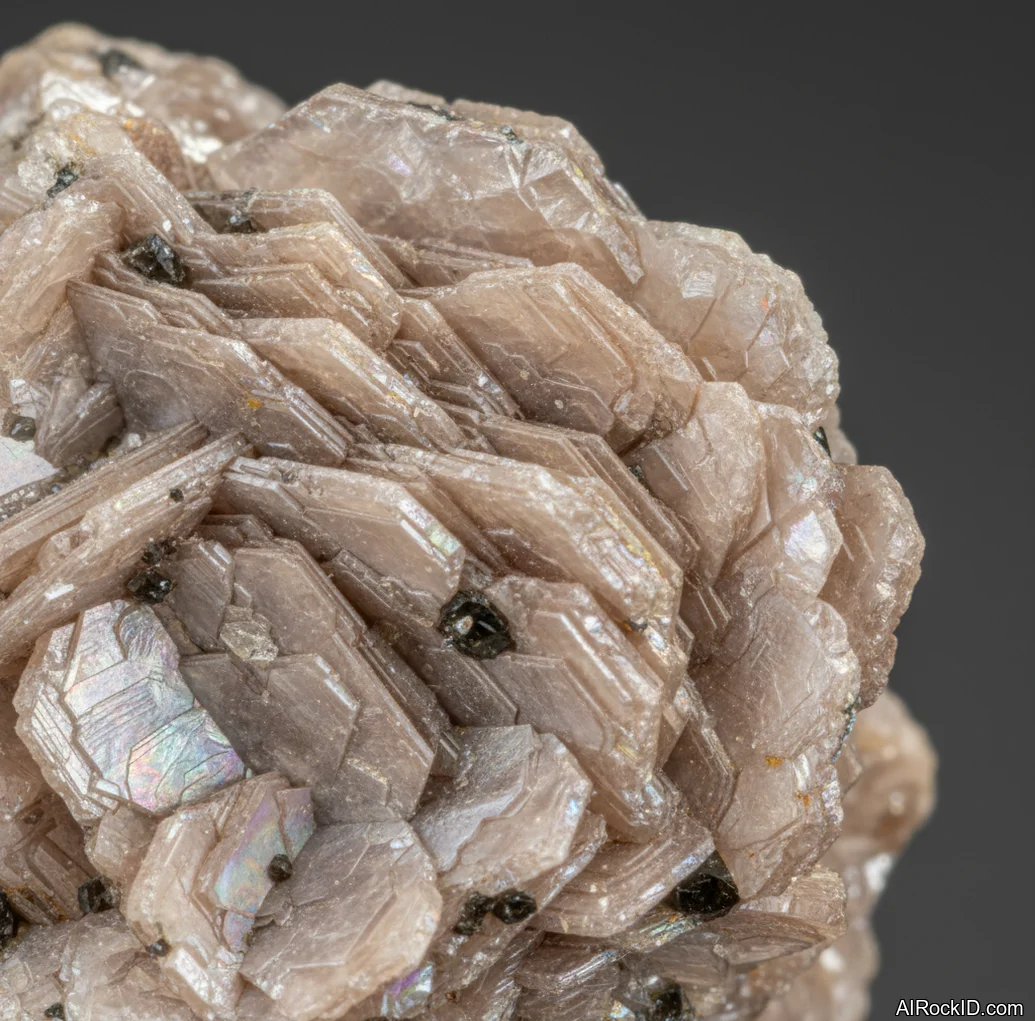
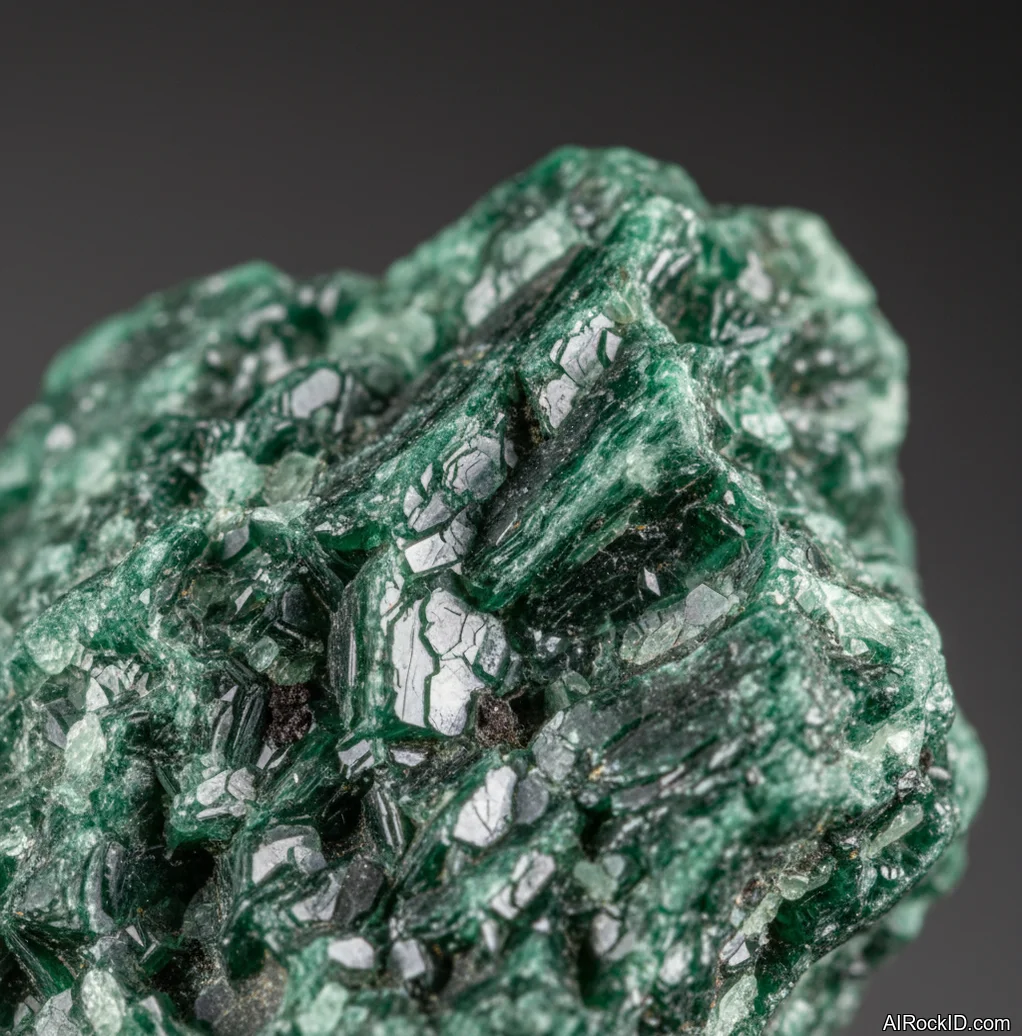
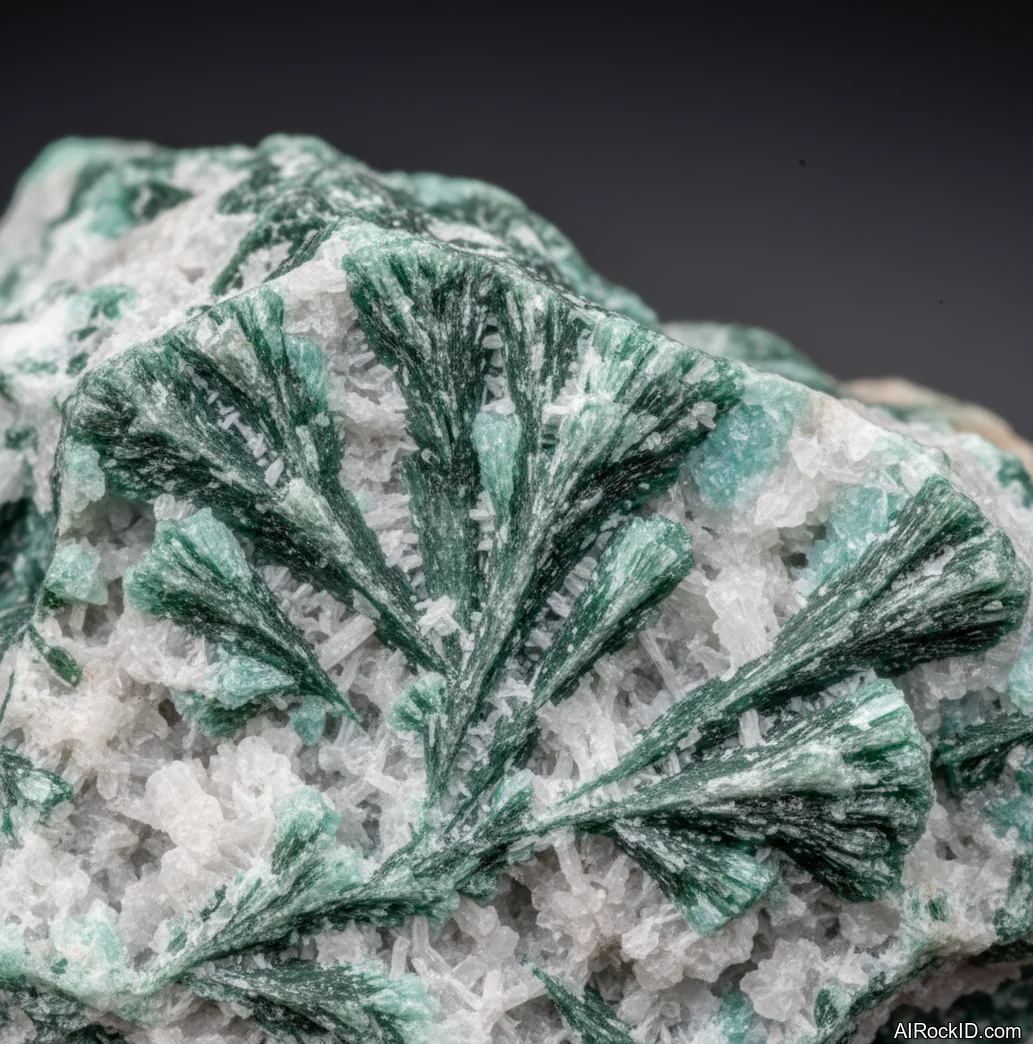
Pick up a chunk and you notice fast it’s not one solid green stone like people expect. It’s more like a white to gray host rock with green mica kind of smeared through it, and that mica will flash when you roll it under a lamp. The feel gives it away, too. Those little mica plates want to peel and scuff, and your thumb catches tiny steps where the sheets stack up (almost like a deck of cards that got bent).
At first glance, a lot of shop labels slap “mariposite” on anything green in quartz. But the real material acts like mica. Rub a fresh surface and you can get a faint greenish film on your skin, and if the piece is micaceous enough you’ll see that booky, layered look instead of chunky grains.
Origin & History
California’s where the name really took hold. People in the Mother Lode gold country started calling it “mariposite,” and the word got tied to Mariposa County, where you’ll see that green mica sitting with quartz veins and altered wall rock around gold deposits.
But it isn’t a separate mineral species, and that’s where the confusion kicks in. In older literature and in the trade, “mariposite” ended up as a field name for green chrome-mica material, especially the kind prospectors linked with gold. Mineralogically, it’s muscovite with chromium substituting into the structure, sometimes with a little extra iron mixed in.
Where Is Mariposite Found?
Most classic material is from California’s Sierra Nevada foothills, but chromium-bearing muscovite shows up anywhere the right metamorphic and hydrothermal chemistry happens, including parts of the Alps.
Formation
Out in the field, mariposite usually turns up in spots where the rock’s been cooked, squeezed, and then soaked with fluids. Think metamorphosed sedimentary rocks and shear zones, with hydrothermal alteration clustered around quartz veins. Chromium has to be in the neighborhood too, usually coming from ultramafic or other chromium-bearing source rocks close by, and it gets pulled into the mica as the mica grows.
If you stare at a lot of those “gold country” chunks long enough, the story shows up in layers. Bright white quartz. That slick, green mica that flashes when you tilt it in the sun. Sometimes there’s rusty limonite staining along little cracks, and every so often you’ll catch small bits of sulfides or carbonate tucked in there. But none of that means you’ve got gold in the hand specimen, not automatically. Dealers lean hard on the association, but most of what you see on show tables is just good-looking altered rock with mica sparkle (pretty, sure) and no metal value.
How to Identify Mariposite
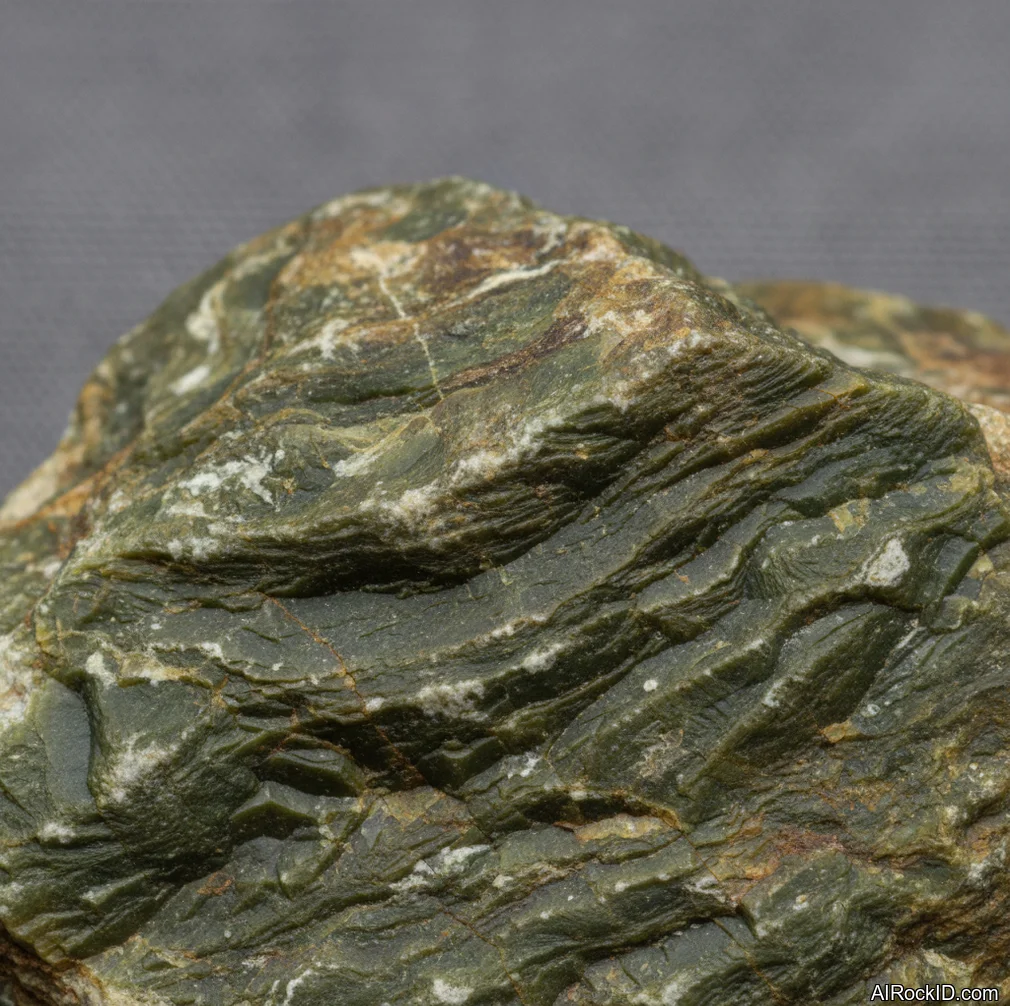
Color: Green ranges from pale pistachio to darker sage, usually as flakes, streaks, or patches rather than a uniform body color. The host is commonly white quartz or gray schist.
Luster: Pearly to vitreous on the mica faces, with a bright flash when the plates catch the light.
Pick up the piece and tilt it under a single strong light. Real mariposite shows that mica “blink” from flat plates, not a waxy, even glow like many green serpentines. If you scratch it gently with a copper penny, the mica-rich areas mark up easily, and you may see tiny sheets lift at the edge. The problem with photos online is they hide the platy texture, so ask for a close shot of a fresh break showing the stacked sheets.
Common Look-Alikes
Mariposite is sometimes confused with these materials:
- Fuchsite (chromium-rich muscovite) in quartz
- Serpentine (including "new jade")
- Aventurine quartz (green quartz with mica sparkle)
- Chrysoprase (green chalcedony)
- Dyed howlite or dyed magnesite sold as "green jade"
- Green glass sold as "jade" or "aventurine"
Market Cautions & Treatments
When AI Can Get This Wrong
At first glance, phone photos mix up mariposite with serpentine and aventurine all the time because they’re all green and often polished. AI also trips on fuchsite since it’s basically the same mica family, and a photo can’t tell you if the green is in flaky plates or just a uniform green mass. The real test is feel and structure: mariposite scuffs easily (Mohs 2 to 2.5), shows platy mica that wants to peel at edges, and the flash comes from flat flakes, not a sugary quartz sparkle.
Properties of Mariposite
Physical Properties
| Crystal System | Monoclinic |
| Hardness (Mohs) | 2-2.5 (Soft (2-4)) |
| Density | 2.76-2.90 g/cm3 |
| Luster | Pearly |
| Diaphaneity | Translucent |
| Fracture | Uneven |
| Streak | white |
| Magnetism | Non-magnetic |
| Colors | green, pale green, sage green, pistachio green, white, gray |
Chemical Properties
| Classification | Silicates (phyllosilicate mica) |
| Formula | KAl2(AlSi3O10)(OH)2 |
| Elements | K, Al, Si, O, H, Cr |
| Common Impurities | Cr, Fe, Mg |
Optical Properties
| Refractive Index | 1.552-1.603 |
| Birefringence | 0.051 |
| Pleochroism | Moderate |
| Optical Character | Biaxial |
Mariposite Health & Safety
Handling it is pretty low-risk. But if you cut it or sand it, you can kick up fine, breathable dust from the quartz and mica (the kind that hangs in the air a bit before it settles).
Safety Tips
If you’re shaping it, keep it wet, make sure the space is well ventilated, and wear a proper respirator that’s actually rated for fine mineral dust.
Mariposite Value & Price
Price Range
Rough/Tumbled: $5 - $80 per specimen
Price usually follows what you see in your hand. If it’s bright green mica with a hard flash sitting in clean, white quartz, it’ll fetch more. If it’s those dull, blocky schist chunks (the kind that look kind of dead under the light), it goes for less. And the big display slabs labeled “California” move quicker, even when the mica content is the same. Buyers just grab them. Why? The label and the size do a lot of the work.
Durability
Nondurable — Scratch resistance: Poor, Toughness: Fair
It’s stable as a rock specimen, but the mica surfaces scuff and shed tiny flakes if it bangs around in a pocket or box.
How to Care for Mariposite
Use & Storage
Store it so the mica faces don’t rub against harder stones. I keep mine wrapped or in a compartment box because the green plates scratch up fast.
Cleaning
1) Rinse briefly with lukewarm water. 2) Use a soft toothbrush to lift dirt from between mica plates without digging. 3) Pat dry and let it air-dry fully before putting it away.
Cleanse & Charge
For a low-fuss reset, use smoke, sound, or a short moonlight sit. I skip salt bowls because flakes can get into the threads of mica and make a mess.
Placement
A shelf spot with angled light makes the mica flash. Keep it out of high-traffic areas if you hate little scuffs.
Caution
Skip ultrasonic cleaners and anything too aggressive with a brush, and don’t toss it in a tumbler with harder stones or it’ll get chewed up. If you’re cutting it, handle it the same way you would quartz-bearing rock and keep the dust under control (it gets everywhere, fast).
Works Well With
Mariposite Meaning & Healing Properties
Most people who buy mariposite aren’t hunting for some perfectly polished “crystal vibe.” They’re after that green-and-white look, plus the old gold-country connection. In my own practice, I’ve watched people use it as a steadying stone for focus when their brain’s all over the place and they want something more grounded than a sparkly point.
Pick up a slab and drag your thumb over the mica. It’s slick going one way, then kind of grabs the other way, like the surface has tiny “grain” you can actually feel, and honestly that weird little contrast is part of why I reach for it. It’s the sort of piece you leave on a desk and absentmindedly touch while you’re thinking. And just to be blunt: none of that is medical care, and it doesn’t replace treatment for anxiety or anything else.
But don’t expect it to act like a tough “carry stone.” Toss it in a pocket and it turns into a scratched-up, dusty little thing (the kind you end up wiping on your shirt), and people get bummed out. If you treat it like a display mineral and a reminder to slow down and pay attention, it tends to work better. Compared to greener, waxier stones like serpentine, mariposite feels cooler and more crisp because of the quartz, and that sharp mica flash can be a pretty good visual nudge toward clarity.
Common mistakes
- Assuming every green rock from a gold district is mariposite
- Calling all fuchsite specimens mariposite without checking the host rock and context
- Mistaking waxy serpentine for mica-rich mariposite
- Expecting mariposite to contain visible gold because of its geological association
- Using harsh abrasion tests on polished or flaky mica-rich specimens
Identify Mariposite from a photo
Compare Mariposite traits, care tips, value clues, and common lookalikes with a clear photo.