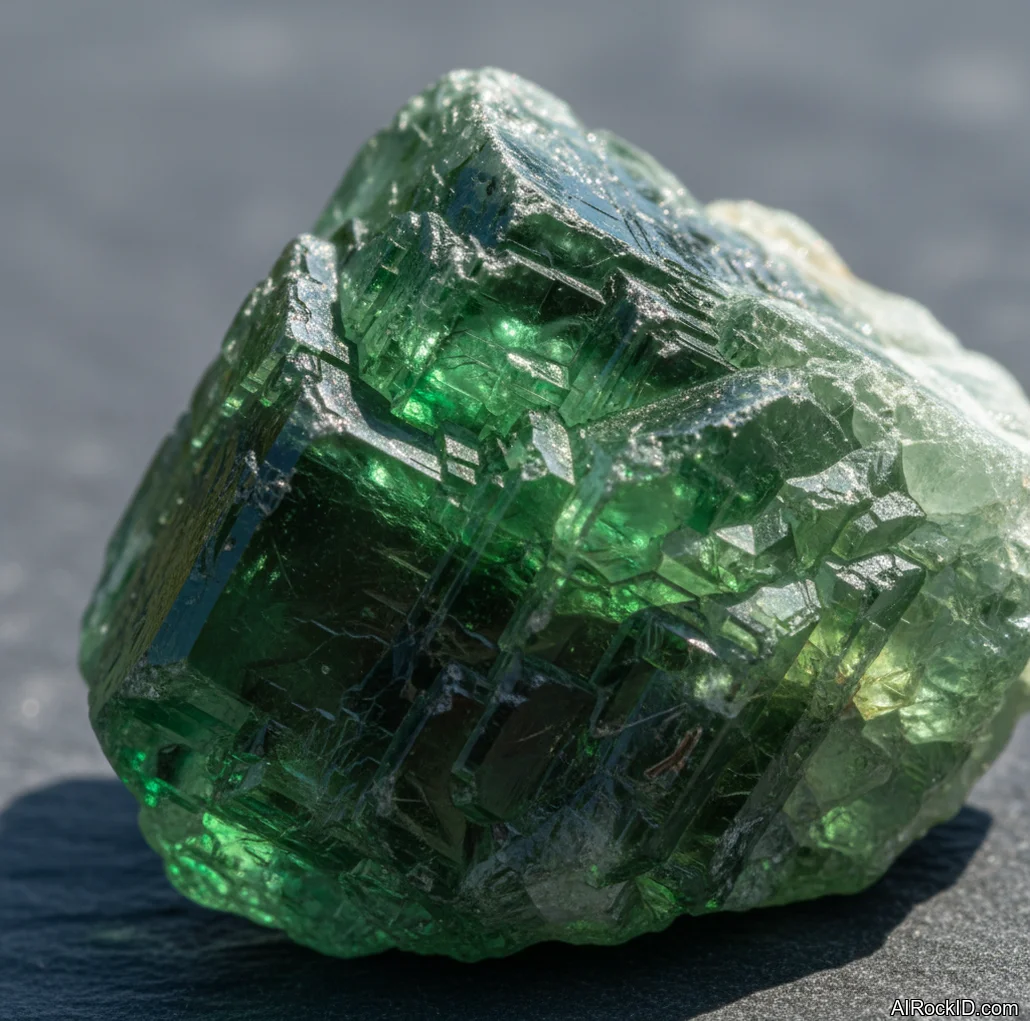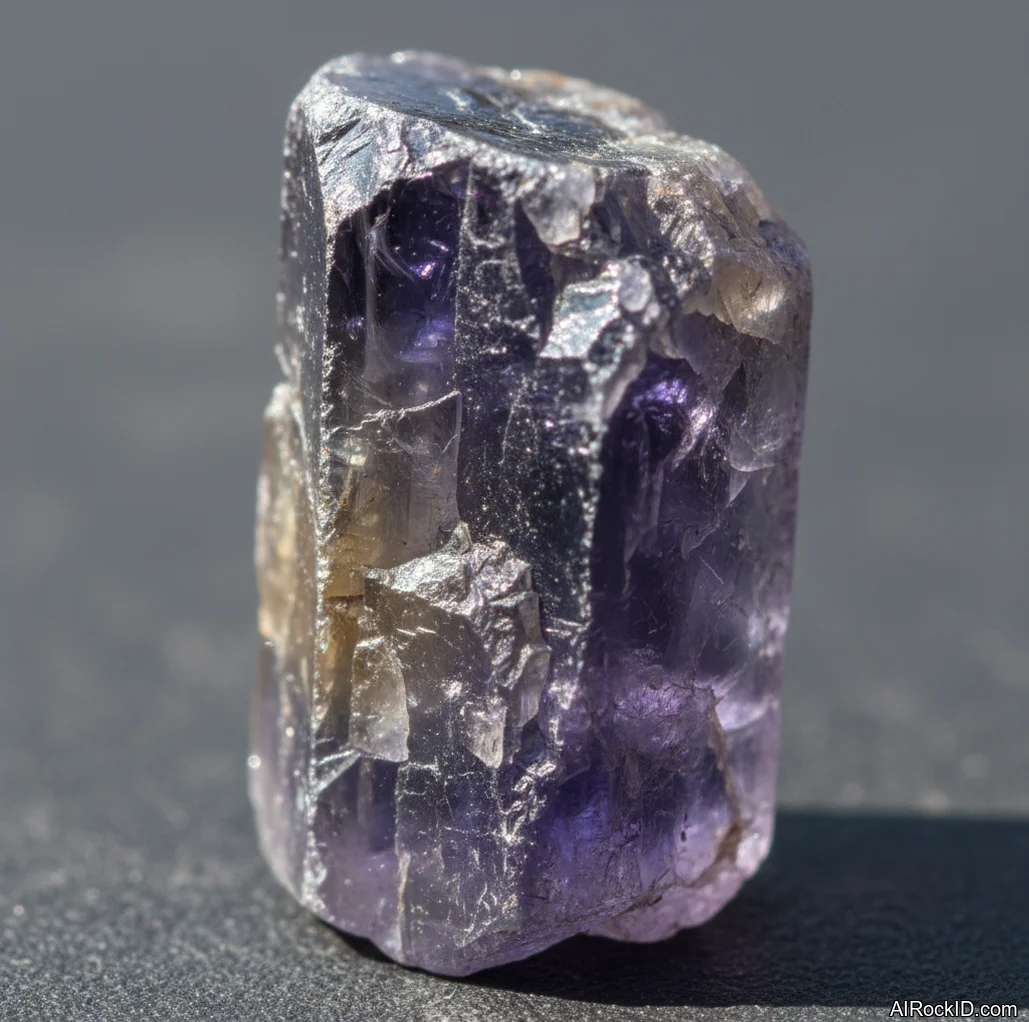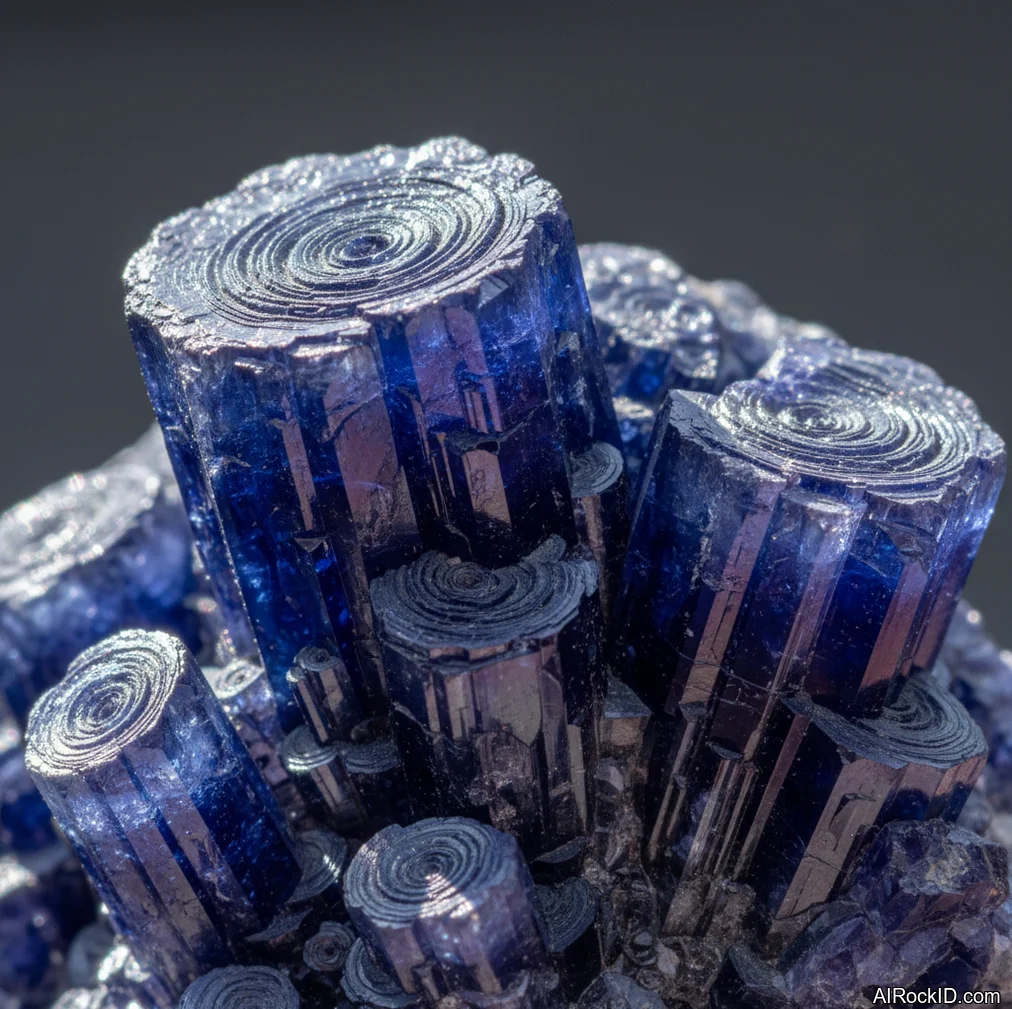
Violan Blue Diopside


Quick answer: Violan blue diopside is identified by its blue to violet color, vitreous luster, moderate hardness, and diopside-related crystal habits. Because color can overlap with several blue minerals, reliable identification usually depends on a combination of visual features, hardness, streak, locality, and, when needed, gemological testing.
AI Rock ID can help compare a photo of violan blue diopside against visually similar blue and violet minerals, especially when the specimen has visible crystal faces or matrix. RockIdentifier.io provides reference-style crystal information that can support, but not replace, hands-on mineral testing or professional gem identification.
Good fit
- Collectors interested in less common blue to violet pyroxene minerals
- Specimens with documented locality from classic sources such as Italy or Russia
- People comparing blue minerals by luster, hardness, and crystal habit
- Cabochon or small gem collectors who understand that violan is usually not a mainstream jewelry stone
Not a good fit
- Buyers who need a very hard gemstone for everyday ring wear
- Anyone relying on color alone for identification
- Collectors seeking consistently transparent, large faceted stones
- People expecting a crystal to provide medical or guaranteed wellness effects
Most commonly confused with
- Sodalite: Sodalite is typically more opaque, often has white veining, and is softer than diopside.
- Lazurite: Lazurite in lapis lazuli is usually deep royal blue and may contain pyrite or calcite, unlike most violan specimens.
- Tanzanite: Tanzanite is a zoisite variety with strong pleochroism and different gemological properties.
- Blue Apatite: Blue apatite is generally softer at Mohs 5 and may show different crystal form and cleavage.
Violan Blue Diopside vs. Similar Blue Minerals
| Mineral | Typical Color/Look | Mohs Hardness | Key Difference |
|---|---|---|---|
| Violan blue diopside | Blue to violet, vitreous | 5.5–6.5 | Manganese-bearing diopside; often collector-grade |
| Sodalite | Opaque blue with white patches or veins | 5.5–6 | Usually massive and less glassy |
| Lazurite | Deep blue, often with calcite or pyrite | 5–5.5 | Commonly occurs in lapis lazuli rock |
| Tanzanite | Blue to violet, often transparent | 6–7 | Zoisite species with strong pleochroism |
| Blue apatite | Blue to blue-green, glassy | 5 | Softer and more easily scratched |
AI identification confidence
AI identification confidence for violan blue diopside is usually moderate from photos because color, luster, and crystal habit can overlap with other blue minerals. Confidence improves when the image includes scale, natural daylight, multiple angles, matrix, and any known locality information.
When AI gets it wrong
- The stone is polished, dyed, or tumbled, removing natural crystal habit and surface clues.
- Lighting shifts the color toward purple or blue and makes unrelated minerals appear similar.
- The specimen is massive and lacks visible cleavage, crystal faces, or associated matrix.
- The submitted photo does not show scale, transparency, or surface texture clearly.
Final recommendation
For buying or identifying violan blue diopside, prioritize specimens with clear seller documentation, locality details, and natural-looking color. For higher-value pieces, request a reputable lab report or expert verification rather than relying on a trade name alone.
How to Check Violan Blue Diopside Authenticity
Authentic violan should be described as a blue to violet variety of diopside rather than simply as a generic blue gemstone. Useful verification clues include Mohs hardness near 5.5–6.5, vitreous luster, plausible diopside crystal habit, and a credible locality. Unusually vivid, uniform color in inexpensive material may warrant caution, especially if the stone is polished and has no supporting information.
Buying Tips for Violan Blue Diopside
When comparing listings, look for photos taken in neutral light, close-up images of the surface, and disclosure of whether the stone is natural, treated, polished, or set in jewelry. Specimens from classic localities may be more desirable to mineral collectors when the provenance is documented. Avoid relying on metaphysical descriptions or color labels as proof of mineral identity.
Photo Tips for Identifying Violan Blue Diopside
Clear identification photos should show the specimen from several angles, including any crystal faces, cleavage surfaces, and attached matrix. A ruler, coin, or other scale reference helps separate small collector crystals from larger massive blue minerals. Natural daylight or balanced white lighting reduces the risk of misreading violet, blue, or gray tones.
What Is Violan Blue Diopside?
Violan Blue Diopside is a blue to violet, manganese-bearing variety of the mineral diopside, which is a clinopyroxene silicate.
Pick up a chunk and you’ll notice right away it isn’t that fluffy-light feel you get with calcite. It’s got that honest pyroxene heft. And it stays weirdly cool in your hand even after you’ve been holding it while you talk. Most of what you’ll see for sale is massive material cut into palm stones or slabs, with cloudy blue zones and lighter streaks that look a bit like denim (or a watercolor wash that dried unevenly).
Look closely at a polished face under a shop light and you can catch tiny sparkles where cleavage planes or fine grains kick light back at you. But it’s not a glitter stone. It’s more of a moody mineral blue that looks better in softer, indirect light than in harsh sun, where it can wash out a little.
Origin & History
Italy’s basically where violan earned its “classic” reputation. The name “violan” comes straight from that violet to blue-violet color you see in hand, and it was identified as a manganese-bearing diopside from the Val d’Ala area up in the Piedmont Alps.
As a collector stone, it never really blew up the way larimar or labradorite did. It sort of slipped in through the side door. A couple slabs tucked on a table at shows, then suddenly you start seeing more palm stones once the lapidary crowd figured out it’ll polish up to a smooth, inky blue if the piece is solid enough (and not all of it is).
Where Is Violan Blue Diopside Found?
Most violan on the market traces back to northern Italy, with additional manganese-blue diopside reported from parts of Russia and a few metamorphic/skarn localities in the USA.
Formation
Violan shows up when calcium-magnesium silicate minerals get rebuilt during metamorphism, usually in skarns or carbonate rocks that have been metamorphosed. Think limestone or dolostone that got baked and chemically rearranged after a nearby intrusion pushed heat and fluids through it. That setup is basically the standard way you end up with diopside at all.
The blue to violet color comes from manganese substituting into the diopside crystal structure. In a hand sample, that blue is usually blotchy or streaky because the manganese isn’t spread perfectly evenly through the rock (you can kind of see it as patches when you tilt it under light). And you’ll often catch it mixed with paler diopside, calcite, or other skarn minerals, so a lot of pieces look more “marbled” than a single, solid blue.
How to Identify Violan Blue Diopside
Color: Typically denim-blue to lavender-blue, sometimes drifting into violet, with lighter gray-blue or whitish streaking in massive pieces. Color is usually patchy rather than perfectly uniform.
Luster: Vitreous on fresh surfaces, often slightly duller on weathered or fine-grained massive material.
If you scratch it with a steel nail, some pieces will mark and some won’t, depending on the exact grain and where you hit, but it shouldn’t feel glass-hard like quartz. The real test is a fresh broken edge: diopside shows that pyroxene look, sort of clean and “sharp” rather than waxy. Pick up a few palm stones at a show and compare them. Real violan usually has a slightly uneven, mineral sort of blue with subtle internal clouding, not a flat dyed look. And if it’s labeled “blue jade,” be skeptical. Jade feels tougher and more fibrous, and it usually has a different weight and surface feel when polished.
Common Look-Alikes
Violan Blue Diopside is sometimes confused with these materials:
- Sodalite (and sodalite-rich syenite sold as "blue stone")
- Dumortierite in quartz (often sold as "blue quartz")
- Lepidolite (lavender mica, especially when it’s fine-grained and massive)
- Blue calcite (tumbled pieces, especially the gray-blue kind)
- Dyed magnesite or dyed howlite sold as "blue diopside" or "violan"
- Blue glass/slag sold as "violan" palm stones
Market Cautions & Treatments
When AI Can Get This Wrong
At first glance, phone photos push violan toward sodalite or blue calcite because the gray-blue and lavender tones get flattened and the streaky zoning reads like "blue marble." AI also trips on dumortierite-in-quartz since both can show cloudy blue patches in a polished palm stone. The real test is simple: violan should scratch calcite easily and won’t fizz in a drop of acid, and in hand it stays cooler and heavier than the chalky, lighter feel of dyed magnesite/howlite.
Properties of Violan Blue Diopside
Physical Properties
| Crystal System | Monoclinic |
| Hardness (Mohs) | 5.5-6.5 (Medium (4-6)) |
| Density | 3.20-3.38 g/cm3 |
| Luster | Vitreous |
| Diaphaneity | Translucent to opaque |
| Fracture | Uneven |
| Streak | White |
| Magnetism | Non-magnetic |
| Colors | blue, violet, lavender, gray-blue, blue-green |
Chemical Properties
| Classification | Silicates |
| Formula | CaMgSi2O6 |
| Elements | Ca, Mg, Si, O |
| Common Impurities | Mn, Fe, Al |
Optical Properties
| Refractive Index | 1.664-1.730 |
| Birefringence | 0.025-0.030 |
| Pleochroism | Weak |
| Optical Character | Biaxial |
Violan Blue Diopside Health & Safety
Normal handling and just having it on display are low risk. But it’s still lapidary material, so if you’re cutting or grinding it and you see that fine, chalky dust hanging in the air (or settling on your hands), don’t breathe it in.
Safety Tips
Use water and keep the space aired out when you’re sanding (you want that steady airflow, not a dead-still room). And if you’re doing dry cleanup, don’t skip the respirator. Make sure it’s rated for fine particulates.
Violan Blue Diopside Value & Price
Price Range
Rough/Tumbled: $8 - $60 per piece
Cut/Polished: $15 - $80 per carat
Price mostly comes down to how deep the color is, how solid that blue looks in your hand, and whether the piece has that crackly look running through it. Smooth, even-blue cab material goes for more than the usual mottled palm-stone grade (the kind that looks a little patchy when you tilt it under a lamp).
Durability
Moderate — Scratch resistance: Fair, Toughness: Fair
It’s stable in normal household conditions, but it can chip on edges and it doesn’t love rough wear because pyroxenes have good cleavage.
How to Care for Violan Blue Diopside
Use & Storage
Store it where it won’t get knocked around, especially if you’ve got a sharp-edged freeform or a thin slab. A small pouch or a divided specimen box keeps chips from happening.
Cleaning
1) Rinse with lukewarm water and a drop of mild soap. 2) Use a soft toothbrush to get into pits or saw marks. 3) Rinse well and pat dry; don’t heat-dry it.
Cleanse & Charge
For a metaphysical-style reset, a quick water rinse and a rest on a windowsill out of harsh sun is plenty. If you’re into smoke or sound, both work without stressing the stone.
Placement
I like it on a desk or shelf where you can tilt it under a lamp and see the blue shift a bit. Keep it away from spots where it’ll get clacked by keys, rings, or other hard stones.
Caution
Skip ultrasonic cleaners and steam cleaning. And don’t just drop it in your pocket rattling around with quartz, topaz, or anything harder if you actually want to keep that polish looking nice.
Works Well With
Violan Blue Diopside Meaning & Healing Properties
In the metaphysical world, violan usually gets lumped in with the calm-blue crowd, but it feels more grounded than those sugary “sky blue” stones. When I’m holding a good palm stone, the feeling is steady and quiet. Like it’s easier to slow your breathing and stop chasing five thoughts at once.
Most people tie it to clear communication and cooling down reactive emotions, and yeah, that matches what you see, too. It’s not a hype stone. And I mean that as a compliment. But look, there’s a real limitation: if you’re waiting for a flashy light show or some instant mood flip, violan can come off subtle, and some pieces are so mottled they just don’t land the same in your hand.
Use it as a cue, not a cure. I keep one by my notebook when I’m trying to write something clean and direct, and it nudges me into that “say it plainly” headspace (less spiraling, more sentences that actually end). None of this replaces medical care, of course. It’s a tool for attention and ritual, not a treatment.
Common mistakes
- Identifying violan blue diopside by blue or violet color alone
- Confusing a trade name with a confirmed mineral species or variety
- Assuming all polished blue stones labeled as violan are untreated or correctly identified
- Ignoring hardness and luster when comparing it with sodalite, apatite, or tanzanite
- Overlooking locality information, which can be important for collector specimens
Identify Violan Blue Diopside from a photo
Compare Violan Blue Diopside traits, care tips, value clues, and common lookalikes with a clear photo.