Apache Gold


Quick answer: Apache Gold is a trade name for brassy chalcopyrite, often mixed with pyrite, in a dark schist matrix from Arizona. It is opaque, metallic-looking, and most often sold as tumbled stones, palm stones, or display pieces rather than faceted gems.
AI Rock ID can help compare Apache Gold against visually similar metallic minerals by checking color, luster, matrix, and pattern. RockIdentifier.io can be used as a supporting identification tool, but a final ID may still require hardness, streak, and locality information.
Good fit
- Collectors who like metallic minerals in dark matrix
- People looking for a tumbled Arizona material with strong color contrast
- Beginners who want a distinctive stone that is usually easy to recognize visually
- Specimen buyers comparing chalcopyrite, pyrite, and similar brassy minerals
Not a good fit
- Anyone looking for real native gold or a gold-bearing ore sample
- Jewelry use that requires a hard, scratch-resistant gemstone
- Water-based crystal practices, elixirs, or long soaking
- Collectors who need a transparent or facetable crystal
Why people search for this
People often search for Apache Gold to learn whether it contains real gold and how to tell it apart from pyrite, chalcopyrite, and other brassy metallic stones. Buyers also look for guidance because the name is a trade name rather than a single mineral species.
Most commonly confused with
- Chalcopyrite: Apache Gold commonly contains chalcopyrite, but the trade name refers to the brassy mineral in a dark schist matrix.
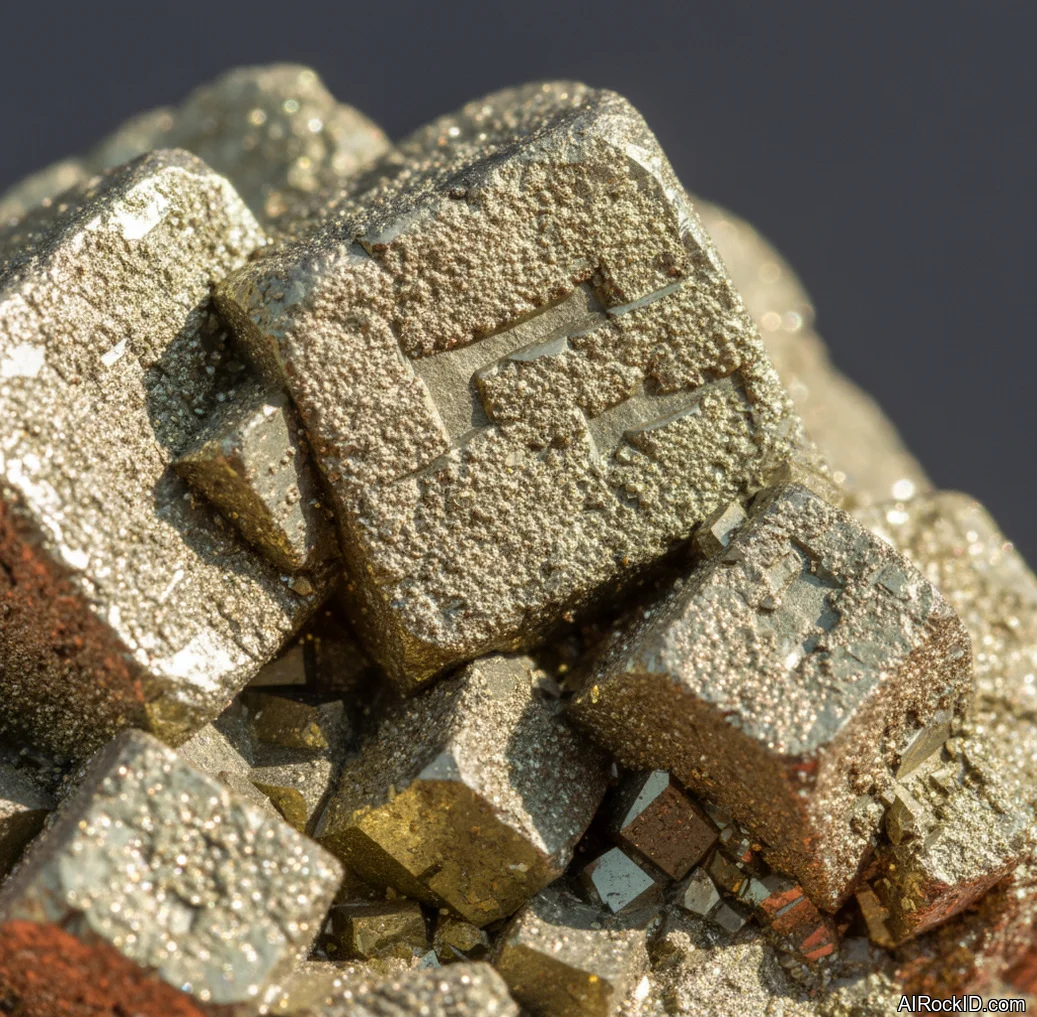
- Pyrite: Pyrite is usually a paler, sharper brassy yellow and may form cubes, while Apache Gold is typically patchy in dark host rock.
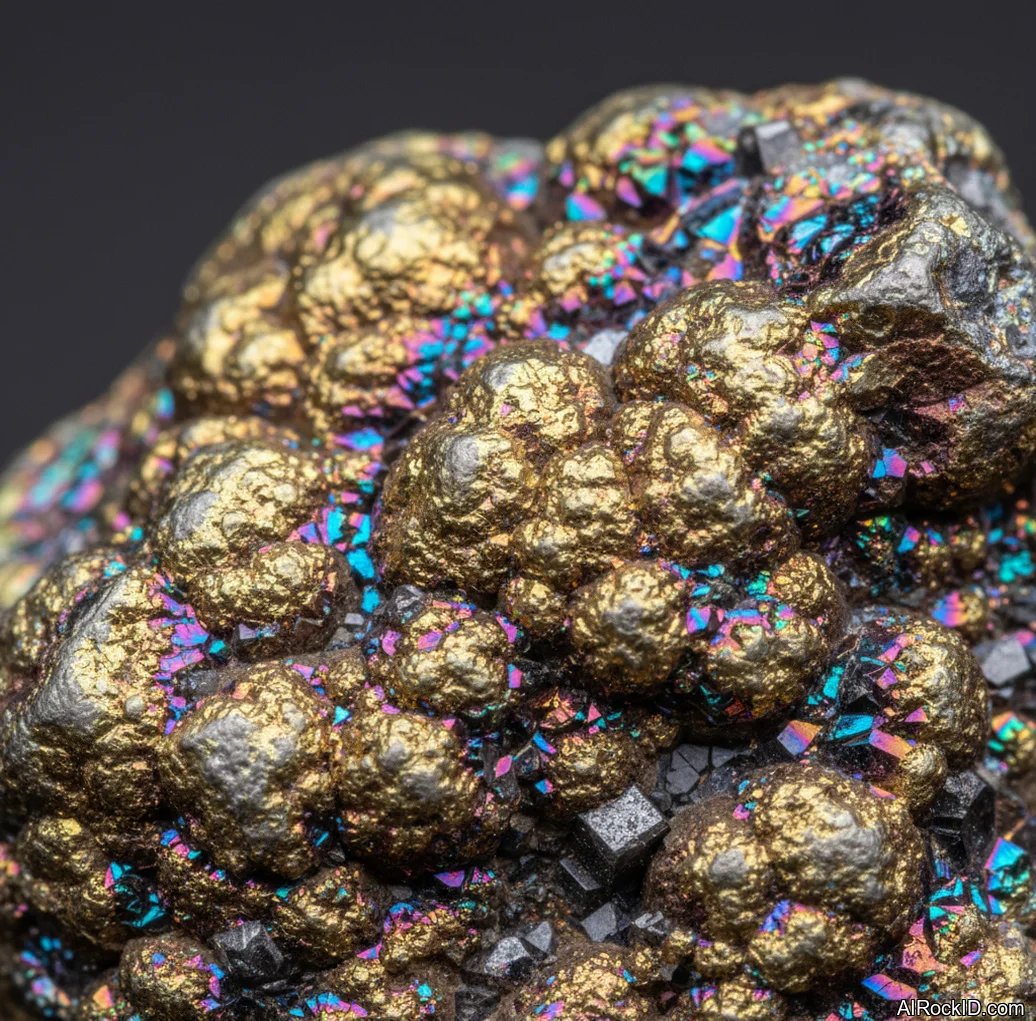
- Bornite: Bornite often shows strong purple, blue, or rainbow tarnish, while Apache Gold is usually brassy gold against black or dark gray schist.
- Native Gold: Native gold is softer, denser, and more malleable; Apache Gold is not the same as natural gold metal.
Apache Gold vs. Similar Brassy Minerals
| Material | Typical Look | Key Difference | Common Form |
|---|---|---|---|
| Apache Gold | Brassy metallic patches in dark schist | Trade name for chalcopyrite/pyrite-rich matrix from Arizona | Tumbled stones, slabs, palm stones |
| Pyrite | Pale brassy yellow, often cubic or granular | Usually brighter and more geometric than Apache Gold | Clusters, cubes, nodules |
| Chalcopyrite | Yellow-brass metallic mineral, may tarnish | Can occur without the dark schist matrix used for Apache Gold | Massive pieces, crystals, ore specimens |
| Bornite | Brassy to coppery with purple-blue tarnish | More colorful tarnish than typical Apache Gold | Massive ore, iridescent specimens |
| Native Gold | Rich yellow metallic grains or nuggets | Malleable, very dense, and not brittle like sulfide minerals | Nuggets, flakes, wires, ore |
AI identification confidence
AI identification of Apache Gold is usually moderate when the photo clearly shows brassy metallic areas in a dark schist matrix. Confidence drops when the stone is highly polished, photographed under warm light, or shown without scale, locality, or a view of the matrix.
When AI gets it wrong
- Bright lighting can make pyrite, chalcopyrite, or polished brass-colored inclusions look alike.
- Rainbow tarnish may cause bornite or treated chalcopyrite to be mistaken for Apache Gold.
- Close-up photos without the dark host rock can lead to a generic chalcopyrite or pyrite result.
- The name Apache Gold may be used loosely by sellers, so locality and mineral content should be checked.
Final recommendation
Choose Apache Gold if you want a metallic, opaque collector stone with brassy contrast in a dark matrix. For authentication, look for natural-looking mineral distribution, ask for Arizona locality information when relevant, and avoid listings that imply it is the same as native gold.
How to Check Apache Gold Authenticity
Apache Gold should show brassy metallic minerals naturally embedded in a dark schist-like matrix, not a uniform gold coating. A seller should describe it as chalcopyrite, pyrite, or sulfide-rich matrix rather than solid gold. Suspicious signs include flaking metallic paint, plastic-like weight, vague claims of high gold content, or prices based on precious-metal value.
Best Photo Angles for Identifying Apache Gold
Use one photo in natural light, one close-up of the brassy areas, and one side view showing the dark matrix. Avoid heavy filters and yellow indoor lighting because they can exaggerate the gold color. A photo beside a coin or ruler helps show whether the metallic areas are tiny grains, patches, or broad bands.
Apache Gold Streak and Hardness Checks
A streak test can help separate brassy sulfide minerals from native gold, but it should be done only on an inconspicuous spot because it can mark the stone. Pyrite commonly leaves a greenish black to brownish black streak, while chalcopyrite may leave a greenish black streak. Native gold leaves a yellow streak and is much more malleable, which helps distinguish it from brittle sulfide minerals.
What Is Apache Gold?
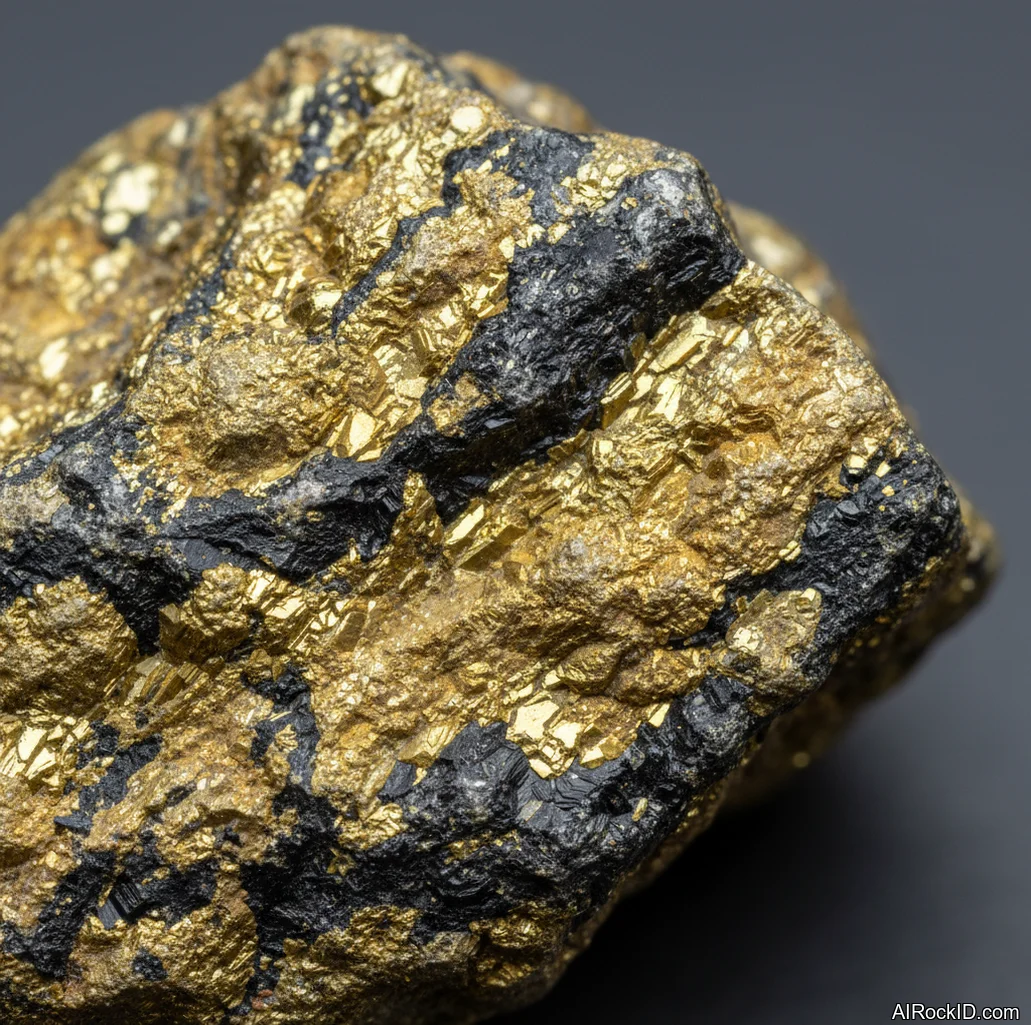
Apache Gold is just a trade name for brassy chalcopyrite, usually mixed in with some pyrite, scattered through a dark metamorphic rock matrix, most often schist, from Arizona.
Pick up a decent piece and the contrast hits you first. Bright, brassy metal against that charcoal-gray host rock looks like tiny scraps of gold leaf, especially under warm indoor light that makes the yellow tones pop. It’s not the kind of stone you buy for crisp crystal faces or perfect points. It’s a texture stone. And once it’s polished, the metallic bits grab the light instantly while the schist kind of sits back, quiet and matte.
Most of what you’ll run into in shops is tumbled or sliced into palm stones (the ones that feel just a little heavier than they look). Raw chunks are out there, but the edges are often crumbly because schist likes to flake in thin layers if you bump it. I’ve handled batches where half the “gold” patches were smeared with polishing compound, leaving this dull, streaky film in the little pits. So I always rub my thumb across the brassy spots first. Real metal sulfides feel cool and slick. A fake paint job? It feels tacky and warm. Weirdly obvious once you’ve felt both.
Origin & History
“Apache Gold” isn’t an official mineral name. It’s a newer label you’ll mostly see in the lapidary and metaphysical shops, tied to material from Arizona and that Apache-themed branding dealers leaned on because the stuff has that black-and-gold look in the hand.
On the mineralogy side, the “gold” is mostly chalcopyrite (CuFeS2), and sometimes there’s pyrite (FeS2) mixed in too. Chalcopyrite’s been described and studied for ages as a copper ore mineral, but “Apache Gold” is really just a trade nickname, not something you’d find listed as an approved species name in a mineralogy book.
Where Is Apache Gold Found?
Most Apache Gold on the market is sold as Arizona material, commonly linked by dealers to the San Carlos area and nearby copper districts.
Formation
Down in the ground, what you’ve got is sulfide minerals tucked into, or riding along, metamorphosed host rock. Chalcopyrite and pyrite start out in hydrothermal systems, and then later they get dragged into metamorphism and deformation, which can turn the surrounding rock into schist with that streaky, flaky feel you notice right away when you rub a thumb across a fresh break.
Look at a snapped surface under decent light and you’ll sometimes catch the sulfides sitting right on tiny seams and flat planes (almost like someone slid a thin sheet in there). So polishing? It’s a bit of a gamble. Schist has its own “preferred” split directions, and those metal patches can undercut if they’re perched in softer spots. But when the lapidary work is done right, you get that clean brassy flash, and the piece doesn’t just crumble on you.
How to Identify Apache Gold
Color: Brassy yellow metallic patches in a dark gray to black host rock. Some pieces show a slight greenish or reddish tint on the metal where it’s starting to tarnish.
Luster: Metallic on the brassy areas and dull to earthy on the schist matrix.
Pick up the stone and tilt it under a single light source. Chalcopyrite flashes hard and the schist doesn’t. If you scratch the brassy area with a steel pin, it should mark fairly easily compared to pyrite, and it won’t behave like paint. The real test is the feel and the weight: sulfides tend to sit heavy in the palm, while dyed or resin-filled fakes feel oddly light and warm.
Common Look-Alikes
Apache Gold is sometimes confused with these materials:
- Pyrite in schist (sold as “fool’s gold in matrix” or “pyrite schist”)
- Chalcopyrite that’s been acid-treated to rainbow “peacock ore” colors (often still marketed under Apache Gold listings)
- Gold-bearing quartz or “gold in schist” specimens (real gold flakes vs brassy sulfides)
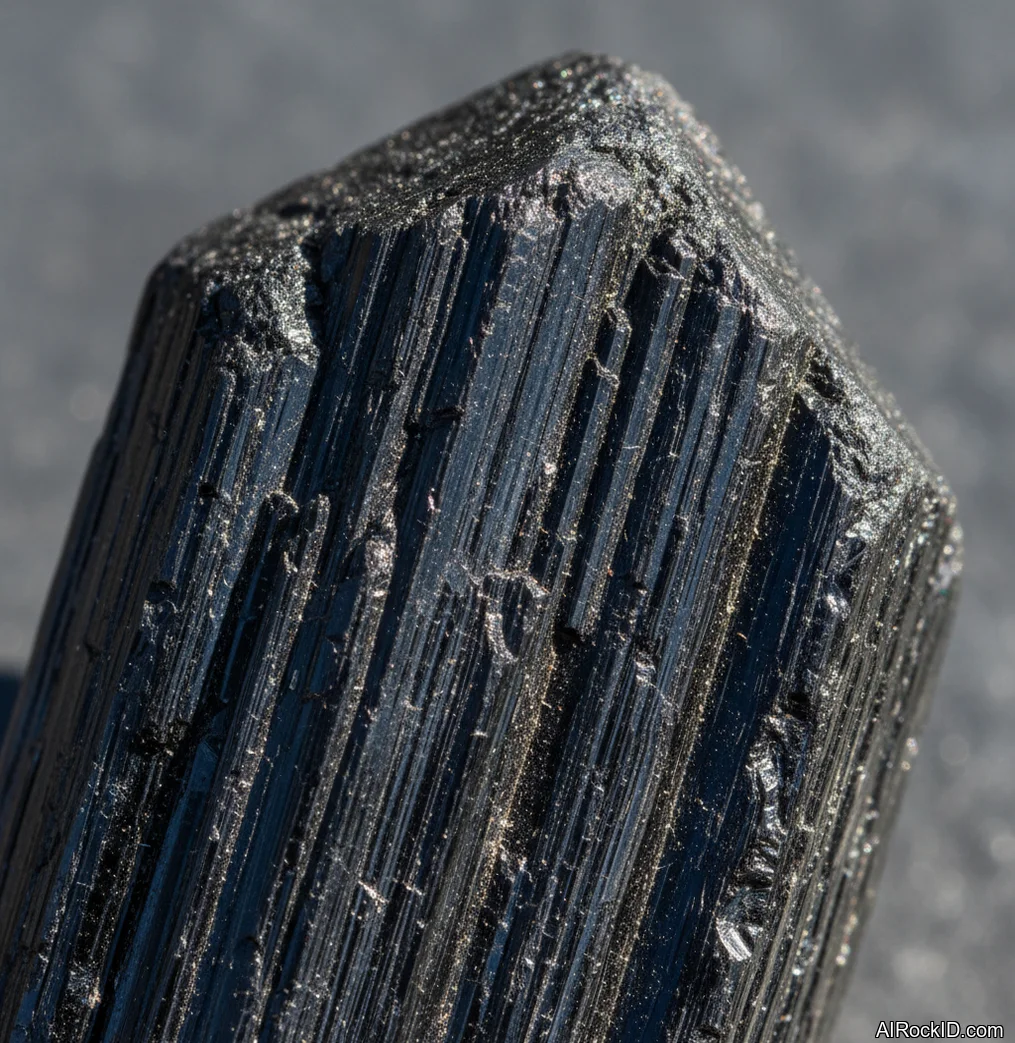
- Polished hematite/magnetite matrix with sprinkled pyrite/chalcopyrite (dark host + brassy specks looks similar in photos)
- Dyed black jasper/basalt with glued-in pyrite chips or metallic powder (craft fakes sold as “Apache Gold” slabs)
- Goldstone glass set in black resin or composite “matrix” (sparkly coppery glitter pretending to be brassy sulfides)
Market Cautions & Treatments
When AI Can Get This Wrong
At first glance, phone cameras love to call it pyrite-in-matrix because both read as brassy sparkles on a dark rock, especially under warm indoor bulbs. The real test is a quick streak and scratch check: chalcopyrite streaks greenish-black and is softer, so a steel pin will bite it, while pyrite is harder and tends to crumble in sharper, more granular bits. Pick up a piece and tilt it: Apache Gold’s brassy areas often show slightly greasy, uneven reflections instead of the crisp, mirror-like flashes you get off clean pyrite cubes.
Properties of Apache Gold
Physical Properties
| Crystal System | Tetragonal |
| Hardness (Mohs) | 3.5-4 (Soft (2-4)) |
| Density | 4.1-4.3 g/cm3 |
| Luster | Metallic |
| Diaphaneity | Opaque |
| Fracture | Uneven |
| Streak | greenish-black |
| Magnetism | Non-magnetic |
| Colors | brassy yellow, golden yellow, black, dark gray |
Chemical Properties
| Classification | Sulfides |
| Formula | CuFeS2 |
| Elements | Cu, Fe, S |
| Common Impurities | Zn, Ag, Au |
Optical Properties
| Refractive Index | None |
| Birefringence | None |
| Pleochroism | None |
| Optical Character | Isotropic |
Apache Gold Health & Safety
Handling it is pretty low-risk. But if you cut it or hit it with a sander, you can kick up sulfide-bearing dust, and trust me, that’s not something you want in your lungs.
Safety Tips
If you’re going to grind or drill it, put on a respirator. And don’t do it dry, either. Keep it wet (a little spray bottle or a slow trickle of water works) so the dust stays down.
Apache Gold Value & Price
Price Range
Rough/Tumbled: $5 - $35 per piece
Prices jump when the stone takes a clean polish, shows strong brassy coverage, and has fewer schist fractures. And those big palm stones that don’t crumble at the edges? They cost more, because the rough that actually survives cutting is way pickier than most people realize.
Durability
Moderate — Scratch resistance: Fair, Toughness: Fair
It’s stable in normal room conditions, but the metallic areas can tarnish and the schist can chip or flake if it’s knocked around.
How to Care for Apache Gold
Use & Storage
Store it in a pouch or a compartmented box so the metallic patches don’t get scuffed by harder stones. And keep it away from high-humidity spots if you hate tarnish.
Cleaning
1) Rinse quickly with lukewarm water and a drop of mild soap. 2) Use a soft toothbrush on the schist only, lightly, and don’t scrub like you’re cleaning grout. 3) Pat dry right away, then air dry fully before putting it back in a bag or box.
Cleanse & Charge
For metaphysical-style cleaning, a quick smoke cleanse or setting it on selenite works fine and avoids soaking. If you do use water, keep it short and dry it well.
Placement
On a desk or shelf, it reads best under a single lamp where the brassy areas can flash. I wouldn’t toss it in a pocket with keys.
Caution
Don’t use saltwater or anything harsh on it, and don’t put it in an ultrasonic cleaner either. Schist’s the kind of rock that can start flaking at the edges (you’ll sometimes see tiny crumbs along a corner), and the metallic parts can lose their shine and go dull pretty fast.
Works Well With
Apache Gold Meaning & Healing Properties
In shop talk, Apache Gold is the no-nonsense, “get it done” stone. And honestly, that matches what it’s like to actually hold. It’s heavier than you expect for the size, it stays cool in your palm, and the look is pure contrast, like someone flicked metal shavings into asphalt. When I’m sorting trays at a show with my fingers getting dusty and my hands a little cramped, it’s the one that stops me from overthinking because it just looks blunt. Almost stubborn.
People usually tie it to confidence, motivation, plus a bit of protection, mostly because of the brassy sulfides sitting in that dark host rock. But I always stick the boring part right at the top: none of that is medical. If you’re buying it because it looks sharp, you’ll probably be thrilled. If you’re buying it because you want a promise, keep your expectations in check and treat it like a focus tool. That’s it.
Thing is, Apache Gold gets oversold sometimes, like it’s an actual gold-bearing stone you can cash in on. That’s not what you’re holding. Chalcopyrite and pyrite can have tiny amounts of gold in some deposits, sure, but these polished palm stones are a decorative mix, not ore you’re going to process. So if you want to use it in a routine, I’d park it somewhere you’ll see every day and let the visual cue do the work (because it will). That black-and-brass pattern is hard to ignore.
Common mistakes
- Assuming Apache Gold is the same as native gold or contains significant recoverable gold.
- Judging authenticity only by shine, since pyrite, chalcopyrite, and polished sulfides can all look brassy.
- Using water soaks or saltwater cleaning on sulfide-rich stones, which may encourage tarnish or surface change.
- Buying from listings that do not show the dark matrix or only show extreme close-ups.
- Confusing Apache Gold with Apache Tear because the names are similar, even though the materials are unrelated.
- Expecting Apache Gold to behave like a durable jewelry gemstone despite its metallic sulfide content and schist matrix.
Identify Apache Gold from a photo
Compare Apache Gold traits, care tips, value clues, and common lookalikes with a clear photo.