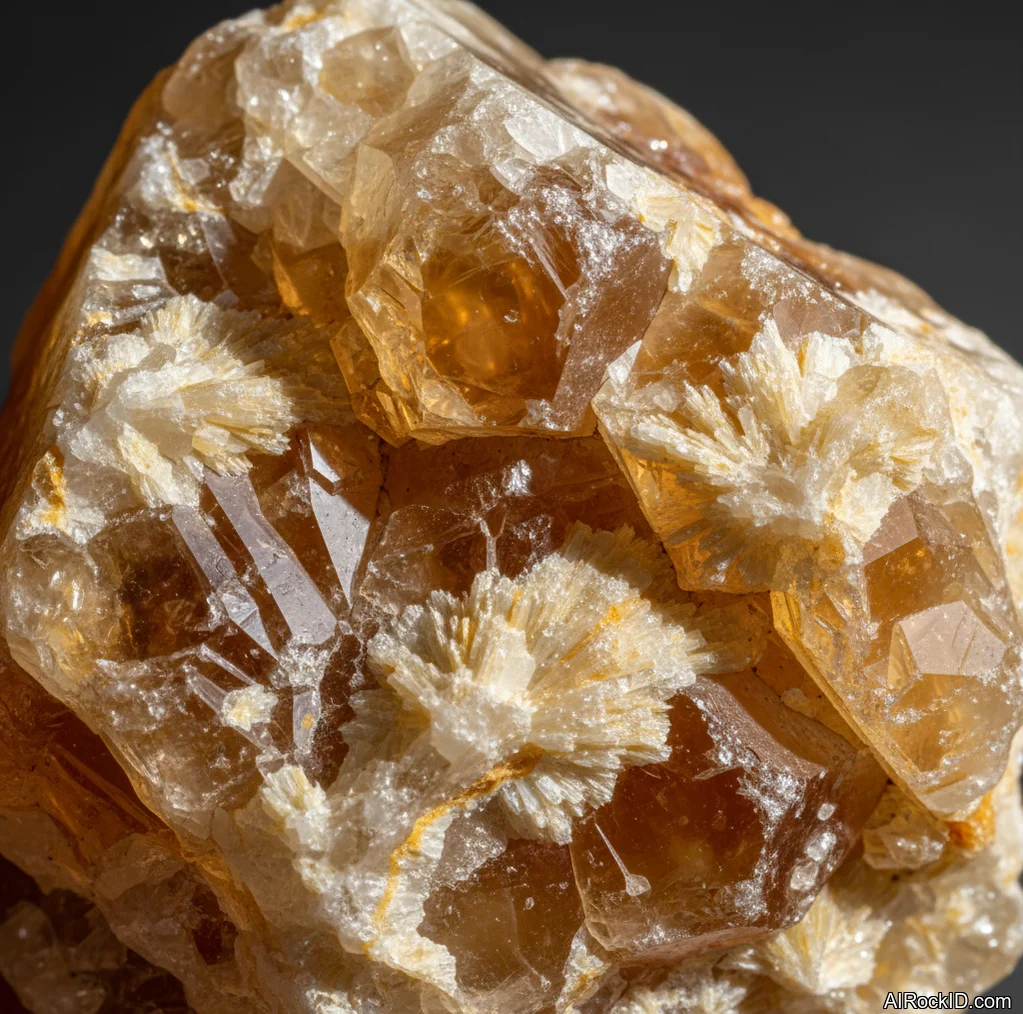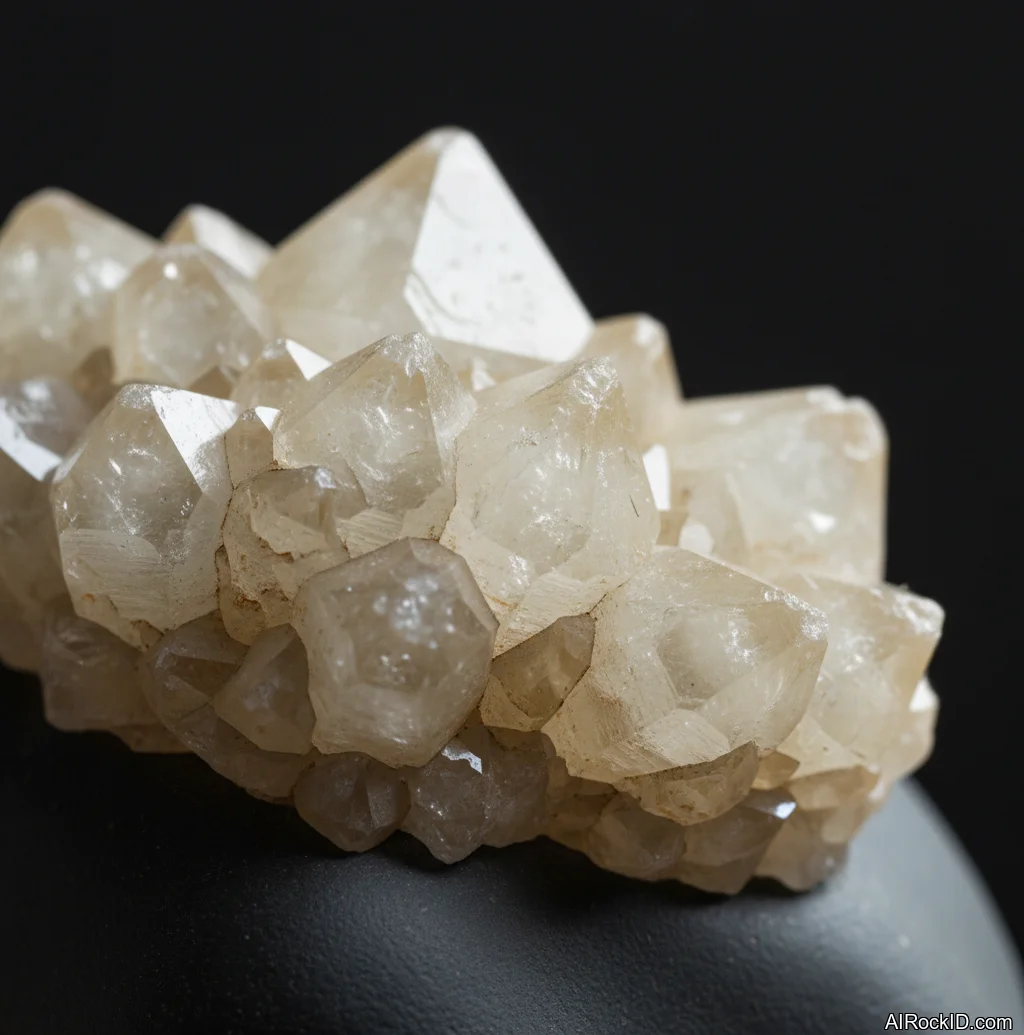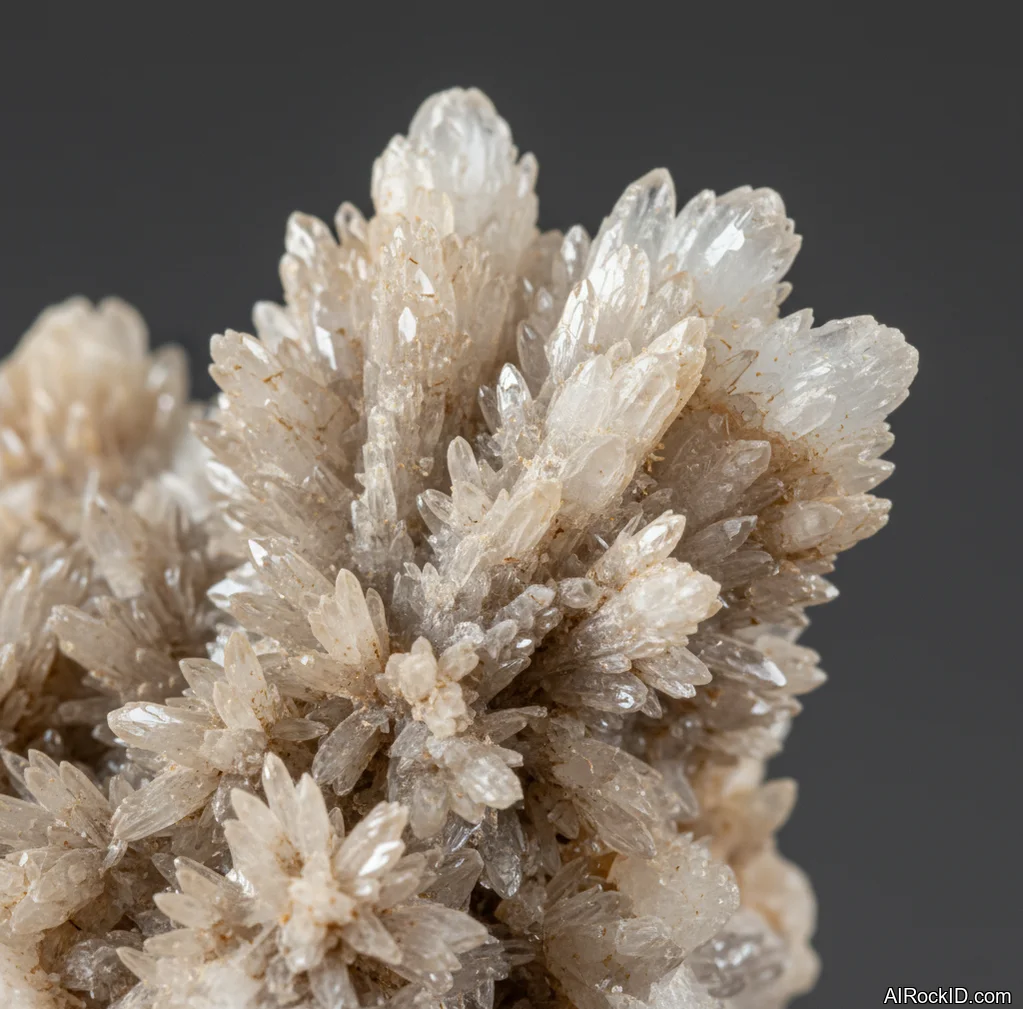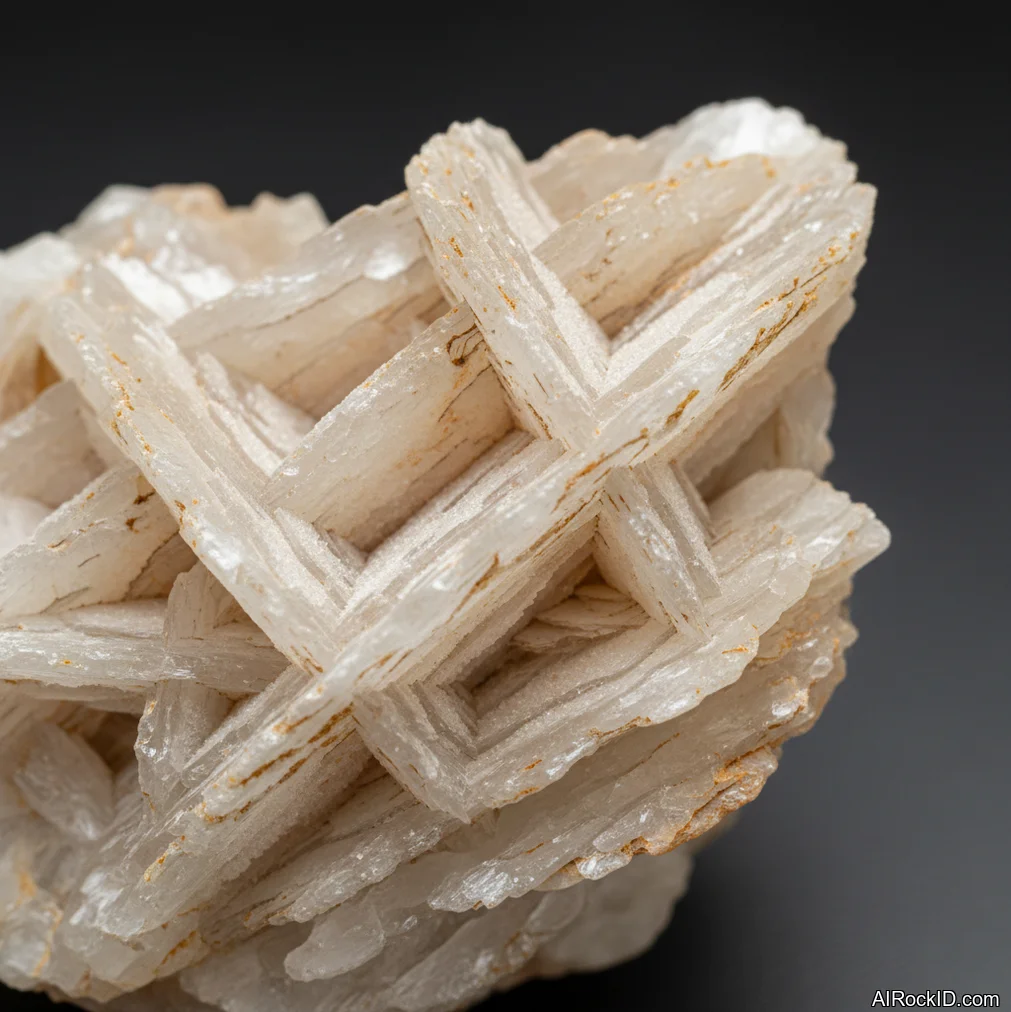
Chinese Bladed Calcite


Quick answer: Chinese Bladed Calcite is a descriptive trade and locality name for calcite specimens from China that form thin, blade-like crystal plates. It is still calcite, so its key identification points include low hardness, strong reaction to acid, perfect cleavage, and a specific gravity near 2.71.
AI Rock ID can help screen Chinese Bladed Calcite by comparing visible crystal habit, luster, color, and cleavage against similar minerals. RockIdentifier.io treats this name as a calcite variety or habit rather than a separate mineral species.
Good fit
- Collectors who like delicate, architectural crystal habits
- Buyers seeking a display specimen rather than a durable pocket stone
- Students comparing calcite habits, cleavage, and carbonate reactions
- Photography setups where thin crystal blades and translucency are important
Not a good fit
- Jewelry or rings exposed to abrasion
- Water soaking, saltwater cleansing, or acidic environments
- Handling by small children without supervision because thin blades can chip
- Anyone needing a rare species rather than a calcite habit
Why people search for this
People often search this name to confirm whether a bladed specimen from China is genuine calcite or a similar-looking carbonate, sulfate, or zeolite. The phrase is also used in online listings, so buyers may want to understand what the name does and does not guarantee.
Most commonly confused with
- Selenite: Selenite is gypsum, usually softer at Mohs 2 and commonly forms satin or transparent blades without calcite’s acid reaction.
- Barite: Barite can form tabular blades but feels noticeably heavier, with a specific gravity around 4.5.
- Aragonite: Aragonite is also calcium carbonate but has a different crystal system and often forms sprays, needles, or pseudohexagonal habits.
- Dolomite: Dolomite is a carbonate but typically reacts more weakly to cold dilute acid unless powdered.
Chinese Bladed Calcite vs Similar Bladed Minerals
| Material | Key Difference | Simple Check |
|---|---|---|
| Chinese Bladed Calcite | Calcite habit; Mohs 3; reacts readily with dilute acid | Can be scratched by copper and fizzes with acid |
| Selenite | Gypsum; Mohs 2; very soft and often fibrous or satiny | Scratches easily with a fingernail |
| Barite | Barium sulfate; much denser than calcite | Feels heavy for its size |
| Aragonite | Same chemistry as calcite but different structure | Often shows sprays, needles, or pseudohexagonal forms |
| Quartz | Silica; much harder and no carbonate fizz | Scratches glass and does not react to acid |
AI identification confidence
AI identification confidence is usually moderate when the photo clearly shows thin blades, vitreous luster, and calcite-like cleavage. Confidence is lower when the specimen is colorless, overexposed, coated with iron oxides, or photographed without scale.
When AI gets it wrong
- The specimen is labeled only by trade name and lacks locality or mineral testing information.
- Photos show a cluster of thin white blades without close-up views of cleavage or crystal terminations.
- A heavy barite specimen is photographed without context, making density impossible to judge.
- Acid reaction, hardness, and specific gravity are not available to separate calcite from lookalikes.
Final recommendation
For buying, treat Chinese Bladed Calcite as calcite with a distinctive habit rather than a rare mineral species. Ask for clear photos, size, locality details, and disclosure of repairs, glued points, or stabilizing coatings before paying specimen-level prices.
Buying and Authenticity Checklist
A credible listing should describe the specimen as calcite and may include a Chinese locality, but the name alone does not prove a specific mine. Look for intact blade edges, natural attachment points, and consistent luster across the cluster. Be cautious with unusually perfect clusters, visible glue, mismatched crystal surfaces, or bases that appear artificially assembled.
Simple At-Home Identification Clues
Calcite is soft enough to be scratched by a copper coin or steel tool, though scratch tests can damage a specimen. A tiny spot of dilute acid on an inconspicuous area should fizz on calcite, but this test should be used carefully and avoided on valuable pieces. Strong cleavage, glassy to pearly luster, and a light feel compared with barite also support a calcite identification.
Photography Tips for Identification
Use daylight or diffuse lighting to show the blade edges, cleavage faces, and any color zoning without glare. Include a ruler or coin for scale, and take at least one close-up of the crystal terminations. A photo of the underside or matrix can help separate natural clusters from repaired or assembled specimens.
What Is Chinese Bladed Calcite?
Chinese Bladed Calcite is just calcite (CaCO3), and it usually grows as thin, knife-like blades packed into flat, platey clusters. Most of what you see for sale is labeled from Chinese localities.
Pick up a piece and two things hit you fast. First, it’s weirdly light for how “solid” the cluster looks in the tray. Then, when you tilt it under a lamp, the blades kick back these quick little flashes. That sparkle isn’t from polish. It’s the cleavage faces catching the light, and if you turn it a tiny bit (like, barely), the bright pop just disappears.
People take one look and call it “cockscomb.” Sometimes that’s fair, sure, but that name gets tossed around way too loosely in the market. The Chinese bladed stuff I’ve handled is usually more like stacked wedges or thin fins, with sharp little edges that chip if you even think about rubbing them. Gorgeous. But not something you keep in your pocket.
Origin & History
“Calcite” got its name in the 19th century, pulled from the Latin *calx* (meaning lime), and mineralogists have had the species formally described since the early days of modern classification.
“Chinese bladed calcite” isn’t some separate mineral name. It’s just a trade and collector nickname for those bladed calcite clusters that started showing up everywhere through the Chinese mineral market in the late 20th and early 21st century.
Most dealers leaned on the phrase because the habit is dead easy to spot when you’re staring into a flat of show material under those harsh overhead lights. You see the thin blades stacked up like shingles, the kind that catch the light on the edges, and you almost don’t even need to ask where it probably came from. But the exact mines? Those shift. And show labels can lag behind what’s actually coming out of the ground (it happens more than people admit).
Where Is Chinese Bladed Calcite Found?
On the market, most “Chinese bladed calcite” labels point to southern China (often Hunan or Guangxi). Similar bladed habits also show up in carbonate districts worldwide.
Formation
Bladed calcite like this usually forms in open pockets where mineral-rich water has some elbow room to build crystals, like little vugs in limestone or hollow spots in hydrothermal veins. Calcite’s a carbonate, so it shows up where calcium and carbonate are moving through water together and the chemistry nudges just enough for crystals to start piling on layer by layer.
Chunky rhombs and blades are the same mineral, just a different growth habit. Thing is, small shifts in temperature, the mix of stuff dissolved in the fluid, or how cramped the cavity gets can push calcite to grow into thin wedges instead of squat blocks. And sometimes the specimen basically tells you that whole timeline if you look close: the blades down near the base start out thicker, then they pinch thinner as the pocket tightens up and the growth space disappears. That “squeezed” look? It’s real.
How to Identify Chinese Bladed Calcite
Color: Most Chinese bladed calcite I see is white, cream, pale honey, or light tan, sometimes with faint iron staining on the edges. Transparent blades exist, but a lot of pieces are translucent with milky zones.
Luster: Vitreous to pearly, with bright flashes off cleavage faces.
If you scratch it with a copper penny, it’ll usually mark, and a steel nail will bite it easily since calcite is Mohs 3. Look closely at broken edges: real calcite likes to step along cleavage planes, and those steps catch light in sharp, flat glints. The real test is a tiny drop of dilute acid: calcite will fizz, but don’t do this on a display piece unless you’re okay with a scar.
Common Look-Alikes
Chinese Bladed Calcite is sometimes confused with these materials:
- Gypsum (selenite) rosettes or bladed gypsum clusters
- Barite blade/plate clusters (often sold as “bladed” pieces)
- Aragonite sprays and “flos ferri” style calcite-aragonite mixes
- Dyed calcite clusters (pink/blue dye jobs sold as “aura” or “color calcite”)
- Clear resin or molded glass “blade cluster” decor pieces with glittery faces
Market Cautions & Treatments
When AI Can Get This Wrong
At first glance in photos, AI mixes Chinese bladed calcite up with selenite and barite because all three can look like pale knife blades stacked into plates. The real test is touch and a quick scratch: calcite feels cooler than resin, it scratches easily with a copper coin or knife tip, and a drop of vinegar will fizz on a fresh edge even if the photo looked “gypsum-like.”
Properties of Chinese Bladed Calcite
Physical Properties
| Crystal System | Trigonal |
| Hardness (Mohs) | 3 (Soft (2-4)) |
| Density | 2.71 g/cm3 |
| Luster | Vitreous |
| Diaphaneity | Transparent to translucent |
| Fracture | Uneven |
| Streak | White |
| Magnetism | Non-magnetic |
| Colors | White, Cream, Honey, Tan, Colorless, Pale yellow |
Chemical Properties
| Classification | Carbonates |
| Formula | CaCO3 |
| Elements | Ca, C, O |
| Common Impurities | Fe, Mn, Mg |
Optical Properties
| Refractive Index | 1.486–1.658 |
| Birefringence | 0.172 |
| Pleochroism | None |
| Optical Character | Uniaxial |
Chinese Bladed Calcite Health & Safety
It’s safe to handle, but watch the blades. They’re sharp, and they’re kind of brittle too, so if you bang it against something, little chips can flake off. And don’t let it touch acids, because acid will etch the surface (you’ll see it right away).
Safety Tips
Handle it over a table, not a tile floor (trust me, it’ll slip faster than you think). And if you have to rinse it, use plain water, just enough to do the job. But don’t use acids or any acidic sprays anywhere near it.
Chinese Bladed Calcite Value & Price
Price Range
Rough/Tumbled: $15 - $250 per specimen
Price swings mostly come down to how sharp the blades are, any damage, the size, and whether the cluster has those clean, sparkly faces instead of that chalky coating you can actually feel when you rub a thumb over it. Tight, uniform blades with barely any edge chipping go for way more money. The crumbly stuff? Not so much.
Durability
Nondurable — Scratch resistance: Poor, Toughness: Poor
Calcite is stable in normal room conditions but scratches easily and can etch in weak acids, including vinegar and some household cleaners.
How to Care for Chinese Bladed Calcite
Use & Storage
Store it in a box with padding or on a stable shelf where it won’t get bumped. I keep bladed calcite away from “grab and go” trays because the edges love to snag and chip.
Cleaning
1) Use a soft, dry brush (makeup brush works) to lift dust off the blades. 2) If it needs more, rinse briefly with lukewarm water and a tiny drop of mild soap, then rinse again. 3) Pat dry and let it air-dry fully before putting it back on a stand.
Cleanse & Charge
If you do energy-style care, stick to smoke, sound, or a quick pass under running water. I avoid salt bowls with bladed calcite because grains get stuck in the crevices and you end up scraping at the edges.
Placement
Best on a low-traffic shelf with side lighting so the cleavage flashes show up when you walk past. Put it somewhere it won’t get hit by swinging cabinet doors.
Caution
Skip acids, vinegar-based cleaners, and ultrasonic cleaners. And don’t just chuck it into a pocket or bag, either. The blades will smack into keys and coins, chip, and you’ll end up with calcite confetti everywhere.
Works Well With
Chinese Bladed Calcite Meaning & Healing Properties
In crystal talk, calcite gets used for that mental “unclogging” feeling, like a gentle reset. And because bladed calcite grows in those flat, knife-like sheets, people love to frame it as something that helps you cut through the noise. I can’t make medical claims, and I wouldn’t treat a rock like therapy. Still, I get it. Sometimes you just want one clean, simple object to park your attention on.
Here’s the practical part, straight from my own shelf time. After a show, when I’m sorting flats and my brain’s turning to mush, bladed calcite is the piece I keep where I can see it. The way it throws light, those little bright flashes off the edges, makes me slow down. So I pay attention. Up close you can trace the natural lines in the blades, and that’s the whole trick. Lines give a tired brain something easy to hold onto. Like a visual metronome.
But there’s a limit, and it’s a real one. It’s fragile. That matters if you’re the type who wants a stone in your pocket every day. I’ve watched plenty of people buy a piece, fall in love with it, then come back irritated because it shed a few blades on the drive home. If you’re going for the “calm focus” routine, treat it like a desk piece. Not a worry stone. Why fight the material? (It’s going to win.)
Common mistakes
- Assuming Chinese Bladed Calcite is a separate mineral species instead of a calcite habit or trade description.
- Judging authenticity only by color, since calcite can be colorless, white, honey, gray, or iron-stained.
- Using water, vinegar, or harsh cleaners on a delicate calcite cluster.
- Confusing light weight with fragility alone; density is also useful for separating calcite from barite.
- Paying a premium for the word “Chinese” without locality details, condition notes, or clear photos.
Identify Chinese Bladed Calcite from a photo
Compare Chinese Bladed Calcite traits, care tips, value clues, and common lookalikes with a clear photo.