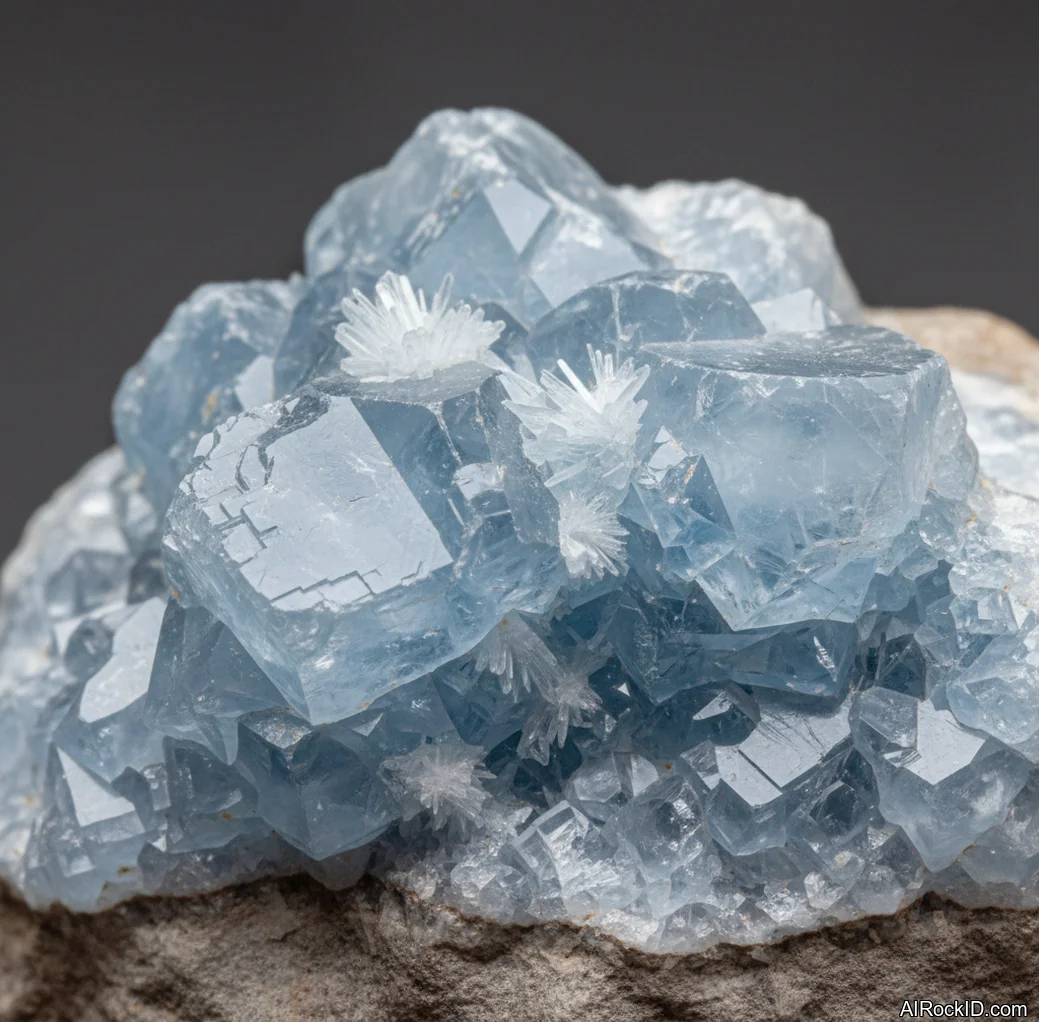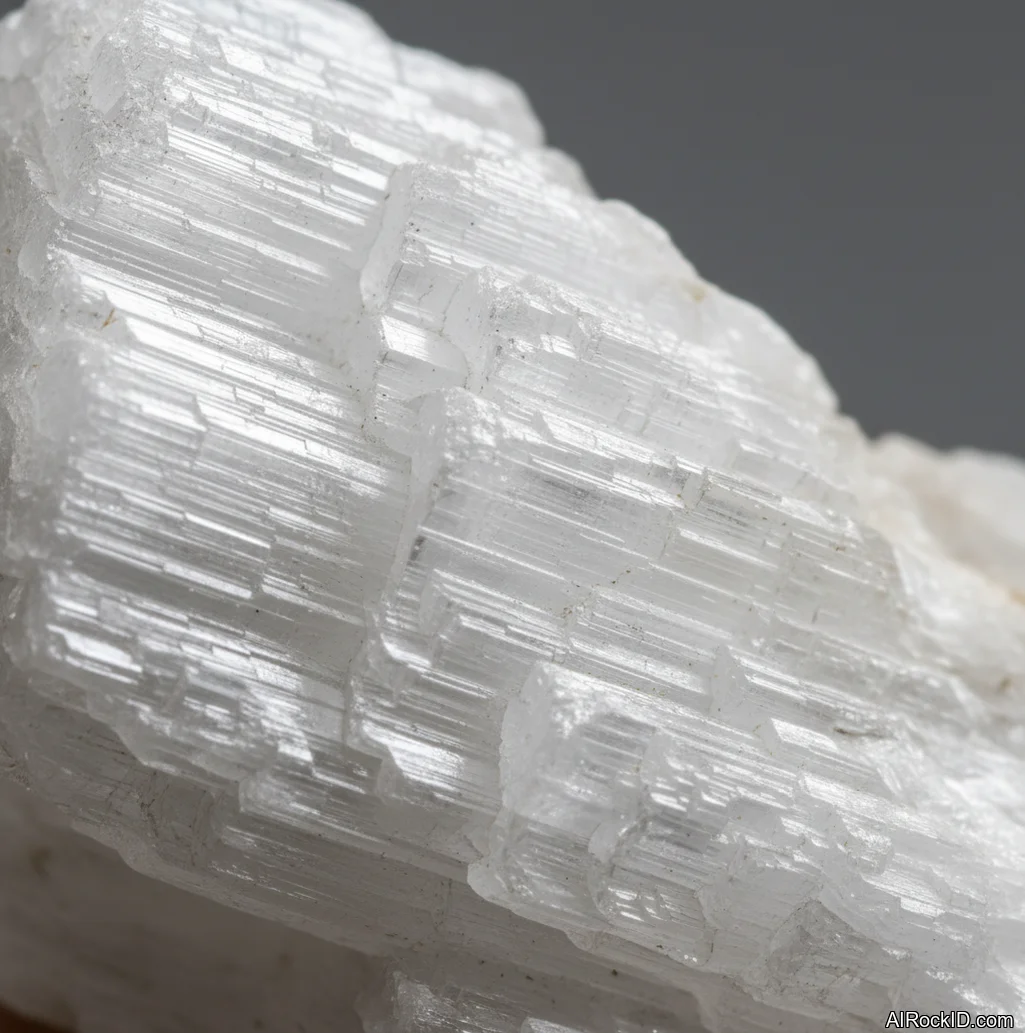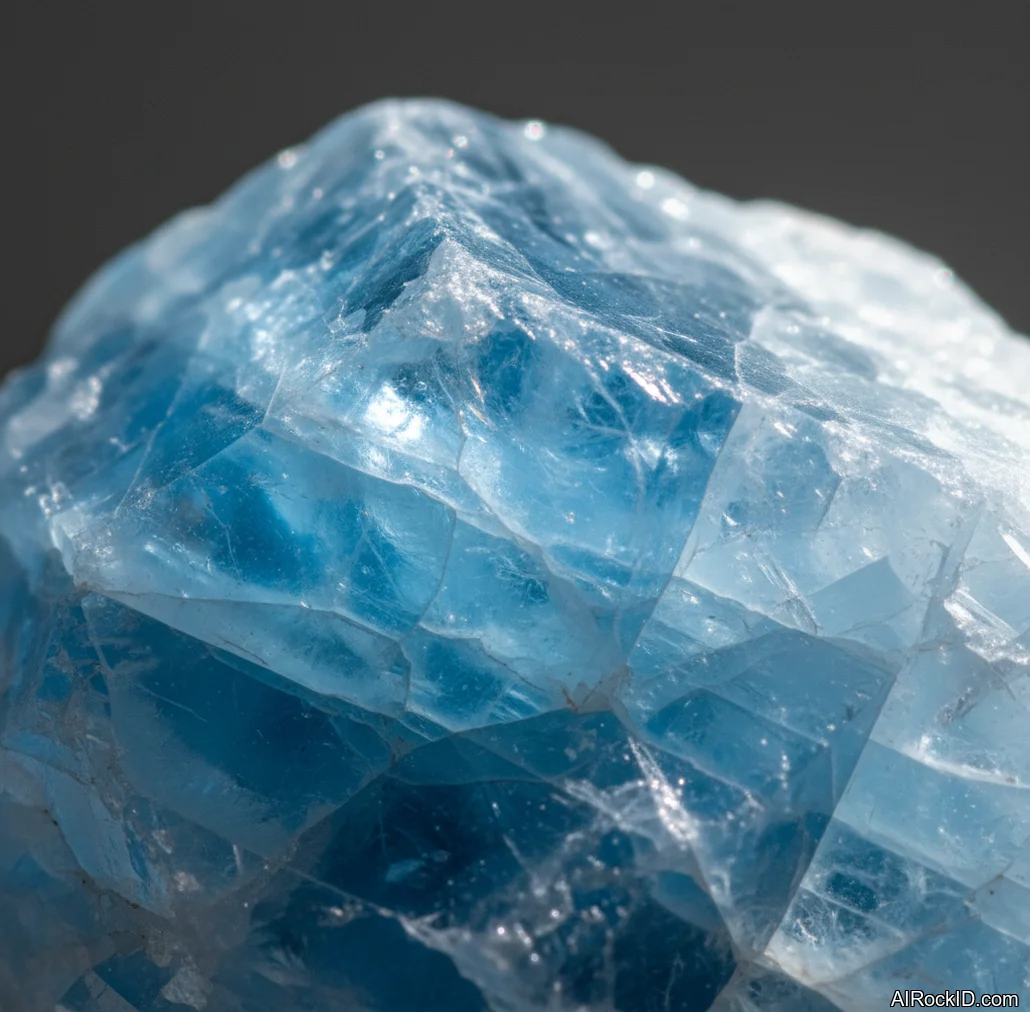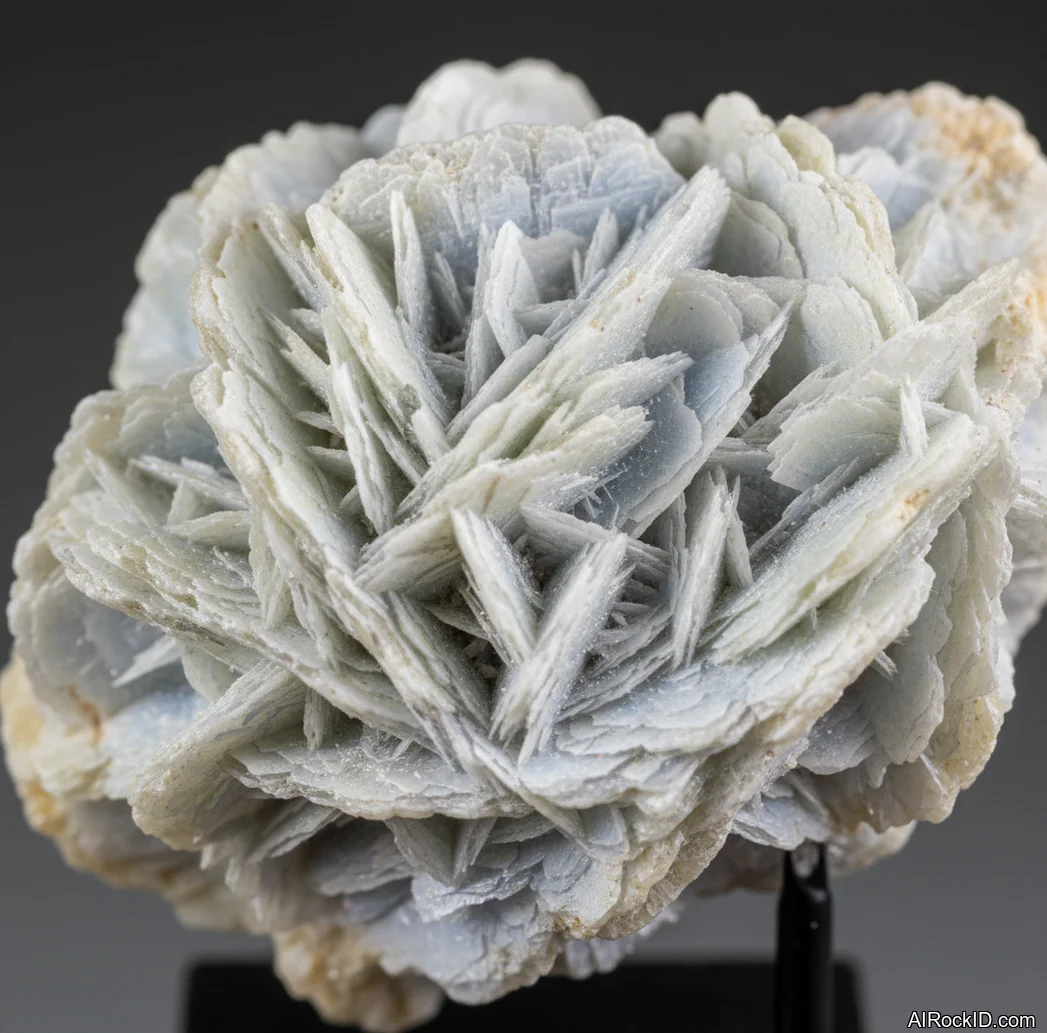
Barite


Quick answer: Barite is best recognized by its unusually high weight for its size, soft Mohs hardness of 3–3.5, and common tabular or bladed crystals. In photos, useful clues include crystal shape, cleavage, color zoning, and whether the specimen looks much heavier than similar-looking calcite or gypsum.
AI Rock ID can help compare a barite photo against visually similar minerals by checking crystal habit, color, luster, and context clues. RockIdentifier.io provides photo-based identification support, but weight, hardness, and streak tests are often needed to confirm barite.
Good fit
- Collectors who want a dense, distinctive sulfate mineral
- Specimens showing bladed, tabular, or rosette-like crystal habits
- Educational collections focused on mineral identification by density
- Buyers who can handle delicate, soft crystals carefully
Not a good fit
- Jewelry that needs daily wear durability
- Collectors who prefer lightweight display pieces
- Situations where the specimen may be dropped, scratched, or washed often
Most commonly confused with
- Calcite: Calcite is usually lighter, reacts readily with dilute acid, and has Mohs hardness 3.
- Celestite: Celestite can look similar in pale blue crystals but is typically strontium sulfate rather than barium sulfate.
- Gypsum: Gypsum is much softer at Mohs 2 and can be scratched easily with a fingernail.
- Quartz: Quartz is much harder at Mohs 7 and usually feels lighter for the same apparent size.
Barite vs. Similar Minerals
| Mineral | Key Difference | Simple Check |
|---|---|---|
| Barite | Very heavy for its size; commonly tabular or bladed | Compare weight against similar-sized stones |
| Calcite | Lighter and commonly fizzes in dilute acid | Acid reaction test if appropriate |
| Celestite | Often pale blue and similar-looking, but typically less dense | Check density and locality information |
| Gypsum | Much softer and easily scratched by a fingernail | Fingernail scratch test |
| Quartz | Harder and lacks barite’s heavy feel | Scratch test against glass |
AI identification confidence
AI identification of barite is usually more reliable when the photo shows crystal habit, luster, matrix, and scale. Confidence is lower for tumbled pieces, massive white chunks, or cropped photos where the mineral’s high density cannot be evaluated.
When AI gets it wrong
- The specimen is white, gray, or colorless and lacks visible crystal faces
- The photo does not include scale, matrix, or multiple angles
- A heavy-looking specimen is actually another dense mineral or a coated stone
- Blue barite is confused with celestite based on color alone
Final recommendation
For identification, combine photo-based clues with weight, hardness, cleavage, and any locality information from the seller. For buying, ask for natural-light photos, size, weight, and disclosure of repairs, coatings, or glued matrix pieces.
How to Check Barite Authenticity Before Buying
Authentic barite should feel noticeably heavy for its size because of its high specific gravity. Ask for specimen dimensions and weight when buying online, especially for colorless, white, or pale blue pieces that resemble other minerals. Natural barite may have small chips, edge wear, or matrix attachment, while overly glossy surfaces, uniform color, or hidden glue lines can indicate treatment or repair.
Photo Tips for Identifying Barite
Take photos in natural, indirect light from the front, side, and top so crystal shape and cleavage can be seen. Include a ruler, coin, or hand for scale, and photograph any matrix or label because locality can help separate barite from celestite, calcite, and gypsum. A short note about the specimen’s weight compared with a similar-sized quartz or calcite piece can improve identification confidence.
Barite in Collections and Display
Barite is popular in mineral collections because its density and crystal habits make it useful for learning identification skills. Many specimens are soft and brittle, so display pieces should be placed where they will not be handled frequently. Darker display backgrounds can make white, honey, blue, or colorless barite crystals easier to examine.
What Is Barite?
Barite is a barium sulfate mineral with the chemical formula BaSO4.
Pick up a chunk and the first thing you clock is the weight. It just drops into your palm like a paperweight, way heavier than you expect if you’re used to quartz or calcite, and honestly that heft is one of the quickest field clues you’ll ever get.
At a glance, barite can pass for other stuff: calcite, gypsum, even a pale bit of quartz if the piece is clean and glassy. But the feel gives it away, and so does the way it breaks. Those flat cleavage faces show up fast, and they can stack into blades, booky plates, or those squat tabular crystals, and when you tilt a decent piece under a shop light you’ll catch sharp little flashes off the cleavage planes. Pretty. Also kind of fussy. It bruises and chips if you toss it in a pocket with harder rocks (ask me how I know).
Origin & History
Most dealers will call it “heavy spar” long before they bother saying barite, and yeah, that old nickname checks out the second you pick a piece up. It’s weirdly weighty for something that looks so plain, and it’s got that cold, dense feel in your palm. The newer name comes from the Greek “barys,” which literally means heavy.
Barite got pinned down as its own mineral species in 1800 by D.L.G. Karsten. That was a big deal because folks kept confusing it with other white minerals that cleave easily. And later on it turned into an important ore for barium, plus a major industrial mineral, especially once drilling mud use really took off.
Where Is Barite Found?
It shows up in hydrothermal veins, limestone cavities, and sedimentary settings worldwide. Collector material often comes from Morocco, China, Romania, the USA, and Brazil.
Formation
Look closely at how barite sits in a pocket and it usually tells a late-stage story. You can almost see it: it turns up after other stuff has already had its turn, tucked into the leftover space (the kind of pocket you’d open and find a dusty coating on the walls).
Thing is, it commonly forms when barium-rich fluids run into sulfate-rich fluids, and BaSO4 drops out because it just doesn’t want to stay dissolved.
You’ll run into it in hydrothermal veins alongside fluorite, calcite, quartz, plus sulfides. And it shows up in sedimentary settings too, like bedded barite layers and nodules.
In vugs and cavities, it can grow those bladed or tabular crystals collectors chase. But in some deposits it’s just massive and granular. Kind of boring, honestly. Same mineral. Totally different vibe.
How to Identify Barite
Color: Most barite you’ll see is white, cream, honey, tan, gray, or pale blue, sometimes with rusty staining. Clear crystals happen, but they’re less common in the average shop tray.
Luster: Luster ranges from vitreous to pearly, especially right on cleavage faces.
Pick up two similar-looking pieces and compare the weight. Barite feels oddly heavy for a non-metallic mineral, and that’s the trick I use at shows when labels are missing. If you scratch it with a copper penny, it’ll usually mark, and a fingernail won’t do much. And watch the cleavage: barite likes to split into flat plates or blades, while quartz won’t cooperate like that.
Common Look-Alikes
Barite is sometimes confused with these materials:
- Gypsum (selenite and satin spar)
- Calcite (clear or honey calcite, including dyed calcite sold as “honey” pieces)
- Quartz (clear/milky quartz points that get mislabeled when barite is clean and glassy)
- Celestite (pale blue to colorless clusters, especially when the barite is tabular)
- Glass fakes/resin casts made to mimic bladed barite clusters (often sold as “barite roses” or generic crystal clusters)
Market Cautions & Treatments
When AI Can Get This Wrong
At first glance, photos of white or colorless barite get called gypsum, calcite, or even quartz because the camera only sees “pale and shiny.” AI struggles most with bladed clusters and rosettes since gypsum and calcite can grow in similar habits. The real test is in-hand: barite feels heavy, shows clean flat cleavage faces, and at Mohs 3 to 3.5 it’ll scratch with a copper coin but won’t take a steel knife the way quartz does.
Properties of Barite
Physical Properties
| Crystal System | Orthorhombic |
| Hardness (Mohs) | 3-3.5 (Soft (2-4)) |
| Density | 4.3-4.6 g/cm3 |
| Luster | Vitreous |
| Diaphaneity | Transparent to translucent |
| Fracture | Uneven |
| Streak | White |
| Magnetism | Non-magnetic |
| Colors | White, Colorless, Cream, Honey, Tan, Gray, Blue, Brown |
Chemical Properties
| Classification | Sulfates |
| Formula | BaSO4 |
| Elements | Ba, S, O |
| Common Impurities | Sr, Ca, Pb, Fe |
Optical Properties
| Refractive Index | 1.636-1.648 |
| Birefringence | 0.012 |
| Pleochroism | None |
| Optical Character | Biaxial |
Barite Health & Safety
For most people, it’s safe to handle, and a quick splash of water isn’t a big deal. The bigger real-world problem isn’t the chemistry at all. It’s how easy it is to crack, chip, or just snap if you bump it on a hard edge (countertops are brutal).
Safety Tips
If you’re trimming matrix or brushing out those crusty little pockets, put on eye protection and try not to inhale the fine dust that floats up (it hangs in the air longer than you’d think). And once you’re done handling any mineral specimen, wash your hands.
Barite Value & Price
Price Range
Rough/Tumbled: $5 - $250 per specimen
Cut/Polished: $10 - $60 per carat
Prices can swing a lot depending on the crystal form and how beat up it is. Clean, sharp bladed clusters with nice color (blue or golden) are the ones that pull real money, but the scuffed-up white chunks, with chipped edges and that dull, chalky look, usually end up in the bargain bin.
Durability
Nondurable — Scratch resistance: Fair, Toughness: Poor
Barite is stable in normal indoor conditions, but its softness and perfect cleavage mean it chips and scuffs easily during handling.
How to Care for Barite
Use & Storage
Store barite by itself or wrapped, because harder stones will scratch it up fast. I keep my nicer blades in little boxes so the edges don’t get bumped.
Cleaning
1) Rinse quickly in lukewarm water to remove loose grit. 2) Use a soft toothbrush with a drop of mild soap and gentle pressure on the matrix, not the sharp crystal edges. 3) Rinse again and air-dry; don’t heat it and don’t tumble it.
Cleanse & Charge
If you’re into the metaphysical side, stick to smoke, sound, or moonlight. I avoid salt bowls with barite mostly because the crystals are soft and I don’t want abrasion.
Placement
Put it somewhere it won’t be knocked over, like a shelf away from the edge. It looks great under a lamp because those cleavage flashes pop when you move past it.
Caution
Don’t hit it with harsh acids, and don’t toss it in an ultrasonic cleaner either. And don’t just drop it in a pocket or bag with other stones unless it’s padded, because barite bruises fast along its cleavage (you’ll see those little dings show up way sooner than you’d think).
Works Well With
Barite Meaning & Healing Properties
Next to those sparkly, hard stones, barite just feels… quiet. You pick it up and it’s heavy, grounded. It kind of makes your hands slow down without you even realizing it, even if you’ve never learned a single “crystal” term in your life.
People in crystal lore tie barite to mental organization and focus, like that “clear the desk” feeling when your brain finally stops hopping around. That lines up with how I use it. When I’m sorting flats after a show, I’ll leave a barite blade right on the table, and it nudges me into this steady one-thing-at-a-time rhythm (no rushing, no bouncing between piles). But it’s not medicine. If you’re dealing with anxiety, sleep issues, or anything serious, treat it like a personal ritual tool, not a fix.
Thing is, there’s a catch folks don’t talk about enough. Barite is soft and it cleaves like crazy, so if you’re the type who’s constantly fidgeting with a stone in your pocket, it’ll get scratched up and sad fast. I think of it as a “sit with it” mineral, not an everyday pocket stone. And if you’ve ever held a fake “barite rose” that feels weirdly warm and kind of plasticky, you already get why I tell people to trust the real tell: that cool, heavy feel in your hand.
Common mistakes
- Identifying blue barite as celestite by color alone
- Assuming a white heavy specimen is quartz without testing hardness
- Using shine or clarity as proof of authenticity
- Ignoring repaired crystals or glued matrix on display specimens
- Cleaning barite with harsh chemicals or abrasive tools
- Buying online without size, weight, and natural-light photos
Identify Barite from a photo
Compare Barite traits, care tips, value clues, and common lookalikes with a clear photo.