Cryolite


Quick answer: Cryolite is a rare sodium aluminum fluoride mineral that is usually white, colorless, grayish, or pale yellow. It is best known for its historic Ivittuut, Greenland source and is often sought by collectors rather than jewelry buyers because it is soft and uncommon.
AI Rock ID can help compare a cryolite photo against visually similar pale minerals, especially when crystal habit and surface texture are visible. RockIdentifier.io provides identification support, but rare minerals such as cryolite should be confirmed with hardness, density, locality, or professional testing when value matters.
Good fit
- Collectors interested in rare fluoride minerals
- Specimens with documented Greenland or classic locality provenance
- Educational collections focused on industrial minerals or aluminum production history
- Collectors who prefer pale, glassy to waxy minerals in thumbnail or cabinet size
Not a good fit
- Daily-wear jewelry, because cryolite is soft and easily scratched
- Buyers who need a durable pocket stone
- Anyone purchasing expensive material without locality or seller documentation
- Collections stored in humid or rough handling conditions
Most commonly confused with
- Quartz: Quartz is much harder and will not scratch as easily as cryolite.
- Calcite: Calcite commonly reacts with dilute acid and has distinct rhombohedral cleavage.
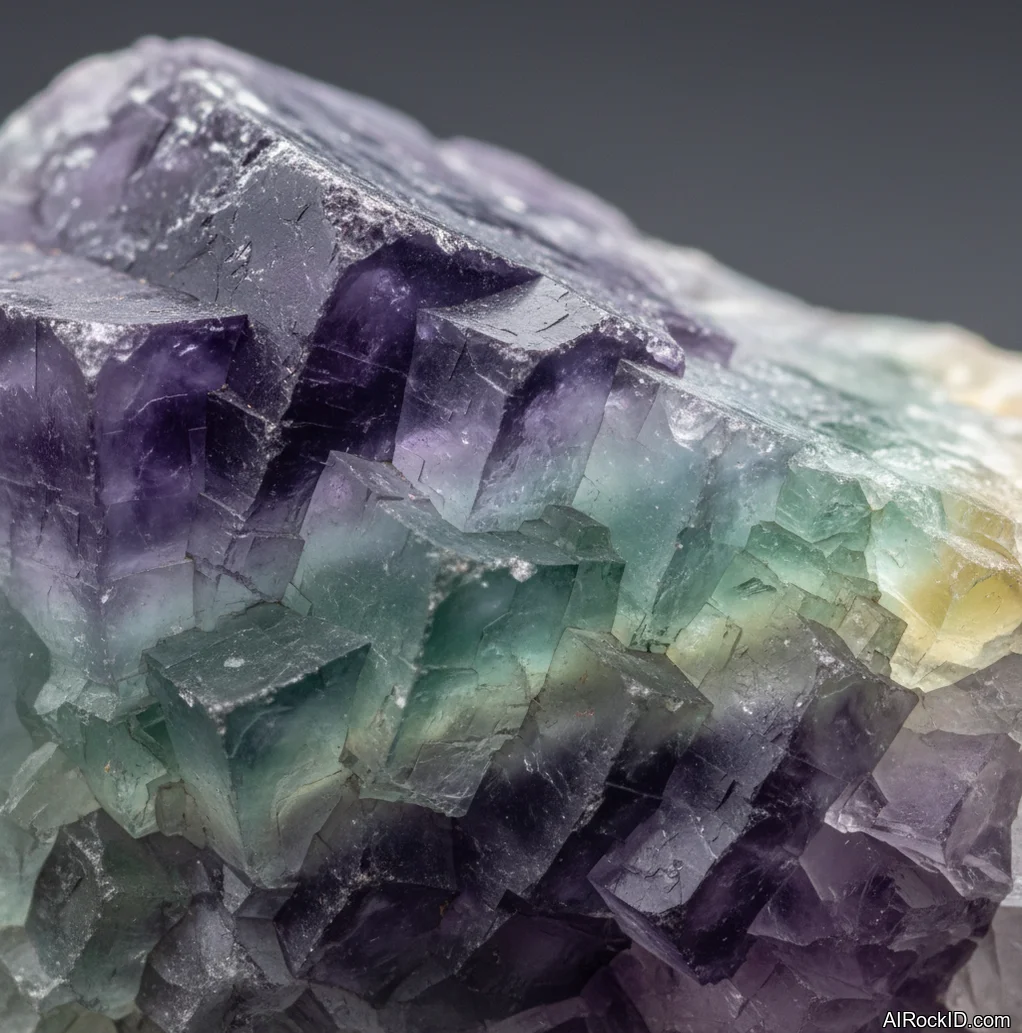
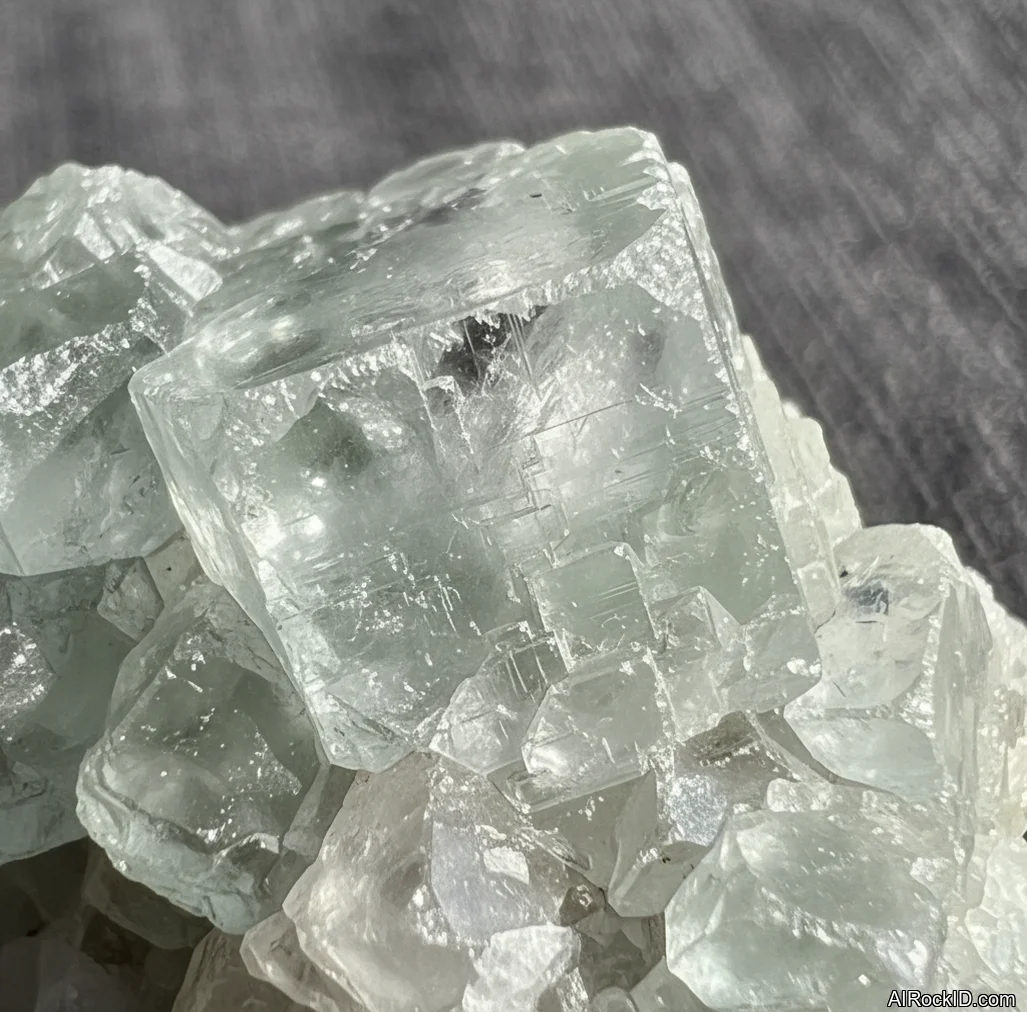
- Fluorite: Fluorite is harder than cryolite and often shows cubic crystals or bright fluorescence.
- Halite: Halite tastes salty and has perfect cubic cleavage, while cryolite should not be taste-tested.
Cryolite vs. Similar Pale Minerals
| Mineral | Typical Difference | Identification Clue |
|---|---|---|
| Cryolite | Soft sodium aluminum fluoride | Pale, waxy to vitreous, historically linked to Greenland |
| Quartz | Much harder silica mineral | Scratches glass easily and lacks cryolite’s softness |
| Calcite | Carbonate mineral | Effervesces with dilute acid and cleaves into rhombs |
| Fluorite | Calcium fluoride | Often cubic, more colorful, and typically fluorescent |
| Halite | Sodium chloride | Cubic cleavage and water solubility; taste testing is not recommended |
AI identification confidence
AI identification confidence for cryolite is usually moderate to low from photos alone because many pale, soft-looking minerals appear similar. Confidence improves when the image includes scale, multiple angles, crystal habit, matrix, locality information, and results from simple non-destructive tests.
When AI gets it wrong
- A white or colorless specimen is photographed without scale or close detail.
- The surface is dusty, altered, polished, or coated, hiding natural texture.
- The specimen is actually quartz, calcite, fluorite, halite, or feldspar with a similar pale appearance.
- Locality information is missing, especially for material claimed to be from Greenland.
Final recommendation
Choose cryolite if the goal is to add a rare, historically important fluoride mineral to a collection. For expensive specimens, prioritize documented provenance, clear photos, and seller transparency over color alone.
How to Check Cryolite Authenticity
Authentic cryolite is best evaluated through a combination of provenance, physical properties, and comparison with known specimens. Ask for locality information, especially if the piece is claimed to be from Ivittuut, Greenland. Avoid relying only on color, because many common minerals can be white, gray, or colorless.
Buying Cryolite Specimens
Cryolite is more often sold as a mineral specimen than as a gemstone. Good listings usually include size, weight, locality, condition notes, and clear photos from several angles. Be cautious with unusually cheap or unusually perfect pieces that lack documentation.
Cryolite in Industrial History
Natural cryolite was historically important as a flux in aluminum production. The famous Greenland deposits were heavily mined and are now a major reason old locality specimens interest collectors. Modern industrial use is largely supplied by synthetic cryolite rather than natural mineral specimens.
What Is Cryolite?
Cryolite is a rare halide mineral made of sodium aluminum fluoride (Na3AlF6).
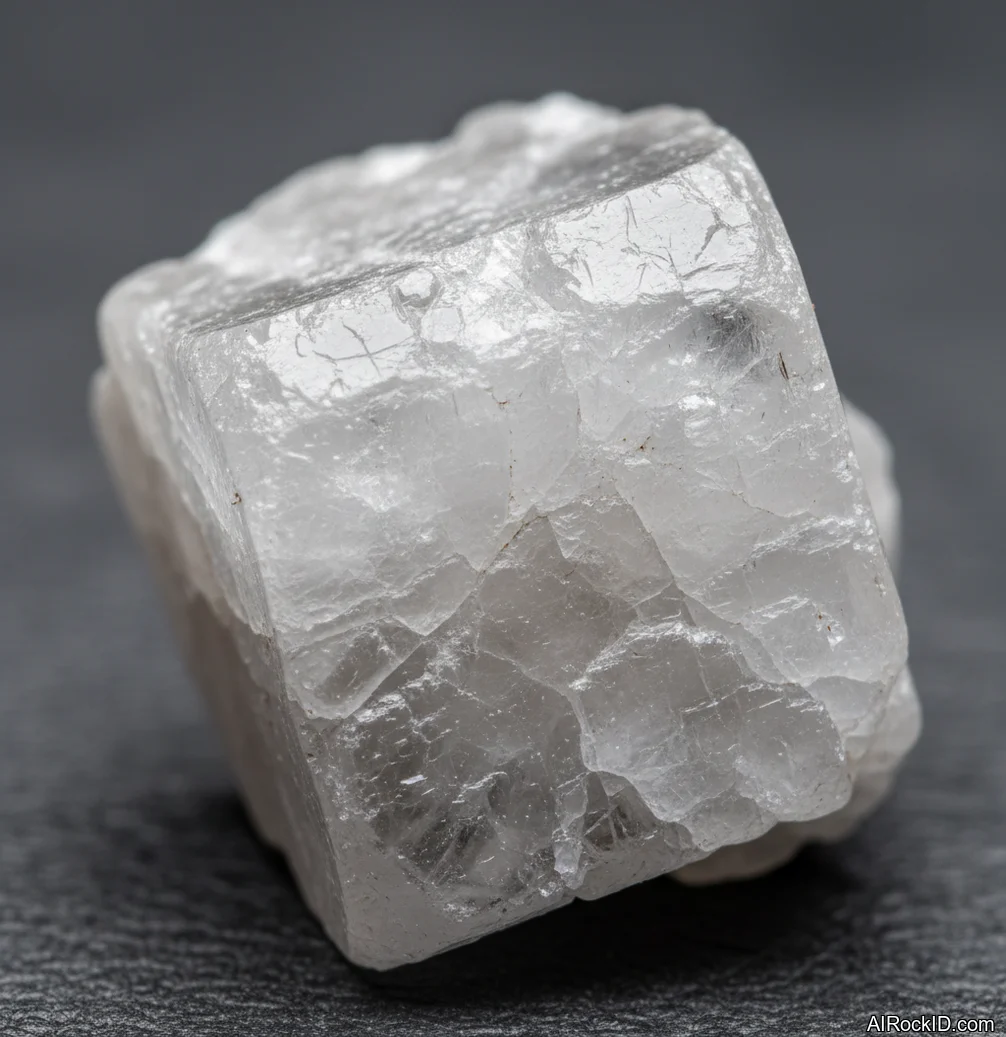
Look, the first time you see it, it honestly just looks like a lump of cloudy ice that never got the memo to melt. Most of the classic material sits in that white-to-gray range, sometimes picking up a faint yellow cast or a smoky tint, and on a fresh break it can look glassy, or kind of greasy, like there’s a thin smear of wax on it. If you pick it up, it won’t feel “gemmy” at all. It’s closer to a brittle bar of soap, the kind that stays cool against your skin.
And this is the part collectors get weirdly excited about: the cleavage can throw a sharp flash when you tilt it under a lamp, then it goes totally dull the second you move it. I’ve handled a few old-stock pieces where the edges will crumble if you squeeze too hard (seriously), so you learn fast it’s a fragile cabinet mineral, not something you toss in a pocket.
Origin & History
Cryolite first got described in 1799 from Ivittuut (spelled Ivigtût back then), Greenland, by the Danish physician and naturalist Peder Christian Abildgaard. The name’s built from Greek words meaning “cold” and “stone,” basically “ice stone.” And yeah, that tracks the second you see a freshly broken face, that icy-white look that almost flashes a little in the light if you tilt it.
But its real claim to fame is industry, not jewelry. Cryolite from Ivittuut turned into a major flux for aluminum production through the 1800s and into the early 1900s. So most of it was used up in factories, not saved on shelves, which is why good, intact hand specimens from the classic locality can feel oddly scarce for how famous the name is.
Where Is Cryolite Found?
The classic and historically important source is Ivittuut, Greenland; smaller occurrences are reported from places like Colorado (USA), Russia, and Brazil, usually in alkaline igneous settings.
Formation
Look, once you start paying attention to where cryolite actually turns up, the pattern’s hard to miss. It keeps popping up in that oddball, fluorine-heavy chemistry you get with alkaline magmas. It forms late in the game, as a late-stage mineral in highly evolved, fluorine-bearing intrusive rocks, and it’s often tied to granite pegmatites or alkaline complexes where the fluids sat around long enough to concentrate the weird elements (the kind that don’t usually get center stage).
Thing is, cryolite isn’t some everyday rock-former. So instead of neat, textbook crystals, it usually shows up as pockets, chunky masses, or a sort of granular material. Real crystals are out there, sure, but most of what you’ll see for sale is massive and cleavable, and it’ll sometimes be mixed in with other pale fluorides that look almost identical until you stick them under a loupe and actually check.
How to Identify Cryolite
Color: Most cryolite is white to gray and can look milky, waxy, or ice-like; some pieces pick up faint yellowish or smoky tones from impurities or staining.
Luster: Fresh surfaces are vitreous to slightly greasy, especially along cleavage faces.
Pick up a piece and test the “feel” first: it’s soft enough that sharp corners scuff and dull faster than you’d expect from something that looks like quartz. If you scratch it with a steel nail, it’ll mark, and a copper coin can sometimes bite depending on the exact material and surface. And watch the cleavage: rotate it under a single light source and you can catch a quick glassy flash on a flat face, then it vanishes as you move your wrist.
Common Look-Alikes
Cryolite is sometimes confused with these materials:
- Calcite (white massive or cleaved pieces sold as “cryolite”; softer and fizzes in acid)
- Milky quartz (cloudy white chunks; much harder and no easy cleavage)
- Satin spar gypsum (white fibrous chunks; lighter feel, silky chatoyance, scratches with a fingernail)
- Halite (white/clear salty-looking pieces; cubic cleavage and it’ll taste salty, plus it dissolves fast)
- White fluorite (especially pale massive fluorite; harder at Mohs 4 and shows better cleavage planes)
- Opalite glass (man-made milky glass sold as “ice cryolite”; warmer feel, more uniform glow, and usually has tiny bubbles)
Market Cautions & Treatments
When AI Can Get This Wrong
At first glance in photos, cryolite reads like milky quartz, white calcite, or even opalite because they all do that cloudy-ice look. AI struggles most when the piece is polished, since cryolite’s greasy-waxy luster gets muted and everything turns into “white tumble” on camera. The real test is physical: cryolite scratches way easier than quartz, and it won’t fizz like calcite if you hit an unpolished spot with a tiny drop of dilute acid.
Properties of Cryolite
Physical Properties
| Crystal System | Monoclinic |
| Hardness (Mohs) | 2.5-3 (Soft (2-4)) |
| Density | 2.95-3.00 |
| Luster | Vitreous |
| Diaphaneity | Transparent to translucent |
| Fracture | Uneven |
| Streak | white |
| Magnetism | Non-magnetic |
| Colors | white, gray, colorless, yellowish white, smoky gray |
Chemical Properties
| Classification | Halides (fluorides) |
| Formula | Na3AlF6 |
| Elements | Na, Al, F |
| Common Impurities | Ca, Fe, Si |
Optical Properties
| Refractive Index | 1.338-1.339 |
| Birefringence | 0.001 |
| Pleochroism | None |
| Optical Character | Biaxial |
Cryolite Health & Safety
You can handle it as long as you’re gentle, but don’t breathe in any of the dust. And don’t soak it either. Soft fluorides can degrade over time, and they can turn ugly if they sit in water.
Safety Tips
Don’t cut it or grind it unless you’ve got proper respiratory protection on. And keep it out of water. If you’ve been rubbing at any crumbly spots and end up with that dusty grit on your fingertips (you know the stuff that sticks in the creases), wash your hands after you handle it.
Cryolite Value & Price
Price Range
Rough/Tumbled: $20 - $250 per specimen
Prices can jump all over the place depending on where it came from (those Ivittuut labels really do move the needle), the condition (you’ll see plenty with little chips and bruises), and if it’s a clean, display-worthy cabinet piece or more of that rough, industrial-looking mass.
Durability
Fragile — Scratch resistance: Poor, Toughness: Poor
Cryolite is soft and cleaves easily, so edges and corners tend to chip during handling or shipping.
How to Care for Cryolite
Use & Storage
Store cryolite in a perky box or a lined specimen case so it can’t rattle around and self-chip. Keep labels with it, because provenance is half the point with this mineral.
Cleaning
1) Use a soft, dry brush to remove dust. 2) If you must, wipe gently with a barely damp microfiber cloth and immediately dry it. 3) Skip ultrasonic and steam cleaners.
Cleanse & Charge
If you do metaphysical cleansing, stick to smoke, sound, or a dry plate of selenite. Don’t use salt water or long rinses.
Placement
A shelf with stable temperature and low humidity is best, away from sunny windows where heat cycling can stress fragile pieces.
Caution
Soft and cleavable, so it’ll chip if you so much as catch an edge on it. Don’t soak it. Skip acids. And try not to make dust when you’re working with it (that fine powder gets everywhere, fast).
Works Well With
Cryolite Meaning & Healing Properties
Next to the loud, shiny stones, cryolite is the one that barely raises its voice. When I’m back at the table after a show, sorting flats with my fingertips all dusty and the lids half squeaking, it’s the piece that makes me pause. I’ll catch myself leaning in. People who use it for spiritual stuff usually call it “mental cooling,” like it takes the sharp edge off a busy brain. And honestly, that matches the physical feel. It’s cool to the touch, pale in a washed-out way, and kind of calming just sitting there.
But look, cryolite’s fragile, and that matters. I wouldn’t toss it in your pocket as a worry stone unless you’re fine with little scuffs, tiny chips, the whole thing getting rough around the edges. It’s happier parked by a notebook or on a desk, somewhere you’re trying to think straight and not spin out. And if you use crystals as reminders or focus objects, cryolite’s vibe is restraint. Not intensity. More of a quiet tap on the shoulder than a blast of energy.
And none of this is medical advice. If you’ve got anxiety, sleep problems, or anything serious going on, crystals don’t replace real care. Still, as a collector, I get why someone reaches for cryolite during a study session or after a long day. It’s soft-looking, it nudges you toward a softer pace, and sometimes that’s enough. (Seriously, who couldn’t use that once in a while?)
Common mistakes
- Assuming every white, glassy mineral is cryolite without hardness or locality checks.
- Buying polished pieces labeled cryolite without asking whether the material is natural or synthetic.
- Using taste tests to separate halite from cryolite; this is unsafe and unnecessary.
- Expecting cryolite to be durable enough for rings, pendants, or pocket carry.
- Overvaluing a specimen based only on a Greenland claim without provenance.
Identify Cryolite from a photo
Compare Cryolite traits, care tips, value clues, and common lookalikes with a clear photo.