Dragon Stone


Quick answer: Dragon Stone, also sold as Dragon Blood Jasper, is typically a green epidote-rich rock with quartz and red to brown iron-rich patches. It is used mainly for carvings, beads, cabochons, and decorative objects rather than as a rare mineral specimen.
AI Rock ID can help compare Dragon Stone against similar green-and-red stones by analyzing color pattern, texture, luster, and visible inclusions from a photo. RockIdentifier.io provides visual identification support, but final confirmation may require hardness checks, magnification, or a gemologist when a piece is high value.
Good fit
- Collectors who like patterned green stones with red or brown contrast
- Jewelry buyers looking for opaque beads, pendants, or cabochons
- Beginners who want a durable decorative stone with a recognizable appearance
- Carvers and lapidary hobbyists interested in earthy, mottled material
Not a good fit
- Buyers seeking transparent or faceted gemstones
- Collectors who need a formally recognized single-mineral species
- Anyone expecting consistent red-and-green patterning in every piece
- High-value purchases without seller disclosure or basic authenticity checks
Why people search for this
People often search for Dragon Stone because the trade name can be confusing: it is not a type of true jasper in the strict mineralogical sense in many cases. Buyers also want to know whether the red areas are natural, dyed, or confused with other red-and-green stones.
Most commonly confused with
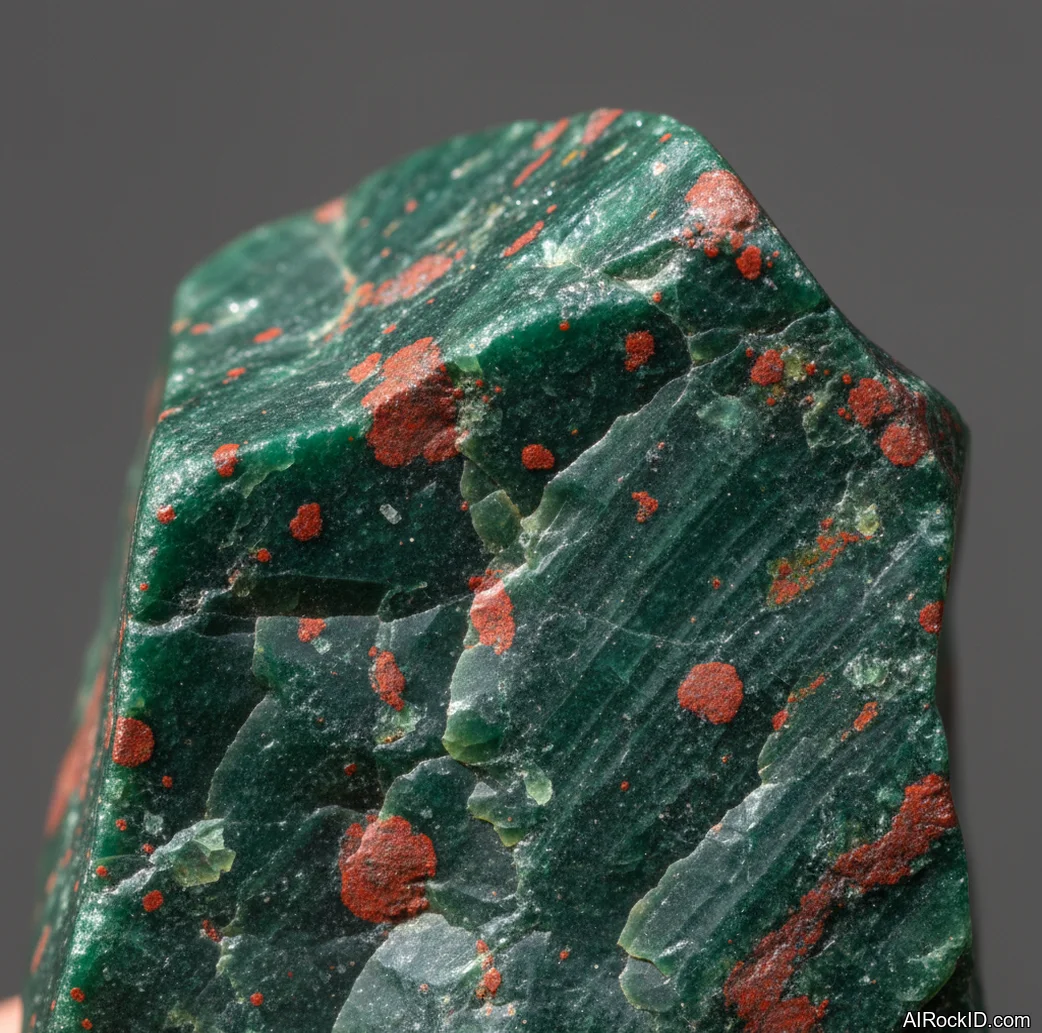
- Bloodstone: Bloodstone is usually dark green chalcedony with red spots, while Dragon Stone is commonly epidote-rich with quartz and a more granular or mottled look.
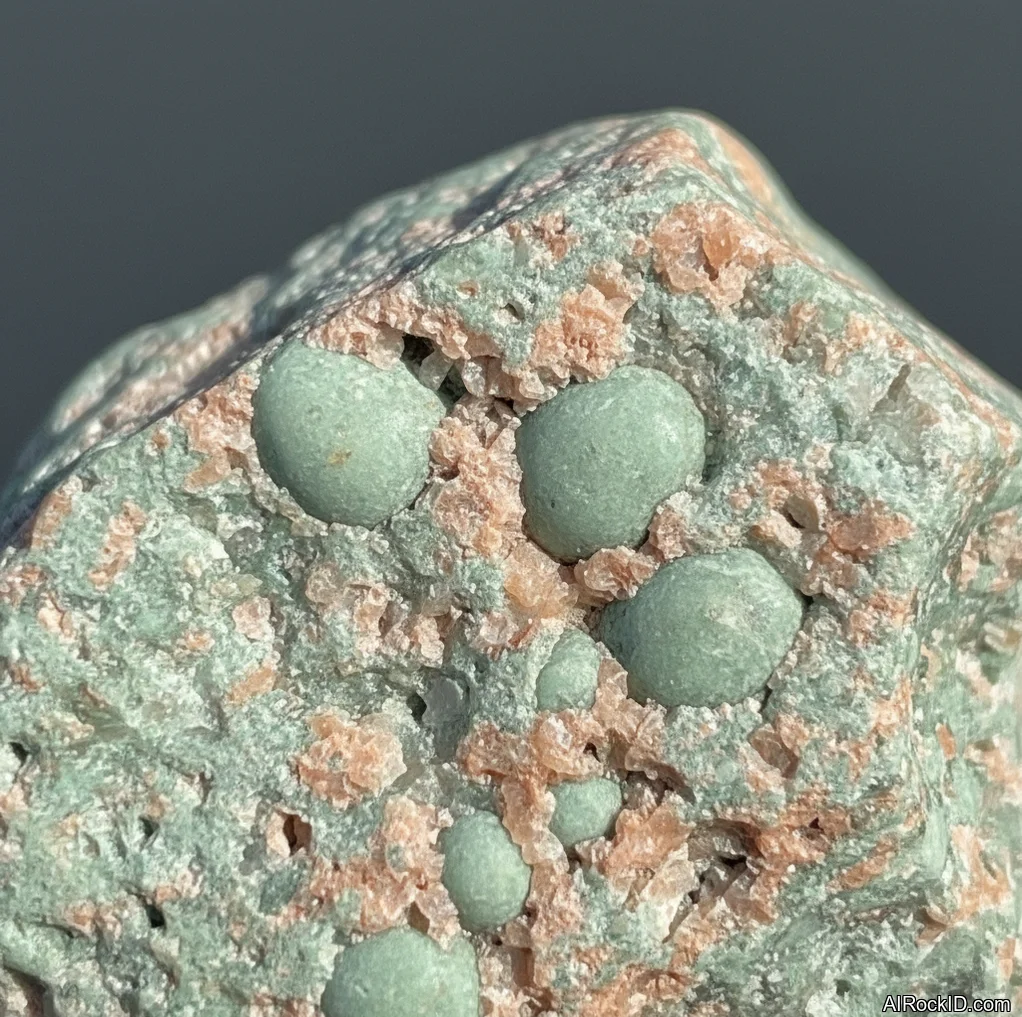
- Unakite: Unakite has green epidote with pink feldspar, not the deeper red to brown patches typical of Dragon Stone.
- Fancy Jasper: Fancy jasper can show mixed earthy colors, but it usually lacks the distinctive green epidote-and-red patch contrast sold as Dragon Stone.
- Serpentine: Serpentine is usually waxier and softer, and it normally does not show the same red iron-rich patches.
Dragon Stone vs. Similar Green-and-Red Stones
| Stone | Typical Appearance | Key Difference |
|---|---|---|
| Dragon Stone | Green base with red to brown mottled patches | Commonly epidote-rich with quartz; sold as a decorative rock |
| Bloodstone | Dark green chalcedony with small red spots | Usually finer-grained and more uniformly chalcedony-based |
| Unakite | Green and salmon-pink mottling | Pink color comes from feldspar rather than red iron-rich patches |
| Fancy Jasper | Mixed earthy colors in opaque patterns | Broader trade category with less consistent green-red contrast |
| Serpentine | Green, yellow-green, or waxy mottled surface | Softer feel and typically lacks red-brown patching |
AI identification confidence
AI identification confidence for Dragon Stone is usually moderate because the stone is recognized by trade appearance rather than a single diagnostic mineral formula. Clear, well-lit photos of the surface pattern, fracture, luster, and any polished versus rough areas improve visual identification accuracy.
When AI gets it wrong
- The photo is taken under warm or colored lighting that changes red and green tones
- The stone is heavily polished, dyed, or sealed, masking its natural texture
- Only a small area of the stone is visible, hiding the overall mottled pattern
- The specimen is actually bloodstone, unakite, serpentine, or another green ornamental rock
Final recommendation
Choose Dragon Stone when you want an opaque decorative stone with natural-looking green, red, and brown contrast. For higher-priced jewelry or carvings, ask the seller whether the material is natural, dyed, stabilized, or sold under a trade name rather than a strict mineral name.
How to Check Dragon Stone Authenticity
Authentic Dragon Stone usually shows irregular green and red-brown patterning rather than perfectly repeated or painted-looking colors. Check drill holes, chips, and edges for color concentration, because dye can collect in cracks or porous areas. A seller should be able to describe the stone as a trade material and disclose any dyeing, stabilization, or resin treatment.
Photo Tips for Identifying Dragon Stone
Use natural daylight or neutral white light and photograph the stone from several angles. Include one close-up of the surface texture and one image of the whole piece so the pattern distribution is visible. Avoid strong filters, wet surfaces, or colored backgrounds because they can make green and red areas appear more saturated than they are.
Buying Notes for Dragon Stone Jewelry
Dragon Stone beads and cabochons are usually valued for pattern, polish quality, size, and craftsmanship rather than rarity. Look for smooth finishing, secure settings, and no obvious surface-filled cracks on pieces intended for daily wear. Very bright red or unusually uniform colors should be checked for possible dyeing or enhancement.
What Is Dragon Stone?
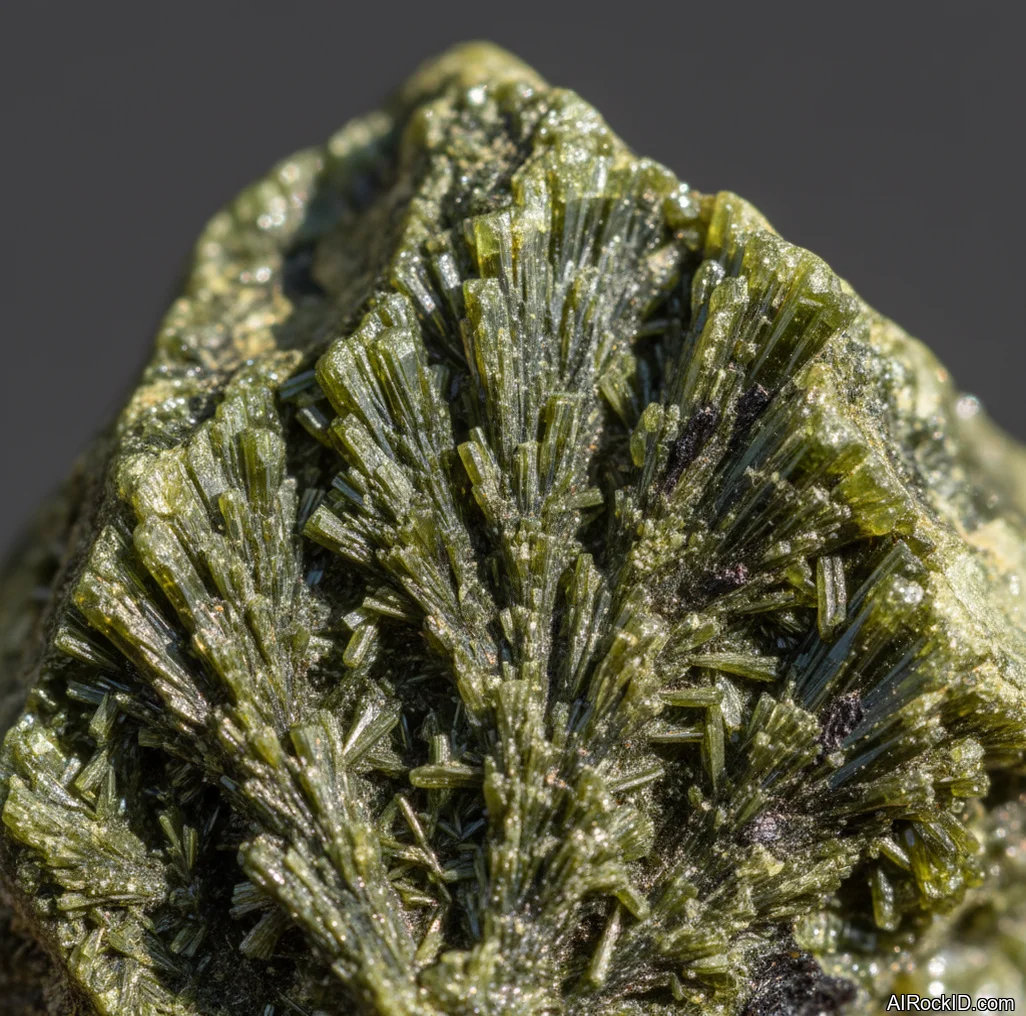
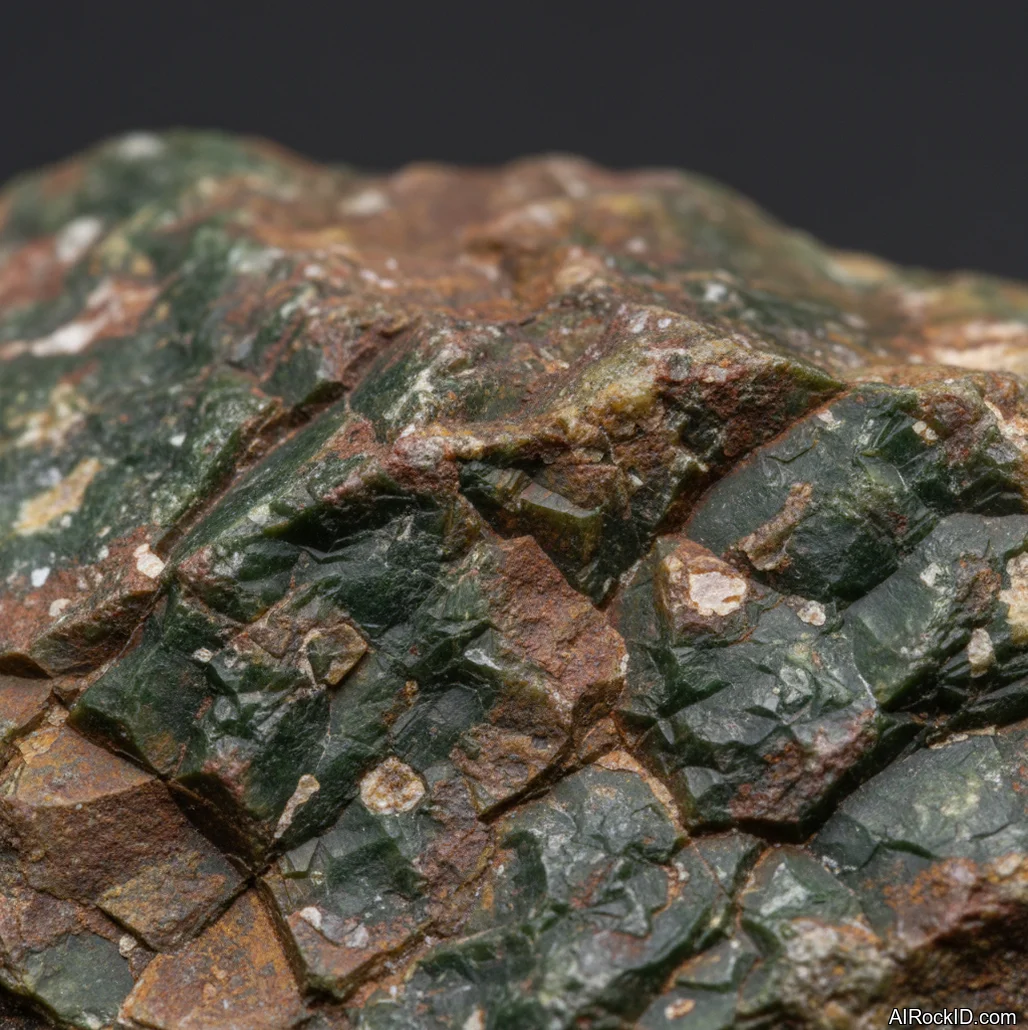
Dragon Stone is a trade name for a green epidote and quartz rock with red to brown patches, and it’s often sold as “Dragon Blood Jasper.”
Hold a tumbled piece for a second. You’ll feel that smooth, slightly waxy polish that crystal shops always seem to go for, but it still reads like a tough, tight-grained rock in your hand, not that glassy, see-through vibe you get with pure quartz. The green usually does most of the work, somewhere between forest and olive, then those rusty red blotches show up like splatter or little islands. Sometimes the pattern really does land and it looks scaly. Other times? It’s basically a green stone with ketchup spots. That’s the honest truth.
Most of what you run into is polished stuff: palm stones, spheres, worry stones, bead strands. Raw chunks are out there, but they’re harder to spot in the average retail bin, and they can look pretty bland until you hit them with a little water (then the colors finally wake up). And yeah, sellers call it jasper constantly. But when you actually handle it, it comes across more like a mixed rock than one clean “jasper” variety.
Origin & History
“Dragon Stone” and “Dragon Blood Jasper” are pretty new trade names, not some old mineral species name with a formal first write-up. It’s basically marketing tied to the look: a green base with red patches that are supposed to read like “dragon skin” and “dragon blood” when you’ve got a polished piece in your hand (the red spots really pop once the surface is buffed).
In stores and at gem shows, people will call it jasper, but that’s more of a handy shortcut than a strict ID. The stuff is usually an epidote-rich rock with quartz, and sometimes you’ll see other minor minerals mixed in. And it really hit the wider crystal market in the late 20th century into the 2000s, when Madagascar material started coming through in steady batches for lapidary cutters and metaphysical sellers.
Where Is Dragon Stone Found?
Most Dragon Stone on the market is exported from Madagascar, with smaller amounts reported from a few other metamorphic terranes where epidote and quartz occur together.
Formation
Look at it this way: epidote is basically the “yep, this rock got cooked and messed with” mineral. You usually see it when calcium-rich rocks or igneous rocks get blasted by hot fluids during metamorphism or hydrothermal alteration. And quartz tends to show up right alongside it, because silica’s everywhere and it loves sneaking in to fill cracks and open space.
Dragon Stone isn’t one clean, single-mineral crystal. It’s a blend. The green bits are epidote-rich zones, the paler speckling or background can be quartz, and those red patches are typically iron-stained areas, sometimes with hematite or other iron oxides mixed in. If you’ve ever split a rock open and noticed that rusty-looking halo along a fracture (that thin, dusty stain that clings to the edge), it’s the same idea, just a lot nicer once it’s polished.
The giveaway is the texture. It’s fine-grained and tight, so it takes a pretty solid polish, but it won’t look crisp and perfectly uniform like a manufactured composite. Under a loupe, you can usually pick out different grains and those tiny little boundaries where one mix shifts into another. Kind of messy up close. In a good way.
How to Identify Dragon Stone
Color: Typically dark green to olive green with scattered red, brick-red, or reddish-brown patches and streaks. Some pieces show cream or gray quartz speckling in between.
Luster: Polished pieces show a waxy to vitreous luster, while rough surfaces are more dull to slightly shiny.
Pick up a piece and feel the temperature. Real material stays cool in your palm longer than dyed resin stuff. Look closely at the red areas: in natural pieces, the red usually fades into the green with messy edges, not perfectly crisp outlines. If you scratch it with a steel nail, it shouldn’t gouge easily, but you can sometimes leave a faint mark on softer epidote-rich spots while the quartz-rich spots resist.
Common Look-Alikes
Dragon Stone is sometimes confused with these materials:
- Dyed green jasper or dyed quartzite sold as “dragon blood jasper” (dye can sink into pits and fractures)
- Unakite (epidote + pink feldspar + quartz), especially when the pink looks brick-red in photos
- Bloodstone / heliotrope (dark green chalcedony with red spots), often confused because the red specks read similar online
- Green aventurine (quartz with fuchsite mica), when the piece is a flat olive green and the red patches are missing
- Kambaba jasper (stromatolitic jasper), if the Dragon Stone has blotchy orb-like patterns and gets listed under “green jasper”
- Green glass or resin “stone” with painted red patches (feels too warm and looks too uniform under bright light)
Market Cautions & Treatments
When AI Can Get This Wrong
At first glance in photos, AI tends to call Dragon Stone either bloodstone (because of the red on green) or unakite (because epidote is the common thread and the red can read like feldspar). The real test is texture: Dragon Stone looks like a tight-grained rock with blotchy red-brown patches, while bloodstone is more waxy and uniform green with sharper red specks. Pick up the piece and hit it with a 10x loupe, you’ll usually spot quartzy sparkle and grain boundaries in Dragon Stone, and a quick glass-scratch check (it should scratch glass) helps rule out resin or soft dyed stuff.
Properties of Dragon Stone
Physical Properties
| Crystal System | Monoclinic |
| Hardness (Mohs) | 6-7 (Hard (6-7.5)) |
| Density | 3.2-3.5 g/cm3 |
| Luster | Waxy |
| Diaphaneity | Opaque |
| Fracture | Uneven |
| Streak | White to gray |
| Magnetism | Non-magnetic |
| Colors | green, olive green, dark green, red, reddish-brown, brick red, gray, cream |
Chemical Properties
| Classification | Silicates (sorosilicate for epidote) + silica (quartz) |
| Formula | Epidote: Ca2(Al,Fe)3(SiO4)3(OH); Quartz: SiO2 |
| Elements | Ca, Al, Fe, Si, O, H |
| Common Impurities | Mn, Ti |
Optical Properties
| Refractive Index | 1.73-1.77 |
| Birefringence | 0.035 |
| Pleochroism | Strong |
| Optical Character | Biaxial |
Dragon Stone Health & Safety
Dragon Stone’s usually fine to handle and keep out on a shelf. But like any lapidary stuff, the only time you really need to be careful is when you’re cutting or grinding it, because you don’t want to breathe in the dust (it hangs in the air longer than you’d think).
Safety Tips
Use water and keep the area well-ventilated when you’re sanding or cutting. Open a window, kick on a fan, whatever it takes to keep that fine dust from hanging in the air. And don’t skip the respirator, make sure it’s actually rated for fine particulate (not just a flimsy mask that gets damp and collapses against your mouth).
Dragon Stone Value & Price
Price Range
Rough/Tumbled: $3 - $20 per tumbled stone
Cut/Polished: $2 - $8 per carat
Thing is, the price jumps usually come down to two things: the pattern and the polish. The clean, high-contrast green stuff with those red patches landing in the right spots tends to move quick, but the muddier pieces just hang around in the bargain bowl.
Durability
Durable — Scratch resistance: Good, Toughness: Good
It’s stable in normal indoor conditions, but the polish can dull if it bangs around with harder stones like quartz points.
How to Care for Dragon Stone
Use & Storage
Keep it in a pouch or a divided box if it’s polished, because harder stones can put little tracks in the surface over time. I’ve pulled dragon stone palm pieces out of mixed bowls and you can see the micro-scratches right away under a lamp.
Cleaning
1) Rinse with lukewarm water. 2) Use a drop of mild soap and a soft toothbrush to get skin oils out of tiny pits. 3) Rinse well and dry with a microfiber cloth.
Cleanse & Charge
If you do energetic cleansing, simple running water or smoke works fine for this material. I don’t leave it soaking for hours just because it’s unnecessary, not because it can’t handle it.
Placement
On a desk or by a plant, it reads earthy and grounded, especially in a sphere where the red patches wrap around. In a window, it’s fine, but the look doesn’t really improve with backlight since it’s opaque.
Caution
Skip ultrasonic cleaners and strong acids. They’ll mess up the polish, and they can bite into any softer alteration zones too. And don’t just toss it in a drawer loose with corundum or topaz, or even a little heap of quartz points. Those edges are harder than you think and they’ll scuff the shine fast.
Works Well With
Dragon Stone Meaning & Healing Properties
At first glance, Dragon Stone gets used the way people use plenty of green-and-red stones: for grit, stamina, and for getting your feet back under you when you’re scattered. I’ve moved enough of it over a shop counter to know why people grab it. They want something that feels heavy and tough in the hand, not airy. It’s got that plain “yep, this is a rock” presence, the kind that sits in your palm like a paperweight.
But look, here’s the honest part. It’s not a magic button, and some of the sales talk out there gets loud fast. What I *do* see is that it’s great as a tactile anchor. If you’re gripping a palm stone during a stressful call, that cool heft and the smooth, almost waxy polish gives your brain something simple to focus on. That’s real. Even if you file it under “comfort object” and call it a day.
Compared to something like malachite, Dragon Stone is lower drama. It doesn’t stain, it doesn’t freak out in water, and it doesn’t feel like it’ll chip if you look at it wrong. People who like it will often pair it with iron-heavy stones or clear quartz, then treat it as a straight-up “keep going” piece. So keep the metaphysical side in its lane, yeah? Supportive, personal (whatever works), and not a replacement for medical care.
Common mistakes
- Assuming Dragon Stone is always true jasper in the mineralogical sense
- Confusing Dragon Stone with bloodstone because both can be green with red areas
- Judging authenticity only by color without checking texture, edges, and drill holes
- Expecting every piece to have strong red patches, even though patterning varies widely
- Paying premium prices for a trade-name stone without asking about treatments or origin
Identify Dragon Stone from a photo
Compare Dragon Stone traits, care tips, value clues, and common lookalikes with a clear photo.