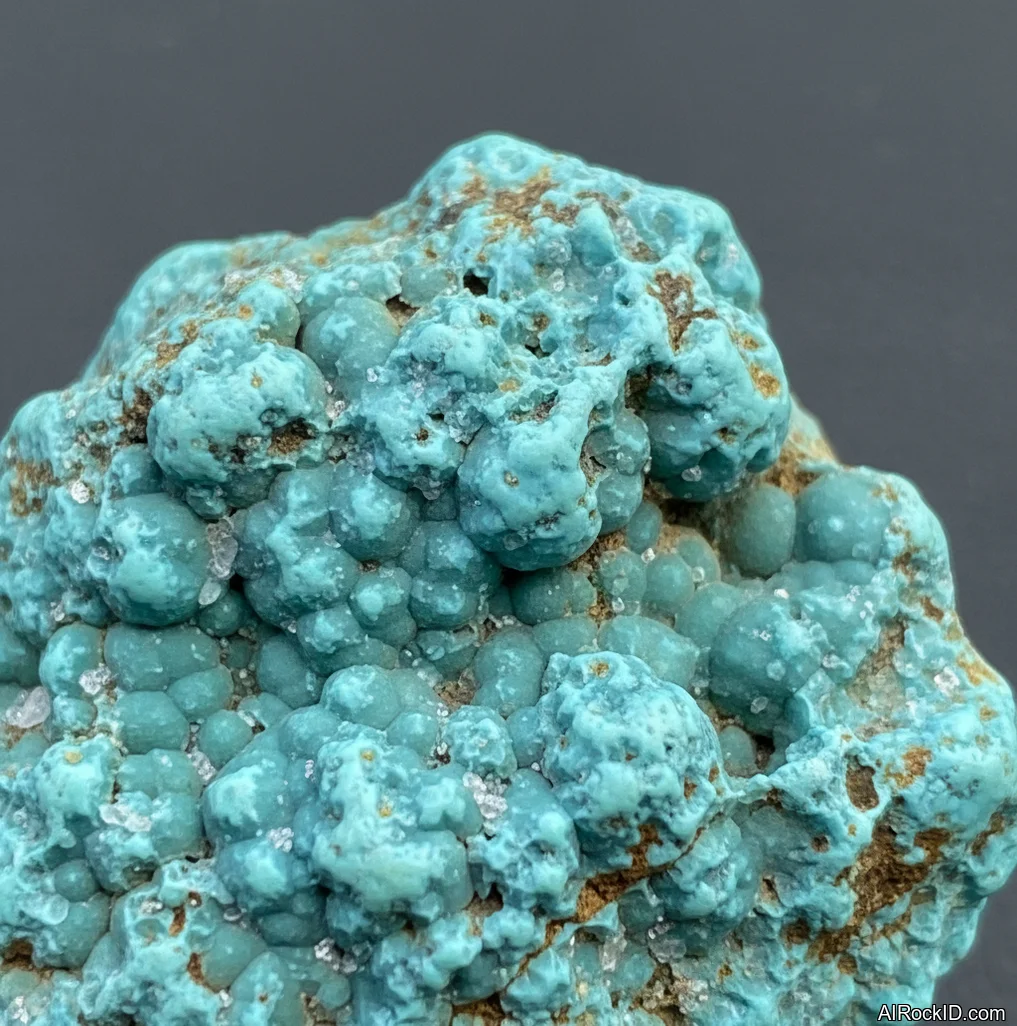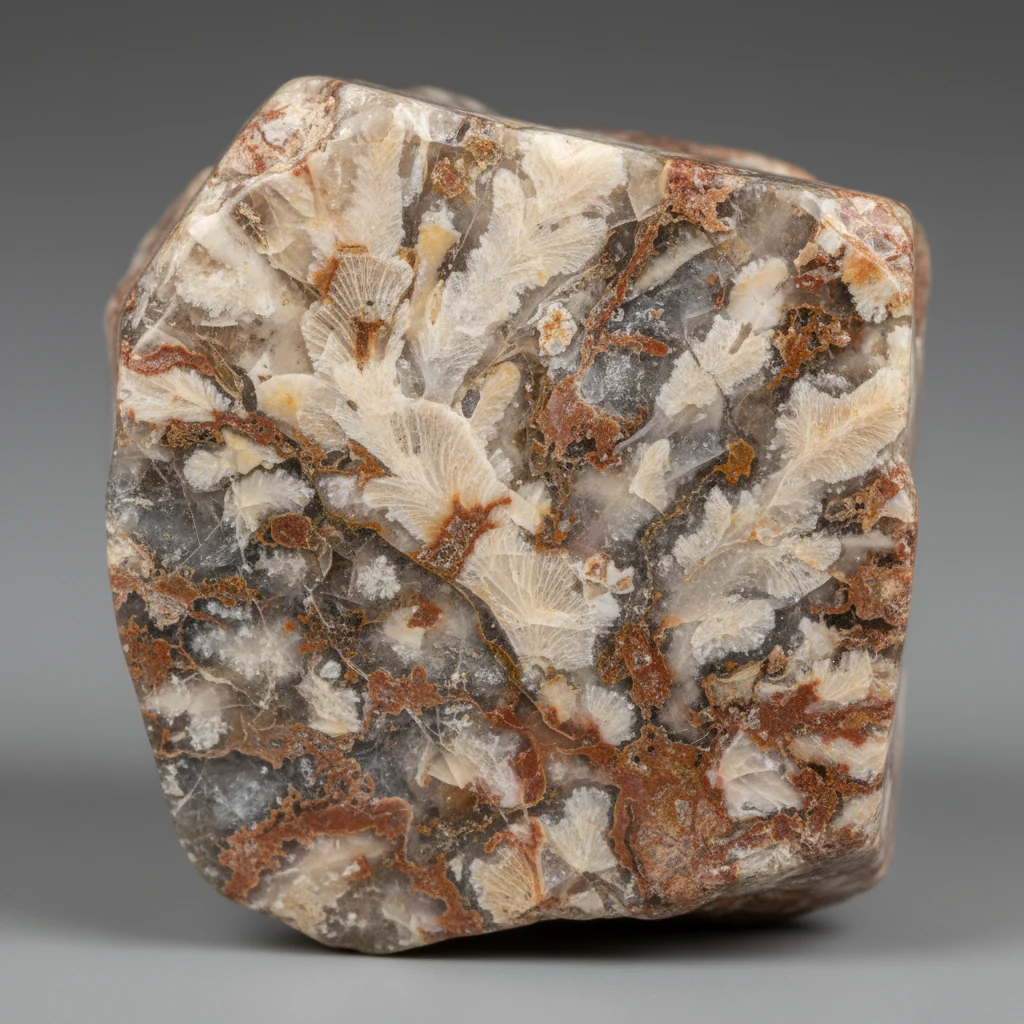
Fossilized Coral


Quick answer: Fossilized Coral is identified by its coral-like flower, honeycomb, or starburst patterns preserved in stone, most often as agate or chalcedony replacement. It is commonly used for cabochons, beads, and display pieces, but pattern clarity and proper disclosure are important when buying.
AI Rock ID can help compare Fossilized Coral against lookalikes by checking visible pattern, texture, color, and likely mineral replacement. RockIdentifier.io provides crystal identification support, but close matches such as agatized coral, jasper, and dyed patterned stones may still need hands-on verification.
Good fit
- Collectors who like visible fossil patterns in polished stones
- Jewelry buyers looking for cabochons or beads with organic-looking patterns
- Beginners who want a fossil gemstone that is usually easy to recognize when patterns are clear
- People interested in stones with both geological and biological history
Not a good fit
- Rings or everyday jewelry exposed to frequent knocks and abrasion
- Buyers who want a highly transparent or faceted gemstone
- Anyone needing a stone that can be safely cleaned with acids or harsh chemicals
Most commonly confused with
- Agate: Agate may have banding or fortification patterns, while Fossilized Coral shows preserved coral polyp structures.
- Jasper: Jasper is usually opaque with earthy patterns, but it does not normally show repeated coral-cell or starburst fossil structures.
- Petoskey Stone: Petoskey Stone is fossil coral with a distinctive hexagonal pattern, often gray to tan rather than the varied colors of many agatized corals.
- Dyed Howlite: Dyed Howlite has gray veining and porous texture, not natural coral polyp patterns.
Fossilized Coral vs. Similar Patterned Stones
| Stone | Typical Pattern | Key Difference |
|---|---|---|
| Fossilized Coral | Flower, honeycomb, or star-like coral cells | Preserved coral skeleton replaced by minerals |
| Agate | Bands, fortifications, or translucent layers | Usually lacks coral polyp structures |
| Jasper | Opaque earthy patches or mottling | Pattern is mineral-based rather than fossil-based |
| Petoskey Stone | Gray-tan hexagonal coral pattern | A specific fossil coral type from the Great Lakes region |
| Dyed Howlite | Gray web-like veining | Often artificially colored and not a fossil |
AI identification confidence
AI identification confidence is usually higher when Fossilized Coral has sharp, repeated coral-cell patterns on a polished or freshly exposed surface. Confidence drops when the piece is heavily dyed, poorly lit, weathered, or shown only from one angle.
When AI gets it wrong
- Banding in agate can be mistaken for coral structure in low-resolution photos.
- Orbicular jasper may resemble fossil cells when the pattern is small or blurry.
- Dyed or stabilized stones can make natural color an unreliable clue.
- Rough specimens may hide fossil structure until a clean face is visible.
Final recommendation
Choose Fossilized Coral with clear, repeating fossil patterns and ask whether the color is natural, dyed, stabilized, or resin-filled. For jewelry, cabochons and pendants are safer choices than high-wear ring settings because the material can scratch or chip with rough use.
How to Check Fossilized Coral Authenticity
Authentic Fossilized Coral should show repeated biological structures rather than random spots, painted lines, or printed surface patterns. A loupe can reveal whether the pattern continues into the stone or sits only on the surface. Ask sellers for disclosure about dyeing, stabilization, or resin filling, especially for bright colors.
Buying Tips for Fossilized Coral Jewelry
Look for centered patterns, smooth polishing, and secure settings that protect edges from impact. Avoid pieces with obvious cracks, pits filled with colored resin, or vague listings that describe the stone only as “coral stone” without noting fossil or treatment status. For beads, compare several holes and surfaces to see whether color and pattern are consistent throughout.
Ethical and Legal Notes
Fossilized Coral is different from modern precious coral, which may be regulated or restricted because it comes from living or recently living marine organisms. Buyers should check local rules for fossil collection and export, especially for specimens sold with specific locality claims. Reputable sellers should be able to explain whether the piece is a fossil material, a modern coral material, or a lookalike.
What Is Fossilized Coral?
Fossilized Coral is a common organic gem made of limestone that contains the fossilized remains of coral polyps. In hand, it is usually valued for its repeating coral textures: small cells, flower-like structures, and natural patterning that still echoes the original coral form. Its colors can range from white, brown, and gray to darker black tones, with a surface that is typically dull to waxy rather than glassy.
Mineralogically, Fossilized Coral is a carbonate material with the formula CaCO3, and its original organic structure has been replaced mainly by calcite during fossilization. It has a Mohs hardness of 3-4, a density of 2.6-2.8 g/cm3, white streak, opaque diaphaneity, conchoidal fracture, and no magnetism. For collectors, the appeal is less about sparkle and more about preserved structure, earthy color, and the quiet evidence of ancient shallow marine life.
Origin & History
Fossilized Coral has been known since ancient times, and its name carries an old linguistic root: the term “coral” comes from the Latin “corallium.” As a specimen, it sits between fossil, rock, and organic gem. When you turn a piece under light, the attraction is immediate and practical—the patterns are not painted or carved, but inherited from the coral colony that once lived in a shallow marine setting.
Collectors often approach Fossilized Coral by looking first at pattern preservation, then color, size, and polish. A specimen with crisp coral textures can feel more visually alive than a plain carbonate rock, even when the luster remains subdued. For locality and label checking, mindat.org is a useful plain-text reference alongside specimen records, especially when comparing named localities such as Florida, Bali, or Okinawa.
Where Is Fossilized Coral Found?
Fossilized Coral is commonly found in shallow marine environments, where coral material could be buried and preserved over long periods. Reported countries include the United States, Indonesia, and Japan, with notable localities including Florida, USA; Bali, Indonesia; and Okinawa, Japan. For a collector, those locality names matter because they give context to the fossil pattern: the specimen is not just decorative limestone, but a preserved record of coral growth from a marine setting.
Formation
Fossilized Coral forms when coral skeletons are buried and mineralized over millions of years. During that process, the original organic material is replaced by minerals, primarily calcite. The result is a carbonate fossil gem: the material is no longer living coral, but the internal pattern can still preserve the architecture of the coral polyps in limestone.
In practical terms, that formation history is what gives Fossilized Coral its best identifying feature. The stone may feel modest—opaque, dull to waxy, and only 3-4 on the Mohs scale—but the repeated coral pattern is the signature. Its chemistry is CaCO3, with calcium, carbon, and oxygen listed as the main elements, and magnesium and iron noted as common impurities. Acids can damage it, so it should be treated as a stable but not indestructible carbonate material.
How to Identify Fossilized Coral
To identify Fossilized Coral, start with the pattern. Look for distinct coral textures: clustered cells, branching or flower-like forms, and intricate natural structures that resemble the original coral. Color alone is not enough, because specimens can be white, brown, gray, or even black, but the preserved coral pattern is the field mark that separates a good piece from ordinary limestone.
Then check the physical clues. Fossilized Coral is opaque, non-magnetic, and usually dull to waxy in luster, with a white streak and conchoidal fracture. Its Mohs hardness is 3-4, so a hardness test can help confirm the identity when used carefully. It has an amorphous crystal system, a refractive index of 1.65-1.68, no birefringence, no pleochroism, and isotropic optical character, though most collectors rely first on texture, luster, and hardness.
Properties of Fossilized Coral
Physical Properties
| Crystal System | Amorphous |
| Hardness (Mohs) | 3-4 (Medium (4-6)) |
| Density | 2.6-2.8 g/cm3 |
| Luster | Dull |
| Diaphaneity | Opaque |
| Fracture | Conchoidal |
| Streak | White |
| Magnetism | Non-magnetic |
| Colors | White, Brown, Gray |
Chemical Properties
| Classification | Carbonate |
| Formula | CaCO3 |
| Elements | Ca, C, O |
| Common Impurities | Mg, Fe |
Optical Properties
| Refractive Index | 1.65-1.68 |
| Birefringence | None |
| Pleochroism | None |
| Optical Character | Isotropic |
Fossilized Coral Health & Safety
There are no significant health risks associated with fossilized coral.
Fossilized Coral Value & Price
Price Range
Rough/Tumbled: $10 - $20 per specimen
Cut/Polished: $5 - $15 per carat
Price is influenced by color, pattern, and size.
Durability
Moderate — Scratch resistance: Fair, Toughness: Good
It is stable under normal conditions but can be damaged by acids.
How to Care for Fossilized Coral
Use & Storage
Store in a dry place away from direct sunlight.
Cleaning
Clean with warm soapy water and a soft cloth. Avoid harsh chemicals.
Cleanse & Charge
Use sunlight or moonlight for cleansing.
Placement
It can be placed in any room for decorative purposes.
Caution
Avoid exposing it to extreme temperatures.
Works Well With
Fossilized Coral Meaning & Healing Properties
In crystal healing traditions, Fossilized Coral is believed to promote emotional healing, resilience, grounding, and stability. Its associations are Root and Sacral chakras, with Pisces and Cancer as linked zodiac signs. The stated elemental connections are Water and Earth, which fit the feel of the stone: marine in origin, earthy in hand, and visually anchored by ancient organic patterning.
Fossilized Coral is not intended as a substitute for medical treatment, but many collectors use it as a calming display or meditation stone. It is associated with protection, emotional healing, balance, trust, nurturing, compassion, and transformation. For care, clean it with warm soapy water and a soft cloth, avoid harsh chemicals and extreme temperatures, and store it in a dry place away from direct sunlight. It can be cleansed in sunlight or moonlight and pairs well with rose quartz, amethyst, and lapis lazuli.
Identify Fossilized Coral from a photo
Compare Fossilized Coral traits, care tips, value clues, and common lookalikes with a clear photo.
Common mistakes
- Assuming every coral-like pattern is Fossilized Coral without checking for repeated fossil structures.
- Confusing modern coral jewelry with mineralized fossil coral.
- Treating bright red, blue, or green color as natural without asking about dye.
- Using vinegar or acidic cleaners, which may damage carbonate-rich fossil material.
- Buying rough pieces from photos that do not show a clean patterned surface.