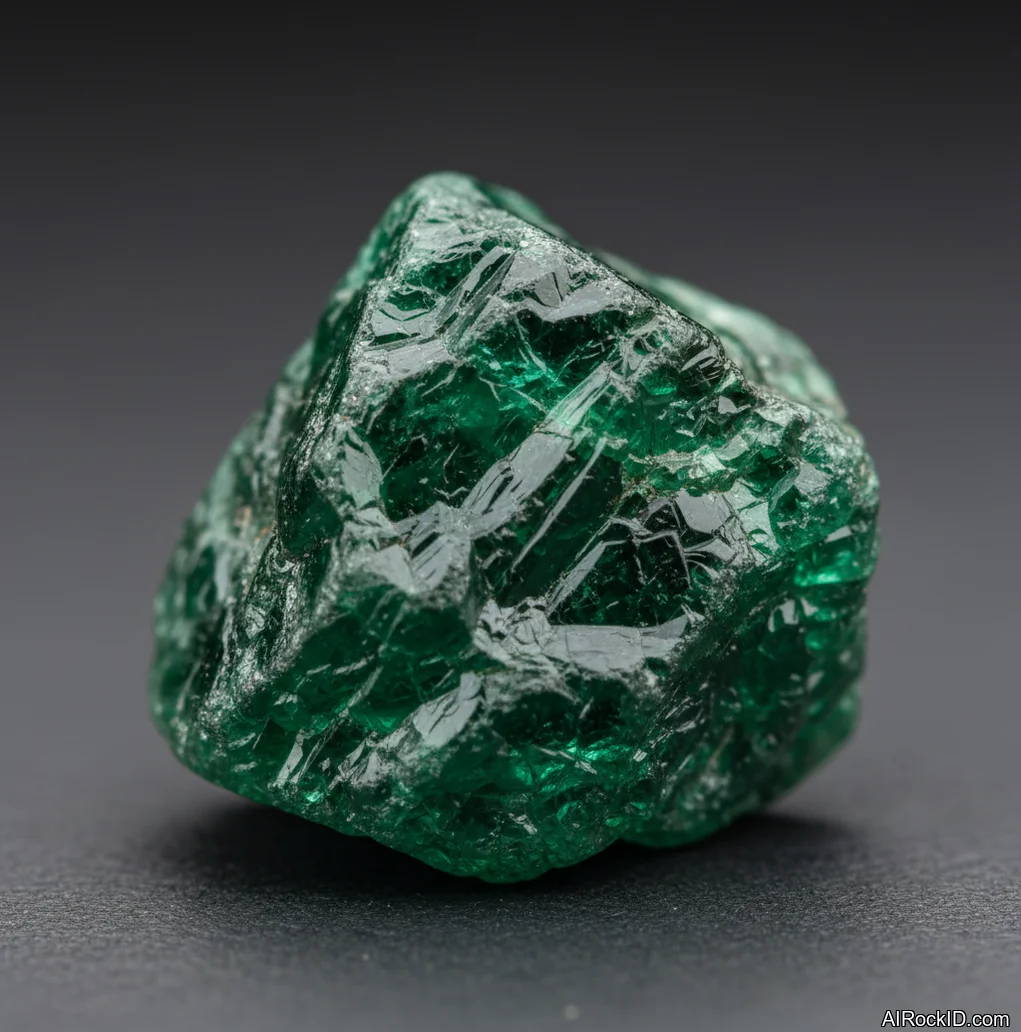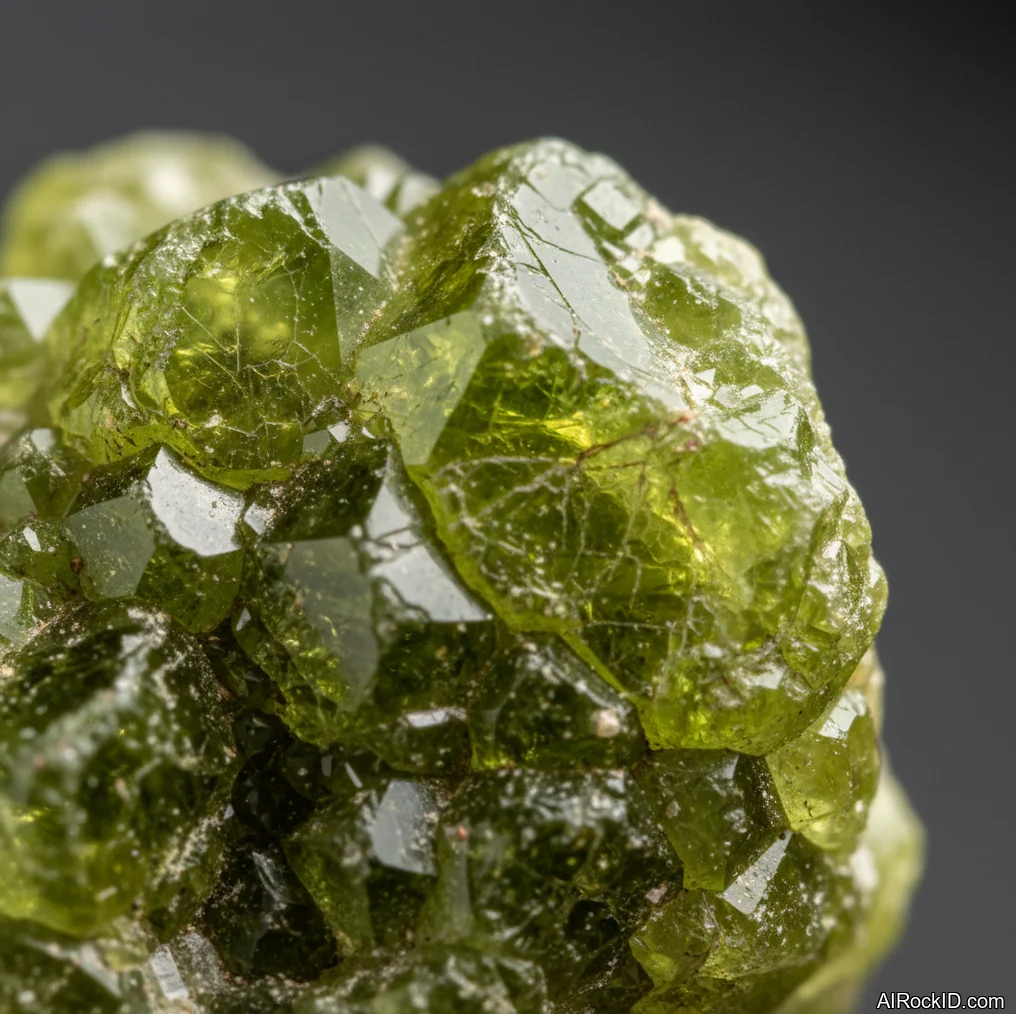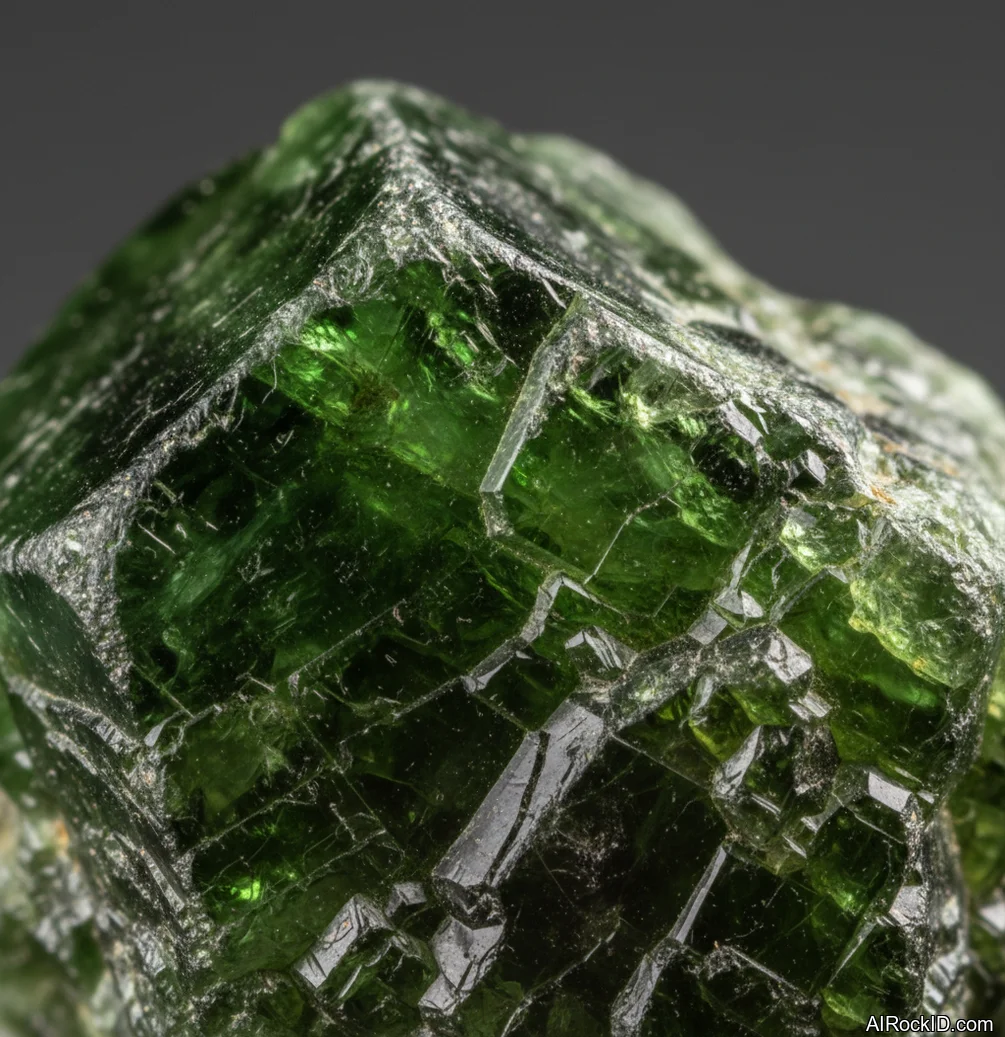
Green Garnet


Quick answer: Green garnet is a green variety within the garnet group, most often referring to tsavorite grossular or demantoid andradite. It can resemble emerald, peridot, chrome diopside, and green tourmaline, so identification usually depends on optical properties, inclusions, and gemological testing rather than color alone.
AI Rock ID can help screen a green garnet from a photo by comparing visible color, crystal habit, luster, and context clues. RockIdentifier.io provides educational identification support, but valuable gems should be confirmed by a qualified gemologist or laboratory report.
Good fit
- Collectors comparing green gemstones with similar color and brilliance
- Buyers who want a durable green gem alternative to softer stones
- People checking whether a green stone could be tsavorite or demantoid
- Jewelry owners who need a first-pass identification before appraisal
Not a good fit
- Confirming treatment status or origin from a photo alone
- Replacing a professional appraisal for high-value stones
- Identifying synthetic or assembled stones without magnification and testing
Most commonly confused with
- Emerald: Emerald is beryl and often shows a lower refractive index and more typical jardin-like inclusions than green garnet.
- Peridot: Peridot is usually more yellow-green and has strong birefringence, while garnet is singly refractive.
- Chrome Diopside: Chrome diopside is commonly softer and more strongly pleochroic than green garnet.
- Green Tourmaline: Green tourmaline is doubly refractive and often shows lengthwise color zoning, unlike singly refractive garnet.
Green Garnet vs Similar Green Gems
| Stone | Typical Clue | Key Difference |
|---|---|---|
| Green garnet | High brilliance; singly refractive | Garnet group; tsavorite or demantoid are common green types |
| Emerald | Bluish to vivid green; common internal fractures | Beryl, not garnet; often treated with oil or resin |
| Peridot | Olive to yellow-green appearance | Doubly refractive and usually less saturated green |
| Chrome diopside | Deep forest green in small stones | Softer and more cleavage-sensitive |
| Green tourmaline | Elongated crystals and possible pleochroism | Doubly refractive with different crystal structure |
AI identification confidence
AI photo identification can be moderately useful for separating green garnet from obvious non-gem materials or stones with very different appearance. Confidence is lower when distinguishing tsavorite, demantoid, chrome diopside, emerald, and green tourmaline because these gems can overlap in color and cut style.
When AI gets it wrong
- The stone is faceted, because cut gems hide crystal habit and surface texture.
- The photo lighting makes yellow-green, bluish-green, or deep green tones look inaccurate.
- The stone is mounted in jewelry, which can hide the girdle, inclusions, and back facets.
- The specimen is synthetic, treated, or glass-filled and cannot be evaluated from appearance alone.
Final recommendation
Use visual identification as a starting point, then verify green garnet with refractive index, specific gravity, magnification, and, for valuable stones, a lab report. For purchases, ask for the exact garnet variety, treatment disclosure, weight, clarity description, and return policy.
How to Check Green Garnet Authenticity
A reliable green garnet identification usually includes refractive index testing, magnification, and comparison with known garnet properties. Tsavorite and demantoid can be valuable, so seller claims should be supported with documentation when the price is high. Be cautious with vague labels such as “green garnet color,” “Russian-type demantoid,” or “tsavorite-like” if the listing does not state the material clearly.
Green Garnet Buying Notes
Color, clarity, cut quality, carat weight, and exact variety strongly affect green garnet pricing. Demantoid may show horsetail inclusions, while tsavorite is usually judged by vivid green color and transparency. A low price for a large, vivid, clean green stone should prompt extra verification.
Natural, Treated, and Synthetic Lookalikes
Green garnets are generally not known for the same routine clarity treatments as emerald, but imitation and mislabeling can occur. Green glass, synthetic spinel, cubic zirconia, and other green gems may be sold with confusing trade descriptions. A gem report is the clearest way to separate natural green garnet from lookalikes in important purchases.
What Is Green Garnet?
Green garnet is exactly what it sounds like: a green member of the garnet family, usually tsavorite (grossular) or demantoid (andradite).
Hold a piece for a second and a couple things jump out right away. It feels heavier than it should for something that size. And when you tip it under a desk lamp, the surface flashes hard, then goes quiet, then snaps bright again like someone’s flicking a switch.
Thing is, the really good green garnets don’t read “mint” in real life. They’re more like fresh leaf green, sometimes with a little warm yellow in there, and they keep that color even when the lighting isn’t doing them any favors.
People glance at one and think “peridot” because, sure, it’s green. But in your hand it’s not the same. Peridot has this slightly oily glow and you often see those lily-pad style inclusions. Green garnet, especially demantoid, throws tighter, sharper flashes and can look almost electric even when the stone’s small. But here’s the catch: most of what you run into at shows is either tiny faceted stones or tumbled pebbles that are basically just green-ish. Clean crystal specimens with crisp faces? Different money. Whole other price bracket.
Origin & History
Demantoid is the classic green andradite garnet. It was first described in the mid-1800s out of Russia’s Ural Mountains, and the name comes from a Dutch word that basically means “diamond-like,” because the dispersion can get kind of crazy for a garnet.
Look, if you’ve ever held a little demantoid up near a window and gently rocked it back and forth, you already know why that name stuck. It’ll spit tiny rainbow sparks, and they feel almost ridiculous for such a small stone.
Tsavorite is a newer trade name. The green grossular from East Africa started getting real attention in the 1960s and 1970s, and it was branded “tsavorite” after the Tsavo area in Kenya.
But dealers still bicker about what “real” tsavorite color even means. Some folks call any green grossular a tsavorite. Others save the word for that saturated, clean East African look.
Where Is Green Garnet Found?
Demantoid is classically tied to Russia’s Urals and also shows up in places like Italy and Namibia, while tsavorite is strongly associated with Kenya and Tanzania in metamorphic belts.
Formation
Most green garnet you’ll run into comes from metamorphic settings where the chemistry lines up and the rock got cooked, then squeezed, for a long time. Tsavorite (green grossular) usually shows up in calcium-rich rocks that were altered during metamorphism, often in spots where fluids brought in vanadium and chromium and that’s what pushes the clean green color.
Demantoid (green andradite) tends to be a different story. A lot of it forms in skarns or serpentinite-related environments where there’s plenty of calcium and iron around, and the conditions let garnet grow with those classic inclusions. Look, if you’ve got Russian demantoid in hand and you tilt it under a desk lamp, you might catch the “horsetail” inclusions, those curved, golden fibers. I’ve handled a few stones where the horsetails were so obvious you didn’t even need a loupe, just the right angle to the light (and a steady hand).
How to Identify Green Garnet
Color: Green garnet ranges from yellow-green to deep forest green, depending on whether it’s grossular (often cleaner green) or andradite (often slightly warmer, sometimes with a brownish cast). Some demantoid shows a neon green that looks brighter than you’d expect in low light.
Luster: Vitreous to adamantine luster, with demantoid often looking extra sparkly in faceted form.
Look closely with a 10x loupe. Demantoid may show horsetail inclusions, and tsavorite often has fine, natural inclusions but usually not the same curved “horsetail” look. The real test is heft and flash: garnet feels dense for its size, and a good green garnet snaps bright reflections when you rock it under a single point light. If you’re comparing to peridot in person, peridot’s color tends to go more yellow under warm indoor lighting, while many green garnets stay a steadier green.
Common Look-Alikes
Green Garnet is sometimes confused with these materials:
- Peridot
- Green glass (especially leaded glass)
- Dyed quartz (often labeled as 'green garnet')
- Chrome diopside
- Green tourmaline
- Synthetic yttrium aluminum garnet (YAG)
Market Cautions & Treatments
When AI Can Get This Wrong
AI photo ID gets tripped up by peridot and green glass—both can look nearly identical in a photo, especially when cut and polished. The only way to be sure is to check weight in hand and look for that sharp, almost metallic flash under a bright light. A scratch test (should scratch glass) or checking for color pooling will also sort out most fakes.
Properties of Green Garnet
Physical Properties
| Crystal System | Cubic |
| Hardness (Mohs) | 6.5-7.5 (Hard (6-7.5)) |
| Density | 3.55-3.95 g/cm3 |
| Luster | Vitreous |
| Diaphaneity | Transparent to translucent |
| Fracture | Conchoidal |
| Streak | White |
| Magnetism | Non-magnetic |
| Colors | yellow-green, green, emerald green, olive green, forest green |
Chemical Properties
| Classification | Silicates |
| Formula | X3Y2(SiO4)3 |
| Elements | Si, O, Ca, Fe, Al, Mg, Cr, V, Mn |
| Common Impurities | Cr, V, Fe, Mn, Ti |
Optical Properties
| Refractive Index | 1.74-1.89 |
| Birefringence | None |
| Pleochroism | None |
| Optical Character | Isotropic |
Green Garnet Health & Safety
Green garnet is generally safe to handle and keep out on display. If you’re cutting or grinding it, though, treat it like any other stone in the shop. Wear a mask, control the dust, and clean up afterward, because the usual lapidary dust precautions still apply.
Safety Tips
If you’re going to work with it, put on a respirator and cut it wet so the dust doesn’t get everywhere.
Green Garnet Value & Price
Price Range
Rough/Tumbled: $10 - $300 per piece (tumbled/rough), $300 - $5,000+ per specimen (fine crystal or display)
Cut/Polished: $200 - $8,000+ per carat (variety and quality dependent)
Prices climb fast when the stone’s actually clean, the green is truly saturated (not that muddy olive stuff you see under bad shop lights), and the variety is documented, like tsavorite or demantoid. And size counts, because once you get past a couple carats, clean stones get genuinely hard to find.
Durability
Durable — Scratch resistance: Good, Toughness: Good
Green garnet is generally stable in normal wear, but it can chip on sharp edges if it takes a hit, especially in rings.
How to Care for Green Garnet
Use & Storage
Store green garnet in a pouch or a compartmented box so it doesn’t rub against corundum, diamond, or even quartz points. Faceted stones can pick up tiny abrasions if they’re loose in a dish.
Cleaning
1) Rinse with lukewarm water and a drop of mild soap. 2) Use a soft toothbrush to gently scrub around facet edges or crystal grooves. 3) Rinse well and pat dry with a clean microfiber cloth.
Cleanse & Charge
For a simple reset, rinse and dry it, then leave it in indirect light for a bit. I skip harsh sun for long stretches, mostly because display habits fade everything over time, not because garnet is fragile.
Placement
Put it where you’ll actually see the flashes, like near a desk lamp or a bright window that doesn’t bake it all day. In a dark shelf, green garnet can look oddly sleepy.
Caution
Skip the ultrasonic cleaner if the piece has stones in it, and be extra careful with demantoid. Those little internal features can turn into weak spots once it starts buzzing and vibrating. And don’t just drop it into a mixed jar with harder gems, either, because it’ll get knocked around and scratched up fast.
Works Well With
Green Garnet Meaning & Healing Properties
Green garnet gets labeled a “heart” stone all the time, and honestly, I see it. That green lands in your head like new leaves after rain. It’s hard not to tie that to growth, bouncing back, and getting steady again.
Hold a polished green garnet for a second and you’ll feel what I mean. It’s cool against your skin right away, like it’s been sitting in the shade. And it’s got this small, solid heft in your palm that makes it feel real, not wispy. When I’m sorting stones at my table and they’re clicking softly against each other, I end up grabbing green garnet when I want something steady but still lively. It’s got a little bite to it. Not a sleepy stone.
But yeah, this is personal and traditional stuff, not medicine. If someone tells you green garnet will fix your heart or your blood pressure, that’s a hard no. So if you’re into crystal habits, what it can do is act like a clean visual nudge: take care of the basics, keep building what you’ve already started. And if you’ve got a demantoid with visible horsetail inclusions, it’s a great reminder that natural beauty can be a little messy (on purpose or not) and still be top shelf. Who says perfect is the point?
Common mistakes
- Assuming every green garnet is tsavorite; demantoid, grossular, and other garnet varieties can also appear green.
- Identifying a green stone as garnet based only on color.
- Ignoring double refraction tests that help separate garnet from peridot and tourmaline.
- Assuming a mounted stone can be fully authenticated without removing or testing it.
- Treating trade names such as “mint garnet” or “chrome garnet” as full gemological identification.
Identify Green Garnet from a photo
Compare Green Garnet traits, care tips, value clues, and common lookalikes with a clear photo.