Impactite


Quick answer: Impactite is a rock or glass formed when a meteorite impact melts, shocks, or fuses target material at the impact site. It can resemble obsidian, slag, or tektite, so location, texture, bubbles, inclusions, and geologic context are important for identification.
AI Rock ID can help compare an unknown dark glassy specimen with impactite, obsidian, tektite, slag, and other lookalikes using visible traits. RockIdentifier.io provides visual identification support, but suspected impact specimens are best confirmed with provenance or laboratory testing when value or scientific significance is involved.
Good fit
- Collectors interested in meteorite-impact geology
- Specimens with documented crater, strewn field, or collection provenance
- Educational displays about shock metamorphism and impact events
- People who like dark, glassy, natural materials with unusual formation histories
Not a good fit
- Buyers who need guaranteed meteorite content without documentation
- Jewelry wearers expecting a highly durable everyday stone
- Collectors relying only on color or glassy appearance for identification
- Anyone seeking a medical or therapeutic substitute
Most commonly confused with
- Obsidian: Obsidian is volcanic glass, while impactite forms from meteorite-impact melting or shock.
- Tektite: Tektites are natural impact glasses ejected and shaped during flight, while many impactites remain within or near the crater material.
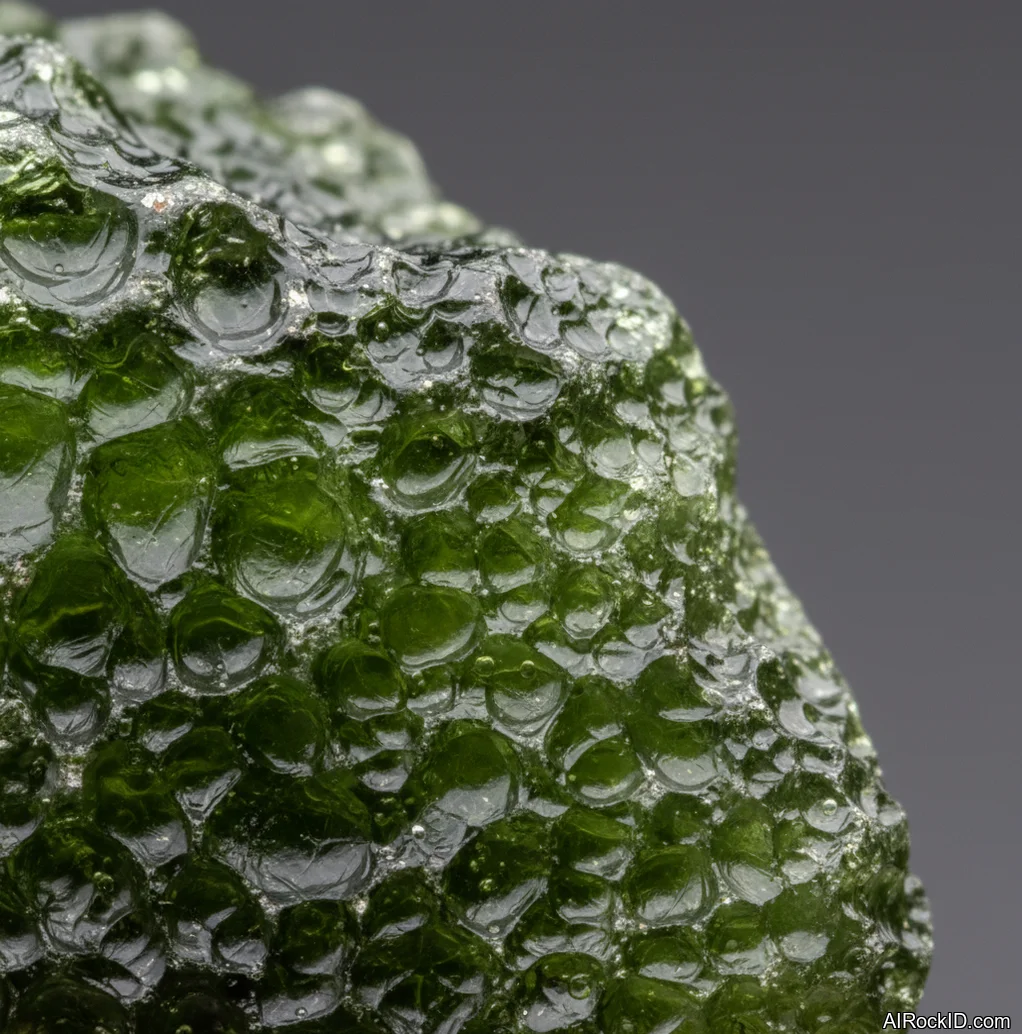
- Moldavite: Moldavite is a specific green tektite from the Central European strewn field, not a general term for all impact glass.
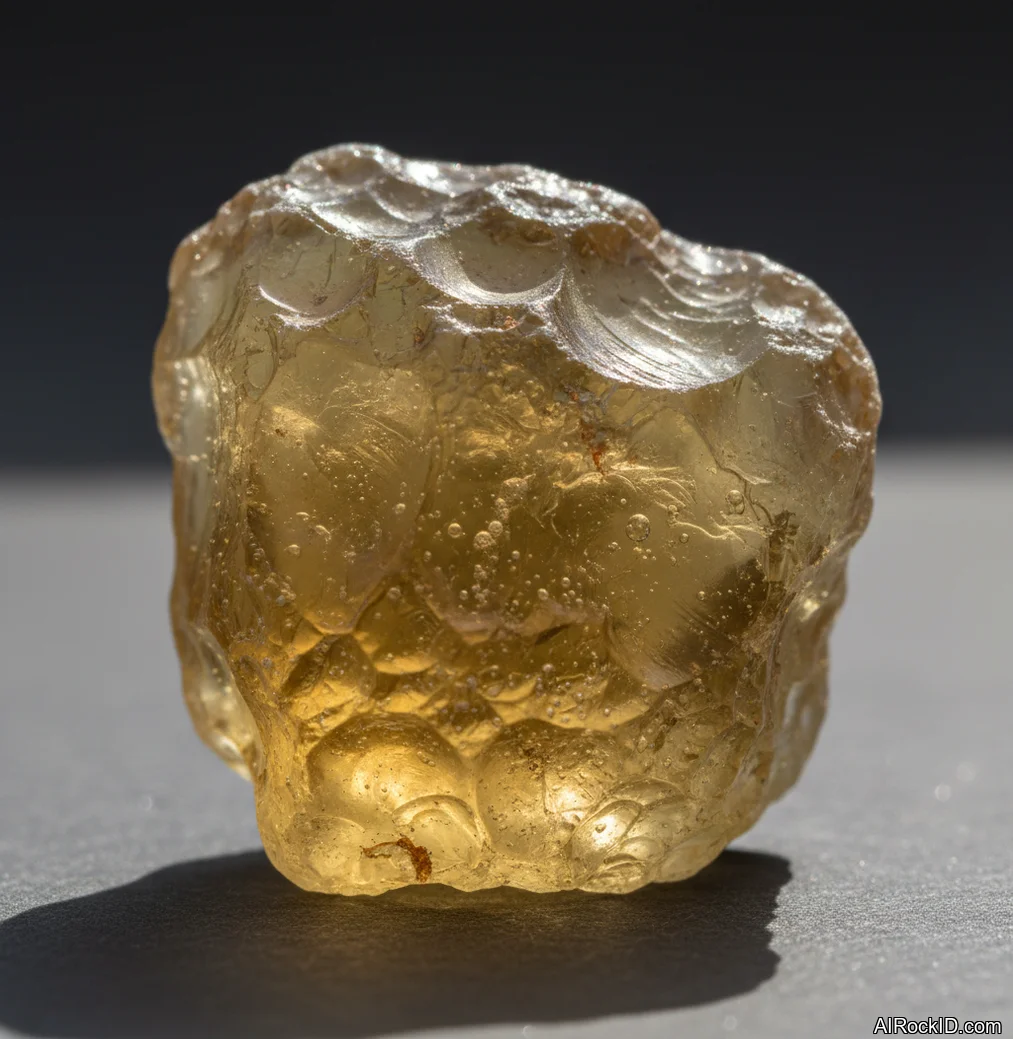
- Libyan Desert Glass: Libyan Desert Glass is a pale yellow natural glass linked to an impact-related event, while impactite can include many colors and textures.
Impactite vs. Common Lookalikes
| Material | Typical Origin | Useful ID Clue | Common Confusion |
|---|---|---|---|
| Impactite | Meteorite impact melt or shocked target rock | May show mixed rock fragments, glass, or shock features with site provenance | Can look like volcanic glass or slag |
| Obsidian | Volcanic lava cooled rapidly | Usually tied to volcanic deposits and may show flow banding | Dark glassy surface and conchoidal fracture |
| Tektite | Impact ejecta glass shaped during flight | Often rounded, splash-form, or pitted with known strewn-field origin | Often sold broadly as impact glass |
| Slag | Industrial smelting byproduct | May contain metallic traces, uniform bubbles, or furnace-related context | Glassy texture and dark color |
| Man-made Glass | Manufactured or melted glass | May show mold marks, uniform color, or decorative additives | Can imitate natural glass specimens |
AI identification confidence
AI identification is moderate when the specimen has clear surface texture, fracture, color, and context photos. Confidence is lower for polished pieces, isolated black glass fragments, or specimens without locality information because several natural and industrial materials can look similar.
When AI gets it wrong
- The photo shows only a polished cabochon or tumbled piece with no natural surface.
- The specimen is dark glassy material from an unknown roadside, beach, or industrial site.
- Lighting hides bubbles, inclusions, flow texture, or fracture details.
- The listing uses impact-related terms without a known crater, strewn field, or collection history.
Final recommendation
Choose impactite with clear locality information, seller documentation, and photos of both natural and broken surfaces when possible. For high-priced pieces, request independent verification or analytical testing rather than relying on appearance alone.
How to Check Impactite Authenticity
Authentic impactite is strongest when it has a documented source tied to a recognized impact structure, strewn field, or reputable collection. Visual traits alone are not enough, because obsidian, slag, and man-made glass can share a dark glassy surface and conchoidal fracture. Useful supporting evidence may include locality labels, old collection records, petrographic analysis, or geochemical testing.
What to Look for in Photos
Good identification photos show the whole specimen, a close view of the surface, a fresh chip or edge, and any inclusions or bubbles. Natural impact materials may be mixed, brecciated, glassy, or fragment-rich rather than perfectly uniform. A scale, daylight lighting, and locality information make visual assessment more reliable.
Buyer Notes for Impactite Listings
Terms such as “meteorite glass,” “impact glass,” and “impactite” are sometimes used loosely in online listings. A low-cost decorative piece may not need laboratory proof, but expensive specimens should include credible provenance or test results. Be cautious of items advertised as containing meteorite metal unless magnetic, chemical, or microscopic evidence is provided.
What Is Impactite?
Impactite is natural glass that forms when a meteorite impact melts the rock it hits, then the melt quenches so fast it doesn’t have time to crystallize.
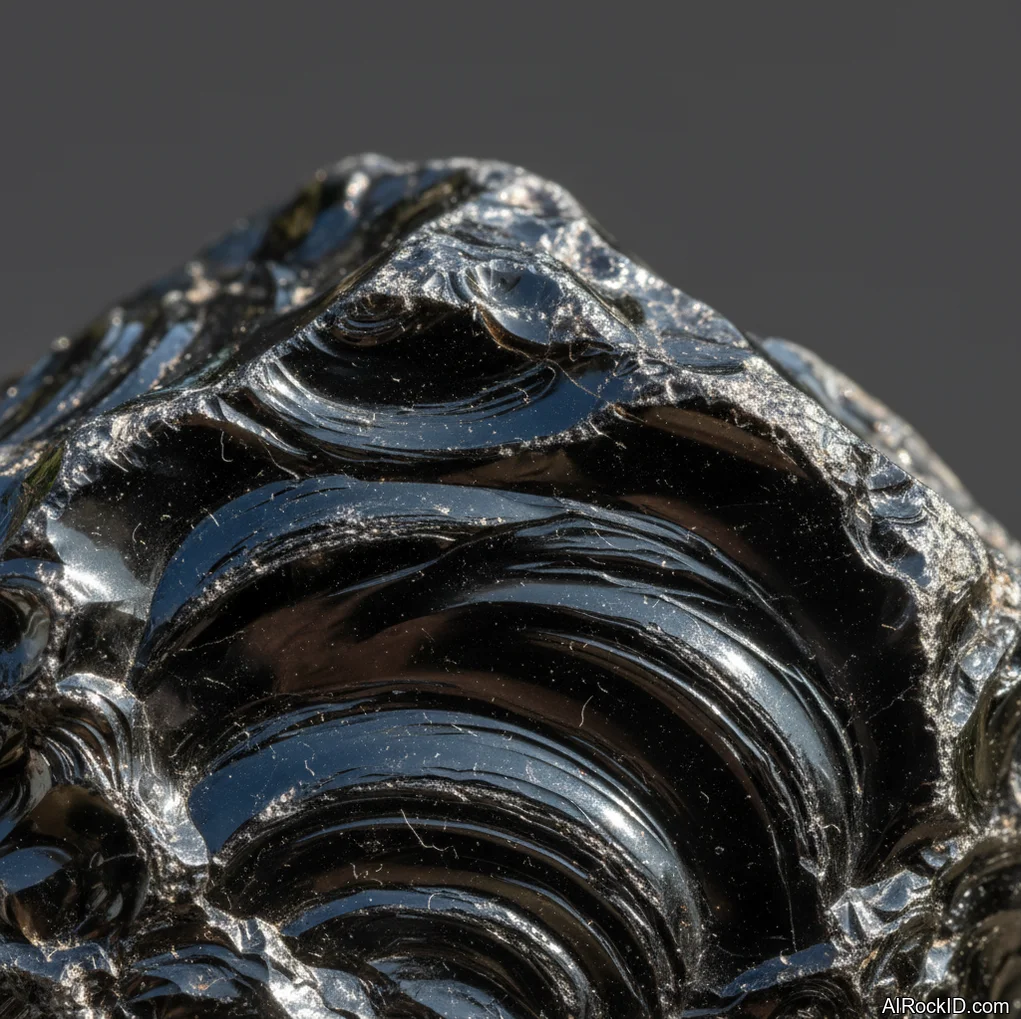
Pick up a piece and you notice the “glass” part immediately. It stays cool in your palm. The broken edges look sharp and kind of scooped, like a thick bottle shard, just heavier and usually darker. Most impactite is brown-black, but you’ll see smoky olive, tea-brown, or even a greenish cast depending on what got melted into it. And it’s not like most crystals where you can hunt for clean, flat cleavage faces. It snaps wherever it feels like it.
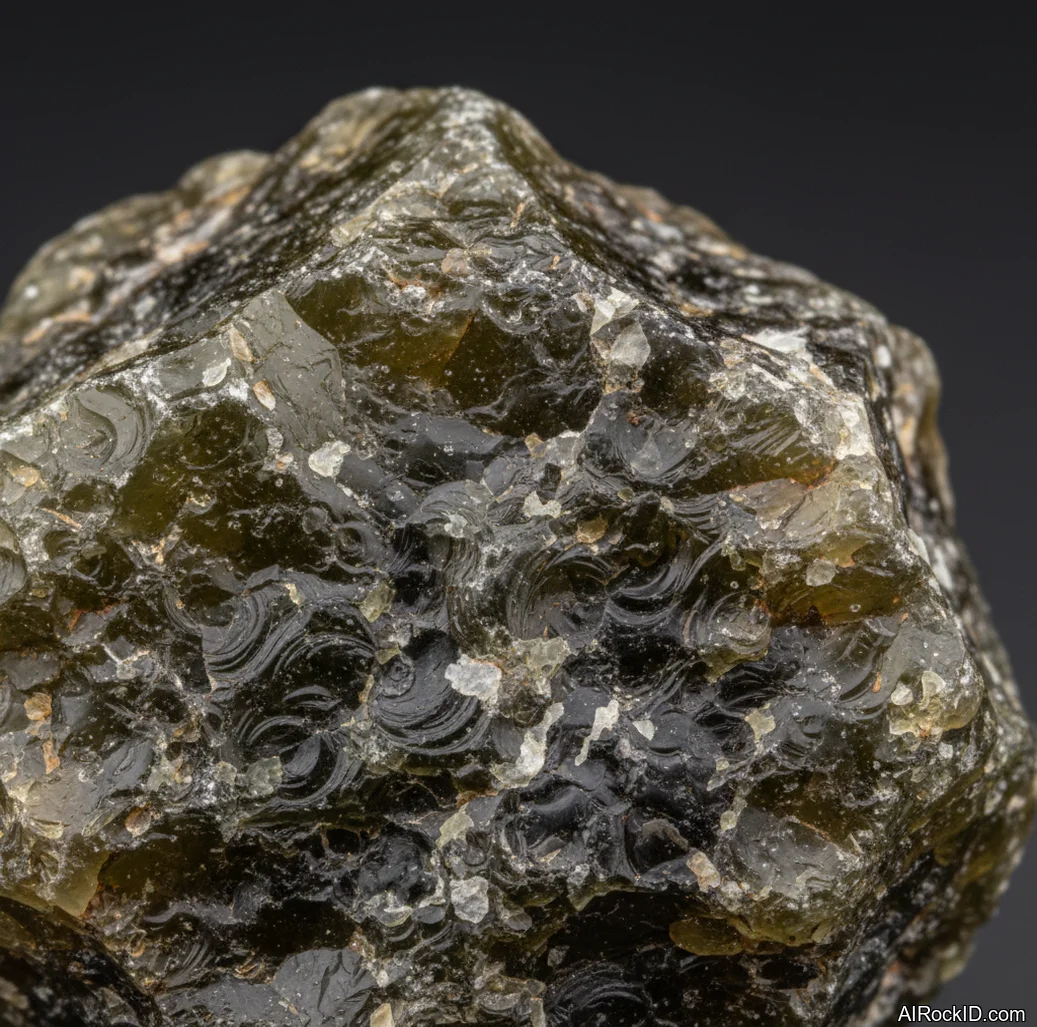
People confuse it at first glance with obsidian, slag, and sometimes tektites from strewn fields. Similar vibe, sure. But impactite often carries little tells from the crater area, like tiny rock fragments, flow banding, or a “dirty” look from minerals mixed through it. I’ve handled pieces where one side was glossy and the other side was matte and pitted (like it took a sandblaster to it). That combo shows up a lot in real crater material.
Origin & History
“Impactite” is basically a field term impact geologists use for the rocks and glass made when a meteorite slams in. You see it all over the scientific papers, usually tied to a particular crater and the ejecta deposits around it.
But in practice, people often switch to more specific names depending on the crater or the kind of melt you’re talking about. Libyan Desert Glass, Darwin glass, plus certain impact-melt glasses from known craters all end up in that same general conversation, even if a dealer tag never actually says “impactite.” And at shows, the backstory is usually the crater story, not one person “discovering” it the way you’d name a brand-new mineral species.
Where Is Impactite Found?
Impactite occurs around confirmed meteorite impact structures as melt glass in ejecta and breccias. Most pieces on the market are tied to well-known craters or nearby desert finds.
Formation
A big impact slams a stupid amount of energy into the ground in basically an instant. The target rock melts, sometimes partly vaporizes, and that melt gets thrown out, pooled up, or shoved into cracks like it’s been pressure-injected. Thing is, it has to cool fast enough that crystals don’t have time to grow, so you wind up with glass instead of a tidy mineral.
Look closely and you can sometimes see swirls or streaks where different melts blended together, kind of like pulling taffy and watching the colors smear. And you’ll run into bubbles, plus stretched-out vesicles that look like little teardrops frozen mid-flow. But here’s the problem: bubbles by themselves don’t prove anything, because industrial slag is full of bubbles too. Real crater glass usually has this “natural chaos” vibe, with inclusions and uneven textures that don’t read as factory-made.
How to Identify Impactite
Color: Most impactite is dark brown to black, often smoky or slightly olive in strong light. Some pieces show subtle flow banding or lighter streaks from mixed-in material.
Luster: Glassy to vitreous, with a glossy break surface and sometimes a dull, weathered rind.
Pick up two candidates side by side, one labeled impactite and one labeled slag. Slag often feels a bit lighter for its size and the surface can look “frothy” or too uniform. The real test is the fracture: impactite usually snaps with clean conchoidal curves, and the edges feel wicked sharp, like fresh obsidian, even when the outside is sand-worn.
Common Look-Alikes
Impactite is sometimes confused with these materials:
- Obsidian (volcanic glass)
- Moldavite (green tektite)
- Slag glass (industrial byproduct)
- Dyed glass fakes
- Libyan Desert Glass
- Apache tears (a type of obsidian)
Market Cautions & Treatments
When AI Can Get This Wrong
Photo AIs mix up impactite with obsidian and slag glass all the time, especially if lighting hides the olive or smoky tinge. Moldavite trips it up too—color is key, but weight and texture matter more. Scratch it or check the edges: true impactite feels denser and the broken faces look rough rather than clean and shell-like.
Properties of Impactite
Physical Properties
| Crystal System | Amorphous |
| Hardness (Mohs) | 5.0-5.5 (Medium (4-6)) |
| Density | 2.2-2.6 g/cm3 |
| Luster | Vitreous |
| Diaphaneity | Translucent to opaque |
| Fracture | Conchoidal |
| Streak | white |
| Magnetism | Non-magnetic |
| Colors | black, dark brown, smoky brown, olive green, gray |
Chemical Properties
| Classification | Oxides (silica-rich natural glass) |
| Formula | SiO2 (dominant; variable composition) |
| Elements | Si, O |
| Common Impurities | Al, Fe, Mg, Ca, Na, K, Ti |
Optical Properties
| Refractive Index | 1.48-1.52 |
| Birefringence | None |
| Pleochroism | None |
| Optical Character | Isotropic |
Impactite Health & Safety
Impactite is usually safe to handle and it’s chemically inert in normal use. But watch your fingers. The real hazard is mechanical, because a fresh break can leave edges that are razor sharp, the kind that’ll slice you before you even notice.
Safety Tips
If you’re cutting it down or cleaning it up, handle it like glass. Seriously. And don’t breathe in the fine dust. It hangs in the air longer than you’d think (you can feel it in your throat). For display, put it somewhere people won’t casually reach and catch a finger on the sharp edges. Why risk it?
Impactite Value & Price
Price Range
Rough/Tumbled: $10 - $120 per piece
Cut/Polished: $2 - $15 per carat
Prices can swing all over the place depending on confirmed locality, the paperwork that comes with it, and how “crater-like” the surface actually looks when you tilt it under a lamp and the pits pop out. If it’s a clean, displayy piece with provenance, it usually moves fast. But if it’s just random dark glass with no story, it can be basically anything, and buyers treat it that way.
Durability
Moderate — Scratch resistance: Fair, Toughness: Fair
It’s stable like most natural glass, but sharp edges chip if you clack pieces together in a tray.
How to Care for Impactite
Use & Storage
Store it like you’d store obsidian: padded box or individual wrap so it doesn’t chip. And don’t toss it in a bowl with quartz points unless you like new scratches.
Cleaning
1) Rinse with lukewarm water and a drop of mild soap. 2) Use a soft toothbrush to get dust out of pits and texture. 3) Pat dry and let it air-dry before putting it back in a closed container.
Cleanse & Charge
If you do energetic cleansing, smoke, sound, or a quick rinse are the low-drama options. I avoid salt bowls with glassy material because it can leave a crust in tiny pits.
Placement
A shelf with side lighting is great because conchoidal curves and flow lines pop when you tilt it. If it’s a sharp chunk, put it behind the front edge of the shelf.
Caution
Some edges are sharp enough to nick your skin, and the thin bits can snap if you drop it on a hard floor. Keep it away from little kids, and don’t carry it as a “pocket stone” unless it’s nicely rounded.
Works Well With
Impactite Meaning & Healing Properties
In metaphysical circles, impactite gets talked about as a “shock event” stone. And yeah, that tracks for me. It’s born out of impact plus heat, and when I’ve got a rough chunk in my hand, I can’t help thinking about sudden change, pressure, and how something new can show up in the middle of a mess.
But the practical side matters. A lot of pieces are basically dark glass. People walk in expecting fireworks, and then they’re let down. If you want to use it in meditation, I’d treat it the way you’d treat obsidian: keep it short, stay grounded, and actually check in with your body while you’re doing it. I’ve noticed impact glass can feel mentally “loud” for some people, especially if they’re already stressed out.
I also reach for it during journaling when I’m staring down a big decision. Not as a cure. Not as a guarantee. Just as this physical nudge that goes, “Something hit, something changed, now what?” Then you’re done, put it down and wash your hands. Not for energy stuff, just because dusty crater glass off a show table is still dusty crater glass (and it gets in the little lines on your fingers).
Common mistakes
- Assuming every black glassy rock is impactite.
- Confusing industrial slag with natural impact glass because both can contain bubbles.
- Treating “meteorite glass” as proof that a specimen contains meteorite material.
- Ignoring locality, even though provenance is one of the strongest clues for impact-related specimens.
- Buying polished pieces without photos of the original natural surface.
- Using magnetism alone as proof of impact origin.
Identify Impactite from a photo
Compare Impactite traits, care tips, value clues, and common lookalikes with a clear photo.