Jet
What Is Jet?
Jet’s one of those small, coal-looking organic gemstones that comes from fossilized wood, usually old conifer-type material. It isn’t a mineral in the strict crystal-system way, and you can tell fast because it doesn’t show crisp faces or that cold, glassy snap you get with quartz.
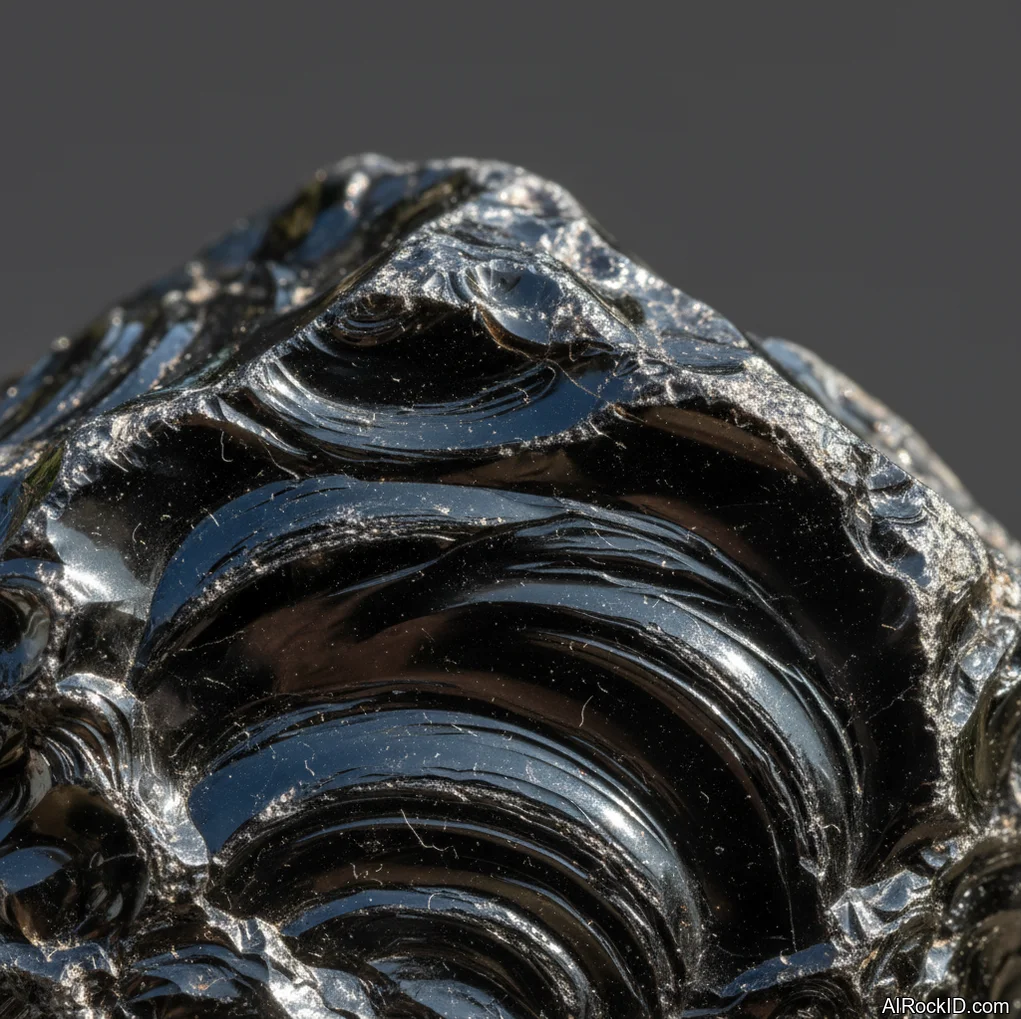
Hold a piece and the first thing that hits you is how little it weighs. Seriously, good jet feels oddly light for something that black, and it heats up in your palm quicker than most stones sitting in my display tray. Polished jet will take on a real shine, almost mirror-like, but it’s not the same sharp flash you see in obsidian. It’s softer. More like a resin glow than hard glass.
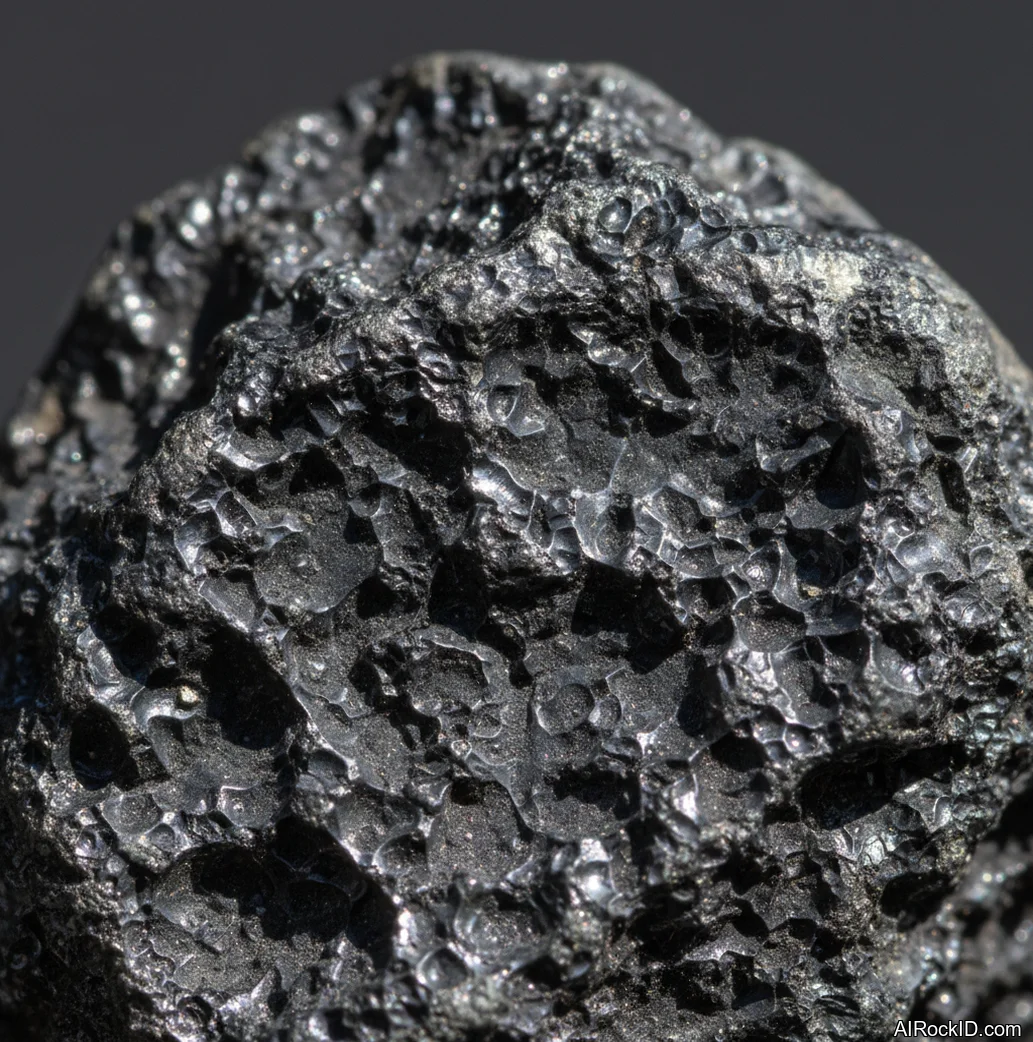
People still confuse it at a glance. Black glass, black onyx, even plastic. But jet’s got its own look: usually a deep, velvety black (and if you tilt a thin edge under bright light, you can catch faint brown undertones). And, up close, you might spot tiny pits or a subtle wood-y texture, like the surface remembers what it used to be.
Origin & History
“Jet” traces back to Gagates, an older name connected to the River Gagas (often associated with what’s now Turkey), where people were already working this black stuff way back in antiquity. And in Europe, the story every collector ends up hearing sooner or later is Whitby, England, where jet carving really took off and then got tightly linked to mourning jewelry in the 1800s.
Thing is, jet was being described and traded long before geology had a neat label like “organic gem.” Most dealers still talk about it like it’s a stone, and honestly, in the hobby that’s fine. Just keep in mind what it actually is: basically fossilized wood, pushed and cooked by pressure, time, and chemistry until it ends up as that dense, polishable black.
Where Is Jet Found?
Jet occurs in sedimentary settings tied to lignite or coal-bearing strata, with famous carving material coming from Whitby (UK), Asturias (Spain), and Oltu (Turkey).
Formation
Good jet usually starts out as plain old wood that got buried where there wasn’t much oxygen around. Over a long stretch of time, it creeps through lignite first and then, if conditions line up just right, turns into jet. Pressure squeezes it down, the chemistry shifts as the volatiles work their way out, and then time just keeps grinding away at it.
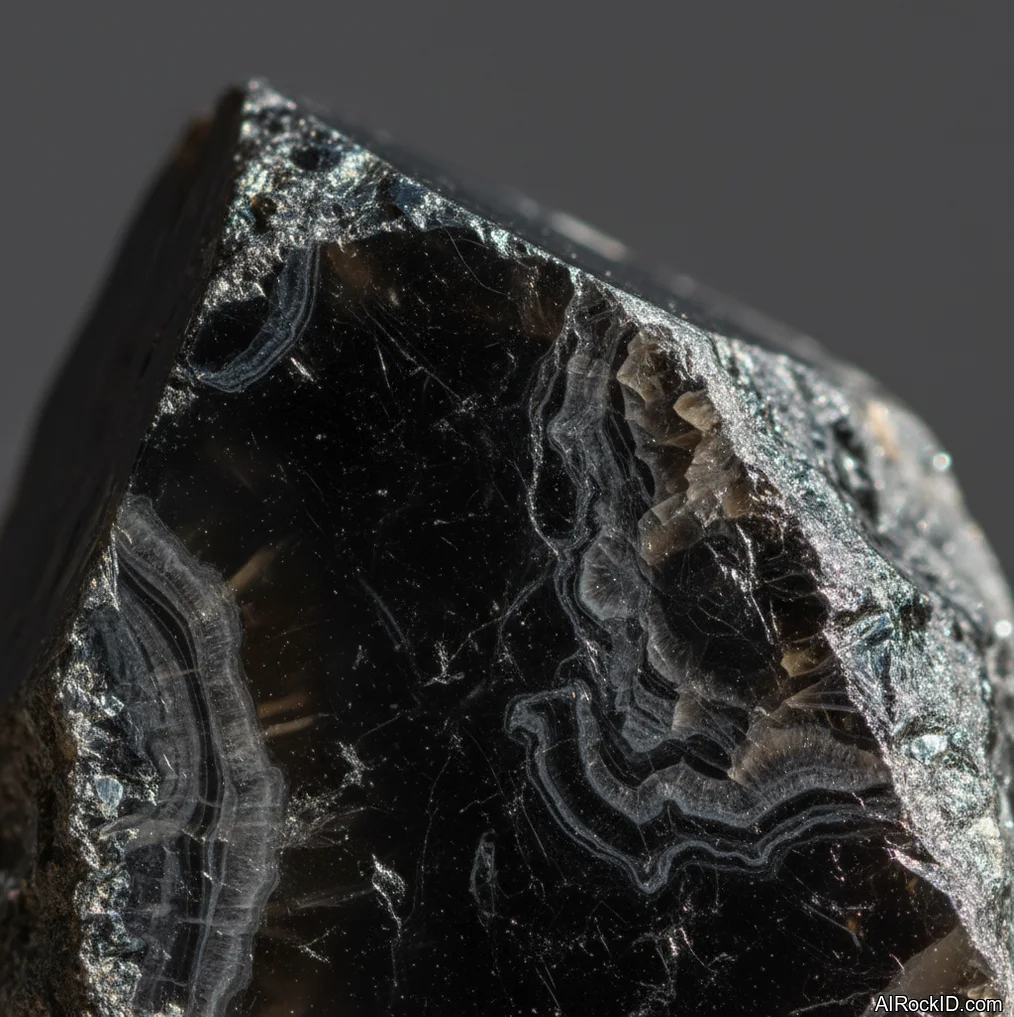
Obsidian’s a different animal. It’s volcanic glass. Jet comes out of sedimentary basins and coal measures, so it’s not weird to see tiny internal seams, faint layering, or that slightly grainy look when you get it under magnification. And yeah, two pieces both tagged “jet” can feel nothing alike in your hand. One might feel tighter and smoother, another a bit softer or more open, depending on how well it consolidated and how it ended up being worked.
How to Identify Jet
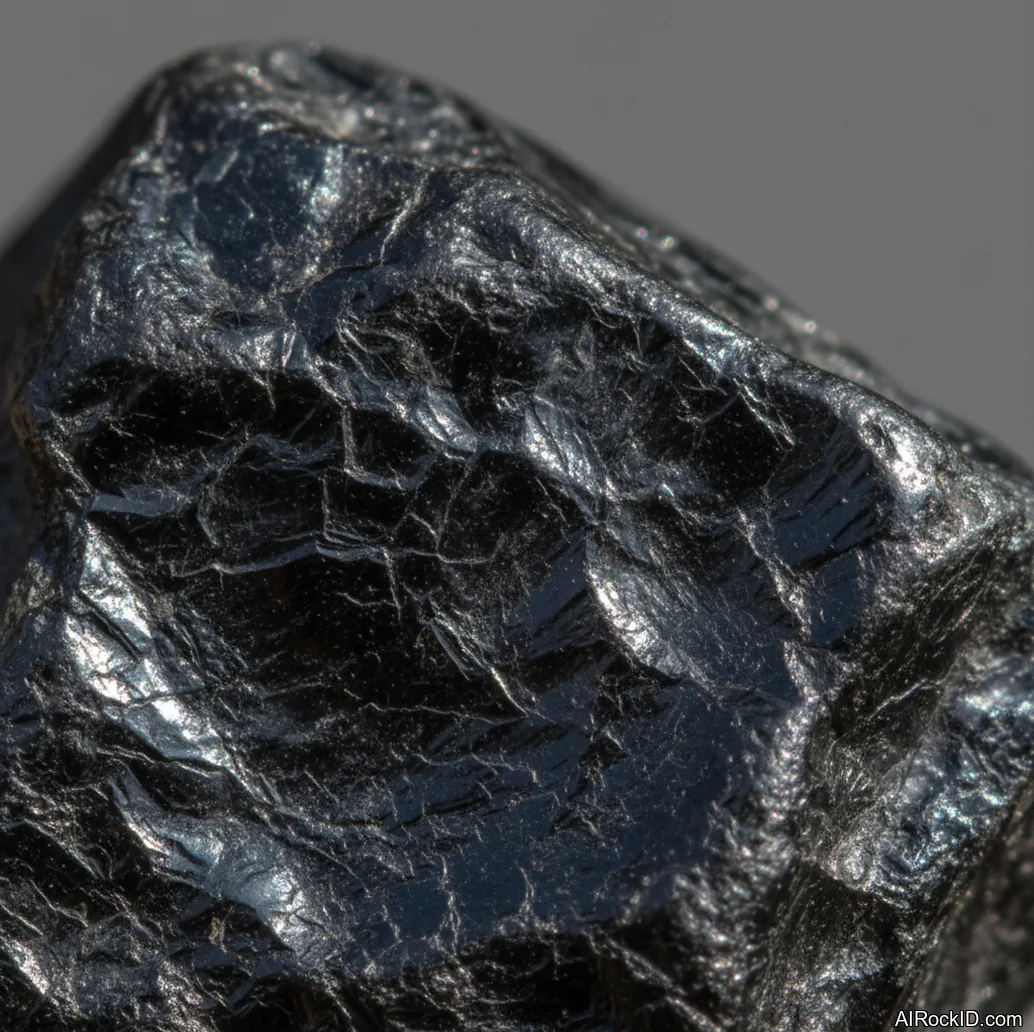
Color: Usually uniform deep black, sometimes with brownish tones on thin edges or in worn spots. Freshly polished surfaces can look inky, but not as glass-bright as obsidian.
Luster: Resinous to waxy, sometimes approaching a soft vitreous look when highly polished.
The real test is the feel: jet is lighter than you expect, and it warms up fast in your palm compared to onyx or hematite. Look closely for tiny pits, faint layering, or a subtle woody texture that glass imitations don’t have. If you scratch it with a copper coin or a steel pin, it can mark more easily than most “black stones”, so do that only on an inconspicuous spot.
Properties of Jet
Physical Properties
| Crystal System | Amorphous |
| Hardness (Mohs) | 2.5-4 (Soft (2-4)) |
| Density | 1.10-1.35 g/cm3 |
| Luster | Resinous |
| Diaphaneity | Opaque |
| Fracture | Conchoidal |
| Streak | brown |
| Magnetism | Non-magnetic |
| Colors | Black, Brownish black |
Chemical Properties
| Classification | Organic (carbon-rich) |
| Formula | C (variable organic compounds) |
| Elements | C, H, O |
| Common Impurities | S, N, Fe |
Optical Properties
| Refractive Index | 1.66-1.70 |
| Birefringence | None |
| Pleochroism | None |
| Optical Character | Isotropic |
Jet Health & Safety
Normal handling is pretty low risk, and a quick splash of water usually won’t hurt anything. The real problem is scratching and scuff marks (the kind you see right away when you tilt it under a light), not toxicity.
Safety Tips
If you’re cutting or polishing jet, do it wet and wear basic dust protection (a simple mask goes a long way). And keep jet away from harsh chemicals and ultrasonic cleaners.
Jet Value & Price
Price Range
Rough/Tumbled: $5 - $80 per piece
Cut/Polished: $5 - $30 per carat
Prices jump around depending on how clean the carving is, where it came from, and what it’s labeled as (Whitby and Oltu on a tag still makes people pay attention). And, honestly, a lot hinges on what you’re actually holding: solid jet, or a composite piece, or something that’s been dyed.
Durability
Nondurable — Scratch resistance: Poor, Toughness: Fair
Jet is soft and can scratch or dull from everyday abrasion, but it’s generally stable if kept away from heat, solvents, and rough handling.
How to Care for Jet
Use & Storage
Keep jet in a soft pouch or a lined box so it doesn’t get rubbed by harder stones. If you toss it in a mixed tumbles bowl, it’ll come out looking tired fast.
Cleaning
1) Wipe with a soft, dry microfiber cloth. 2) If needed, use lukewarm water with a tiny bit of mild soap and a quick rinse. 3) Pat dry right away and let it air dry before storing.
Cleanse & Charge
For a gentle reset, stick to smoke, sound, or a quick pass under cool running water, then dry it well. Skip salt soaks and skip leaving it in hot sun.
Placement
On a desk or bedside is fine, but don’t set it where keys, coins, or harder crystals will scrape it. I like it on fabric or a wood tray where it won’t pick up scuffs.
Caution
Skip ultrasonic cleaners, steam cleaning, harsh solvents, or anything with high heat. Jet scratches fast, and even a little rubbing can leave it looking dulled over with a light haze (you’ll notice it right away when it stops catching the light).
Works Well With
Jet Meaning & Healing Properties
People grab jet when they want a quiet black stone that feels protective, but doesn’t have that heavy, metallic vibe hematite has. In my own stash, I’ve literally labeled it “soft armor.” Not superhero armor. More like tugging on a beat-up hoodie when you’re fried and you just want the volume turned down.
If you watch how jet actually gets used, there’s a pattern. Grief jewelry. Worry beads. Plain little pendants that someone keeps rubbing with their thumb all day without even thinking. Jet got linked to mourning pieces for a reason, and that old association still hangs around in how people treat it now. I’ve held older carved beads where the edges are worn smooth and slightly dull, like the shine got buffed off by years of skin and pocket lint (you can almost feel the grooves where fingers kept landing). It’s hard not to connect that kind of lived-in, tactile wear with the whole idea of steadiness.
But stay grounded. Jet isn’t medical care, and it won’t magically solve anxiety by itself. What it can do, if you’re someone who responds to objects and little rituals, is give you something light, warm to the touch, easy to carry, and easy to fidget with. Something that can hook your attention for half a second and help you catch a breath when your brain’s running hot. Why not use that, if it helps?
Identify Any Crystal Instantly
Snap a photo and get properties, value, care instructions, and healing meanings in seconds.