Pallasite Meteorite


Quick answer: Pallasite meteorite is a rare stony-iron meteorite made of gemlike olivine crystals set in iron-nickel metal. It is often collected as polished slices, but authentication is important because etched metal, glass, resin, and altered terrestrial rocks can imitate its appearance.
AI Rock ID can help screen a suspected pallasite meteorite by comparing visible olivine, metallic matrix, and cut-surface patterns. RockIdentifier.io supports visual identification, but meteorite confirmation may still require density checks, nickel testing, provenance, or laboratory analysis.
Good fit
- Collectors who want a rare meteorite specimen with visible olivine crystals
- Buyers seeking a display piece with documented provenance
- People comparing stony-iron meteorites with iron meteorites and tektites
- Advanced beginners willing to verify authenticity before purchase
Not a good fit
- Anyone needing a low-maintenance pocket stone, because metal can rust
- Buyers who cannot verify the source, cut, or documentation
- People expecting every specimen to show transparent gem-quality olivine
- Use in water, salt, or humid environments
Most commonly confused with
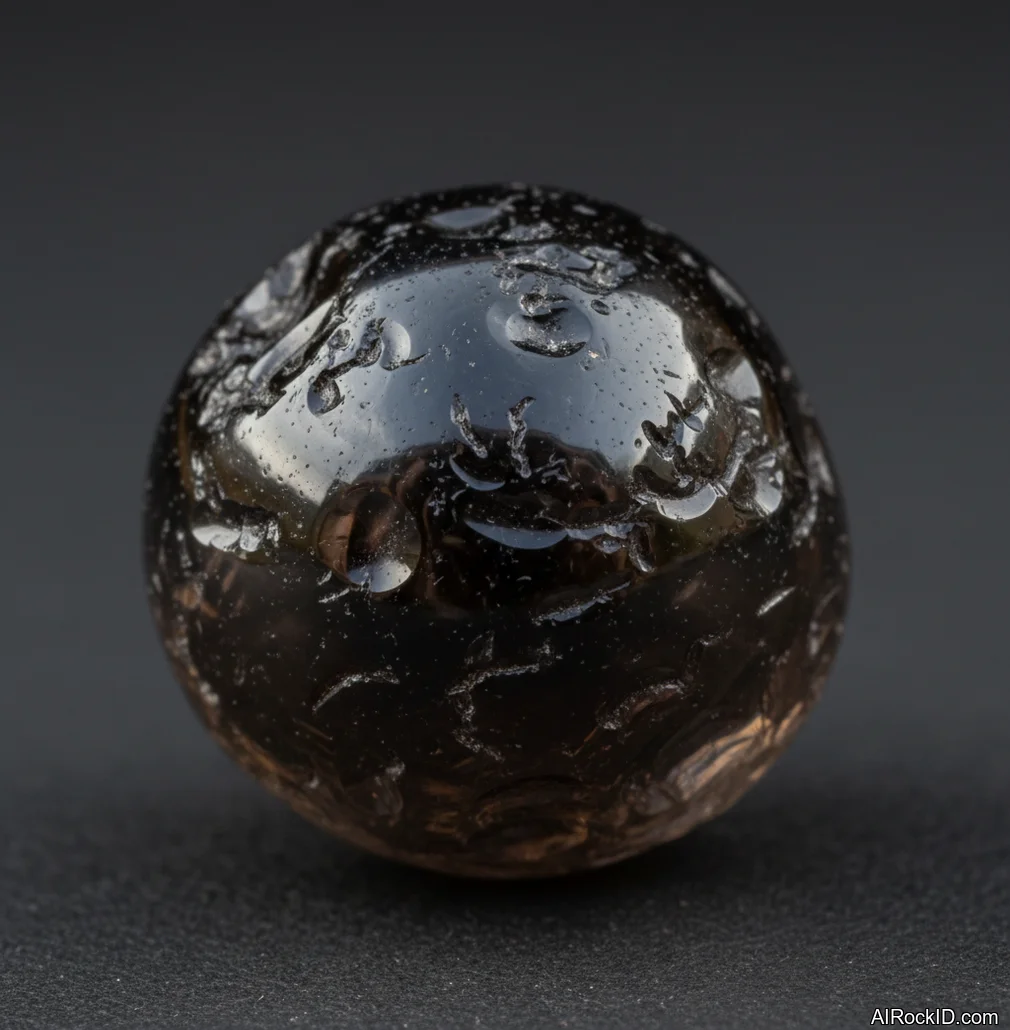
- Moldavite: Moldavite is natural impact glass and lacks the iron-nickel metal framework seen in pallasite.
- Peridot: Peridot is gem-quality olivine, while pallasite contains olivine crystals embedded in meteoritic metal.
- Iron Meteorite: Iron meteorites are mainly metal and usually do not contain abundant rounded olivine crystals.
- Libyan Desert Glass: Libyan Desert Glass is yellow impact glass without nickel-iron metal.
Pallasite Meteorite vs Common Lookalikes
| Material | Typical Appearance | Key Difference | Authentication Clue |
|---|---|---|---|
| Pallasite meteorite | Olivine crystals in iron-nickel metal | Stony-iron meteorite texture | Nickel-rich metal and documented provenance |
| Moldavite | Green translucent glass | No metal matrix | Glass chemistry and etched natural surface |
| Peridot | Green faceted or rough olivine | No meteoritic metal | Gem testing confirms olivine only |
| Iron meteorite | Metallic gray cut or etched surface | Little to no visible olivine | Widmanstätten pattern and nickel content |
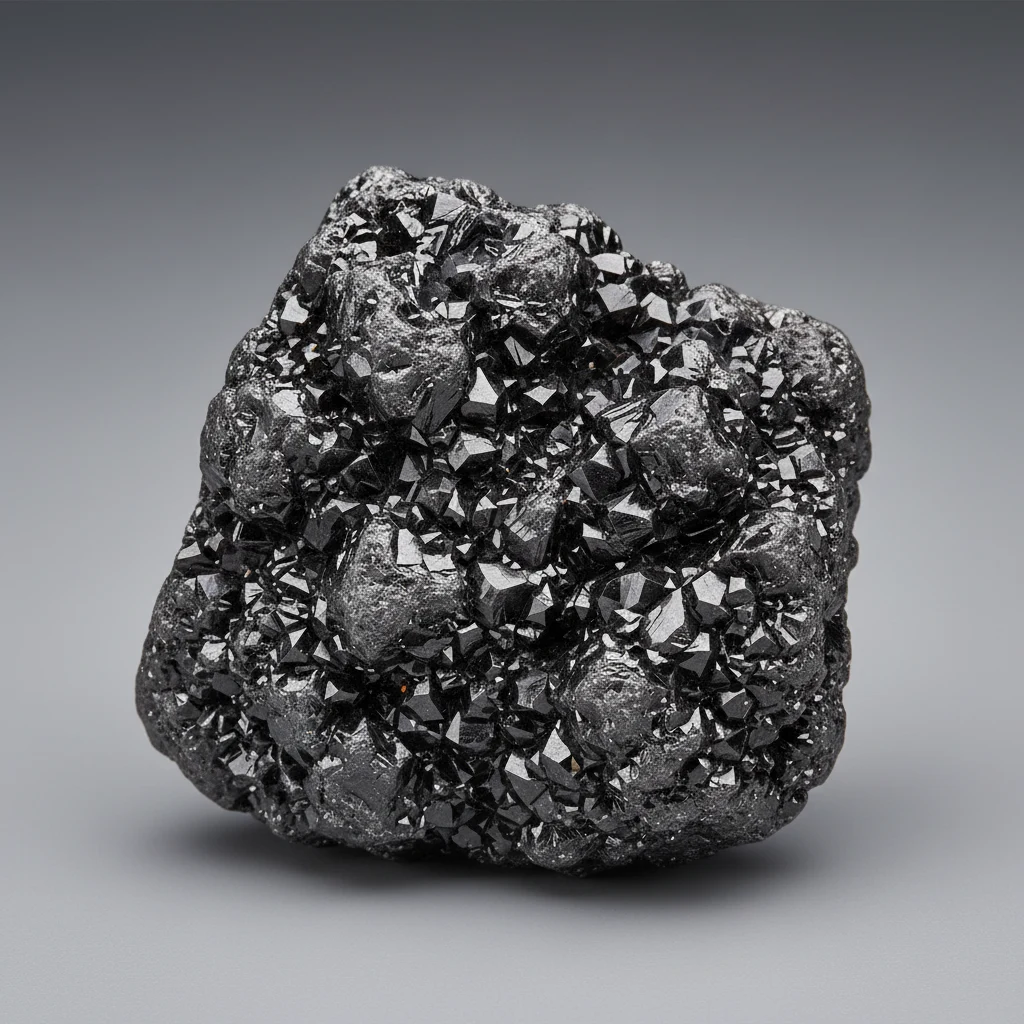
| Slag | Bubbly glassy or metallic material | Industrial origin | Vesicles, inconsistent texture, low meteorite nickel evidence |
AI identification confidence
AI identification confidence is usually moderate for polished pallasite slices with clear olivine crystals in a metallic matrix. Confidence is lower for small fragments, heavily rusted pieces, jewelry settings, or photos that do not show both the metal and crystal structure.
When AI gets it wrong
- A photo shows only green crystals without the surrounding metal.
- The surface is highly polished, sealed in resin, or photographed through glass.
- Industrial slag or decorative composite material has a similar speckled pattern.
- A seller photo uses low resolution or does not include scale, weight, or edge views.
Final recommendation
Choose pallasite meteorite only when the specimen has credible provenance, clear photos, and evidence supporting meteoritic nickel-iron composition. For higher-value pieces, request laboratory documentation or buy from a meteorite dealer with a clear return policy.
Advanced recommendations
How to Check Pallasite Meteorite Authenticity
Authentic pallasite should show olivine crystals naturally enclosed in iron-nickel metal, not glued into a base or painted onto a surface. Ask for provenance, specimen name or locality when available, weight, dimensions, and whether the piece has been stabilized against rust. Nickel testing, density, magnetic response, and laboratory classification can support authenticity, but no single home test is conclusive.
Buying Pallasite Meteorite Online
Online listings should include sharp front, back, edge, and scale photos. Be cautious with vague terms such as “meteorite-like,” “space stone,” or “pallasite style,” which may indicate decorative material rather than a verified meteorite. Very low prices for large, transparent, metal-rich slices should be treated with skepticism.
What Makes Pallasite Meteorite Different from Peridot
Pallasite contains olivine, the same mineral group that includes peridot, but the specimen is valued as a meteorite rather than a conventional gemstone. Peridot is usually separated from its host rock and cut as a gem, while pallasite is usually kept as a slice that preserves both olivine and iron-nickel metal.
What Is Pallasite Meteorite?
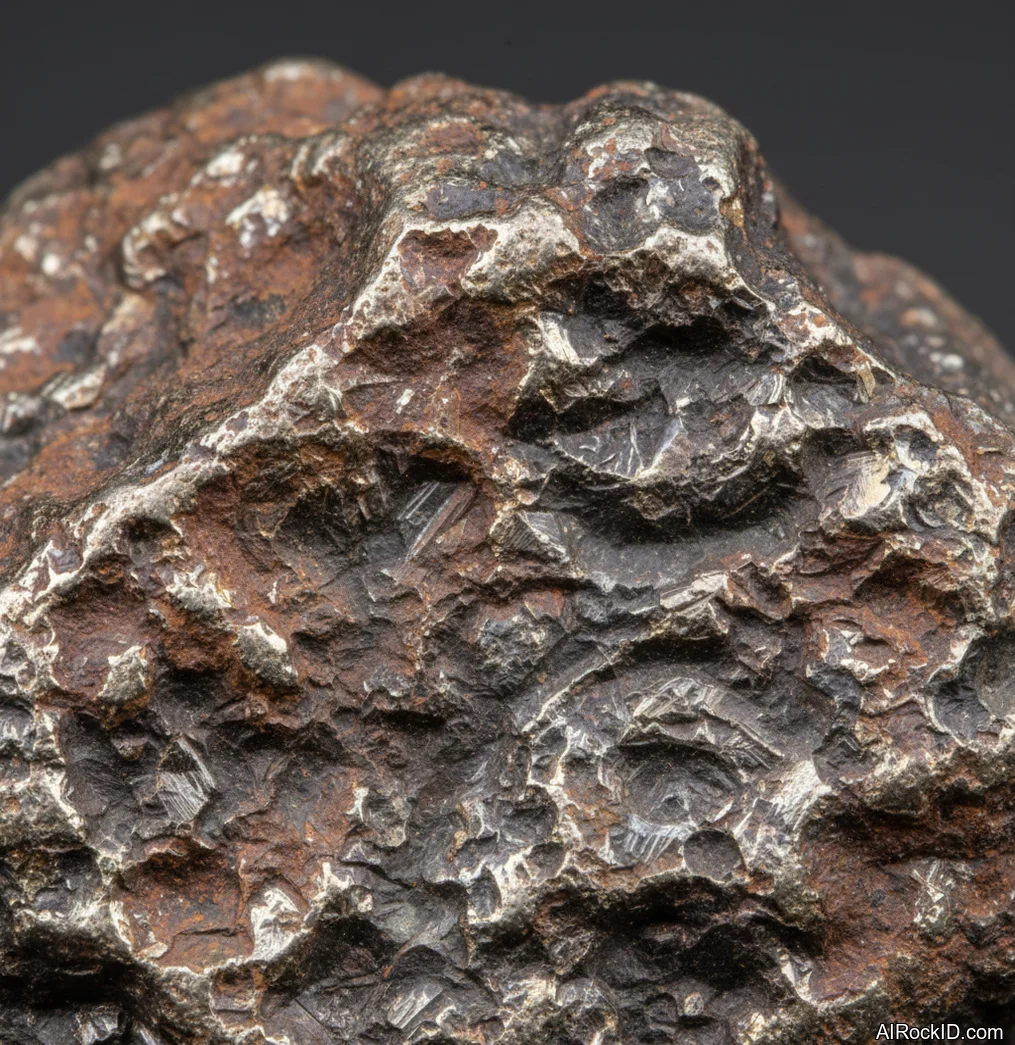
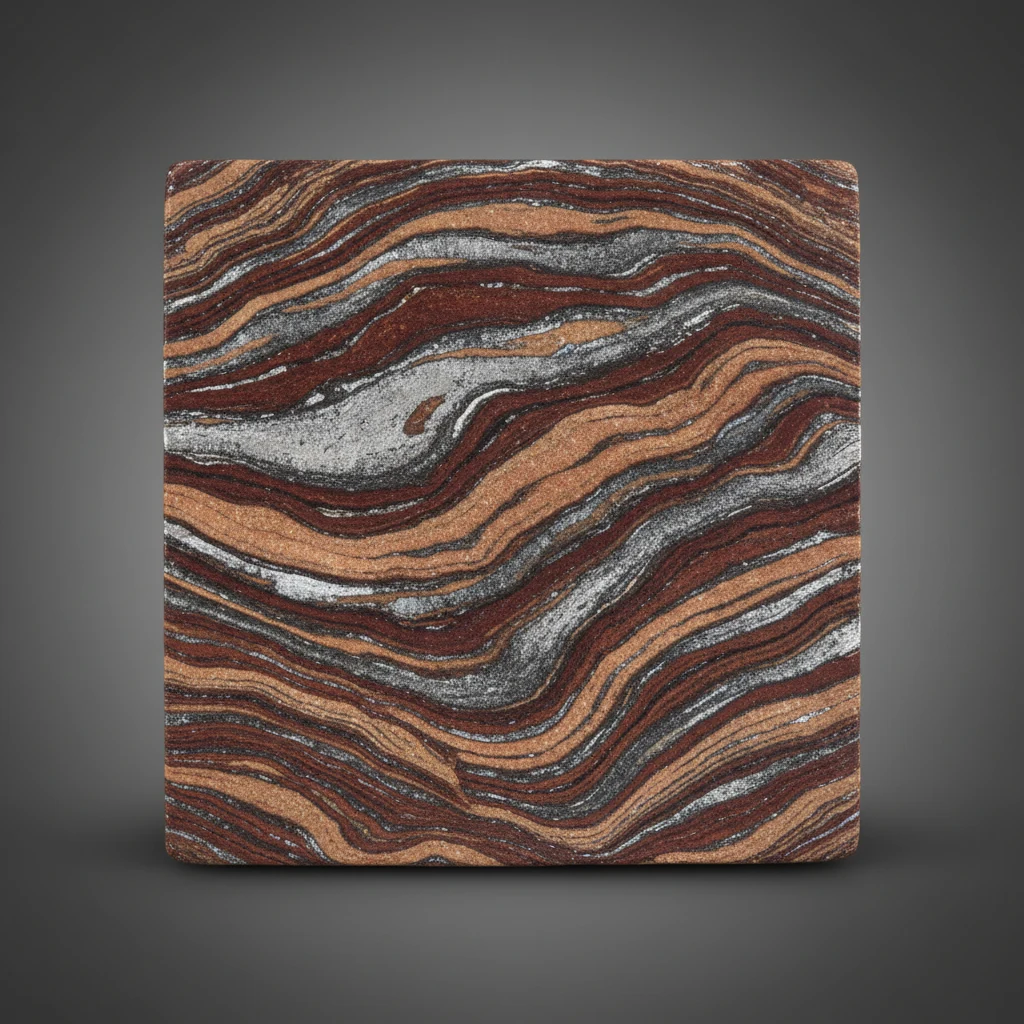
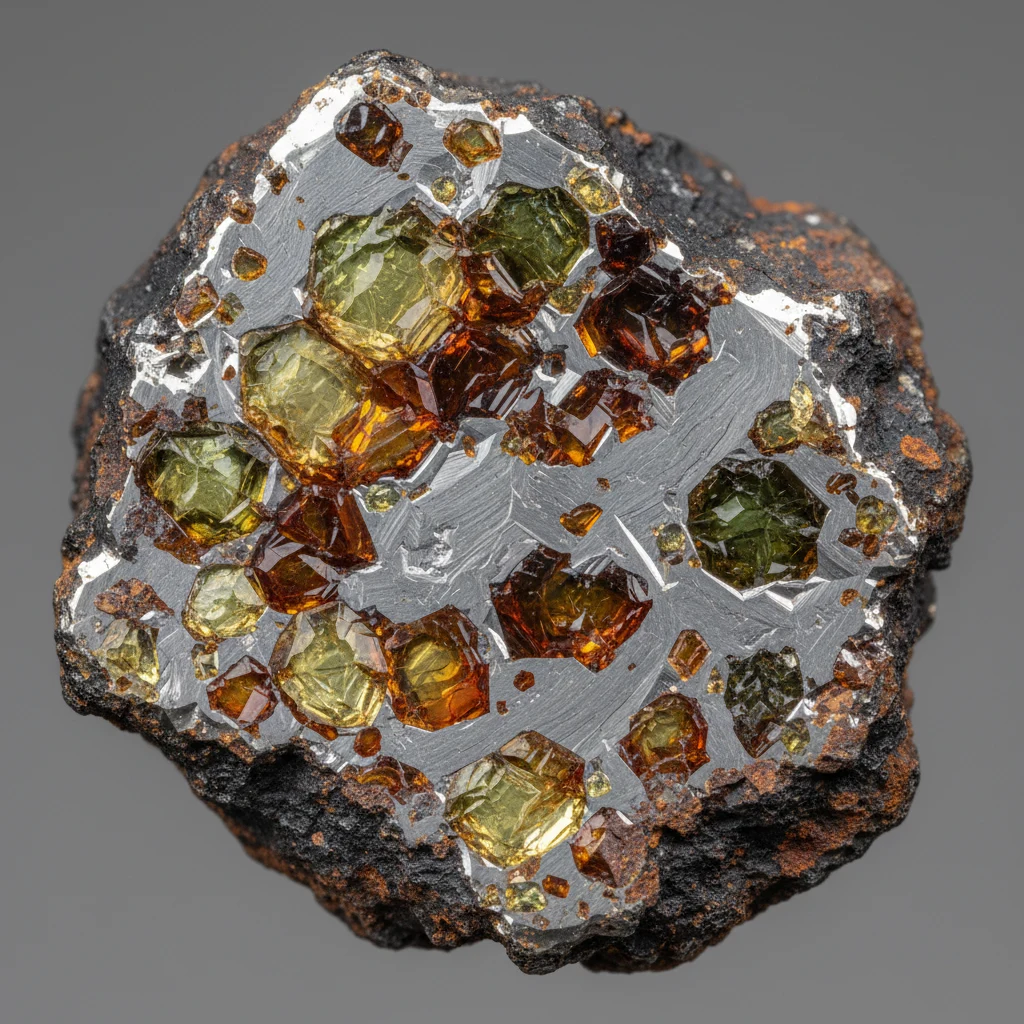
Pallasite Meteorite is a rare stony-iron meteorite made mainly of olivine crystals suspended in iron-nickel metal. In the hand, a polished slice feels dense and metallic, with silver-gray metal framing yellow-green, honey, amber, or brown olivine like small windows. Thin slices can transmit light through the olivine, creating the stained-glass look that makes pallasites some of the most prized meteorites for collectors.
Unlike a single mineral specimen, pallasite is a natural extraterrestrial mixture. Its olivine component is orthorhombic, while the iron-nickel metal is cubic, so the whole meteorite has no single crystal system. Hardness is variable: olivine is about Mohs 6.5-7, while iron-nickel metal is about Mohs 4-5. It is strongly magnetic, relatively dense, and visually durable, but moisture can make the metal rust.
Origin & History
The name pallasite comes from Peter Simon Pallas, who described the famous Krasnojarsk stony-iron mass found in Siberia in the 18th century. That historic association still matters to collectors: a labeled pallasite slice is not just a pretty metal-and-olivine object, but a documented piece of early Solar System material with scientific and cultural value.
Pallasites are interpreted as fragments from differentiated asteroids, probably from boundary zones where metallic core material mixed with silicate mantle minerals; some may have formed by impact mixing. Their extraterrestrial origin and distinctive olivine-metal texture make careful identification important. For locality and classification context, collectors often compare specimen names with mindat.org records and reputable meteorite references.
Where Is Pallasite Meteorite Found?
Pallasite Meteorites are recovered as meteorite falls or finds, often from dry deserts, prairies, or glacially exposed terrains where dark fusion crust and metallic density make them easier to notice. Known pallasite-producing countries include Russia, the United States, Argentina, Chile, China, Canada, Kenya, Belarus, and Australia.
Formation
Pallasite Meteorites formed in the early Solar System inside differentiated asteroids. The iron-nickel metal represents molten metallic material, while the olivine crystals represent silicate mantle or mantle-like material. These two components were mixed, crystallized, and later broken apart by impacts, leaving dense fragments that eventually crossed Earth’s orbit.
After surviving atmospheric entry, pallasites reach the ground as meteorites with metal, olivine, and sometimes fusion-crusted or weathered surfaces. Their formula is best treated as a mixture dominated by olivine, (Mg,Fe)2SiO4, plus iron-nickel metal, Fe-Ni, with minor troilite, chromite, phosphates, schreibersite, and other meteoritic minerals. USGS-style mineral identification practice supports using multiple observations rather than one quick test.
How to Identify Pallasite Meteorite
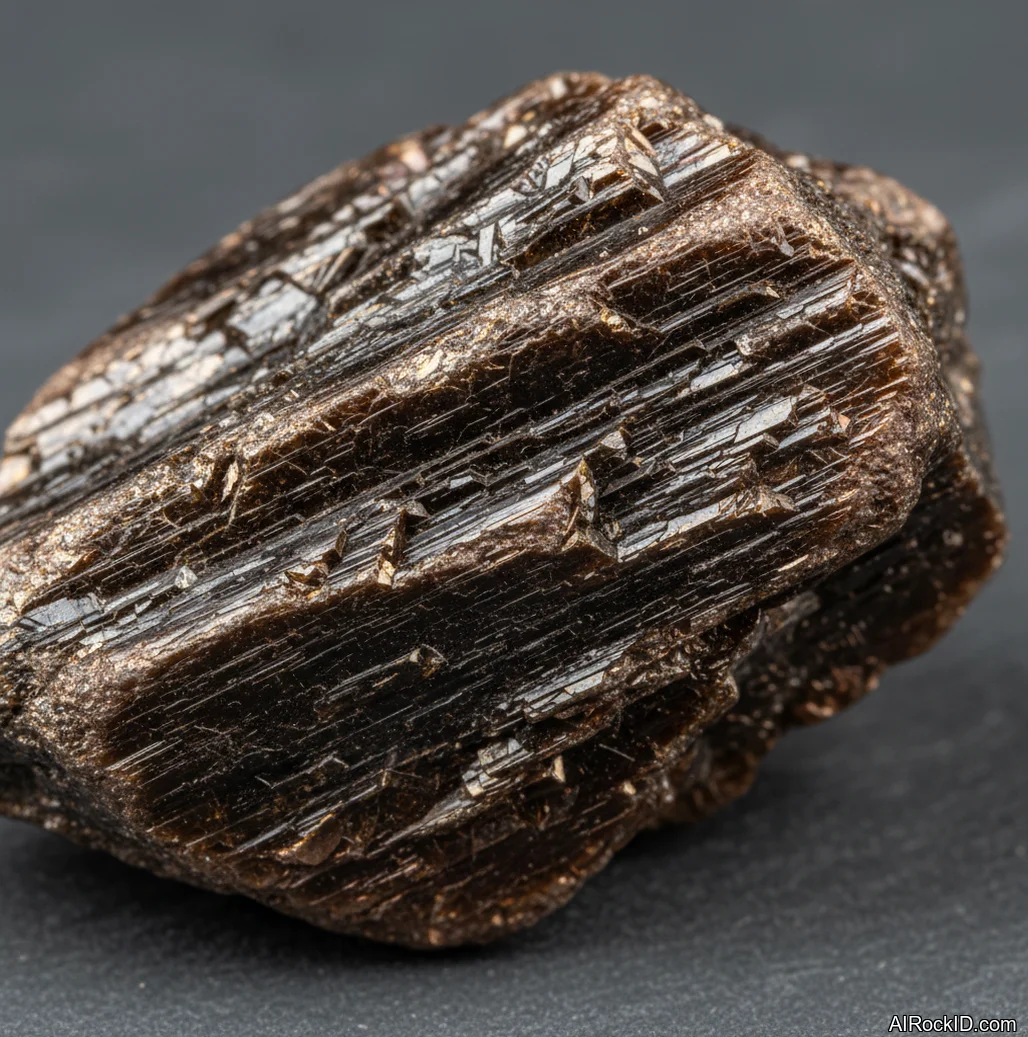
To identify Pallasite Meteorite, look for strong magnetism, high density, iron-nickel metal, and natural olivine crystals enclosed in the metal. A good polished slice shows bright metallic luster around vitreous olivine grains that may be yellow-green, olive green, honey, amber, orange-brown, or brown. Weathered surfaces may be rusty brown, dull, oxidized, or coated with dark fusion crust.
Authentic pallasite slices usually show a natural intergrowth, not crystals that appear glued into metal. Laboratory confirmation may include nickel-rich metal, meteoritic Widmanstätten or etched metal structures in some specimens, olivine chemistry, and oxygen isotope data. Because many imitations exist, valuable pieces should be bought with reliable provenance or checked by a reputable meteorite lab or trusted dealer.
Properties of Pallasite Meteorite
Physical Properties
| Crystal System | Not applicable as a meteorite; olivine component is orthorhombic and iron-nickel metal is cubic |
| Hardness (Mohs) | Variable: olivine about 6.5-7; iron-nickel metal about 4-5 (Variable, moderately hard to hard) |
| Density | Approximately 4.5-7.0 g/cm³, depending on metal content and weathering |
| Luster | Metallic in iron-nickel areas; vitreous in olivine grains |
| Diaphaneity | Opaque overall, but thin slices may be translucent to transparent through olivine crystals |
| Fracture | Olivine may show conchoidal to uneven fracture; metal may be hackly or malleable; whole specimens break irregularly |
| Streak | Variable; olivine is white to colorless, metal is gray, and weathered material may leave brown iron-oxide marks |
| Magnetism | Strongly magnetic due to iron-nickel metal |
| Colors | silver-gray, green, yellow-green, honey, amber, orange-brown, brown, black fusion crust, rusty brown |
Chemical Properties
| Classification | Stony-iron meteorite; mixture of silicate olivine and iron-nickel alloy |
| Formula | Mixture dominated by olivine ((Mg,Fe)2SiO4) plus iron-nickel metal (Fe-Ni), with minor troilite, chromite, phosphates, and other meteoritic minerals |
| Elements | Iron, Nickel, Magnesium, Silicon, Oxygen, Sulfur, Chromium, Phosphorus, Cobalt |
| Common Impurities | Terrestrial iron oxides from weathering, Troilite, Chromite, Schreibersite, Phosphates, Weathering salts |
Optical Properties
| Refractive Index | Not applicable to the whole meteorite; olivine commonly about 1.65-1.70 |
| Birefringence | Not applicable to the whole meteorite; olivine commonly about 0.035-0.052 |
| Pleochroism | Whole meteorite not applicable; olivine is usually weakly pleochroic to non-pleochroic in hand specimens |
| Optical Character | Not applicable to the whole meteorite; olivine is biaxial |
Pallasite Meteorite Health & Safety
Pallasite meteorites are generally safe to handle, but the iron-nickel metal may irritate people with nickel sensitivity. Cutting, grinding, or polishing can create metal and silicate dust that should not be inhaled. Water exposure is not recommended because it can promote rust.
Pallasite Meteorite Value & Price
Price Range
Rough/Tumbled: Common small weathered fragments may sell from about $5-30 per gram, while attractive polished slices often range from about $20-200+ per gram. Exceptional, translucent, well-prepared, or historically important pallasites such as Esquel, Fukang, Imilac, or fine Seymchan slices can command substantially higher prices.
Cut/Polished:
Value depends on confirmed authenticity, locality, classification, olivine transparency and color, metal pattern, slice thickness, polish quality, stability against rusting, overall aesthetics, provenance, and whether the specimen comes from a famous or scarce fall/find. Stable, thin, backlit slices with clear green to amber olivine are especially desirable.
Durability
Moderate; visually durable but vulnerable to rust — Scratch resistance: Olivine is relatively scratch resistant, but the iron-nickel metal can scratch more easily and may oxidize., Toughness: Variable. Olivine grains can fracture, and thin slices may be fragile, especially if heavily etched or highly translucent.
Pallasites are sensitive to moisture, salts, fingerprints, and humid storage because the iron-nickel matrix can rust. Stabilized and properly sealed specimens last much longer, but they should be kept dry and handled carefully.
How to Care for Pallasite Meteorite
Use & Storage
Store in a dry, low-humidity display case or sealed container with silica gel. Keep away from bathrooms, kitchens, damp basements, and direct contact with acidic papers or untreated wood.
Cleaning
Dust gently with a soft dry cloth or air blower. Avoid soaking, ultrasonic cleaners, steam cleaners, vinegar, saltwater, and household chemicals. If rust appears, consult a meteorite conservator or experienced dealer.
Cleanse & Charge
For metaphysical use, avoid water or salt cleansing. Use dry methods such as moonlight, smoke, sound, or placing the specimen near dry quartz or selenite without scratching the polished surface.
Placement
Display where it can be backlit to show translucent olivine, but keep it out of humid air and away from frequent handling. A sealed frame or display box is ideal for thin slices.
Caution
Do not test with acid, do not soak in water, and do not use a scratch test on polished slices. Pallasites are frequently imitated, so buy valuable pieces only with reliable provenance or laboratory confirmation.
Works Well With
Pallasite Meteorite Meaning & Healing Properties
In modern crystal healing traditions, Pallasite Meteorite is associated with cosmic perspective, transformation, courage, grounding, wonder, and resilience. Its mixed nature gives it a strong symbolic contrast: iron-nickel metal feels heavy, ancient, and grounding, while translucent olivine glows with green, honey, or amber light. These meanings are spiritual beliefs rather than scientifically proven effects.
Practitioners commonly connect pallasite with the Root, Solar Plexus, Heart, and Crown chakras, linking stability, courage, compassion, and expanded awareness. It is also associated with Aries, Leo, Sagittarius, and Aquarius, and with Mars, the Sun, and Uranus. For metaphysical care, keep it dry; use moonlight, smoke, sound, or placement near dry quartz or selenite rather than water or salt.
Identify Pallasite Meteorite from a photo
Compare Pallasite Meteorite traits, care tips, value clues, and common lookalikes with a clear photo.
Common mistakes
- Assuming any green crystal in metal is automatically pallasite.
- Buying a specimen without provenance, classification details, or seller accountability.
- Using water, saltwater, or ultrasonic cleaning on a metal-bearing meteorite.
- Judging authenticity from magnetism alone, because many non-meteorite metals are magnetic.
- Confusing resin-filled display slices with naturally transparent olivine windows.
- Ignoring rust, flaking, or unstable metal when evaluating long-term storage needs.