Peach Moonstone


Quick answer: Peach Moonstone is commonly identified by its peach to apricot body color, pearly sheen, and feldspar-like translucency. Because many pale orange polished stones can look similar, identification should consider luster, hardness, internal texture, and whether the glow is natural adularescence or a surface effect.
AI Rock ID can help screen a photo of Peach Moonstone by comparing visible color, sheen, crystal texture, and common lookalikes. RockIdentifier.io provides crystal reference information that can support visual identification, but uncertain specimens may still need gemological testing.
Good fit
- Collectors who want a peach-colored feldspar with a soft pearly glow
- Jewelry wearers who prefer cabochons, beads, or low-impact settings
- Beginners comparing feldspar gems such as moonstone, sunstone, and labradorite
- People interested in traditional crystal symbolism without treating it as medical advice
Not a good fit
- Rings or bracelets exposed to frequent knocks, abrasion, or rough wear
- Buyers who need a gem that can be reliably identified from color alone
- Anyone expecting a transparent, faceted stone with high brilliance like quartz or topaz
Most commonly confused with
- Sunstone: Sunstone may show glittery aventurescence from plate-like inclusions, while Peach Moonstone more often shows a soft, floating pearly sheen.
- Orange Calcite: Orange Calcite is softer, more easily scratched, and lacks true moonstone adularescence.
- Peach Aventurine: Peach Aventurine is a quartz variety with a granular or sparkly look rather than a feldspar glow.
- Carnelian: Carnelian is chalcedony with a waxy to vitreous luster and usually no blue-white or pearly internal sheen.
Peach Moonstone vs. Similar Orange Stones
| Stone | Typical Look | Key Difference | Mohs Hardness |
|---|---|---|---|
| Peach Moonstone | Peach feldspar with pearly adularescence | Soft internal glow that shifts with angle | 6–6.5 |
| Sunstone | Orange to reddish feldspar, sometimes glittery | Aventurescent sparkle may appear metallic | 6–6.5 |
| Orange Calcite | Orange, translucent to opaque, often waxy | Much softer and reacts to acid testing | 3 |
| Carnelian | Orange to red chalcedony, waxy or glassy | No feldspar sheen or cleavage | 6.5–7 |
| Peach Aventurine | Pale peach quartz with granular sparkle | Quartz texture rather than moonstone glow | 6.5–7 |
AI identification confidence
AI photo identification of Peach Moonstone is usually moderate when the image clearly shows pearly adularescence, peach body color, and a polished surface. Confidence drops when the stone is overexposed, heavily filtered, photographed under warm lighting, or shown as small beads with limited visible structure.
When AI gets it wrong
- A warm light source makes white or gray moonstone appear peach-colored.
- A polished sunstone bead shows feldspar color but its glittery inclusions are not visible in the photo.
- Dyed quartz or glass has a similar peach tone but lacks identifiable feldspar features.
- A close-up image hides scale, fracture pattern, and luster clues needed for comparison.
Final recommendation
For buying Peach Moonstone, look for a natural-looking peach color, visible internal glow, and seller photos taken in both direct and indirect light. If the listing only shows highly saturated images or gives no information about treatment, ask for additional photos or choose a seller with clear disclosure policies.
How to Check Peach Moonstone Authenticity
Authentic Peach Moonstone should show feldspar-like luster and may display a soft sheen that appears to move under the surface as the stone is rotated. Be cautious of stones with unnaturally even neon-orange color, visible dye trapped in cracks, bubbles that suggest glass, or a coating that scratches off. A hardness check should not be done on finished jewelry, but feldspar is harder than calcite and softer than quartz.
Buying Tips for Peach Moonstone
Cabochons and beads usually show Peach Moonstone’s optical effect better than small faceted cuts. Ask whether the stone is natural, dyed, coated, or stabilized, especially for very bright peach or pink-orange material. For jewelry, protective settings are preferable because feldspar can scratch or chip with daily abrasion.
Photo Clues for Identification
Useful identification photos include one image in diffused daylight, one angled image showing the sheen, and one close-up of inclusions or surface texture. A plain white background helps separate true body color from reflections. Photos taken under intense yellow light can make pale moonstone, quartz, or calcite appear more peach than they are.
What Is Peach Moonstone?
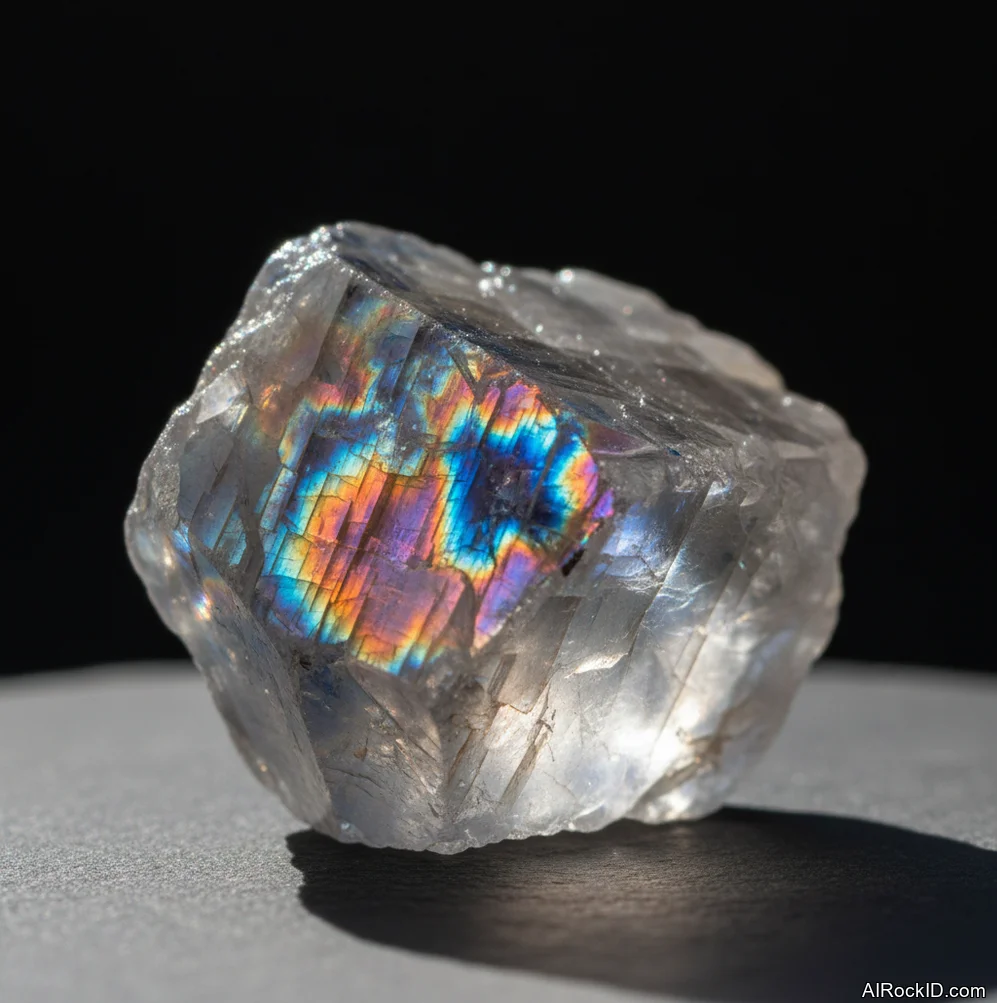
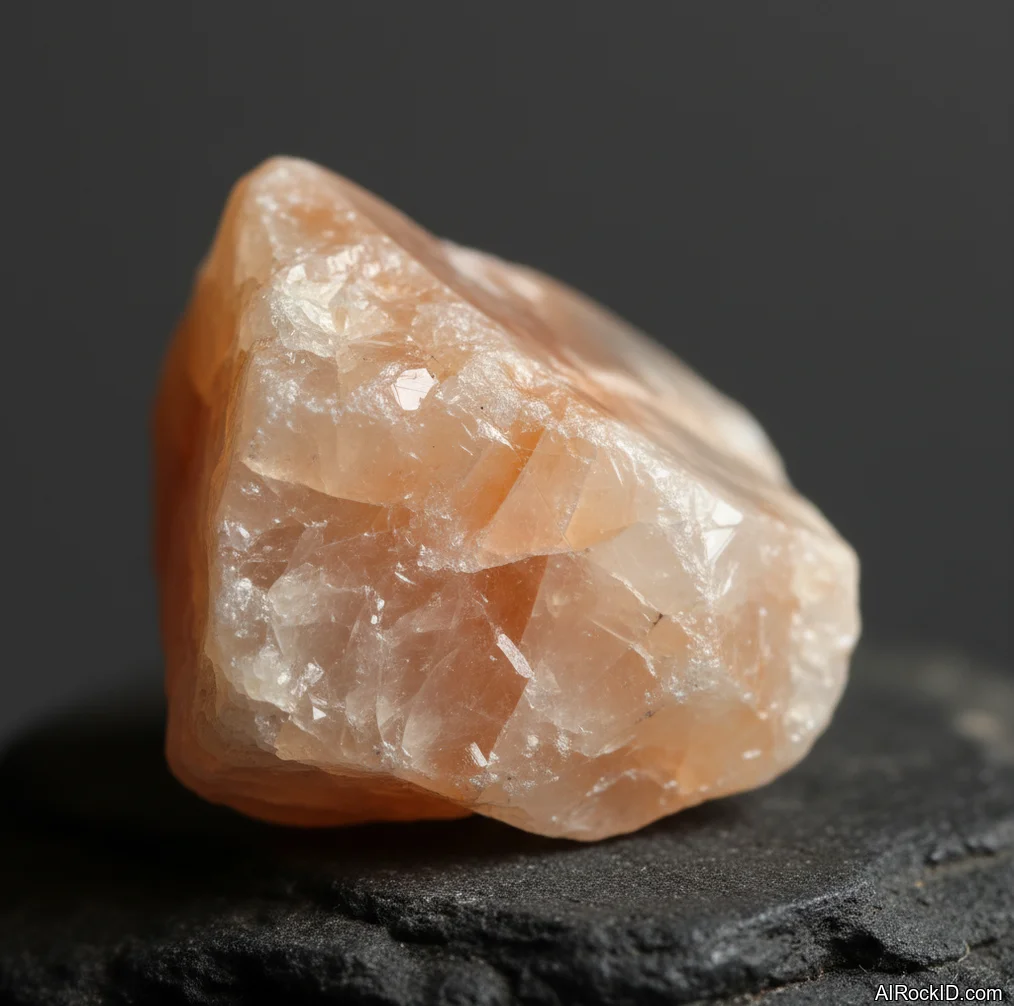
Peach Moonstone is a peach-to-apricot colored variety of feldspar (usually orthoclase/adularia) and it has that soft, floaty sheen people call adularescence.
Grab a palm stone and you notice the feel before anything else. It’s cool the second it hits your hand, then it warms up fast, and the polish feels almost “buttery” compared to harder stuff like quartz (you can tell right away). Tip it under a lamp and the glow kind of drifts across the face, like it’s hovering just under the surface. Some stones throw a white flash. Others lean a little bluish. And a lot of the peach material doesn’t do that big dramatic blue you see in classic rainbow moonstone, it’s more of a gentle shimmer.
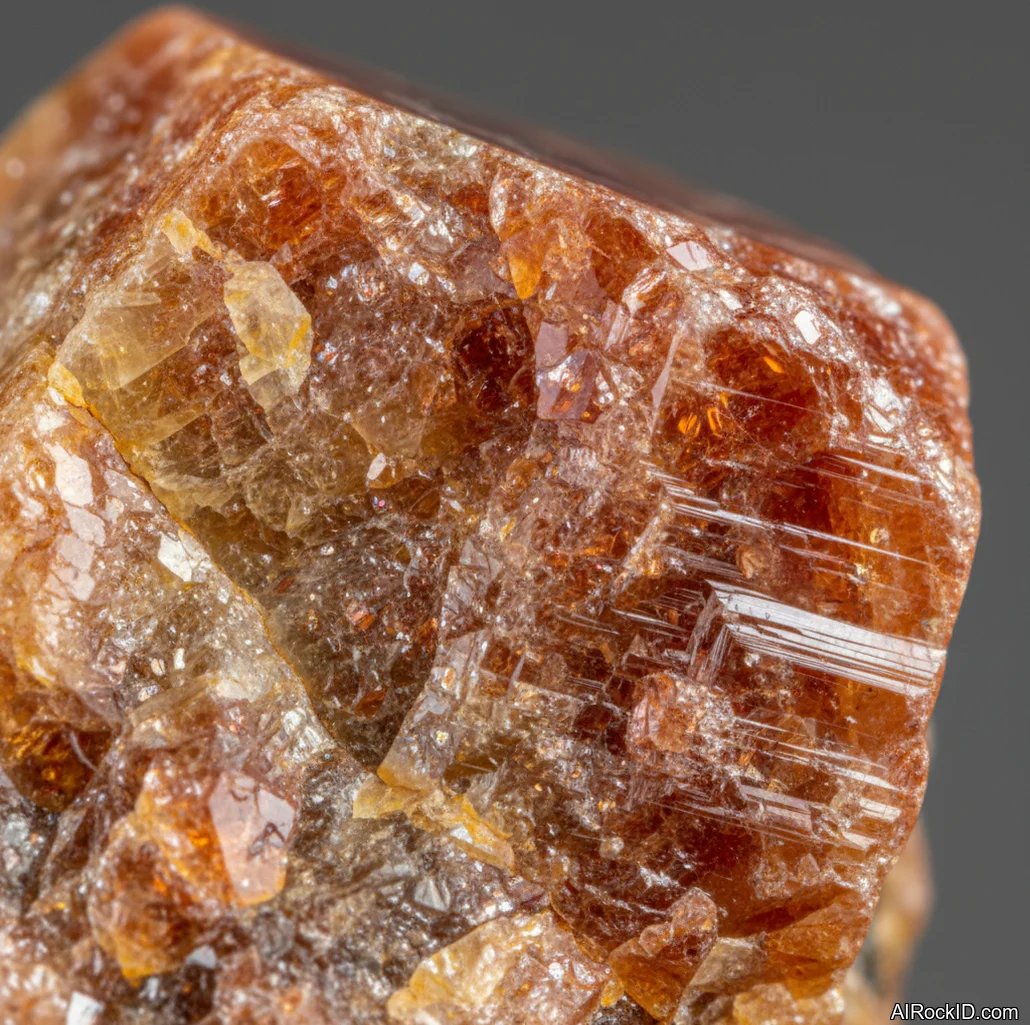
Most of what you’ll see in shops is tumbled or cut into cabochons, because moonstone only really does its trick on a curved surface. Rough chunks are out there. But clean, pretty rough isn’t as common at everyday shows. And look, sellers mix up names constantly, so watch it: peach moonstone is feldspar moonstone, but “peach selenite” and “peach aventurine” are completely different things.
Origin & History
Moonstone’s been used as a gem name for ages. But the mineral side of it didn’t really get nailed down until the 1800s, when people finally started sorting out feldspar varieties in a more serious, organized way.
The word “adularia” comes from those early write-ups of feldspar found around the Adula region in the Swiss Alps. And yep, you’ll still hear “adularia” used for moonstone-grade orthoclase today.
“Peach moonstone,” though? That’s mostly a trade name, not some official mineral variety. It’s basically the warmer-toned stuff that got carved out as its own category once dealers noticed buyers were after something softer and more skin-toned than the cooler white or blue moonstones. If you’ve ever stood at a gem table and watched someone slide stones around under the lights (that little sheen only really pops when you tilt it), you’ve probably seen it sitting right next to “white moonstone” and “gray moonstone,” often coming from the same general mining districts.
Where Is Peach Moonstone Found?
Peach moonstone shows up in pegmatites and gem gravels, with a lot of commercial material coming through India and Sri Lanka, plus Madagascar and parts of the USA.
Formation
Most moonstone is feldspar that cooled slowly enough to set up those super thin internal layers. And that layering is basically the whole trick behind adularescence, since light scatters along the intergrowth planes instead of just pinging off the surface.
Raw pegmatite pieces can look kind of dull sitting in your palm, chalky and sleepy, until somebody slices them and puts a dome on top. That’s the hard-earned moonstone lesson for collectors: the glow depends on orientation. If the cutter misses the right plane, the stone just goes flat and milky, with almost no sheen at all. I’ve held plenty of “meh” cabochons like that, the ones cut too low or slightly off-axis (you can feel it when you roll them under a lamp and nothing ever lights up). Same rough, totally different outcome.
How to Identify Peach Moonstone
Color: Body color ranges from pale peach and champagne to apricot or light salmon, often with cloudy white zones. Many stones also show tiny brown or reddish specks from iron staining.
Luster: Pearly to vitreous, with a floating sheen (adularescence) that moves as the stone is tilted.
Look closely under a single point light source like a desk lamp and rotate it slowly. The sheen should slide across in one coherent “patch” instead of glittering like metallic sparkles. The real test is feel and behavior: feldspar stays cool to the touch longer than glass, and it’ll show those flat cleavage directions if you’ve got a chipped edge to examine.
Common Look-Alikes
Peach Moonstone is sometimes confused with these materials:
- Peach/orange calcite (often sold as “peach moonstone” in tumbles, but it’s softer and looks more waxy than floaty)
- Orange selenite / satin spar gypsum (peachy, glowy, but it’s way softer and shows fibrous chatoyancy instead of moonstone sheen)
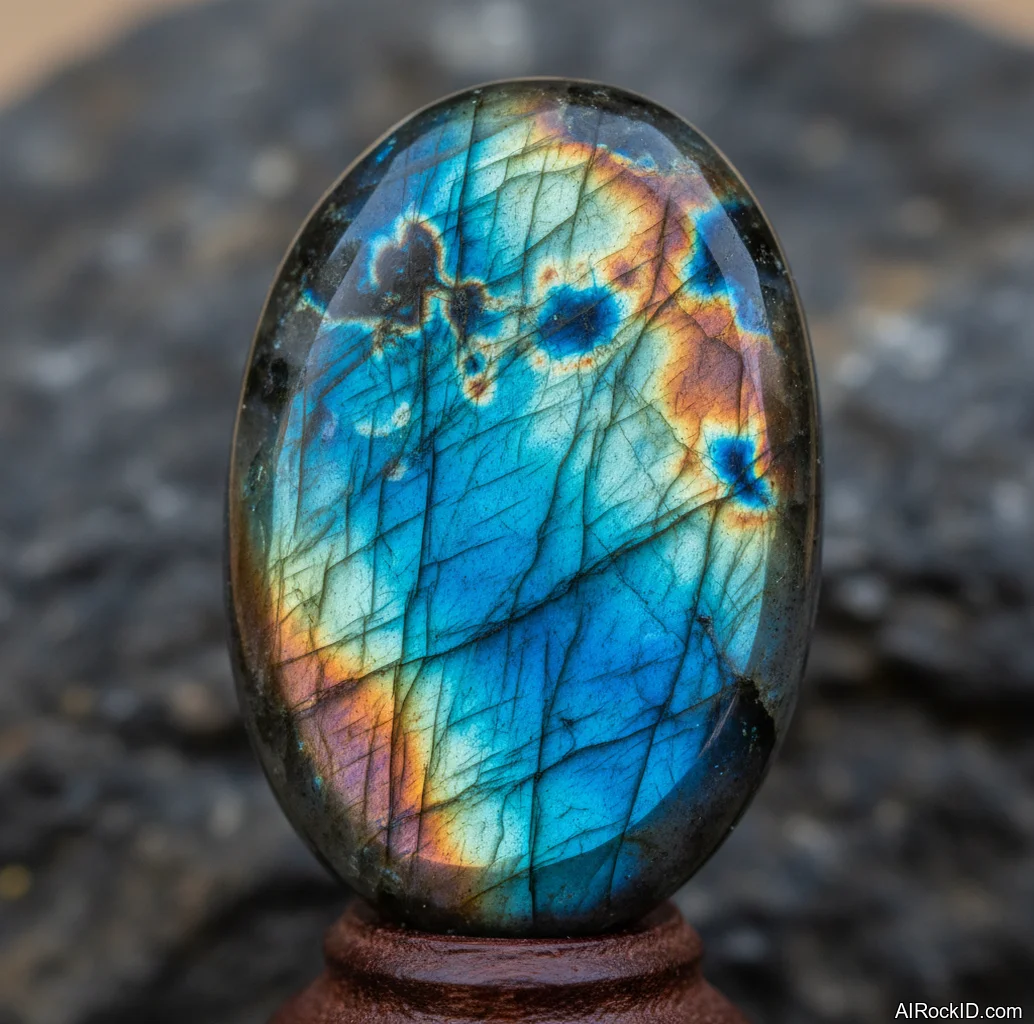
- Sunstone (feldspar with coppery glittery aventurescence, not the milky drifting adularescence)
- Peach aventurine quartz (sparkly mica “sugar” flash and higher hardness; doesn’t have that under-the-surface glow)
- Dyed white moonstone or dyed feldspar (peach tone with color pooling in pits, fractures, and drill holes)
- Peach-colored glass or opalite glass (too uniform, too “wet” looking, often with bubbles or flow lines and a warmer feel in the hand)
Market Cautions & Treatments
When AI Can Get This Wrong
At first glance, photos make peach moonstone look like peach calcite or orange selenite because all three can read as “soft peach glow” on a phone camera. The real test is movement: tilt it under a single lamp and moonstone’s adularescence slides across the face, while calcite stays more static and selenite flashes in fibrous bands. If you can handle it, check hardness and feel, since peach moonstone (6 to 6.5) won’t scratch like gypsum and it doesn’t have that sticky-soft drag calcite sometimes gets when it’s freshly polished.
Properties of Peach Moonstone
Physical Properties
| Crystal System | Monoclinic |
| Hardness (Mohs) | 6-6.5 (Hard (6-7.5)) |
| Density | 2.55-2.63 g/cm3 |
| Luster | Pearly |
| Diaphaneity | Transparent to translucent |
| Fracture | Uneven |
| Streak | White |
| Magnetism | Non-magnetic |
| Colors | peach, apricot, salmon, champagne, cream, light orange, white |
Chemical Properties
| Classification | Silicates (tectosilicate feldspar) |
| Formula | KAlSi3O8 |
| Elements | K, Al, Si, O |
| Common Impurities | Fe, Na, Ca, Mn |
Optical Properties
| Refractive Index | 1.518-1.526 |
| Birefringence | 0.005-0.007 |
| Pleochroism | Weak |
| Optical Character | Biaxial |
Peach Moonstone Health & Safety
Peach moonstone is safe to handle and it’s non-toxic. But if you’re cutting or grinding it, treat it like any other rock: watch out for the fine dust (the kind that clings to your fingers and gets on everything) and follow normal rock-dust safety precautions.
Safety Tips
If you’re sanding or drilling, put on a respirator and keep the surface wet while you work. Dust gets everywhere fast (you can taste it), and the water keeps it down.
Peach Moonstone Value & Price
Price Range
Rough/Tumbled: $5 - $60 per piece (tumbled/palm stones); $40 - $250+ for high-flash display or thick slabs
Cut/Polished: $5 - $40 per carat (typical cabochon quality); $40 - $150+ per carat for top sheen and clean material
Price jumps when you’ve got a strong, centered sheen and the body color stays clean, with no dead gray patches anywhere (those muddy spots are hard to unsee once you notice them). Size matters, sure. But the cut orientation matters more than people think.
Durability
Moderate — Scratch resistance: Good, Toughness: Fair
It’s stable in normal use, but it can chip on edges and it hates hard knocks because feldspar cleavage is real.
How to Care for Peach Moonstone
Use & Storage
Store it in a soft pouch or a separate compartment so it doesn’t get scratched by quartz or corundum. If it’s jewelry, keep it away from keys and loose change.
Cleaning
1) Rinse with lukewarm water and a drop of mild soap. 2) Use a soft toothbrush on the back and around settings, not aggressive scrubbing on edges. 3) Rinse well and pat dry; skip ultrasonic and steam cleaners.
Cleanse & Charge
A quick rinse and a wipe with a soft cloth is plenty for most people. If you do moonlight routines, keep it out of a sunny windowsill because heat and UV can mess with the look over time.
Placement
I like it where you’ll actually handle it, like a nightstand bowl or a pocket stone rotation. Just don’t park it under strong spotlights all day if you want the color to stay gentle.
Caution
Skip ultrasonic cleaners, steam, and anything too harsh chemically. Feldspar has cleavage, so it’ll chip more easily than quartz (you can feel how those edges catch if you’ve ever handled one). And don’t just toss it into a bag with harder stones where it can rattle around. With rings, be extra careful, because when you bump your hand, the hit usually lands on the edge first.
Works Well With
Peach Moonstone Meaning & Healing Properties
In a lot of crystal shops, peach moonstone is what people grab when they want the moonstone vibe but not that icy, silvery look. This one reads warmer. More human. Softer. And when you’ve got a good cabochon between your fingers, you can literally feel how smooth the dome is as you roll it under a lamp, and that slow, drifting glow is weirdly calming all by itself. Like watching clouds slide by when you’re stuck staring out a window.
People link moonstone with cycles, rest, and emotional processing, and peach moonstone tends to get filed under the same ideas, just with a little extra comfort on top. But look, here’s the honest part: a lot of what you get from it depends on how you use it. If it’s the stone you actually remember to leave on your nightstand, you’ll think about winding down when you see it. If it’s the one you rub with your thumb when you’re tense (you know that mindless little habit), it turns into a small anchor. That’s real. Even if it’s not “medical.”
The issue with moonstone talk online is how quickly it turns into promises. In my experience, peach moonstone works best as a gentle nudge to slow your breathing, not some magic fix. And if you’re buying it for the feel, go try a few pieces in person. Some are chalky and kind of dead. Others have that slick polish, and a flash that seems to follow you across the room when you move. Big difference.
Common mistakes
- Identifying any peach-colored polished stone as Peach Moonstone without checking for adularescence.
- Confusing glittery sunstone aventurescence with moonstone’s softer pearly sheen.
- Assuming all Peach Moonstone is untreated; dyed or color-enhanced material may appear in the market.
- Using color alone to separate Peach Moonstone from carnelian, orange calcite, or peach aventurine.
- Wearing Peach Moonstone in high-impact jewelry settings without considering its cleavage and moderate hardness.
Identify Peach Moonstone from a photo
Compare Peach Moonstone traits, care tips, value clues, and common lookalikes with a clear photo.