Rainbow Moonstone


Quick answer: Rainbow moonstone is valued for its blue to multicolor flash, but many stones sold under this name are actually white labradorite rather than true orthoclase moonstone. For identification, look for feldspar hardness, a moving internal sheen, and a refractive index near 1.56–1.57.
AI Rock ID can help screen rainbow moonstone by analyzing visible sheen, color zoning, translucency, and common lookalike patterns from a clear photo. RockIdentifier.io supports visual crystal identification, but gemological confirmation may still require refractive index, specific gravity, and magnification tests.
Good fit
- Collectors who like feldspar gems with blue-white or rainbow adularescence
- Jewelry buyers choosing pendants, earrings, or protected ring settings
- Beginners comparing moonstone, labradorite, and opalite lookalikes
- People who prefer a pale, translucent stone with subtle color flash
Not a good fit
- Daily-wear rings exposed to frequent knocks or abrasion
- Buyers expecting the hardness of quartz, sapphire, or diamond
- Anyone needing a guaranteed natural stone without seller documentation
- Collectors who dislike cleavage-sensitive feldspar minerals
Most commonly confused with
- Labradorite: Labradorite commonly shows stronger broad flashes on a darker gray to greenish body color.
- Moonstone: Traditional moonstone is usually orthoclase feldspar with a softer blue or white glow rather than strong rainbow flash.
- Opalite: Opalite is man-made glass with a milky glow and lacks feldspar cleavage and natural internal structures.
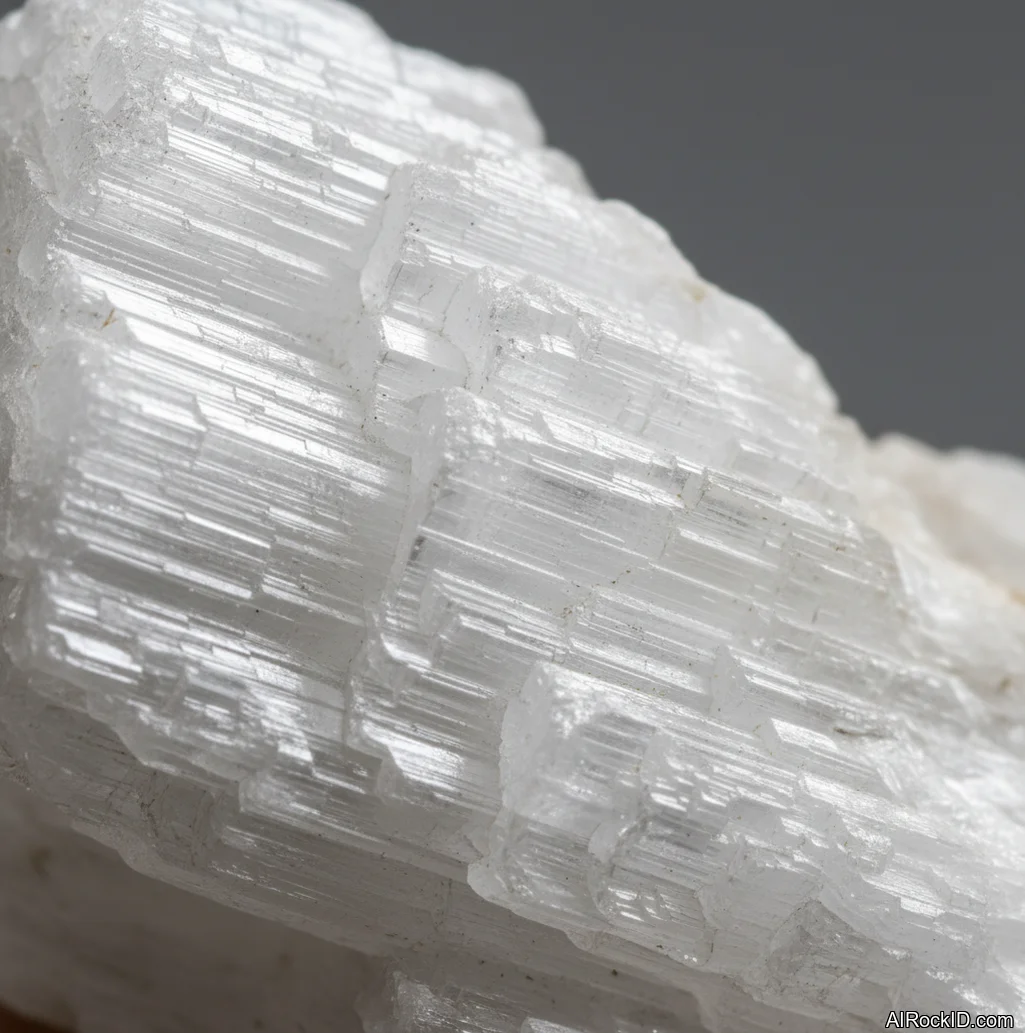
- Selenite: Selenite is much softer, can be scratched easily by a fingernail, and has a silky or pearly appearance rather than feldspar flash.
Rainbow Moonstone vs Common Lookalikes
| Stone | Typical Look | Key ID Clue | Hardness |
|---|---|---|---|
| Rainbow moonstone | White to translucent with blue or rainbow flash | Feldspar sheen that moves with the viewing angle | 6–6.5 |
| Labradorite | Gray, greenish, or dark body with bright color flash | Broader labradorescence on a darker base | 6–6.5 |
| Opalite | Milky glass with blue-orange glow | Man-made glass; no natural feldspar cleavage | About 5.5–6 |
| Selenite | White, fibrous, or transparent with pearly luster | Very soft and easily scratched | 2 |
| White opal | White to translucent with possible play-of-color | Lower hardness and different color pattern | 5.5–6.5 |
AI identification confidence
AI identification is usually more confident when the photo clearly shows the stone from multiple angles, including the flash direction and body color. Confidence is lower for polished cabochons, beads, and overexposed photos because opalite, white labradorite, and pale moonstone can look similar on camera.
When AI gets it wrong
- The photo shows only a single angle and the flash is not visible.
- The stone is a bead, tumbled piece, or cabochon with no crystal structure visible.
- Lighting creates artificial blue glare that resembles adularescence.
- The specimen is dyed, coated, or sold under a trade name rather than a mineral name.
Final recommendation
Choose rainbow moonstone with a clearly visible moving flash, no obvious surface coating, and a setting that protects the stone from hard impacts. For higher-value purchases, ask whether the material is natural feldspar, white labradorite, or treated glass, and request basic gem testing when possible.
How to Spot Real Rainbow Moonstone When Buying
Real rainbow moonstone should show a flash that appears to move from within the stone as it is rotated, rather than a flat surface coating. Natural pieces often have small inclusions, internal veils, or slight unevenness, while perfectly uniform milky glass may indicate opalite. Seller descriptions may use rainbow moonstone for white labradorite, so asking for the mineral identity can prevent confusion.
Photo Tips for Identifying Rainbow Moonstone
Use indirect daylight or a single soft light source and rotate the stone until the flash appears. Take photos from the front, side, and at an angle, and include a close-up of any inclusions or cleavage lines. Avoid strong blue reflections from screens or windows because they can mimic the stone’s natural sheen.
Common Treatments and Trade Names
Rainbow moonstone is commonly sold as a trade name for color-flashing feldspar, especially white labradorite from India. Some imitations are glass, coated material, or synthetic-looking opalite sold with moonstone-style names. A reputable listing should distinguish natural feldspar from glass and disclose any coating or enhancement.
What Is Rainbow Moonstone?
Rainbow Moonstone is basically a trade name for a light-colored feldspar that throws off a blue to rainbow sheen because light’s scattering around inside the stone.
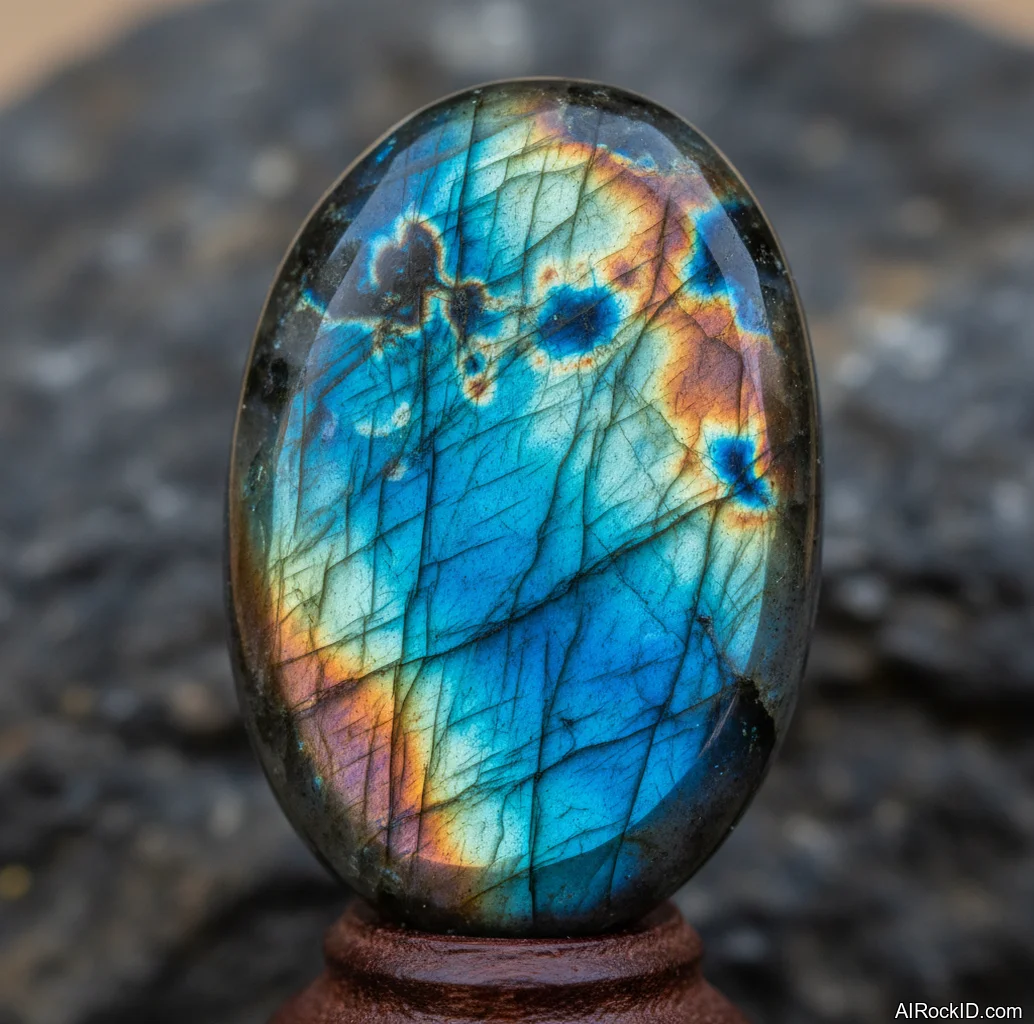
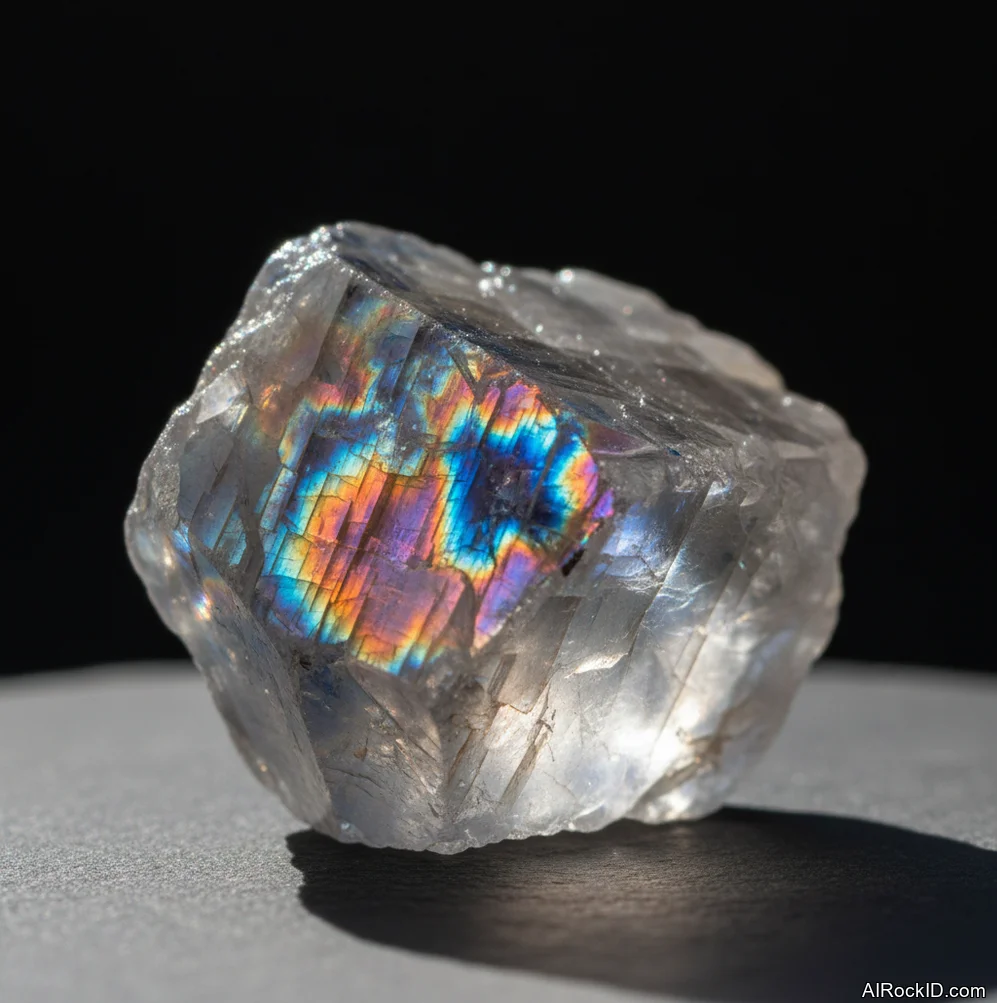
Pick up a good one and you’ll notice it fast: the flash isn’t sitting on top like paint. Tip it a few degrees and that glow glides around under the polish like it’s suspended in there, then it just blanks out the second you hit the wrong angle. Gone. That shifting shine is the whole point.
Thing is, most of what gets sold as “rainbow moonstone” in stores is actually a pale labradorite, not orthoclase moonstone. Sellers swap the names around all the time, so I go by what it does in hand: that cool, glassy feldspar feel, the internal lamellae you can catch when you roll it under a light, and a crisp blue flash that can jump to green or even a little peach along the edges (especially on a domed cab).
Origin & History
Moonstone’s been called “moonstone” in jewelry for ages, but mineral-wise it’s feldspar through and through. The whole “adularescence” term came from the classic material found near Mt. Adula in Switzerland, where that soft, milky glow (the kind you see slide across the surface when you tilt it under a lamp) made people think of moonlight.
“Rainbow moonstone” showed up later as a trade label once buyers started asking for the same moonstone look, just with more color. Most dealers use the name for pale labradorite from India and a few other places. And yes, it trips people up: real moonstone is usually orthoclase or a related K-feldspar, while rainbow moonstone is typically plagioclase.
Where Is Rainbow Moonstone Found?
Most commercial rainbow moonstone on the market is cut from Indian material. You’ll also see it from Madagascar and East Africa, with occasional small lots from other feldspar-bearing pegmatites worldwide.
Formation
Rainbow moonstone comes together the way a lot of feldspar does: inside slow-cooled igneous rocks and in pegmatites, where crystals get the time they need to grow and sort themselves into thin internal layers. Those tiny layers are the whole trick, because they bend the light around and that’s what gives you the flash.
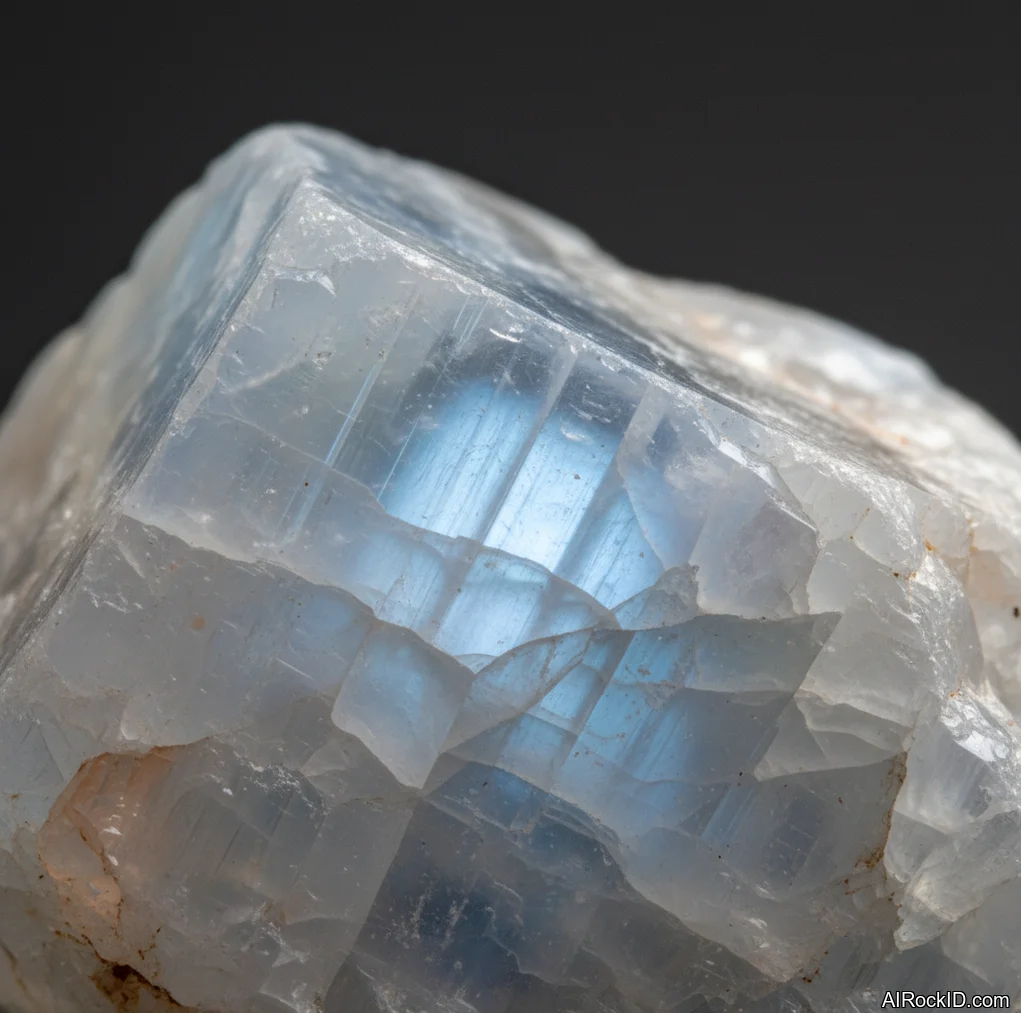
And yeah, rough out of a pegmatite pocket can look downright dull until you move it under a lamp. I’ve split open pieces that were basically cloudy white gravel, then one clean cleavage face suddenly went electric blue the second it caught the overhead lights. But feldspar cleavage is no joke. One wrong smack and it’ll pop apart along a plane like it was planning to the whole time.
How to Identify Rainbow Moonstone
Color: Body color is usually white to grayish-white, sometimes slightly peach or smoky, with blue to multicolor flash that appears at certain angles. The flash can look like a sheet, a streak, or patchy “windows.”
Luster: Vitreous to pearly on polished surfaces, with a pearly look on cleavage faces.
Pick up the stone and rock it under a single point light. Real material has a flash that turns on and off with angle, not a glitter that stays put. The real test is the feel plus the cleavage: if you see flat, step-like planes and it chips in blocky bits, you’re in feldspar territory. Cheap versions in glass feel warmer and the “flash” looks like uniform foil trapped inside.
Common Look-Alikes
Rainbow Moonstone is sometimes confused with these materials:
- White labradorite (often sold as “rainbow moonstone” even though it’s really plagioclase with labradorescence)
- White/peach moonstone (orthoclase feldspar with a softer, billowy adularescence instead of that sharp blue flash)
- Opalite glass (man-made glass sold as moonstone; milky body with blue/orange edges and a too-even glow)
- Milky quartz (white to gray, waxy look, no true moving sheen, just surface glare)
- Selenite/satin spar gypsum (very soft, fibrous sheen; gets dinged up fast and doesn’t take a hard polish like feldspar)
- Coated “aura” feldspar or coated glass (thin-film coating that throws rainbow colors that sit on the surface and scratch off at edges)
Market Cautions & Treatments
When AI Can Get This Wrong
Phone pics love to misread rainbow moonstone as opalite or milky quartz because the camera boosts the blue sheen and blows out the body color. Photos also confuse it with white labradorite since both can throw that electric blue flash. The quick confirm is angle play plus hardness: the flash should move and vanish with tilt, and at Mohs 6 to 6.5 it’ll scratch a copper penny but won’t scratch quartz.
Properties of Rainbow Moonstone
Physical Properties
| Crystal System | Triclinic |
| Hardness (Mohs) | 6-6.5 (Hard (6-7.5)) |
| Density | 2.69-2.72 g/cm3 |
| Luster | Vitreous |
| Diaphaneity | Transparent to translucent |
| Fracture | Uneven |
| Streak | White |
| Magnetism | Non-magnetic |
| Colors | White, Gray, Colorless, Blue, Rainbow (multicolor flash) |
Chemical Properties
| Classification | Silicates |
| Formula | (Na,Ca)(Al,Si)4O8 |
| Elements | Na, Ca, Al, Si, O |
| Common Impurities | K, Fe, Ti |
Optical Properties
| Refractive Index | 1.559-1.573 |
| Birefringence | 0.008-0.010 |
| Pleochroism | None |
| Optical Character | Biaxial |
Rainbow Moonstone Health & Safety
Rainbow moonstone is safe to touch and it’s non-toxic. If you’re cutting or grinding it, just use the usual lapidary common sense: keep the dust down, wear eye protection, and don’t breathe the powder (that fine, clingy grit gets everywhere).
Safety Tips
If you’re throwing it on a wheel, keep a splash of water going and put on a respirator that’s rated for fine particulates (the kind that ends up as that sneaky, gritty dust on your hands). But for normal day-to-day handling? Just don’t drop it on tile.
Rainbow Moonstone Value & Price
Price Range
Rough/Tumbled: $5 - $40 per piece (small rough/tumbled), $40 - $250+ for large high-flash slabs or specimens
Cut/Polished: $5 - $40 per carat (commercial), $40 - $150+ per carat (fine blue/rainbow flash, clean cabochons)
Price mostly comes down to how strong the flash is, how far it spreads across the stone, and how clean the body looks when you turn it in your hand under a light. And those big cabochons where the blue flash sits dead center? They’ll run higher, because cutters end up sacrificing a lot of rough just to nail the orientation (and that’s not a small waste).
Durability
Moderate — Scratch resistance: Good, Toughness: Fair
It wears okay for pendants and earrings, but cleavage makes it prone to chipping if it takes a sharp knock.
How to Care for Rainbow Moonstone
Use & Storage
Store it in a soft pouch or a separate box slot so harder stones don’t scuff the polish. I don’t toss feldspar into a mixed tumble jar unless I like surprises.
Cleaning
1) Rinse with lukewarm water. 2) Use a drop of mild soap and your fingers or a very soft brush to lift skin oils. 3) Rinse again and pat dry with a microfiber cloth.
Cleanse & Charge
If you do energy-style cleansing, simple smoke, sound, or a quick rinse works fine. I avoid long salt soaks because it’s pointless and can creep into tiny fractures.
Placement
Keep it where you can tilt it under a lamp, like a desk shelf, because the flash needs directional light. Direct sun all day isn’t great for display anyway since it highlights every little surface scratch.
Caution
Skip ultrasonic cleaners, steam cleaning, and anything that could smack it hard. And don’t leave it face-down on a gritty countertop, because feldspar gets those tiny hairline scratches almost immediately (you can feel the faint grit drag if you slide it).
Works Well With
Rainbow Moonstone Meaning & Healing Properties
Look at why people grab rainbow moonstone and it usually comes down to one thing: that quick blue flash when you tilt it under a light. In crystal culture, that “now you see it, now you don’t” glow gets linked to intuition, good timing, and noticing what’s right in front of you before you barrel ahead.
In my own stash, I treat it like a quiet stone, not a fireworks stone. When I’m sorting new show finds at the table, I’ll keep a moonstone cab right there and just roll it between my thumb and index finger while I’m thinking. It’s cool the second you pick it up. A little slick, like polished glass with the tiniest bit of drag. Weirdly grounding. That small habit keeps my brain from sprinting off in ten directions (because it will).
But it’s still a gemstone, not medicine. If someone’s pitching it like it’ll fix your hormones, cure anxiety, or replace therapy, that’s a red flag. What it can do, if you’re into the metaphysical side, is work like a nudge to slow down and check your emotional weather before you answer, buy, or react. Who doesn’t need that sometimes?
Common mistakes
- Assuming every stone labeled rainbow moonstone is traditional orthoclase moonstone.
- Confusing opalite glass with natural feldspar because both can show a blue glow.
- Judging authenticity from color alone instead of observing how the flash moves.
- Wearing rainbow moonstone in an exposed daily ring without considering cleavage and moderate hardness.
- Using a scratch test on finished jewelry, which can permanently damage the stone.
Identify Rainbow Moonstone from a photo
Compare Rainbow Moonstone traits, care tips, value clues, and common lookalikes with a clear photo.