Phenacite


Quick answer: Phenacite is a rare beryllium silicate that can resemble clear quartz, topaz, or colorless sapphire in cut stones. Its high hardness, glassy luster, and strong brilliance help with identification, but reliable confirmation often requires refractive index, specific gravity, or professional gem testing.
AI Rock ID can help screen a suspected phenacite specimen by comparing visible features such as crystal habit, transparency, luster, and color. RockIdentifier.io provides crystal reference information, but rare transparent gems like phenacite should be verified with gemological tests before buying or selling.
Good fit
- Collectors seeking a rare beryllium silicate mineral
- Gem enthusiasts comparing high-brilliance colorless stones
- Students learning how rare minerals can resemble common gems
- Buyers who are willing to request lab reports for higher-value stones
Not a good fit
- Shoppers who want a low-cost everyday ring stone
- Anyone relying on appearance alone for identification
- Buyers who cannot verify the source or testing of a claimed phenacite
- People seeking a stone for medical or safety-related purposes
Most commonly confused with
- Quartz: Quartz is much more common and has lower refractive index and brilliance than phenacite.
- Topaz: Topaz may look similar when colorless, but it has perfect cleavage and different gemological readings.
- White Sapphire: White sapphire is corundum with higher hardness and greater density than phenacite.
- Goshenite: Goshenite is colorless beryl and may occur with other beryllium minerals, but it has different crystal habit and optical properties.
Phenacite vs. Common Lookalikes
| Feature | Phenacite | Common Lookalikes | Useful Check |
|---|---|---|---|
| Typical appearance | Colorless to pale yellow or pink, glassy | Quartz, topaz, sapphire, goshenite can be colorless | Appearance alone is not enough |
| Hardness | About 7.5–8 | Quartz 7, topaz 8, sapphire 9 | Hardness narrows options but does not confirm |
| Cleavage | Poor to indistinct | Topaz has perfect basal cleavage | Look for cleavage planes in damaged stones |
| Density feel | Moderate | Sapphire feels heavier; quartz often feels lighter | Specific gravity test is more reliable than feel |
| Best confirmation | RI and SG consistent with phenacite | Different refractive index and density ranges | Use gemological testing or a lab report |
AI identification confidence
AI identification confidence for phenacite is usually moderate to low from photos alone because many transparent minerals share similar color and luster. Confidence improves when images show crystal form, matrix, locality information, scale, and multiple angles, but instrumental testing is still recommended.
When AI gets it wrong
- A faceted colorless stone is photographed without scale, weight, or optical test data.
- Quartz, glass, topaz, or white sapphire is labeled as phenacite based only on brightness.
- The specimen is highly included, weathered, or coated, hiding its true surface and crystal habit.
- Lighting or editing makes luster and color appear different from the actual stone.
Final recommendation
Treat phenacite claims cautiously when the stone is transparent, faceted, or priced well below comparable verified material. For significant purchases, request a reputable gem lab report or documented gemological readings rather than relying on seller descriptions alone.
How to Verify Phenacite Before Buying
A reliable phenacite purchase should include clear photos, weight, dimensions, origin when known, and disclosure of any treatments or repairs. For faceted stones, ask for refractive index, specific gravity, and a lab report from a recognized gemological laboratory. For mineral specimens, documented locality and crystal habit are especially useful because phenacite is uncommon and often confused with more common transparent minerals.
Natural Phenacite vs. Imitations
Phenacite is rarely synthesized for normal jewelry use, but misidentification and substitution are more common concerns. Colorless quartz, glass, topaz, and sapphire may be sold or mislabeled as phenacite by mistake or for profit. A seller’s name alone is not proof; independent testing is the best way to separate natural phenacite from lookalikes.
Phenacite Locality Clues
Phenacite is known from several classic localities, including parts of Brazil, Russia, Myanmar, Madagascar, and the United States. Locality can support an identification when it matches known geology, but it cannot confirm the mineral by itself. Specimens with old collection labels, mine information, or provenance are generally easier to evaluate than untraceable loose stones.
What Is Phenacite?
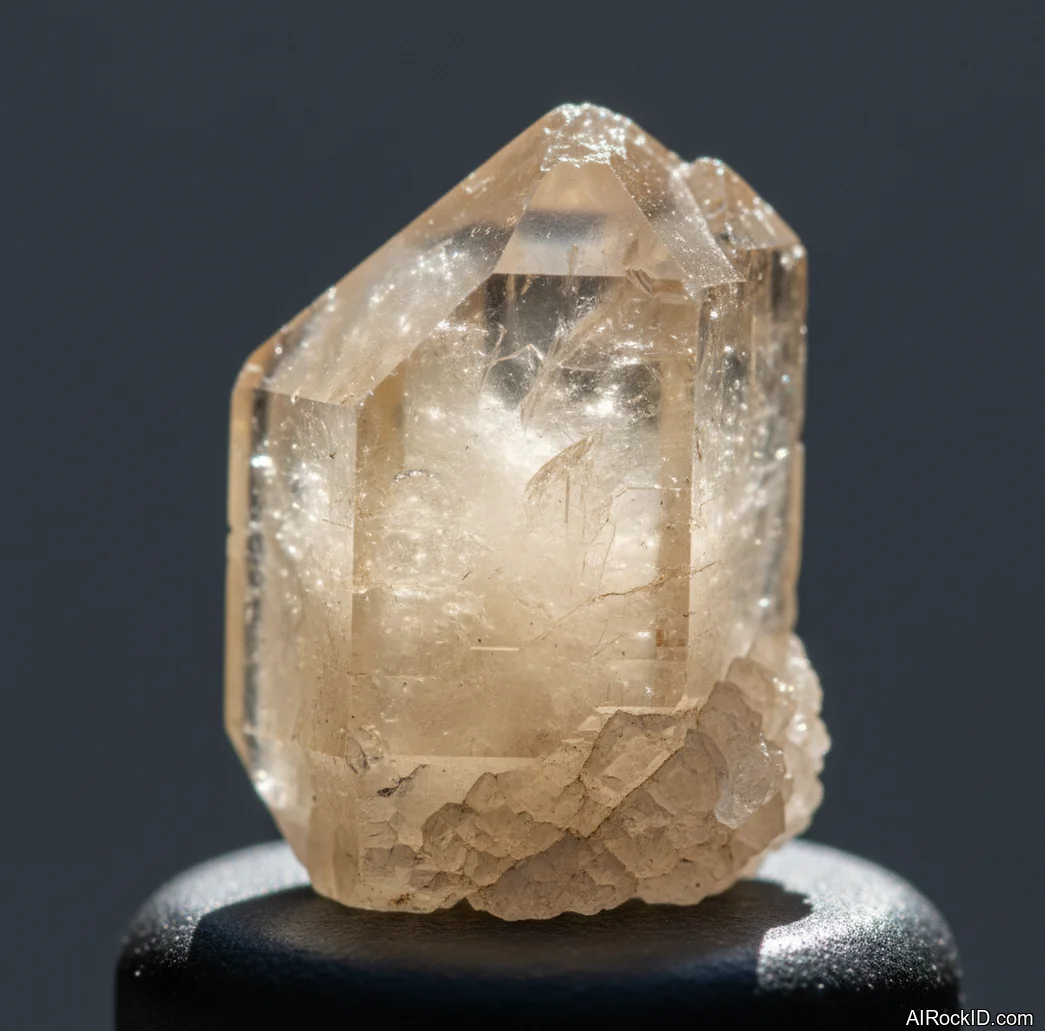
Phenacite is a rare beryllium silicate mineral, formula Be2SiO4. The funny part is how often it passes for plain clear quartz at first glance. You’ll pick it up, think “yep, quartz,” then put it under a loupe and there it is: that extra-sharp, glassy snap in the reflections that quartz doesn’t quite have.
Grab a clean crystal and it feels kind of tight and crisp in your fingers, like it wants to ring if you tap it lightly on a fingernail. I’ve handled a bunch of tumbled stones sold as “high vibration quartz” (you know the kind), and once you’ve had both in your hand, you spot the difference fast. Phenacite stays cooler. The edges feel sharper too, even when the piece has been rounded down.
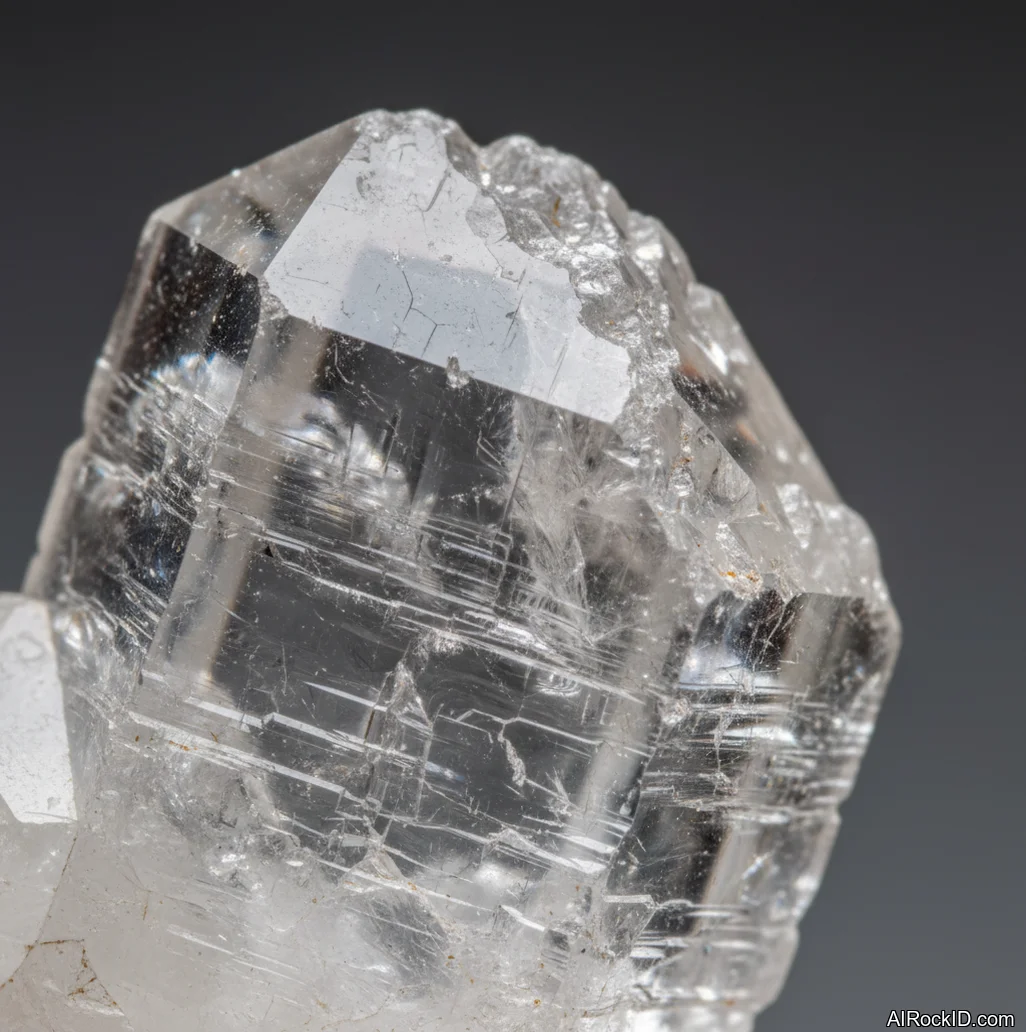
Next to quartz, phenacite often reads a little more watery and bright when it’s transparent, and on good faces the luster can slide toward adamantine. But, yeah, there’s a catch. Nice, undamaged crystals don’t usually show up in bargain boxes. Most are small, broken, or included, and the clean material gets priced like a gem, not like some random curiosity.
Origin & History
In 1833, Nordenskiöld described phenacite from Russia’s Ural Mountains. The name traces back to the Greek “phenax,” or “deceiver,” since early collectors kept mistaking it for quartz.
And honestly, that little backstory still holds up. I’ve handled older collections where a phenacite crystal just lived in the quartz drawer for decades, sliding around in a paper tray with a smudged pencil label, until somebody finally checked the hardness, measured the angles, and looked at its optical behavior and thought, “Wait a second.” It’s the kind of mineral that pays you back if you actually test it instead of relying on a quick glance.
Where Is Phenacite Found?
It turns up in granitic pegmatites and alpine-type pockets in a handful of classic localities, with Russia, Brazil, and parts of the western USA showing up a lot in the trade.
Formation
Raw pegmatite pieces usually come out of those late-stage fluids, the ones that were already soupy with oddball chemistry, and beryllium is a huge part of that mix. Phenacite shows up when Be and silica hit the right conditions, often forming right alongside feldspar, quartz, mica, plus other pegmatite minerals.
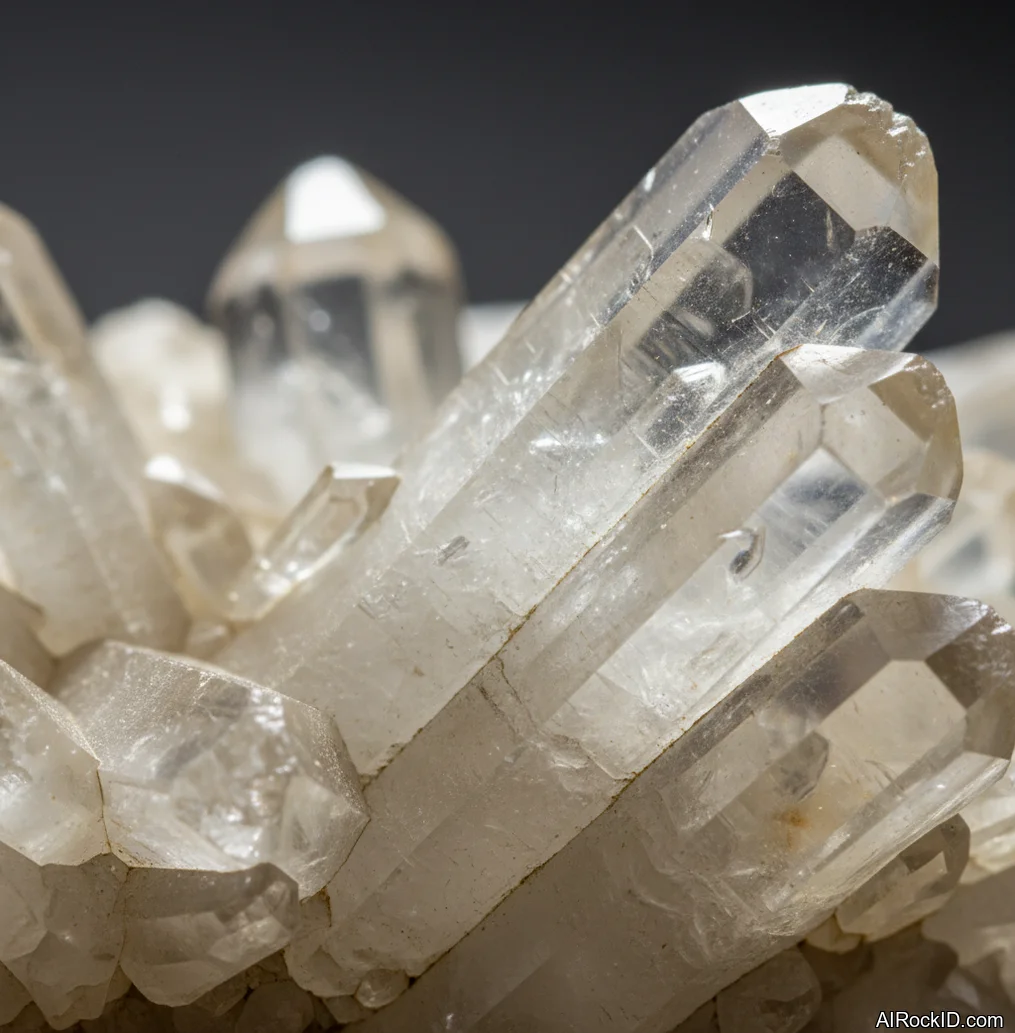
If you really study a matrix specimen, you’ll often catch phenacite hanging around the stuff that practically yells “late-stage pocket.” Clean quartz points with sharp tips, cleavelandite plates that look like little stacked white fish scales, and sometimes tourmaline. Other times it’s topaz or beryl sitting in the same pocket zone. But phenacite doesn’t have to be perched on a flashy matrix to be legit. Plenty of it is just loose crystals dug out of pockets, rinsed off, and cleaned up.
How to Identify Phenacite
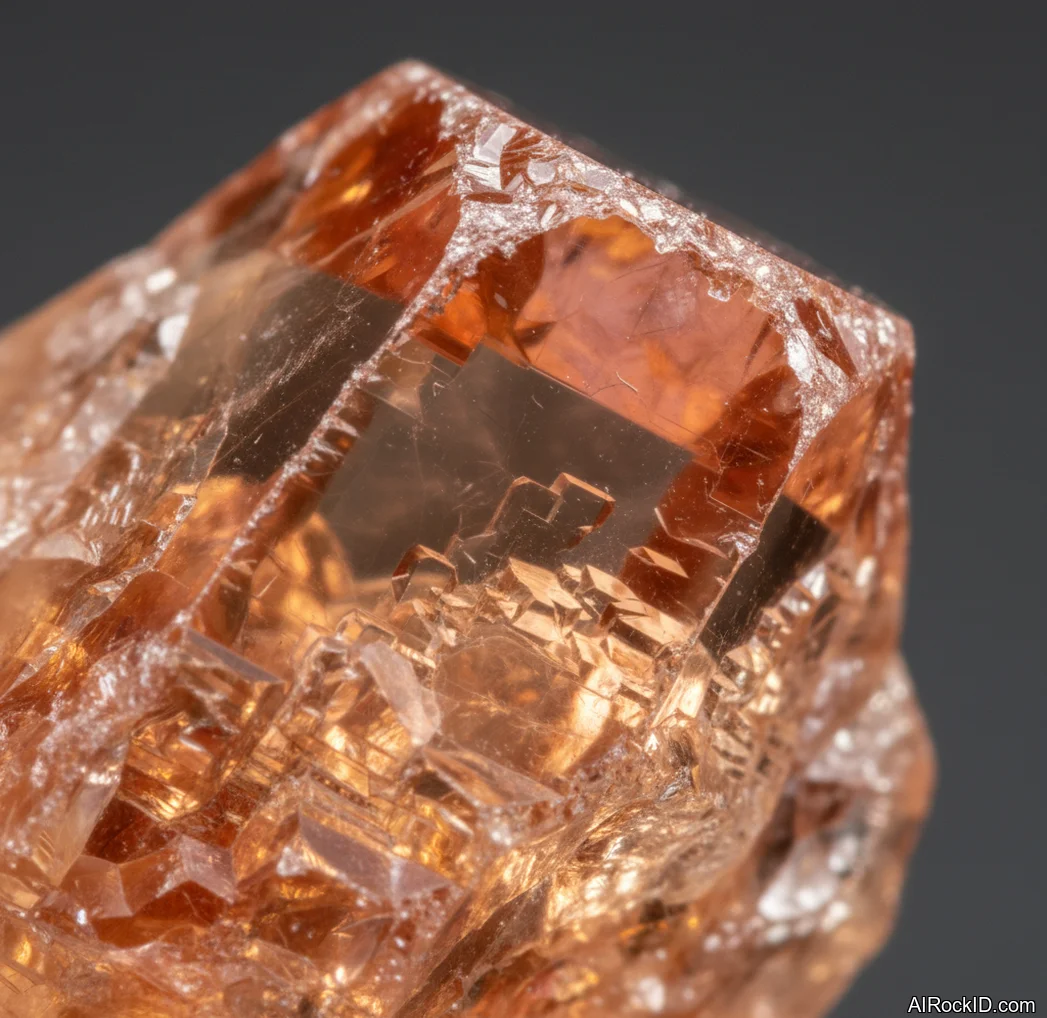
Color: Most phenacite is colorless to white, sometimes with a faint champagne tint. Rarely you’ll see pale yellow, brownish, or very light pinkish tones.
Luster: Vitreous to adamantine when clean and well-polished or naturally sharp-faced.
If you scratch it with a quartz point, quartz shouldn’t win. Phenacite is harder, so quartz (Mohs 7) usually won’t leave a mark on a clean face, while phenacite can scratch glass easily. The real test is a combo of hardness, crystal habit, and optics: under a loupe, phenacite often looks extra crisp with bright facet-like flashes even on natural faces, and it doesn’t have quartz’s common internal “wispy” look as often.
Common Look-Alikes
Phenacite is sometimes confused with these materials:
- Quartz (especially clear or milky)
- Danburite
- Topaz
- Colorless Beryl (Goshenite)
- Glass fakes
- Colorless synthetic spinel
Market Cautions & Treatments
When AI Can Get This Wrong
AI photo tools often tag phenacite as clear quartz or danburite because the crystal habits overlap and both can be colorless. Photos don’t capture the razor-sharp glassy reflections and subtle heft that real phenacite has. A scratch test or checking refractive index with a simple penlight and loupe will usually clear things up if you’re unsure.
Properties of Phenacite
Physical Properties
| Crystal System | Trigonal |
| Hardness (Mohs) | 7.5-8 (Very Hard (7.5-10)) |
| Density | 2.96-3.00 |
| Luster | Vitreous |
| Diaphaneity | Transparent to translucent |
| Fracture | Conchoidal |
| Streak | White |
| Magnetism | Non-magnetic |
| Colors | Colorless, White, Pale yellow, Light brown, Very pale pink |
Chemical Properties
| Classification | Silicates |
| Formula | Be2SiO4 |
| Elements | Be, Si, O |
| Common Impurities | Fe, Mn, Al |
Optical Properties
| Refractive Index | 1.650-1.670 |
| Birefringence | 0.016 |
| Pleochroism | None |
| Optical Character | Uniaxial |
Phenacite Health & Safety
Handling it, putting it on display, and even a quick splash of water usually isn’t a problem as long as the piece is intact. But if you’re going to lapidary it, don’t make dust you can breathe in. Mineral dust is the part you want to avoid.
Safety Tips
If you’re cutting or sanding, don’t do it dry. Keep it wet, crack a window or run a fan so the air actually moves, and wear a real respirator that’s rated for fine particulates (not just a flimsy paper mask).
Phenacite Value & Price
Price Range
Rough/Tumbled: $20 - $300 per specimen
Cut/Polished: $80 - $600 per carat
Prices can swing all over the place depending on clarity, size, and whether the crystal faces are actually sharp and not chipped up. If you’ve ever held one, you know what I mean, those crisp, glassy terminations with clean edges you can catch with a fingernail (and you can spot a ding instantly). Clean, terminated crystals and well-cut stones climb in price fast, mostly because there just aren’t heaps of them floating around the way there are with quartz.
Durability
Durable — Scratch resistance: Excellent, Toughness: Fair
It’s stable in normal conditions, but sharp edges can chip if you knock it around, especially in faceted stones.
How to Care for Phenacite
Use & Storage
Store it in a box or a padded tray so it doesn’t bang into harder stones or metal. I keep mine away from quartz points because a sharp quartz edge can still chip a crystal corner if it gets jostled.
Cleaning
1) Rinse with lukewarm water and a drop of mild soap. 2) Use a very soft toothbrush around crevices and rinse again. 3) Pat dry and let it air-dry fully before putting it back in a closed case.
Cleanse & Charge
If you do energetic cleansing, stick to gentle options like smoke, sound, or a quick rinse and dry. I skip salt so I’m not grinding crystals together by accident in a bowl.
Placement
A windowsill is fine for looks, but I prefer a shelf where it won’t get knocked over. Small phenacite crystals disappear into clutter, so give them a clean background and a little spotlight.
Caution
Don’t run fragile pieces (or any specimen that’s still in its matrix) through an ultrasonic cleaner. And don’t just drop a faceted phenacite loose in your pocket with keys or coins unless you want to see fresh scuffs and little edge dings when you pull it back out. Also, don’t grind or drill it unless you’ve got proper dust controls in place. Thing is, the dust can be beryllium-bearing, and that’s not something you want floating around in the air you’re breathing.
Works Well With
Phenacite Meaning & Healing Properties
Most dealers talk about phenacite like it’s “all head and light,” and honestly, that matches how people actually use it. In my own little box of stones, it’s the one I grab when my thoughts won’t stop looping and I just want everything to get clean and simple. Not sleepy. Just quieter.
Pick up a small, clear phenacite and sit with it for a minute. It’s not dramatic, but it feels tight and directed, like a beam instead of a floodlight. But look, it isn’t a comfort stone for everyone. Some people find it a little too “up,” especially if they’re already wired or anxious (you know that buzzy feeling), so putting it with something grounding can make the whole thing feel more usable.
And none of this is medical care, and I don’t treat it like that. I treat it like a tool for attention and mindset, the same way you’d use a timer for meditation or a notebook for brain-dump journaling. If you’re trying to do quiet work, a tiny phenacite on the desk can be a solid little nudge to keep it simple. Why make it harder than it has to be?
Common mistakes
- Assuming any very bright colorless stone is phenacite.
- Using a phone photo as the only basis for buying a rare transparent gem.
- Ignoring topaz cleavage when comparing colorless stones.
- Confusing a metaphysical trade label with a verified mineral identification.
- Buying high-value phenacite without a lab report or documented gemological readings.
- Treating claimed locality as proof without supporting mineral evidence.
Identify Phenacite from a photo
Compare Phenacite traits, care tips, value clues, and common lookalikes with a clear photo.