Herkimer Diamond


Quick answer: Herkimer Diamond is a naturally double-terminated variety of quartz best known from Herkimer County, New York. Despite the name, it is not diamond; it is quartz with Mohs hardness 7 and a glassy luster.
AI Rock ID can help screen a suspected Herkimer Diamond by checking crystal shape, transparency, luster, and visible inclusions from a photo. RockIdentifier.io provides educational identification support, but locality, hardness, and professional gem testing may still be needed for high-value purchases.
Good fit
- Collectors who like naturally terminated quartz crystals
- Beginners who want a durable mineral with recognizable form
- Jewelry wearers looking for a clear quartz gem with Mohs 7 hardness
- Buyers interested in New York mineral specimens with locality appeal
Not a good fit
- Anyone expecting true diamond hardness or fire
- Buyers who need a guaranteed Herkimer County origin without documentation
- Rings intended for heavy daily impact or rough wear
- People who prefer colored gemstones over clear quartz
Most commonly confused with
- Clear Quartz: Clear quartz may form many habits, while Herkimer Diamond specifically refers to naturally double-terminated quartz, especially from New York deposits.
- Diamond: Diamond is carbon with Mohs hardness 10 and much higher brilliance; Herkimer Diamond is quartz with Mohs hardness 7.
- Glass: Glass can look clear and shiny but lacks natural quartz crystal faces and has lower hardness.
- Topaz: Colorless topaz is harder than quartz and usually shows different crystal form and cleavage.
Herkimer Diamond vs. Common Lookalikes
| Material | Key Difference | Typical Clue |
|---|---|---|
| Herkimer Diamond | Double-terminated quartz | Six-sided points, glassy luster, Mohs 7 |
| Clear Quartz | Same mineral, broader crystal habits | May have a single termination, clusters, or massive form |
| Diamond | Different mineral and much harder | Greater brilliance, Mohs 10, higher density |
| Glass | Amorphous material, not crystalline quartz | Rounded bubbles, mold marks, lower scratch resistance |
| Cubic Zirconia | Synthetic diamond simulant | Stronger rainbow flashes and higher weight for size |
AI identification confidence
AI identification confidence is usually higher when the photo clearly shows natural terminations, crystal faces, transparency, and scale. Confidence drops when the stone is faceted, mounted in jewelry, heavily included, or photographed under strong reflections.
When AI gets it wrong
- A faceted Herkimer Diamond can resemble glass, white topaz, cubic zirconia, or diamond in photos.
- A clear quartz point from another locality may be mislabeled as a Herkimer Diamond without origin evidence.
- Very clean specimens may be difficult to separate from synthetic or imitation materials using images alone.
- Reflections, fingerprints, and backlighting can hide inclusions and distort the crystal outline.
Final recommendation
Choose Herkimer Diamond when you want a clear quartz crystal with natural double termination and a distinct New York collecting tradition. For expensive specimens or jewelry, prioritize seller transparency, locality information, and return policies over the name alone.
How to Check Herkimer Diamond Authenticity
A genuine Herkimer Diamond should show quartz crystal features such as flat faces, sharp natural terminations, glassy luster, and Mohs 7 hardness. Locality is part of the name, so specimens sold as true Herkimer Diamonds should ideally include mine, county, or dealer provenance. A crystal can be double-terminated quartz without being from Herkimer County, New York.
Buying Tips for Herkimer Diamond
Look for clear photos that show both terminations, side faces, chips, internal fractures, and scale. Higher prices are often linked to clarity, symmetry, size, luster, minimal damage, and documented New York origin. Be cautious of vague listings that use “Herkimer-style” or “Herkimer-type” when locality matters.
Natural Inclusions and Surface Features
Herkimer Diamonds commonly contain internal veils, black carbon-like inclusions, fluid inclusions, or tiny cavities. These features do not automatically mean the stone is fake, and some collectors value them as evidence of natural growth. Perfectly clean material should still be evaluated by crystal form, seller history, and any available testing.
What Is Herkimer Diamond?
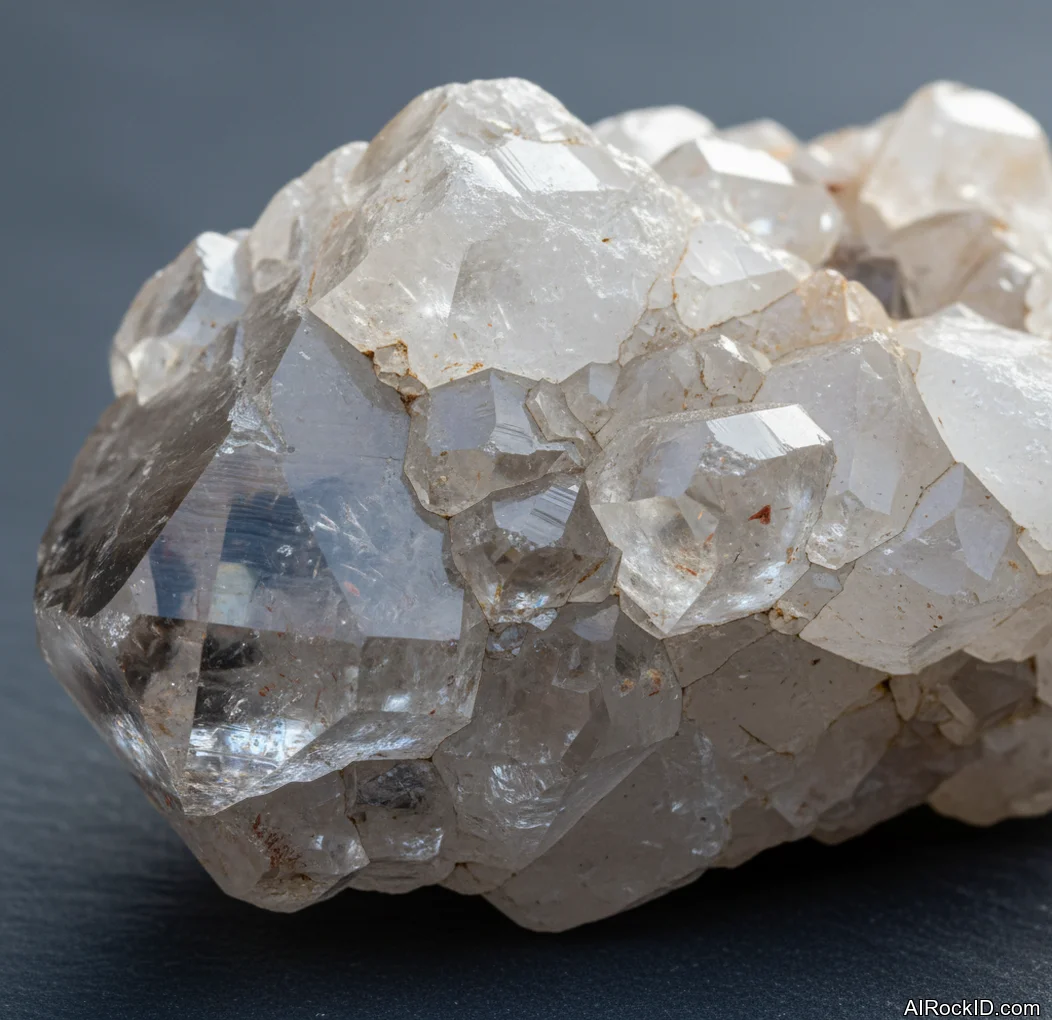
A Herkimer Diamond is a naturally double-terminated quartz crystal that comes from in and around Herkimer County, New York. It’s not a real diamond, obviously, but the nickname clicks the second a clean one catches the light and flashes like broken glass under a shop lamp.
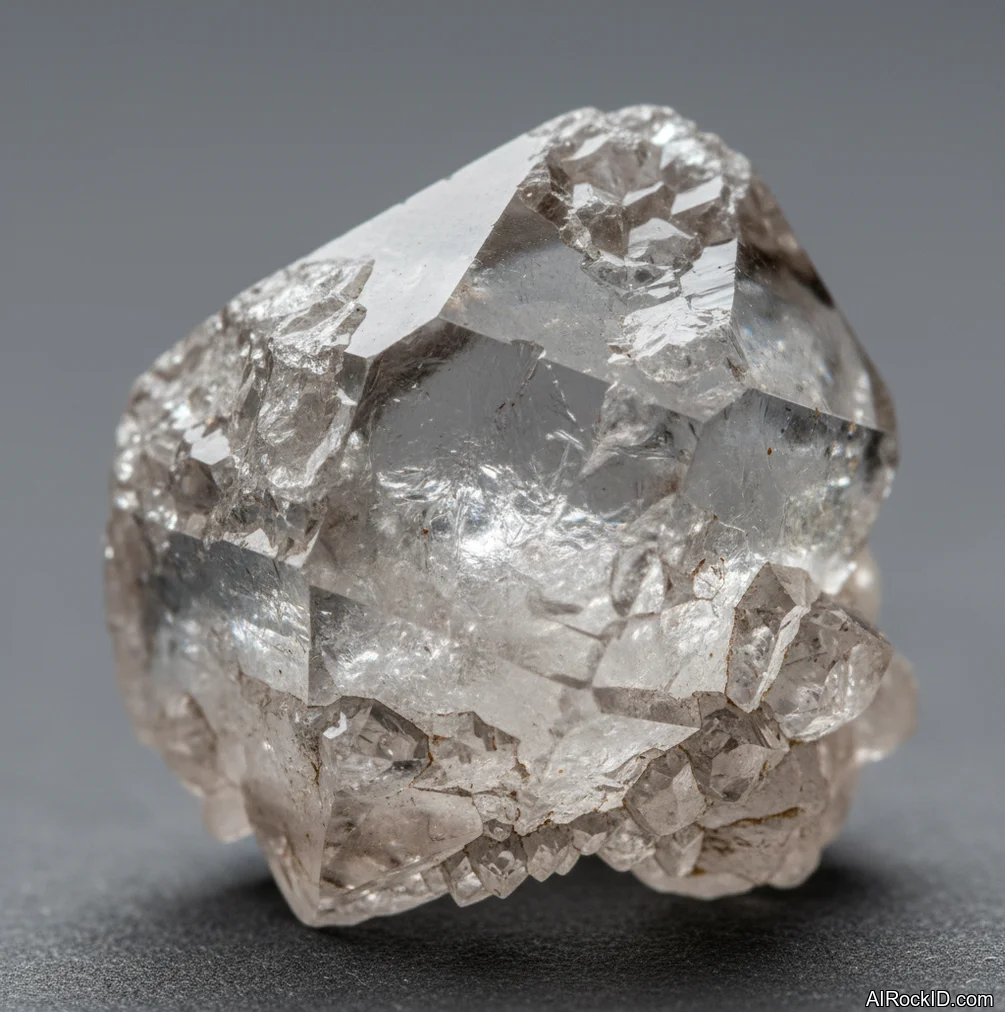
Hold a decent specimen and, yeah, it feels sharp. Not “polished into a point” sharp, but actual pointy points that’ll snag your skin if you’re not paying attention. Most of them have that classic two-ended shape because they grew free inside little pockets, so they didn’t end up stuck to a wall the way regular quartz points do.
They can look crystal clear at first, but then you roll it a bit and you’ll spot tiny rainbows, some needle-like inclusions, maybe a few little black specks. And if you’ve ever cracked open dolostone at a New York dig, you already know some crystals come out wearing that thin gray coating (annoying stuff) that takes patience to scrub off.
Origin & History
The name’s literally just the place: Herkimer County, New York. Folks were turning up these crystals in the Mohawk Valley way before modern collecting was even a thing, but “Herkimer Diamond” really caught on when dealers noticed the double terminations and that clean, bright clarity basically sold on sight.
Geology-wise, it’s plain old quartz. And quartz was formally described long before anyone was writing about Herkimer material in a scientific way. The real story is the local fame. Walk around a gem show and you’ll see them everywhere, usually sitting in a shallow tray with that little folded card that says “New York diamonds,” because that’s the line people actually remember.
Where Is Herkimer Diamond Found?
True Herkimer Diamonds come from the dolostone pockets of central New York. Similar-looking double-terminated quartz is sold from other countries, but it’s not “Herkimer” in the strict locality sense.
Formation
Raw Herkimer pieces get pulled out of Cambrian-age dolostone. Quartz grew inside little vugs and cavities in that rock, the kind of pockets you see when you crack a chunk open and there’s that drusy, hollow surprise inside.
And the double terminations? That part’s pretty simple once you picture it. The crystals had open space around them, so they could build out on all sides instead of being stuck to host rock on one end.
Thing is, the matrix story makes it click if you stare at it for a minute. You’ve got silica-rich fluids moving through carbonate rock, feeding slow quartz growth in those pockets. Some crystals trap hydrocarbons or tiny mineral bits, so you’ll catch black inclusions or little “floating” specks that look like pepper when the light hits just right (especially if you tilt it and the glare shifts). But don’t expect every piece to be museum-clear. A lot of honest field material comes out frosty, coated, or chipped from extraction. Why wouldn’t it?
How to Identify Herkimer Diamond
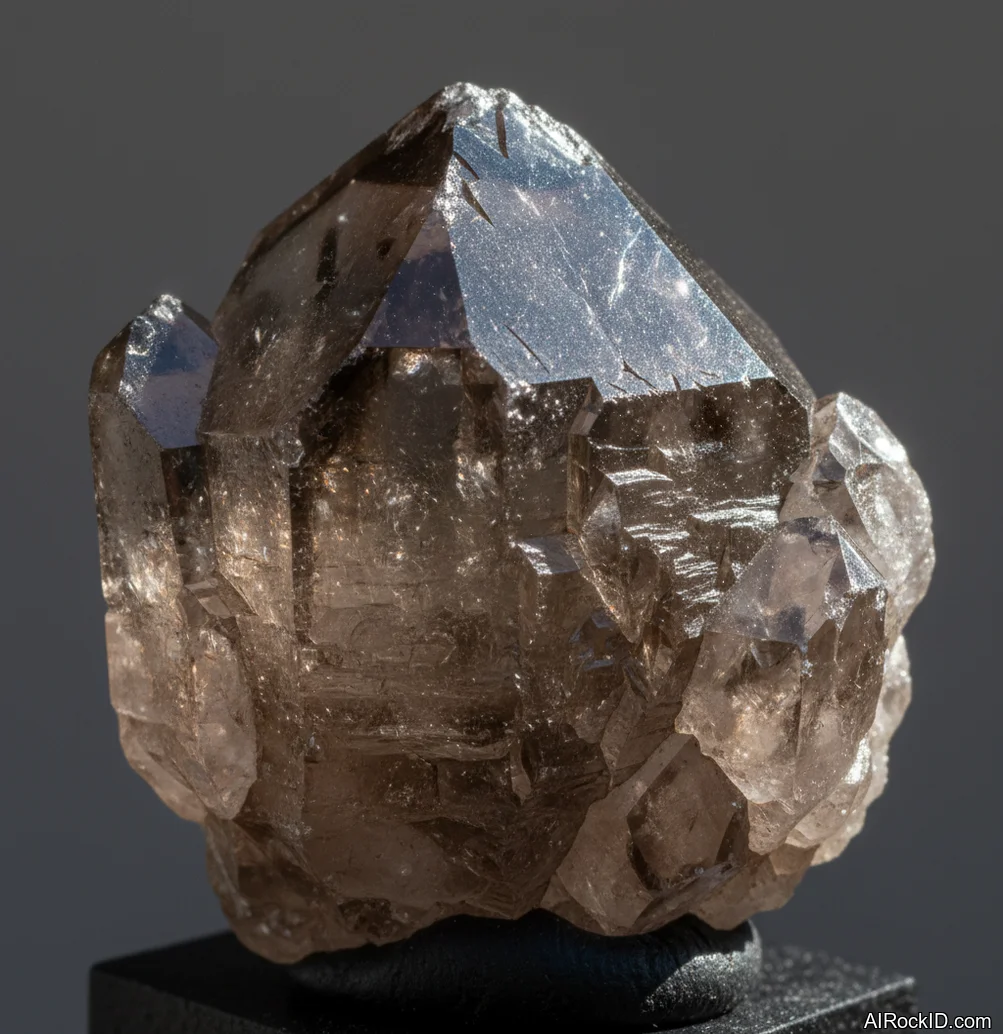
Color: Most Herkimer Diamonds are colorless to smoky-clear, with occasional gray tints from surface coatings or inclusions. Some show black inclusions (often carbonaceous material) and internal rainbows from stress fractures.
Luster: Vitreous luster on clean faces, with a bright glassy flash when you rotate it under a single light.
The real test is the shape and the feel: natural double terminations with crisp faces that still look “grown,” not rounded like tumbles. If you scratch it with a steel knife, the knife won’t bite the quartz, but quartz will scratch glass easily. Cheap versions are sometimes just regular quartz points cut at both ends, and they feel too perfect and too symmetrical when you roll them between your fingers.
Common Look-Alikes
Herkimer Diamond is sometimes confused with these materials:
- Double-terminated quartz from Brazil/Arkansas sold as "Herkimer"
- Clear calcite (often sold as "Iceland spar")
- Danburite (colorless to white, prismatic crystals)
- Apatite or topaz points mislabeled as "diamond quartz"
- Lead crystal or molded glass "diamond" souvenirs
- Heat-treated or artificially smoky quartz sold as "smoky Herkimer"
Market Cautions & Treatments
When AI Can Get This Wrong
At first glance in photos, AI mixes Herkimers up with any clear terminated quartz, danburite, or even calcite because the two-ended shape reads the same on a white background. The real test is hardness and feel: a Herkimer (quartz) will scratch glass cleanly and won’t fizz in a drop of weak acid, while calcite scratches easily and reacts fast. Look closely for those needle-sharp terminations and the little pocket crud collectors know, like tiny black inclusions or frosty contact faces, because studio-clean crystals from other localities can fool cameras.
Properties of Herkimer Diamond
Physical Properties
| Crystal System | Hexagonal |
| Hardness (Mohs) | 7 (Hard (6-7.5)) |
| Density | 2.65 g/cm3 |
| Luster | Vitreous |
| Diaphaneity | Transparent to translucent |
| Fracture | Conchoidal |
| Streak | White |
| Magnetism | Non-magnetic |
| Colors | Colorless, White, Gray, Smoky |
Chemical Properties
| Classification | Silicates |
| Formula | SiO2 |
| Elements | Si, O |
| Common Impurities | Al, Fe, Li, Na, K, Ti, H |
Optical Properties
| Refractive Index | 1.544-1.553 |
| Birefringence | 0.009 |
| Pleochroism | None |
| Optical Character | Uniaxial |
Herkimer Diamond Health & Safety
Herkimer Diamond is just non-toxic quartz, so it’s safe to handle. But the real issue is physical: those sharp terminations can poke you fast, and if a piece has a chipped edge, it can feel weirdly slicey when you run a finger along it (ask me how I know).
Safety Tips
If you’re cleaning or trimming matrix, put on eye protection and try not to breathe in the fine dust that comes off (it’s the kind that hangs in the air longer than you expect). But for everyday handling, just don’t store loose crystals where they can clack into each other.
Herkimer Diamond Value & Price
Price Range
Rough/Tumbled: $10 - $150 per piece
Cut/Polished: $5 - $30 per carat
Clean, sharp crystals that end naturally on both sides, and have that nice bump in size, get expensive in a hurry. But if the tips are chipped, there’s a thick crusty coating on them, or they’re just hazy all over, the value drops fast even though the crystal itself is still legit.
Durability
Durable — Scratch resistance: Excellent, Toughness: Good
Quartz is stable in normal household conditions, but the points chip if you let pieces rattle together in a bag or jar.
How to Care for Herkimer Diamond
Use & Storage
Store it in a small box or wrap it in a soft cloth so the tips don’t chip. If you keep a group piece, make sure it can’t wobble and fall off a shelf.
Cleaning
1) Rinse with lukewarm water and a drop of mild dish soap. 2) Use a soft toothbrush to work around the terminations and any crevices. 3) Rinse well and air dry; for stubborn mineral film, a short soak in plain white vinegar can help, then rinse again.
Cleanse & Charge
If you like ritual cleaning, a quick rinse and a dry in indirect light works fine. I avoid leaving clear quartz baking in a hot windowsill for days, mostly because shelves get knocked and sunlight can heat the spot.
Placement
Put it where you can catch the flash, like near a lamp or on a desk you actually sit at. If you’ve got pets or kids, keep it off the edge, because those points don’t forgive falls.
Caution
Skip harsh acids and don’t go at it with a stiff wire brush, especially if your Herkimer’s sitting on a carbonate matrix (you’ll feel that matrix crumble under the bristles fast). And please don’t throw a bunch of Herkimers together in a jar unless your goal is to end up with a jar full of little chips and bruised points.
Works Well With
Herkimer Diamond Meaning & Healing Properties
Next to a lot of the crystals with fancy names, Herkimer’s kind of blunt in the metaphysical scene: people talk about it like a loud, clean signal. And honestly, I get it. When I’m sorting a tray at a show, the really clear ones can look like tiny light bulbs under the table lights, and it’s hard not to buy into the whole clarity and focus story right then.
But let’s just say it. It’s still quartz. If you’re waiting for it to feel wildly different from a solid piece of rock crystal, you might walk away a little let down. Where it really earns the hype is the shape. Those double terminations feel weirdly “aimed” in your hand, like the stone has two poles, and that’s probably why people like pairing it with meditation, intention-setting, and dream work.
So if you’re using crystals as a personal tool, I’d keep it simple and practical. Hold one for a short breathing session, then jot down what you actually noticed, not what you wanted to notice. And if anxiety, insomnia, or anything medical is in the mix, treat crystals like a comfort object or a reminder (something to reach for), not a stand-in for real care.
Common mistakes
- Assuming Herkimer Diamond is a type of diamond rather than quartz.
- Treating all double-terminated clear quartz as Herkimer Diamond without checking origin.
- Using only sparkle to identify the stone, since glass and diamond simulants can also look bright.
- Expecting every natural specimen to be flawless and water-clear.
- Cleaning damaged or included specimens with harsh chemicals before checking stability.
- Paying premium prices for jewelry without asking whether the stone is natural, treated, or locality-documented.
Identify Herkimer Diamond from a photo
Compare Herkimer Diamond traits, care tips, value clues, and common lookalikes with a clear photo.