Goshenite


Quick answer: Goshenite is the colorless variety of beryl, the same mineral family as emerald, aquamarine, morganite, and heliodor. Its lack of color, high hardness, and glassy luster can make it easy to confuse with quartz, topaz, white sapphire, or glass without testing.
AI Rock ID can help screen a suspected goshenite specimen by comparing visual features such as crystal habit, transparency, luster, and surface texture. RockIdentifier.io provides educational identification support, but final confirmation may require refractive index, specific gravity, or gemological testing.
Good fit
- Collectors who want a colorless member of the beryl group
- People comparing clear crystals with similar glassy appearances
- Jewelry buyers seeking a durable colorless gemstone with Mohs hardness around 7.5–8
- Students learning how beryl varieties are separated by color and trace elements
Not a good fit
- Anyone needing a diamond substitute with diamond-level brilliance or dispersion
- Buyers relying only on photos to confirm identity
- People who want a rare colored beryl such as emerald, aquamarine, or morganite
- Situations where untreated origin or exact locality must be guaranteed without documentation
Most commonly confused with
- Clear Quartz: Quartz is typically lower in refractive index and has Mohs hardness 7, while goshenite is beryl with Mohs 7.5–8.
- White Topaz: Topaz has perfect basal cleavage and higher density than goshenite.
- White Sapphire: White sapphire is corundum with Mohs hardness 9 and usually higher specific gravity.
- Glass: Glass is usually softer, may show bubbles, and lacks the consistent crystal properties of beryl.
Goshenite vs. Similar Clear Materials
| Material | Key ID Clue | Typical Difference |
|---|---|---|
| Goshenite | Hexagonal beryl; RI about 1.564–1.602 | Colorless beryl with Mohs 7.5–8 |
| Clear quartz | Lower RI and Mohs 7 | Often more common and less dense |
| White topaz | Perfect cleavage and higher density | Can feel heavier for its size |
| White sapphire | Mohs 9 and higher specific gravity | Harder and denser than goshenite |
| Glass | Possible bubbles; lower hardness | Non-crystalline or manufactured appearance |
AI identification confidence
AI identification confidence for goshenite is moderate when the specimen shows a clear hexagonal crystal form or known beryl association. Confidence is lower for faceted, tumbled, or very clean transparent stones because many colorless gems look similar in photos.
When AI gets it wrong
- Faceted stones are photographed without scale, facet detail, or optical test results
- The image shows only transparency and luster, not crystal habit or inclusions
- The specimen is mislabeled as clear quartz, topaz, or glass in a mixed collection
- Lighting or background color makes a faintly colored beryl appear fully colorless
Final recommendation
For buying goshenite, prioritize sellers who provide the mineral name, variety, treatment disclosure, and basic gemological measurements when available. For higher-value jewelry, an independent lab report or qualified gemologist’s assessment is more reliable than appearance alone.
How to Check Goshenite Authenticity
A visual check can identify clues such as hexagonal crystal habit, vitreous luster, and natural inclusions, but these are not enough for certainty. Refractive index, specific gravity, and hardness testing help separate goshenite from quartz, topaz, sapphire, and glass. Faceted colorless stones should be treated as unconfirmed unless supported by gemological data.
Goshenite Treatments and Mislabeling
Goshenite is often sold as natural colorless beryl, but some clear stones may be mislabeled quartz, glass, topaz, or synthetic material. Treatment disclosure is important because beryl varieties can be heated or otherwise processed in the gem trade. A seller should be able to state whether the stone is natural, treated, synthetic, or unknown.
What to Look for When Buying Goshenite
Useful buying details include carat weight, dimensions, clarity, cut quality, and whether the stone is loose, mounted, or in a mineral specimen. For mineral specimens, intact crystal shape, transparency, matrix association, and locality can influence interest. For jewelry, secure setting design matters because goshenite can still chip if struck despite its good hardness.
What Is Goshenite?
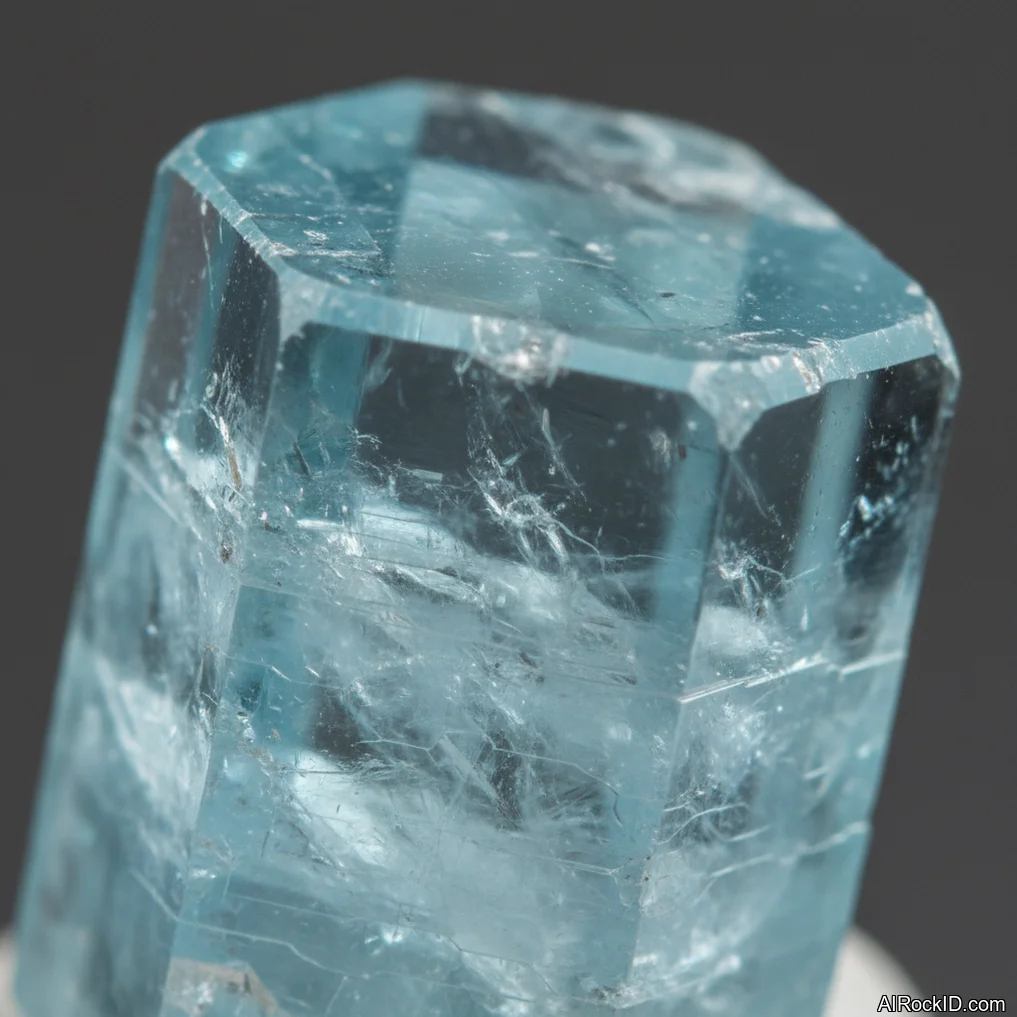
Goshenite is the colorless version of beryl (Be3Al2Si6O18). It’s basically beryl that never picked up the tiny trace elements that push it into green (emerald), blue (aquamarine), pink (morganite), or yellow (heliodor).
Grab a clean crystal and, honestly, the first thing that hits you is how glass-cold it feels, even next to quartz. The faces can be sharp and tidy. So when you roll it under a shop light, you get that crisp, watery flash beryl does so well, the kind that looks like it’s coming from inside the stone. I’ve handled plenty of tumbled “goshenite” that turned out to be plain clear quartz, and the feel is just off. Beryl has a slightly denser, slicker hand feel, like a piece of glass that’s been polished one step further.
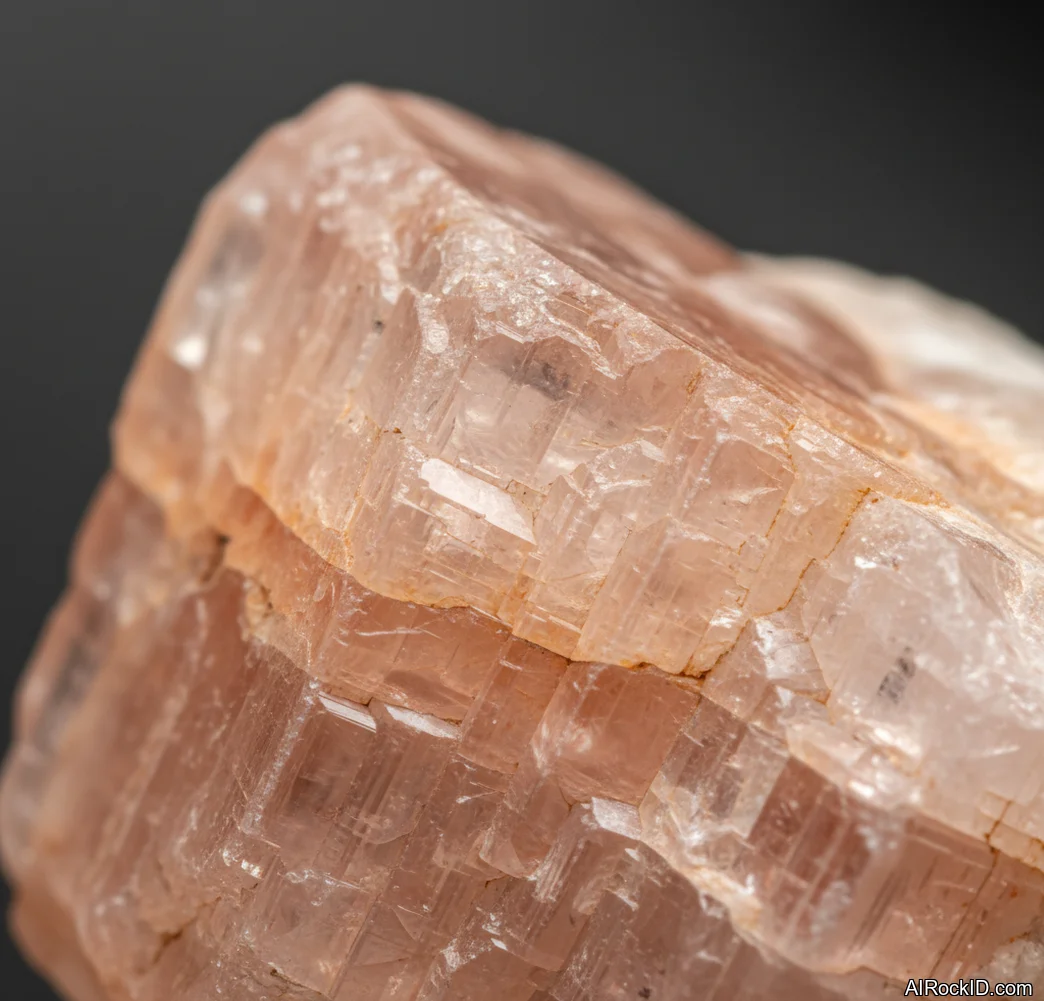
But here’s the catch: real goshenite isn’t always perfectly colorless. Sometimes there’s a faint champagne tint, or a little smoky whisper from inclusions, and dealers will still call it goshenite. The truly icy-clear material is out there. And when you find it, it’s priced like a gemstone, not a cabinet mineral.
Origin & History
Massachusetts is where the name comes from. Goshenite got its label from Goshen, Massachusetts, after people turned up colorless beryl crystals there and realized, hey, this clear stuff is worth calling out instead of lumping it in with the rest of the beryl family.
The beryl species was described and nailed down earlier in mineralogy. But “goshenite” stuck as a trade and collector name because it’s handy. “Colorless beryl” is correct, sure, but it feels like something you’d put on a filing cabinet. “Goshenite” is one clean word, and when you’re standing at a show table with emerald, aquamarine, and a clear crystal sitting in the same tray under those harsh overhead lights, it saves you from giving the whole explanation every single time.
Where Is Goshenite Found?
Goshenite turns up in granitic pegmatites and related pockets worldwide, with steady material from Brazil, Russia, the USA, and classic Alpine cleft finds.
Formation
Most goshenite turns up in pegmatites, those coarse-grained granite bodies that cool at a crawl and give crystals time to get huge. Late-stage fluids snake through cracks and little open pockets, and beryllium gets concentrated enough that beryl can finally crystallize. If the chemistry stays clean and there isn’t much iron, chromium, or manganese in the mix, you get colorless beryl.
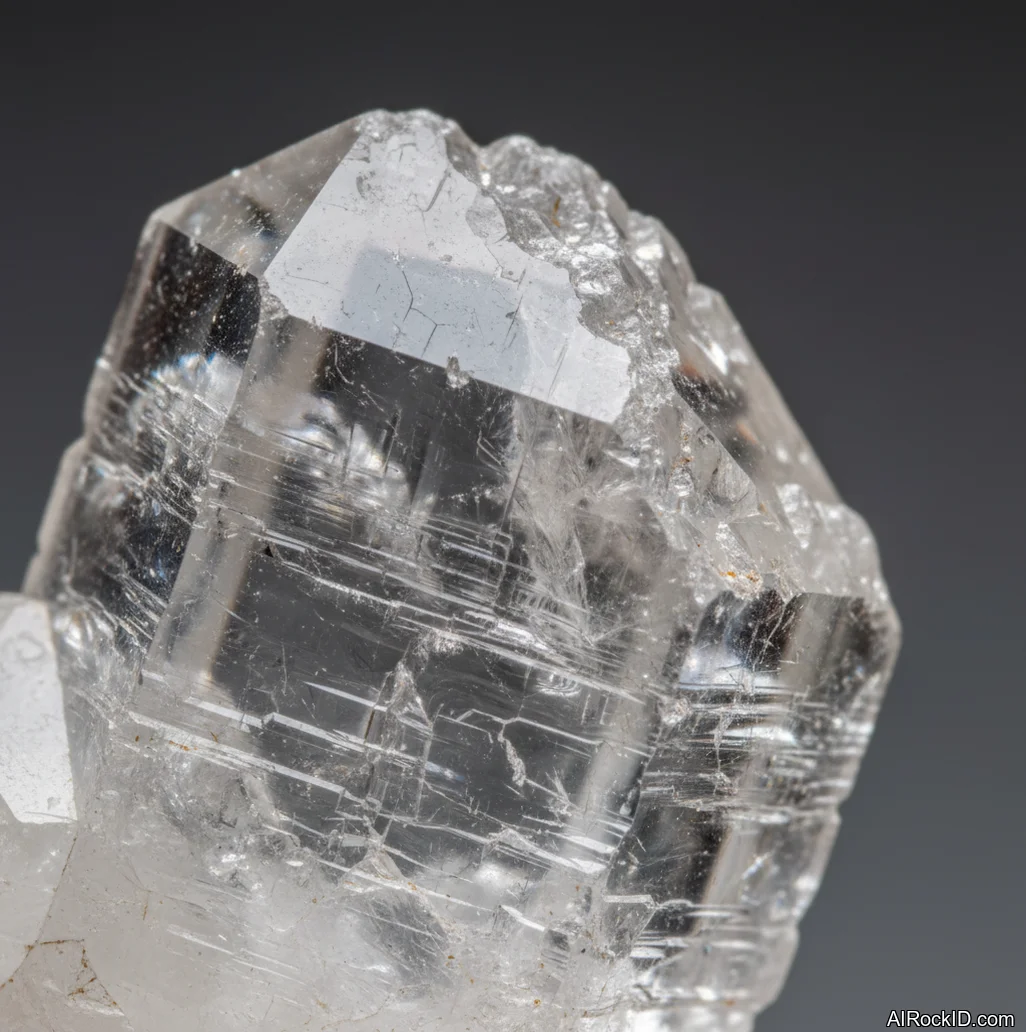
Look closely at a natural crystal and you’ll usually spot growth tubes or those tiny “rain” streaks inside (they’re easy to miss until you tilt it under a lamp). You can also run into healed fractures that flash when they catch the light, like thin, flat sheets. In pocket material, goshenite often shows up as clean hexagonal prisms with flat basal terminations, sometimes with a bit of etching or a light frosting on the faces. But it’s pretty common to see little nicks along the edges, because beryl is hard, sure, but it’ll still chip if it takes a knock.
How to Identify Goshenite
Color: Typically colorless to near-colorless, sometimes with a faint yellow, gray, or very pale blue cast. Good pieces look like clear window glass with depth.
Luster: Vitreous, with sharp, glassy reflections on clean faces.
Pick up the piece and compare it to clear quartz of similar size. Goshenite usually feels a bit heavier and the reflections look crisper and more “watery” than quartz. If you have a loupe, look for long parallel tubes and growth features that run with the crystal, plus the hexagonal habit is a big clue. The real test is hardness: it should scratch glass easily, and it should be hard enough that a steel blade won’t bite into it.
Common Look-Alikes
Goshenite is sometimes confused with these materials:
- Colorless quartz (rock crystal)
- Glass (clear and leaded)
- White topaz
- Colorless spodumene
- Colorless synthetic beryl
- Dyed goshenite (sold as cheap 'aquamarine')
Market Cautions & Treatments
When AI Can Get This Wrong
Photo AIs mix up goshenite with clear quartz a lot because both are colorless and can look identical in pictures, especially tumbled stones. Glass fakes trip up apps too, since they mimic the luster well but feel warm and lighter to the touch. Only hardness and heft tests sort them out for sure—goshenite scratches glass, but glass won’t scratch goshenite.
Properties of Goshenite
Physical Properties
| Crystal System | Hexagonal |
| Hardness (Mohs) | 7.5-8 (Very Hard (7.5-10)) |
| Density | 2.63-2.80 g/cm3 |
| Luster | Vitreous |
| Diaphaneity | Transparent to translucent |
| Fracture | Conchoidal |
| Streak | White |
| Magnetism | Non-magnetic |
| Colors | Colorless, White, Very pale yellow, Very pale gray |
Chemical Properties
| Classification | Silicates |
| Formula | Be3Al2Si6O18 |
| Elements | Be, Al, Si, O |
| Common Impurities | Fe, Mn, Li, Na, K, Cs |
Optical Properties
| Refractive Index | 1.564-1.602 |
| Birefringence | 0.005-0.009 |
| Pleochroism | None |
| Optical Character | Uniaxial |
Goshenite Health & Safety
Goshenite’s pretty safe to handle and keep out on display. But like any mineral, don’t breathe in the dust if you’re cutting or grinding it, because that fine powder can hang in the air longer than you’d think (especially right around the wheel).
Safety Tips
Use water and keep the area well-ventilated when you lap or saw it, and make sure you’re wearing a respirator rated for fine particulates. Dust gets everywhere fast (you’ll see it clinging to the bench and your sleeves), so don’t skip the airflow.
Goshenite Value & Price
Price Range
Rough/Tumbled: $10 - $150 per specimen
Cut/Polished: $15 - $120 per carat
Price swings usually boil down to clarity and size, plus one other thing: is it an actual sharp, natural crystal, or is it just tumbled clear beryl that’s been knocked around until the edges go soft? Clean, well-terminated prisms (the kind with crisp faces you can feel with a fingernail) and truly colorless faceting rough shoot up in price fast.
Durability
Durable — Scratch resistance: Excellent, Toughness: Fair
Goshenite is stable in normal room conditions, but edges can chip and internal fractures can spread if it gets knocked around.
How to Care for Goshenite
Use & Storage
Store it wrapped or in a compartment box so the edges don’t get dinged by harder stones. If it’s a clean crystal, I keep it away from quartz points because they love to scratch up glossy faces over time.
Cleaning
1) Rinse with lukewarm water to remove dust. 2) Use a drop of mild soap and a soft brush for crevices. 3) Rinse again and pat dry with a microfiber cloth.
Cleanse & Charge
If you do energetic cleansing, gentle options work fine: running water, smoke, or a quick rest on selenite. Skip anything that involves banging it around in a bowl of rocks.
Placement
On a desk it reads as “clear and bright” without shouting, especially near a window where it throws small flashes. Just don’t put it where it can roll onto tile.
Caution
Skip ultrasonic cleaners and stay away from harsh chemicals, especially if the stone has fractures or those tiny fluid inclusions you can spot when you tilt it under a lamp. And don’t just drop it loose in your pocket with your keys. Beryl chips way easier than most people think.
Works Well With
Goshenite Meaning & Healing Properties
If you’re into the metaphysical side of things, goshenite usually gets talked about like the “blank sheet of paper” version of beryl. In my own stash, it’s the one I reach for when I want it simple. No color vibe. No extra baggage. Just clear.
Grab a palm-sized chunk and you’ll notice it right away: it sits heavy for its size, cool in your hand, and it stays that way longer than you expect (even after you’ve been holding it a minute). That steady, chilly feel is honestly half the reason I like it for meditation. I’ve seen people at shows lift a piece under those harsh booth LEDs, go quiet for a beat, then squint and ask, “Is this glass?” That clean, calm look is exactly what they’re after. For intention work, people usually connect it with mental clarity, honesty, and cutting through noise, but in my head it lives in the same lane as clear quartz, just with a slightly more “structured” feel. Hard to explain. You know it when you feel it.
But look, there’s a misconception that won’t die. Clear doesn’t automatically mean “stronger.” A lot of goshenite out there has plenty of inclusions, cloudy bits, little internal threads, and people still swear it works for them. And none of this is medical advice. If you’re dealing with anxiety, sleep problems, or anything physical, crystals are a comfort tool at best, not a stand-in for a professional.
Common mistakes
- Assuming every colorless transparent crystal is quartz
- Calling goshenite a diamond substitute without comparing brilliance, dispersion, and hardness
- Identifying a faceted stone from color alone
- Ignoring density and refractive index when separating goshenite from topaz or sapphire
- Assuming a seller’s variety name is correct without treatment or identity disclosure
Identify Goshenite from a photo
Compare Goshenite traits, care tips, value clues, and common lookalikes with a clear photo.