Imperial Topaz


Quick answer: Imperial Topaz is best identified by a combination of orange, peach, pink, or reddish body color, high hardness, strong vitreous luster, and gemological testing. Because treated topaz, citrine, zircon, and garnet can look similar in photos, confident identification usually requires refractive index, specific gravity, and treatment disclosure.
AI Rock ID can help screen a photo of Imperial Topaz by comparing visible color, crystal habit, transparency, and surface features with known lookalikes. RockIdentifier.io provides visual identification support, but gem-quality Imperial Topaz should still be verified by a qualified gemologist when value or authenticity matters.
Good fit
- Collectors comparing rare orange-to-pink topaz varieties
- Buyers who want a durable gemstone with Mohs hardness 8
- People checking whether a stone may be Imperial Topaz or a common lookalike
- Jewelry owners seeking a factual starting point before professional gem testing
Not a good fit
- Confirming origin or treatment status from a photo alone
- Distinguishing natural Imperial Topaz from treated topaz without lab testing
- Identifying heavily included, abraded, or poorly lit stones with high confidence
Most commonly confused with
- Citrine: Citrine is quartz with lower hardness and refractive index, and it commonly appears yellow to orange without topaz cleavage.
- Orange Zircon: Zircon has higher dispersion and a higher refractive index, often showing stronger fire than topaz.
- Spessartine Garnet: Spessartine is singly refractive garnet and lacks the perfect basal cleavage associated with topaz.
- Pink Topaz: Pink topaz overlaps in color but may be treated or classified separately depending on hue, origin, and trade usage.
Imperial Topaz vs Common Lookalikes
| Stone | Key Difference | Typical Test Clue | Caution |
|---|---|---|---|
| Imperial Topaz | Orange, peach, pink, or reddish topaz variety | RI about 1.609–1.643; Mohs 8 | Color and origin claims need documentation |
| Citrine | Quartz, usually yellow to orange | Lower RI about 1.544–1.553; Mohs 7 | Heat-treated amethyst can resemble golden topaz |
| Orange Zircon | Often shows stronger fire | Much higher RI and high dispersion | Can be confused in faceted stones |
| Spessartine Garnet | Orange garnet, no cleavage | Singly refractive; different SG range | Color alone is not diagnostic |
| Yellow Sapphire | Corundum, harder than topaz | Mohs 9; different RI range | May be heat treated |
AI identification confidence
AI identification of Imperial Topaz is usually moderate at best from photos because many orange, peach, and pink gemstones share similar appearance. Confidence improves when images show crystal shape, cleavage, inclusions, scale, and several lighting angles, but lab measurements remain the most reliable standard.
When AI gets it wrong
- A faceted stone is photographed without scale, lighting variety, or optical test data
- The color has been altered by warm lighting, filters, or background reflections
- A treated blue, pink, or orange topaz is labeled as natural Imperial Topaz without paperwork
- Citrine, zircon, garnet, or sapphire has a similar hue in a single image
Final recommendation
Use visual identification as a screening step, not as final proof of Imperial Topaz. For purchases, request treatment disclosure, origin information when relevant, and an independent gemological report for higher-value stones.
Imperial Topaz Buying and Authenticity Checks
A reliable Imperial Topaz listing should state whether the stone is natural, treated, or laboratory-tested, and it should avoid vague color names without supporting details. For valuable stones, look for a report from a recognized gemological laboratory that confirms species, variety, and any detectable treatment. Be cautious with unusually low prices, saturated color claims, or listings that rely only on trade names.
Photo Tips for Identifying Imperial Topaz
Clear photos in daylight, neutral indoor light, and close-up side views are more useful than a single front-facing image. Include a scale reference, the stone’s back and girdle if faceted, and any visible inclusions, chips, or cleavage planes. Avoid color filters because orange and pink gemstones can shift noticeably under warm or oversaturated lighting.
Imperial Topaz Treatment Notes
Some topaz on the market is heated, irradiated, coated, or otherwise treated to improve or change color. Natural Imperial Topaz with stable orange-to-pink color can be more valuable than treated material, but treatment status cannot be confirmed by appearance alone. Written disclosure and laboratory testing are the most dependable ways to evaluate treatment claims.
What Is Imperial Topaz?
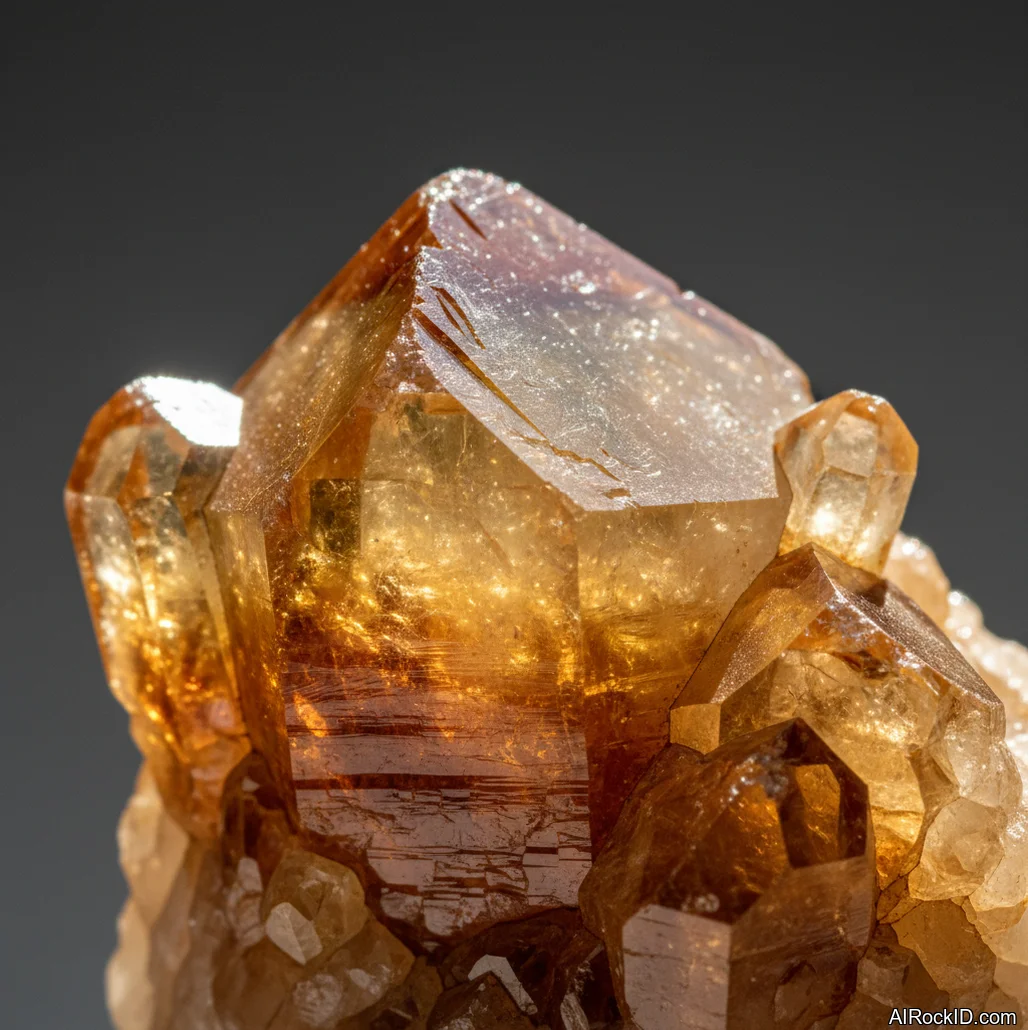
Imperial Topaz is a rare, gem-quality kind of topaz, and people chase it for those warm golden, orange, and pink to reddish-orange colors. In your hand, it doesn’t feel dainty at all. It’s a serious stone. Grab a clean crystal or a chunky faceted piece and the first thing you clock is the heft, heavier than most folks expect from something that looks so sunny.
A lot of people glance at it and assume it’s citrine, or even spessartine. But once you’ve actually handled a few, you stop mixing them up. Imperial topaz has this crisp, glassy flash. And the color can shift a bit when you roll it under a lamp, especially with the pinkish material. Get your hands on a rough crystal with natural faces and the edges can look razor-sharp, almost like it was cut yesterday. Sharp enough to make you pull your finger back (you know what I mean?).
Most of what’s for sale is faceted, since the best color usually shows up in small, clean chunks. Raw display crystals are out there. But they’re in a totally different price bracket. Thing is, the market’s messy. Some sellers throw “imperial” on any yellowish topaz, and that’s how people wind up paying imperial money for plain topaz.
Origin & History
Brazil is where the “imperial” story really took off, and it’s tied hard to the Ouro Preto area in Minas Gerais. The name gets tossed around in trade lore as a nod to the Brazilian imperial court and that high-status jewelry taste, even though dealers have used the term pretty loosely over the years. If you’ve wandered a couple gem shows, you’ve heard the booth debate: what counts as true imperial, and what’s just nice golden topaz.
Topaz as a species was described way before anybody started calling anything “imperial.” The word topaz itself has this old, messy trail, bouncing between the Red Sea island called Topazios and other classical naming traditions. In modern mineralogy, topaz is a well-defined species. “Imperial” is just a variety name, pushed by color, origin reputation, and the simple fact that Ouro Preto material can look unreal when it’s clean and warm-toned with that little pink kick (the kind you notice when you tilt it under a booth light and it flashes back at you).
Where Is Imperial Topaz Found?
True imperial material is most strongly associated with Ouro Preto, Minas Gerais, Brazil, but topaz occurs worldwide in granites, rhyolites, and related pegmatites.
Formation
Grab a handful of rough from pegmatites or any high-silica igneous system and you start to see the story of how topaz actually shows up. What you’re really seeing is late-stage fluid, loaded with fluorine, sneaking through granitic rock as it cools and locks up. That fluorine matters. A lot. It helps stabilize topaz, and it lets the crystal keep growing in spots where other silicates would’ve muscled in and taken over.
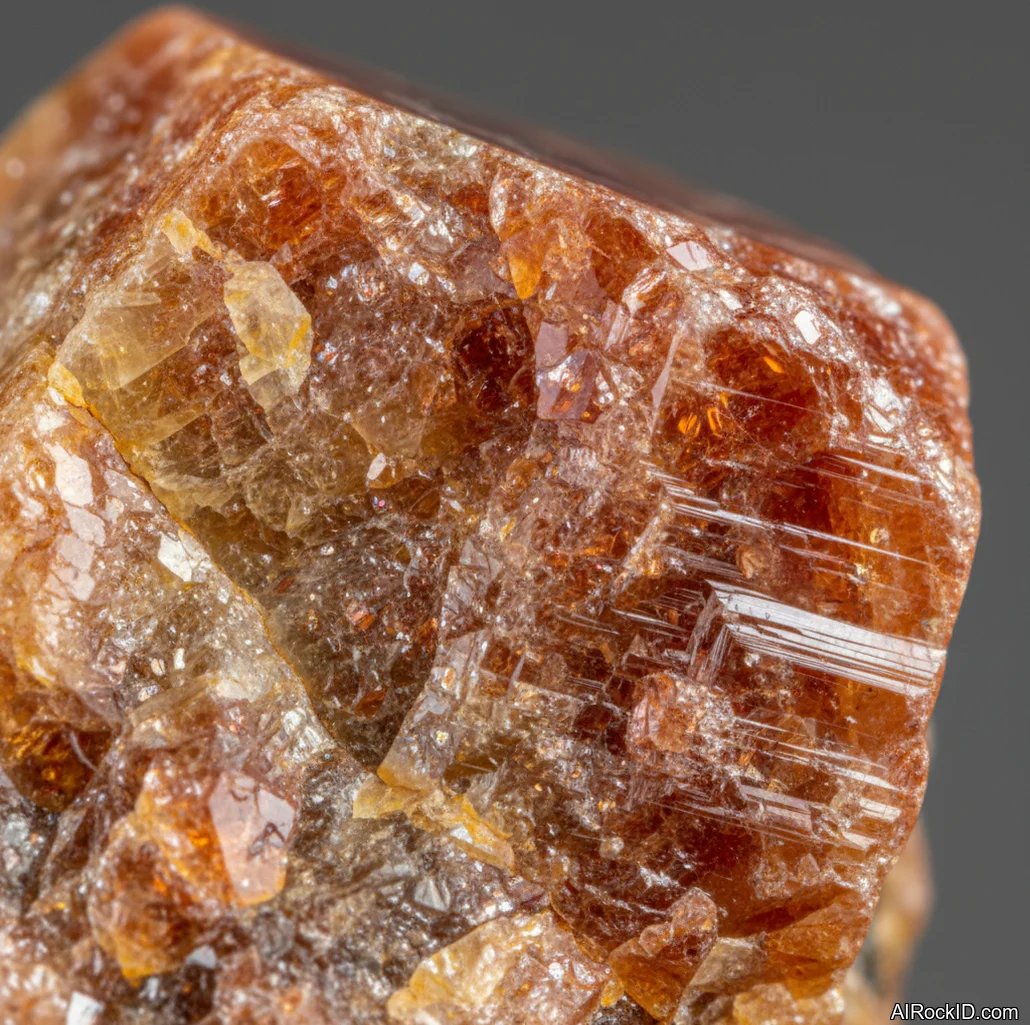
And in places like Minas Gerais, those crystals don’t just pop out of nowhere. They form in veins and pockets tied to altered granites and related rocks, then weathering comes along later and shakes them loose into near-surface deposits. So you end up with imperial topaz rough that looks like it’s been through it: etched faces you can feel with a fingernail, iron-stained coatings that leave rusty smudges, rounded edges from getting knocked around in transport. Clean, sharp, unbroken crystals? Those are the weird ones. Not the rule.
How to Identify Imperial Topaz
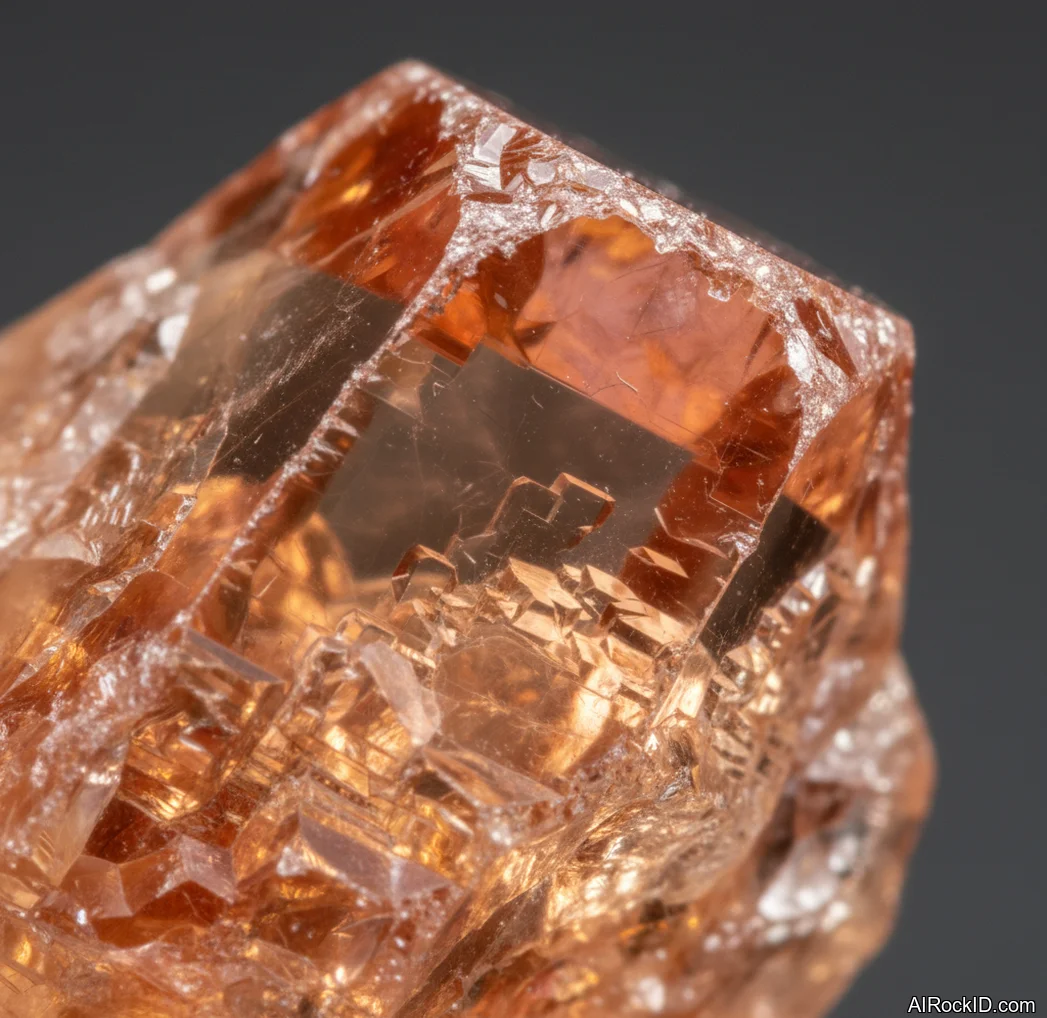
Color: Imperial topaz ranges from golden-yellow and orange to peach, pink, and reddish-orange, often with a warm, slightly brownish undertone in some lighting. The most desired color tends to be orange with a pink cast rather than straight lemon yellow.
Luster: Vitreous luster with bright, glassy reflections on fresh faces or polished facets.
Pick up the stone and tilt it slowly under a single light. Topaz has a clean, sharp sparkle that doesn’t look “oily” the way some garnets can, and it won’t have quartz’s softer, less snappy edge reflections. If you scratch it with a steel blade, you won’t get far, but don’t do that on a good piece because topaz has perfect cleavage and you can chip it with a bad hit. The real test is separating it from look-alikes: citrine is lighter in hand and sits at Mohs 7, and orange sapphire has a different kind of fire and a much higher price tag when it’s clean.
Common Look-Alikes
Imperial Topaz is sometimes confused with these materials:
- Citrine (natural quartz) and heat-treated amethyst sold as “citrine”
- Spessartine garnet (mandarin garnet)
- Yellow to orange sapphire (often sold as “golden sapphire”)
- Yellow beryl (heliodor) and peach morganite
- Dyed quartz/chalcedony marketed as “imperial topaz color”
- Orange/yellow glass or leaded glass imitations
Market Cautions & Treatments
When AI Can Get This Wrong
At first glance, phone pics love to call imperial topaz “citrine” or “spessartine” because all three live in the same honey-orange range and cameras blow out the peach tones. Clean, faceted stones are the worst for AI since the facet reflections hide clues like cleavage and zoning. The real test is a couple quick checks: topaz should scratch quartz easily (citrine won’t), and under a loupe you’ll often spot those straight cleavage-related internal planes that garnet and quartz usually don’t show.
Properties of Imperial Topaz
Physical Properties
| Crystal System | Orthorhombic |
| Hardness (Mohs) | 8 (Very Hard (7.5-10)) |
| Density | 3.49-3.57 g/cm3 |
| Luster | Vitreous |
| Diaphaneity | Transparent to translucent |
| Fracture | Conchoidal |
| Streak | White |
| Magnetism | Non-magnetic |
| Colors | golden yellow, orange, peach, pink, reddish-orange, brownish-orange |
Chemical Properties
| Classification | Silicates |
| Formula | Al2SiO4(F,OH)2 |
| Elements | Al, Si, O, F, H |
| Common Impurities | Fe, Cr |
Optical Properties
| Refractive Index | 1.609-1.643 |
| Birefringence | 0.008-0.010 |
| Pleochroism | Weak |
| Optical Character | Biaxial |
Imperial Topaz Health & Safety
Imperial topaz isn’t toxic, so it’s safe to handle with bare hands. But you still want to treat it like any crisp, glassy crystal: don’t knock it around, because the edges can chip. And if you’re dealing with a rough piece, watch those sharp terminations, they’ll catch on fabric and take a ding fast.
Safety Tips
Keep it tucked away so it won’t smack into harder stuff like corundum or diamond. And don’t let it take hits on the corners or those thin facet junctions (they chip fast, trust me).
Imperial Topaz Value & Price
Price Range
Rough/Tumbled: $80 - $800 per piece (small rough); $1,500+ for fine display crystals
Cut/Polished: $200 - $2,500+ per carat
Color does most of the heavy lifting here. If it’s a clean, warm orange that runs into pinkish-orange and it’s got high clarity, it just jumps at you the second you tilt it under a light. Origin claims still matter, sure, but only when the stone actually looks like top-tier Ouro Preto material. Otherwise? It’s just paperwork.
Durability
Durable — Scratch resistance: Excellent, Toughness: Fair
Topaz resists scratching well, but its perfect cleavage means it can chip or split if it takes a sharp knock.
How to Care for Imperial Topaz
Use & Storage
Keep it in a fabric-lined box or a separate pouch because it’ll chip before it’ll scratch. And don’t toss it loose in a pocket with keys or other stones.
Cleaning
1) Rinse with lukewarm water and a drop of mild soap. 2) Use a soft toothbrush to clean around facet edges or natural creases. 3) Rinse well and pat dry with a soft cloth.
Cleanse & Charge
If you do energy-style cleansing, stick to gentle methods like smoke, sound, or a quick rinse and dry. I wouldn’t leave a good imperial topaz sitting in direct sun for days just because you saw that tip online.
Placement
On a desk, it’s great where light can hit it from the side, not straight overhead. In a jewelry box, keep it away from harder gems that can nick the girdle.
Caution
Skip ultrasonic or steam cleaners for jewelry, and try not to bang it around. Topaz cleaves really cleanly, so one sharp hit, like smacking a ring on a granite countertop or a metal sink edge, can make it split.
Works Well With
Imperial Topaz Meaning & Healing Properties
A lot of “feel-good” stones come off kind of soft and floaty. Imperial topaz doesn’t. It lands sharper, more like a nudge in the ribs, and yeah, I’ve felt that too, especially with the orange-pink pieces. When you hold one, it feels bright and forward-moving, not as dreamy as moonstone and not as fuzzy as calcite. Quick. Clean.
If you actually listen to how people talk about it in crystal circles, the same ideas keep popping up: confidence, personal will, getting unstuck. I can live with that wording, as long as we keep it in bounds. It’s not medicine. It won’t fix your life on its own. But as a focus object, something you can literally feel pressing into your palm (cold at first, then warming up), it works the way a reminder is supposed to work.
Thing is, imperial topaz is expensive, so people swap it out. Heat-treated quartz gets sold with the same vibe, and the “I want that feeling but cheaper” crowd is absolutely real. And if you’re using it for intention-setting, the boring practical part matters: I’ve noticed I grab the stones I’m not scared to wreck. So if your imperial topaz is some pricey faceted gem, you might end up babying it instead of actually using it. A small, honest rough chip you don’t panic over (the kind that can clink against keys and survive) can be the better everyday carry.
Common mistakes
- Calling any orange topaz Imperial Topaz without gemological confirmation
- Assuming a strong orange or pink color proves natural origin
- Confusing heat-treated citrine with topaz because both can appear golden orange
- Ignoring topaz cleavage when choosing a setting for rings or daily-wear jewelry
- Relying on seller color terms such as “sherry,” “precious,” or “imperial” without documentation
- Using a photo-only ID to make a high-value purchase decision
Identify Imperial Topaz from a photo
Compare Imperial Topaz traits, care tips, value clues, and common lookalikes with a clear photo.