Pink Tourmaline In Quartz
What Is Pink Tourmaline In Quartz?
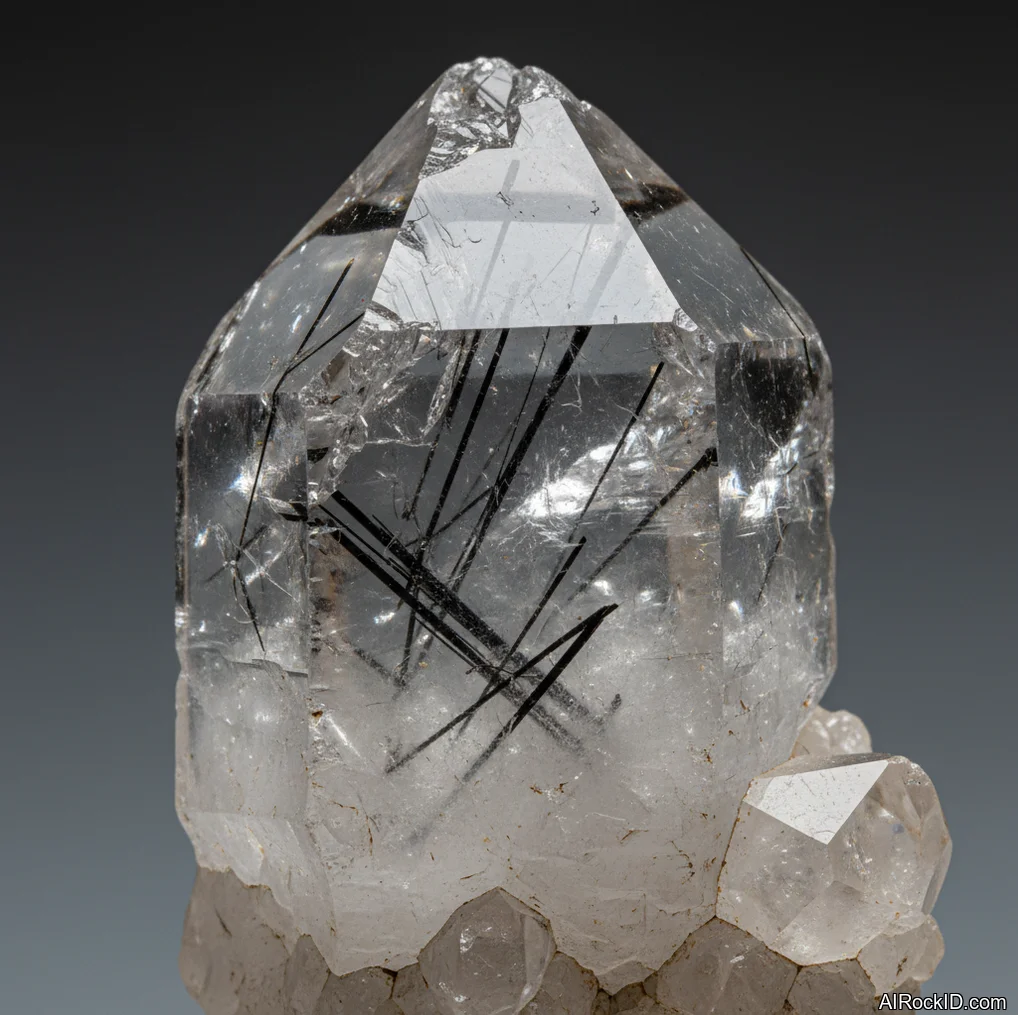
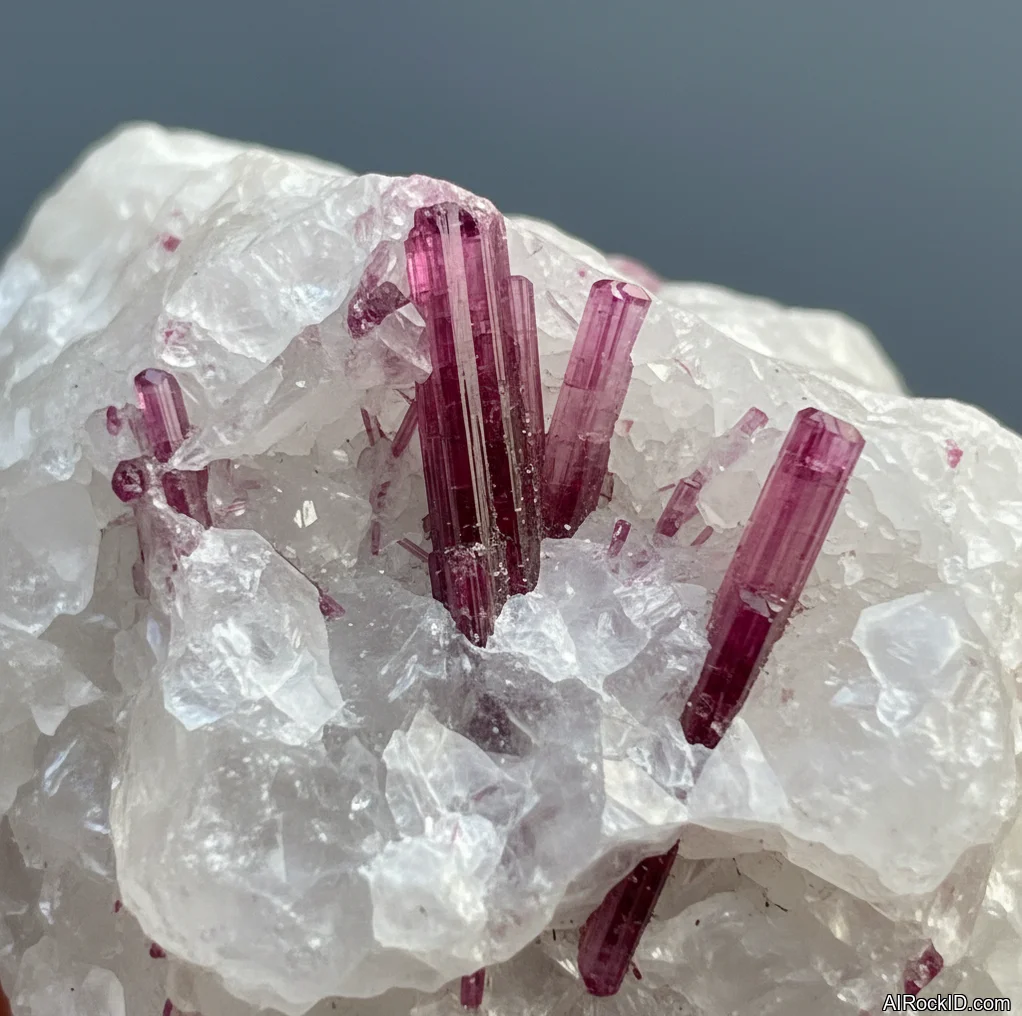
Pink Tourmaline In Quartz is just quartz with natural pink tourmaline inclusions, usually elbaite, showing up as needles, rods, or small prismatic crystals.
Grab a decent chunk and the quartz hits you first. Cold. Glassy. Kind of slick under your thumb if it’s polished, and a bit grabby if it’s left rough. Then you notice the tourmaline. Some pieces really do look like thin pink threads trapped in ice, but others have thicker, blunt prisms that look snapped off and frozen right in the middle of growing. Weirdly satisfying to stare at.
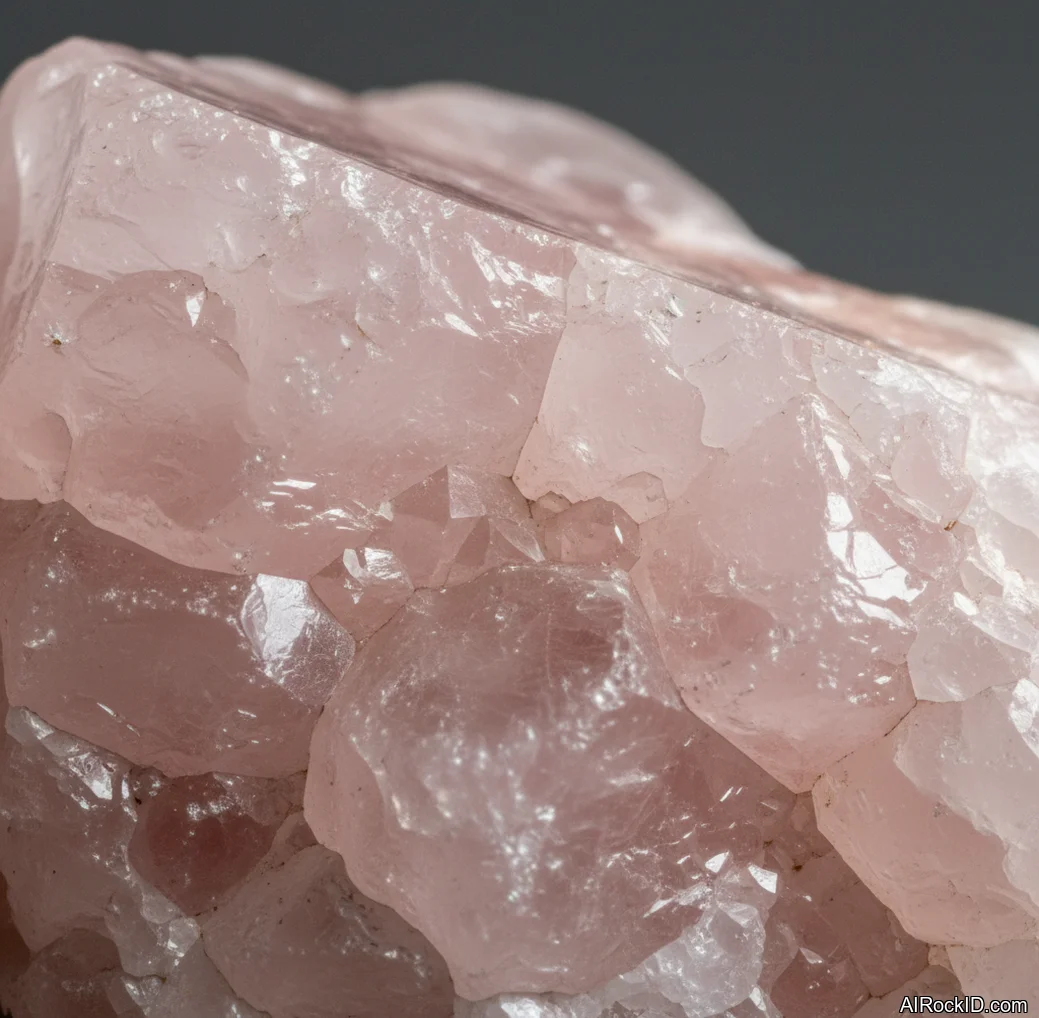
People see the name and expect “all pink,” but that’s not how most specimens read in person. It’s more contrast than saturation. You get milky patches, little clouded zones, and fractures that flash when you tilt it, like fine silver hairlines. And honestly, that’s the whole appeal. It looks like a small geologic accident that happened to turn out pretty.
Origin & History
Quartz has been talked about since antiquity. But it didn’t get pinned down as a formal mineral species until early modern mineralogy. The name itself comes from the German “Quarz,” a word people in central Europe were already using by the late Middle Ages.
Tourmaline’s name is a different story. It traces back to the Sinhalese word “turamali,” and it got carried into Europe through Dutch trade in the early 1700s. And the specific pink, lithium-bearing tourmaline most folks mean in this context is elbaite, a name assigned in 1913 after Elba, Italy, where those classic tourmaline specimens helped scientists sort out the broader group.
Thing is, “pink tourmaline in quartz” isn’t one official species name. It’s a trade and collector phrase for how the tourmaline shows up included in the quartz (you’ve probably seen those needlelike or chunky bits trapped inside). So dealers keep using it, because it tells you exactly what you’re buying.
Where Is Pink Tourmaline In Quartz Found?
Most of the material you’ll see comes out of granitic pegmatite districts, especially Brazil and Madagascar, with smaller amounts from classic tourmaline areas in the western United States and parts of Central Asia.
Formation
Raw chunks from pegmatites are where this pairing actually clicks. Pegmatites are those late-stage granitic melts that cool slowly and end up concentrating water, boron, lithium, and other elements tourmaline really likes. Tourmaline can start growing early in little pockets and fractures. Then quartz just keeps on going, filling space and sealing the whole thing shut.
But it’s not always “tourmaline first, quartz later” in some tidy timeline. Thing is, out in the field the chemistry can swing around, cracks pop open again, fluids squeeze through, and you end up with tourmaline needles locked inside quartz, quartz growing back over tourmaline, or both minerals growing right alongside each other in the same pocket. Look, if you’ve got a polished face in your hand and you tilt it under a light, you’ll sometimes catch tourmaline cutting across healed fractures in the quartz, like it wormed through after the quartz had already started to firm up. How else would it end up stitched right through those sealed lines?
How to Identify Pink Tourmaline In Quartz
Color: The quartz ranges from clear to smoky-clear to milky white, with inclusions from pale bubblegum pink to deeper rosy pink tourmaline. The pink is often strongest in thicker prisms and fades toward hair-thin needles.
Luster: Quartz shows a vitreous (glassy) luster, while tourmaline inclusions look vitreous to slightly resinous where they’re thick enough to catch light.
Look closely for tourmaline’s straight, prismatic habit and the way it stays needle-straight instead of curling like rutile. Pick up the piece and tilt it under a single overhead light: tourmaline needles go dark and bright as they rotate, while random “pink stain” in quartz stays flat. If you scratch it with a steel knife, the quartz won’t give, but a rough edge will still chip if you whack it. And watch for dyed quartz sold as “pink tourmaline in quartz.” The giveaway is color pooled along fractures or concentrated in surface pits rather than clean, crisp needles inside.
Properties of Pink Tourmaline In Quartz
Physical Properties
| Crystal System | Hexagonal |
| Hardness (Mohs) | 7 (Hard (6-7.5)) |
| Density | 2.65 g/cm3 |
| Luster | Vitreous |
| Diaphaneity | Transparent to translucent |
| Fracture | Conchoidal |
| Streak | White |
| Magnetism | Non-magnetic |
| Colors | Clear, White, Smoky, Pink, Rose |
Chemical Properties
| Classification | Silicates |
| Formula | SiO2 (host quartz) + complex borosilicate tourmaline inclusion (elbaite: Na(Li,Al)3Al6(BO3)3Si6O18(OH)4) |
| Elements | Si, O, Na, Li, Al, B, H |
| Common Impurities | Mn, Fe, Ti |
Optical Properties
| Refractive Index | 1.544-1.553 |
| Birefringence | 0.009 |
| Pleochroism | None |
| Optical Character | Uniaxial |
Pink Tourmaline In Quartz Health & Safety
It’s usually fine to handle, and a quick splash of water isn’t a big deal either. The real concern is more basic: if it cracks or breaks, you can end up with sharp little chips that’ll cut you (those tiny edges are nasty).
Safety Tips
If you’re going to cut or grind it, put on eye protection and a respirator. And run a bit of water while you work to keep the dust down.
Pink Tourmaline In Quartz Value & Price
Price Range
Rough/Tumbled: $20 - $400 per specimen
Prices jump around depending on how clear the quartz is, how easy it is to read the pink tourmaline from about an arm’s length away, and whether you’re seeing true prismatic crystals instead of those fuzzy, needle-like sprays. Bigger, cleaner display faces go for more money. And pieces that aren’t crisscrossed with distracting fractures usually do too.
Durability
Durable — Scratch resistance: Excellent, Toughness: Good
Quartz is stable for everyday handling, but sharp impacts can chip edges and open fractures around inclusions.
How to Care for Pink Tourmaline In Quartz
Use & Storage
Store it so it can’t knock against other quartz points or harder gems. I keep mine in a tray with a bit of padding because polished pieces love to pick up tiny edge chips.
Cleaning
1) Rinse under lukewarm water to remove grit. 2) Use a soft toothbrush with a drop of mild soap, especially around pits and natural fractures. 3) Rinse well and pat dry, then air-dry fully before putting it back in a box.
Cleanse & Charge
If you’re into the metaphysical side, smoke cleansing or a quick rinse and dry is plenty. Skip salt soaks if the piece has open fractures that can trap residue.
Placement
Window light looks great through clear quartz, but don’t bake it in harsh sun for weeks if the tourmaline color is strong. I’ve seen some pink tourmaline look a touch washed after long windowsill time.
Caution
Skip ultrasonic cleaners and don’t blast it with high heat. And don’t kid yourself that every little fracture is sealed up tight. If it’s a tower or a point, handle the tip like it’s glass, because honestly it pretty much is.
Works Well With
Pink Tourmaline In Quartz Meaning & Healing Properties
Next to plain rose quartz, this blend doesn’t come off as quite so “soft-focus” for a lot of folks. You’ve still got quartz doing its usual thing in crystal lore: clarity, amplification, that clean, bright vibe. But then the pink tourmaline shows up with the heart-centered feel, just with a bit more bite. Like, yeah, feel your feelings, but keep your spine, too.
Pick up a palm stone and the difference isn’t just in your head. Even polished, you can feel it. Quartz stays slick and glassy, almost like a piece of smooth window glass that’s been warmed by your hand. Where the tourmaline breaks through, it can feel a touch grippier, sometimes with tiny micro-steps or faint little ridges you notice when you rub your thumb across the surface. Subtle, but it’s there. And that contrast is exactly why people like it as a “two-in-one” stone for meditation, or just sitting on a desk while you work.
But look, I’ll say the quiet part out loud: a lot of listings go way too hard on the big promises. If you’re into stones for mood and ritual, keep your feet on the ground. It can be a useful object for focus, reflection, emotional processing (that whole sit-with-it thing). It isn’t medical treatment, and it won’t replace therapy or medication. What it does do really well? It gives you something genuinely nice to hold when you’re trying to slow down. Isn’t that enough sometimes?
Identify Any Crystal Instantly
Snap a photo and get properties, value, care instructions, and healing meanings in seconds.