Red Calcite


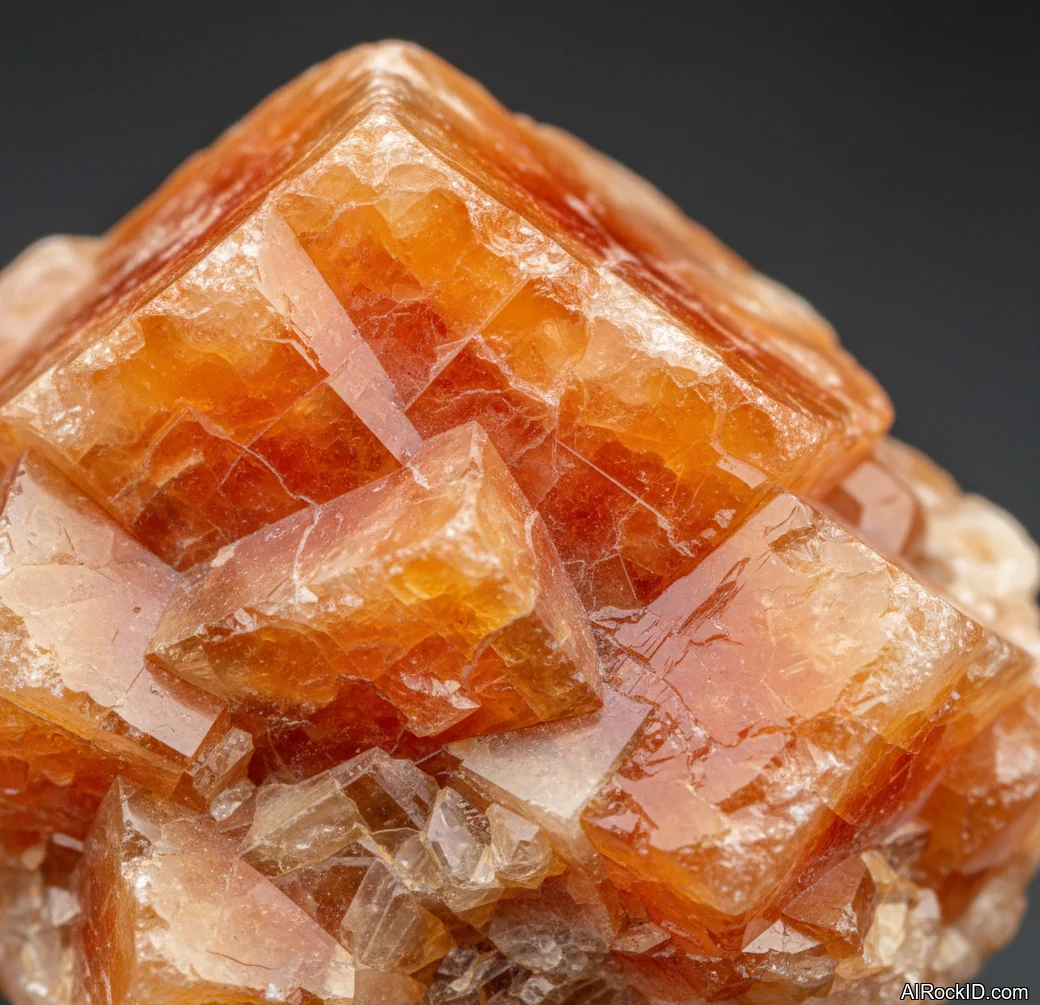
Quick answer: Red Calcite is a red to orange-red variety of calcite colored mainly by iron inclusions or staining. It is softer than many red gemstones, reacts to acid, and has strong cleavage that can make edges chip easily.
AI Rock ID can help compare Red Calcite against visually similar red, orange, and iron-stained minerals from a photo. RockIdentifier.io provides identification support, but hardness, acid reaction, and cleavage checks are still useful for confirming calcite.
Good fit
- Collectors who want an affordable red carbonate mineral
- Beginners learning cleavage, softness, and acid reaction tests
- Display pieces, tumbled stones, or carvings kept away from rough wear
- People comparing red minerals by luster, streak, and transparency
Not a good fit
- Daily-wear rings or bracelets exposed to knocks and abrasion
- Aquariums, fountains, or acidic environments
- Anyone seeking a scratch-resistant red gemstone
- Outdoor placement where rain and pollutants may dull the surface
Most commonly confused with
- Carnelian: Carnelian is much harder quartz-family chalcedony and does not show calcite’s strong rhombohedral cleavage.
- Red Jasper: Red Jasper is opaque, tougher, and harder, while Red Calcite is softer and may show a waxy-to-vitreous surface.
- Aragonite: Aragonite has the same chemical formula as calcite but different crystal structure, habit, and cleavage behavior.
- Rhodochrosite: Rhodochrosite is usually pink to rose-red with manganese content and commonly has banding unlike many Red Calcite pieces.
Red Calcite vs. Similar Red Minerals
| Feature | Red Calcite | Common Lookalikes |
|---|---|---|
| Hardness | Mohs 3; scratches easily with a copper coin or knife | Carnelian and Red Jasper are much harder; Rhodochrosite is slightly harder |
| Cleavage | Strong rhombohedral cleavage | Jasper and Carnelian lack visible cleavage; Aragonite has different cleavage and habits |
| Acid reaction | Fizzes in dilute acid, especially on a fresh surface | Quartz-family lookalikes do not fizz |
| Luster | Waxy to vitreous | Jasper is usually dull to waxy; Carnelian can be vitreous to waxy |
| Typical transparency | Translucent to opaque | Red Jasper is opaque; Carnelian is often translucent |
AI identification confidence
Photo-based AI identification of Red Calcite is usually moderate because several red and orange minerals can look similar in lighting and polish. Confidence improves when the image includes scale, natural broken surfaces, cleavage faces, and test results such as hardness or acid reaction.
When AI gets it wrong
- A polished tumble hides cleavage and makes Red Calcite resemble Carnelian or Red Jasper.
- Strong warm lighting makes orange calcite, iron-stained calcite, and red calcite appear nearly identical.
- A photo lacks scale, texture, or close-up detail of crystal faces and broken edges.
- The specimen is dyed, coated, or mislabeled by a seller.
Final recommendation
Choose Red Calcite when you want a soft, iron-tinted calcite specimen for study, display, or careful handling. For jewelry that must resist scratches and impacts, a harder red material such as Carnelian or Red Jasper is usually more practical.
How to Check Red Calcite Authenticity
A likely Red Calcite specimen should be soft enough to scratch with a steel knife and may scratch with a copper coin. A tiny drop of dilute acid or vinegar on an inconspicuous fresh spot can produce bubbling, which supports calcite identification. Avoid destructive testing on polished, valuable, or borrowed specimens.
Buying Red Calcite: What to Look For
Look for clear seller photos that show the actual color in neutral light, not only highly saturated images. Natural Red Calcite can vary from pale orange-red to deeper brick red, and uneven color zoning or iron staining is common. Ask whether a piece has been dyed, oiled, or resin-stabilized if the color appears unusually uniform or intense.
Natural Red Calcite vs. Dyed Calcite
Dyed calcite may show concentrated color in cracks, pores, or along damaged edges. Natural iron-related color is often less uniform and may follow growth zones, cloudy areas, or surface staining. A cotton swab with water or alcohol can sometimes reveal unstable dye, but testing should be done carefully on a hidden area.
What Is Red Calcite?
Red Calcite is a red-to-orange variety of calcite (calcium carbonate), and that color mostly comes from iron oxides or iron-rich impurities. The second you hold it, it gives itself away as calcite: it’s cool on first touch, then it warms up quickly, and if you’ve got a broken bit the edges feel kind of sugary, not sharp like quartz.
Grab a chunk and you’ll probably notice it isn’t as heavy as folks expect from something that looks that “dense” in color. A lot of the red material out there is massive, sometimes banded with white calcite, other times streaked with rusty swirls that honestly look like dried paint. Tip a clean cleavage face under a lamp and you’ll get that familiar calcite flash, but it comes off softer and milkier than the crisp sparkle you see in quartz.
So most dealers move it as tumbled stones or polished freeforms, because raw calcite will bruise from nothing more than getting knocked around in a box. And if you’ve ever hauled a piece home from a show, you know the feeling: it looked flawless on the vendor’s table, then you set it under your kitchen light and there it is, a fresh little crescent-shaped ding right on the corner. (How does that happen so fast?)
Origin & History
Calcite’s been recognized as its own mineral species since the 1700s, and the name traces back to the Latin *calx*, which just means lime. The version of the name we use now usually gets credited to Abraham Gottlob Werner in 1791, back when people were trying to standardize mineral names and the big catch-all label “spar” was being chopped up into clearer species.
And “red calcite” isn’t some separate, official species name. It’s a trade and collector color label. People have carved and used colored calcite for ages because it takes a really nice polish (you can feel how slick it gets under your fingertips once it’s buffed), but the red color is typically just iron staining in the carbonate. So you tend to see it anywhere calcite grows alongside iron-rich fluids or where conditions are oxidizing.
Where Is Red Calcite Found?
Red calcite turns up in a lot of carbonate-hosted deposits, especially where iron oxides are present. The show-table material people recognize most often comes out of Mexico and Brazil.
Formation
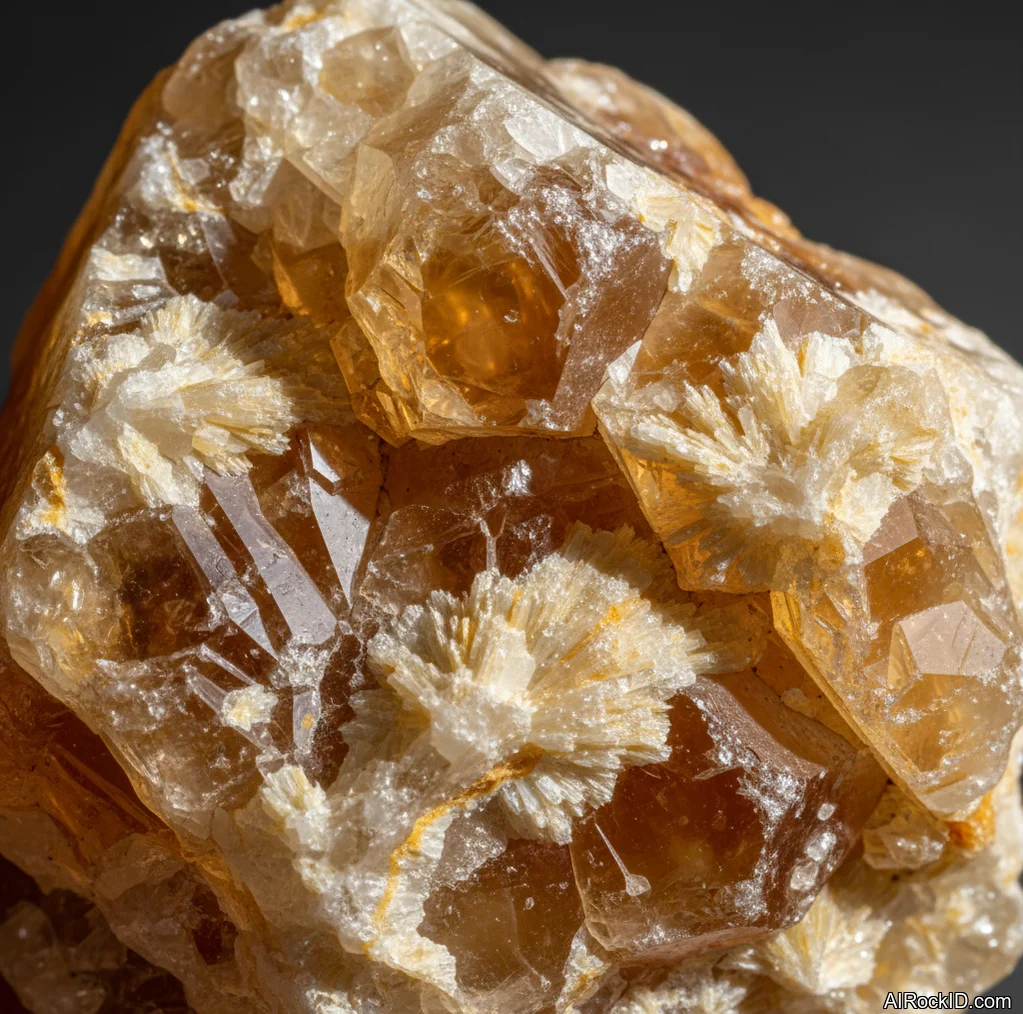
At first glance, yeah, it looks like “just a red rock.” But it’s really pretty plain carbonate geology. Calcite drops out of mineral-rich water in veins, vugs, and little cavities, or it forms when limestone and dolostone get replaced. Give the crystals a bit of room and time and you’ll see the usual shapes: classic rhombohedrons, scalenohedrons, or those chunky cleavage blocks that break into smooth, flat faces when you tap them.
The red color is usually iron. Sometimes it’s tiny iron oxide grains scattered through the calcite, sometimes it’s iron-heavy fluids leaving stains along fractures and growth bands, and sometimes you get both at once, which is where the banding comes from. I’ve split pieces open where the outside was that brick-red skin, but the fresh inside was peachy and way lighter, like the iron mostly sat near the surface instead of soaking the whole thing. Who hasn’t seen that kind of “rim stain” effect (even if you didn’t have a name for it)?
How to Identify Red Calcite
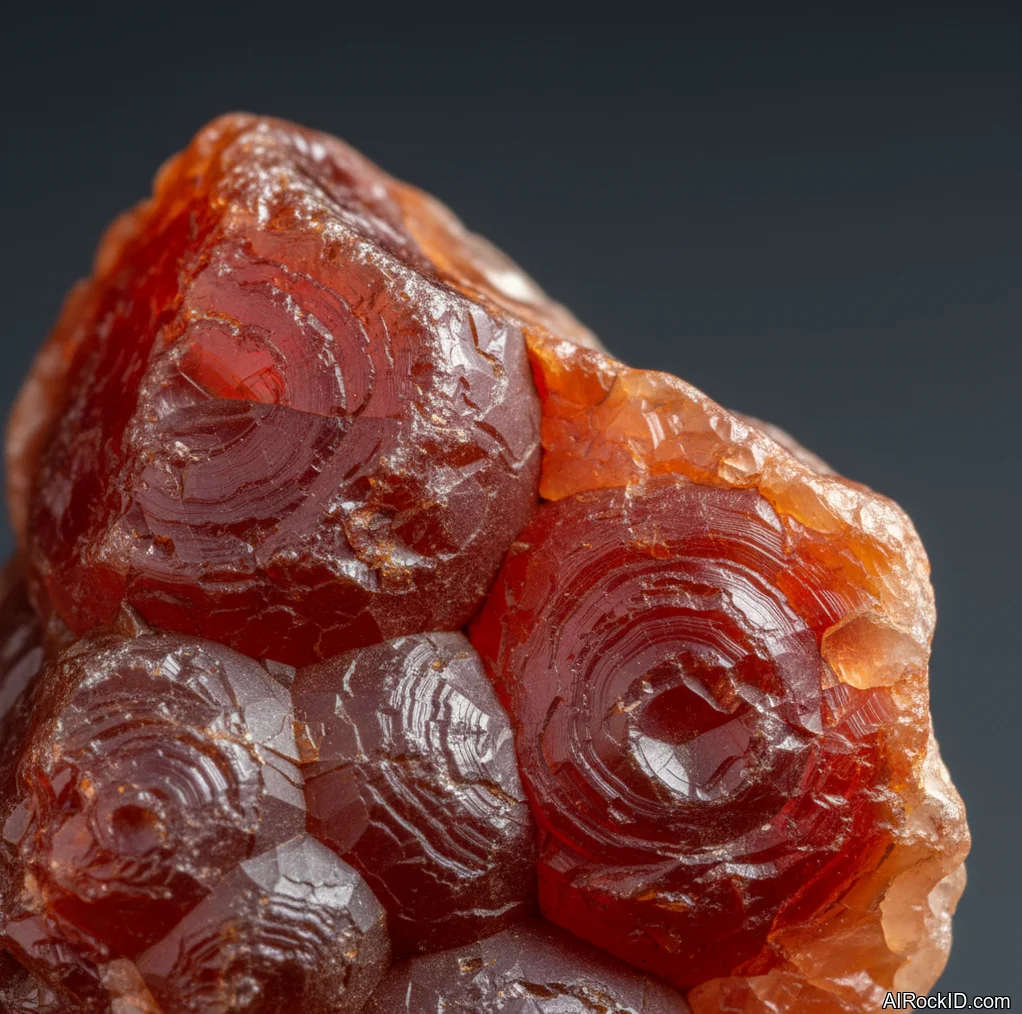
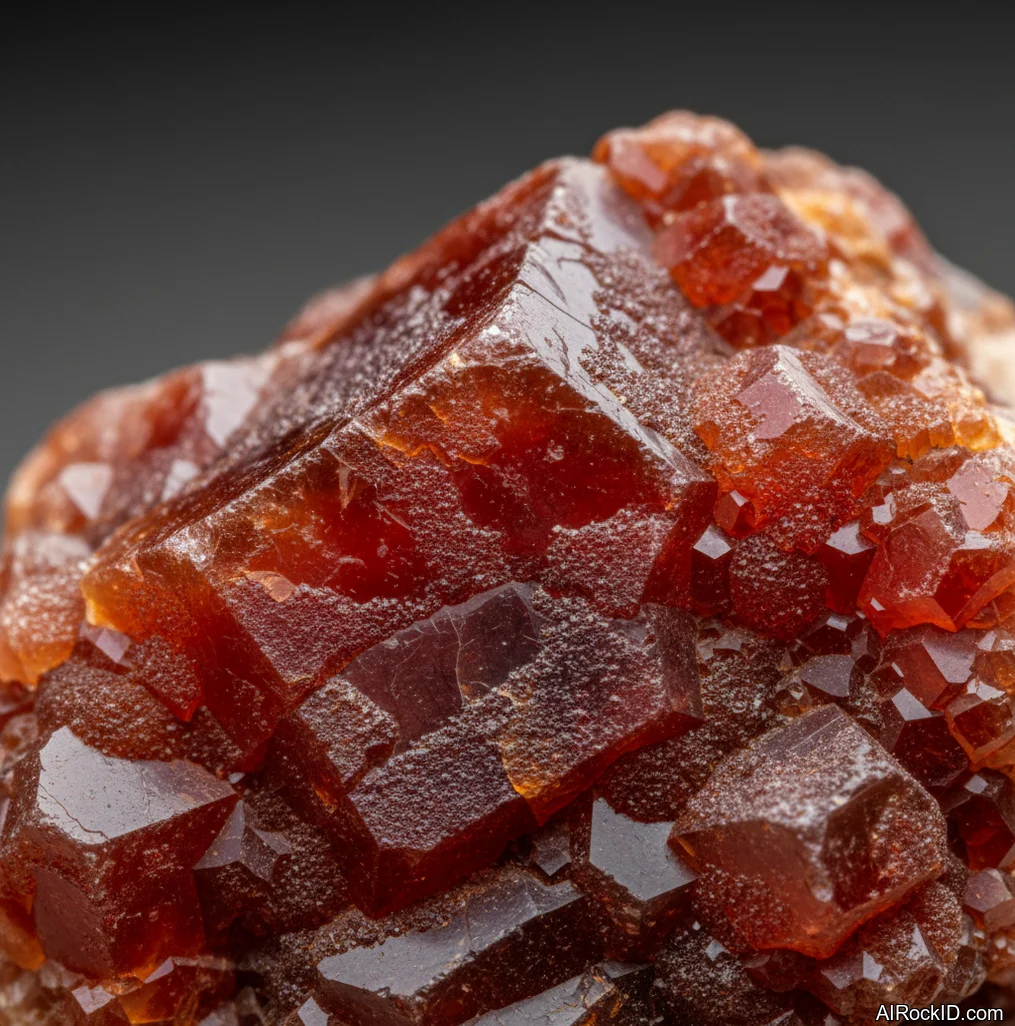
Color: Colors run from pale peach and salmon to tomato red and rusty orange, often with white calcite banding or cloudy zones. The red is commonly patchy or streaky rather than perfectly even.
Luster: Luster is vitreous on fresh cleavage and more waxy on tumbled or weathered surfaces.
If you scratch it with a copper coin, it’ll mark pretty easily, and a steel knife will bite in without much effort. The real test is a drop of weak acid: vinegar will fizz slowly on a fresh surface, and dilute HCl will fizz fast, like classic calcite. Look closely at broken faces too, because calcite loves rhombohedral cleavage, and you’ll see those step-like planes instead of the curved shell break you get with quartz.
Common Look-Alikes
Red Calcite is sometimes confused with these materials:
- Orange calcite (often sold interchangeably when the red is weak or patchy)
- Carnelian (chalcedony) tumbled stones, especially the lighter orange-red ones
- Red jasper (opaque, brick-red material that gets mislabeled as “red calcite” in mixed bins)
- Dyed white calcite or dyed marble (color concentrates in cracks and around pits)
- Orange glass or resin “palm stones” (too uniform, too glossy, often warmer in-hand)
- Rhodochrosite (banded pink-to-salmon carbonate that gets confused in photos)
Market Cautions & Treatments
When AI Can Get This Wrong
At first glance, AI loves to call red calcite “carnelian” or “red jasper” because the color reads similar and photos hide calcite’s cleavage. Polished pieces are the worst for this. The real test is a quick hardness check and a look at breaks: calcite scratches with a copper coin and shows flat cleavage faces and a sugary, chalky edge, while carnelian and jasper stay glassy and don’t chip into clean planes.
Properties of Red Calcite
Physical Properties
| Crystal System | Trigonal |
| Hardness (Mohs) | 3 (Soft (2-4)) |
| Density | 2.71 g/cm3 |
| Luster | Vitreous |
| Diaphaneity | Translucent to opaque |
| Fracture | Uneven |
| Streak | White |
| Magnetism | Non-magnetic |
| Colors | Red, Orange, Peach, Salmon, Reddish-brown, White |
Chemical Properties
| Classification | Carbonates |
| Formula | CaCO3 |
| Elements | Ca, C, O |
| Common Impurities | Fe, Mn |
Optical Properties
| Refractive Index | 1.486-1.658 |
| Birefringence | 0.172 |
| Pleochroism | None |
| Optical Character | Uniaxial |
Red Calcite Health & Safety
Red calcite is usually safe to pick up and handle, and it isn’t considered toxic. But if you’re cutting or sanding it, don’t breathe in the dust, because that fine carbonate powder can irritate your nose and throat (it has that dry, chalky feel).
Safety Tips
If you’re going to shape it, put on a respirator and keep the dust down with wet methods (a little water goes a long way). And if you’ve been grinding or polishing, wash your hands afterward.
Red Calcite Value & Price
Price Range
Rough/Tumbled: $5 - $80 per piece
Prices jump around depending on how saturated the color looks, whether there’s banding, and how clean the polish comes out. And yeah, the big carved bowls and those chunky freeforms usually run higher, mostly because getting calcite rough that size without it arriving chipped (or with little bruised spots you can feel with a fingernail) is just harder to ship safely.
Durability
Nondurable — Scratch resistance: Poor, Toughness: Fair
It’s stable in normal room conditions, but it bruises, scratches, and cleaves if you knock it around.
How to Care for Red Calcite
Use & Storage
Store it in a soft pouch or wrapped in paper so it doesn’t get scuffed by harder stones. And don’t toss it loose in a pocket with keys, it’ll come out looking like it went through a rock tumbler.
Cleaning
1) Rinse quickly with lukewarm water. 2) Use a drop of mild soap and your fingers or a very soft cloth. 3) Pat dry and let it finish air-drying before putting it away.
Cleanse & Charge
If you do energetic cleansing, stick to gentle options like smoke, sound, or moonlight. Skip salt bowls and harsh sun since calcite surfaces can dull and the color can look washed out over time.
Placement
Put it where it won’t get bumped, like a shelf away from the edge or a desk corner that doesn’t see a lot of traffic. It looks great under warm light because the reds and peaches read deeper.
Caution
Skip acids and acidic cleaners, including vinegar soaks, because calcite reacts and you’ll end up with etching. Don’t use ultrasonic or steam cleaners either. And watch out for long water exposure on polished pieces, since water can sneak into tiny micro-fractures (you can’t see them until the surface starts looking a little hazy) and it’ll dull the shine.
Works Well With
Red Calcite Meaning & Healing Properties
A lot of “soft” stones feel kind of airy in your hand, but red calcite doesn’t. It’s got this surprisingly steady, planted feel once you’ve been holding it for a minute. I’ve had pieces that almost work like a hand warmer, not actually hot, just that slow warmth creeping in from your palm (the kind that makes you keep turning it over without thinking).
And if you stare at it up close, you can see why people tie it to motivation and stamina. The color looks like iron and clay, and most pieces aren’t crystal-clear. They’re usually cloudy or banded, sometimes with that dusty, brick-red look that shifts a bit when the light hits the surface. For me, it’s a solid “get back in your body” stone. When my brain’s all over the place, having a palm stone sitting on my desk is a simple nudge to straighten up, take a breath, and just finish one small task. Why not start there?
But keep your feet on the ground with it. Any wellness claims around crystals are spiritual or personal, not medical. If you’re dealing with anxiety, depression, pain, or anything serious, crystals are a side tool at best, more like a reminder object than a fix. The practical stuff still matters: sleep, food, movement, and getting help from a professional when you need it.
Common mistakes
- Assuming every red-orange polished stone is Carnelian rather than testing hardness.
- Using Red Calcite in rings or bracelets where its softness and cleavage make damage likely.
- Cleaning Red Calcite with vinegar, lemon juice, or acidic cleaners.
- Identifying polished pieces by color alone without checking cleavage, hardness, or acid reaction.
- Confusing iron-stained common calcite with a distinct red gemstone variety.
- Placing Red Calcite in direct sunlight for long periods without checking for fading or surface changes.
Identify Red Calcite from a photo
Compare Red Calcite traits, care tips, value clues, and common lookalikes with a clear photo.